

The revolution will not be optimised: on frictionmaxxing and the creative virtues of inconvenience
In a culture obsessed with seamlessness and instant fulfilment, inconvenience is starting to feel strangely radical again.
Share
The other day, I watched a TikTok about a woman who’d installed one of those hyper-efficient office taps. The kind where boiling water arrives instantly, as quickly as cold. At first, she was overjoyed: double the tea, half the time. But then reality crept in. In removing the wait, she’d also removed the pause. No more wandering to the kitchen, no more quick rants with co-workers while the kettle boiled, no more accidental moments of staring into space where an idea might quietly arrive.
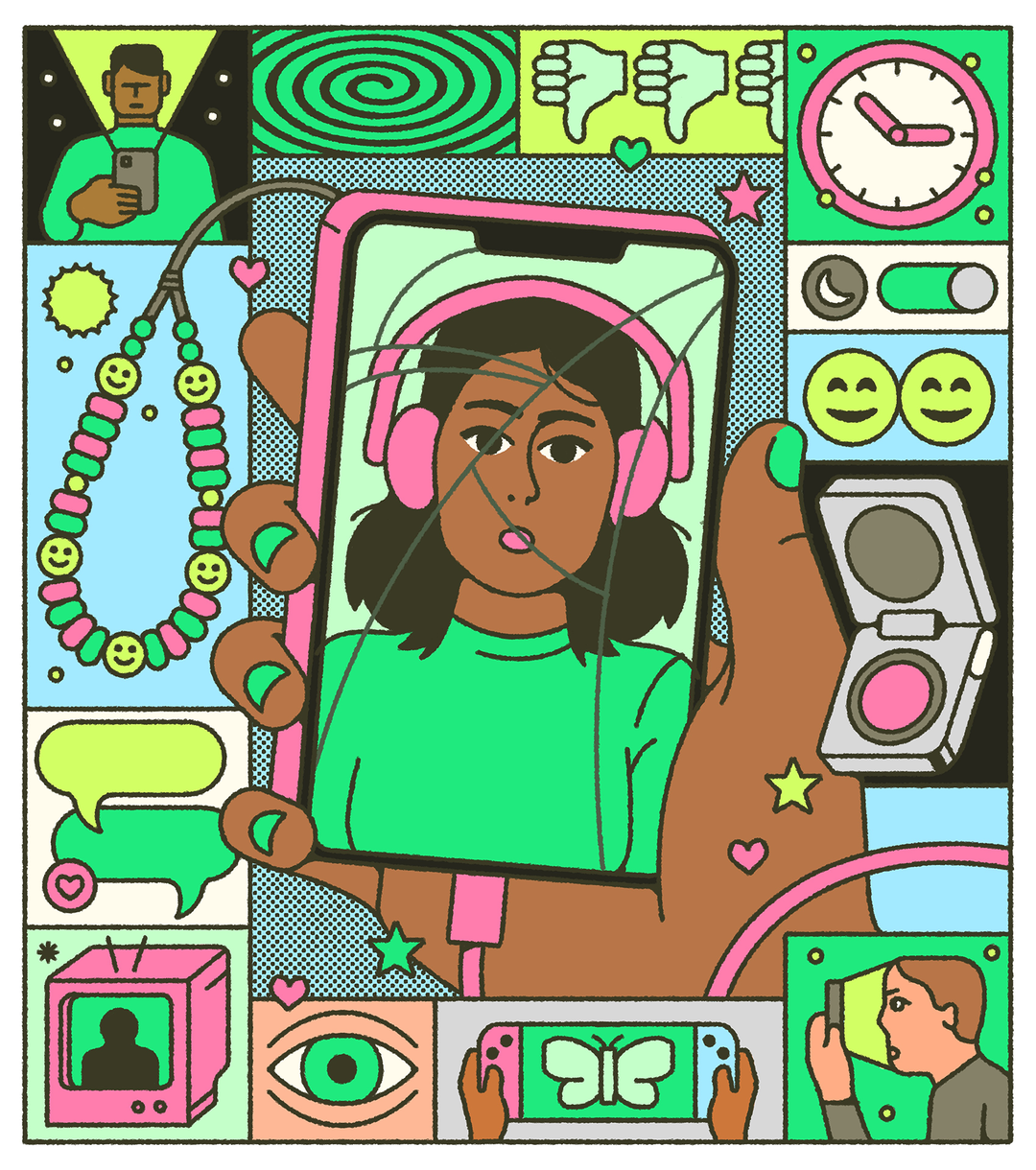
It struck me as a strangely perfect metaphor for modern life. Increasingly, everything around us is designed to remove friction. Meetings become on-the-go calls, office conversations flatten into Slack reactions, curiosity is outsourced to AI summaries and instant answers. Every platform promises seamlessness, every app competes to collapse the distance between desire and fulfilment. We’ve become obsessed with optimisation while quietly eliminating the pauses, inefficiencies and idle moments that creativity, intimacy and even a coherent inner life have historically depended on.
“Every platform promises seamlessness, every app competes to collapse the distance between desire and fulfilment.”
Nina Maria
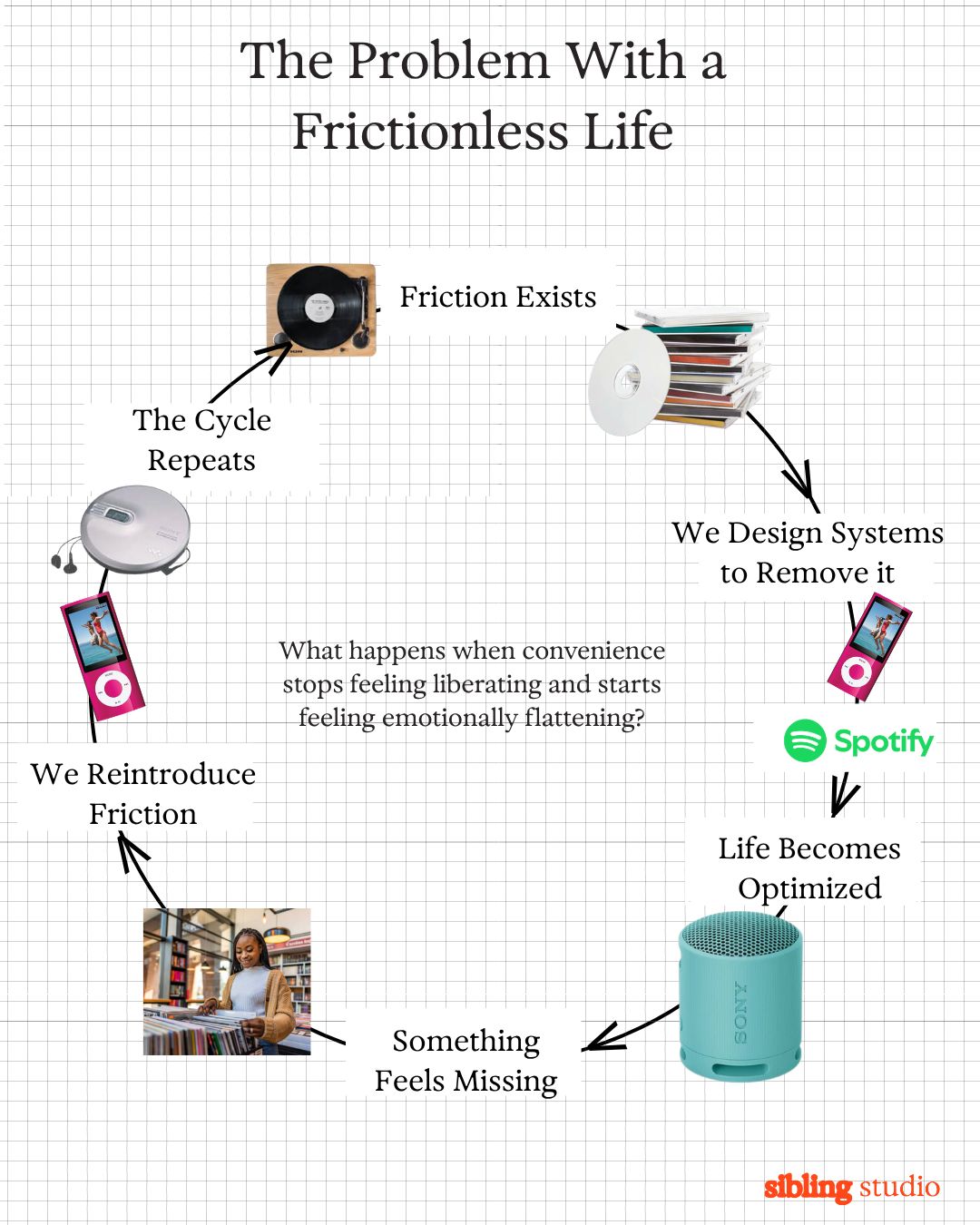
Sibling Studio: The problems with a frictionless life
It’s perhaps why conversations around “frictionmaxxing” exploded online earlier this year. Depending on who you asked, it was either another fleeting internet microtrend or a more serious reaction to the hyper-optimisation of contemporary life. The Guardian described it as “a lifetime of happy inconvenience”: choosing a restaurant over Uber Eats, going to the local DIY shop instead of defaulting to Amazon, embracing the conversations, delays and minor inefficiencies that technologies have spent the past decade training us to eliminate.
In many ways, the pursuit of convenience has become a form of escape. An attempt to eliminate the mundane tasks and small inconveniences that structure everyday life: waiting, wandering, asking for help, tolerating boredom, doing things the slower way. In a recent long-read on frictionmaxxing, The Cut argued that the phenomenon isn’t really about romanticising analogue life, but about what happens when we lose our tolerance for inconvenience altogether. When even the smallest moments of friction begin to feel intolerable, something deeper starts to shift in how we move through the world.
“Friction is not necessarily the opposite of progress. More often than not, it is the thing that makes depth, creativity and selfhood possible at all.”
Nina Maria
The philosopher Byung-Chul Han has written extensively about how contemporary society suffers from an excess of smoothness: a world increasingly designed to remove resistance, discomfort, ambiguity and pause. But what if those things are not interruptions to life, but the very conditions that give it texture and depth in the first place? A difficult conversation is often what deepens intimacy. A long walk without headphones is when memory or clarity unexpectedly surfaces. Writing something yourself, rather than outsourcing the task to AI, forces you into confrontation with your own thinking. Friction is not necessarily the opposite of progress. More often than not, it is the thing that makes depth, creativity and selfhood possible at all.
The irony is that the very inefficiencies we try to eliminate are often the places where life actually happens. The walk to the shop becomes an unexpected conversation with a neighbour. Cooking dinner becomes ritual rather than fuel consumption. Getting lost without GPS forces observation. Even boredom, once considered intolerable, has historically been one of the great incubators of creativity. Many of our best ideas arrive not when we are consuming, scrolling or optimising, but when the mind is left unstimulated long enough to wander.
“It asks a deceptively simple question: what parts of life are actually worth experiencing fully, even if they take longer?”
Nina Maria
Frictionmaxxing, then, feels less like a rejection of technology altogether and more like a rejection of passivity. It asks a deceptively simple question: what parts of life are actually worth experiencing fully, even if they take longer?
Because perhaps convenience has quietly altered our expectations of existence itself. We no longer just want efficiency from machines; we expect efficiency from relationships, careers, even emotions. We ghost instead of confronting. We optimise dating through filters and algorithms. We consume self-help content at double speed while searching for shortcuts to discipline, confidence or healing. The underlying assumption is that discomfort is a design flaw rather than an inevitable part of living.
Yet most meaningful things remain stubbornly resistant to optimisation. Friendship still takes time. Skill still requires repetition. Creativity still demands boredom, frustration and failed attempts. There is no frictionless version of becoming an interesting person.
That is what makes frictionmaxxing feel less like a fleeting internet trend and more like a small act of rebellion. In choosing inconvenience, people are not necessarily romanticising struggle; they are reclaiming presence. They are resisting the idea that every moment of life must be monetised, accelerated or made productive.
Maybe the answer is not to abandon convenience altogether. Nobody genuinely wants to handwash clothes or churn butter in the name of authenticity. But perhaps we need to become more selective about which frictions we remove, and which ones are quietly essential to our humanity.
After all, a completely frictionless life may not feel liberating in the end. It may simply feel numb.
Share Article
Further Info
This column was first published on Sibling Studio’s Substack, Post-Culture – you can subscribe here.
About the Author
—
Nina Maria is a pop culture enthusiast and strategist at Sibling Studio, a London-based creative strategy studio founded by Lucinda Bounsall, with clients including Nike, adidas, Hinge, Durex, Pepsi and LVMH.