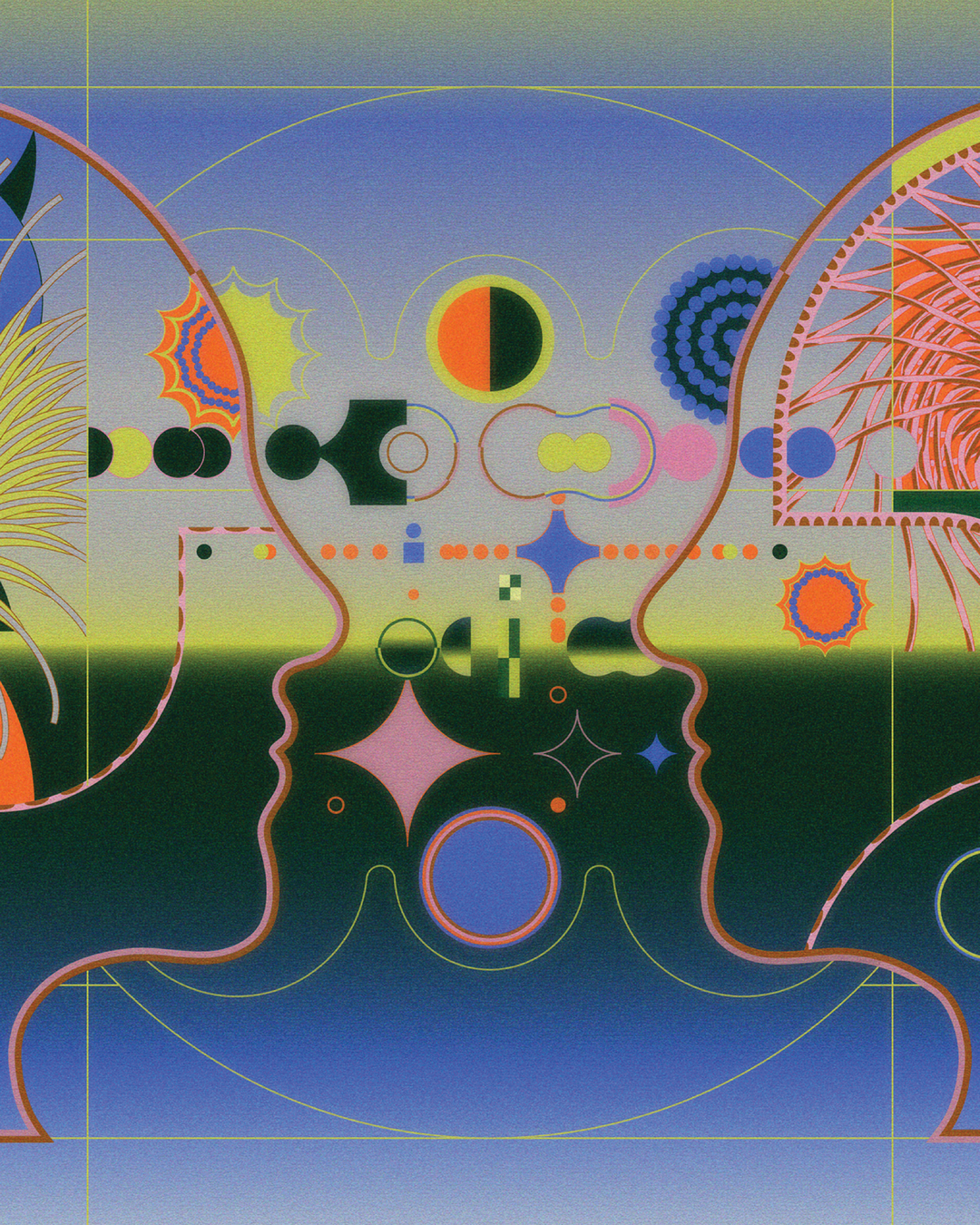



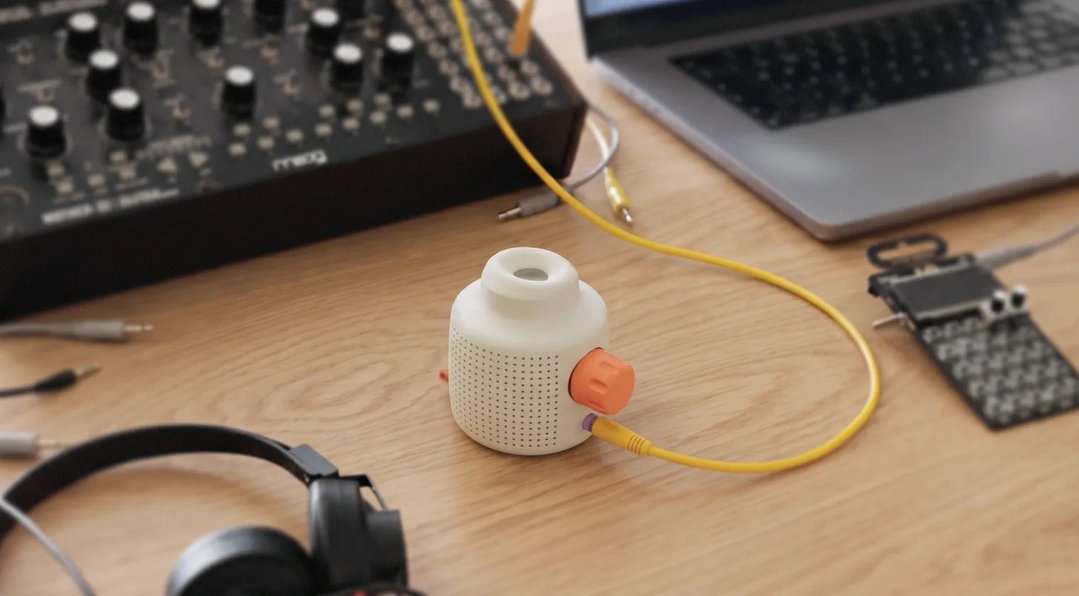
Less of an object, more of a place: Mattering and Oio’s Mur Mur is a portable speaker that holds an entire ecosystem within
Using generative AI in inventive ways, Oio and Mattering’s Mur Mur is looking at home technology in a new way, seeing the portable speaker as a way to build worlds with digital critters and calming ambience.
There was a time when technology looked towards the future, so much so that our culture was populated with ideas of flying cars, cities in space, refrigerators that store food with biopolymer “future gel”, laser guns and warp drives. But now we’re half way there, with virtual reality, AI assistants and transhumanism, it seems to have fallen flat. As sci-fi dystopias imagined by William Gibson and Philip K. Dick predicted, it’s corporate-owned, proliferated across nefarious means and jacking our nervous systems.
In contrast, a small renaissance of home technology has risen, centring creativity and curiosity, such as Modem’s Dream Recorder or the Hot Air Factory. The latter was created by creative company Oio, whose quest is to turn emerging technologies into everyday and sustainable realities, working with Ikea, Google, YouTube, UAL and the V&A. For its newest project, quaintly titled the Mur Mur, the company has teamed up with design practice Mattering to create something that’s less of an object and more of a place.
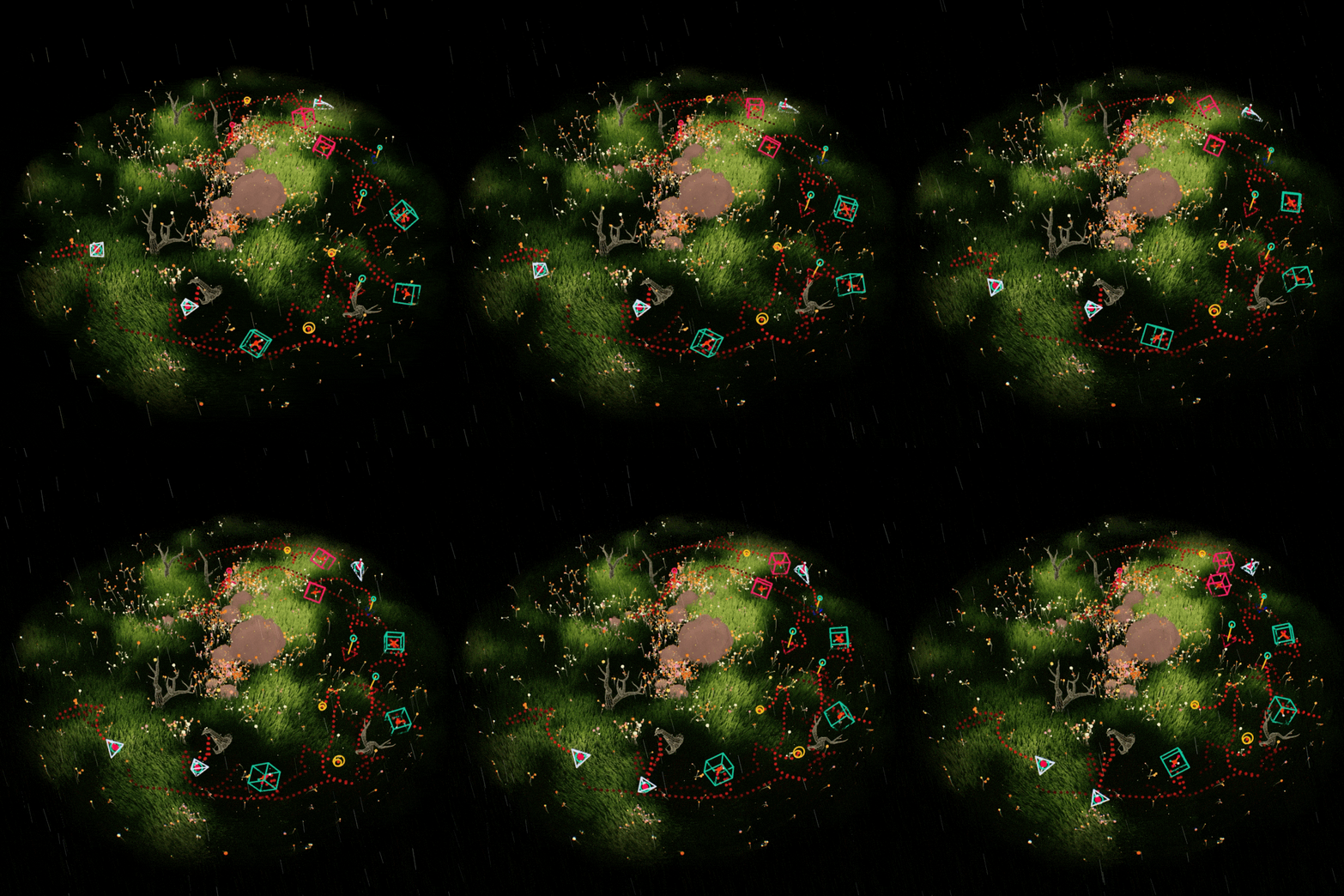
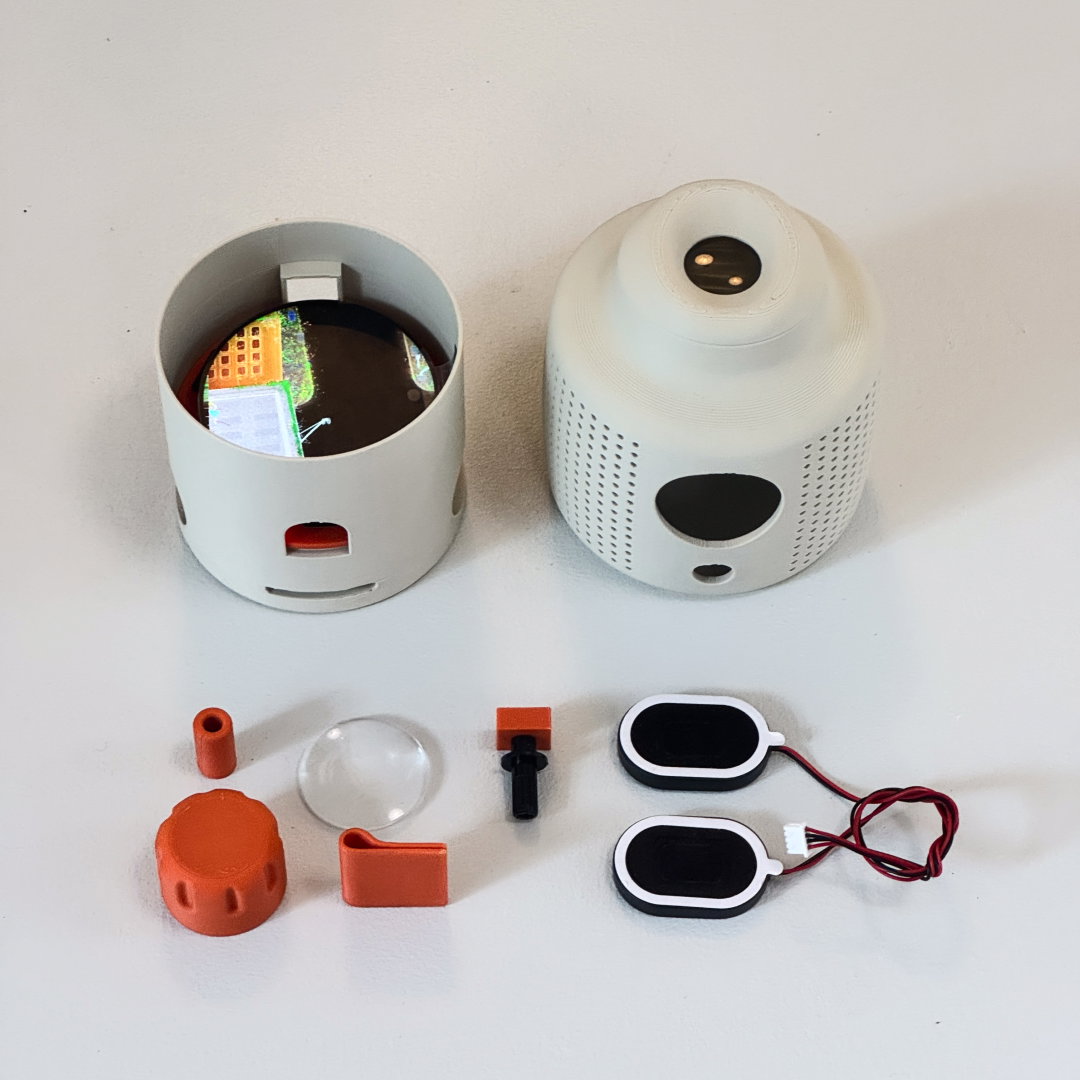
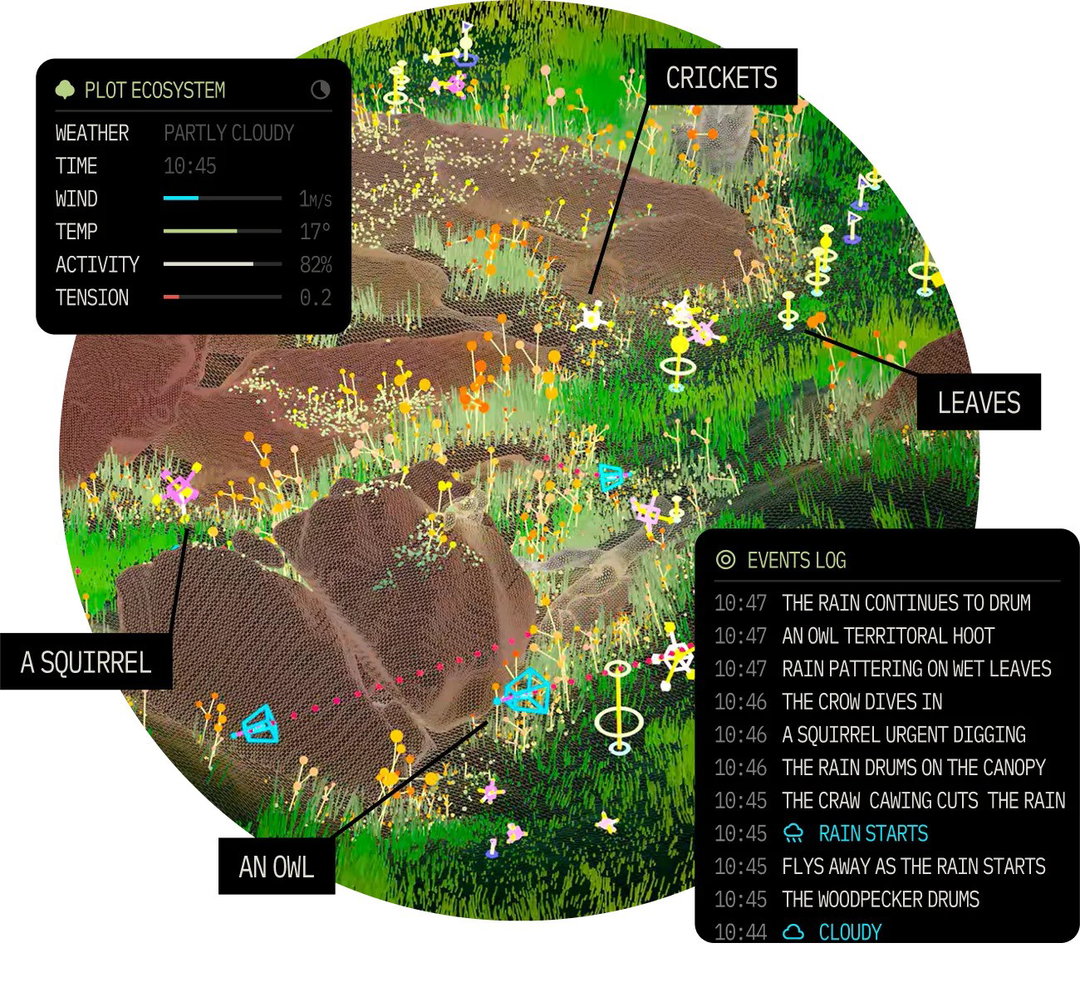
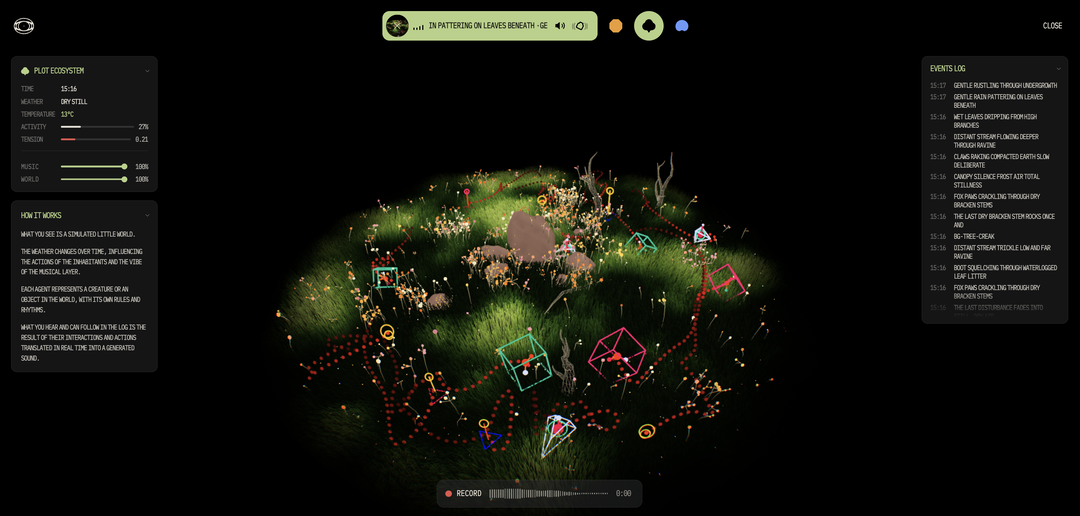
The Mur Mur is technically a portable speaker, but it’s a lot more – the device generates ambient soundscapes from a tiny world in which AI agents live inside of it. These aren’t your typical, mind-numbing agents like Siri or Cortana, but more like virtual critters. There’s three variants of the Mur Mur called ecosystems: Pond, Plot and Block, each with its own distinct aesthetics mirroring bodies of water, plants and cityscapes – and inside are its unique inhabitants. For Pond, there’s herons and otters, for Block, there’s vendors and skaters, all characterised by geometric shapes. Unlike a streaming app or an ambient sound generator, Mur Mur doesn’t generate sounds directly: it simulates a place, with its own rhythms, weather and a small society of inhabitants, whose lives and interactions create an ever-changing soundscape. In fact, I’m listening to a Mur Mur’s bustling, chirpy world as I write this.
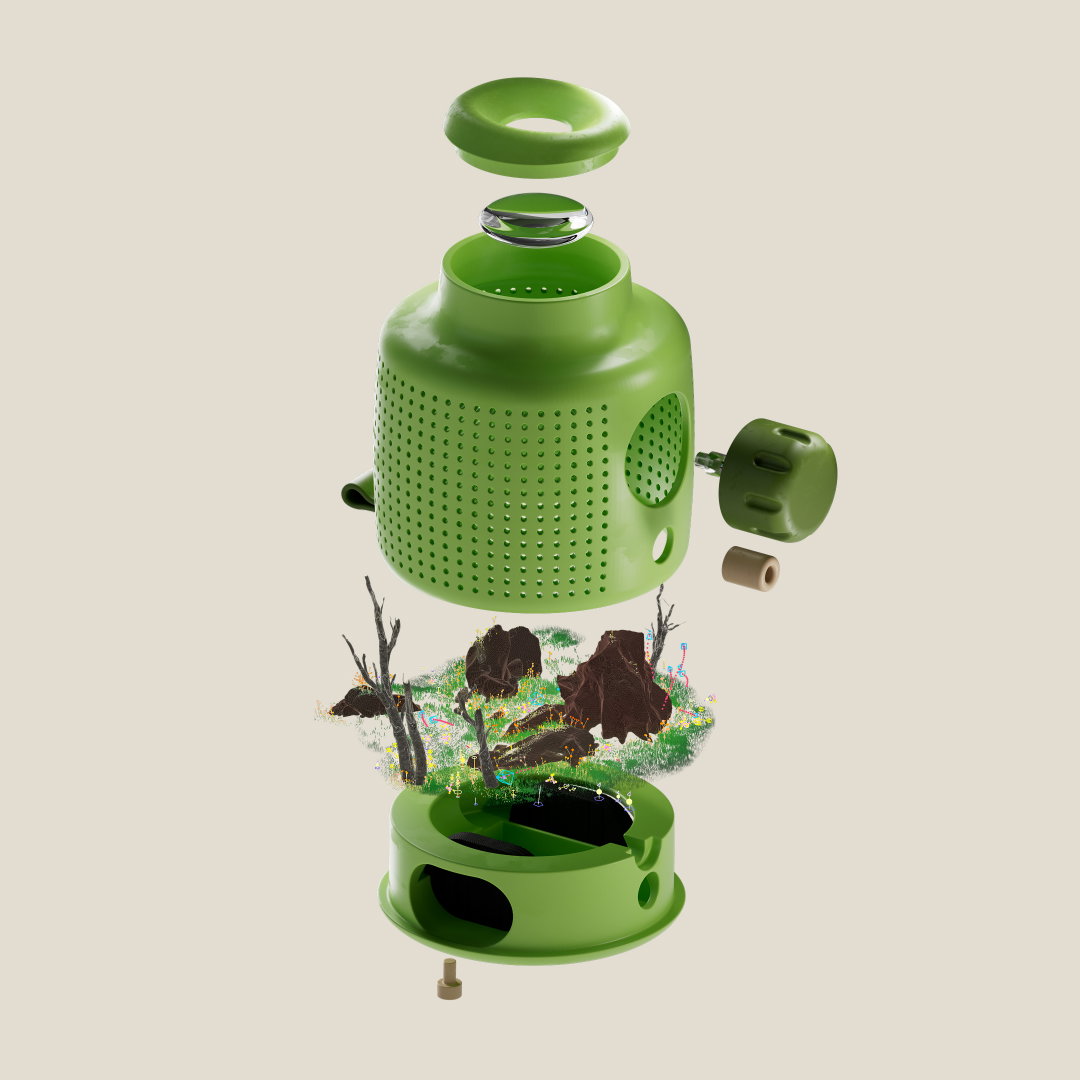
Oio & Mattering: Mur Mur (Copyright © Oio & Mattering, 2026)
“Throughout our practice we often end up rethinking everyday objects, and how they evolve with technology. So we wanted to explore how to re-think the speaker archetype, towards a new device that generates its own sounds continuously outside anyone’s control,” says Matteo Loglio from Oio. “We like the thought of a living virtual world where our version of AI agents are not just there to work for us but are free to roam, and there’s something rather cheeky about being able to take a peek at what they’re up to!” says Simone Rebaudengo from Oio. It’s built to be taken everywhere with you or perhaps it can just sit near your bed, a comforting reminder of a world that is alive right outside your window.
What makes looking into a pond or rockpool so interesting? How does that feeling change in a slightly overgrown forest? How do things behave differently when locked to a city grid? These are questions that Oio and Mattering tackled when bringing these ecosystems to life. The weather changes, the inhabitants go on about their life and what you hear is the events that happen. A little traffic jam, frogs jumping around or the calm wind passing through a forest. It’s like when you’re a kid and you collect a bunch of bugs in tupperware, you can even shake the Mur Mur to create a little commotion between the mini agents, to which they respond to differently. The website itself makes for a lovely screensaver, populated with lovely minimal design, coloured in neon and just low-poly enough to allow your brain to fill in the rest. It propels imagination forwards, which is more than what can be said for a lot of technology that uses AI.

Oio & Mattering: Mur Mur (Copyright © Oio & Mattering, 2026)
Oio and Mattering conceptulised the project whilst bouncing ideas back and forth, using programs such as Cinema4D, Houdini, Figma, Fusion, Blender, even “ugly mouse sketches on a FigJam board”. For the music, the team didn’t just want to generate infinite soundscapes from a prompt, but rather craft and populate tiny places with interesting sounds. Less music production, more world building. The generated music was made in collaboration with musical artist Morgan with a significant amount of coding weaving found sounds (300,000 custom sound effects that Oio will share with the public) into the sound’s fabric, making it feel infinite and unpredictable. The tiny worlds inside each Mur Mur were designed and simulated by Mattering in Houdini, a powerful software for VFX and motion design, where Mattering were able to define the ecosystem’s looks and behaviours before porting it all over to a smaller real-time interactive three.js prototype.
The project is currently mostly speculative, but feedback from the launch has proven people want it for themselves, to build or buy, which Oio is working on making that happen. “It’s the fascination of having a little world inside an object, which is why many of the reactions mention Rick and Morty, Black Mirror, and other fictional simulated worlds,” says Matteo. “Our favourite comment is from a user who said ‘maybe we’re in someone else’s speaker…’”
GalleryOio & Mattering: Mur Mur (Copyright © Oio & Mattering, 2026)





Hero Header
Oio & Mattering: Mur Mur (Copyright © Oio & Mattering, 2026)
Share Article
Further Info
About the Author
—
Paul M (He/Him) is a Junior Writer at It’s Nice That since May 2025. He has a strong interest in graphic design, digital kitsch, multimedia painting, collage, nostalgia, analogue technology and all matters of strange stuff. pcm@itsnicethat.com
To submit your work to be featured on the site, see our Submissions Guide.