


- Words
- Arman Khan
- —
- Date
- 15 June 2026
- Tags
Inside the handcrafted world-building of Olivia Rodrigo’s The Cure music video
An army of over two dozen craftspeople, led by production designer Liam Moore, worked for a month on a gargantuan undertaking that bridged the worlds of practical effects, stop-motion puppetry and miniature art.
Share
Share
Wonder is the genesis for most artists. Zadie Smith became a “cult follower” after she read Martin Amis. Curry Barker, Hollywood darling after Obsession, couldn’t believe his eyes when he watched Ari Aster’s Hereditary as a 17-year-old, even sleeping on the floor of his mother’s room later that night, terrified. Kendrick Lamar was utterly transfixed when, as a boy in Compton, his father hoisted him onto his shoulders to watch Tupac and Dr. Dre film the music video for California Love a few blocks from his house.
“It’s these visceral experiences, where I was seeing things that I couldn’t believe were real.”
Liam Moore
There is a sense of disbelief, followed by a longing to imitate the mortals who inspire a near-religious awe. For the production designer Liam Moore, that disbelief manifested thrice. First, as a five-year-old, on a Pirates of the Caribbean ride at Disneyland in Los Angeles, the grandiosity got to him. Then, the music videos of Kate Bush, her “world-building and her willingness to experiment and do bizarre things”. Finally, at age 10, he witnessed the chandelier fall onstage during the musical The Phantom of the Opera. “I was like, ‘What the hell?’ I was shaken to my core,” he says. “So, it’s these visceral experiences, where I was seeing things that I couldn’t believe were real, and I had to understand how they were made, who was making them, and if I could do the same.”
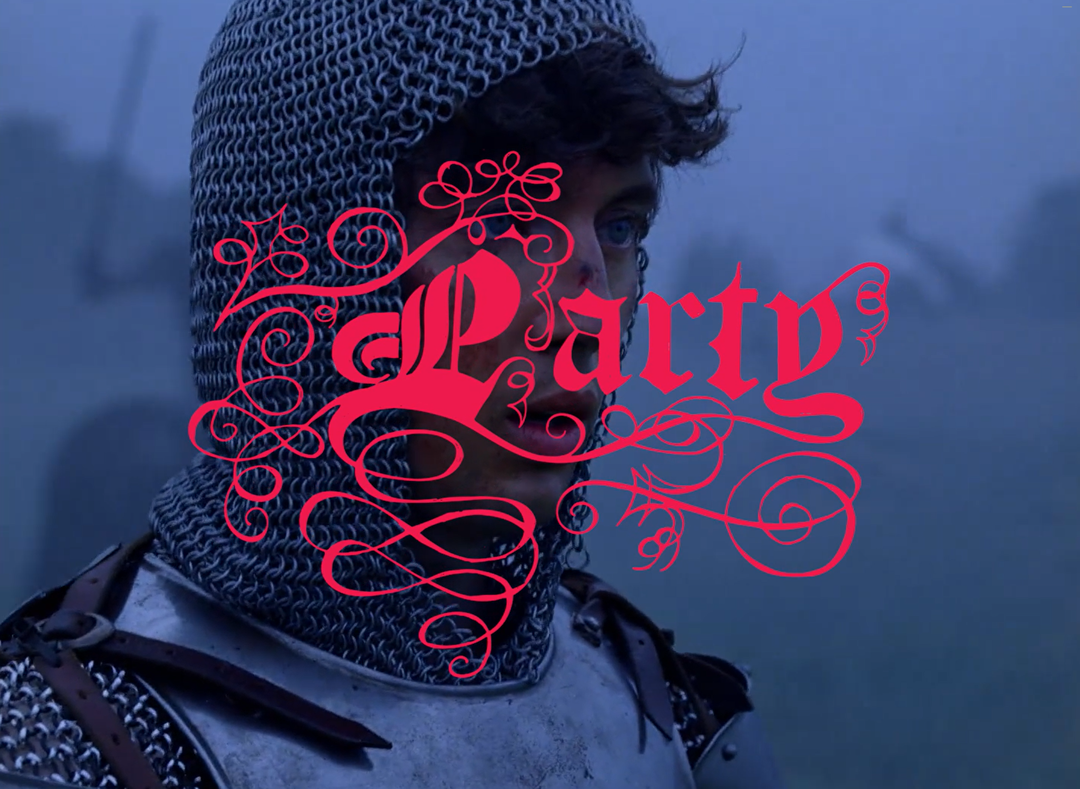
Still from Olivia Rodrigo: The Cure music video (Copyright © Geffen Records)
And he did. After earning a degree in graphic design in London and building props for theatre and event design, Liam turned to pop music, a conduit for all his curiosities. In the I Drink Wine music video, Adele is on a boat, drinking on a stylised river, surrounded by painterly, theatrical tableaux, all handcrafted. In Billie Eilish’s What Was I Made For?, tied to the Barbie soundtrack, the singer is in a domestic space carefully handling miniature doll clothes, before a storm disrupts everything.
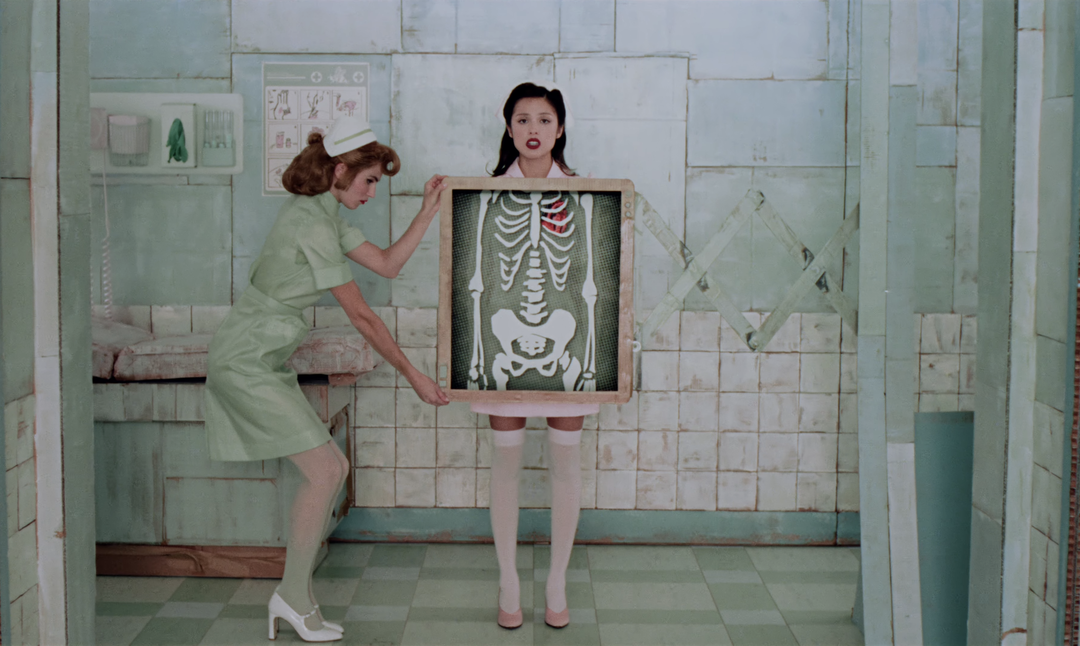
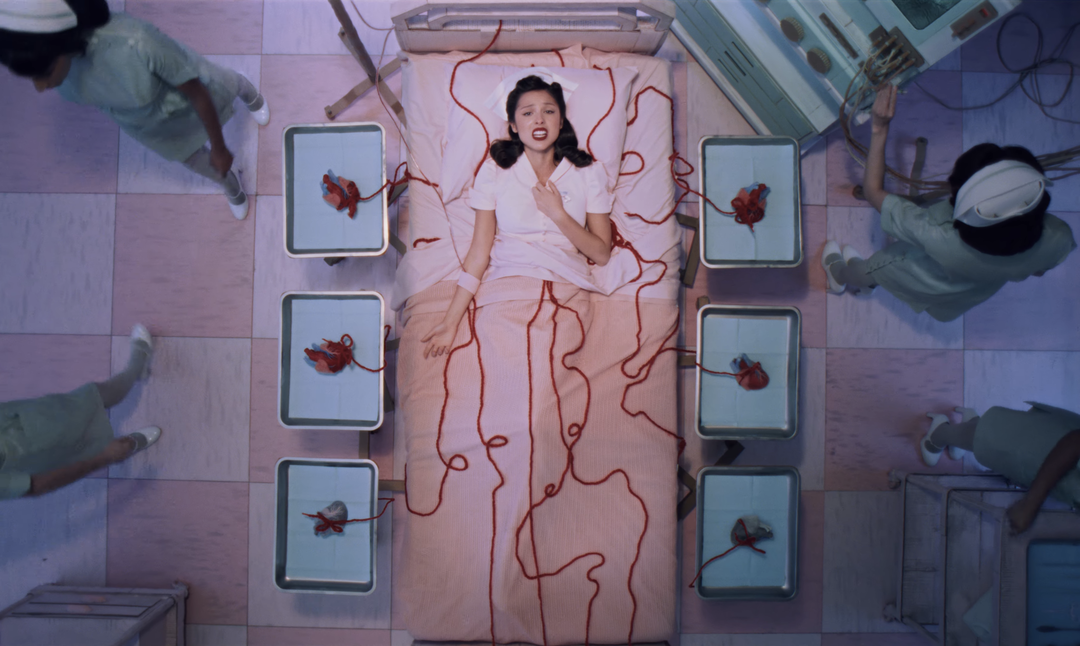
In Olivia Rodrigo’s music video for The Cure, the handcrafted tradition endures. “Art direction is SO back,” is one of the most-liked comments on the video’s YouTube. In interviews, Olivia has said that the song is the thesis statement for her new album, You seem pretty sad for a girl so in love, which came out 12 June. The thesis is clear in The Cure: the long journey to finding one’s voice. Olivia plays a nurse, attempting to revive a broken heart in vain. Eventually, she pricks herself with a needle and begins to unravel: she bleeds red yarn; multiple red threads jut out of her body as she winces in pain. Other nurses wheel her in the operating room, until, in a twist, the camera pulls back to reveal that the hospital is a cardboard diorama, which the ‘real’, life-sized Olivia picks up, crushes underfoot, and walks away from.
Sketch by Cat Solen (Copyright © Cat Solen)
“The moodboard drew from a deliberately mixed set of references: the otherworldly staging of Björk’s videos, Michel Gondry’s handmade visual trickery...”
Arman Khan
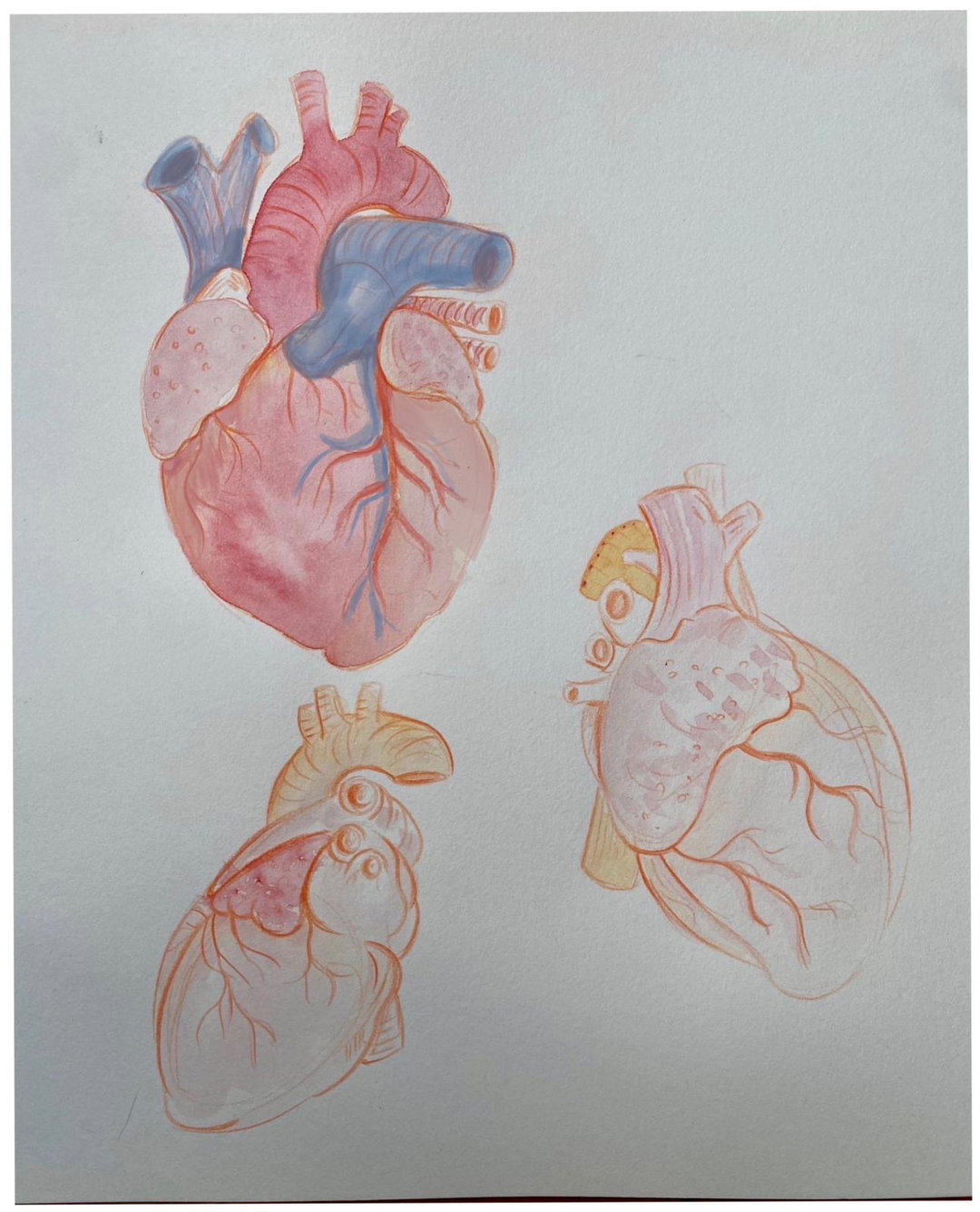
The idea, Liam explains, stemmed from the directors, Jaime Gerin and Cat Solen. “Jaime even drew out these little storyboards of Olivia going to the hospital with the nurses and the unravelling with the yarn,” he says. “Cat comes from a stop-motion background, and her show, The Shivering Truth, explores stop-motion and clinical spaces. So, it was basically: How do we create this world that feels handmade but still tells the story, has this colour palette, and is in the world we’re creating for the album?”
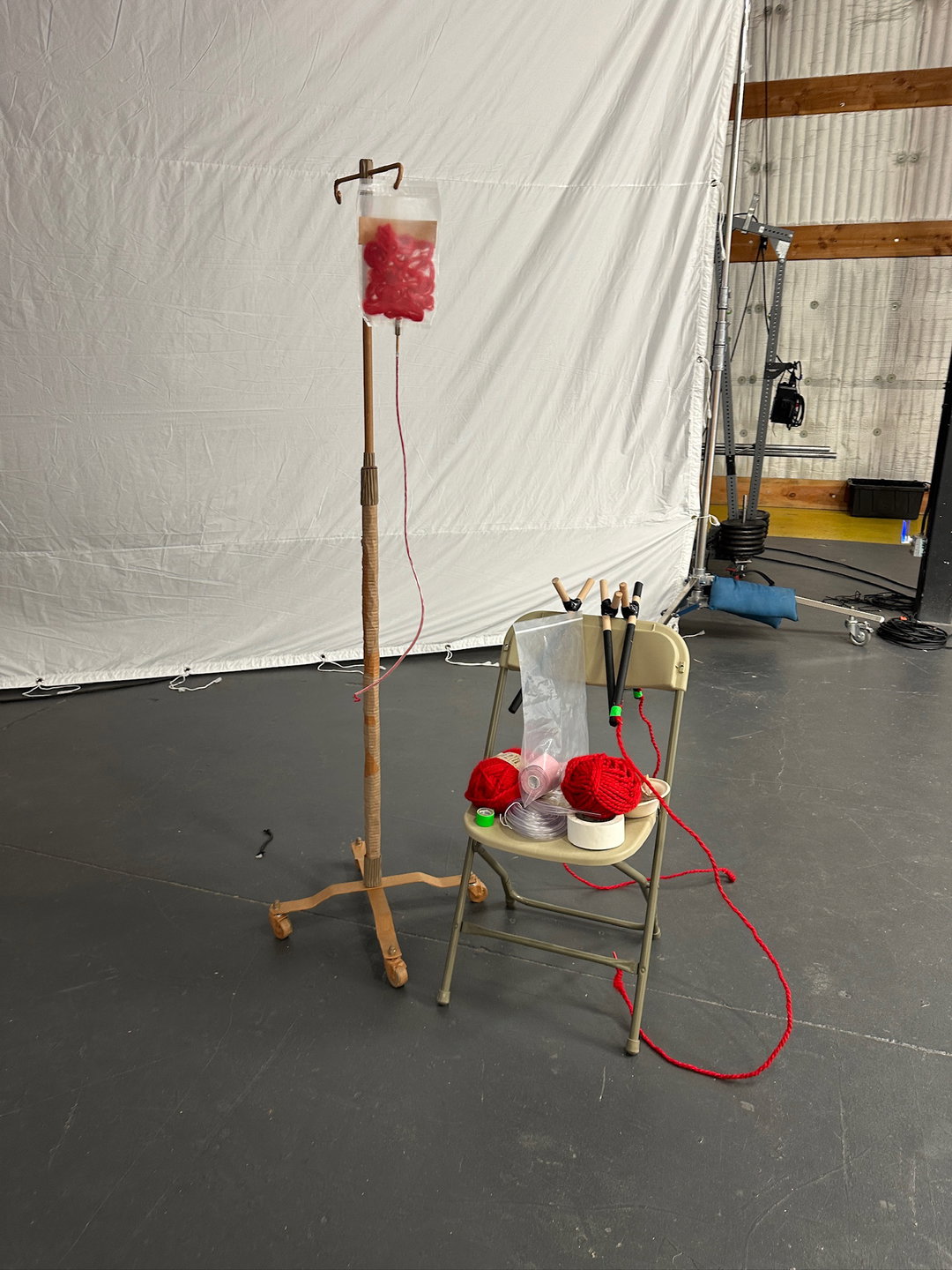
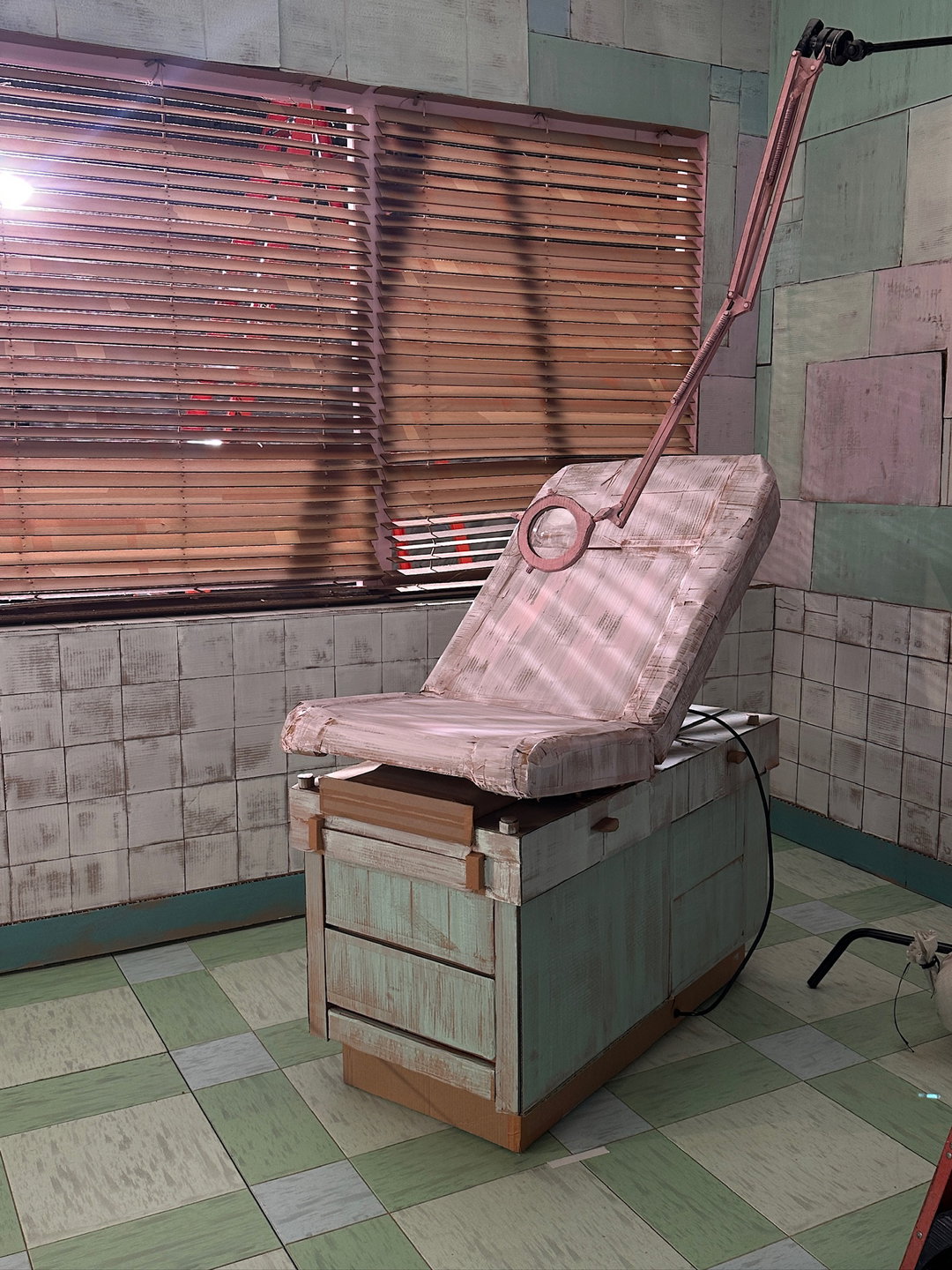
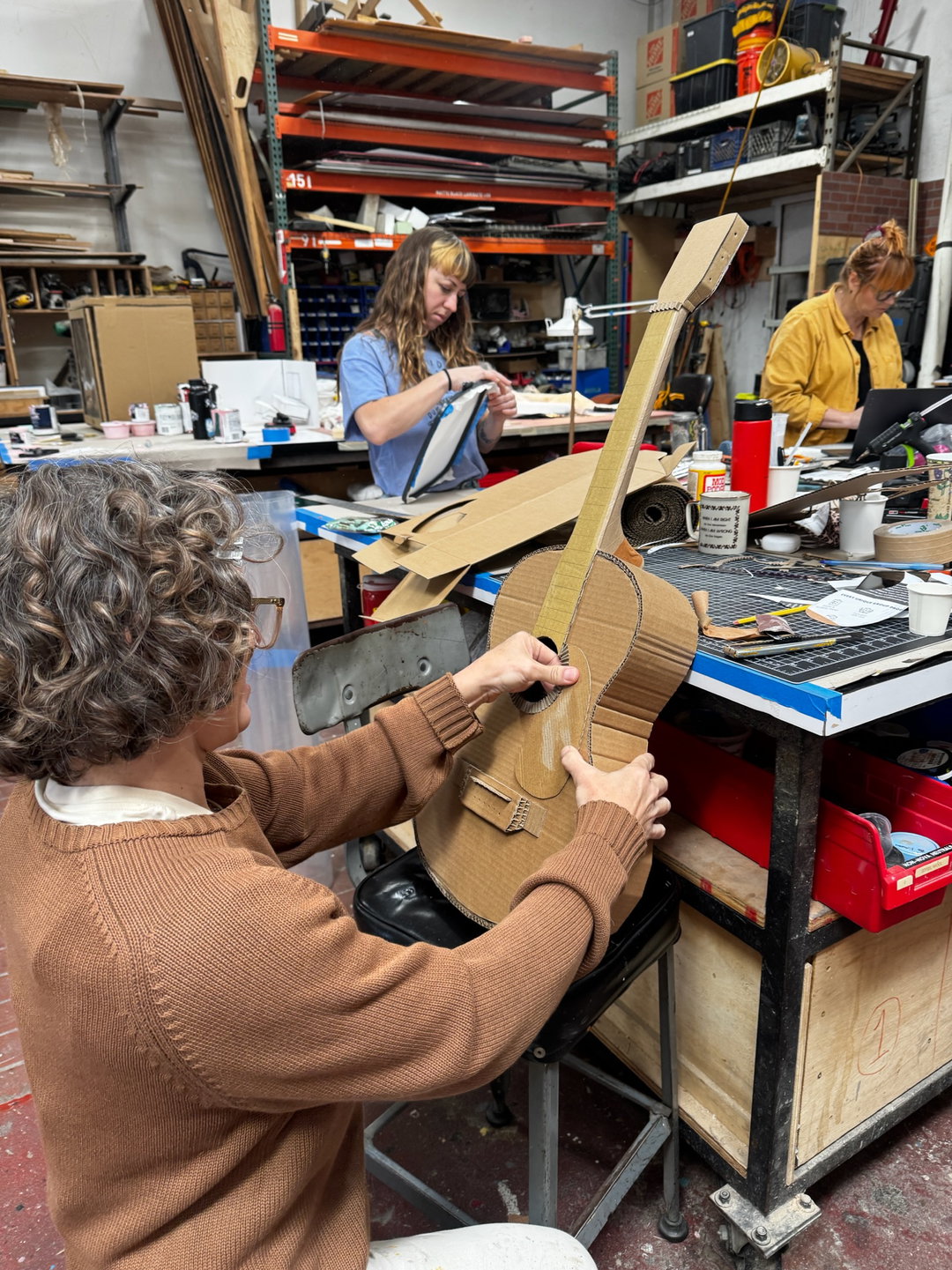
The moodboard drew from a deliberately mixed set of references: the otherworldly staging of Björk’s videos, Michel Gondry’s handmade visual trickery, the desaturated, deadpan universe of Roy Andersson’s films, the stop-motion whimsy of Regina Spektor’s video for Us, and the Méliès-inspired theatricality of the Smashing Pumpkins’ Tonight, Tonight. For The Cure, there was only one rule: Everything in the video should, almost across the board, have a handmade touch. The walls and electrical wires would be made of cardboard, wood, and yarn, controlled with stop-motion. For the yarn, Liam and the directors examined over a dozen samples to get the right red, the right thickness. Olivia, despite being swamped with recording and performances, was deeply involved in selecting every element on set, including colours and textures that resonated with her. “The lab equipment is rented because we wanted this tactile feeling of glass and metal,” he says. “Because the whole thing with Olivia, and the song, is this softness meeting something a bit more severe and hard.”
Copyright © Liam Moore
1 of 6
Copyright © Sara Paquette
1 of 6
Copyright © Sara Paquette
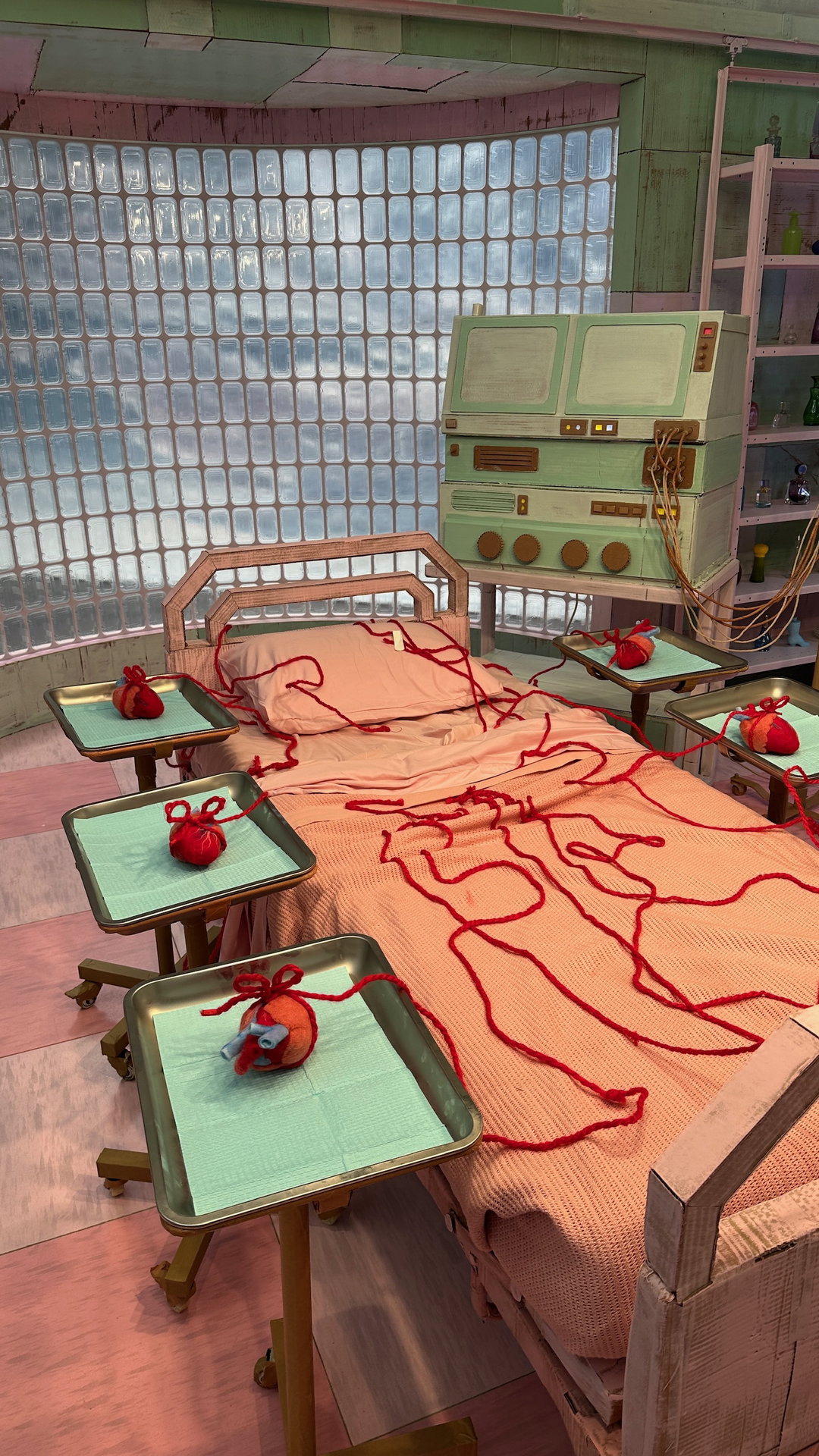
The balance speaks to the story. Encased in cute pink-and-blue palettes, the music video’s story is darker than it looks: beating hearts go grey under needles, the nurse herself is unable to cure herself and bleeds red yarns. On Reddit, there are detailed fan theories about the symbolism. A post on r/OliviaRodrigo argues, among other things, that towards the end, when Olivia becomes a patient and six hearts are hooked onto her, it signifies how “she needs external hearts (sources of love) again, since her own heart (self-love) is not working well”. On the number of hearts itself, one of the comments on the post claims that it “represents the six romantic relationships” Olivia is rumoured to have had.
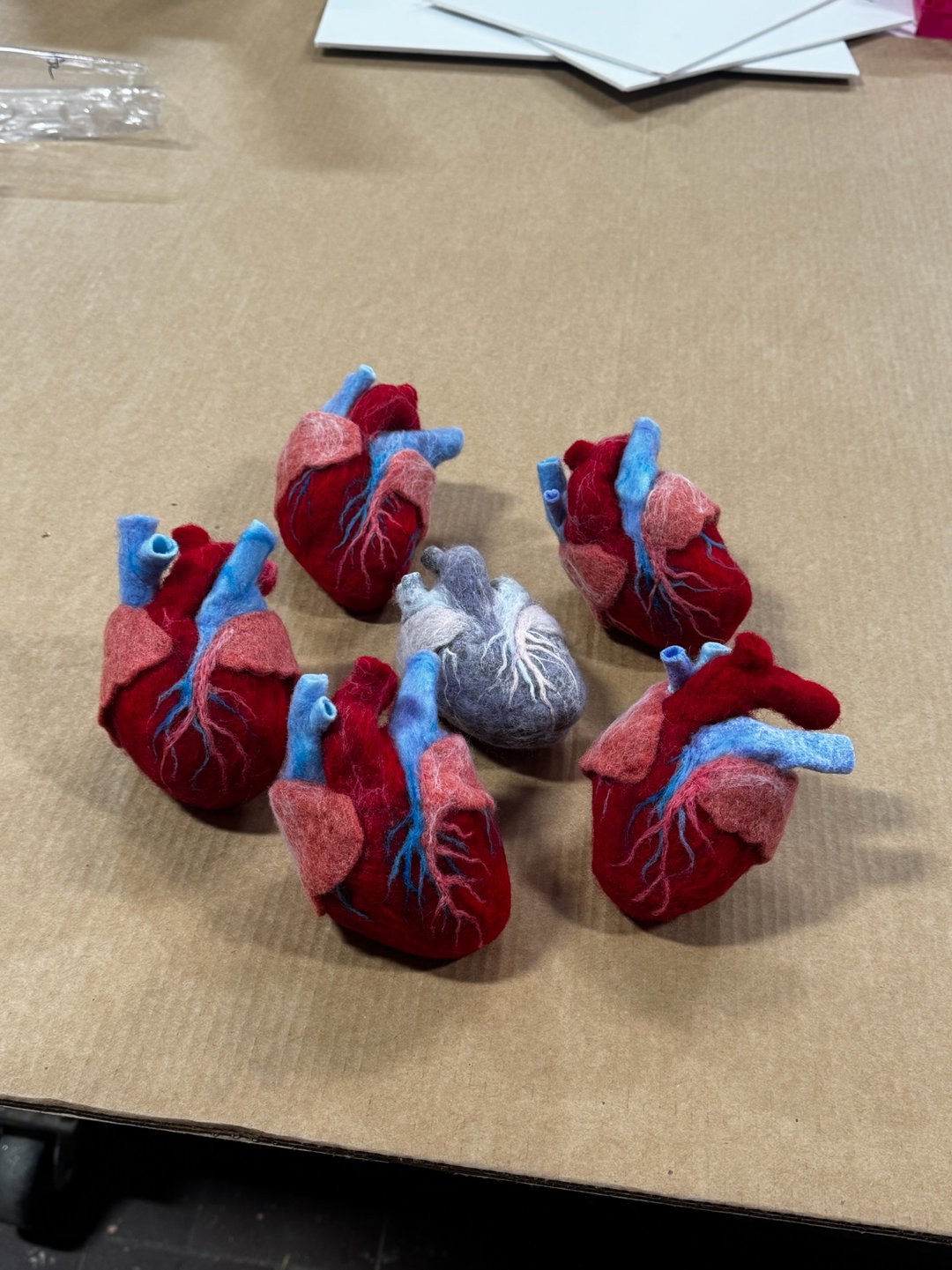
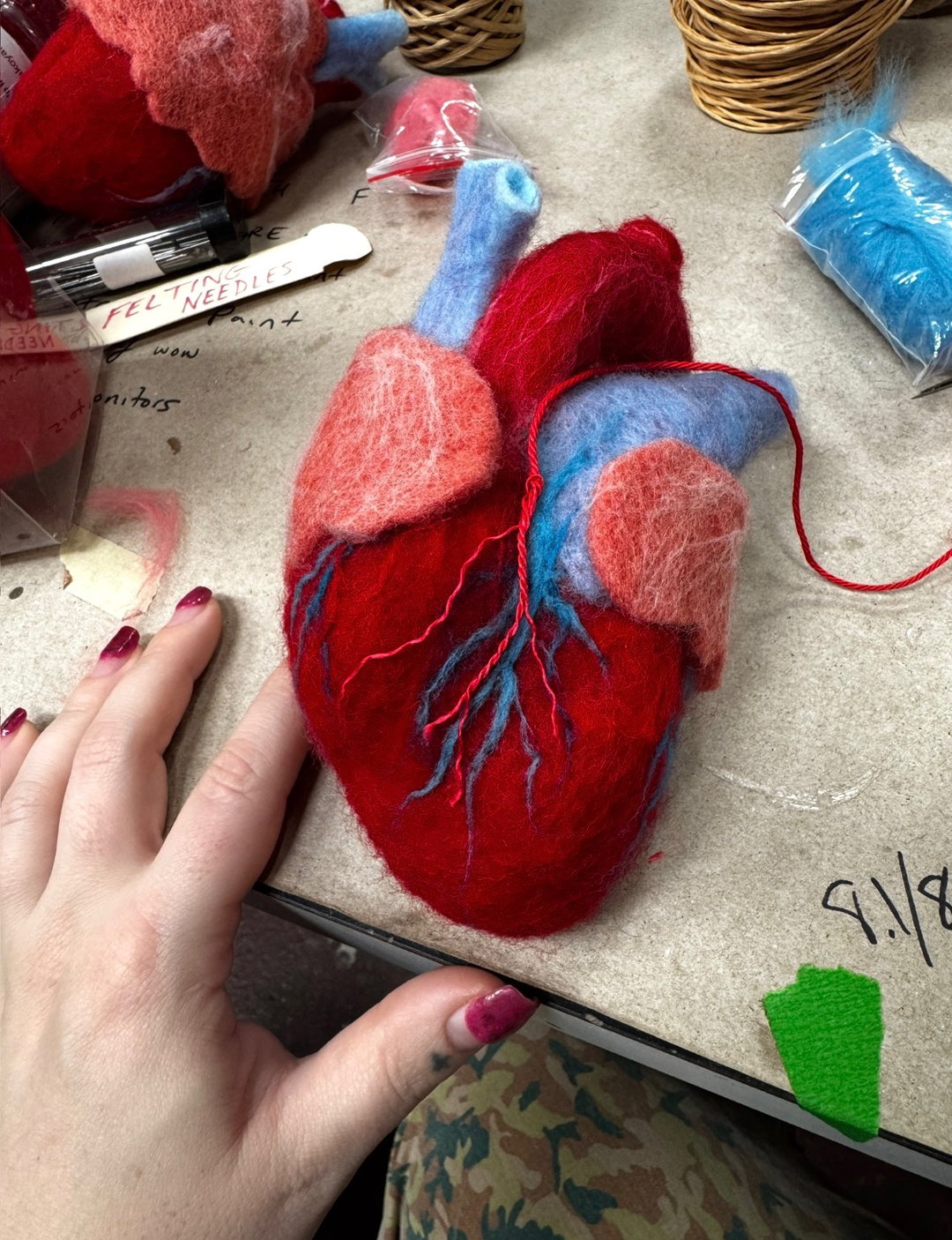
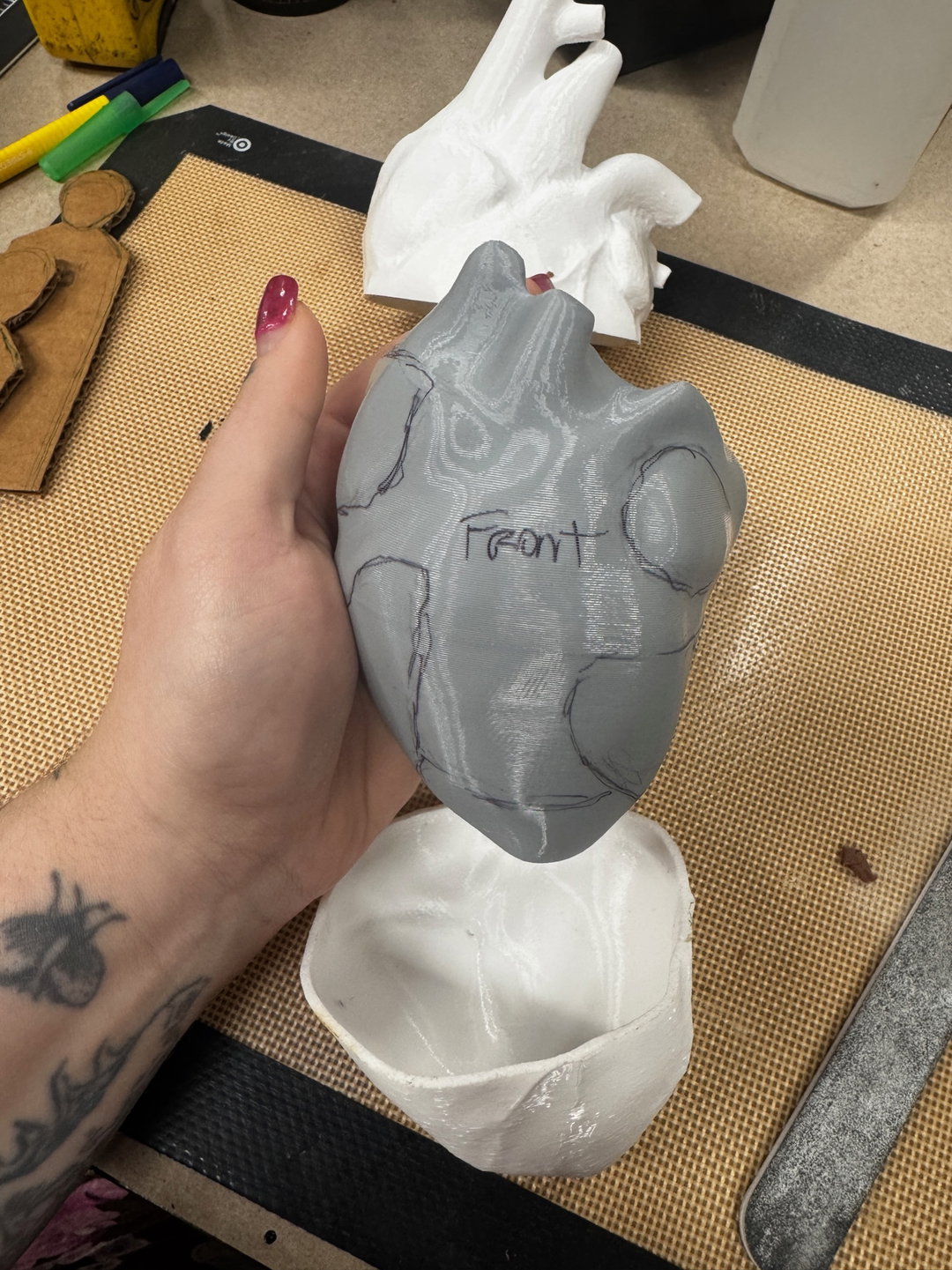
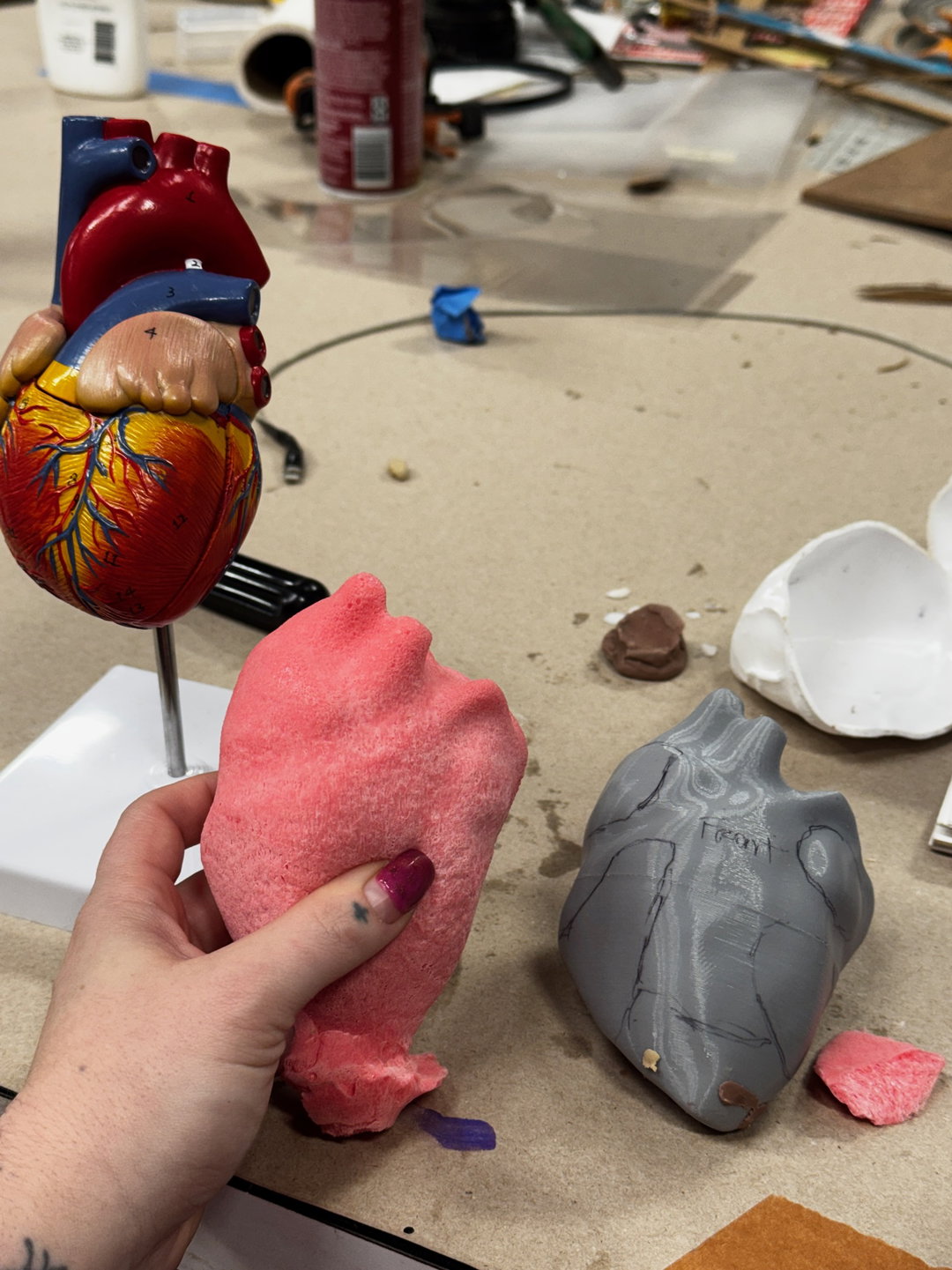
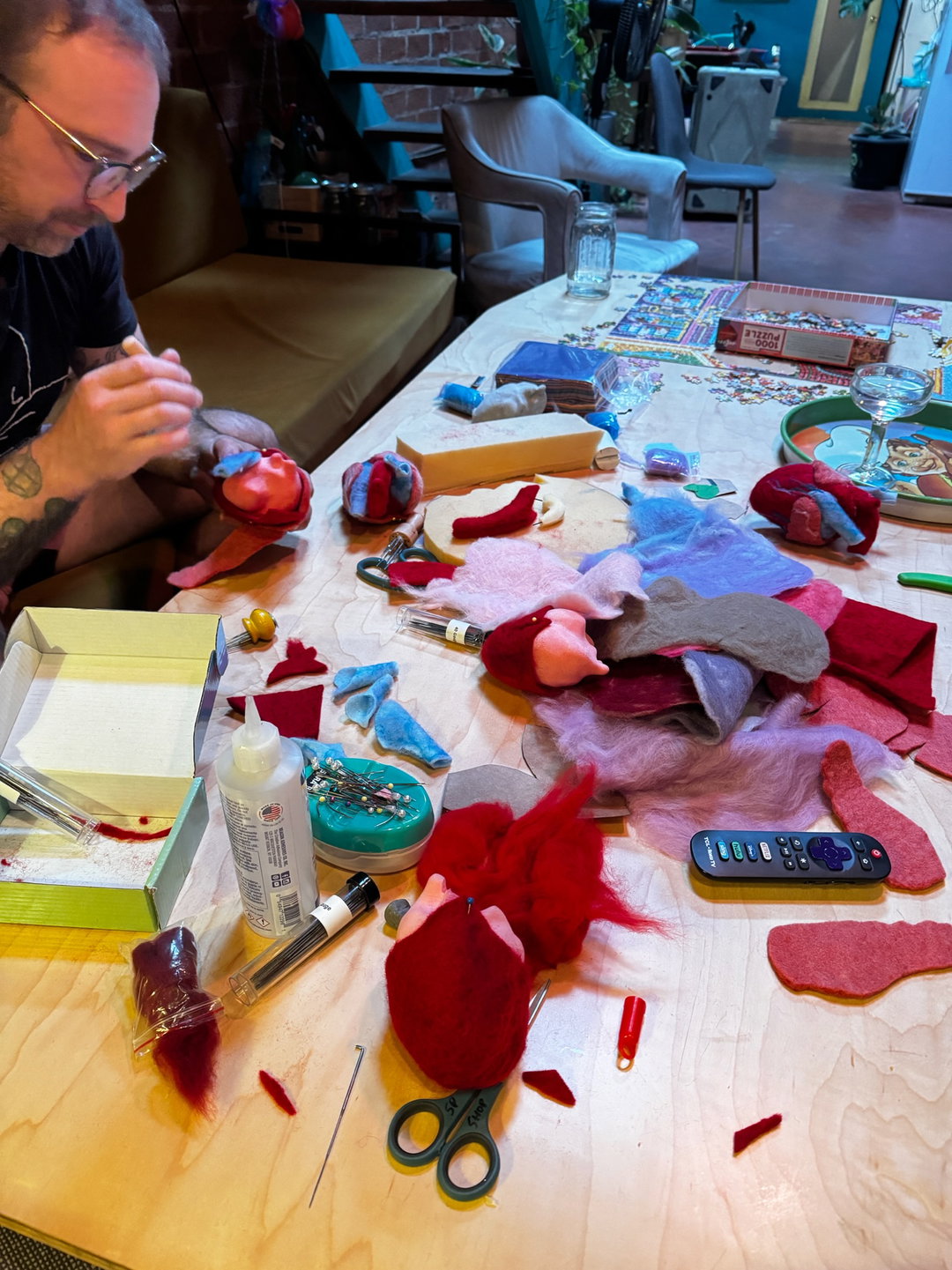
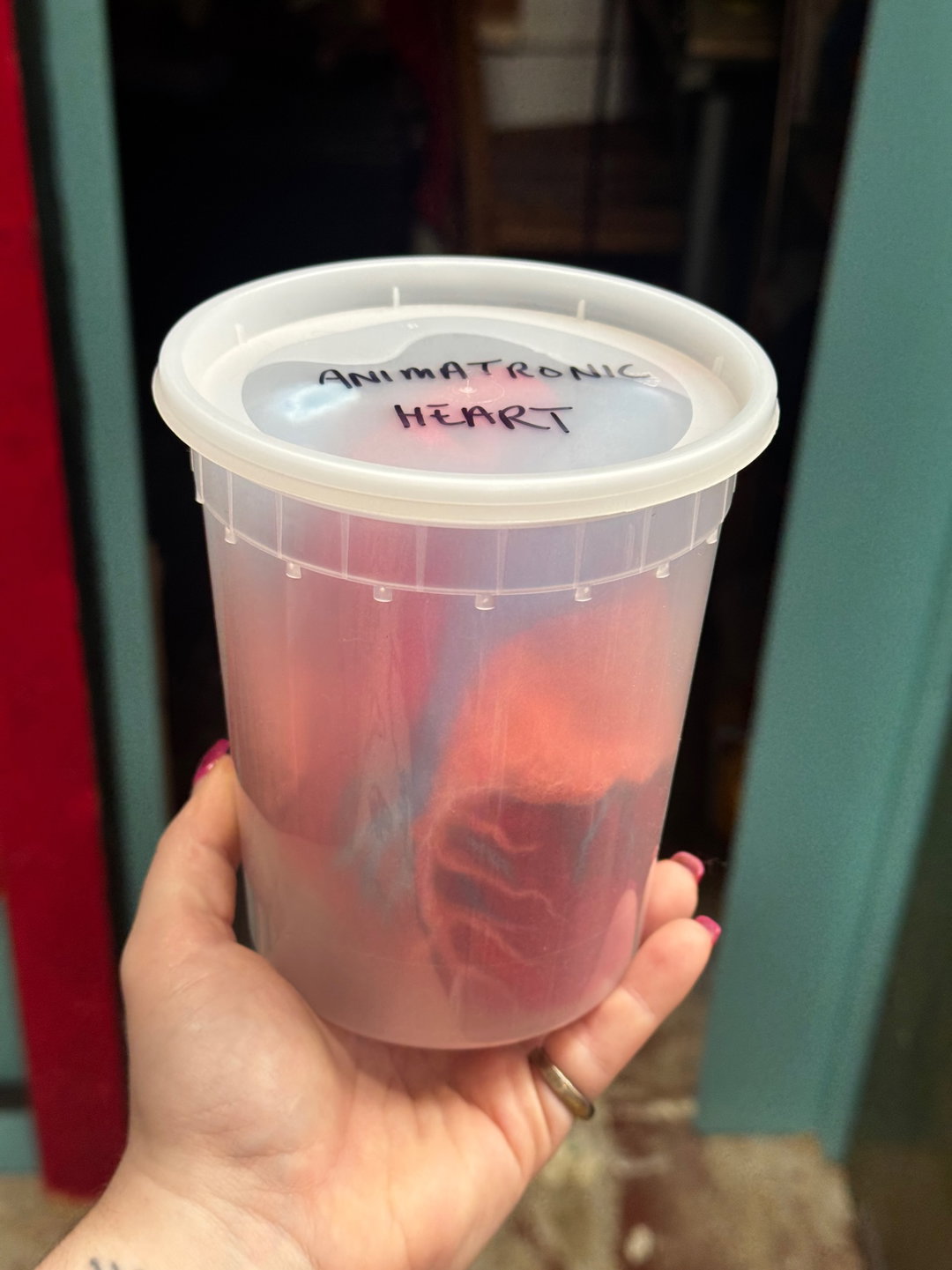
Liam, though, has focused on striking the balance between soft and severe in the set’s details, away from the labyrinthine corridors of fan theories. For the animatronic heart, a motorised, mechanical puppet that appears throughout the video, he found Erik Beck on Instagram, who was already building one. “We had this robotic shell and Sara Paquette, my lead fabricator, made the skin for it with felt so that it’d beat realistically.”
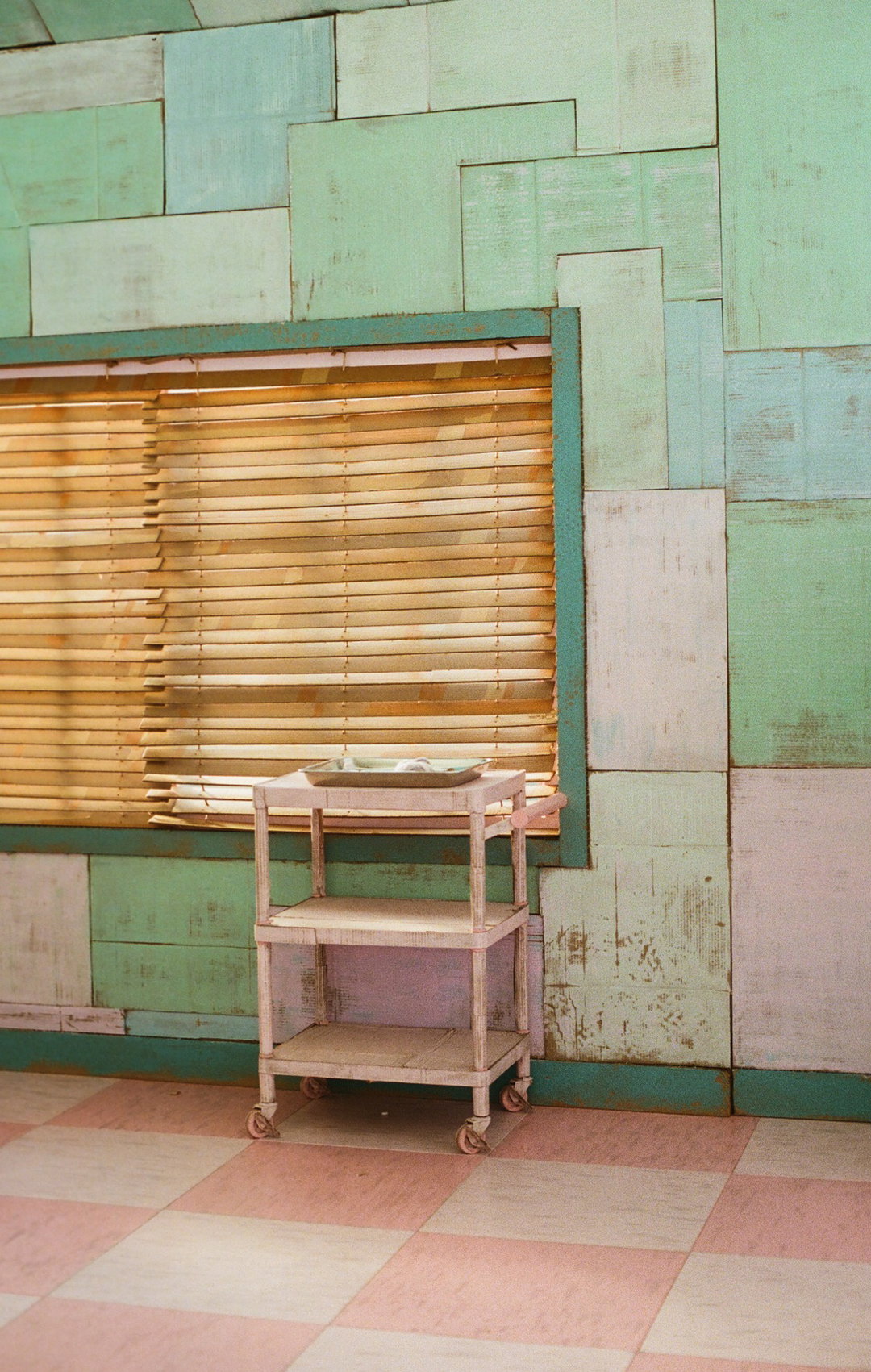
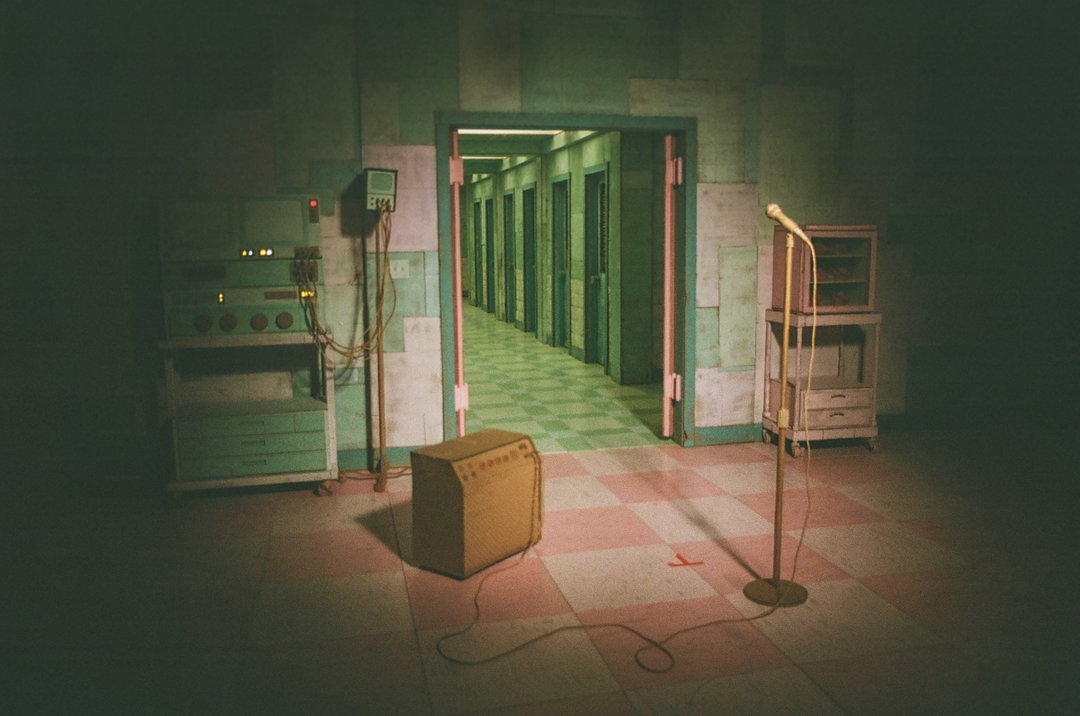
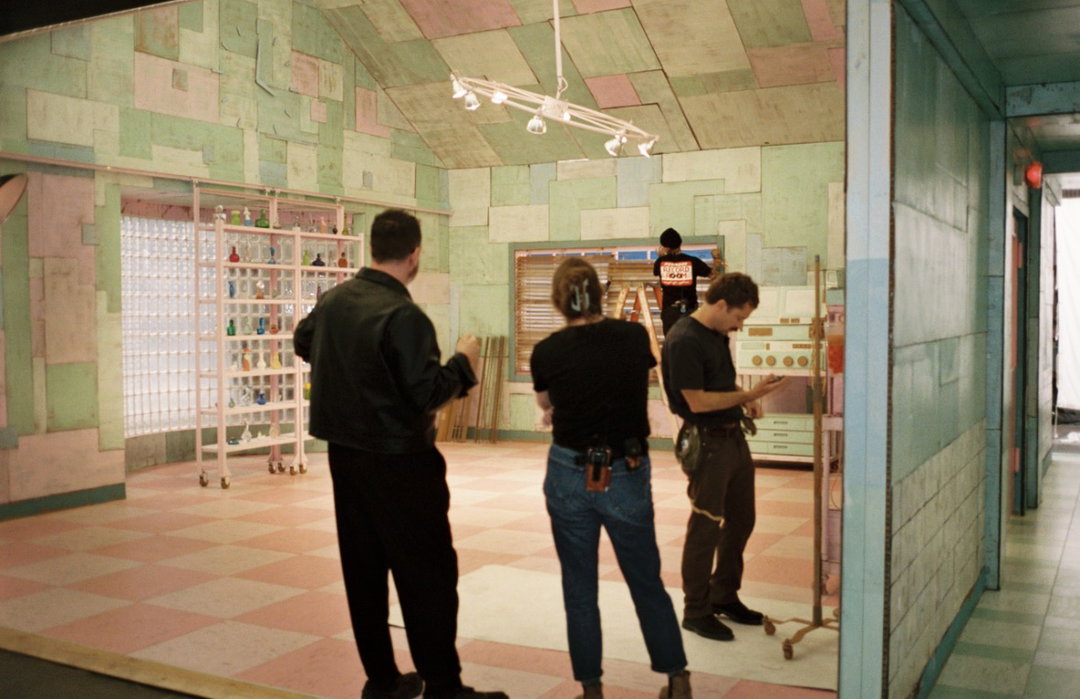
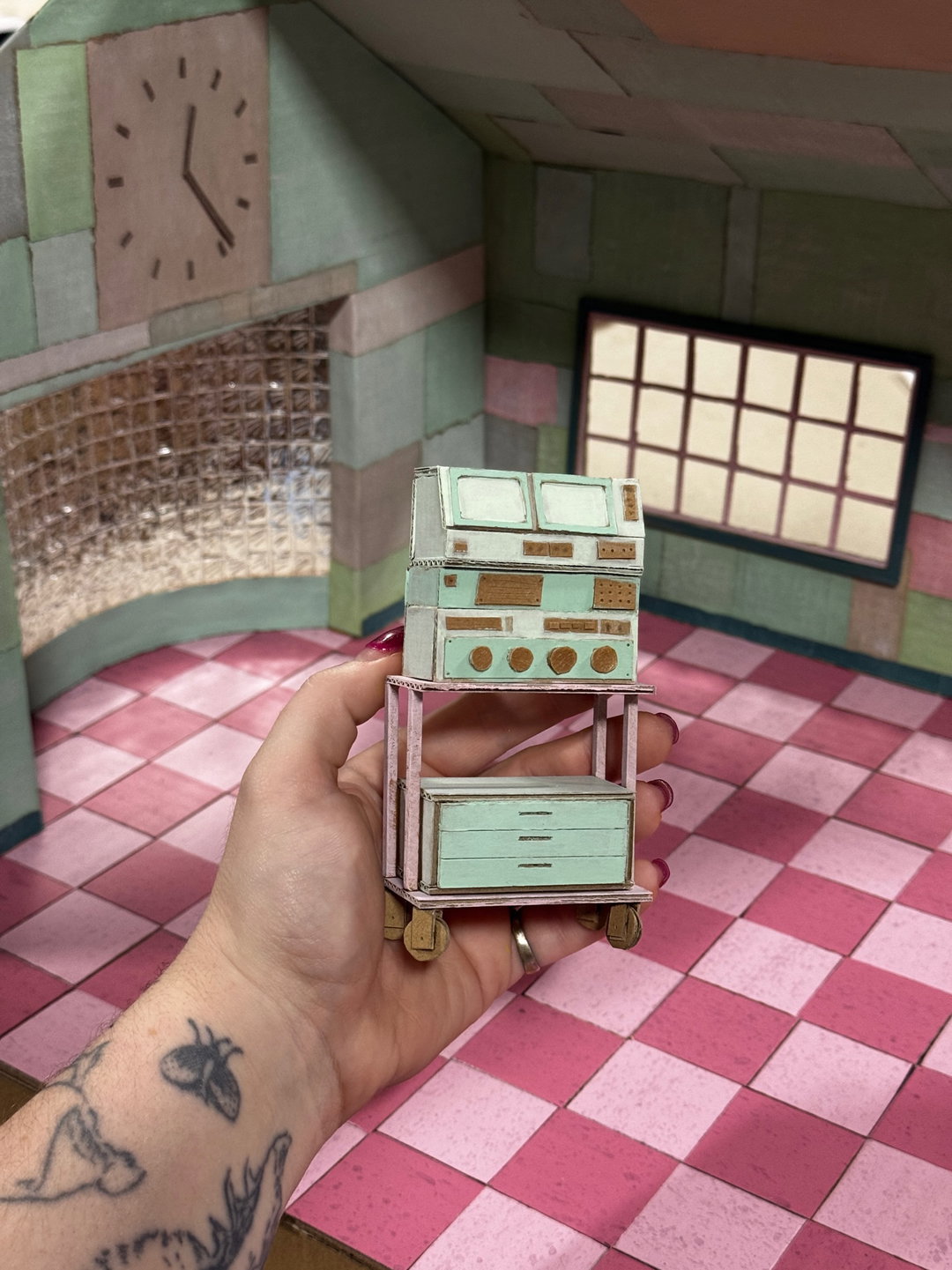
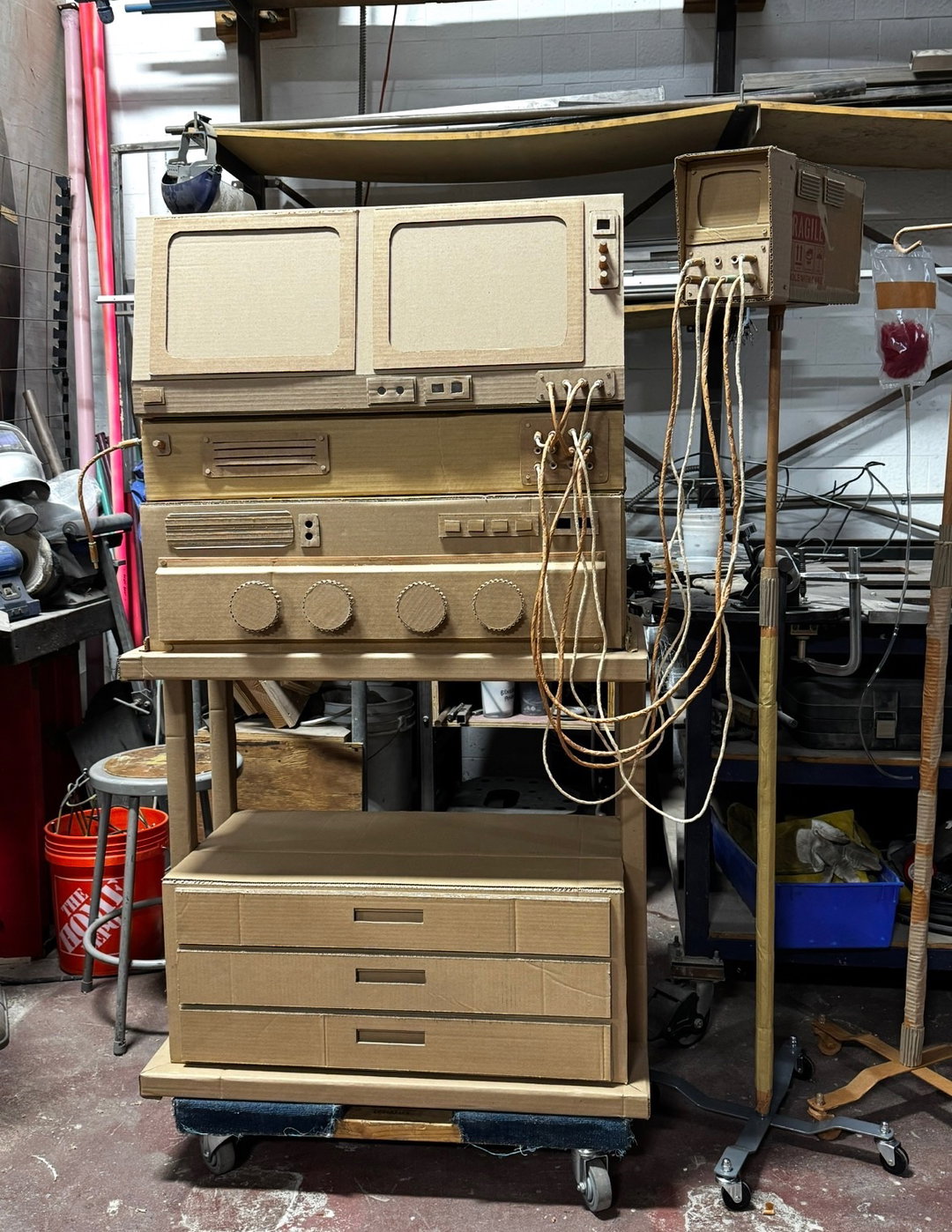
Cardboard was crucial. When Olivia finally crushes the diorama, it is revealed to have been made of it. When she is playing the guitar, it is a life-sized, intricately detailed cardboard guitar and not a basic prototype. The microphone she sings into is covered with a cardboard mesh. “Inherently, cardboard has this texture to it, and so, even when we were making the blinds in the hallway and the walls, we started coming up with a patchwork motif in pastel colours, a little rough around the edges,” Liam says. “It started feeling not too clinical and not too whimsical. It’s this mix in between, where you just feel the texture and this darker nature of the set. It was also exciting to use a pastel colour palette, which you’d think would be inherently happier, and contrast it with something a little sadder or darker, the brown of the cardboard.”
Copyright © Cloudyytots
Copyright © Cloudyytots
And the song helps – it is relatively long, manages to build upon a certain intensity, Olivia strums the guitar, crashes, bleeds. It all comes to a head towards the end when she starts ripping the set apart, pulling the cardboard off the walls. “Cardboard is brown, and everything else in the video is this pastel colour, so we used the brown of the cardboard almost like a neutral point in the video, and it’s revealed slowly throughout. So, these decisions help tone down the whimsy and make the set feel a bit more reflective of what the song is saying.”
“These decisions help tone down the whimsy and make the set feel a bit more reflective of what the song is saying.”
Liam Moore
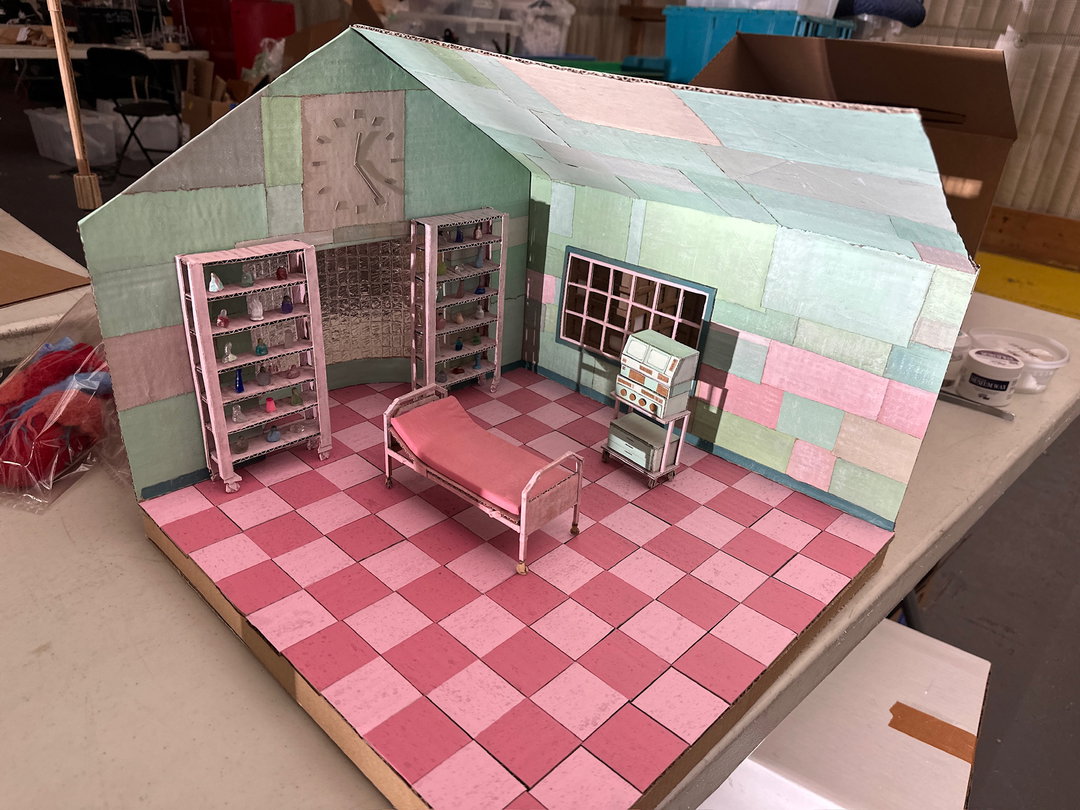
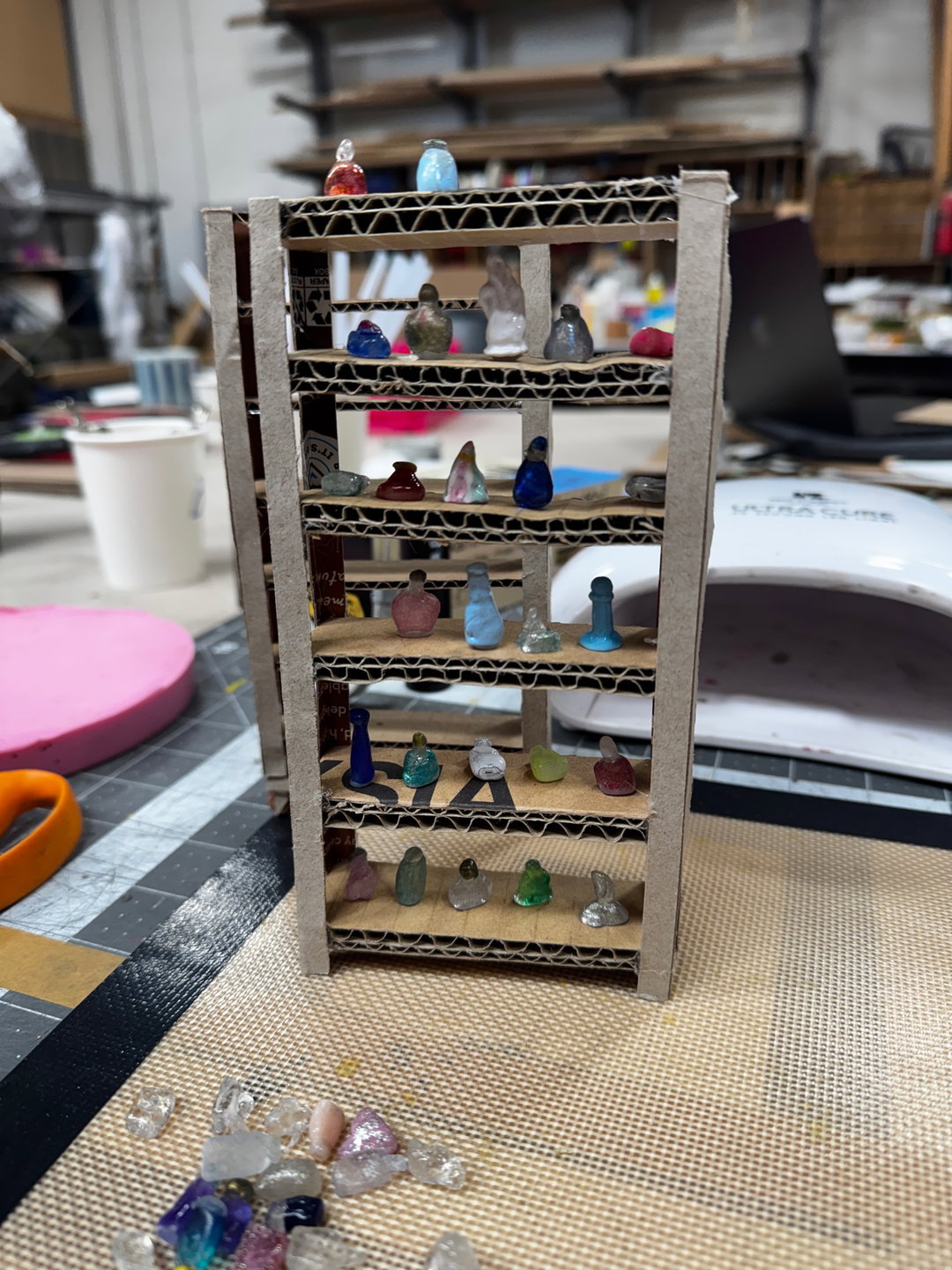
The stop-motion department’s touch in the video is subtle. It is on the screens of the cardboard-made heart machine; it is the liquid bubbles that float in the chemical beakers – puppet-controlled beads from the director Jaime’s personal bead collection. The centre of the light in the operating room, inspired by 40s-era lights, is actually a cookie tin. But in the end, all departments really had to come together. For Olivia to crush the diorama, the whole set had to be scaled down to a handcrafted miniature by Sara Paquette. There could only be one such miniature model, designed to the last detail – the glass bricks and bottles in it were made from nail polish gel, the way clear shellac nail polish, when put under UV light, hardens. Even the act of crushing, an inherently chaotic human action, had to be practised by Olivia on dummy models of the miniature. There was going to be only one take, and it had to work.
1 of 8
Copyright © Liam Moore
1 of 8
Copyright © Liam Moore
“There was going to be only one take, and it had to work.”
Arman Khan
“The ending of the video is a testament to our director of photography, Chris Ripley, because there is the full-size set, the miniature of the operating room, the lights – all of it had to be lined up carefully on camera down to the last millimetre, so that when we gave it to post, they could match those two things,” Liam says. “We had to ensure that when she picks the room up, it doesn’t distort the image, doesn’t shake too much, so that we can keep those two things aligned, and it’s a seamless transition from one to the other.”
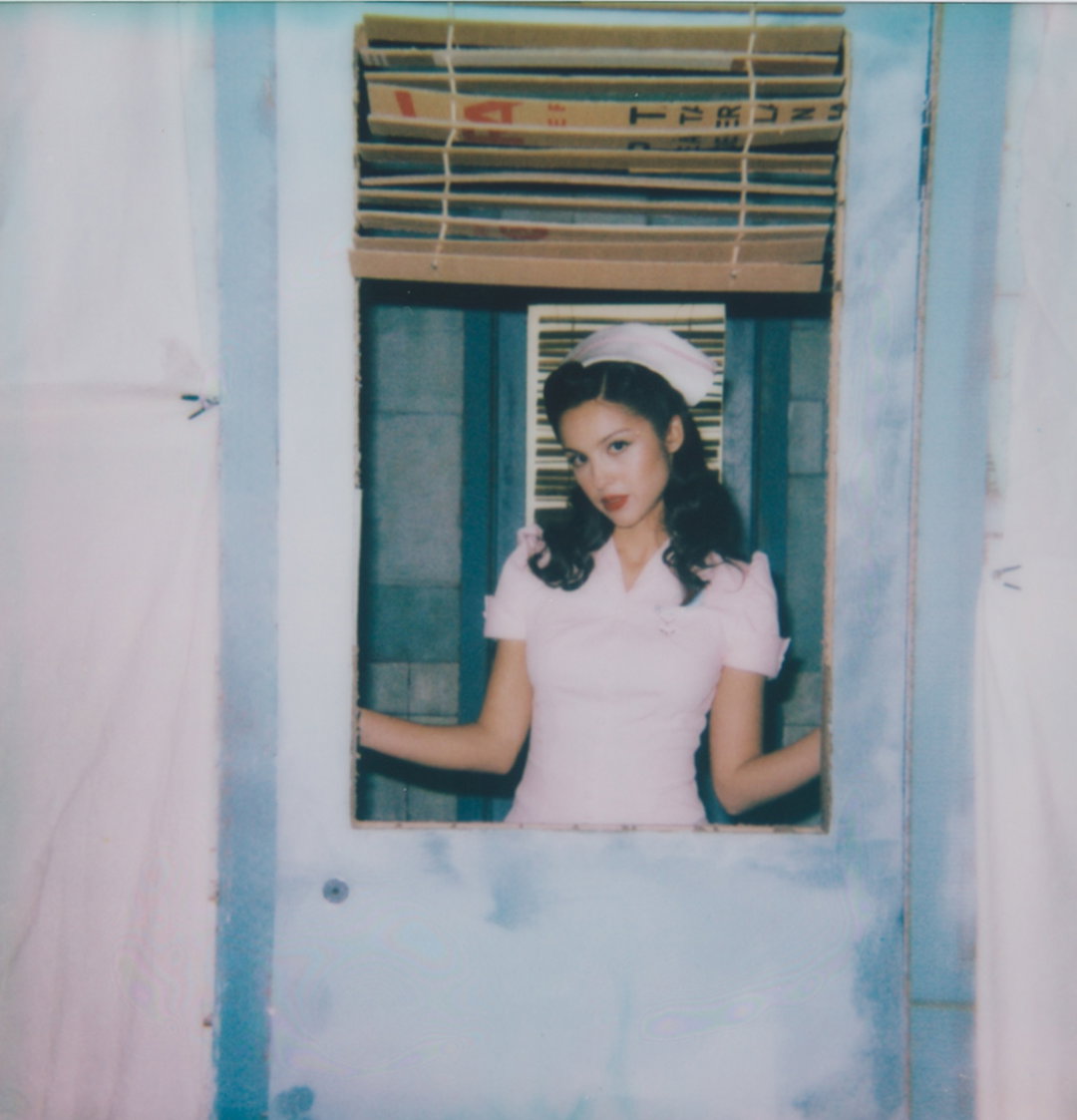
Regardless of the mind-numbing march of AI, Liam’s sets have always been handcrafted, from Adele drifting down a river to Billie Eilish among the dolls to Caroline Polachek pouring wine in a sun-warmed world of grapes and goblets. It’s all about the wonder that can only emerge from the human touch; it’s what he certainly felt on those Pirates of the Caribbean rides and watching, mouth agape, all the things Kate Bush did in her music videos – twirling in chiffon through fog, switching costumes mid-song, building rain machines in a field. “I hope people just get lost in The Cure,” he says. “My favourite stuff has always been the kind that lets me escape for a little bit; hopefully it will help others escape too.”
Copyright © Cloudyytots
Hero Header
Still from Olivia Rodrigo: The Cure music video (Copyright © Geffen Records)
Share Article
Further Info
www.instagram.com/liam.mooore
www.liammooredesign.com/musicvideos
Credits:
Directors: Cat Solen and Jaime Gerin; DOP: Chris Ripley
Production designer: Liam Moore
Art director: Charles Varga
Set build: LA Fast Sets; Art dept coordinator: Adi Mizrahi; Set decorator: Piper Riley
Prop master: Marcy Silver; Prop assist: Kevin Beebe
Prop fabricators: Sara Paquette, Miles Robinson, Jesse Harron, Amber Padgett, Nancy Parczyk, Dilean Jimenez, Elleven Vargas.
Embroidery: Remac; Animatronic heart: Erik Beck.
Stop motion: Linguine Studio
Production Company: Ways & Means
Produced by: Lana Kim, Jett Steiger, Brandon Robinson
Further credits here.
About the Author
—
Arman Khan is a writer, editor and educator. Formerly, he was the executive editor at Vogue India. He writes at the intersection of culture and fashion with a sociological lens.