James Aspey's grid inspired typeface New Europa features a user-generated specimen
“I see myself as a designer who likes to explore unusual, speculative letter and number forms, as well as ones which can be seen and used in a commercial sense,” explains graphic design student James Aspey. Having previously been a student under Patrick Thomas (Klasse Thomas) at the Stuttgart State Academy of Art and Design, James is currently in his third year at Winchester School of Art.
James’ work spans a range of processes and outcomes, from typography and editorial design to code-based projects and visual identities. “I had my first insight in graphic design whilst studying at college back in my hometown, Portsmouth,” he says, recalling of the first time he was introduced to the works of Wolfgang Weingart and Armin Hofman. “Their ability to apply type and image together to create striking visual communication utterly blew me away… I remember thinking to myself, this is what I want to pursue a career in,” James tells It’s Nice That.
With a largely typographically based practice, James is always on the lookout for things which can inspire or ignite unusual letter forms. “I’m always capturing things with my iPhone, I completely forget about these captures until I rediscover them and turn them into typographic sketches,” he explains. Favouring this more traditional means of conceptualising type, James produces endless sketches when first starting a project. “I find something particularly interesting about sketching typography by hand instead of just rushing to use something like Glyphs or FontLab.”
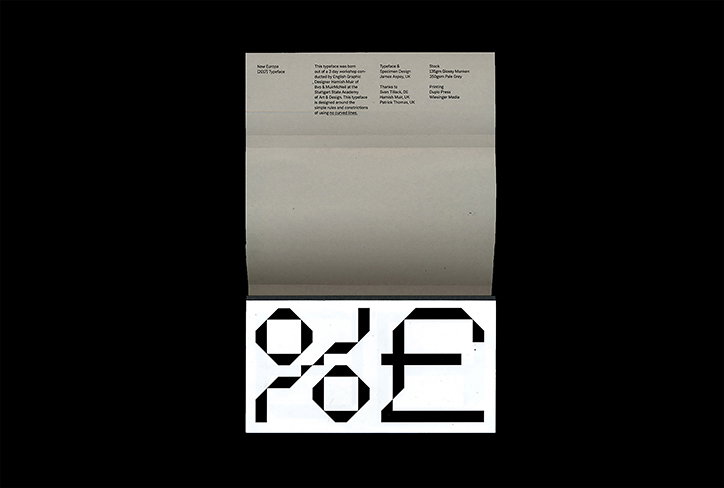
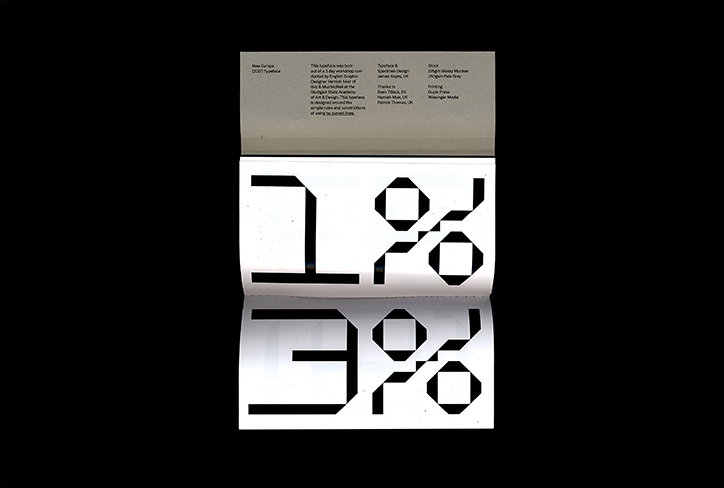
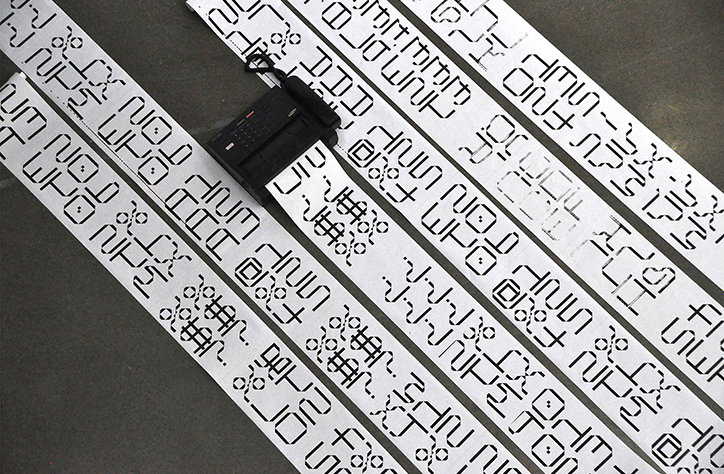
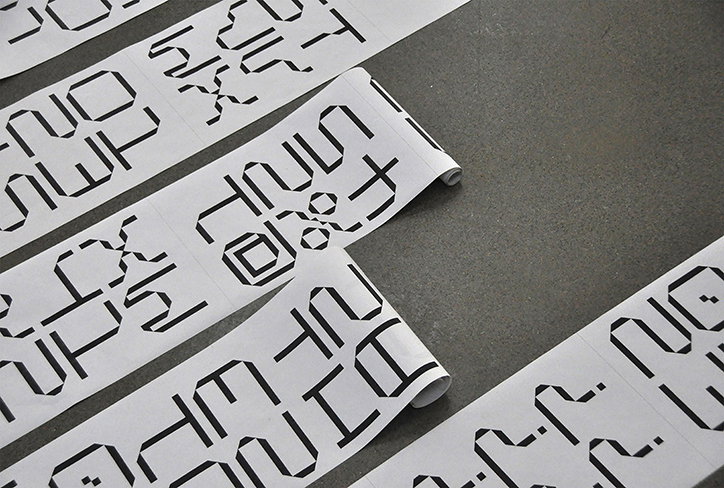
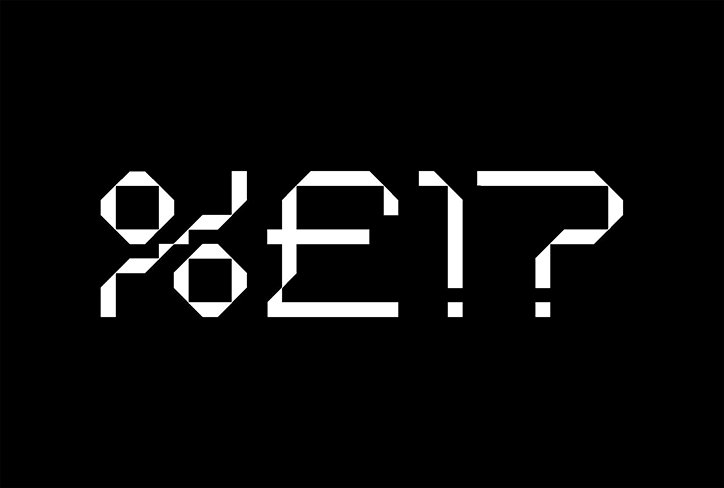
While still studying in Stuttgart, James employed this approach during a three-day workshop held by Hamish Muir of 8vo and MuirMcNeil. The designer started by creating a series of sketches on gridded paper in an attempt to create a typeface that presents the constraints of working with both a grid and a simple set of rules. The outcome, titled New Europa, embodies sharp angles which create a balance between white and black space with a rejection of curved lines. With its graphically satisfying and strong aesthetic, New Europa is a typeface intended to be used as a “supersize tool for visual communication.”
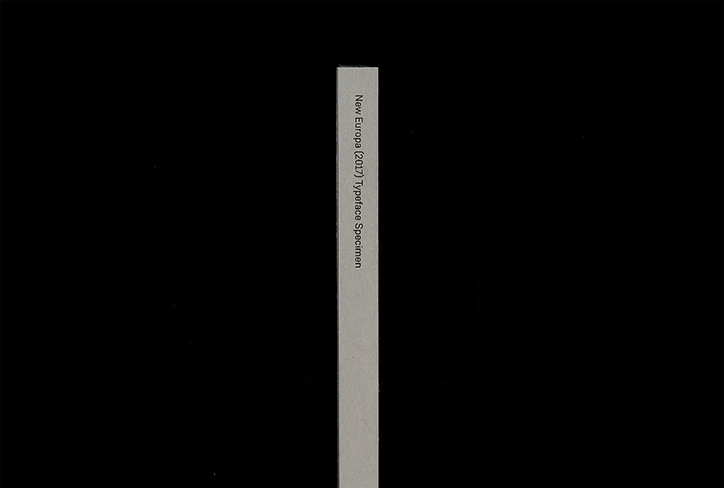
To accompany the project and present the typeface as a “beautiful, tactile object” James created a specimen. However, instead of designing and printing the booklet in a straightforward manner, he searched for a simple solution that could offer an alternative method of production. James found the solution while taking part in an event in Heidelberg, Germany which he (and the rest of Klasse Thomas) took part in to celebrate the 20th anniversary of Erasmus. “I used the fax machines which we used for this event to print out parts of the type specimen. Endless sheets of fax machine paper were soon hung from the floors of our visual communication building at the Stuttgart State Academy of Art and Design campus,” he describes. Instead of taking control of the fax machines himself, James left them open for anyone to use, creating a user-generated type specimen which displays New Europa how it actually functions in the real world.
James Aspey: New Europa
James Aspey: New Europa
James Aspey: New Europa
James Aspey: New Europa
James Aspey: New Europa
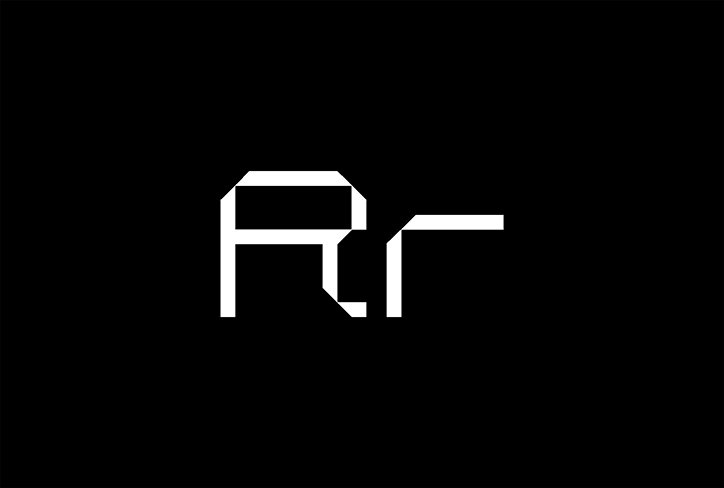
James Aspey: New Europa
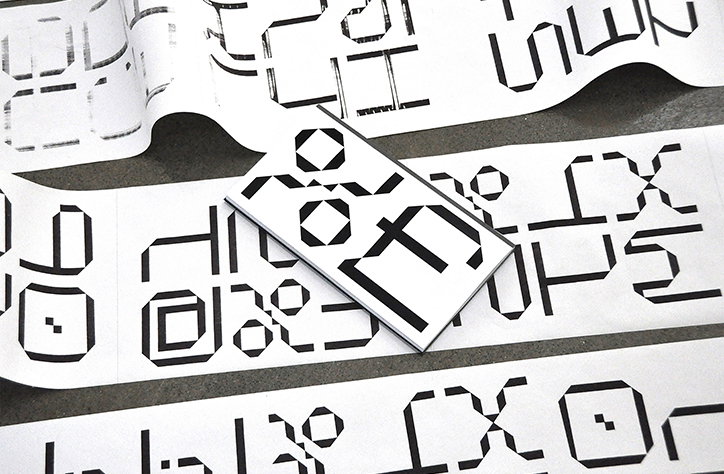
James Aspey: New Europa
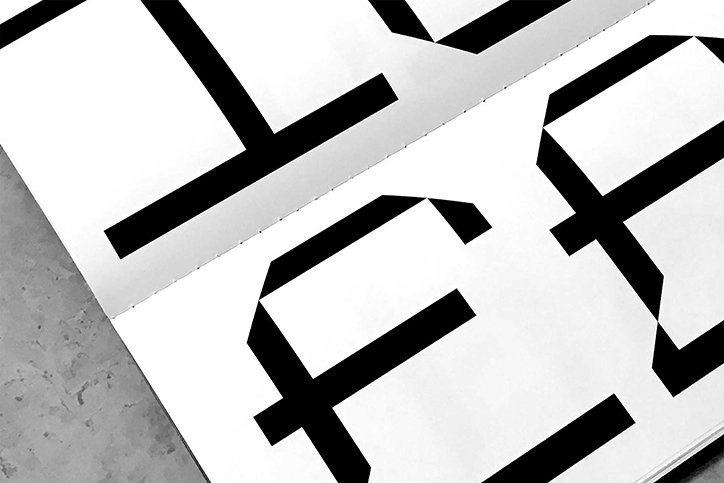
James Aspey: New Europa
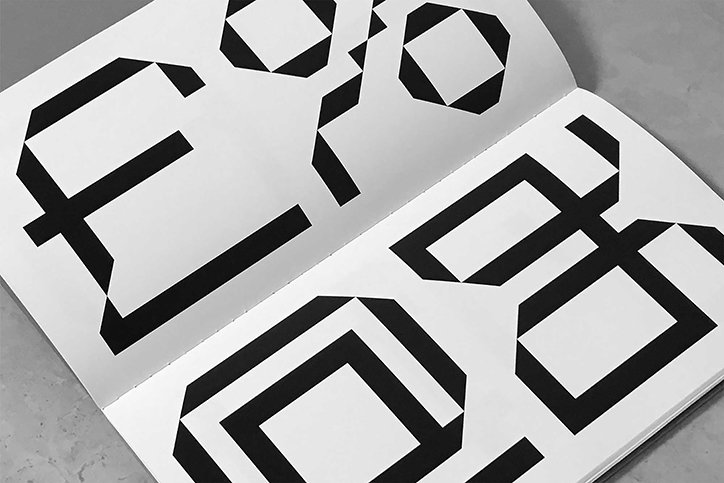
James Aspey: New Europa
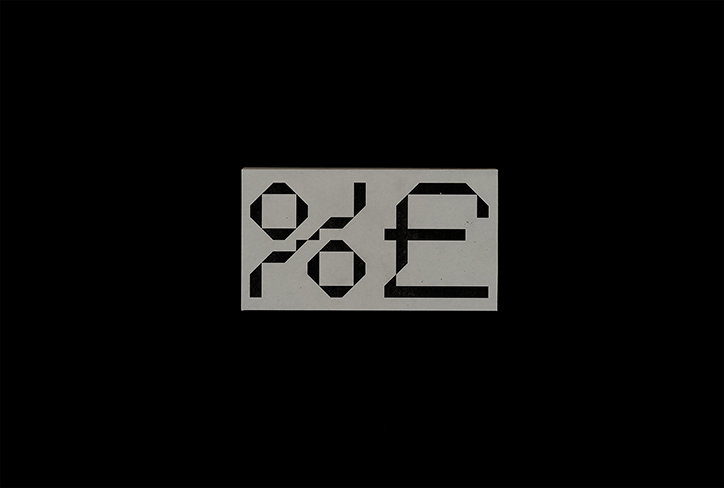
James Aspey: New Europa
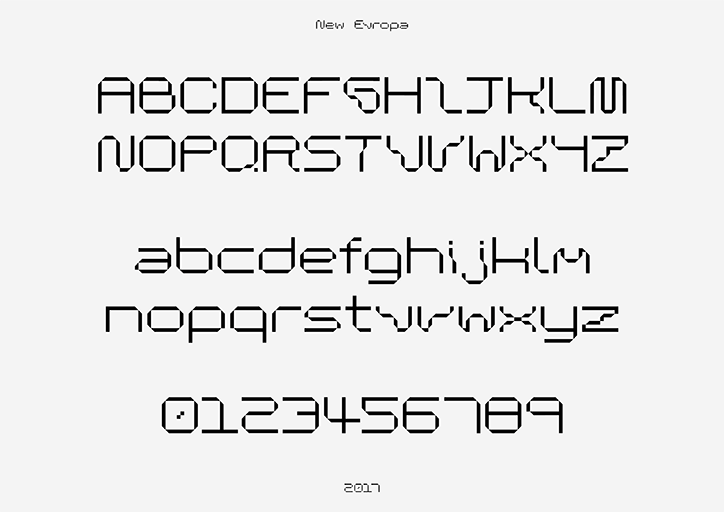
James Aspey: New Europa
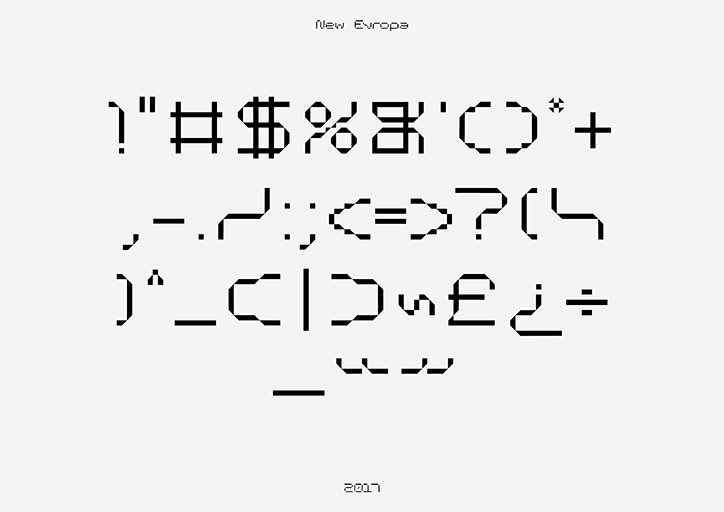
James Aspey: New Europa
Share Article
Further Info
About the Author
—
Ruby is Senior Creative at It's Nice That, overseeing our visual output across platforms and projects. Before that, she was associate editor on the editorial team, after joining in September 2017 following graduation from Central Saint Martins.