Inside Casa do Povo: a rare (and brave) public forum for creativity
Home to 20 collectives, the space is a breeding ground for fresh perspectives. Our São Paulo correspondent meets some of its community.
Bom Retiro is a central neighbourhood in São Paulo, located near the city’s main train station, a historical destination for successive waves of immigrants who have put down roots there. In the late 19th century, it became home to Italians coming to work in the emerging factories in the nearby neighbourhoods, and, starting in the 1920s, an influx of Jewish immigrants from Eastern Europe gave the neighbourhood a new identity, transforming it into a major garment manufacturing hub. This was followed by the massive migration from Brazil’s Northeast, who played a fundamental role in shaping São Paulo throughout the second half of the 20th century. In the 1960s, a strong South Korean community took shape in the area, and later, in the 1980s, a new wave of Bolivian families arrived. This layering of cultures has made Bom Retiro what I consider to be the most fascinating neighbourhood in the city – where multiple languages are still spoken today, and where a vibrant mix of shops, restaurants, and cultural activities thrives.
One of the most traditional institutions in the neighbourhood is Casa do Povo (People’s House), a modernist building inaugurated in 1953 by the progressive and politically engaged Jewish community that lived in the area. Built as a tribute to the Jews who perished in the Second World War, Casa do Povo was conceived as a place of remembrance – but as an anti-monument: an empty space meant to be filled with community actions. The building, which houses a theatre in its basement, became home to a series of avant-garde initiatives and endured two decades of repression under Brazil’s military dictatorship, until the 1980s, when an institutional crisis prompted its slow abandonment. In the 2000s, its activities were revived by a new administration that restored the space, bringing back its original mission – a place where “memory is constantly activated through practices”, with the goal of “making the past present and fueling the imagination of the future.”
Casa do Povo is, therefore, a “void space” with open doors – and this is precisely what makes it a radically unique and innovative place within São Paulo’s cultural scene. Readers unfamiliar with São Paulo may not fully grasp the courage and generosity it takes to keep its doors open, with no restrictions, in the heart of a city defined by deep social inequality – where everything is fenced off (even public squares), segmented by security checkpoints, guards, and restricted access. Public spaces are scarce and often marked by tension. In the city centre, this reality is even more stark, with a large homeless population completely neglected by public authorities and the growing challenges posed by the crack epidemic.
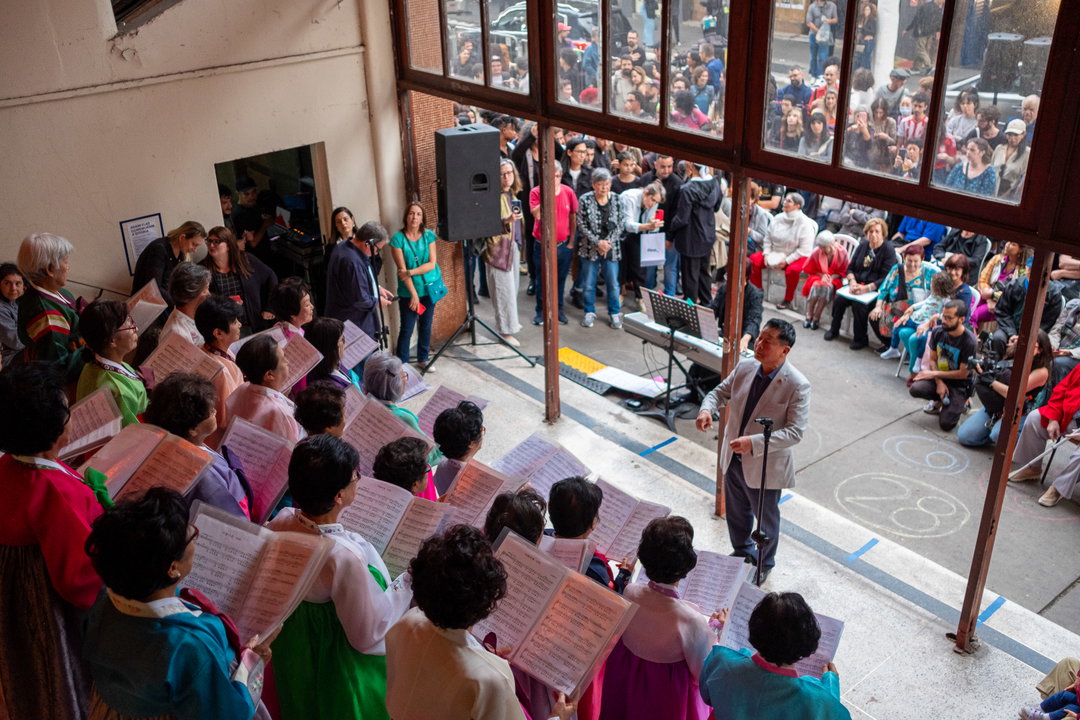
Korean Mothers’ Choir, 2023 (Photo © Gustavo Moita)
Collective Ocupação rehearsal (Photo © Camila-Svenson)
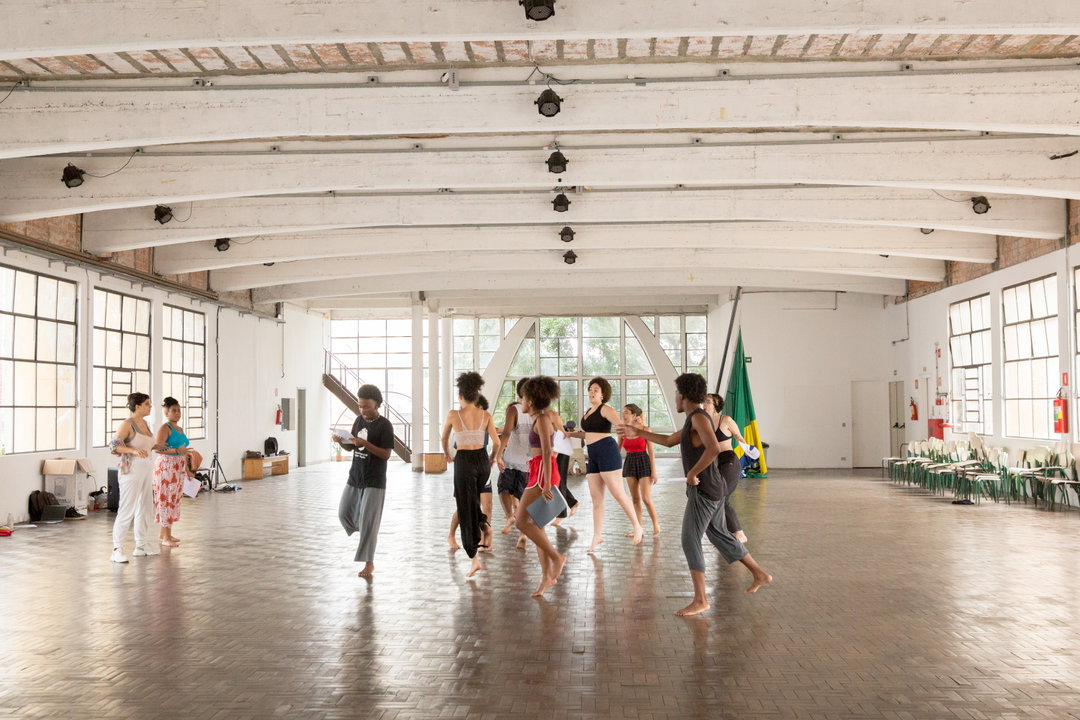
Collective Ocupação rehearsal (Photo © Camila-Svenson)
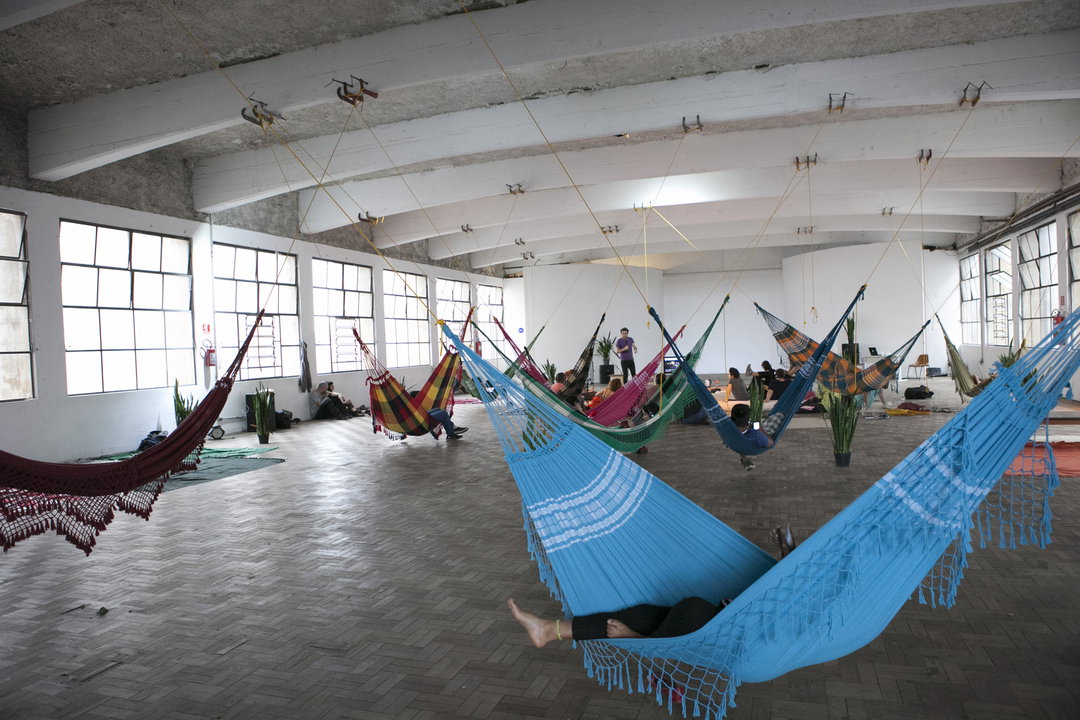
Redário Installation by Amilcar Packer, 2017 (Photo © Julia Moraes)
Tinkus San Simón, traditional Bolivian dance group getting dressed for a presentation, 2023 (Photo © Gustavo Moita)
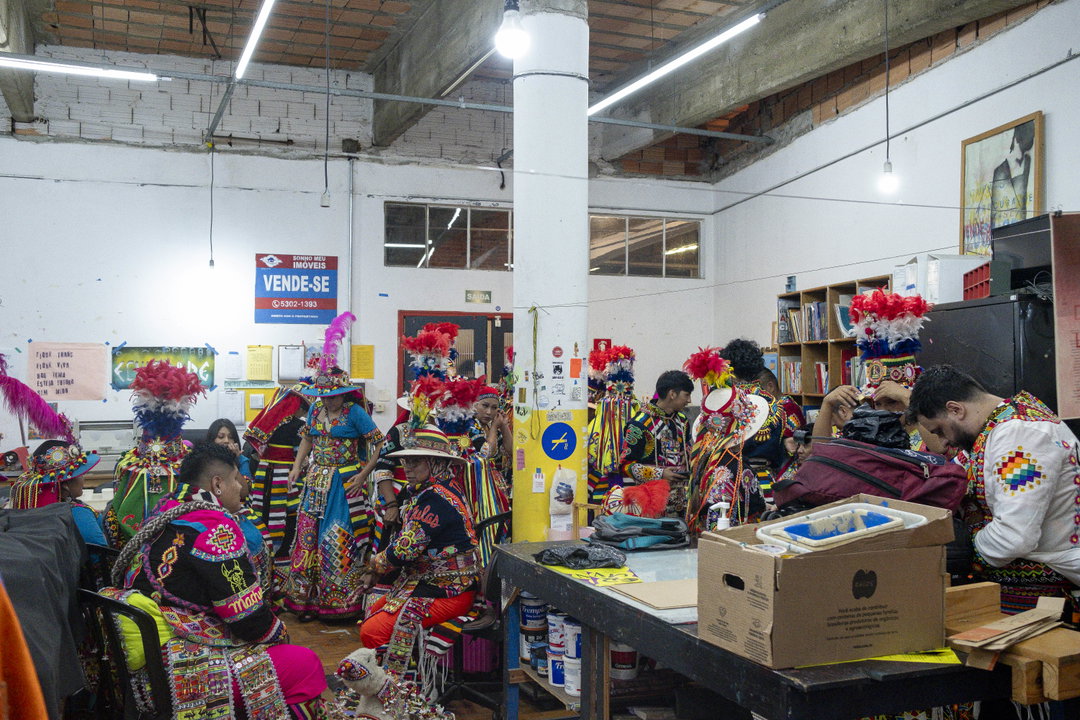
Tinkus San Simón, traditional Bolivian dance group getting dressed for a presentation, 2023 (Photo © Gustavo Moita)
“Casa do Povo is a void space with open doors – and this is precisely what makes it a radically unique and innovative place within São Paulo’s cultural scene.”
Elaine Ramos
Casa do Povo opens its doors daily, directly onto the street, inviting passersby to approach and inhabit its “empty” spaces. Even before entering, right on the sidewalk, the house has recently installed a drinking fountain, a subtle initiative primarily aimed at welcoming the homeless population.
As you climb the first steps, you’ll encounter a display of books and magazines – some free, others for reading on-site, and some for sale – which turns the staircase itself into a gathering space. Instead of the standard cafe found in most cultural spaces, the house maintains an open kitchen, stocked with ingredients for anyone who wants to make coffee, heat up food or use the bathrooms, along with a piano available for free use. Anyone can also, at any time, set up one of the folding tables stacked in the main hall and hold a meeting, a gathering, or come up with a new project.
Casa do Povo is not, therefore, an exhibition venue (just a few blocks away is one of the city’s main museums) but a space that responds to the multiplicity of ever-changing desires of the city. Currently, it is home to more than 20 collectives, which use the space for their ongoing activities and take part together in its management and maintenance. The common denominator is these groups’ focus on process, experimentation, and transdisciplinarity, along with an overtly antifascist orientation. Among them are an open psychoanalysis clinic, which offers free sessions weekly; a boxing academy; a yoga group that offers classes to people with all kinds of bodies; the Korean mothers’ choir and an all-ages longstanding Yiddish choir; a chess club; and Flor de Kantuta, a collective of Bolivian immigrant seamstresses “who sew and embroider, valuing ancestral knowledge while building fair and sustainable labour relations”.
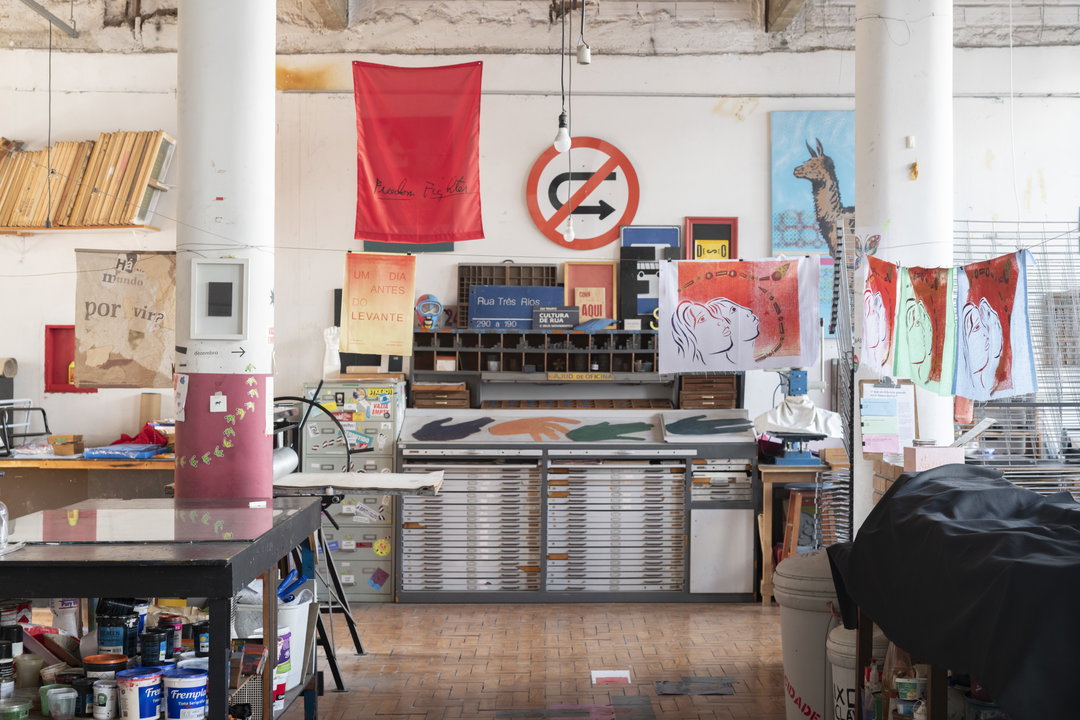
Parquinho gráfico [graphic playground] (Photo © Julia Thompson)
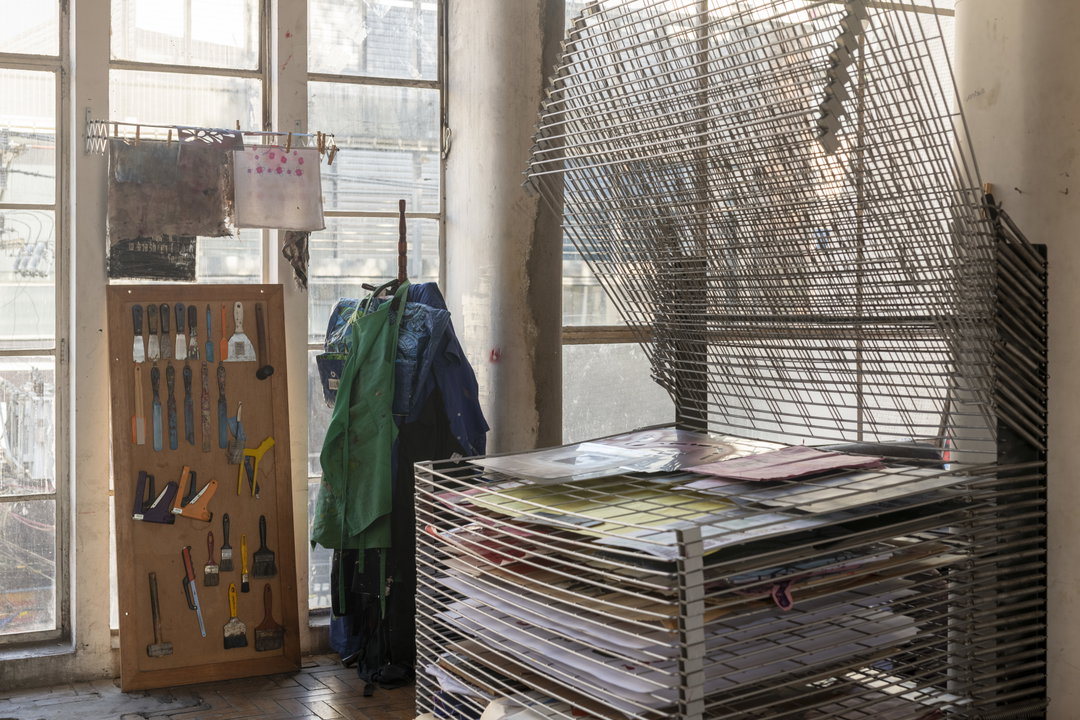
Screen printing drying rack (Photo © Julia Thompson)
Weird Type – Queer Design Experiments, an initiative by PSSP studio (@pssp_____livros) in collaboration with Ateliê Dragão (@ateliedragao) that took place at Parquinho Gráfico (@parquinhografico) (Photo © Ana Druwe)
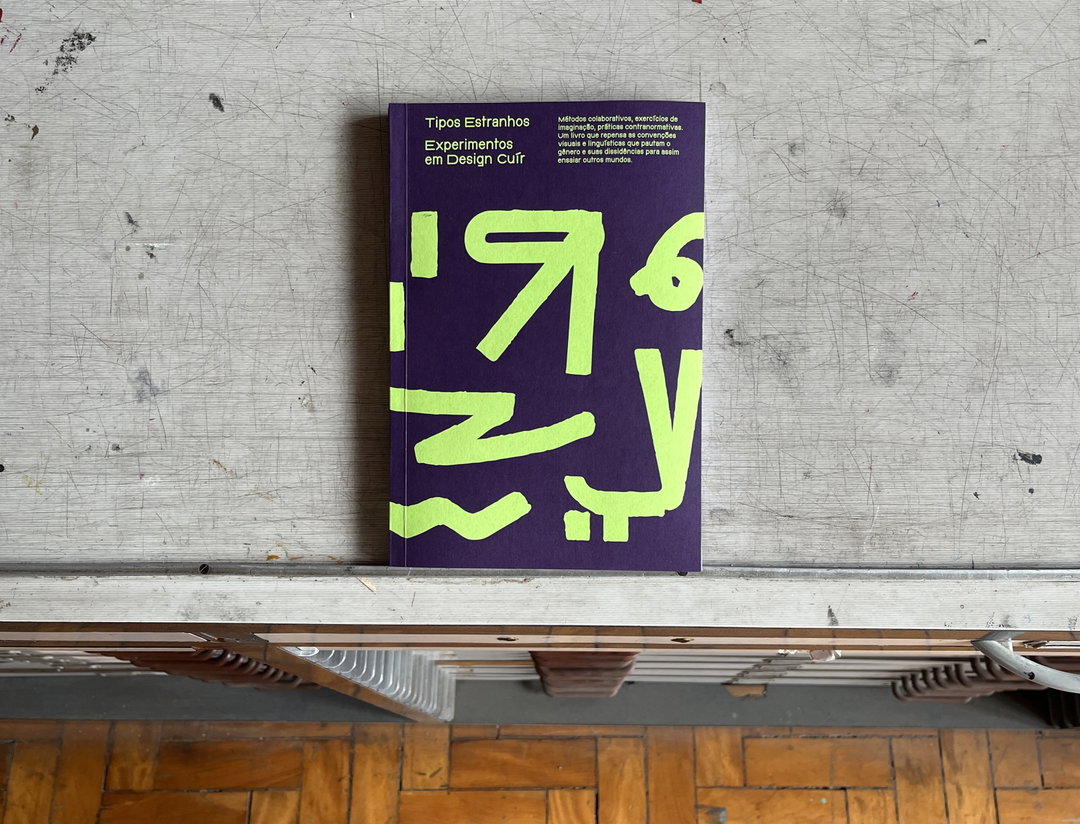
Weird Type – Queer Design Experiments, an initiative by PSSP studio (@pssp_____livros) in collaboration with Ateliê Dragão (@ateliedragao) that took place at Parquinho Gráfico (@parquinhografico) (Photo © Ana Druwe)
“The common denominator is these groups’ focus on process, experimentation, and transdisciplinarity, along with an overtly antifascist orientation.”
Elaine Ramos
The house also has a graphic experimentation workshop, Parquinho Gráfico, equipped with Risography, stencils, stamps, typography, screen printing, and other printmaking techniques, along with a library and a store for independent publications. “Maintained by artists, collectives, and designers, Parquinho brings together editing, design, printing, and finishing practices aimed at fostering autonomy and self-sufficiency for projects.” Workshops and poster production collectives are held there, all of which are open to the public and most of which are part of larger initiatives by grassroots political movements. One of its publications, which is quite representative of the workshop’s purpose, compiles typographic investigations from the project Collective Practices in Queer Design: Gestures Towards a Post-Binary Future, an effort to explore ways of disrupting official rules for written language through the design of experimental glyphs.
Based on the concept of the “minimum institution”, the furniture design and signage plays a central role in welcoming visitors, making the space legible, and sharing responsibility for space maintenance. How may one design a furniture set for spaces that must remain entirely flexible and where the rules must be constantly negotiated with the visitor? In this case, the way objects and messages communicate with the user is absolutely crucial, and even the simple arrangement of furniture in the space can extend the invitation, make navigation intuitive, and establish agreements.
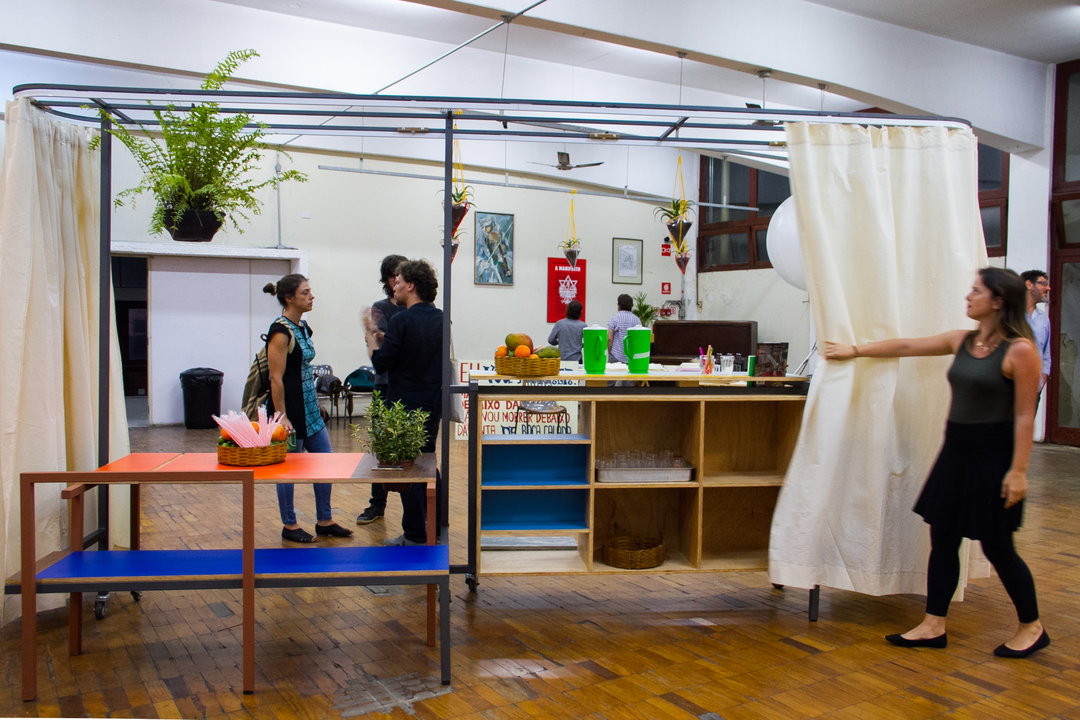
Metacozinha [Meta-kitchen] design by Vitor Cesar and Carol Tonetti (Photo © Camila Picolo)
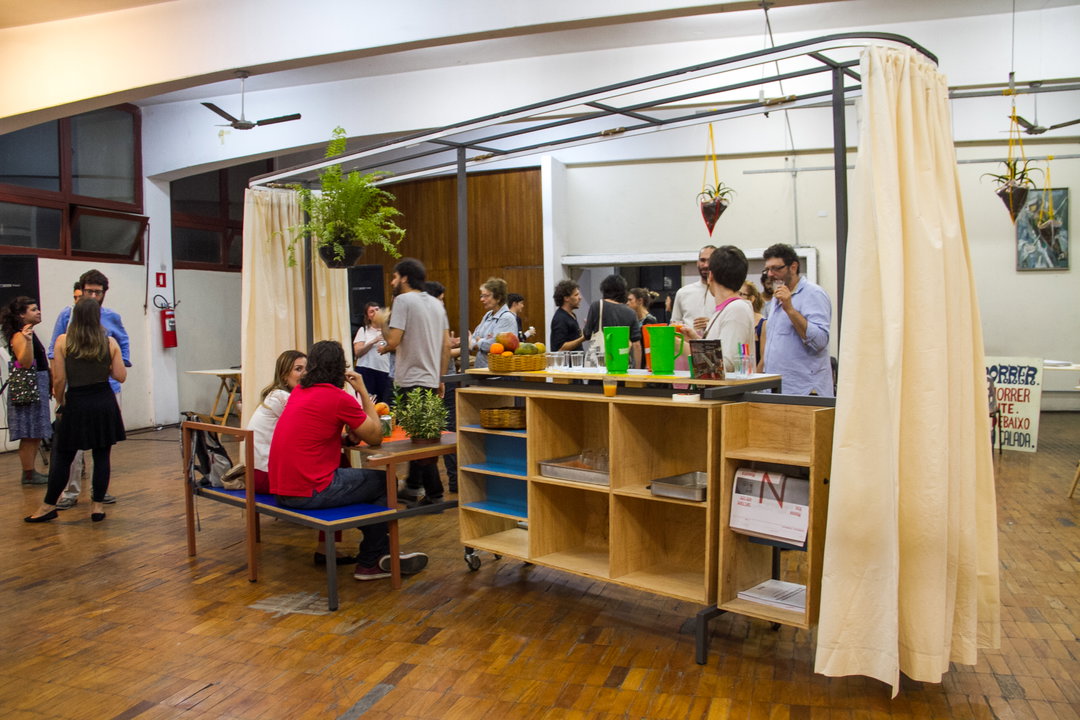
Metacozinha [Meta-kitchen] design by Vitor Cesar and Carol Tonetti (Photo © Camila Picolo)
Metacozinha [Meta-kitchen] design by Vitor Cesar and Carol Tonetti (Photo © Camila Picolo)
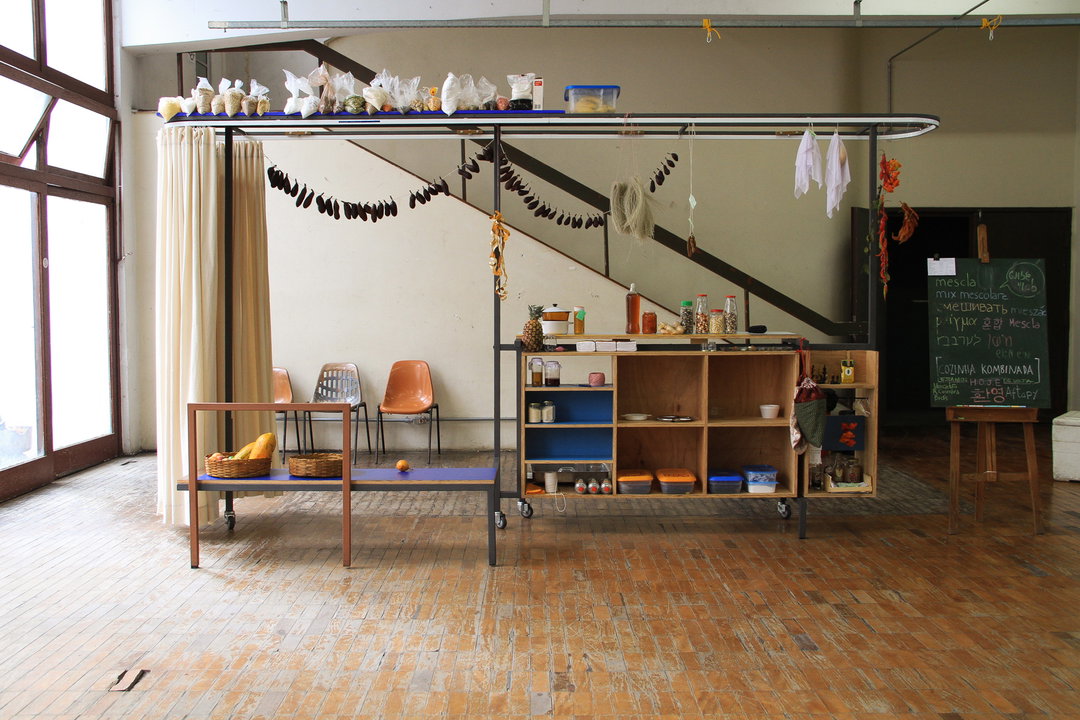
Metacozinha [Meta-kitchen] design by Vitor Cesar and Carol Tonetti (Photo © Camila Picolo)
Designers Vitor Cesar and Carol Tonetti took on the challenge of designing the furniture that would address the collective ideas and desires of the participants. With a minimal budget, the duo designed the furniture for the kitchen and the library (the latter with contributions from Ligia Nobre and Cláudio Bueno), guided by flexibility, simplicity, and practicality. The modules can be assembled in various configurations, moved, rearranged, opened or closed, and, in the case of the library, even disassembled and easily stored.
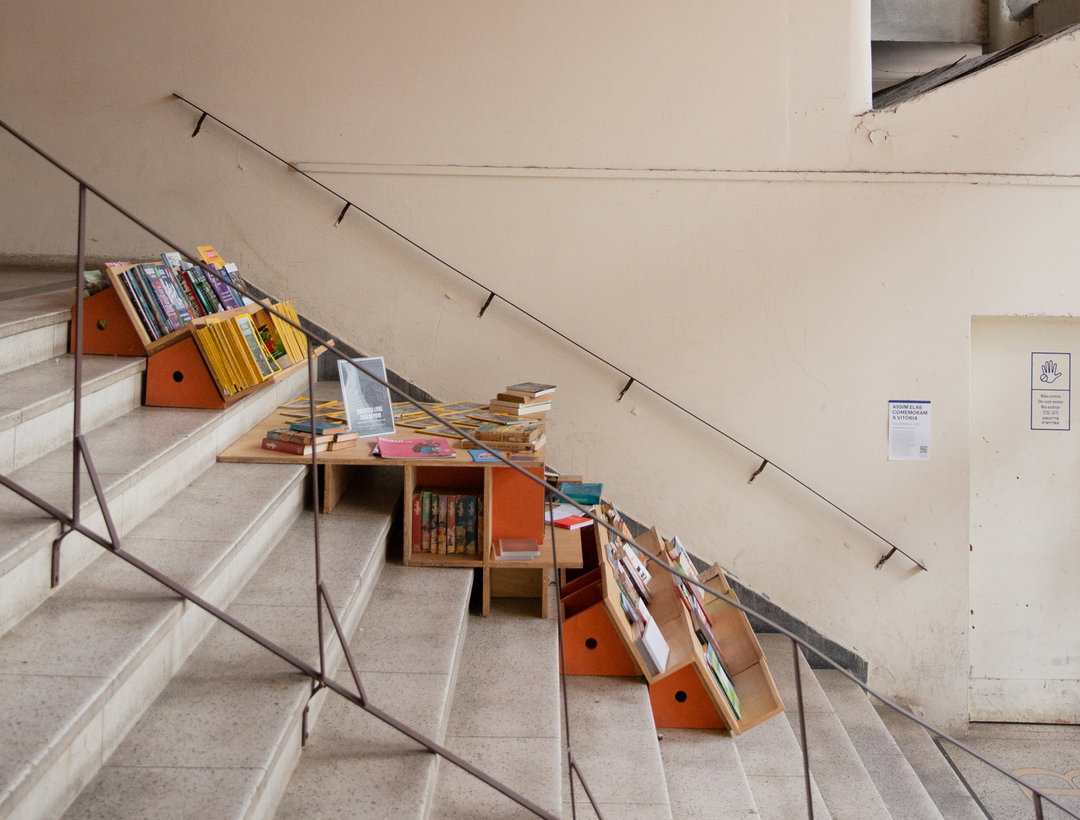
Library components, design copyright © the collective O Grupo Inteiro (Cláudio Bueno, Vitor Cesar, Ligia Nobre and Carol Tonetti)
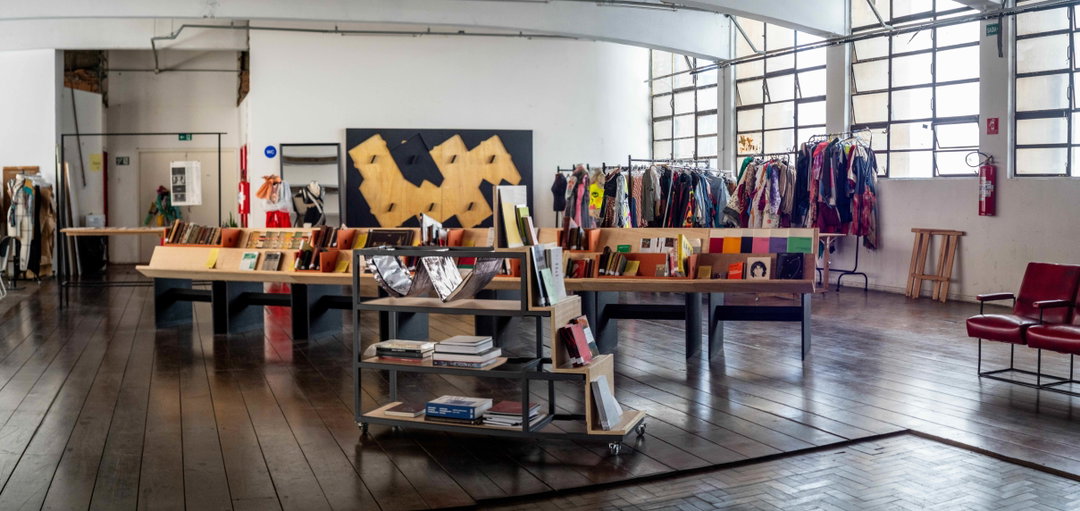
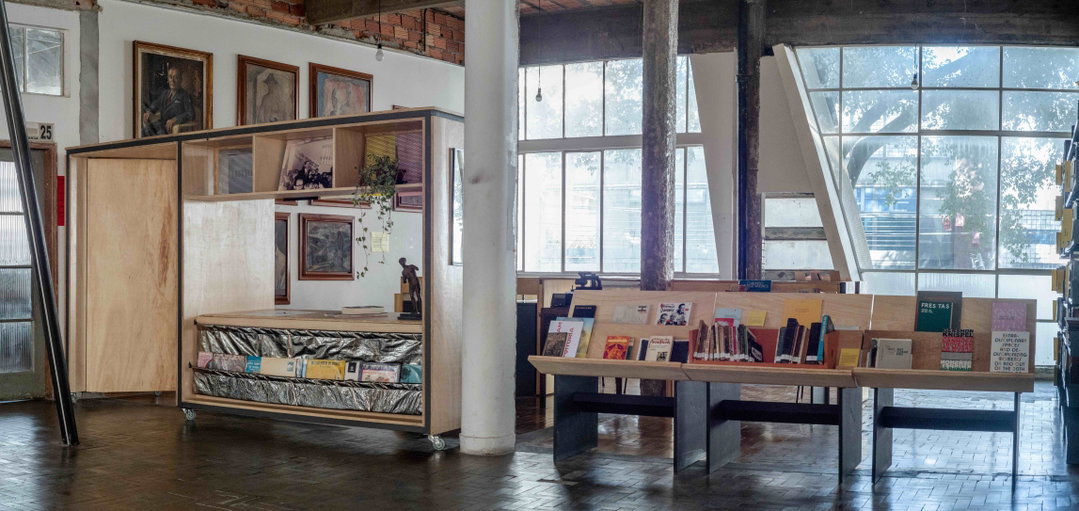
Library components, design copyright © the collective O Grupo Inteiro (Cláudio Bueno, Vitor Cesar, Ligia Nobre and Carol Tonetti)
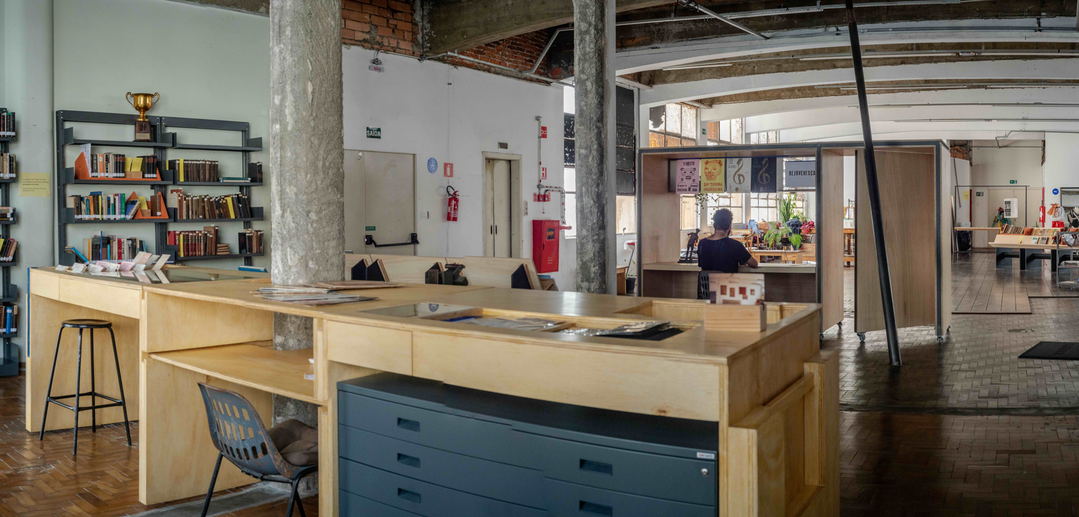
The building’s signage, designed by Estúdio Campo, follows similar principles: low cost, practicality, warmth, and belonging. To communicate with the diverse range of individuals that inhabit the house, all wayfinding information is written in Portuguese, Spanish, Korean, Yiddish, and includes a pictogram for people with low or no literacy. All rotating information is printed in-house, on coloured A4 paper sheets, and affixed to designated magnetic areas.
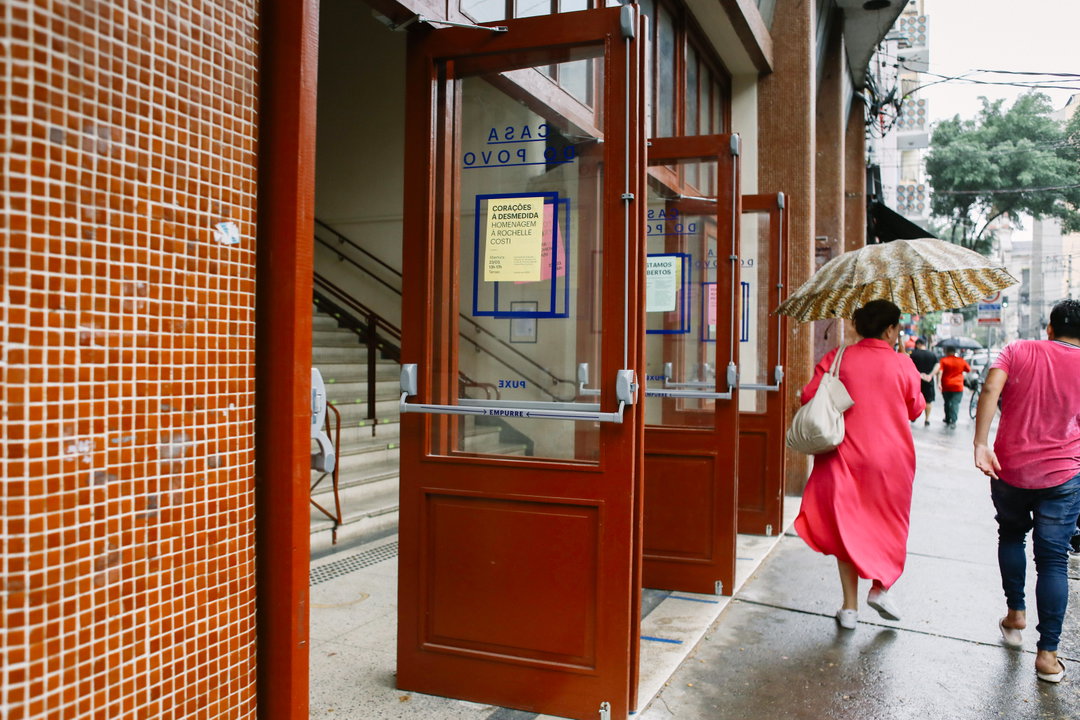
Casa do Povo’s signage design, copyright © Estúdio Campo (Photo by Perola Dutra)
Casa do Povo’s signage design, copyright © Estúdio Campo (Photo by Perola Dutra)
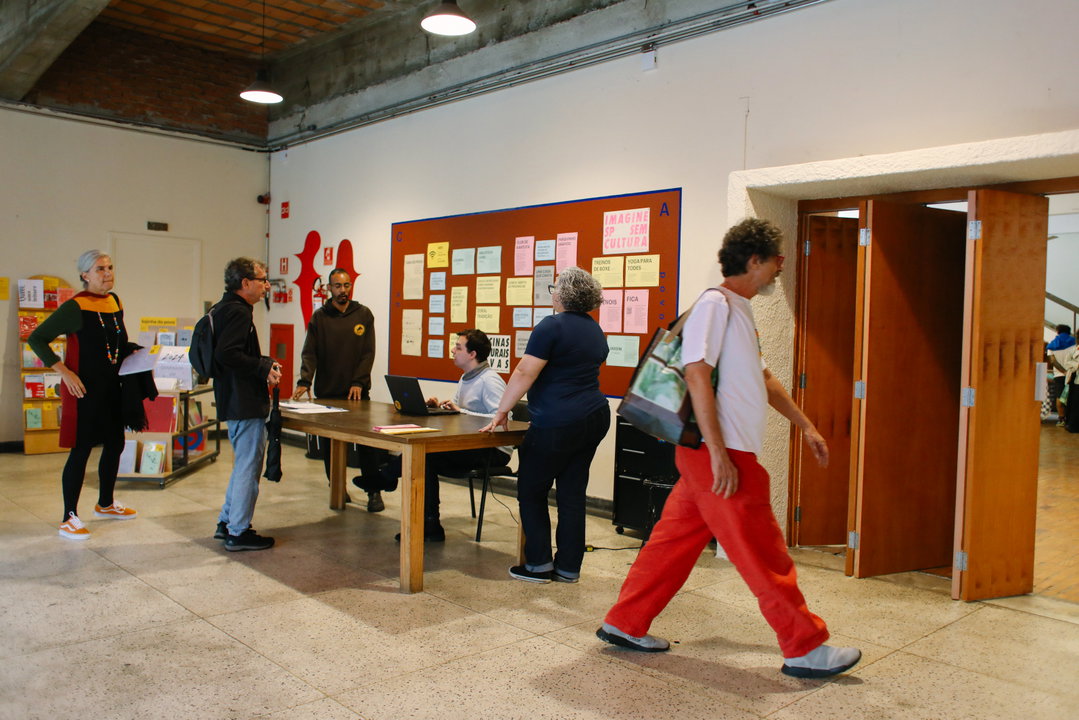
Casa do Povo’s signage design, copyright © Estúdio Campo (Photo by Perola Dutra)
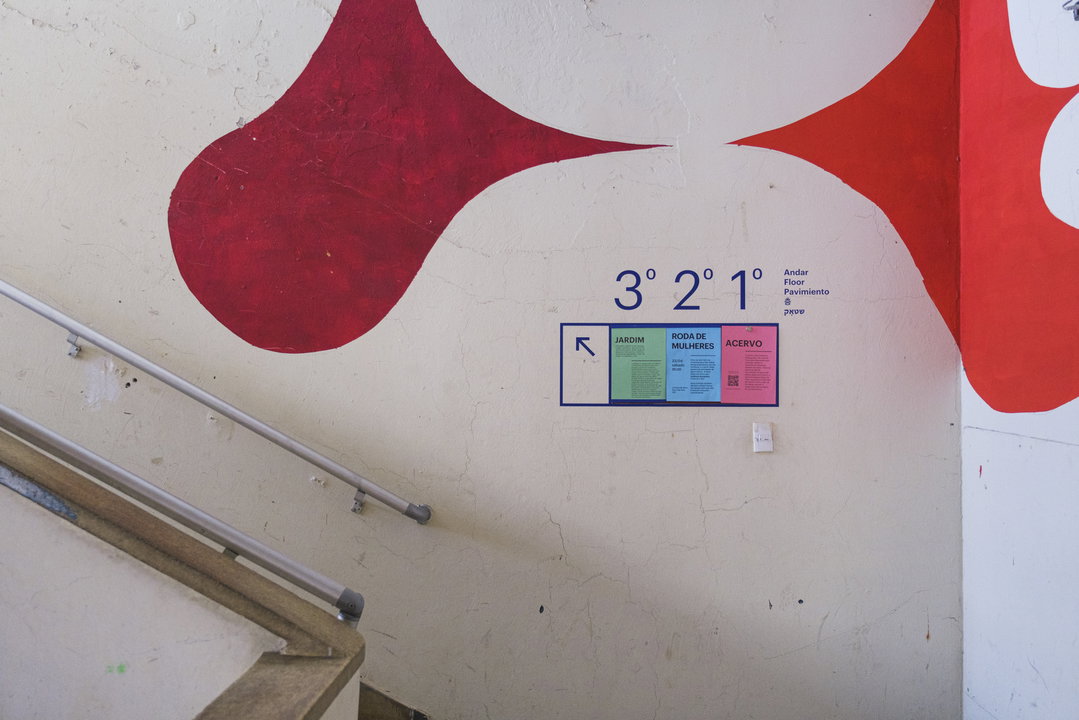
Casa do Povo’s signage design, copyright © Estúdio Campo (Photo by Agência Ophelia)
Casa do Povo’s signage design, copyright © Estúdio Campo (Photo by Ana Druwe)
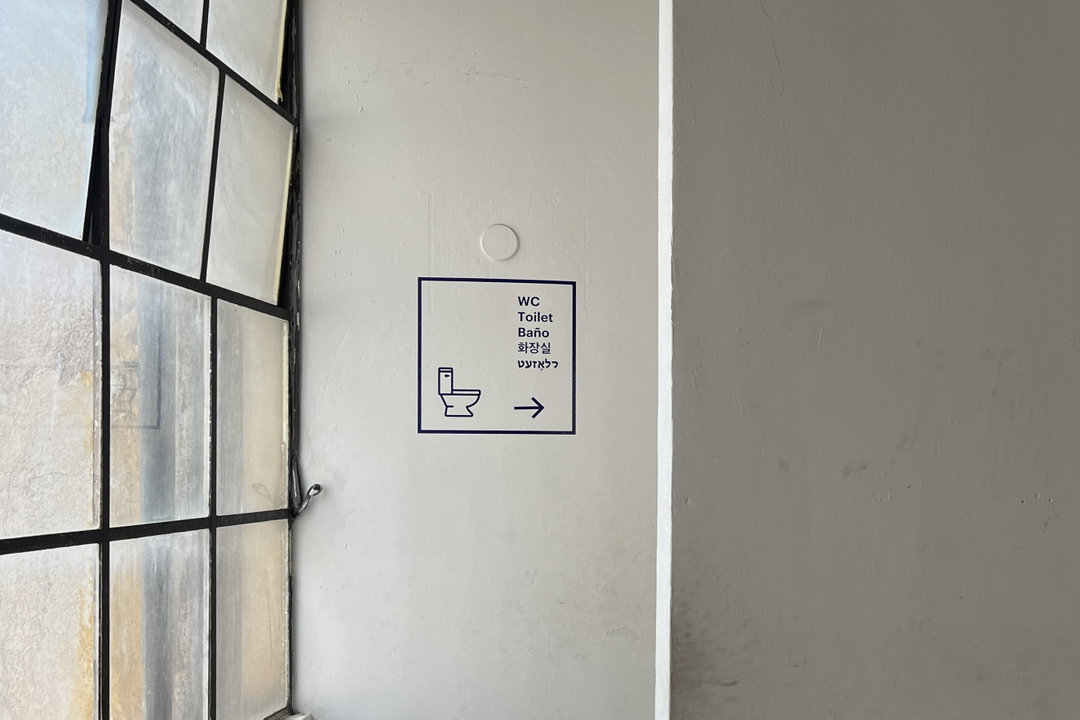
Casa do Povo’s signage design, copyright © Estúdio Campo (Photo by Ana Druwe)
The reopening of the building also brought back the community newspaper Nossa Voz (Our Voice), 50 years after it was shut down by the civil-military dictatorship in 1964. Nossa Voz “experiments with different formats to read and echo voices that explore other possible worlds on a real scale,” is how it defines itself. Today, Nossa Voz has become a large-format magazine which functions primarily as a platform for artistic discourse and graphic experimentation, led with remarkable freedom by Margem studio.
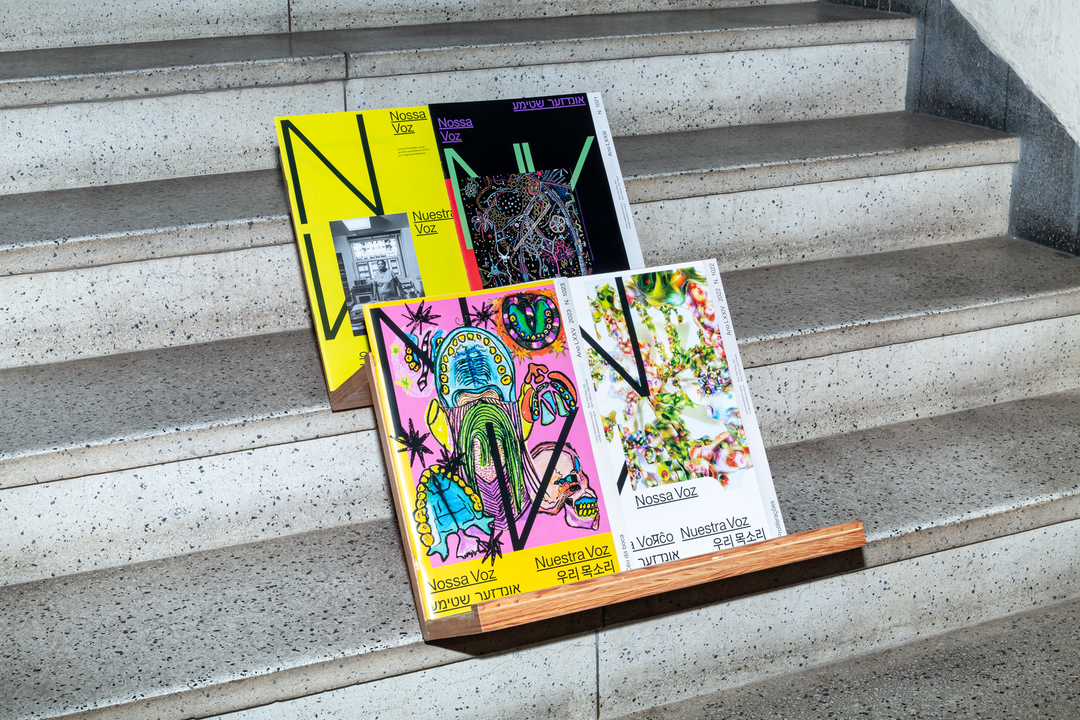
Nossa Voz (Our voice) design copyright © Estúdio Margem (Photos by Marcelo Mudou)
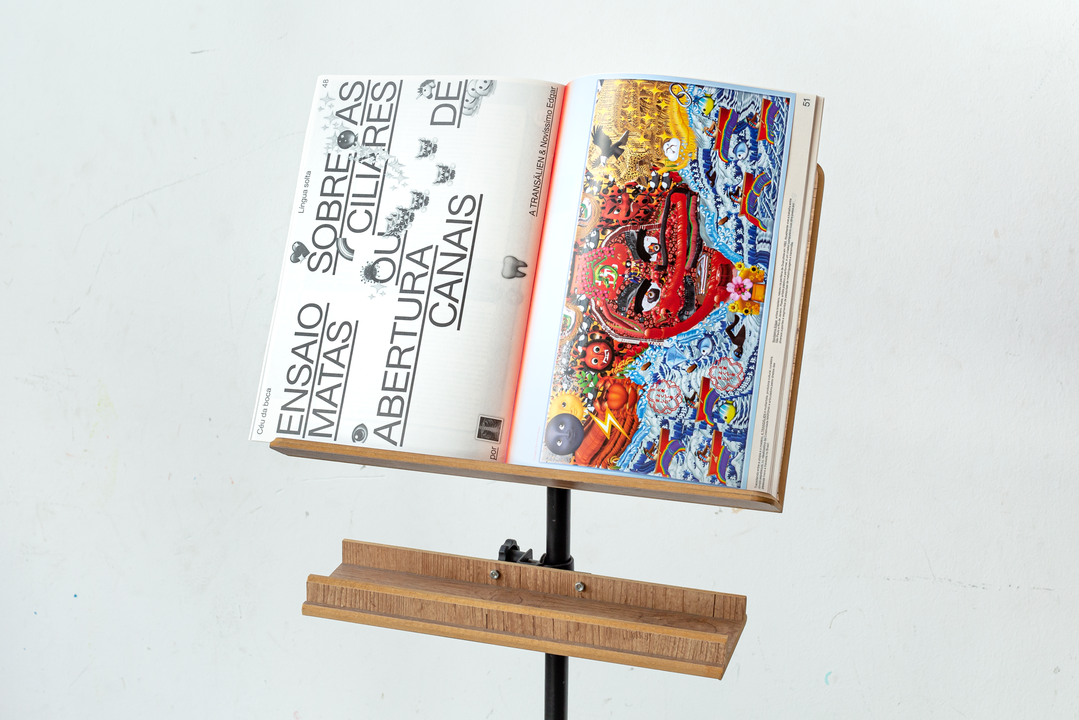
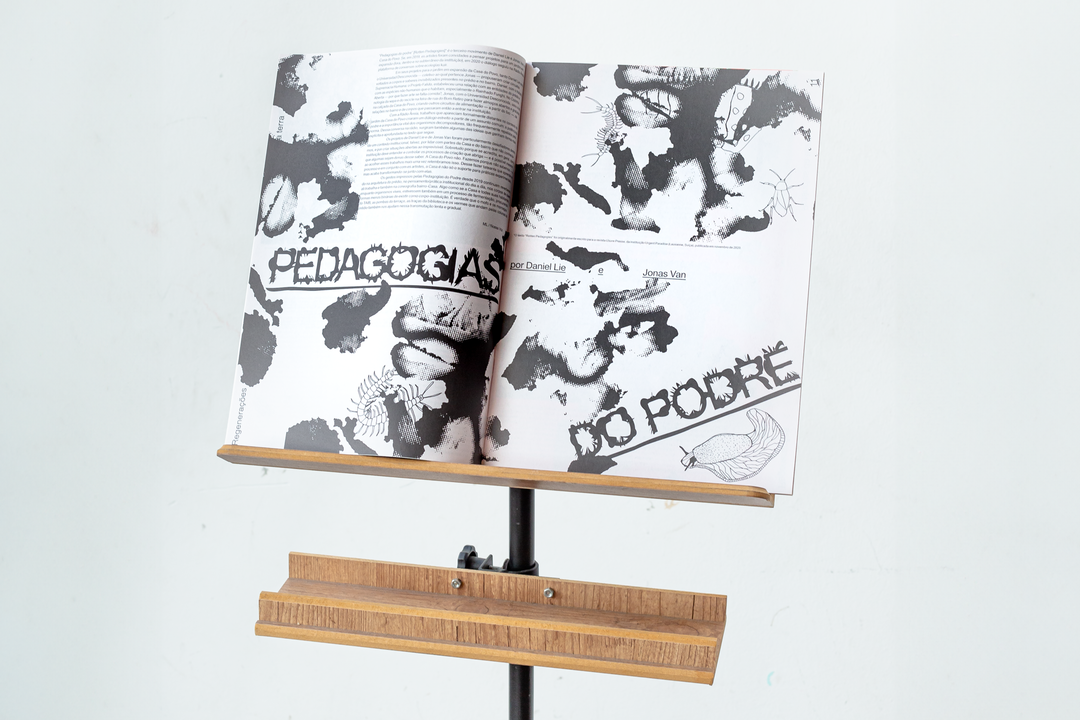
Nossa Voz (Our voice) design copyright © Estúdio Margem (Photos by Marcelo Mudou)
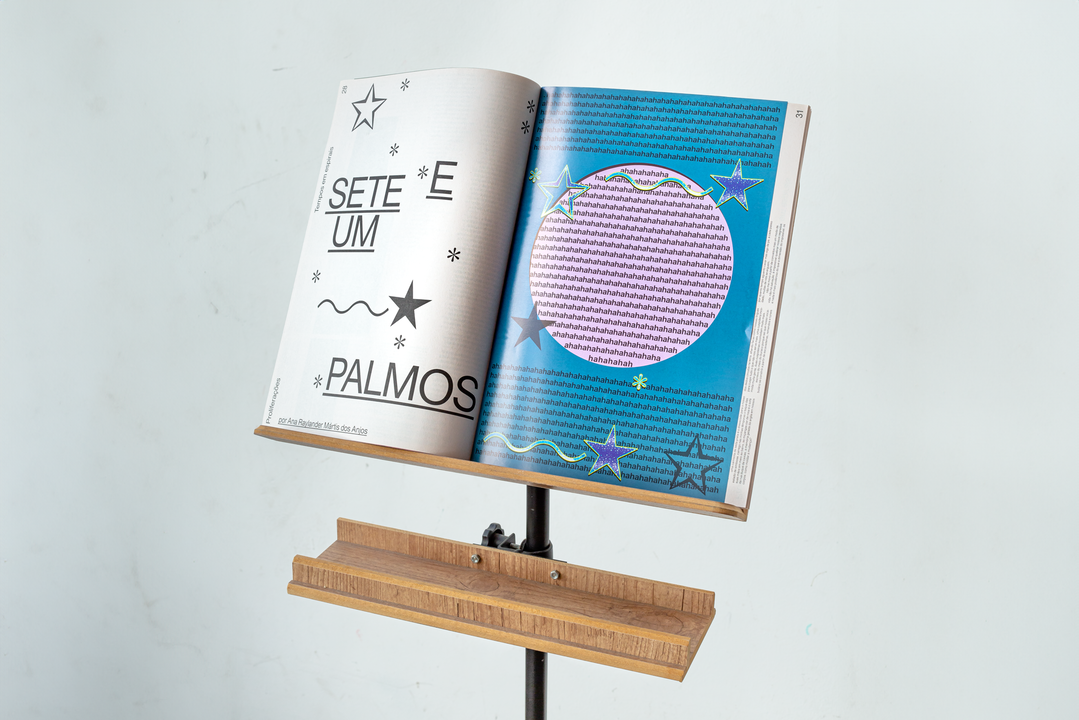
Margem studio is also in charge of the institution’s ongoing rebranding. In this process, they chose Arial as the typeface and with no fixed configuration. In a do-it-yourself mood, the letters adapt freely according to the space and the sender’s intention. Shifting the focus from a finished form to a more open-ended approach, they offer the user a playful experience with simple rules, while the identity ingeniously translates into the graphic field the institution’s approach as an open and accessible space.
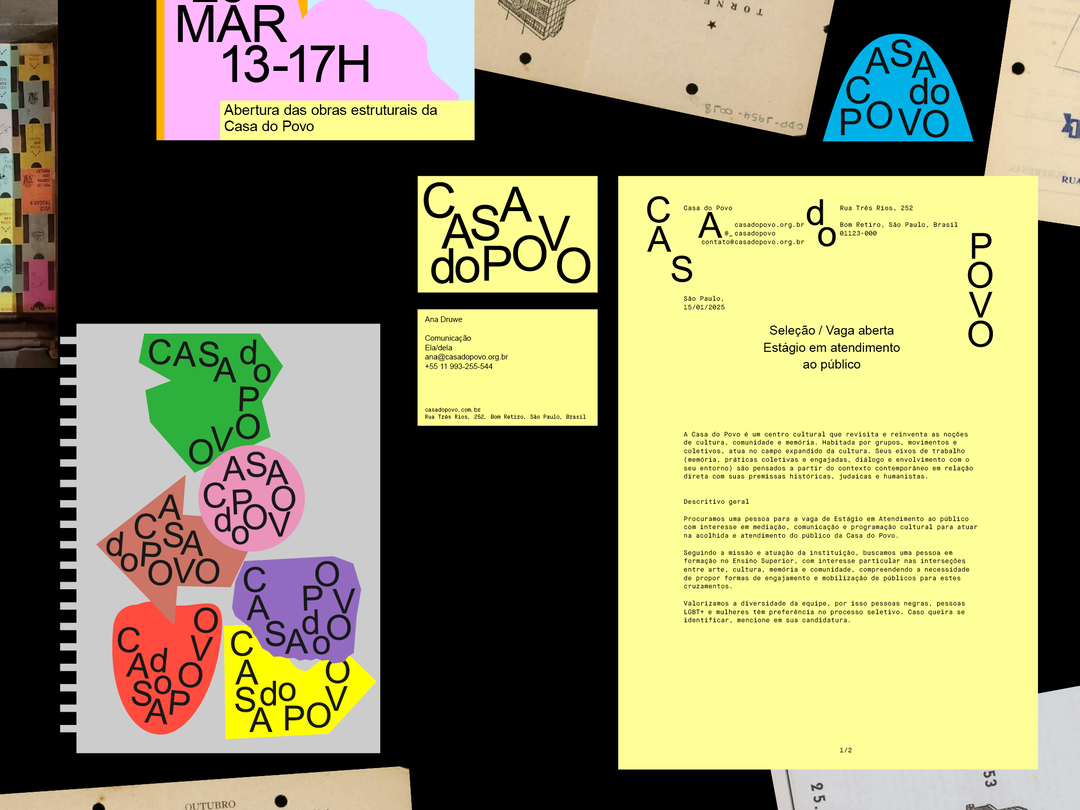
Casa do Povo’s rebranding mock-ups, design copyright © Estúdio Margem
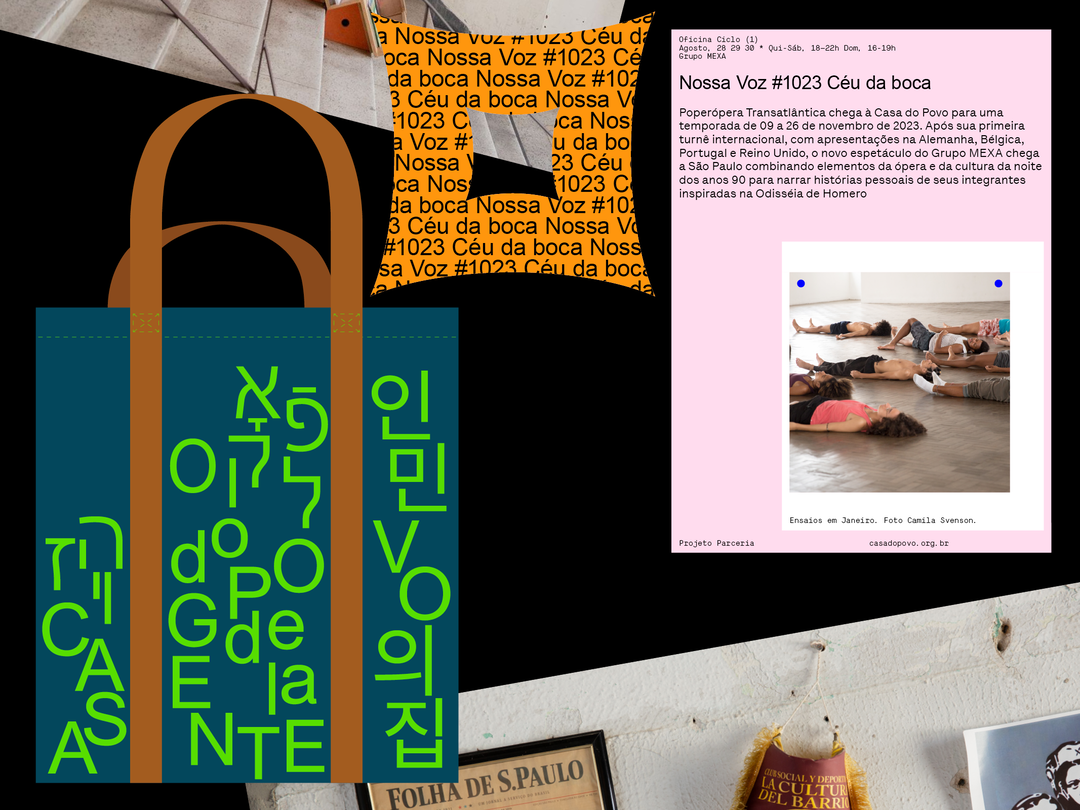
Casa do Povo’s rebranding mock-ups, design copyright © Estúdio Margem
With all of this combined, the feeling for anyone visiting Casa do Povo is that of entering a space that is vibrant, democratic, and generous. Generosity of the open, porous space; generosity of the people who make everything happen with minimal resources, resisting a top-down, authoritative management approach, and shifting it towards a place of active listening and welcoming.
Recent events remind us how important it is to embrace and amplify the richness that comes from the coexistence of diasporic cultures, and how fundamental it is to cultivate memories through continuous actions that can shape a different imaginary for the future.
[This text was written based on conversations with Ana Druwe, responsible for communication and editor of Nossa Voz, and Benjamin Seroussi, artistic director and content writer for the institution’s website.]
Closer Look
- Among the many collectives that have passed through Casa do Povo is Mexa, a theatre and performance group that brings together a diverse mix of people – artists, activists, a hairdresser, an actress, a filmmaker, communicators, a journalist, a photographer, and others without a defined profession, including LGBTQIA+ individuals, wheelchair users, and Black communities. Through art, Mexa creates spaces for dialogue and connection, using performance as a tool to amplify the voices of those in socially vulnerable situations.
- Parquinho gráfico
One of the collectives within Parquinho Gráfico is Publication Studio São Paulo. Its website showcases a selection of independent publications worth exploring, including Tipos Estranhos, which I mentioned earlier.
- It is possible to download and print the poster designed at Parquinho Gráfico directly from Casa do Povo’s website.
- Aigo Livros is a small neighborhood bookstore that recently opened in Bom Retiro, founded by young local residents. A must-visit spot, it offers a selection of books from the countries of origin and diasporas of the area’s immigrant communities. Located in a gallery with a distinctly Soviet-style architecture, it adds to the unique charm of the space.
- It’s impossible to visit Bom Retiro without trying the local food at some of the many great restaurants around Casa do Povo, such as Hwang To Gil (Korean cuisine) and Shoshana (Jewish cuisine).
Share Article
About the Author
—
Elaine Ramos is a graphic designer based in São Paulo, Brazil. She runs a design studio primarily focused on the cultural market and is a founding partner of Ubu, a publishing house created in 2016. She is It’s Nice That’s São Paulo correspondent.