


In the burgeoning Nigerian animation industry, these creatives are turning myth, memory and mischief into moving image
From NTA jingles and stop-motion soap adverts to Disney’s Lagos-set Iwájú and a new wave of Spirit Fiction, Somto Ajuluchukwu, Erem Emeka Nehemiah and more are building worlds rooted in folklore, humour and everyday Nigerian life.
Share
From the mid-1990s to late-2010s, Nigerian animation was in its pioneering years. While the competitive commercial ecosystem did not fully exist, a small number of studios working across advertising and broadcasting created animations for educational programmes, children’s shows, news introductions and product adverts aired by the Nigeria Television Authority. For children like myself who grew up during that era, these animations became part of our visual and sonic memory. They arrived with melodic intro soundtracks, often recited in moments of solitude or while playing with our friends. TV programmes such as Unicef’s 1996 animated film Sara’s Choice, alongside the animated opening sequence of NTA’s A.M. Express, which began airing in 2002, became defining moments of this period.
There were also animated adverts in the early 2000s, many of which leaned more heavily on stop-motion techniques and early digital graphics. Among the era’s most memorable campaigns were the Shaky Shaky Daddy advert, the Baba Blue throat drop commercials and the hauntingly beautiful Fumman fruit juice ads, in which anthropomorphic oranges sang melancholic tunes about being picked.
The next wave arrived in the 2010s, when internet culture and platforms like YouTube and Facebook brought animation to a wider audience. Unlike broadcasting, this generation was more driven by independent creators, with comedy becoming one of its core forms. Leading this movement was House of Ajebo.
GalleryCopyright © Somto Ajuluchukwu, VXanimation
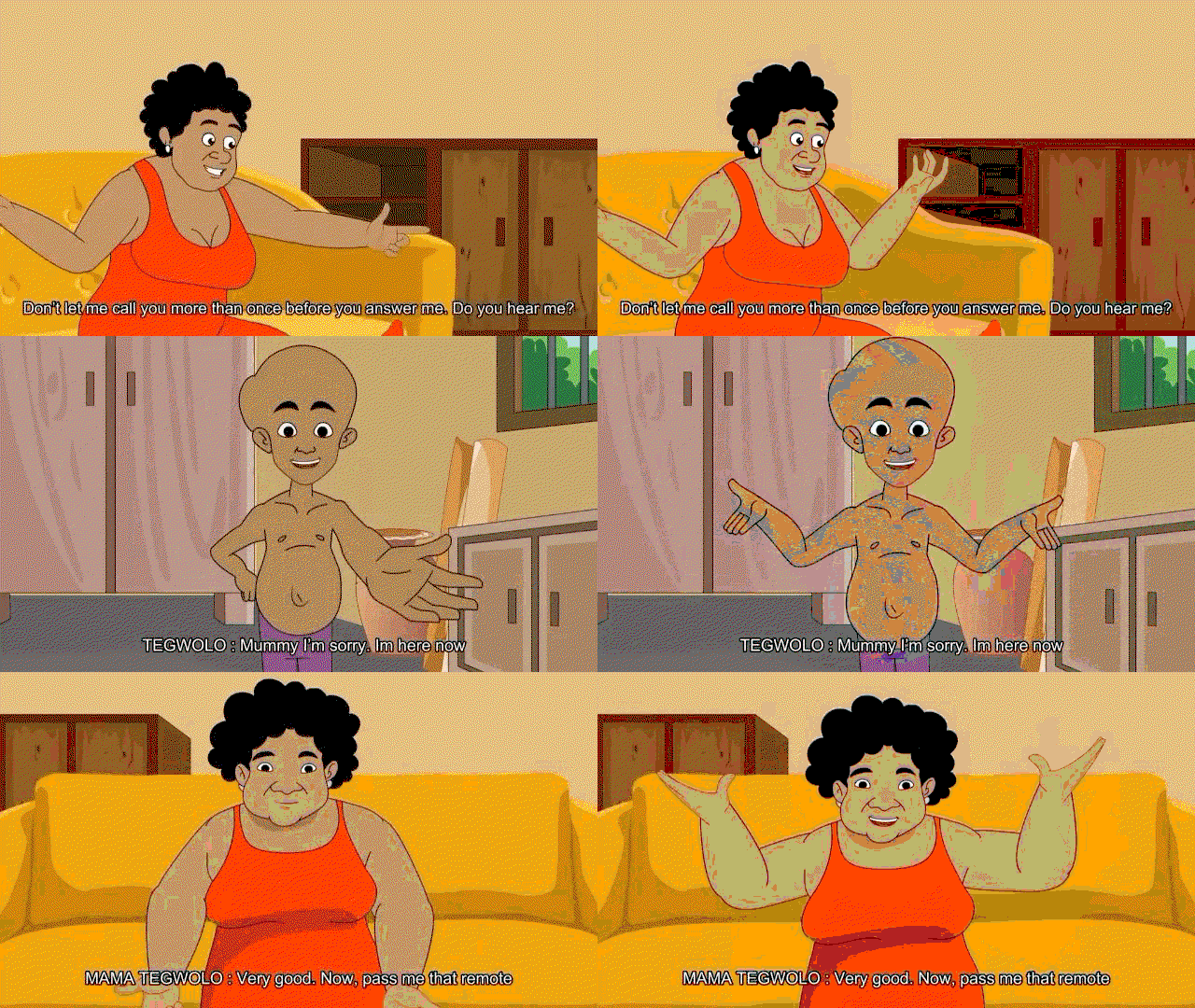
Erem Emeka Nehemiah started House of Ajebo while in his sophomore year in university, driven by a desire to create something unique that didn’t exist in the Nigerian entertainment industry. Before animation, he was a comedian who had spent years building his craft – something he credits fully to the support of his parents, who encouraged him to express himself from a young age. The characters he built were those that Nigerians could instantly relate to. His breakout character, Tegwolo, embodied the humour, chaos and confidence of the everyday Nigerian child, particularly the mischievous schoolboy archetype familiar across many African homes. Today, the characters he created have amassed more than a billion views across digital platforms, while House of Ajebo has grown into one of Africa’s most recognisable animation studios, with nearly four million followers and subscribers.
As one of the creators who helped define this wave, he’s optimistic about what young people have been able to achieve with animation. “Watching that evolution has been incredible,” he says. “I’ve built a legacy in this field. Many people are doing similar work today, and even now, as we pivot into educational content, I see others following that path too. What has been most fulfilling, though, is the human response. People stop me and say, ‘Thank you, you made my childhood.’ For me, that means everything.”
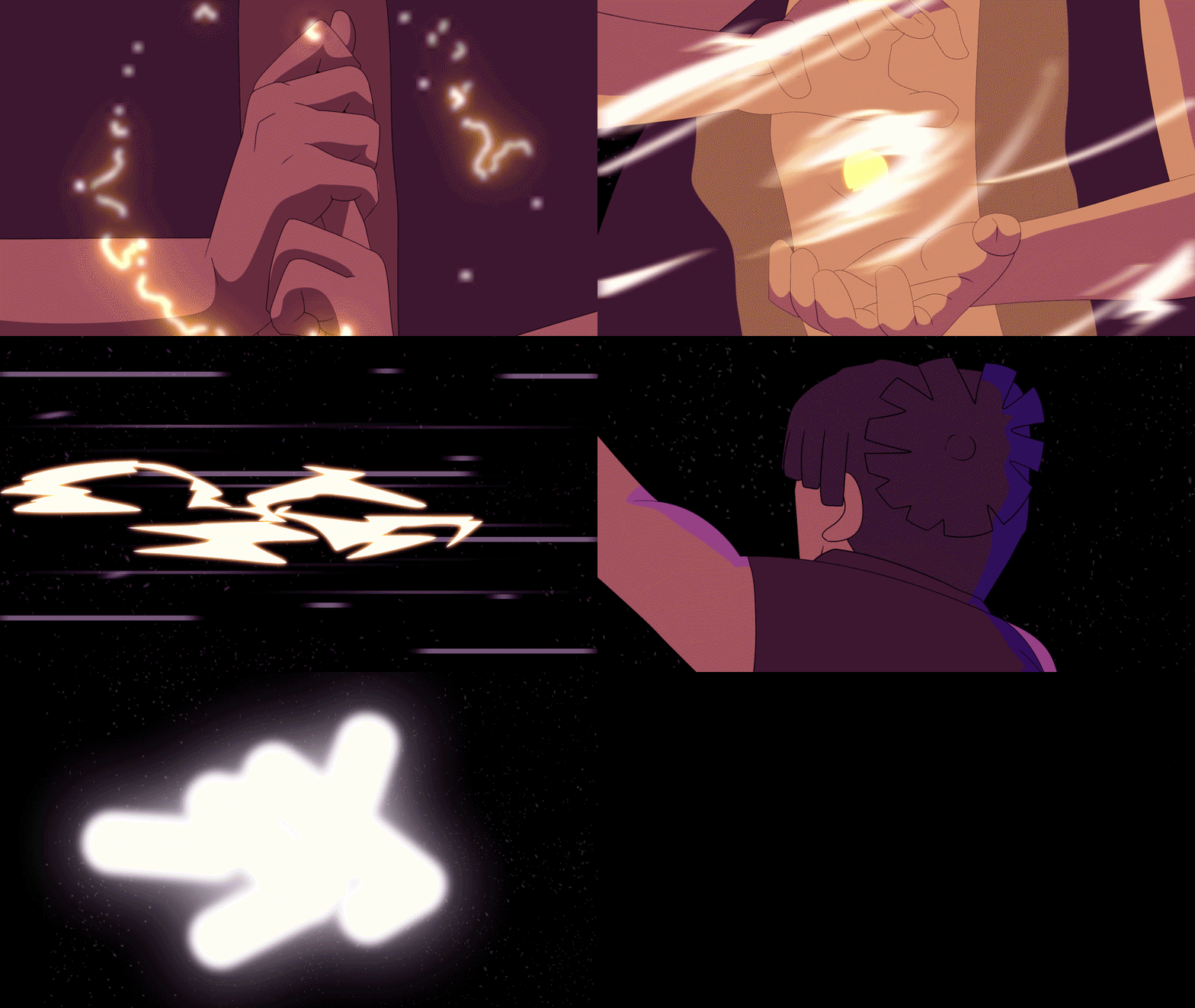
Glych: Somto Ajuluchukwu, VXanimation (Copyright © Somto Ajuluchukwu, VXanimation)
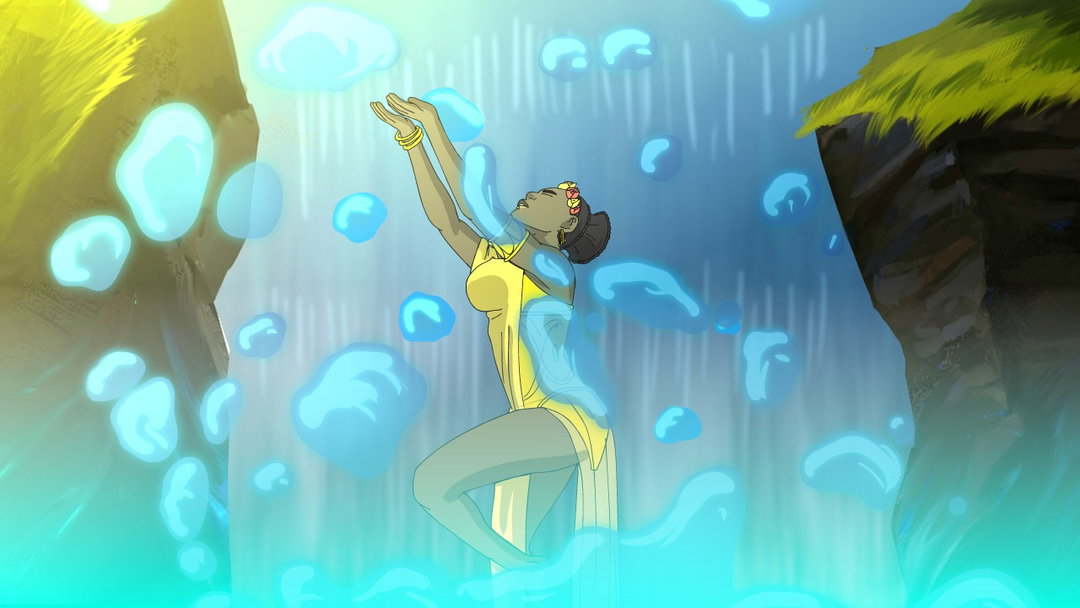
Glych: Land of the Gods (Copyright © Somto Ajuluchukwu, VXanimation)
For decades, Nigerian animators have imagined stories that could compete on a global stage while remaining rooted in local realities, mythology and everyday experiences. Often working with limited infrastructure, unstable electricity and small budgets, they continued building worlds far bigger than the industries around them. Yet the question lingered: what could Nigerian animation become if it were given global scale, visibility and institutional backing?
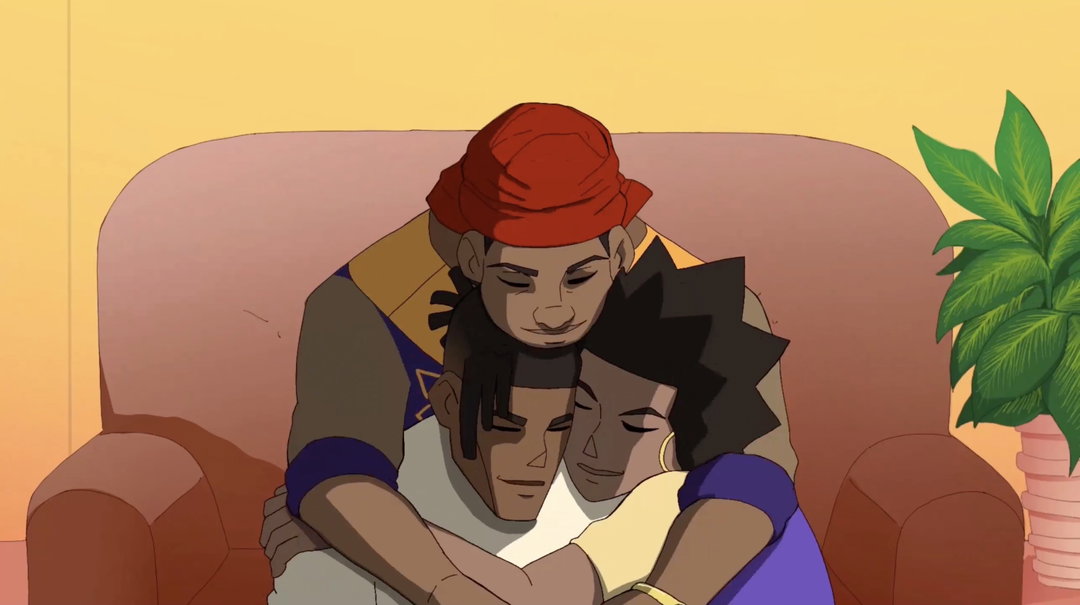
In 2024, Disney premiered Iwáju, a six-part animated miniseries set in a futuristic Lagos, created in collaboration with Pan-African entertainment company Kugali Media. Iwájú follows the unlikely friendship between Tola, a wealthy girl from the city’s affluent island, and Kole, a tech-savvy boy from the mainland, as they navigate questions of inequality, technology and belonging in a rapidly changing society.
After Iwájú’s success came Iyanu, an animated series created by Nigerian filmmaker and graphic novelist Roye Okupe and developed in partnership with Cartoon Network and HBO Max. The series follows a teenage orphan named Iyanu, who discovers extraordinary powers linked to the ancient Divine Ones.

Glych: Land of the Gods (Copyright © Somto Ajuluchukwu, VXanimation)

Glych: Land of the Gods (Copyright © Somto Ajuluchukwu, VXanimation)
Somto Ajuluchuckwu is the founder and exec head of VXanimation, a Lagos-based studio that is drawn to the representation of Nigerian stories in the animated fantasy world. They branded the genre Spirit Fiction, which combines spirituality, culture, myth and folklore from different African tribes.
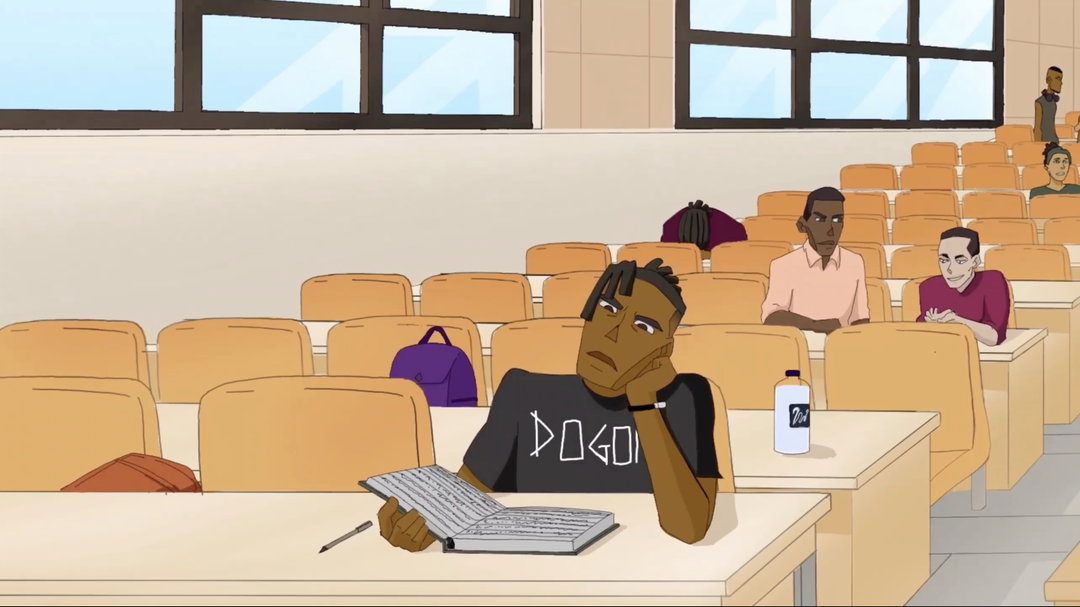
One of VXanimation’s strongest projects, Land of Gods, tells the story of Kashia, a Nigerian-American girl who visits Nigeria for the first time to see her grandmother. After discovering a magical mirror in her grandmother’s basement, she is transported into a mythological Yoruba world. To return home, she must travel across nine realms and find three crystals to rebuild a portal. Another project, Ojuju, follows a masquerade who gets buried alive more than 200 years ago by an enemy faction and is awakened by his great-granddaughter after she unknowingly reads a letter he once wrote to his lover. For Somto, these stories are worlds people may encounter in literature, but rarely in animation. Bringing them to life in a contemporary way is what makes them exciting.
VXanimation often uses 2D and 3D animation in its storytelling, but the team has also experimented with analogue techniques while working for a client. “For one documentary project, a client specifically requested a watercolour aesthetic, so we created an analogue production style for that,” Somto says. “The documentary isn’t out yet, but it was a fascinating process.”
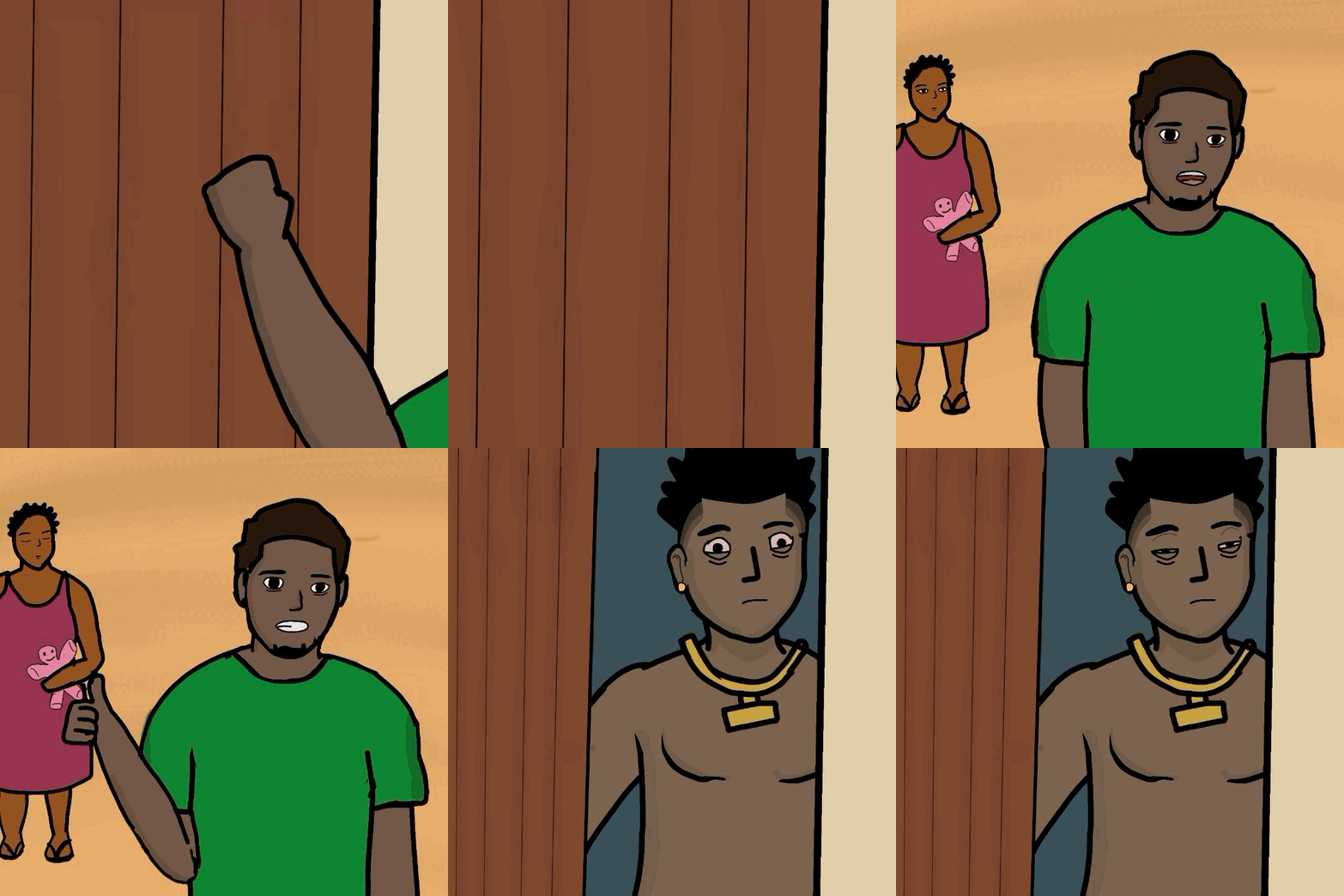
Copyright © Okekwuo Praise, praiztoons
“It’s one of the few storytelling mediums where your ideas are not restricted by what a camera can physically achieve.”
Somto Ajuluchuckwu
Somto began his career in animation in 2014, when he created a Youtube show called Town Cryer, that had only two episodes and featured voices from people like DJ Sose and OAP Nay Opay. For him it was a wacky animated series and one of his earliest experiments with animation. In 2015, he transitioned to comics for a couple of years and returned to animation in 2016 to revive Town Cryer, this time as a short episodic show on YouTube. The episodes were still short-form but more developed. “Animation was important to me because it offered complete imagination without limitations. It’s one of the few storytelling mediums where your ideas are not restricted by what a camera can physically achieve. There’s a fluidity to it – you can create worlds that simply cannot exist otherwise,” he says.
For Somto, the process always begins with a story. After that, he moves onto the character design and concept art which establishes the visual identity and tone of the project. The visual style becomes a way of deepening the immersion, making fictional worlds feel more believable. After writing the script, he then develops the frame, style and visual direction through animatics before building the world. For 2D animation, this includes rough animation, clean-up, colour, shadows, lighting and final compositing with backgrounds and effects. While analogue techniques can offer a rare aesthetic, they are also more traditional and time consuming compared to digital animation.
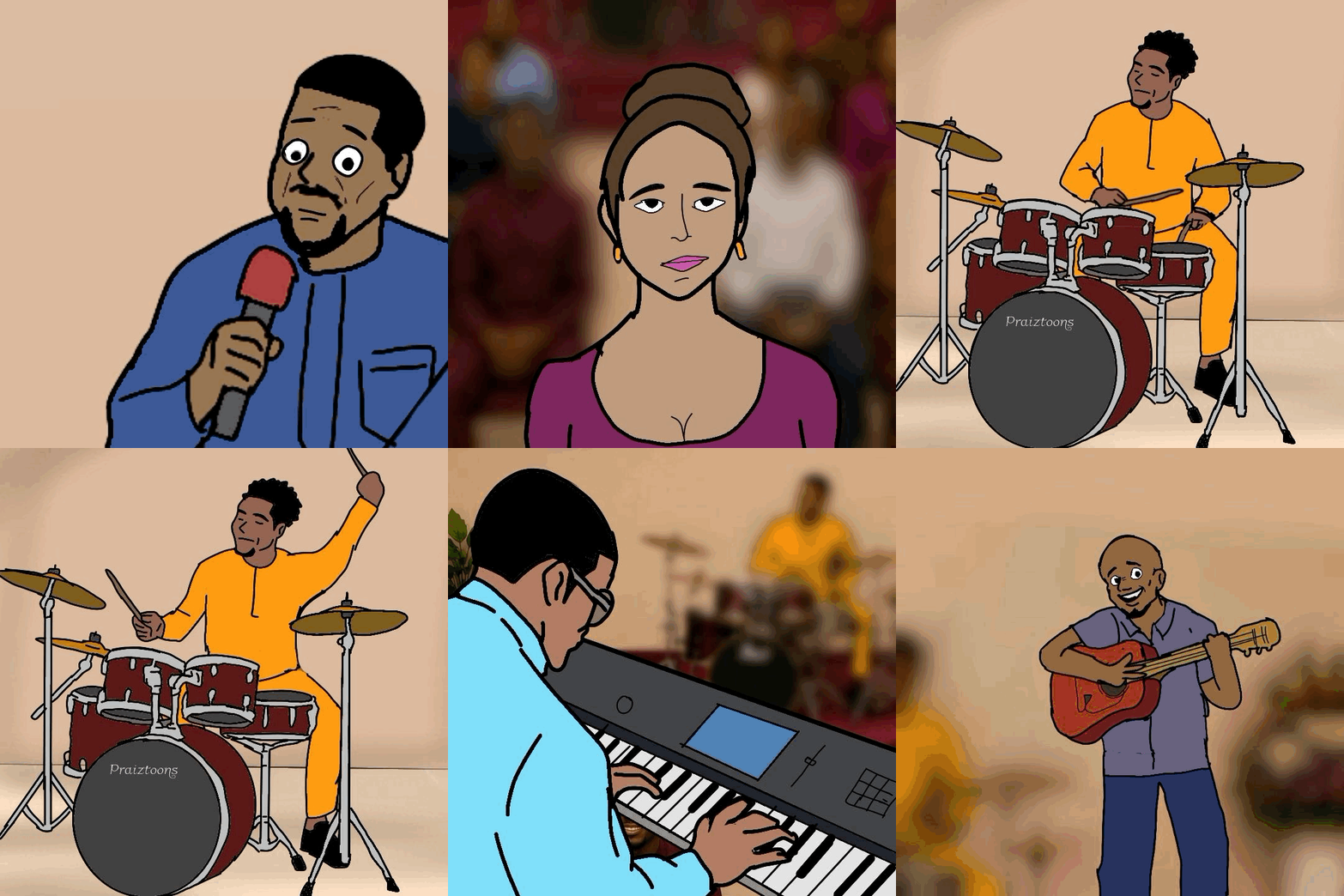
Okekwuo Praise, praiztoons: Church drama (Copyright © Okekwuo Praise, praiztoons)
Okekwuo Praise, praiztoons: The Preacher (Copyright © Okekwuo Praise, praiztoons)
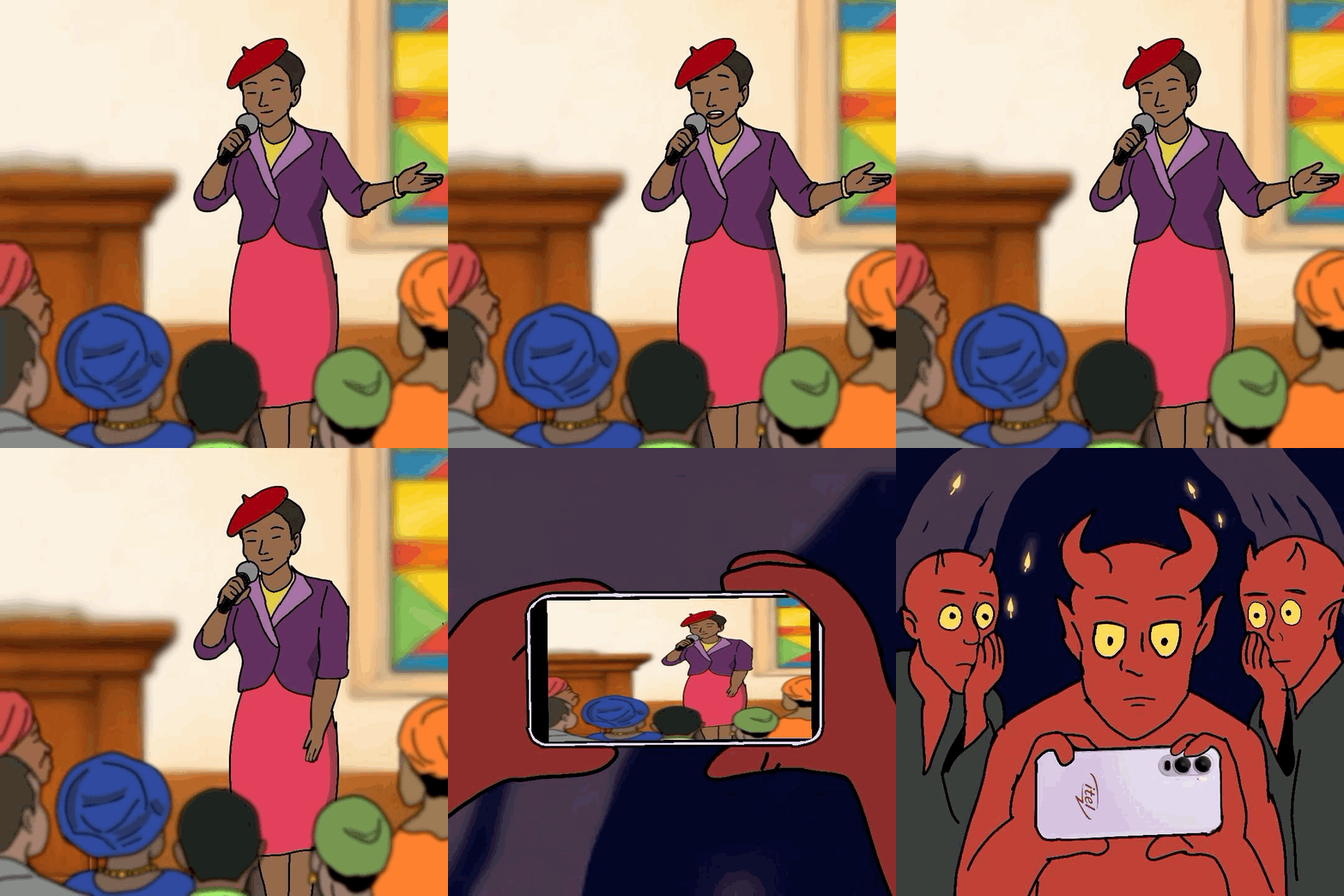
Okekwuo Praise, praiztoons: The Preacher (Copyright © Okekwuo Praise, praiztoons)
Okekwuo Praise, known by the pseudonym praiztoons, belongs to a new generation of animators continuing the decades-long legacy of creating comedy animations. He has 103,000 followers on TikTok, with many of his videos gaining millions of views. Okekwuo found solace in animation because he wanted to express his creativity through drawing, but he was also the funny guy. And while he wanted to express that part of himself socially, he didn’t want to reveal his face. So he combined the two things he loved the most, and animation became the perfect middle ground.
Okekwuo currently uses FlipaClip, an animation application that allows him to draw frame by frame and edit each one to create motion between characters. He mainly uses 2D and is self-taught, learning professionally through tutorials and experimentations. His process might be less complex, but it’s a thorough one. “I create a background layer, then separate layers for the characters and moving objects. You shouldn’t place everything on the same layer because it makes the animation harder to edit and less organised. After that, I work on lip-syncing. Since animation works frame by frame, I have to match the mouth movements and expressions to the audio. As the audio plays, I draw the character’s movements to align with the dialogue and rhythm. It’s a detailed process because every movement has to feel natural,” he explains.
“Animation can actually be an easier and more affordable way to create entertaining stories and make people happy.”
Okekwuo Praise

Okekwuo Praise, praiztoons: Ishowspeed visits Nigeria (Copyright © Okekwuo Praise, praiztoons)
Although most of his animations are under one minute, even a short clip can take around three hours to complete – which he has to balance alongside school work. He is currently a freshman studying Economics at the University of Nigeria. “Balancing school and content creation has been difficult, but I try my best. Thankfully, I’ve just finished this semester, so I have a bit more free time now,” he says. “One of the biggest challenges is electricity. Animation takes time, and I need both my phone and tablet charged to work consistently. For me, animation is fun, it’s something I genuinely enjoy doing. So even when it gets difficult, I still make time for it.”
What keeps him pushing is the constant recognition he gets from other creators he admires, as well as understanding the impact his fictional worlds and everyday stories can have on people’s lives. “Animation can actually be an easier and more affordable way to create entertaining stories and make people happy.”
Closer Look (Lagos)
Ugonna-Ora shares some further reading, places to visit and people to follow if you’re interested in learning more about Nigerian animation:
- Check out VX Animation, Orange VFX and 32AD studio.
- Follow: @belonwus, @judeinggg, @willy_kanga, @royeokupe, @omenkualonka, @komotionstudios.
- Comic reads: Nigeria’s comic book scene has become an incubator for visual storytelling, drawing from folklore, mythology, superheroes and speculative futures to imagine uniquely African worlds. Reading list: Eyo, King Jaja of Opobo & Queen Amina.
Hero Header
Glych: Land of the Gods (Copyright © Somto Ajuluchukwu, VXanimation)
Share Article
About the Author
—
Ugonna-Ora Owoh is a journalist and editor based in Lagos, Nigeria. He writes on arts, fashion, design, politics and contributes to Vogue, The New York Times, TeenVogue, Wallpaper, WePresent, Interior Design, Foreign Policy and others. He is It’s Nice That’s Lagos correspondent.