Summer of resistance: LA’s visual response to ICE
Los Angeles doesn’t just march – it designs resistance. And this summer, that resistance has a new rally cry: No Ice.
Share
Los Angeles is a city fluent in protest. It knows how to speak with its walls, its murals, its fashion. From the Chicano Moratorium, which protested the Vietnam War in the summer of 1970, to the women’s marches on Pershing Square, LA doesn’t just march – it designs resistance. And this summer, that resistance has a new rally cry: No Ice.
As federal immigration raids have intensified across the city, artists, designers, and communities have responded with unmistakable clarity. “No Ice” is showing up everywhere: in hand-drawn posters taped to taquerías, in bold block letters at vigils, even in digital toolkits circulated on Instagram stories, ready for print or repost. It’s not a campaign; it’s a collective exhale of defiance.
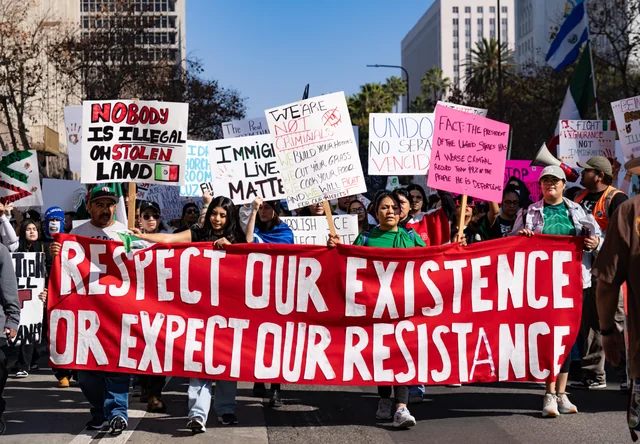
Chicano anti-Ice protests 2025
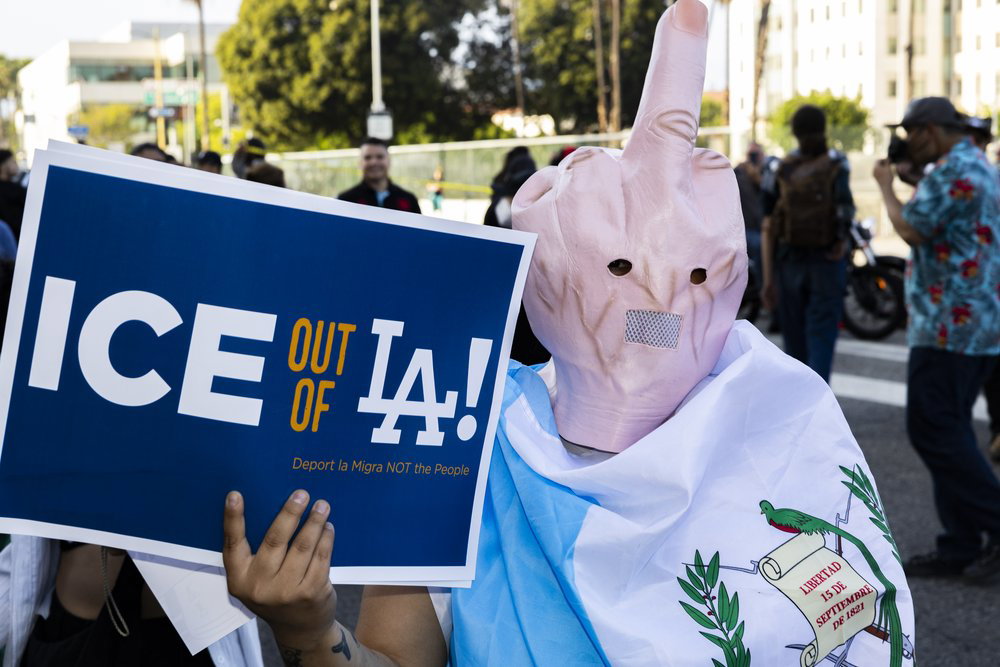
Courtesy Jake Crandall / The Corsair
Getty Images via AFP
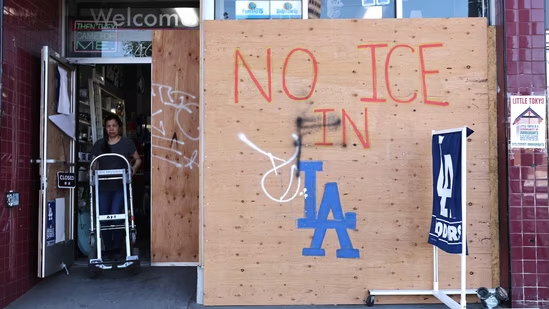
Getty Images via AFP
“As systems fail, communities design for survival.”
Meg Farmer
Leading the charge is Crenshaw Dairy Mart, an artist-run collective and gallery dedicated to shifting the trauma-induced conditions of poverty and injustice. Co-founder Noé Olivas adapted the iconic Ice logo found on gas station freezers into a mural, reimagined in bold lettering on the former dairy mart’s facade. Its scale and familiarity make it impossible to ignore. Conceptually, it leverages the blocky outlined letters covered in frosty snow as a call to action.
As part of its Summer of Resistance, Crenshaw Dairy Mart also invited artist and altarista Ernesto Rocha to pull up and contribute. “I presented the idea of creating an altar made of ice in homage to the hundreds of people who had been kidnapped by Ice up to that point,” Rocha says. Altars are places of mourning, grief, and remembrance. His installation, How to Melt Ice, called on participants to engage directly with the piece: crush it, watch it, heat it, and abolish it without causing harm to yourself, others or the environment.
Rocha constructed the altar using 20-lb ice blocks stacked like bricks over a dry ice foundation. “It was important to build a barrier that literally created a chilling effect on the other ofrendas,” he explains. Behind the frozen wall, delicate flowers – symbols of families and lives disrupted – were shrouded until the community came together to break the ice, unveiling them in an act of symbolic protection. Rocha reinforced this sentiment by framing the words “Families are sacred” in an Old English typeface, which has long defined the Chicano culture in LA. He also designed the participant instructions in the same font, empowering pride and celebrating Mexican American identity.
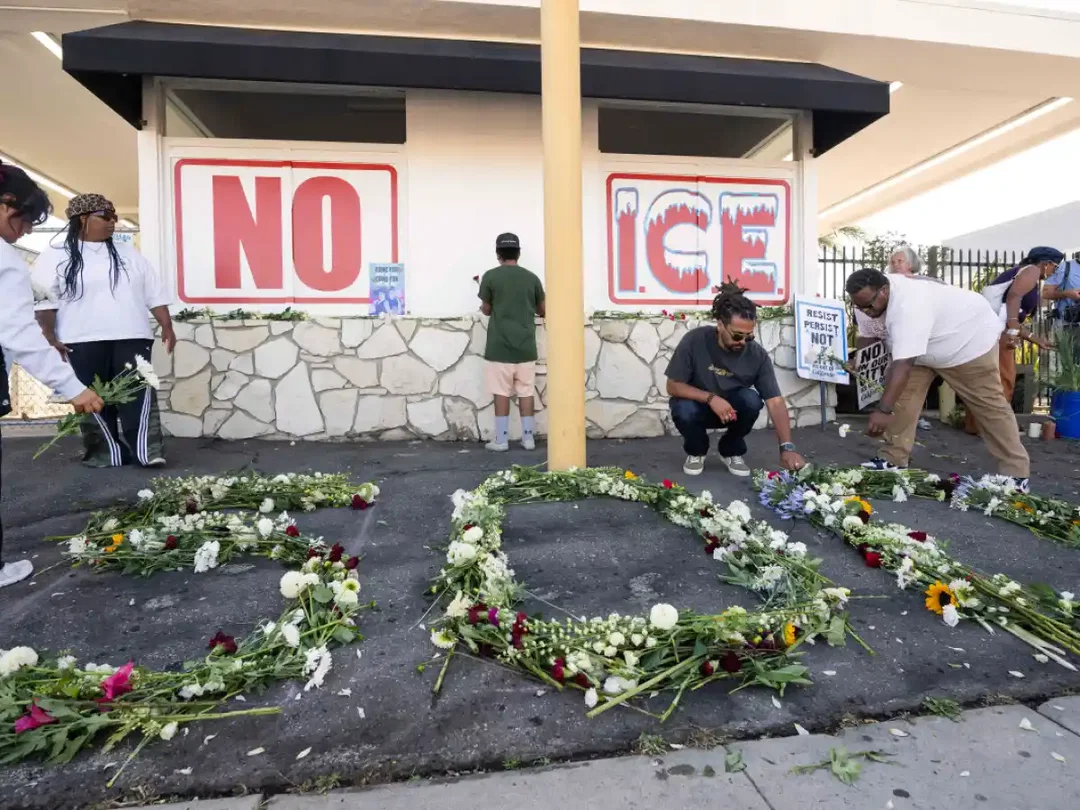
Noé Olivas: No Ice mural. Image courtesy Crenshaw Dairy Mart, 2025
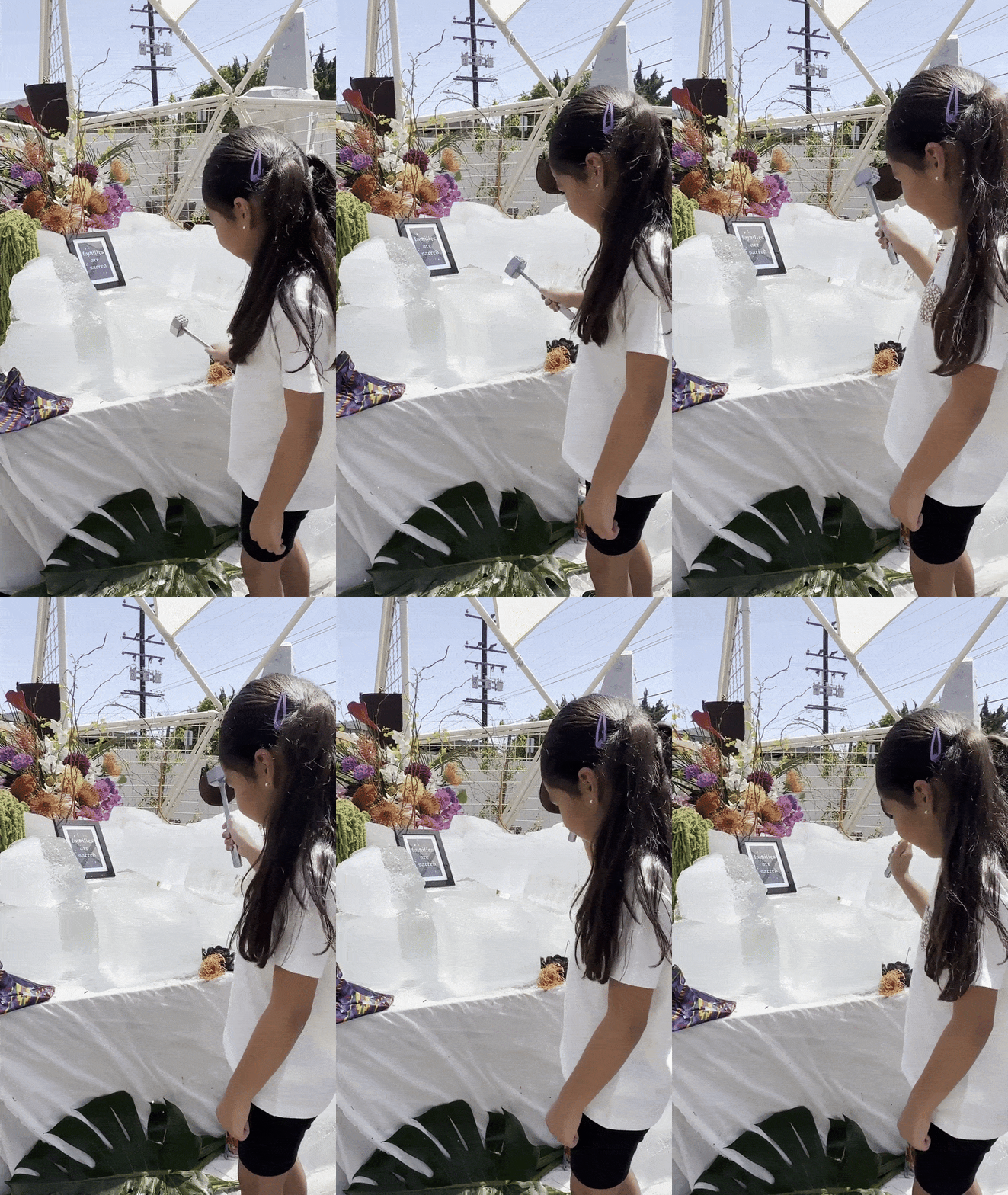
Ernesto Rocha: How to Melt Ice, on 79th, 2025
Ernesto Rocha: How to Melt Ice, on 79th, 2025. Image: Leroy Hamilton
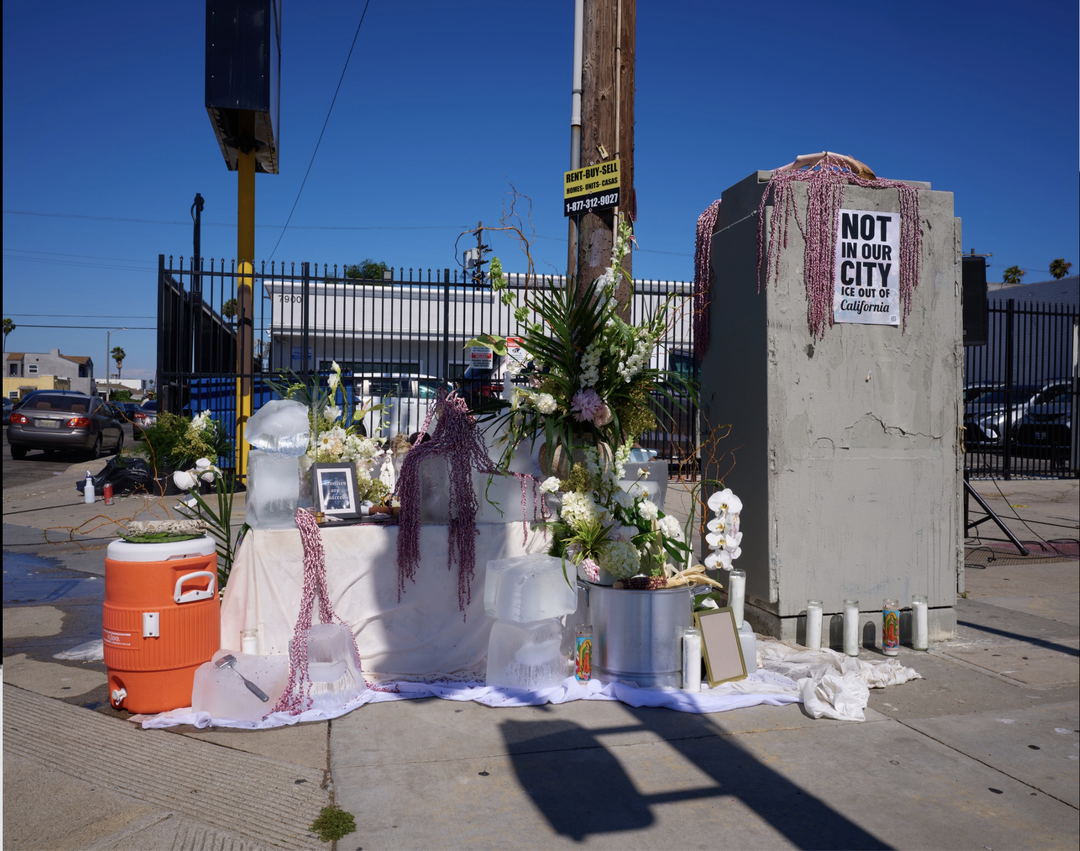
Ernesto Rocha: How to Melt Ice, on 79th, 2025. Image: Leroy Hamilton
Beyond Crenshaw, the visual resistance is citywide. The familiar LA Dodgers logo has been adapted in protest signage – not just as shorthand for city pride, but as a loaded reminder. Dodger Stadium was built atop Chavez Ravine, a working-class Mexican American community razed through eminent domain and political manoeuvring. These echoes of violent forced removal remain.
There have been moments of surreal visual levity, too. Middle finger masks, hand-stitched and oversized, channel the cheeky spirit of Claes Oldenburg’s object replicas. A life-sized pink Labubu – the viral plush figure designed by Kasing Lung to be somewhere between gremlin and greeter – made an unexpected appearance at a protest, dancing with bite. And high above downtown LA, skywriting read “No Cages No Jaulas,” designed by artist Beatriz Cortez as part of a nationwide artist-led Independence Day protest. Its bilingual message was effective in calling out the inhumane detention centres.
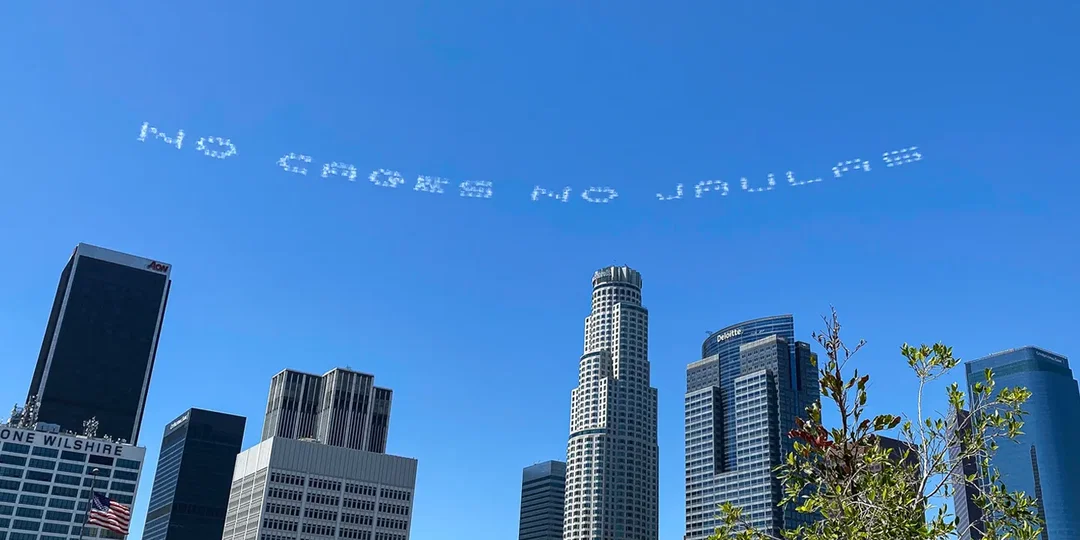
Beatriz Cortez: No Cages No Jaulas. Image courtesy Dee Gonzalez, In Plain Sight
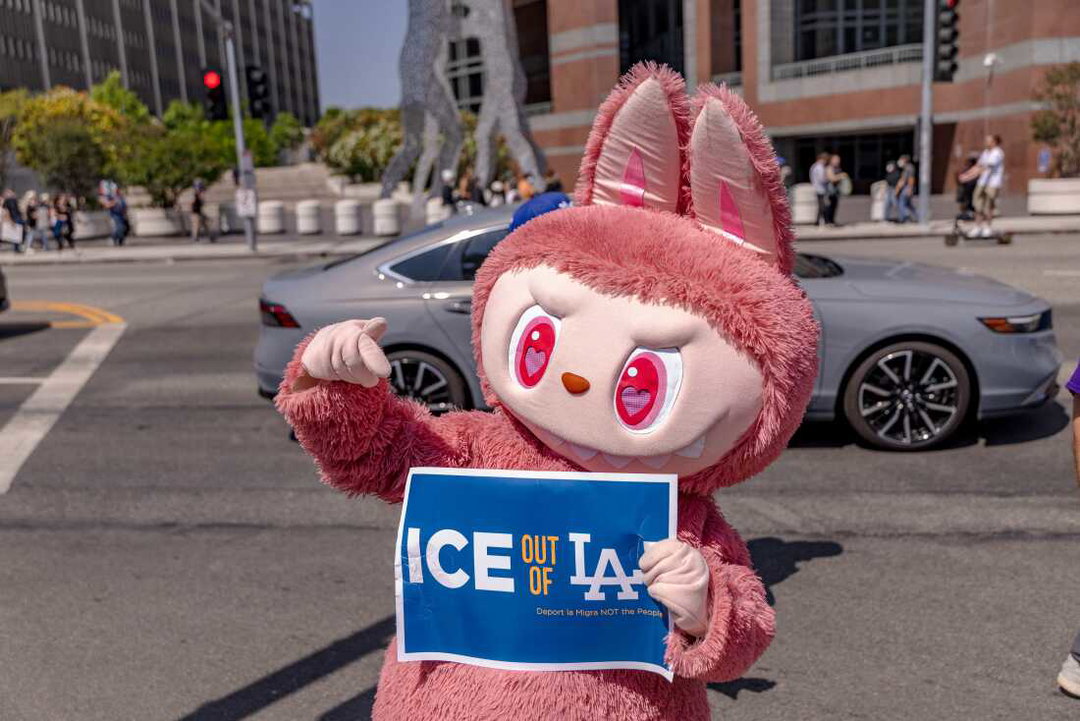
Image: Sahab Zaribaf. Courtesy: Middle East Images/AFP via Getty Images
Dodgers Stadium. Image: Damian Dovarganes | Credit: AP Copyright: Copyright 2025 The Associated Press
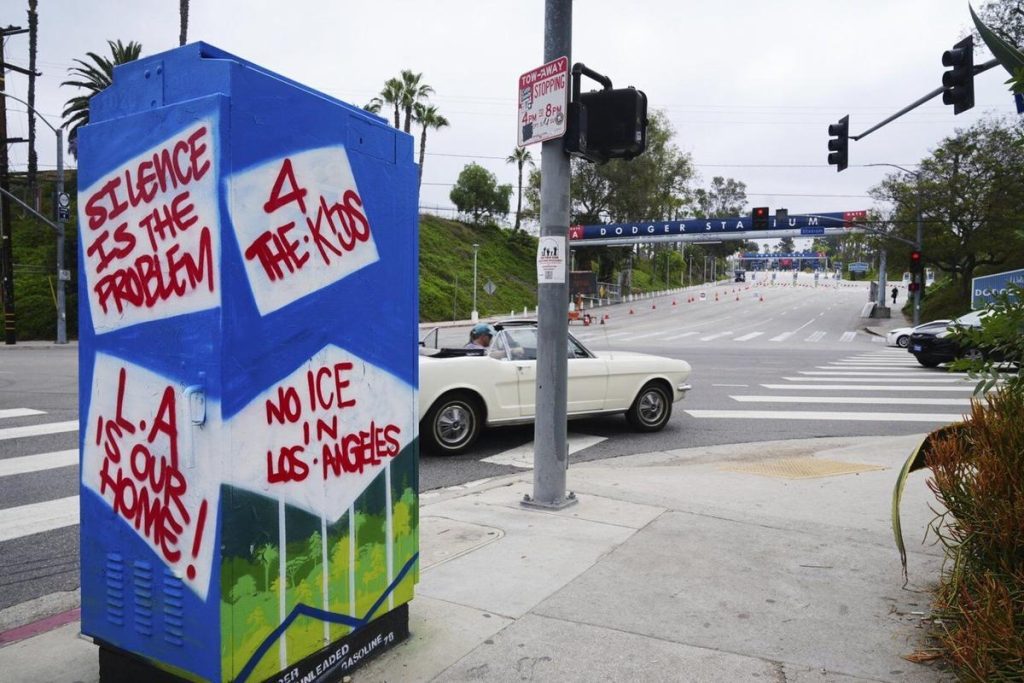
Dodgers Stadium. Image: Damian Dovarganes | Credit: AP Copyright: Copyright 2025 The Associated Press
“Everyone in this country is a hyphenated American, and this could have happened to anyone.”
Frank Fujii
Historically, LA has always used visual ephemera, be it fashion, signage, or graphics, as tools of resistance. During the 1943 Zoot Suit Riots, young Mexican Americans were targeted and attacked by US servicemen in Los Angeles, when their oversized coats and trousers were seen as threats to American conformity. The zoot suit, influenced by Texas’ Pachuco culture, became a uniform of youthful defiance – a rejection of “Juan Crow” racial policies that limited Mexican American mobility and rights.
California is no stranger to mass detention. After Pearl Harbor, over 120,000 Japanese Americans were incarcerated without due process under Executive Order 9066. One of the most iconic protest images of that time is a photograph by Dorothea Lange, where she captured a storefront in Oakland with a sign reading in bold, crisp caps “I am an American.” Placed in the window the day after the bombing, the shop was soon shuttered, and its owner, an American-born UC graduate, was sent to an internment camp.
Years later in 1978, Seattle-based graphic designer Frank Fujii, himself a former detainee at Tule Lake in California, created the ichi-ni-san logo for the Japanese American redress movement. The design features three figures representing Japanese immigrants across generations, bound in a circle of barbed wire. Still used to this day, it commemorates the Day of Remembrance. Fujii warns, “I am afraid for anyone who can lose rights without due process the way we did. You know everyone in this country is a hyphenated American, and this could have happened to anyone.”
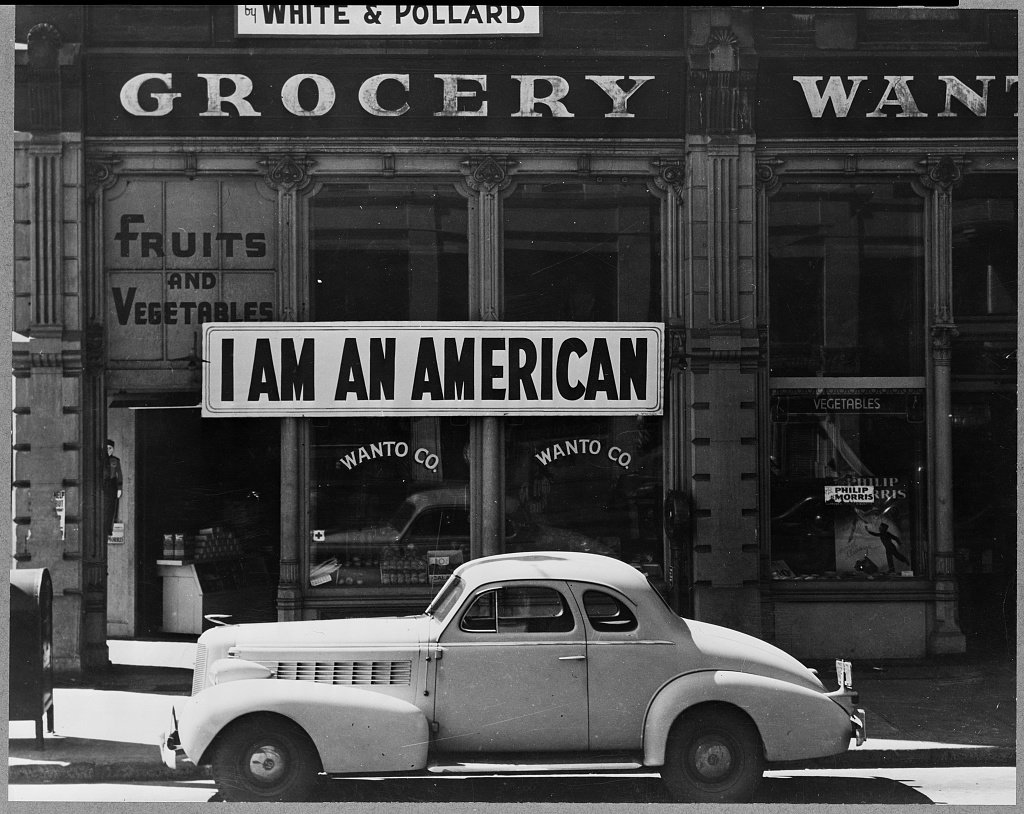
Dorothea Lange, 1942. Image courtesy of Library of Congress
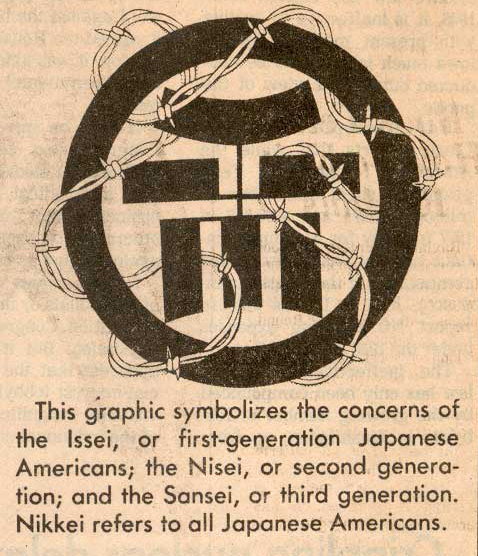
The original ichi-ni-san logo created by Frank Fujii. Courtesy of the Frank Abe Collection
Frank Tellez, wearing a zoot suit, was arrested during the riots, June 9, 1943. Courtesy of the Library of Congress
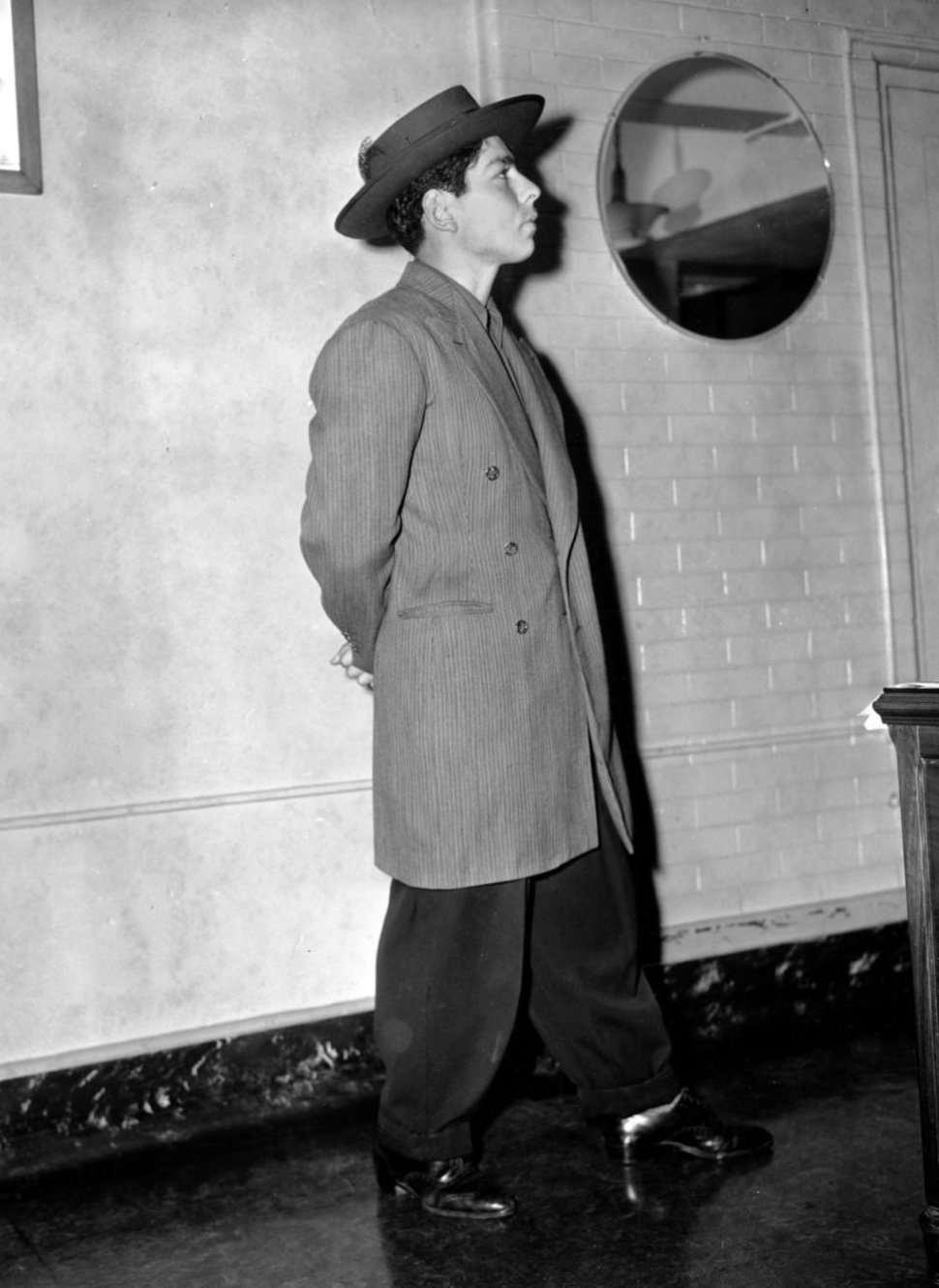
Frank Tellez, wearing a zoot suit, was arrested during the riots, June 9, 1943. Courtesy of the Library of Congress
Fujii’s fears are playing out today on the streets of LA in broad daylight. Signage reminding the world, “No One’s Illegal on Stolen Land” marks America’s long history of weaponising legislation as a tool for detainment, deportation, and demolition. The very first immigration law passed in the US (the 1790 Naturalization Act) limited citizenship to “free white persons” or immigrants who had established residency for two years. The truth is, we’ve been here before.
“Art and culture function as invitations for direct action; they are onramps for further and more disciplined engagement,” Rocha says. He recalls a memorable exchange during How to Melt Ice, when a local 10-year-old girl named Laila joined the installation. “What are you doing, Laila?” he asked. She brushed her hair aside and replied, “I’m smashing it because they are kidnapping people from the streets!”
That’s the message. Simple. Sharp. Undeniable.
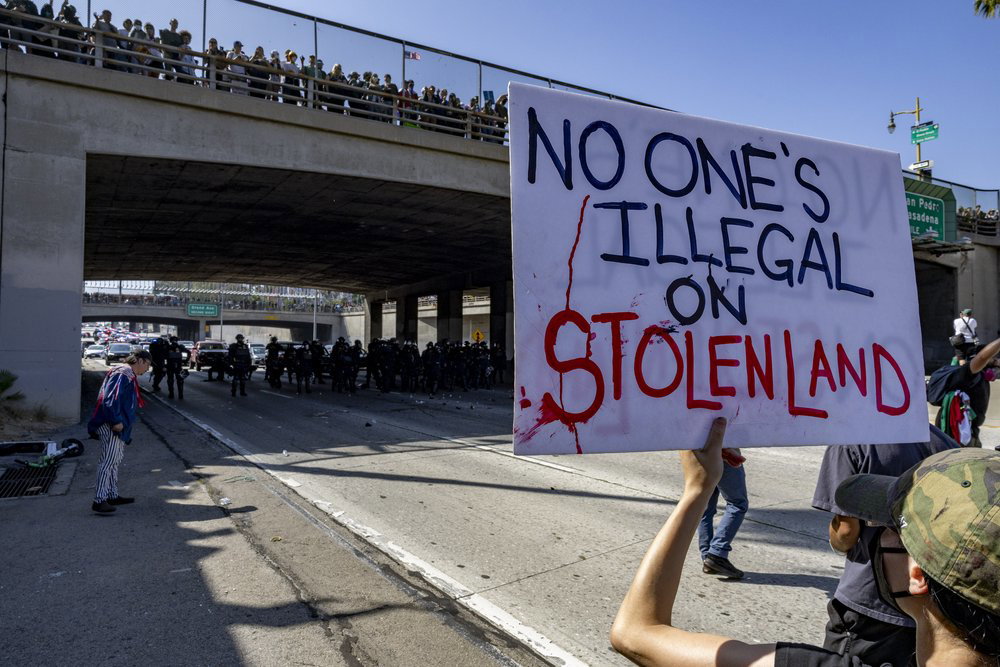
Courtesy Jake Crandall / The Corsair
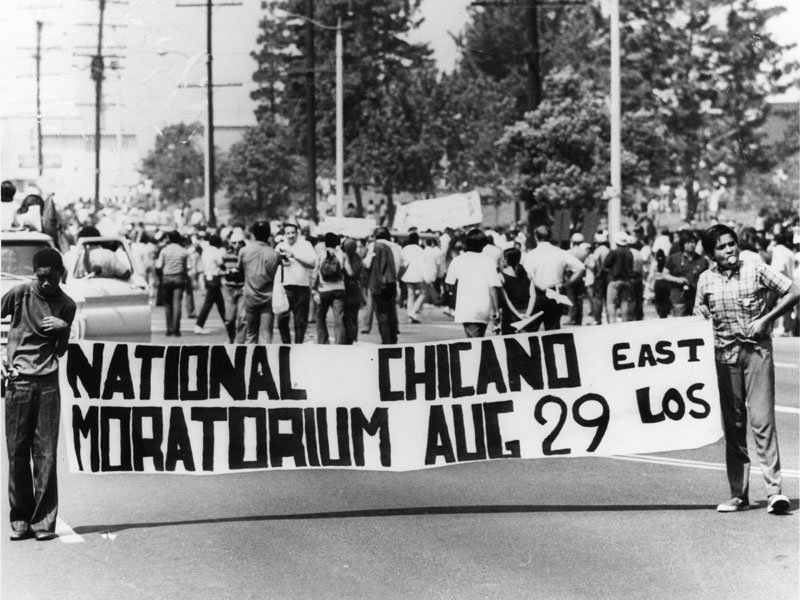
Chicano Moratorium March, 1970, Sal Castro Security Pacific National Bank Collection, Courtesy LAPL
Ice Wrecks Communities, Home Depot, 2025. Image: Meg Farmer
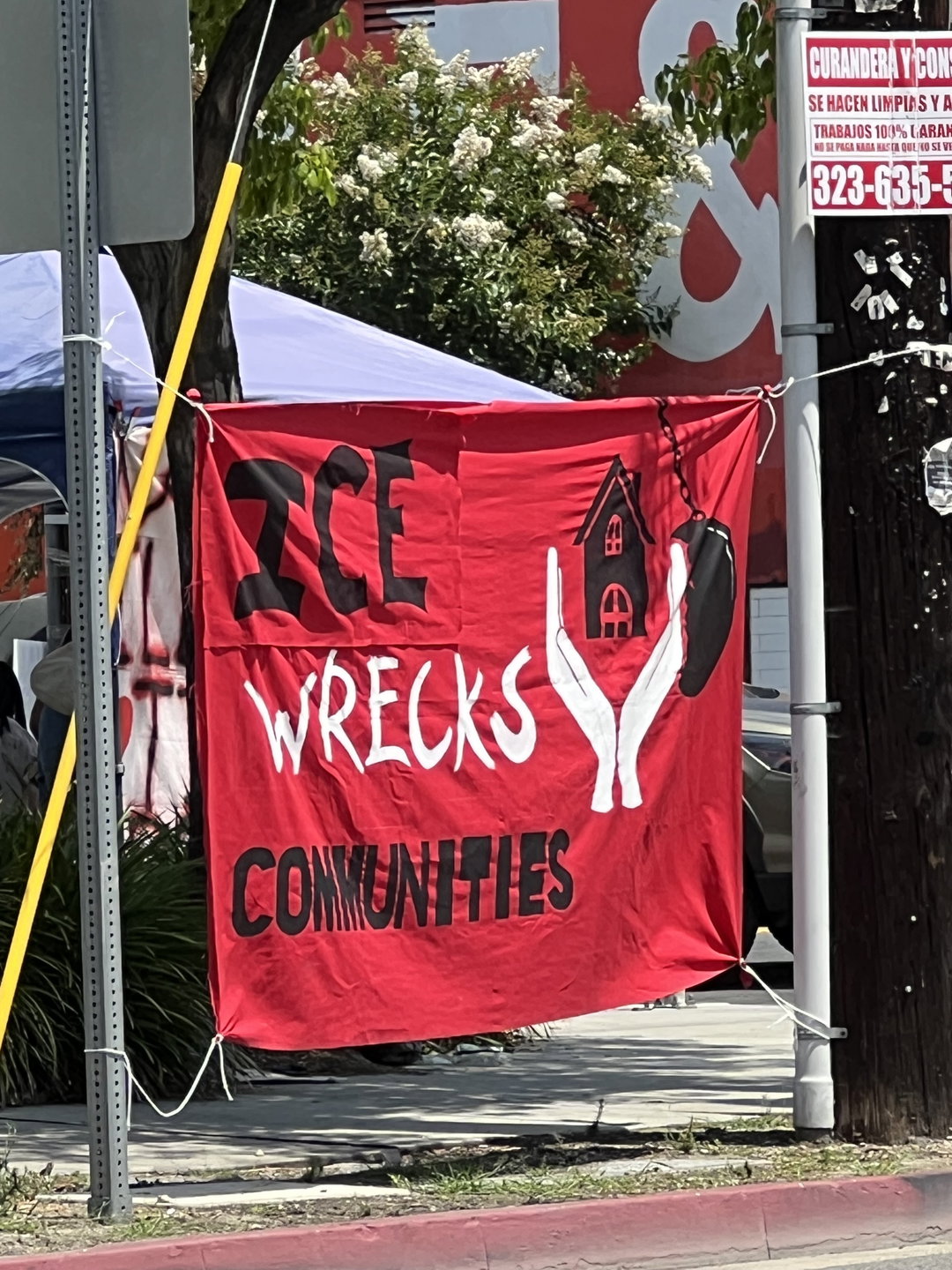
Ice Wrecks Communities, Home Depot, 2025. Image: Meg Farmer
It’s also worth noting where the message isn’t. In glossy brand campaigns or municipal design systems, the issue is conspicuously absent. That silence is its own kind of violence. As systems fail, communities design for survival. As LA communities defend themselves, they’re also creating their own visual infrastructure – one that doesn’t ask permission to exist.
What we’re seeing this summer isn’t design for design’s sake. It’s communication in a crisis. It’s artists stepping in where systems have failed. And in true LA fashion, it’s being done with grit, urgency, and style.
Because in a city where helicopters hover and sirens punctuate daily life, every wheatpaste, every altar, every hand-lettered “No Ice” is more than a message.
It’s a line in the sand.
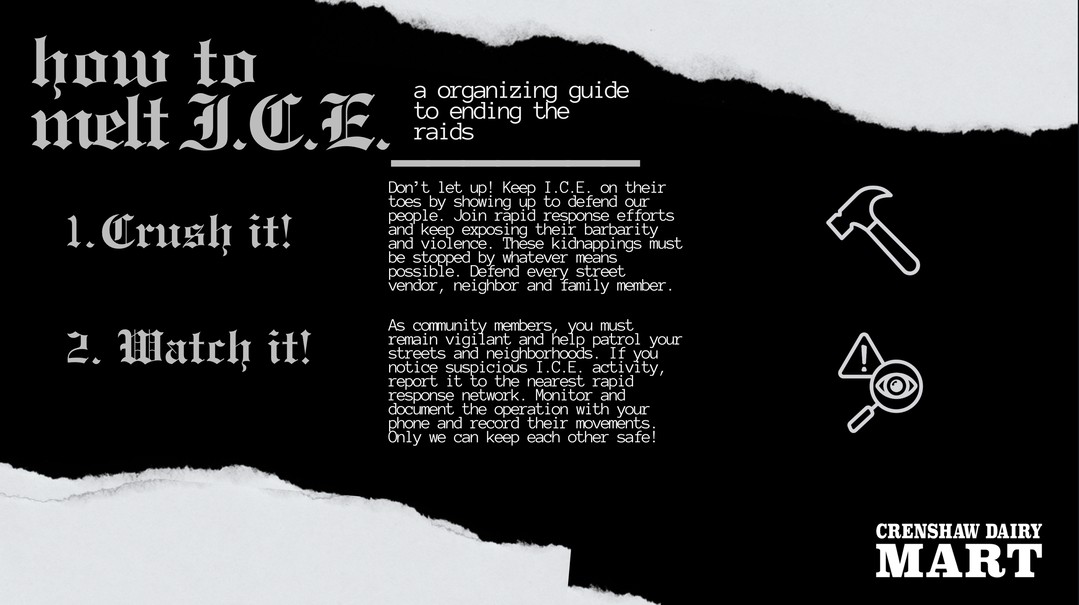
Ernesto Rocha: Instructions, How to Melt Ice, 2025
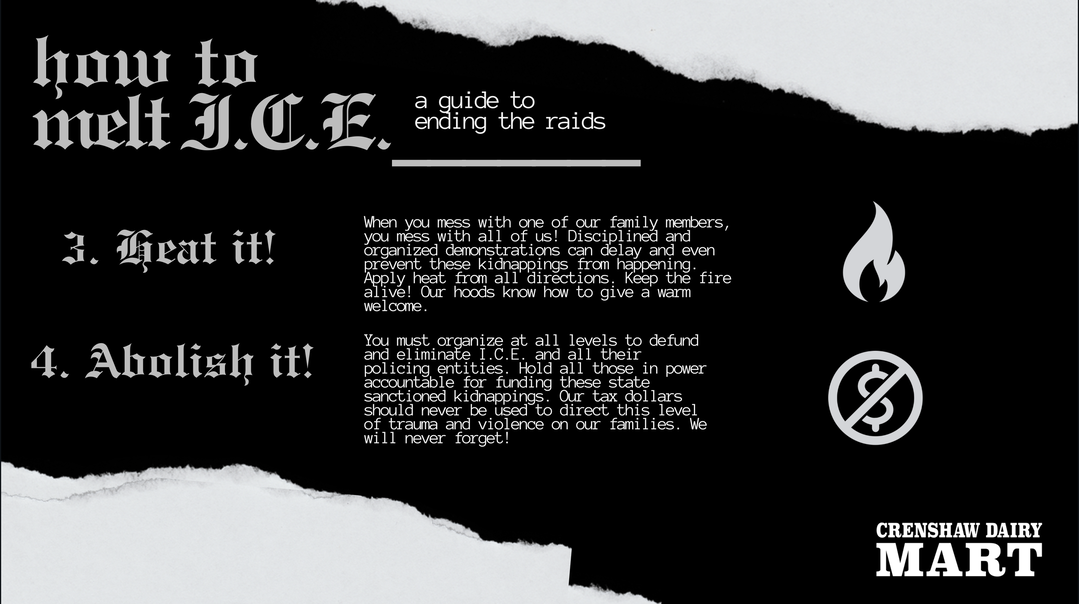
Ernesto Rocha: Instructions, How to Melt Ice, 2025
Closer Look
Meg’s suggestions for further reading and following, related to this vital topic.
- Eat + Follow: lataco.com
- Read: Words Can Lie or Clarify by Aiko Herzig-Yoshinaga
- Follow: @undocubae, @calmatetupedo, @beatrizcortezflores
Share Article
Further Info
About the Author
—
Meg Farmer is a culture vulture who writes honest criticism framed by the pulse of the day, thorough research and design history. Based in Los Angeles, she is a graduate of the Design Criticism MFA program at the School of Visual Arts, where she received the first Steven Heller Design Research Award for her investigation into the universal symbol for poison and how it once failed. Her fervour for design and the way everyday people use it inspires her to bring design literacy to all. She is It’s Nice That’s LA correspondent.