The Hardware Archive by Liang-Jung Chen shows these humble, utilitarian objects in a new light
The London-based artist, designer and researcher has been gathering things you might find oddly familiar, but have never actually looked at up close before.
This wonderful collection of items you might find under the sink, in your family tool box or at your local DIY store, originally started out as a design project titled The Misused by designer Liang-Jung Chen. It started back in 2018, where they reconfigured hardware items into homeware objects. “The idea was inspired by the makeshift phenomenon in my hometown where the elder generation upcycled disused items into things they needed. I was impressed by their thrifty and resourceful spirit and how clever some of the improvisations were,” the designer explains.
The series of object experiments started a journey of hardware collecting that, well, never really stopped for Liang… “this habit of collecting hardware items at local hardware shops started to grow on me. When I moved to London and had the chance to travel a bit in Europe, I was utterly obsessed by the hardware items that I had never seen before,” they say. It was on their travels that the designer consolidated the idea that their interest in hardware had legs, and was an area of object research that they thought “had anthropological and ethnographic depth to it”. Pursuing their hardware fixation in the form of a material culture study, Liang created The Hardware Archive website with a research grant they received a few years ago.
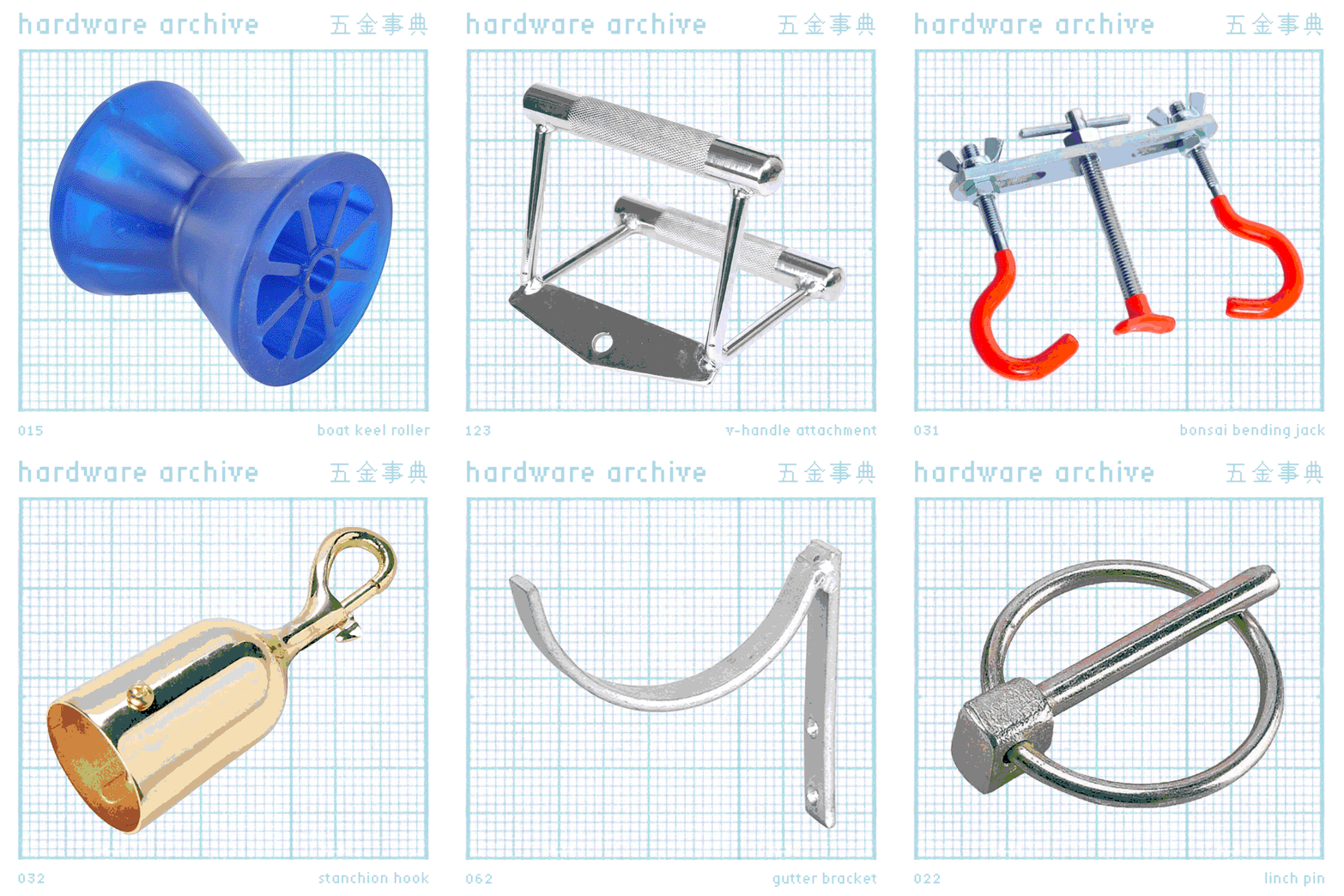
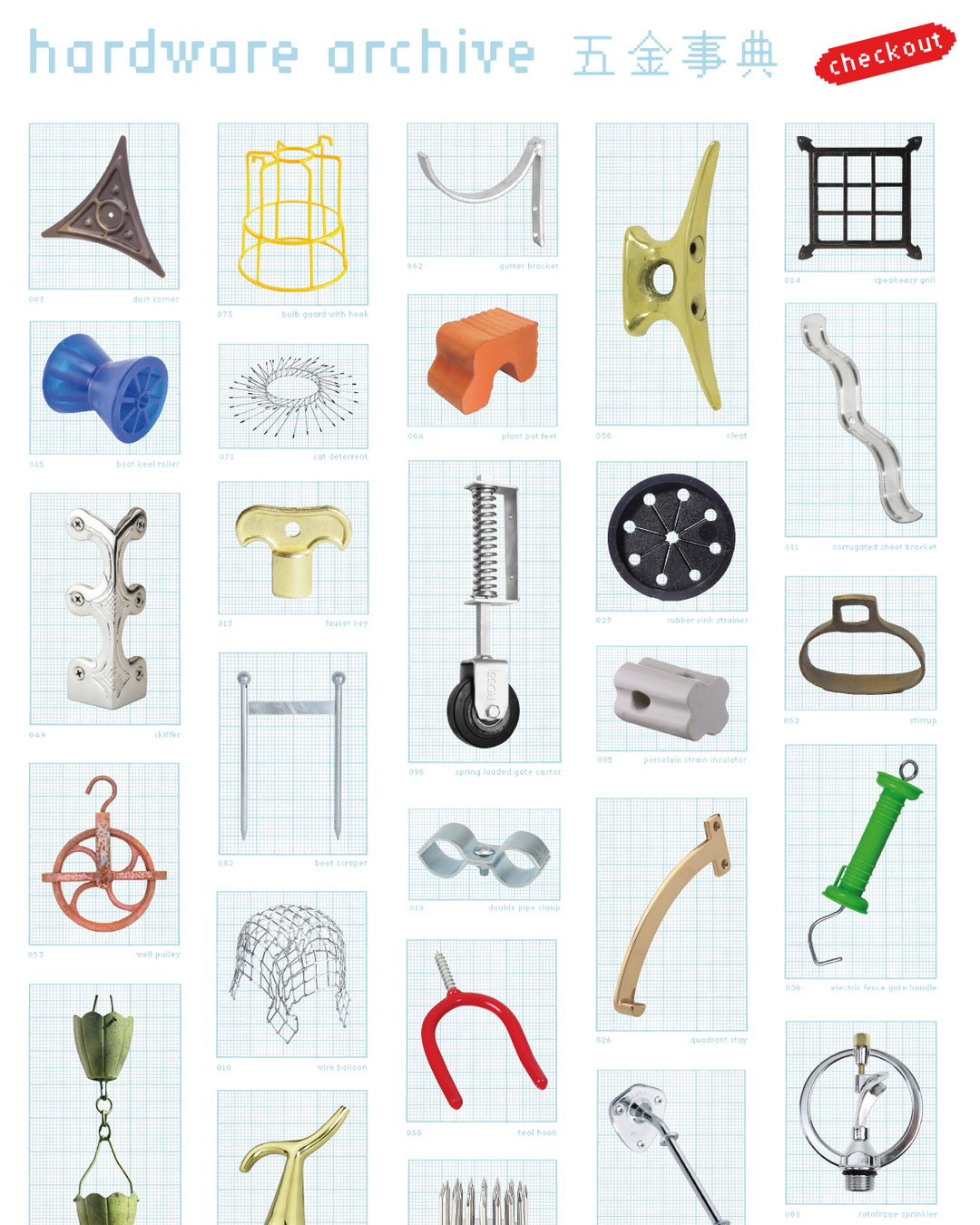
Liang-Jung Chen: Hardware Archive – selected items (Copyright © Hardware Archive, 2024)
With such a wonderful obsession with everyday, and (readily available) objects, things could get out of hand, so Liang had to, of course, set some parameters for the collection. First defining what exactly ‘hardware’ meant to them, they tell us their collection only focuses on “devices that are not able to function on their own, similar to the definition of a semi-finished good, they are waiting for their potential to be fulfilled”, Liang explains. Another key criteria for the archive was the ability for each item to be industrially produced and therefore available to buy (no matter how niche its purpose).
With each hardware accessory precisely positioned on a background of graph paper displayed on a digital gallery-like wall, the website makes for a satisfying visit. This framework also allows us to look at completely mundane, utilitarian objects in an unfamiliar way. As if we have never encountered them before, we notice all the smaller details of these objects’ satisfying forms and nifty tricks to perform their functions; “suddenly a lot of them look very sleek”, Laing says. Whilst hardware items by nature are always used in conjunction with other objects (like Liang’s definition), and anonymously blend into the fabric of everyday things, on Liang’s site it is quite the opposite, with accessories framed as humble ‘artworks’ that steal the show.
Liang says “the collection has attracted nerds of all kinds – architects, artists, designers, engineers, DIY-ers and beyond”, containing everything from pizza savers, to Victorian piano insulators and bonzai branch benders. Many of the archive images have left us asking “what is this one for?” Liang’s interest amongst all of this variety however, is how each object “reflects its time and local needs”. Not only are hardware items “heavy-duty”, says Liang but “they are also made at the lowest cost possible – that’s exactly why they are so cleverly engineered. They are designed anonymously and collectively, the design improves over time in different parts of the world.”
The archivist hopes that each object in their collection continues to “embody some sort of relevance… Much like an archaeology museum, where we appreciate the primitive spears made of stones thousands of years ago. I imagine, in the year 3024, future living beings will dig out a piece of metal anti-loitering spike and study how human species in London were trying to stop people from sitting down in public… How absurd! Why did we need that?” they say. The Hardware Archive then, is perhaps a digital archeological site for the past and present of these largely co-dependent, but very helpful objects. Something that Liang hopes to take further in an academic framework where they travel the world to investigate hardware culture, “like ethnographers do”, they say.
The designer hopes to culminate the collection in a publication, alongside a physical exhibition in the future to display the fruits of their fieldwork. They are continuing to keep their eyes peeled round any hardware shops for something new to add to the collection. The archive, however, is open to public submissions, so if you’ve come across something that might fit the bill, get in touch – you might see your strange but useful object pinned up on The Hardware Archives digital wall of fame.
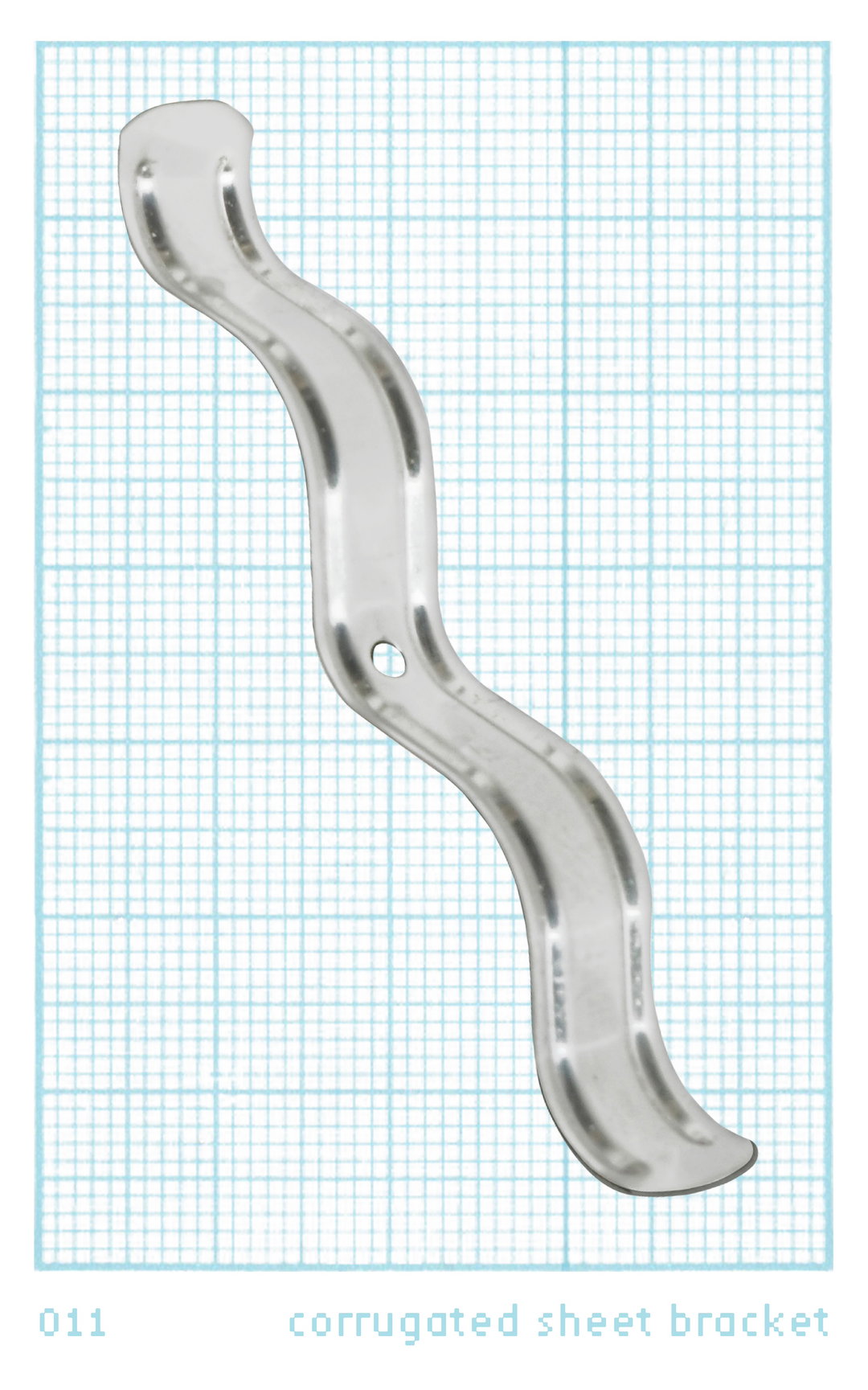
Liang-Jung Chen: Corrugated sheet bracket (Copyright © Hardware Archive, 2024)
Liang-Jung Chen: Tiller pin (Copyright © Hardware Archive, 2024)
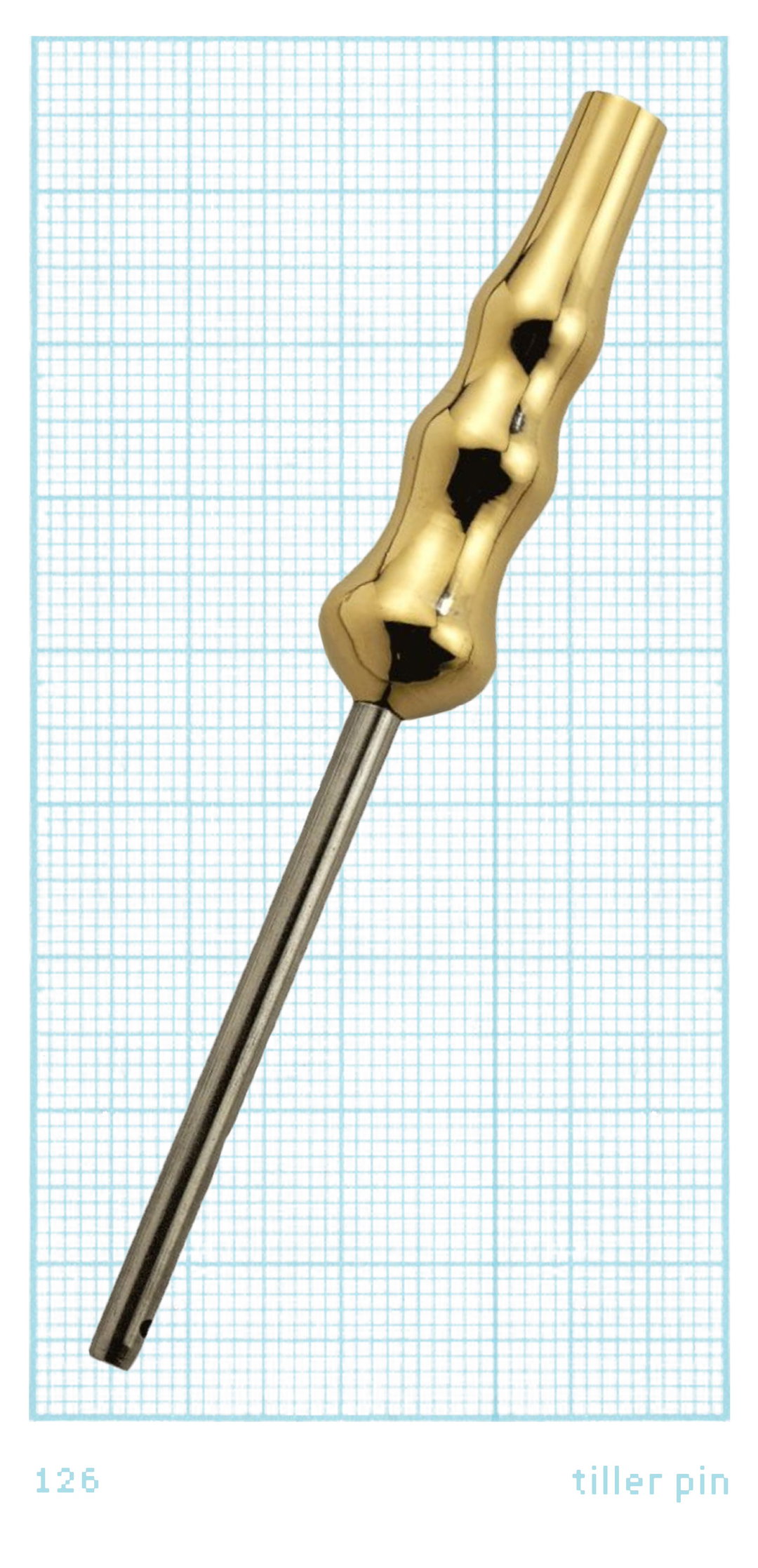
Liang-Jung Chen: Tiller pin (Copyright © Hardware Archive, 2024)
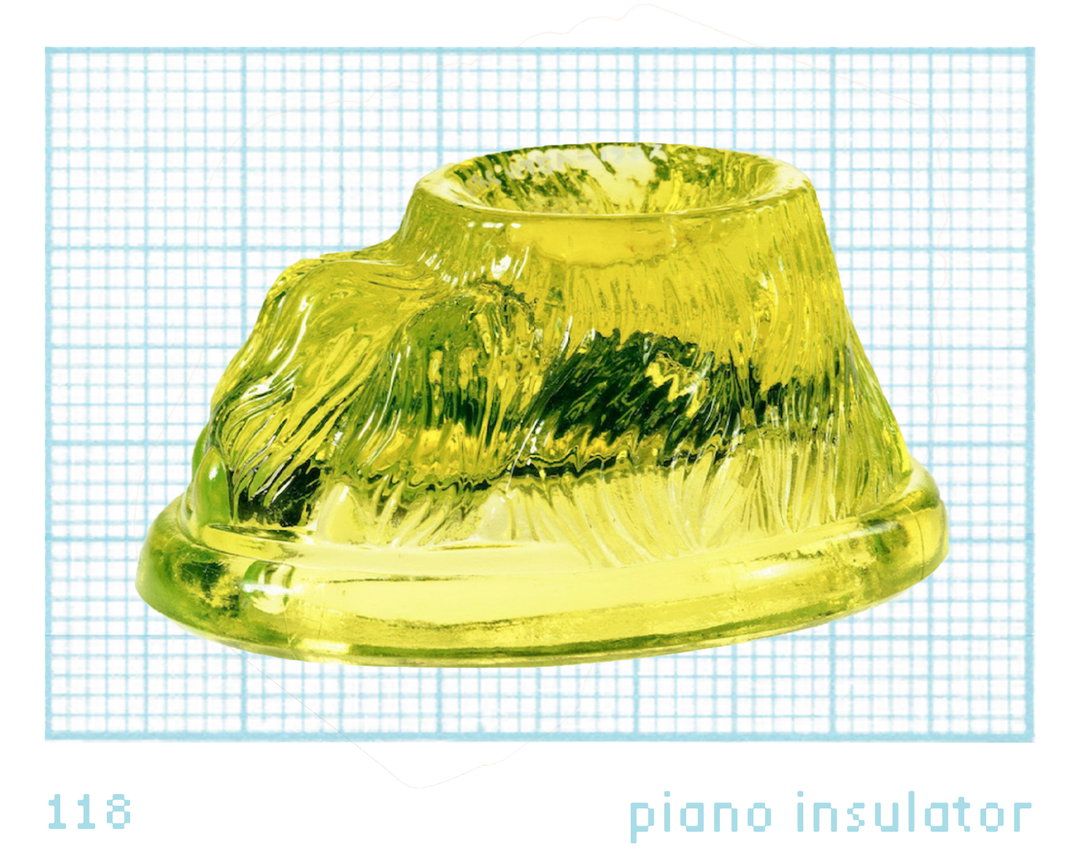
Liang-Jung Chen: Piano Insulator (Copyright © Hardware Archive, 2024)
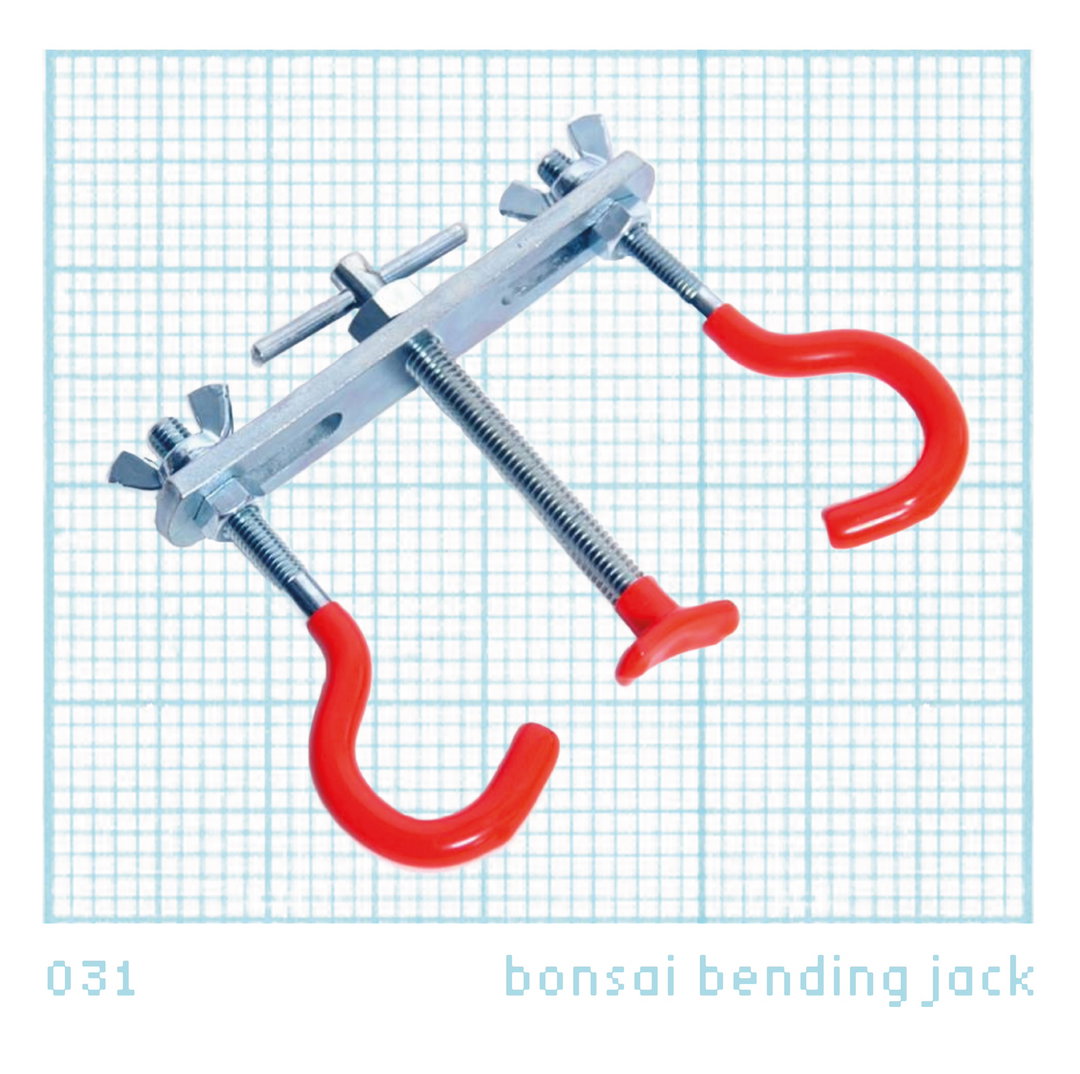
Liang-Jung Chen: Bonsai bending jack (Copyright © Hardware Archive, 2024)
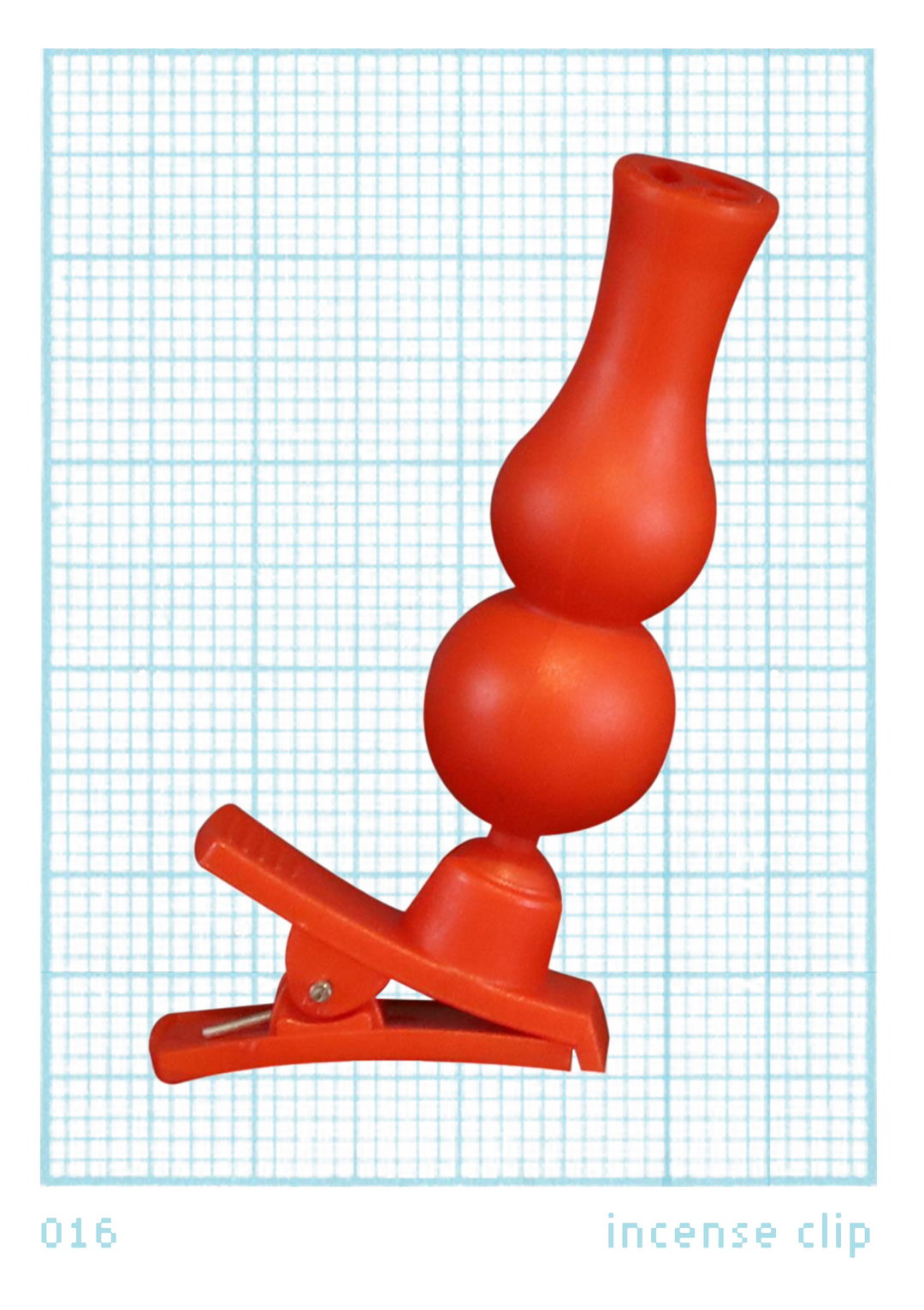
Liang-Jung Chen: Incense clip (Copyright © Hardware Archive, 2024)
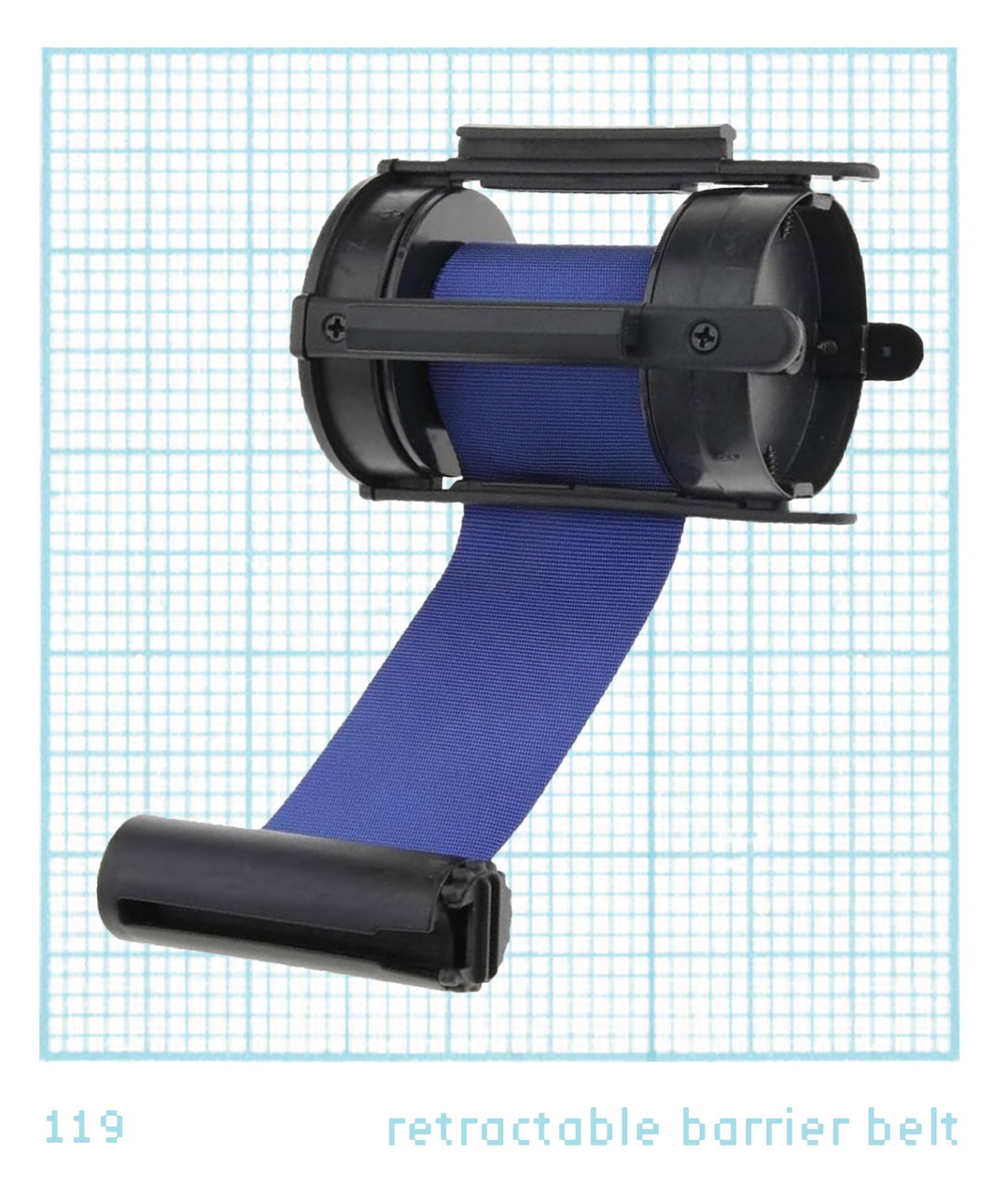
Liang-Jung Chen: Retractable barrier belt (Copyright © Hardware Archive, 2024)
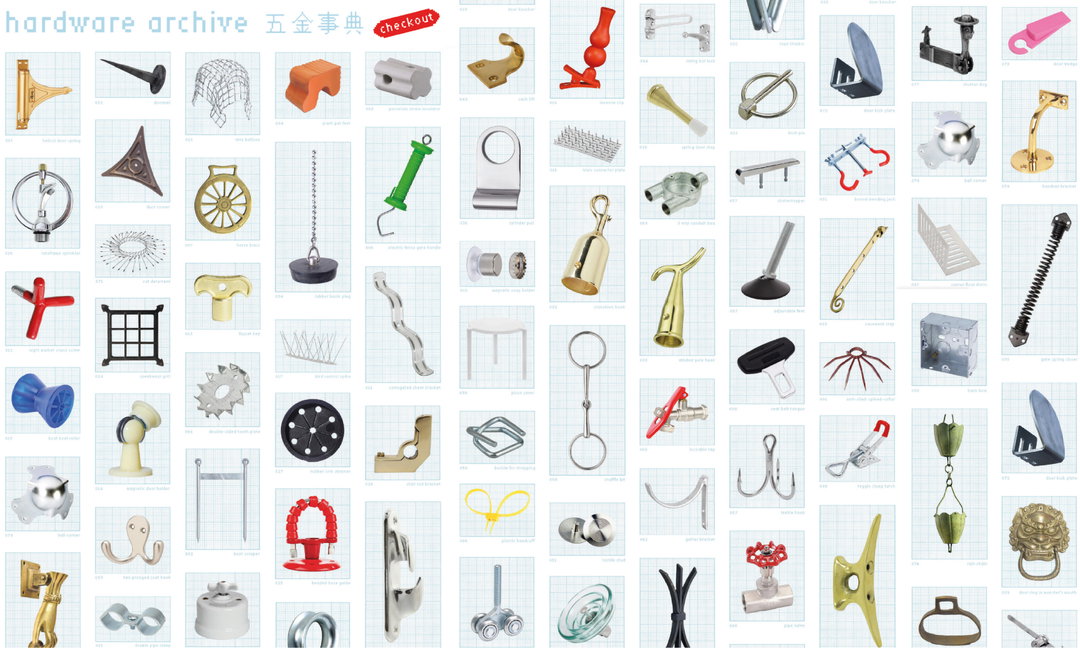
Liang-Jung Chen: The Hardware Archive website (Copyright © Hardware Archive, 2024)
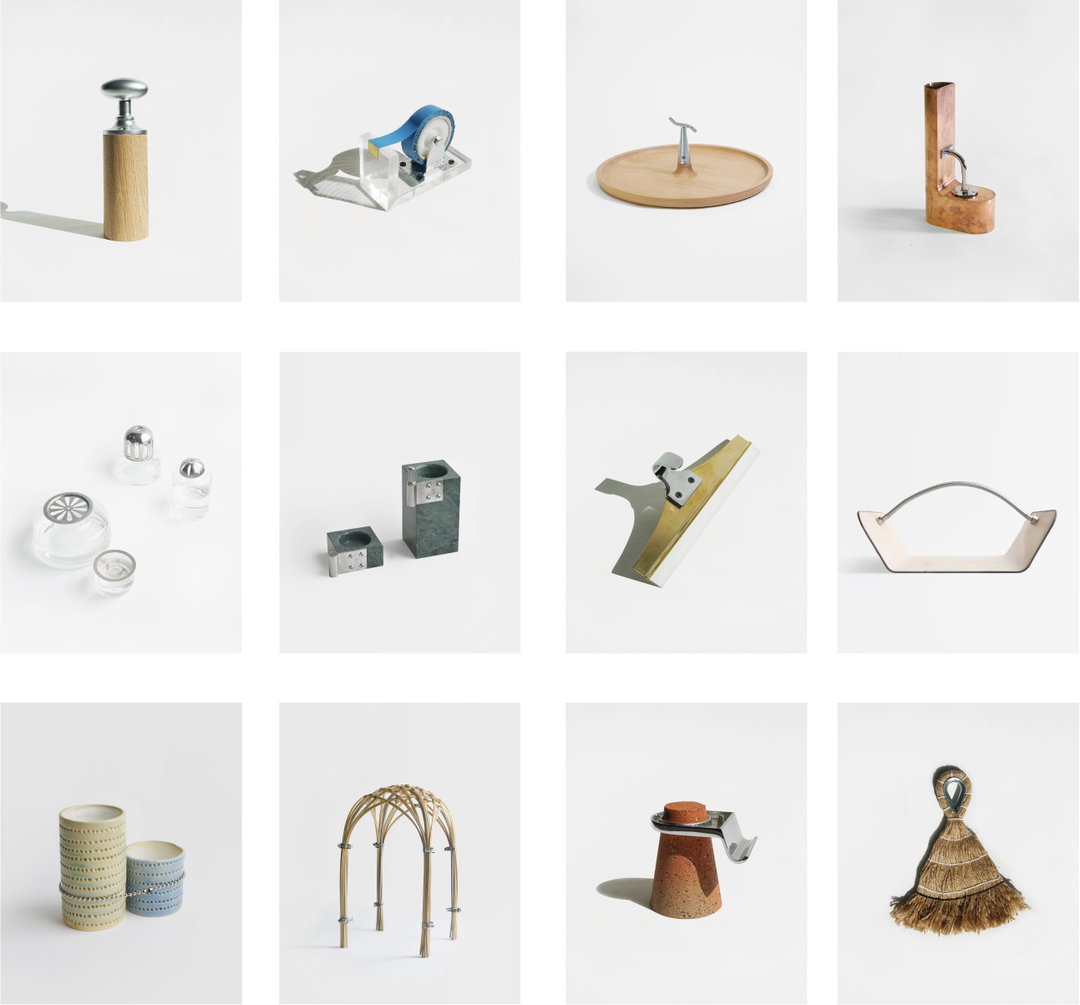
Liang-Jung Chen: The Misused series (Copyright © Hardware Archive, 2020)
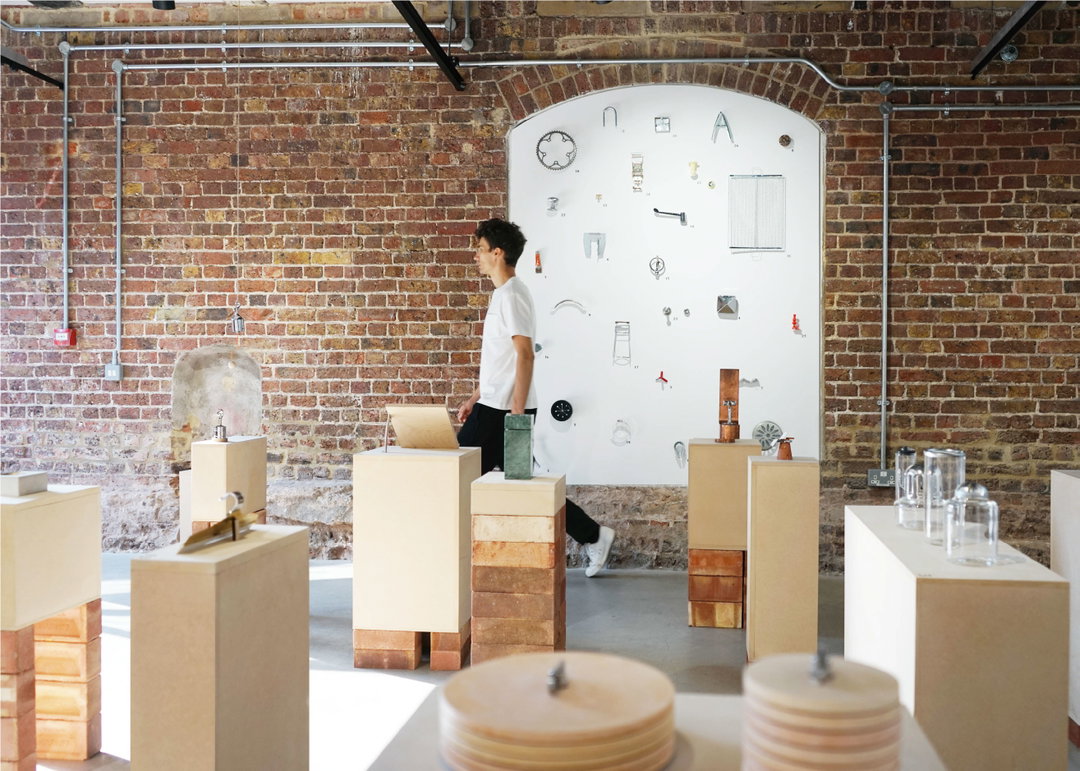
Liang-Jung Chen: The Misused exhibition - London Design Week 2020 (Copyright © Hardware Archive, 2020)
Hero Header
Liang-Jung Chen: The Hardware Archive website (Copyright © Hardware Archive, 2024)
Share Article
About the Author
—
Ellis Tree (she/her) is a staff writer at It’s Nice That. She joined as a junior writer in April 2024 after graduating from Kingston School of Art with a degree in Graphic Design. Across her research, writing and visual work she has a particular interest in printmaking, self-publishing and expanded approaches to photography. ert@itsnicethat.com
To submit your work to be featured on the site, see our Submissions Guide.