All Work is Women’s Work recovers the forgotten history of Amsterdam’s seamstresses
Through radical publishing, archival research and printed garments, Hanka van der Voet brings the overlooked labour and political organising of early 20th-century seamstresses back into view.
Researcher, writer and educator Hanka van der Voet’s work has “always been rooted in interrogating the systems that shape the fashion industry,” she tells us, taking shape as beautifully curated publishing projects such as Press & Fold: Notes on making and doing fashion, The Warehouse Review and A Magazine Reader, in collaboration with artist and writer Femke de Vries. If you picked up a copy of MacGuffin: The Stitch late last year, then you will have come across a fragment of Hanka’s most recent research project All Work is Women’s Work, in which she contributed a text titled Women Unstitched to the magazine’s fifteenth issue. The project explores the history of seamstress exploitation, political struggle and collective defiance – a story that, according to MacGuffin, is “still tugging at the seams of today’s fashion industry”.
Hanka created a corresponding book titled All Work is Women’s Work: On the seamstresses’ union of radical publishing practices in early 20th century Amsterdam, published by Clotheslines Press, the writer’s small press initiative dedicated to the intersections of fashion, labour and feminism. It was born out of an interest in feminist labour practice and organising – methods of work and structures that actively challenge patriarchal systems and inequalities – which led her to investigate the history of seamstress unions close to home in the Netherlands. Unearthing a small 1970s exhibition catalogue at Amsterdam’s Tesselschade library, the writer learned that although Amsterdam itself was once a major garment production centre in the late 19th and early 20th centuries, the city itself “bears almost no trace of this history”, she says. “That systematic erasure of working-class women’s labour from Amsterdam’s collective memory became the project’s driving force.”
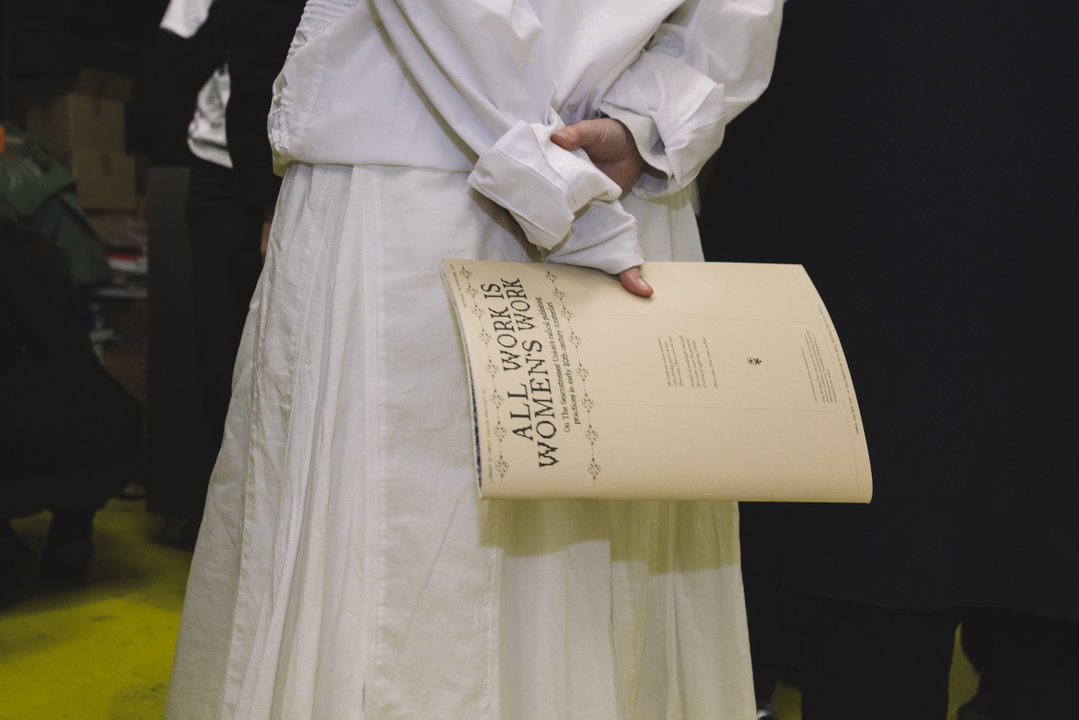
Hanka van der Voet: All Work Is Women’s Work launch at San Serriffe Amsterdam, photography by Diego Diez (Copyright © Hanka van der Voet, 2025)
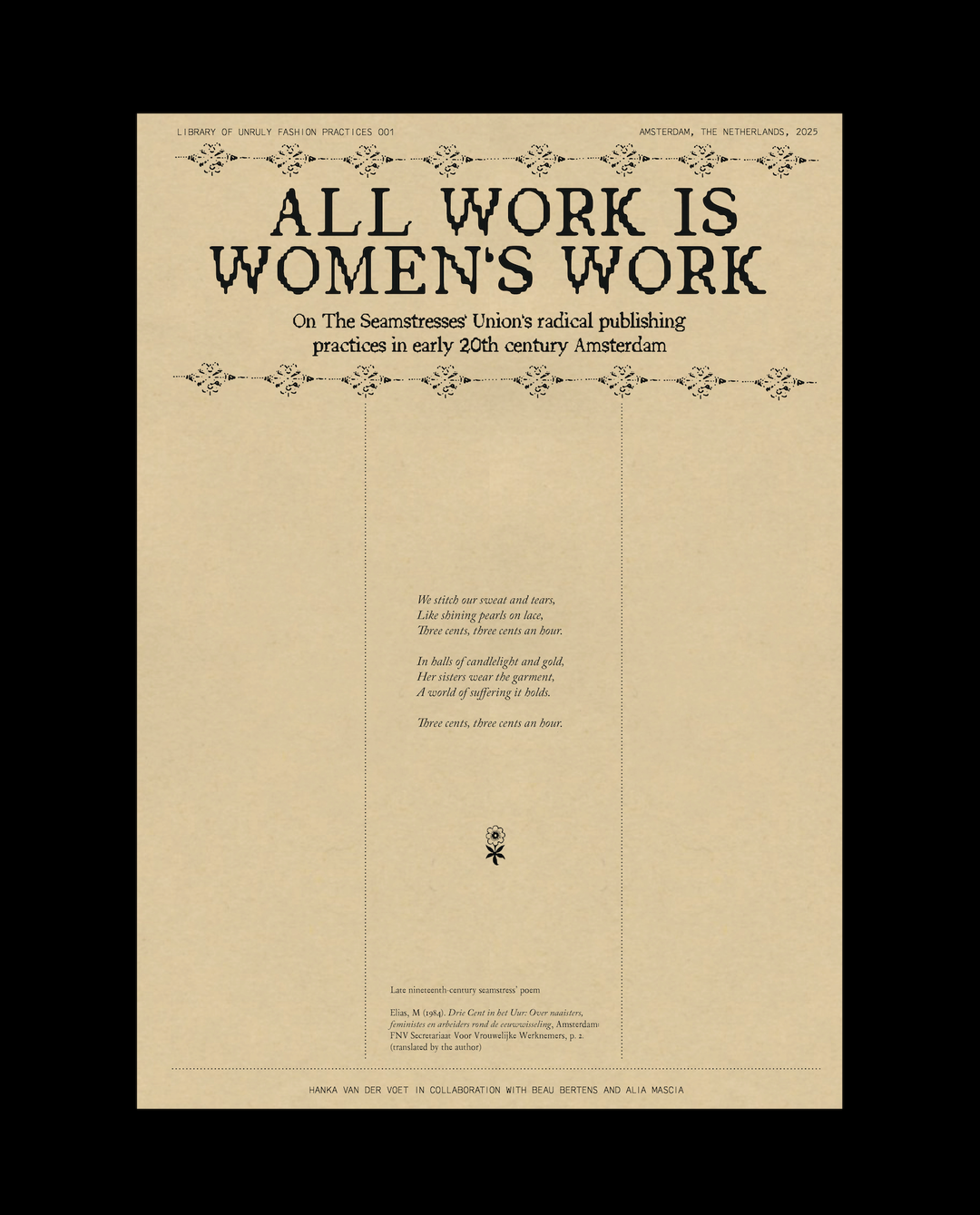
Designed by Beau Bertens, the book specifically recovers the forgotten story of The Seamstress Union, one of the first all-female labour unions in the Netherlands whose use of print media challenged patriarchal, capitalist systems in the early 20th century. Made up of a combination of elements: an essay tracing the union’s radical publishing practices, a map plotting the locations of garment ateliers named in the call-outs and stickers inviting readers to mark sites of exploitation themselves, the publication design and materiality sits alongside the archival material that Hanka uncovered in the project.
“We wanted the physical experience of holding the publication to echo the archival materials we’d been working with. We started by looking closely at seamstresses’ own newspaper, De Naaistersbode (The Seamstresses’ Courier); its layout was sparse and utilitarian — a practical necessity for a workers’ paper – but it was often punctuated by these beautiful Art Deco-inspired ornaments, which were common in leftist newspapers of that era,” she says. Beau set about recovering these historical ornamental elements in order to weave them into motifs across the publications spreads.
For Hanka and Beau, typography became a key political statement in the project: “All the typefaces used in the publication were designed by women; a conscious counter-move against the historical exclusion of women from printing and type design”, Hanka shares. “We used TorreFarfan by Estefanía González Sánchez for the body text, Wondertype by Yvonne Diedrich for the headers, and CCM Coda by Anna Cairns for the map.” This type bled out beyond the page onto Xerox-printed garments produced in collaboration with Alia Mascia and her platform Xeroxed, “which explores the printed garment as a publishing medium for social critique and dissident practices”, Hanka says.
These wearable elements incorporated the front page of De Naaistersbode, alongside other slogans, advertisements and poems from its pages, returning seamstress’ stories to the “material site of their exploitation” and transforming fabric into “a medium for their memory”, says Hanka. “The garments emerged from the core conviction that this history shouldn’t remain confined to the archive. If the seamstresses’ labour was literally worn — produced through their bodies, stitched into the fabric of the city — then their remembrance should be worn too. Working on All Work is Women's Work has taught me that archives are not dusty, passive repositories of the past. They’re living spaces full of stories that are still urgent today,” the designer ends.
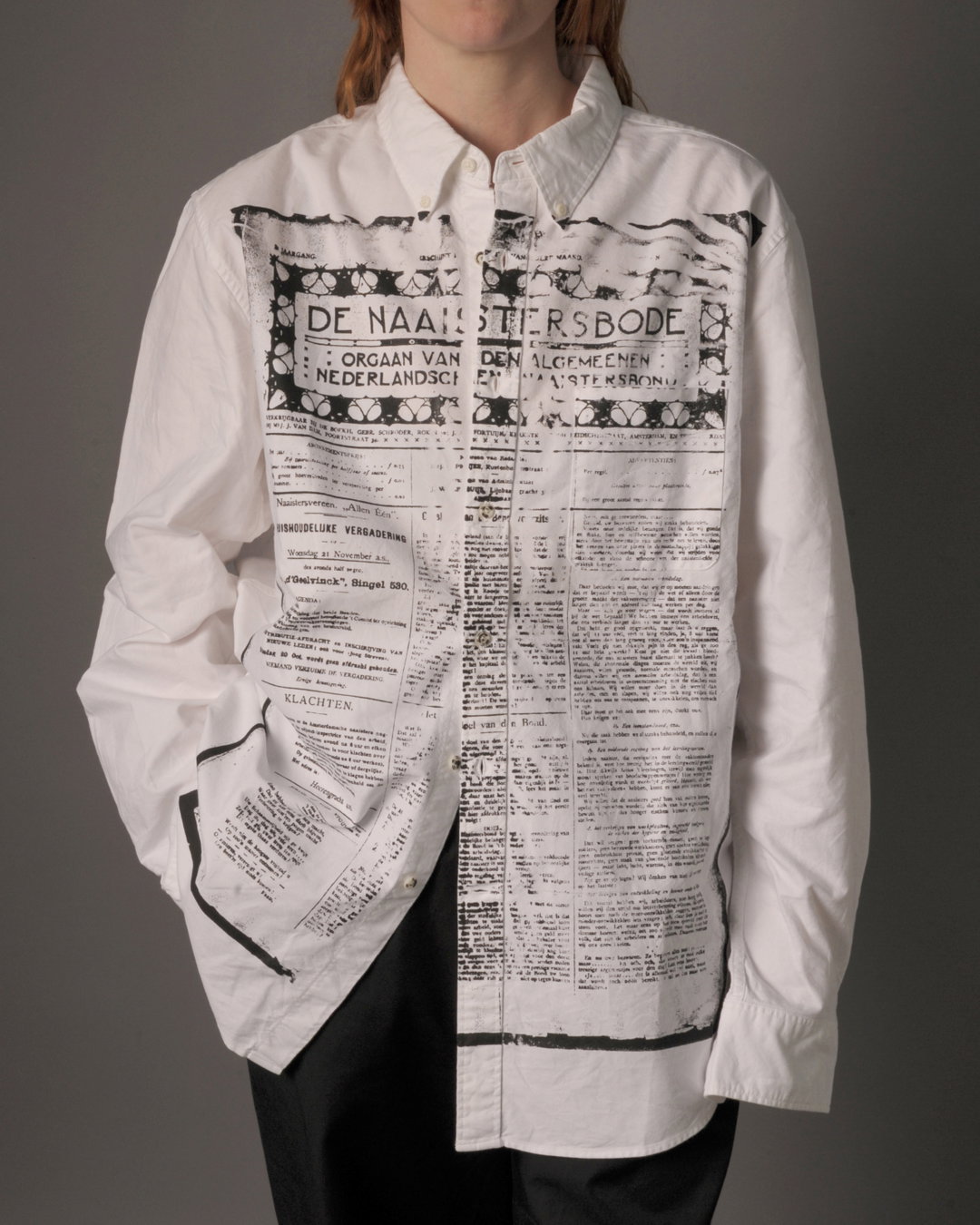
Hanka van der Voet: All Work Is Women’s Work merch drop, button up cover, concept & photography by Beau Bertens (Copyright © Hanka van der Voet, 2025)
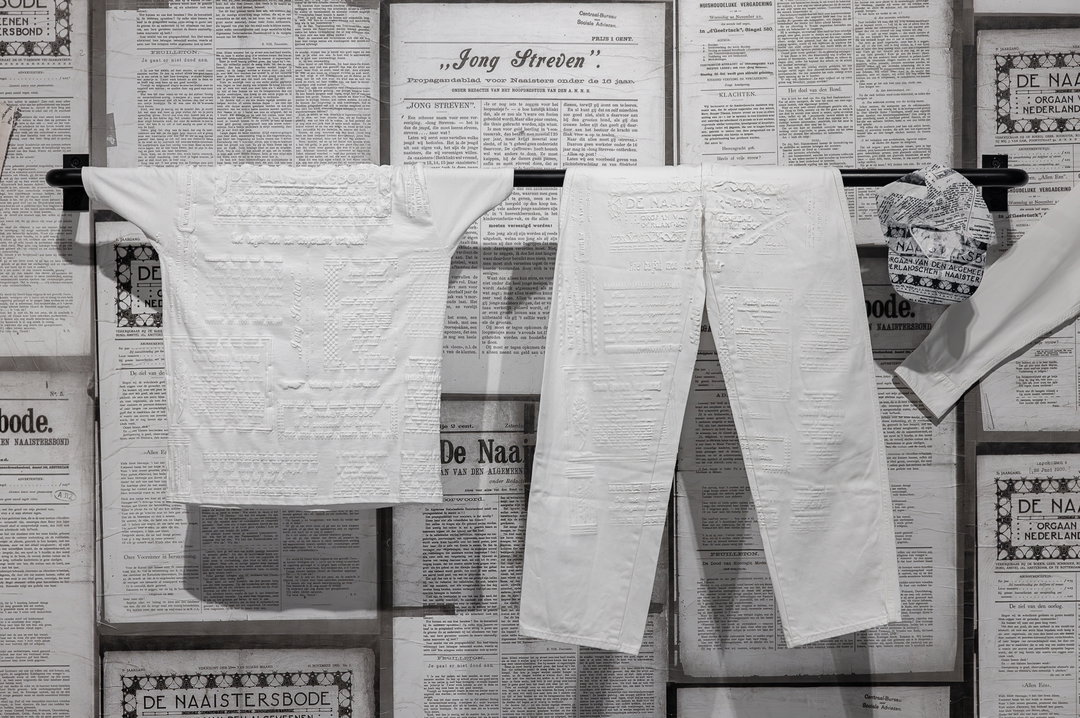
Hanka van der Voet: All Work Is Women’s Work at the No Place For Mannequins exhibition at UTS Sydney, photography by Jacquie Manning (Copyright © Hanka van der Voet, 2026)
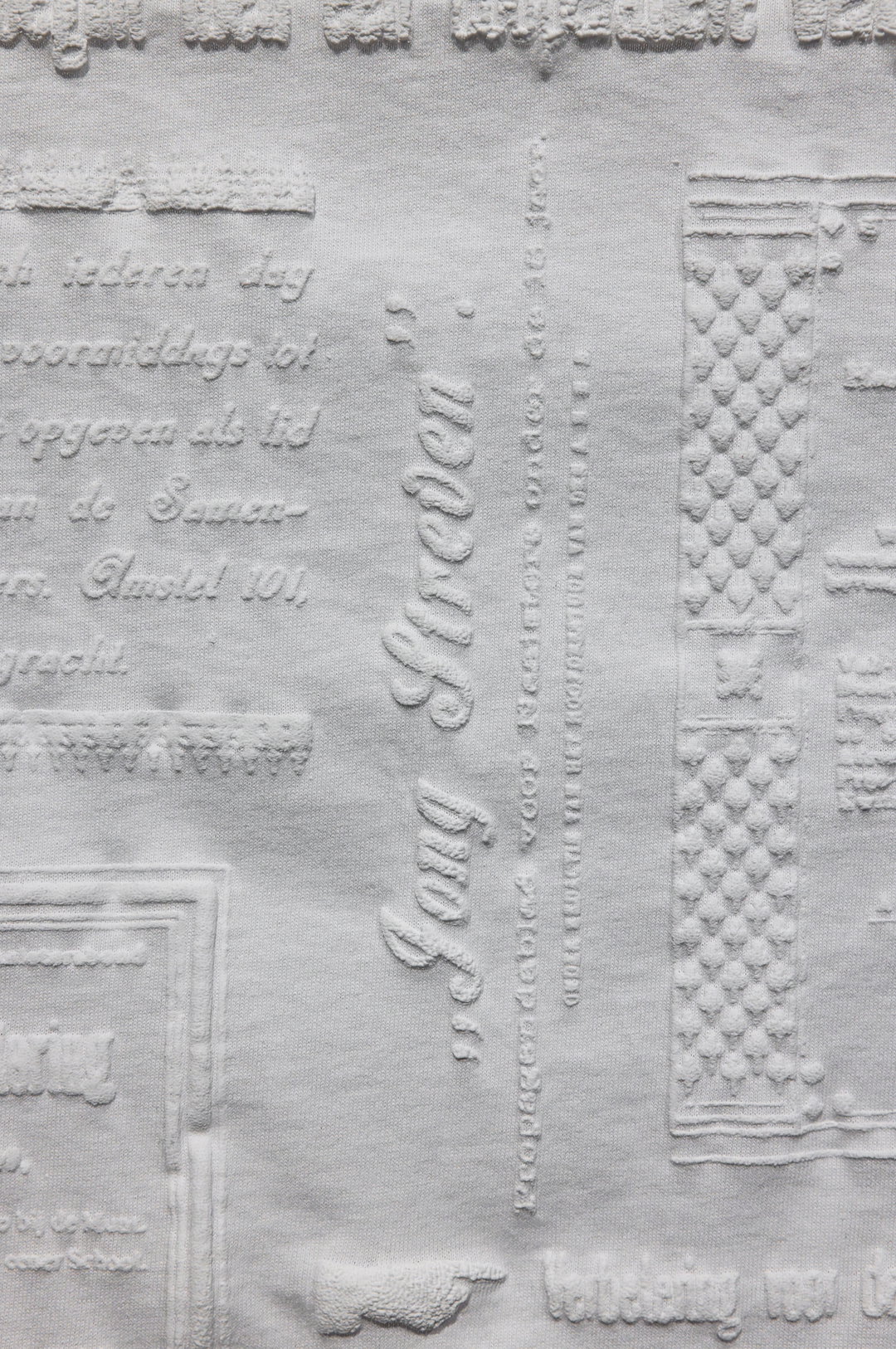
Hanka van der Voet: All Work Is Women’s Work at the No Place For Mannequins exhibition at UTS Sydney, photography by Jacquie Manning (Copyright © Hanka van der Voet, 2026)
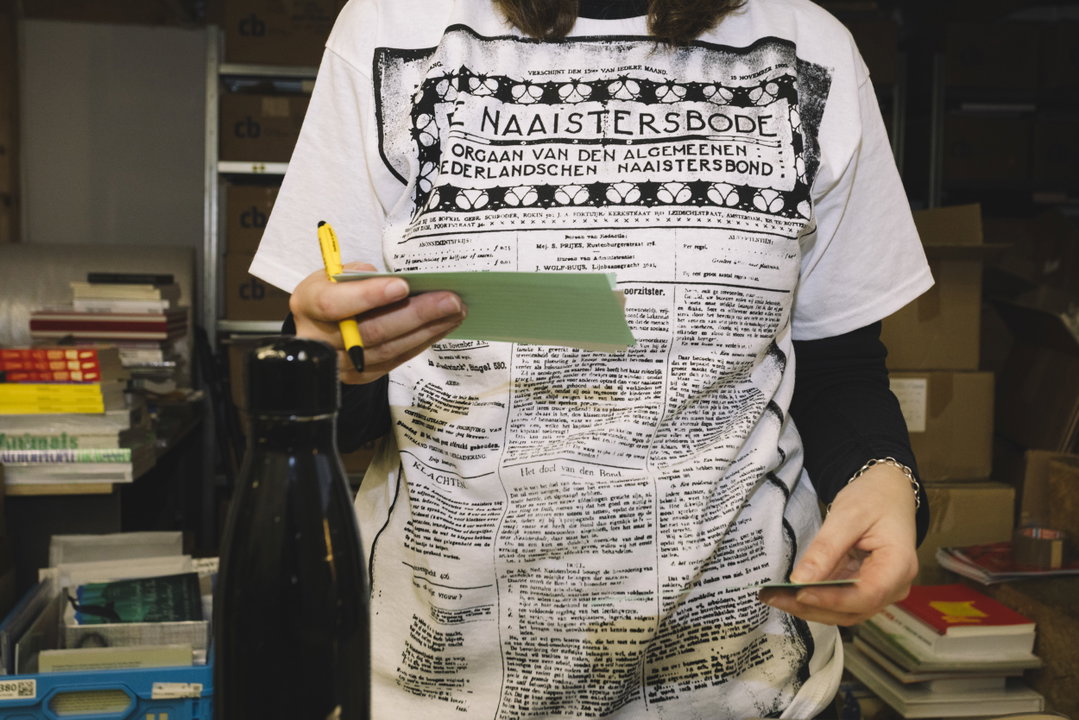
Hanka van der Voet: All Work Is Women’s Work launch at San Serriffe Amsterdam, photography by Diego Diez (Copyright © Hanka van der Voet, 2025)
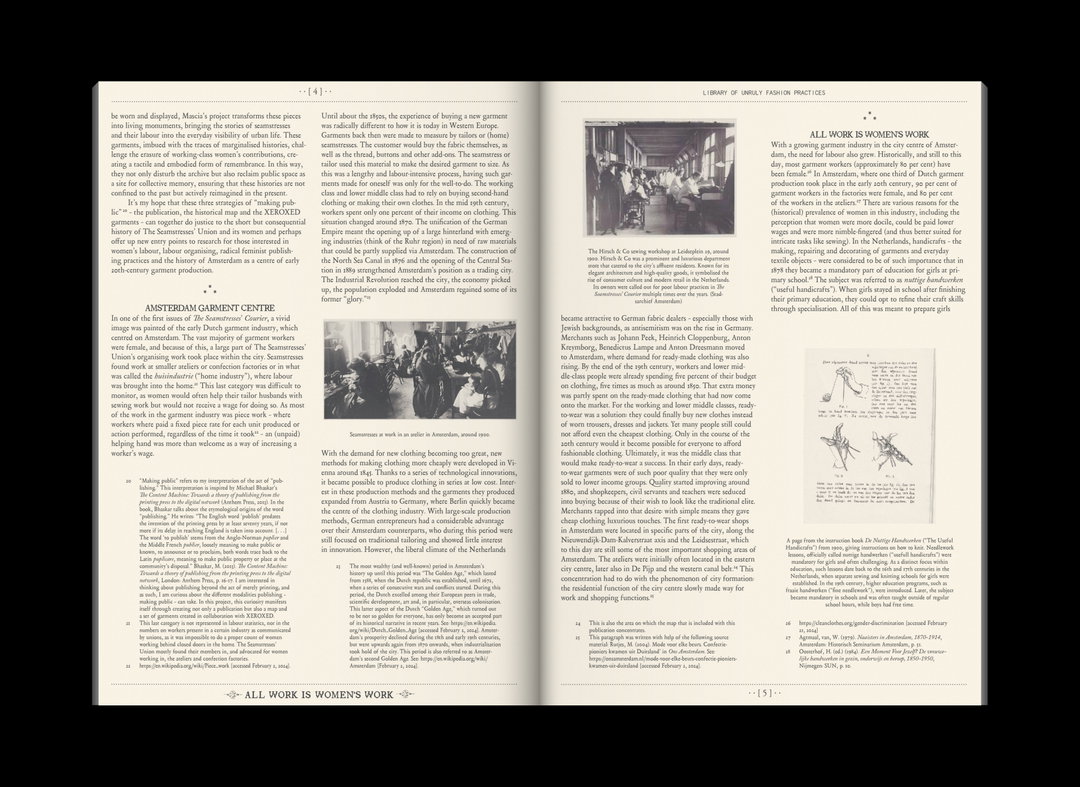
Hanka van der Voet: All Work Is Women’s Work (Copyright © Hanka van der Voet, 2025)
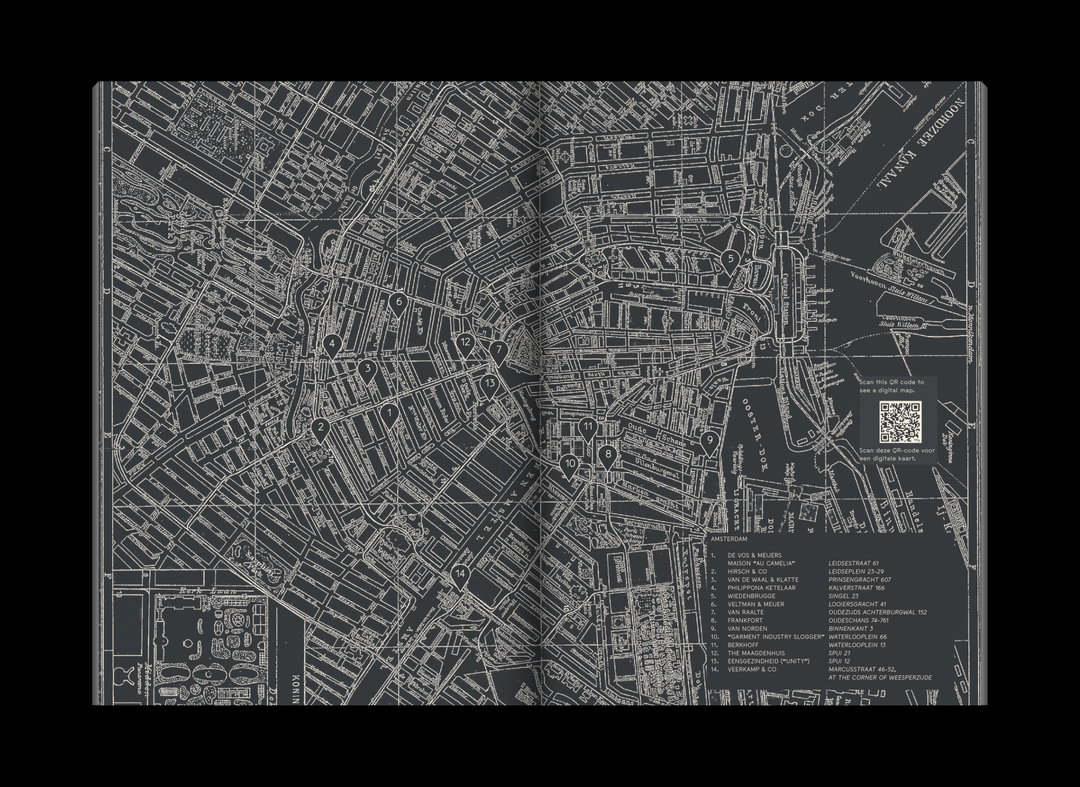
Hanka van der Voet: All Work Is Women’s Work (Copyright © Hanka van der Voet, 2025)
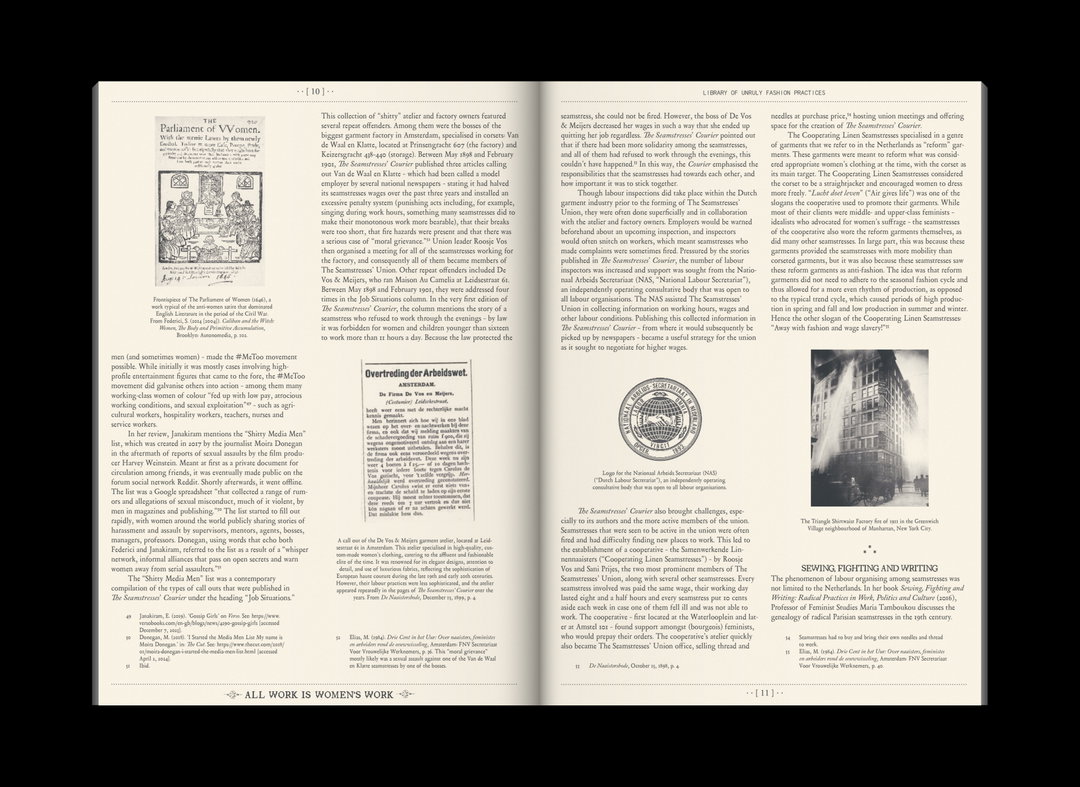
Hanka van der Voet: All Work Is Women’s Work (Copyright © Hanka van der Voet, 2025)
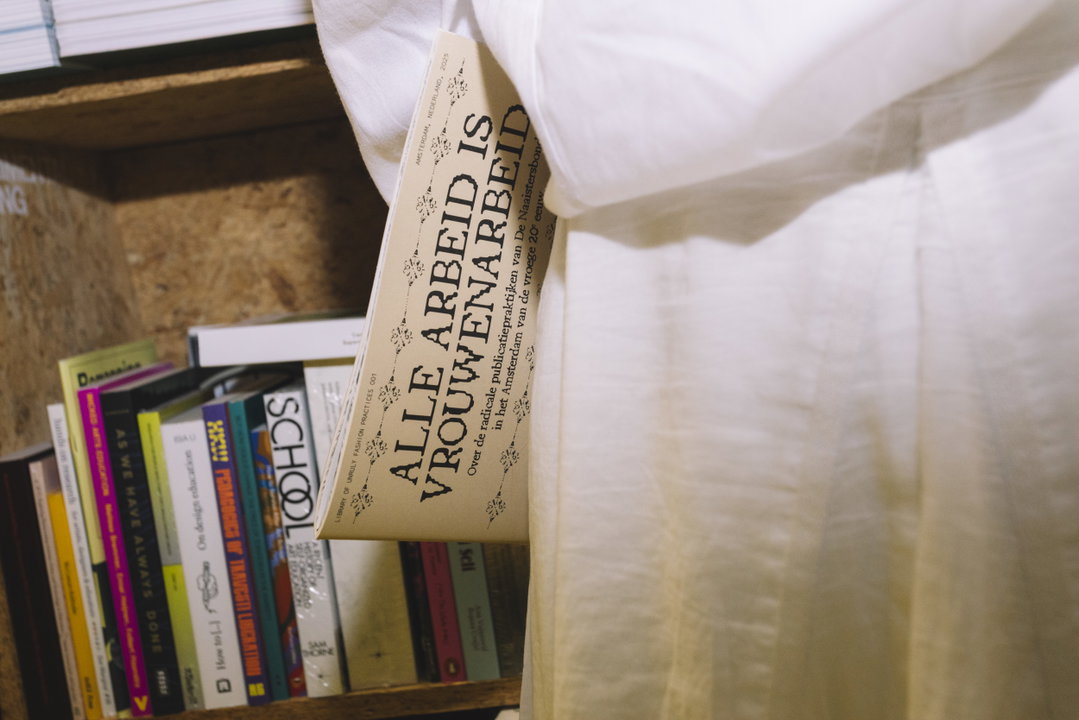
Hanka van der Voet: All Work Is Women’s Work launch at San Serriffe Amsterdam, photography by Diego Diez (Copyright © Hanka van der Voet, 2025)
Hero Header
Hanka van der Voet: All Work Is Women’s Work (Copyright © Hanka van der Voet, 2025)
Share Article
About the Author
—
Ellis Tree (she/her) is a staff writer at It’s Nice That. She joined as a junior writer in April 2024 after graduating from Kingston School of Art with a degree in Graphic Design. Across her research, writing and visual work she has a particular interest in printmaking, self-publishing and expanded approaches to photography. ert@itsnicethat.com
To submit your work to be featured on the site, see our Submissions Guide.