Klasse John Morgan takes Virginia Woolf’s Solid Objects through a variety of translation processes
“Raum 106 is a class, a studio, a library, and a publication,” says John Morgan, of the publication designed and produced by Klasse John Morgan, at the Kunstakademie, Düsseldorf where he’s been professor of Entwurf, Typographie und Buchkunst since 2016. “Typographie und Buchkunst” translates as typography and book art, but there isn’t a direct translation for Entwurf: “today it typically means ‘to sketch, design, draft, plan, outline’”, John tells It’s Nice That. It’s previously been translated as to form a picture, design, out-throw, throw-open and to throw forward: “This etymology is useful for us to underscore the role and practice of an artist as a ‘conceiver-projector’, working across disciplines.”
The publication is produced annually for the academy Rundgang (tour, or exhibition), and the class is comprised of painters, sculptors, publishers, typographers, art directors, performers, editors and writers, among other practitioners; who “seek positions and ways of working where these distinctions matter less”, John says. This approach is at the core of the Kunstakademie, where “all class members are enrolled as students of Freie Kunst (free art), and determine their own practice. It’s an interesting, innovative approach to the traditional model for art and design education, and the impact of it is clear in the approach the class has taken to the latest edition of Raum 106.
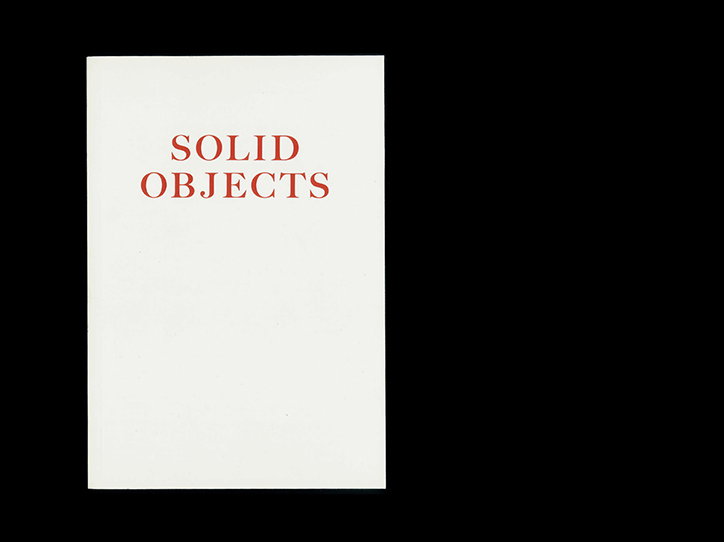
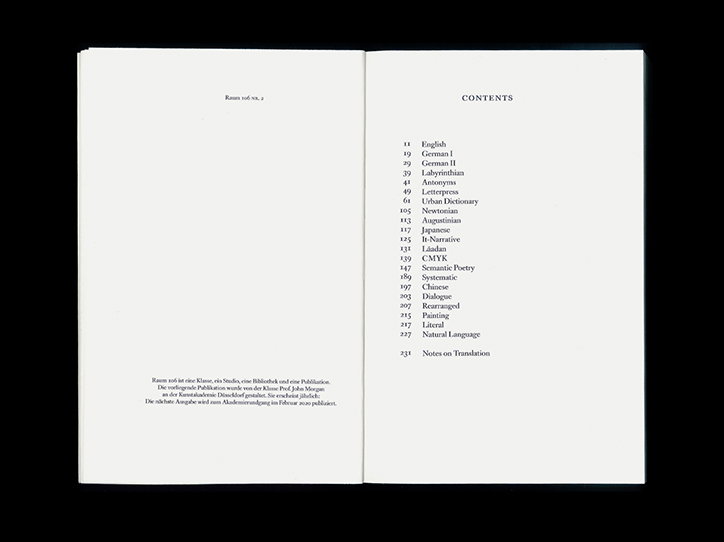
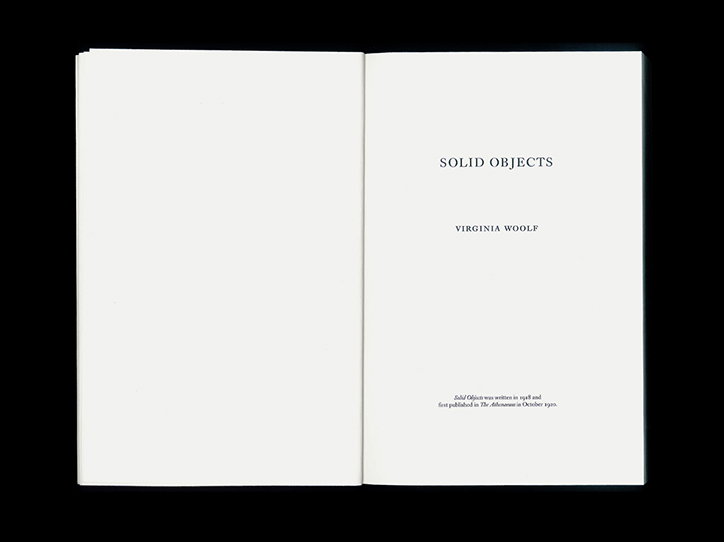
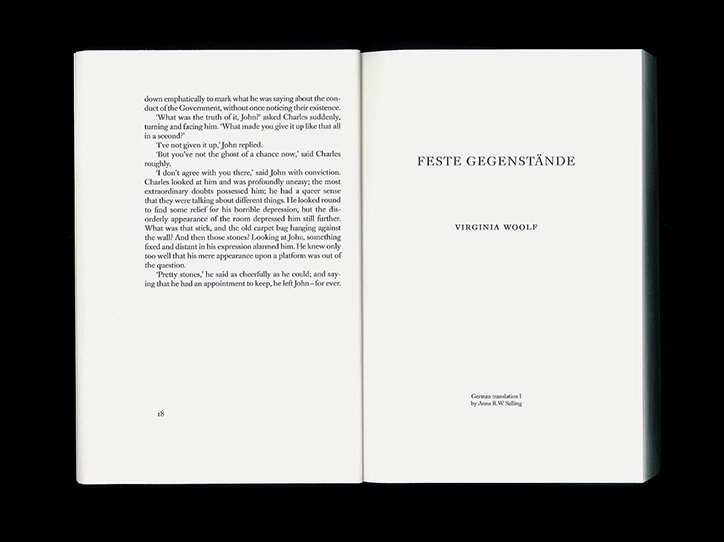
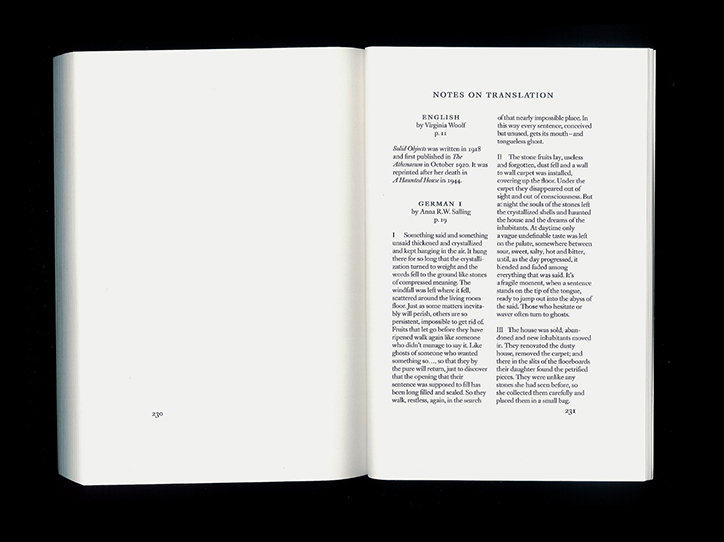
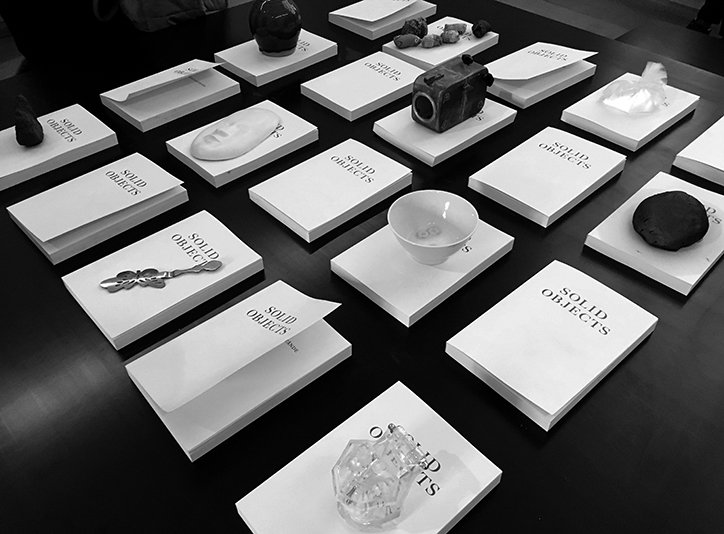
Issue two of Raum 106: Solid Objects is a collection of translations of a short story, “Solid Objects” by Virginia Woolf, written in 1918. It was first published in The Athenaeum,1920, and reprinted after her death in A Haunted House, 1944. “The story begins on a beach with John putting his hand into the sand and pulling out a solid lump of sea-smoothed green glass” John Morgan explains. “This fascination with collecting objects of no monetary value marks the beginning of John’s retreat from a life in politics and all expected societal ambitions. It ends with his closest friend not understanding him and leaving him forever.” In Raum 106 “Woolf’s original English language text is translated into twenty versions or readings, including: German (x two), Urban Dictionary, Newtonian, Antonyms, Japanese, Láadan, Natural Language, Semantic Poetry and Letterpress”.
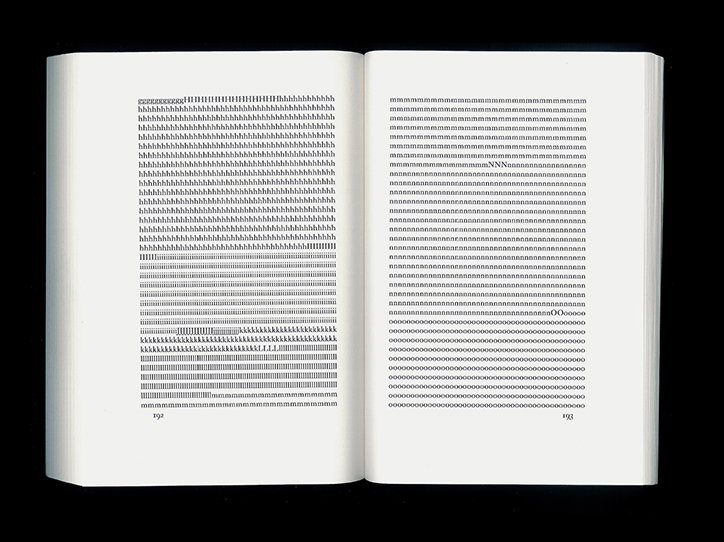
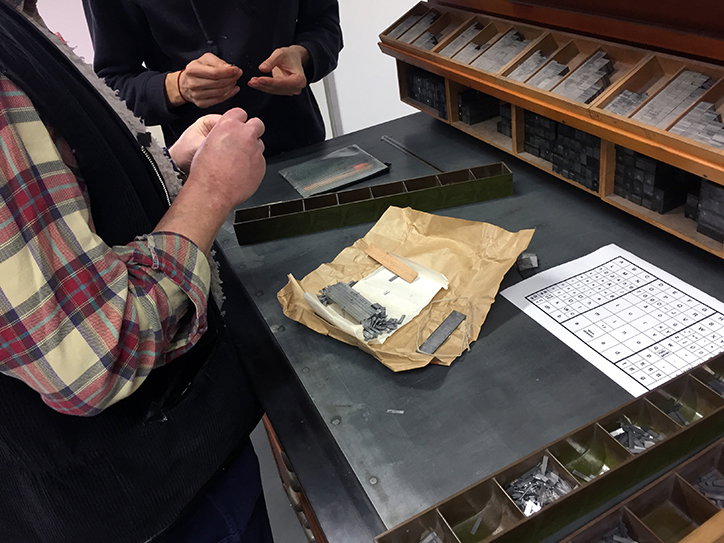
“Setting text by hand develops respect and a heightened awareness of language and the spaces within it,” says John. “Language here is composed of real objects. Woolf conveys this thought in ‘How Should One Read a Book?’: Try to understand what a writer is doing. Think of a book as a very dangerous and exciting game, which it takes two to play at. Books are not turned out of moulds like bricks. Books are made of tiny little words, which a writer shapes, often with great difficulty, into sentences of different lengths, placing one on top of another, never taking his eye off them, sometimes building them quite quickly, at other times knocking them down in despair, and beginning all over again.”’ An effective example of this is one of the English versions of Solid Objects in Raum 106, where “the ghostly body of metal type is made visible”: “set and printed letterpress by the class using the Kunstakademie’s fragmented letterpress collection of Venus, Garamond and Bodoni types. Where the class ran out of ‘sorts’, the space was filled with a solid black print of the type body.”
Solid Objects considers translation as something that requires a process of interpretation as much as a coherent, logical methodology; in regards to both language and its treatment on the printed page. Throughout Raum 106: Solid Objects, Virginia Woolf’s writing changes shape, in terms of language, meaning and form; the typographic treatments shifting the rhythm of each iteration, and providing solid proof of the integral relationship between typography and language in producing meaning.
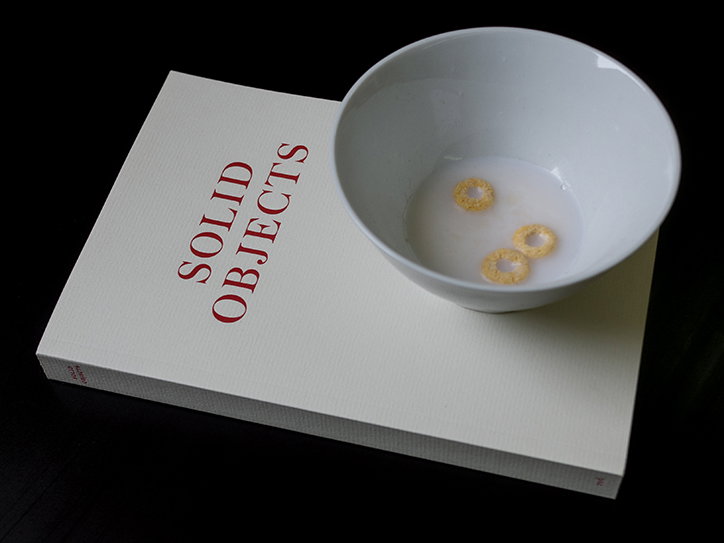
Klasse John Morgan: Solid Objects
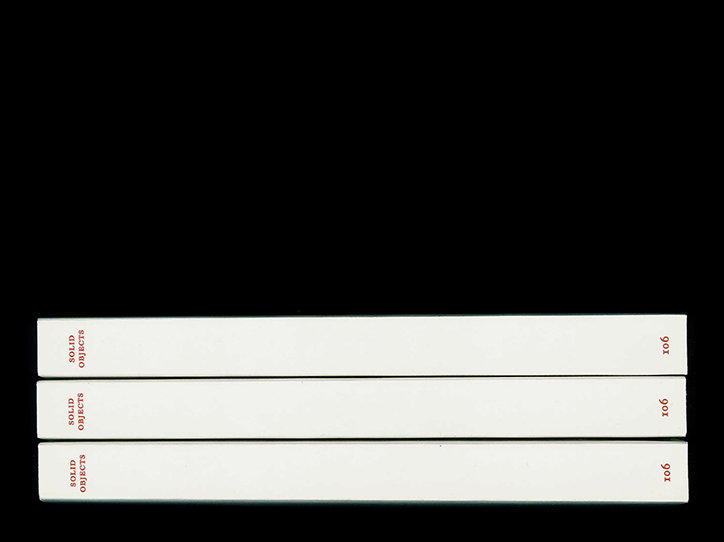
Klasse John Morgan: Solid Objects
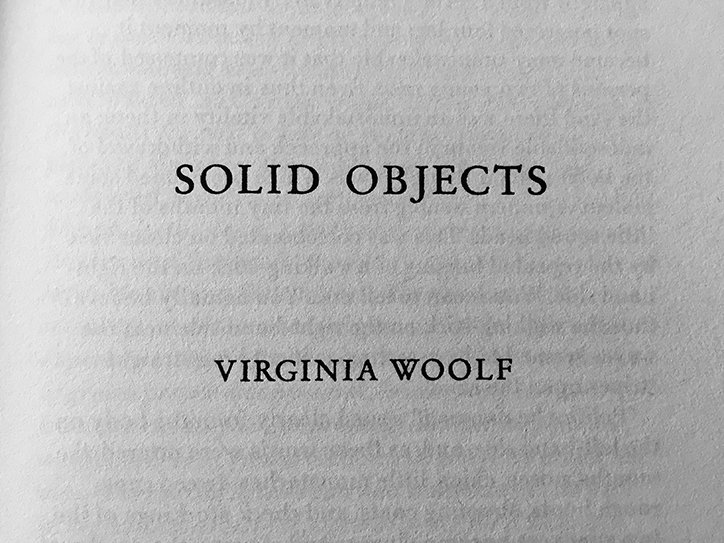
Klasse John Morgan: Solid Objects
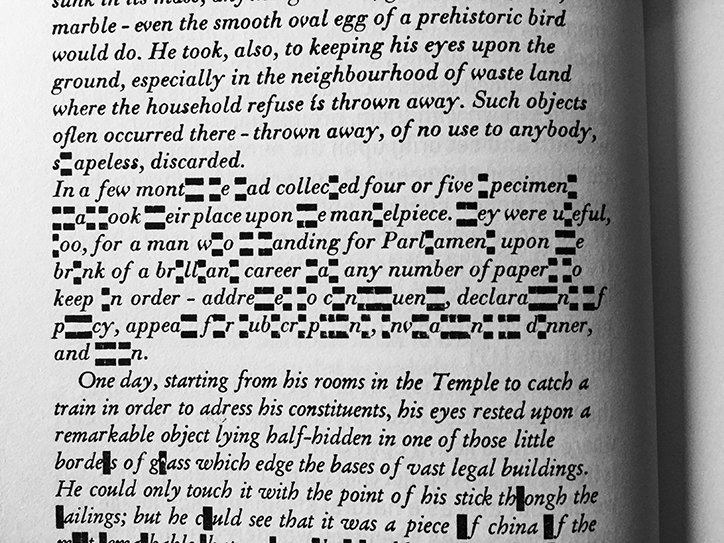
Klasse John Morgan: Solid Objects
Klasse John Morgan: Solid Objects
Klasse John Morgan: Solid Objects
Klasse John Morgan: Solid Objects
Klasse John Morgan: Solid Objects
Klasse John Morgan: Solid Objects
Klasse John Morgan: Solid Objects
Klasse John Morgan: Solid Objects
Klasse John Morgan: Solid Objects
Klasse John Morgan: Solid Objects
Klasse John Morgan: Solid Objects
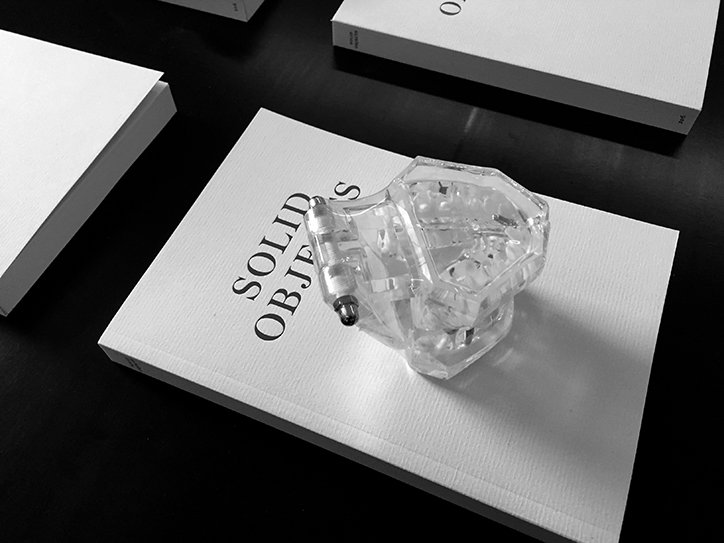
Klasse John Morgan: Solid Objects
Share Article
Further Info
About the Author
—
Billie studied illustration at Camberwell College of Art before completing an MA in Visual Communication at the Royal College of Art. She joined It’s Nice That as a Freelance Editorial Assistant back in January 2015 and continues to work with us on a freelance basis.