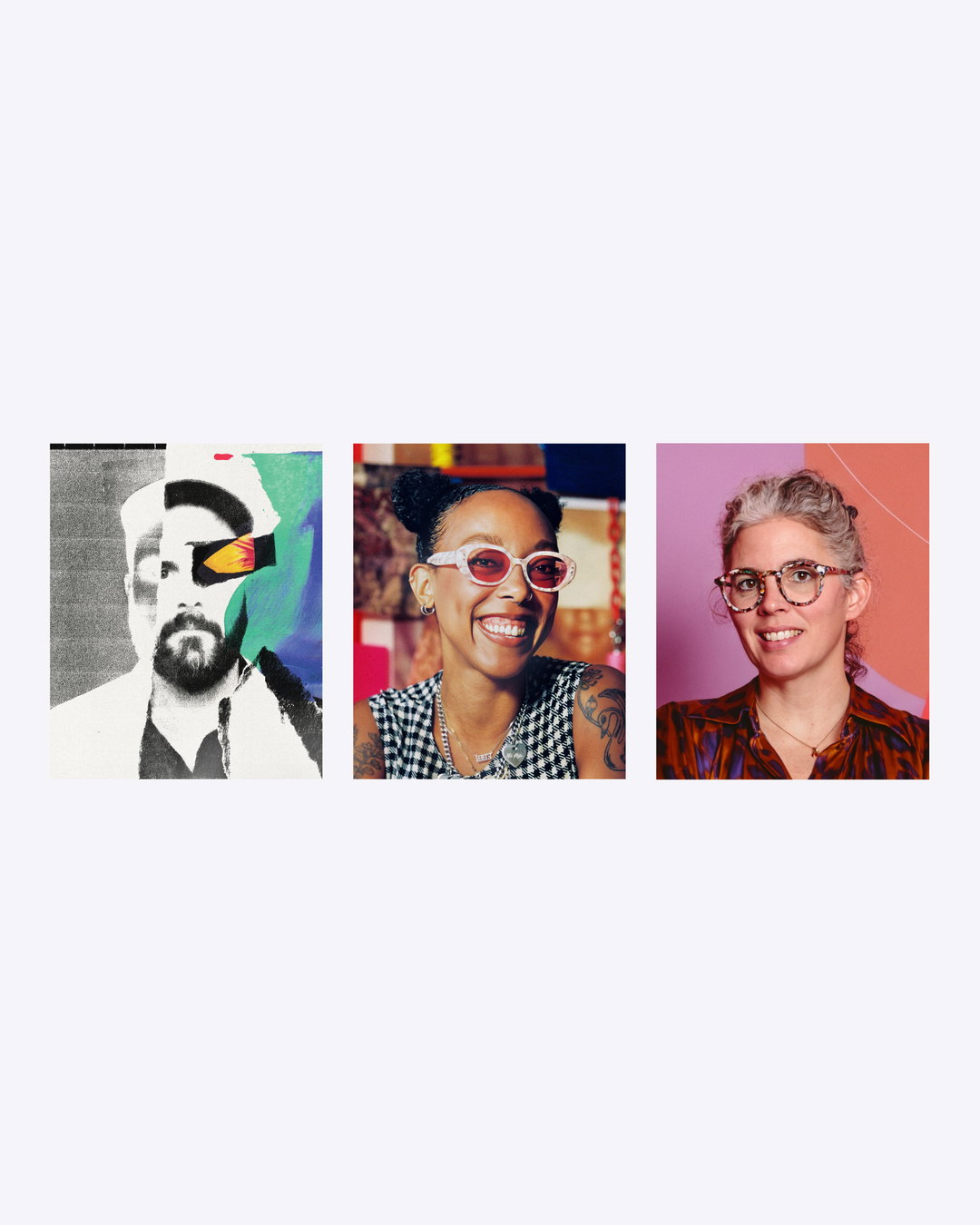
“Like punk”; 30 disabled artists take over museums across the UK
Dash is disrupting spaces from Bristol to Belfast, reflecting on the links between disability and dadaism, and the movement’s relevancy after the pandemic.
What would happen if the dada movement had started now, in a post-lockdown world? This is the question behind a new pop-up intervention, We are Invisible We are Visible (WAIWAV), taking over spaces across the UK this Saturday (2 July). Led by disabled-led visual arts organisation Dash, WAIWAV, will be the largest showcase of work by d/Deaf, disabled and neurodivergent artists ever to be presented in the UK, comprising 31 artists and 30 galleries. It will also dive into an art movement somewhat forgotten in today’s visual landscape – although Dash aims to prove that early 20th century Dadaism has never been more relevant.
“Dada grew out of a reaction to the horror of the first world war,” the collective tells It’s Nice That. The movement was based on the idea of absurdity, using satire to critique the nonsense of the governing rule at the time – Marcel Duchamp’s Fountain being one such infamous example. “It aimed to disturb, to offend and to challenge. So like punk,” adds Dash. After the pandemic, the collective is reviving this approach. “For many disabled people, covid had a massive impact on our lives, many died and we felt expendable,” it explains. Equally, “There has been a link between dada and disability art over the years as outsiders.”

Kristina Veasey: Complete Basketcase (Copyright © Kristina Veasey, 2022)
As for how dadaism has been resurrected in 2022, Dash explains artists’ responses to include: a dark humour, “as a response to the acceptance that some of us are expendable”, an anger; about how “the political response to covid has affected us all but particularly disabled people”; and crucially, an urge to “not go quietly”. Interventions at each exhibition range from spotting an artist in ‘dazzle’ design to fuzzy protests and using chewing gum and a Dadaist puppet to explore neurodivergent communication.
With each artist taking over a separate gallery for an entirely distinct intervention, WAIWAV is a mammoth event. “We were lucky to have time on our side,” says Dash – the team is “tiny”, it says, made up of only five part-time staff. The organisation was awarded the 2021 Ampersand Prize to carry out the intervention, a fact which Mike Layward, Dash’s artistic director states: “will not only have a massive impact on Disability arts but will show that the visual arts institutions are now open and willing to change.”
Readers can find out more about the range of interventions on display here. The museums and galleries taking part in WAIWAV include: Arnolfini, Baltic Centre for Contemporary Art, Centre for Contemporary Art Derry, Firstsite, Focal Point Gallery, Golden Thread Gallery, Grizedale Arts, Glynn Vivian Art Gallery, Harris Museum and Art Gallery, HOME, The Hepworth Wakefield, IKON, John Hansard Gallery, Leeds Art Gallery, Liverpool Biennial, Manchester Art Gallery, MIMA, MK Gallery, Modern Art Oxford, Newlyn Art Gallery, Nottingham Contemporary, The Pier Arts Centre, Site Gallery, Tate Britain, Tate Liverpool, Tate Modern, Tate St Ives, Towner Art Gallery, Turner Contemporary and VOID.

Louise Morgan: Art in Motion group (Copyright © Louise Morgan, 2022)

Bel Pye: Cocoon (Copyright © Bel Pye, 2022)

Aaron Williamson: Invisible Man (Copyright © Aaron Williamson, 2022)

Dash: WAIWAV (Copyright © Dash, 2022)
Hero Header
Aaron Williamson: Hiding in 3D (Copyright © Aaron Williamson, 2022)
Share Article
Further Info
About the Author
—
Liz (she/they) is the senior editor at Insights, a research-driven department within It’s Nice That. They previously ran the news section of the website. Get in contact with them for potential Insights collaborations or to discuss Insights’ public-facing reports.