

- Words
- Paul Moore
- —
- Date
- 15 September 2026
- Tags
The mascots, design and visual history of Wikipedia, the encyclopedia that puts functionality above aesthetics
Who actually makes Wikipedia? It’s Nice That speaks to the creatives behind, in-front and all around the greatest internet database, the site where every single human is the target audience.
Share
Share

We all know and love Wikipedia – as a teenage student, teachers would tell me that Wikipedia “isn’t trustworthy”, that quoting from it didn’t count as legitimate research. Poppycock! What my foolish teachers didn’t know is that Wikipedia and its sister websites are arduously and lovingly maintained by some of the most info-hungry individuals we have (with some now-iconic volunteer editors clocking in over six millions contributions to the site). Although we may take it for granted, the expansive database has a fascinating aesthetic; minimal, data-first, accessible, beautifully simple – but who designs Wikipedia? I’m here to find out once and for all.
The name Wiki doesn’t come from Wikipedia, but from the first user-editable website ever: WikiWikiWeb, launched 6 years before Wikipedia. It borrows the Hawaiian word wiki – which means quick – and became synonymous with wikis: “hypertext publications on the internet which are collaboratively edited and managed by its audience directly through a web browser.” After co-founder Lawrence Mark Sanger had dinner with WikiWikiWeb computer programmer Ben Kovitz, Lawrence was so inspired that he wrote in a mailing list for the Jimmy Wales-founded Nupedia, which he was working with: “Let’s make a wiki.” The rest was history.
Courtesy of the Wikimedia Foundation, CC BY-SA 4.0

Wikipedia is the most classic idea of the internet you could possibly imagine: function over aesthetics, a treasure trove of knowledge rooted in homage to The Library of Alexandria, a website that you can really explore (you know, like how the internet is for exploring… an idea that has long been abandoned by most!). My friend calls it a relaxation medium – it’s serene, a place where you can effortlessly glide from learning about the moon landing to all of a sudden: exploding trousers. “Wikipedia pre-dates the attention economy,” says Justin Scherer, UX designer at the Wikimedia Foundation, the non-profit that supports Wikipedia and its visual design system. There are no infinite doomscrolls, only enriching rabbit holes that avoid those all-too-common psychic blasts of negative energy you get from Instagram reels.
According to Annie Rauwerda’s excellent article on the controversial Vector 2022, Wikipedia’s most recent redesign is barely noticeable, “but that’s the point,” says Annie on Slate. “It doesn’t look all that different than it did 23 years ago, when it was run by a few guys in an office in Florida. The text-heavy website resembles an email inbox, or Craigslist or old Reddit. It’s a barrage of straightforward white and blue text, a rather unsightly assemblage of lines and squares. It’s not trendy.” But as Justin says, “consistency goes a long way to establishing trust in a piece of software.”
One discussion around whether or not the Vector 2022 redesign should be default surpassed 90,000 words between Wikipedians, however despite all the hullabaloo, Wikipedia is still highly customisable, so anyone can use their own JavaScript to make neon backgrounds or turn links into emojis if they so wish. “Our challenge as designers is to stay true to the fundamentals of verifiably accurate encyclopedic hypertext while also supporting the changing expectations of readers,” says Justin. And that’s not all: jumping off the site completely are fan-projects such as The Wiki Reader: “a project to deliver an offline, text-only version of Wikipedia on a mobile device,” similar to the Internet-in-a-Box devices assembled by Wiki Project Med Foundation that were available on the Wikipedia Store. Or there’s WikiSpy, an endless, searchable I-spy-esque collage of over 43,000 cut-out objects and images from Wikipedia. Wikimedia runs several independent, interconnected websites that use the same engine, such as Wiktionary, a multilingual dictionary and thesaurus database, Wikibooks, a repository for free e-book textbooks and annotated texts and even Wikivoyage, a collaborative, free travel guide. The fact that all of these sister-sites feel interconnected is a testament to Wikipedia’s brand loyalty, even if the brand is quiet.
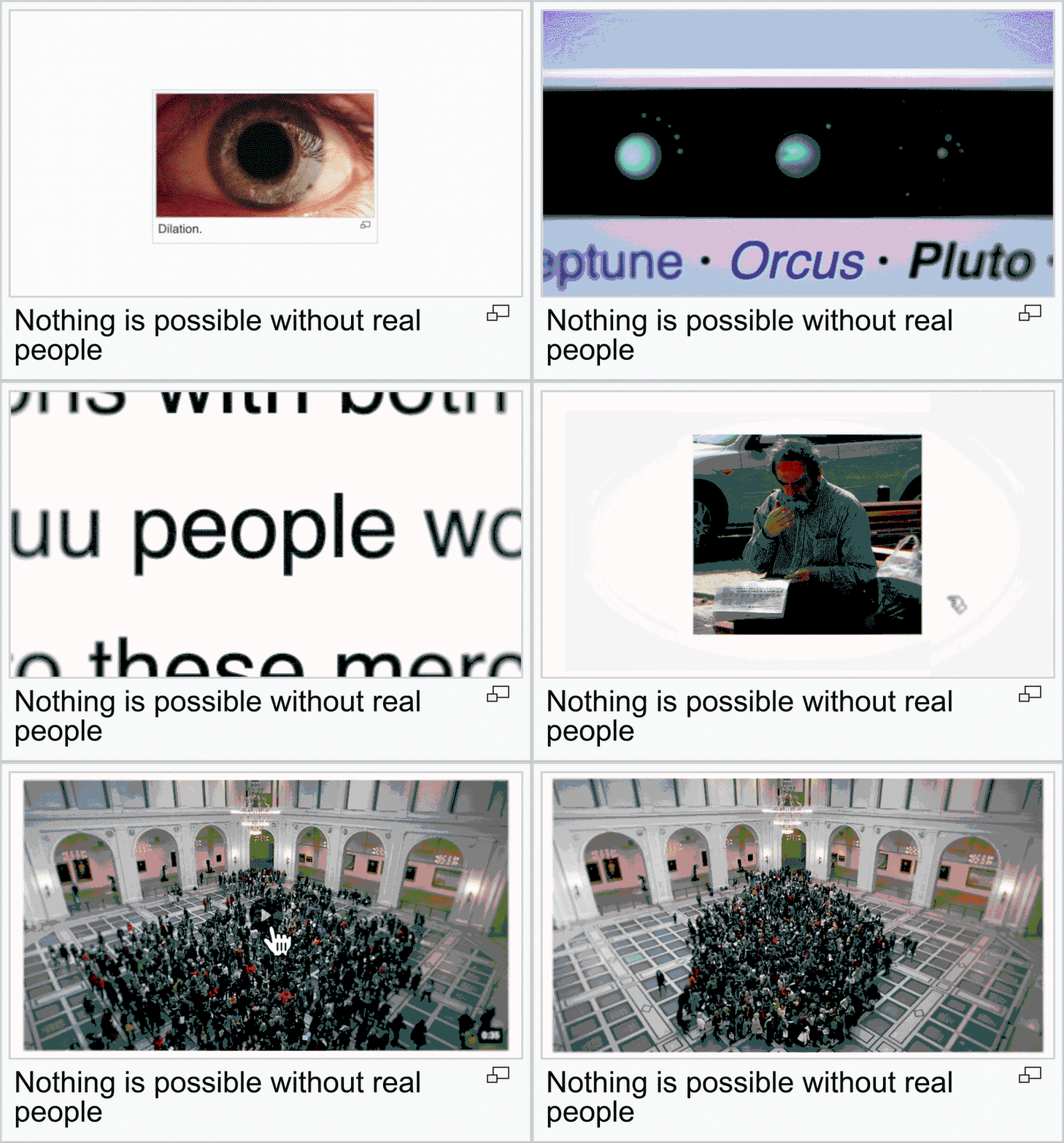
Anthem: Courtesy of Adrian Yu, Tom Goulet, Connor Griffith/Wikimedia Foundation, CC BY-SA 4.0
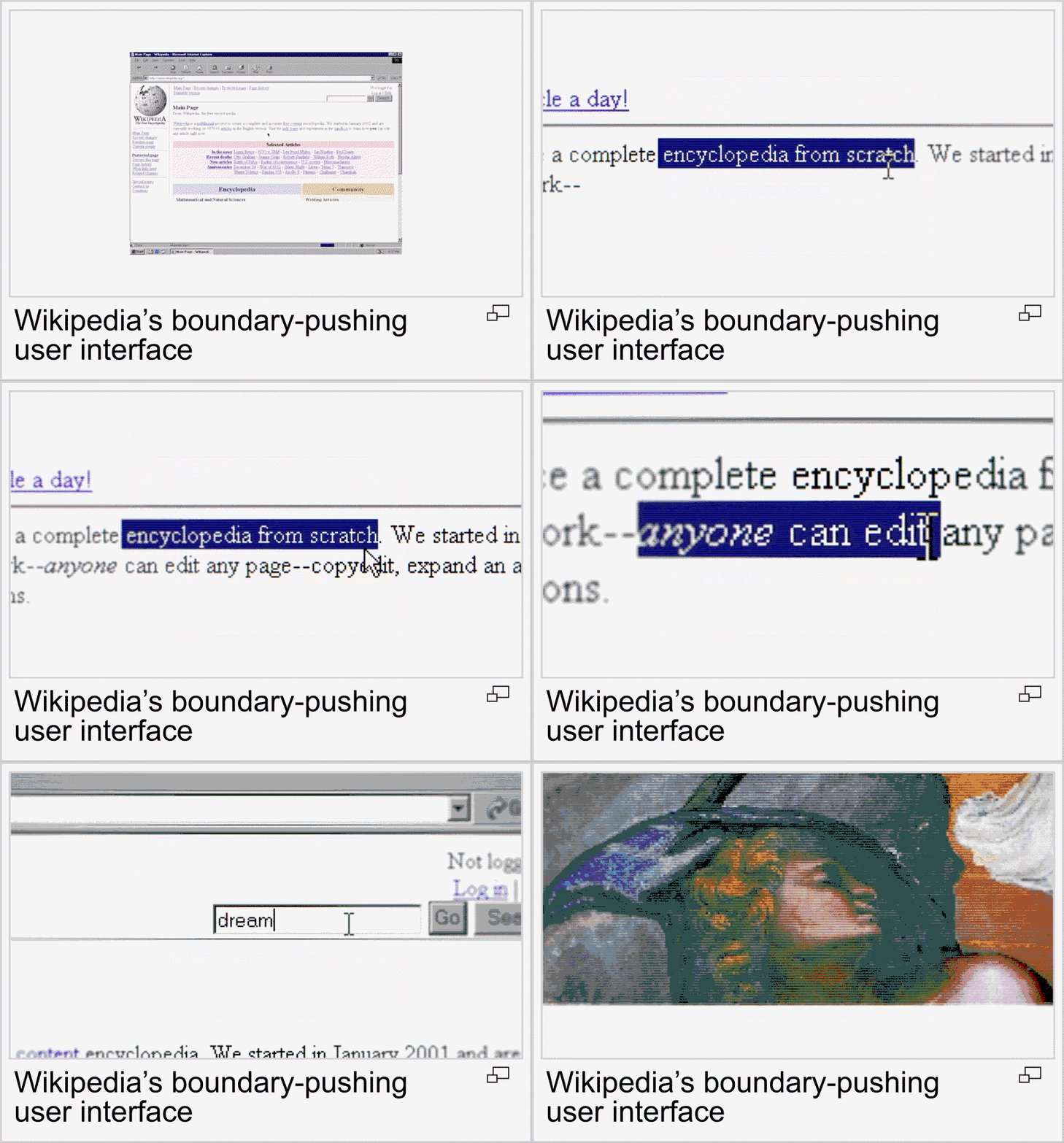
Anthem: Courtesy of Adrian Yu, Tom Goulet, Connor Griffith/Wikimedia Foundation, CC BY-SA 4.0
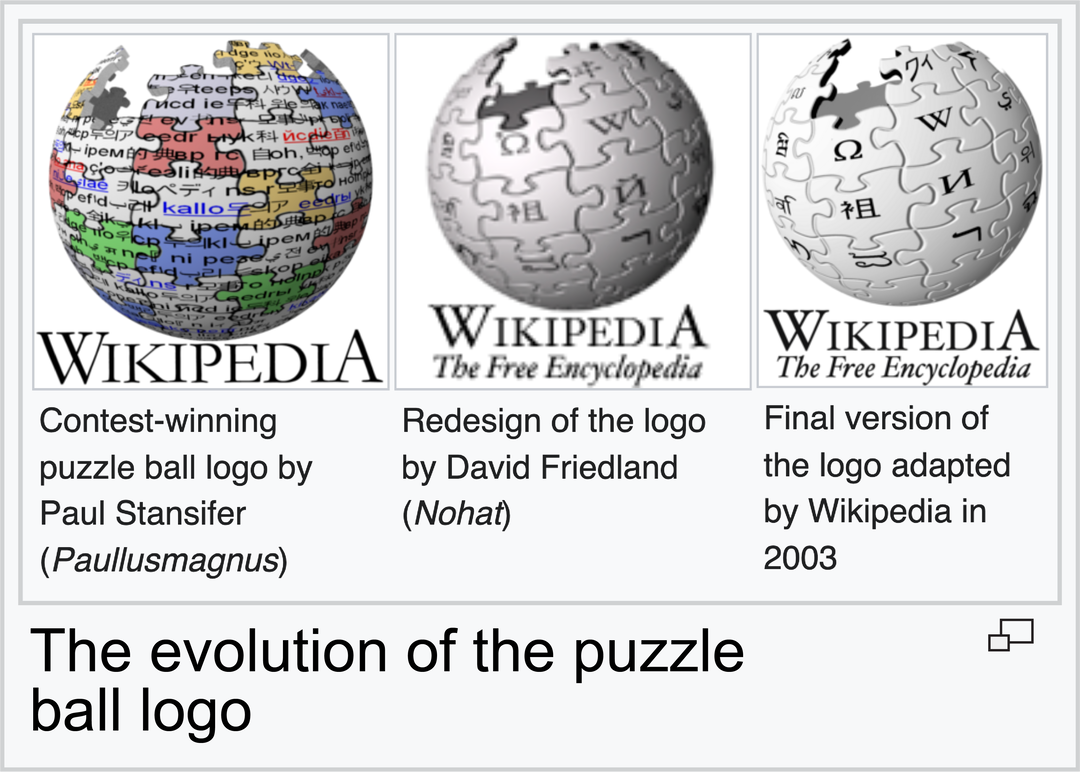
Courtesy of the Wikimedia Foundation, CC BY-SA 4.0

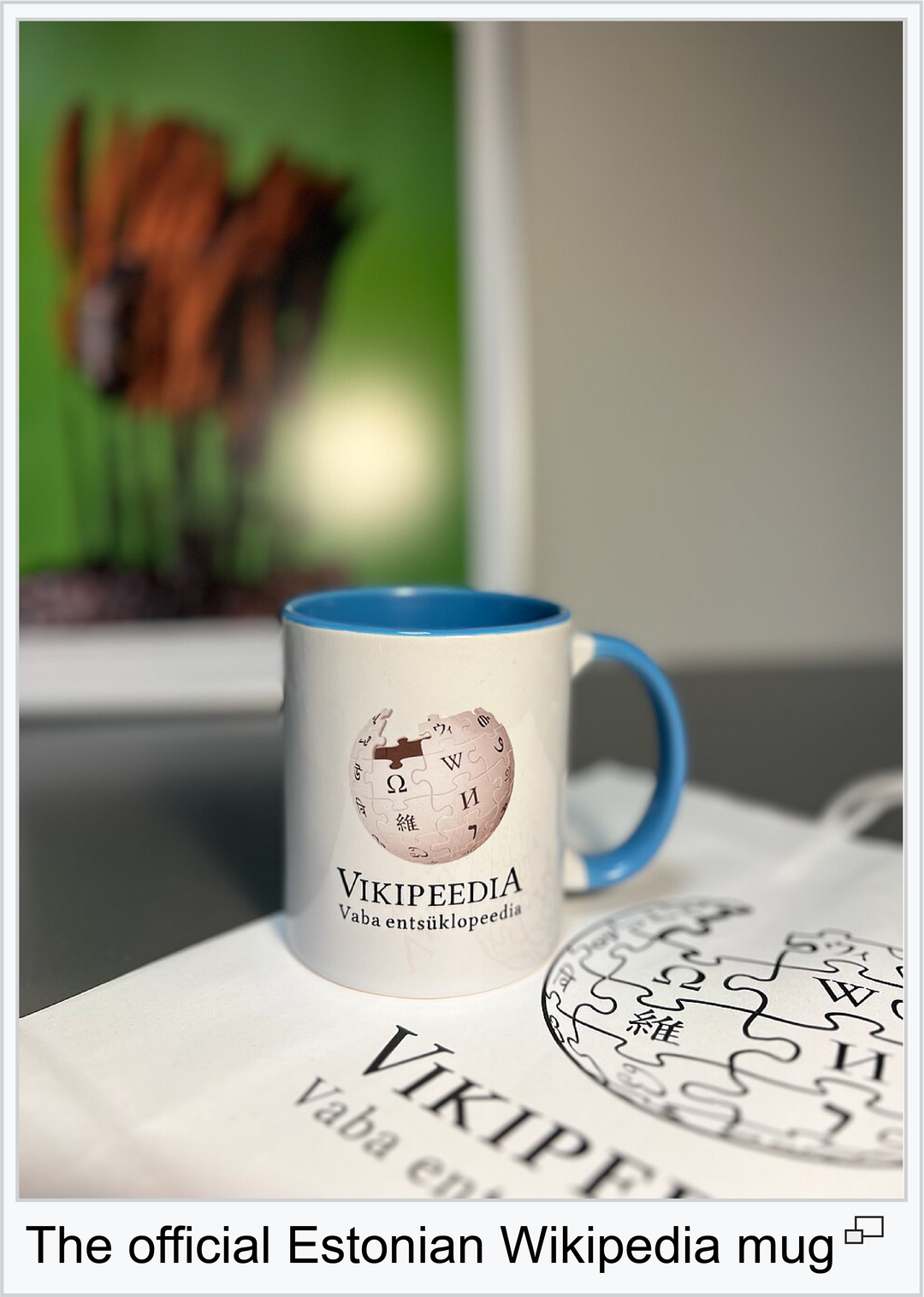
Often we ask: where have all the mascots gone? But Wikipedia has almost always had a mascot, albeit an unlikely one. Wikipedia’s first true logo was an image originally submitted by Bjørn Smestad for a Nupedia logo competition in 2000, according to Wikipedia. Across the years, the puzzle ball logo we all know and love today was refined and updated, including letterforms from Japanese, Latin, Armenian, Cherokee, Greek and even Star Trek’s Klingon alphabets. It’s not your most obvious mascot when up against the Michelin Man for example, but it’s a mascot of the diversity of knowledge.
Novelty editions of the logo for milestone birthdays have been created, along with 3D versions and even buildable puzzle balls which were given to Wikimania 2007 attendees – as well as that, the puzzle ball has been even been anthropomorphised, accentuating its mascotness (but more on that later...) One early (but unofficial) mascot came about in fan creation; an anime girl called Wikipe-tan, a fan-art image of the title character from Midori Days (which was the original mascot for the Anime and manga WikiProject after Commons removed it for copyright reasons). With blue hair and jigsaw piece clips, she’s become a cult-favourite, even being featured in the example image of a recent article on the site about shipping ethics in fanfiction. Since then, the character has been joined by two sisters: Commons-tan, representing Commons, and Quote-tan, representing WikiQuotes – and all three are proof of the creativity poured back into Wikipedia from readers.
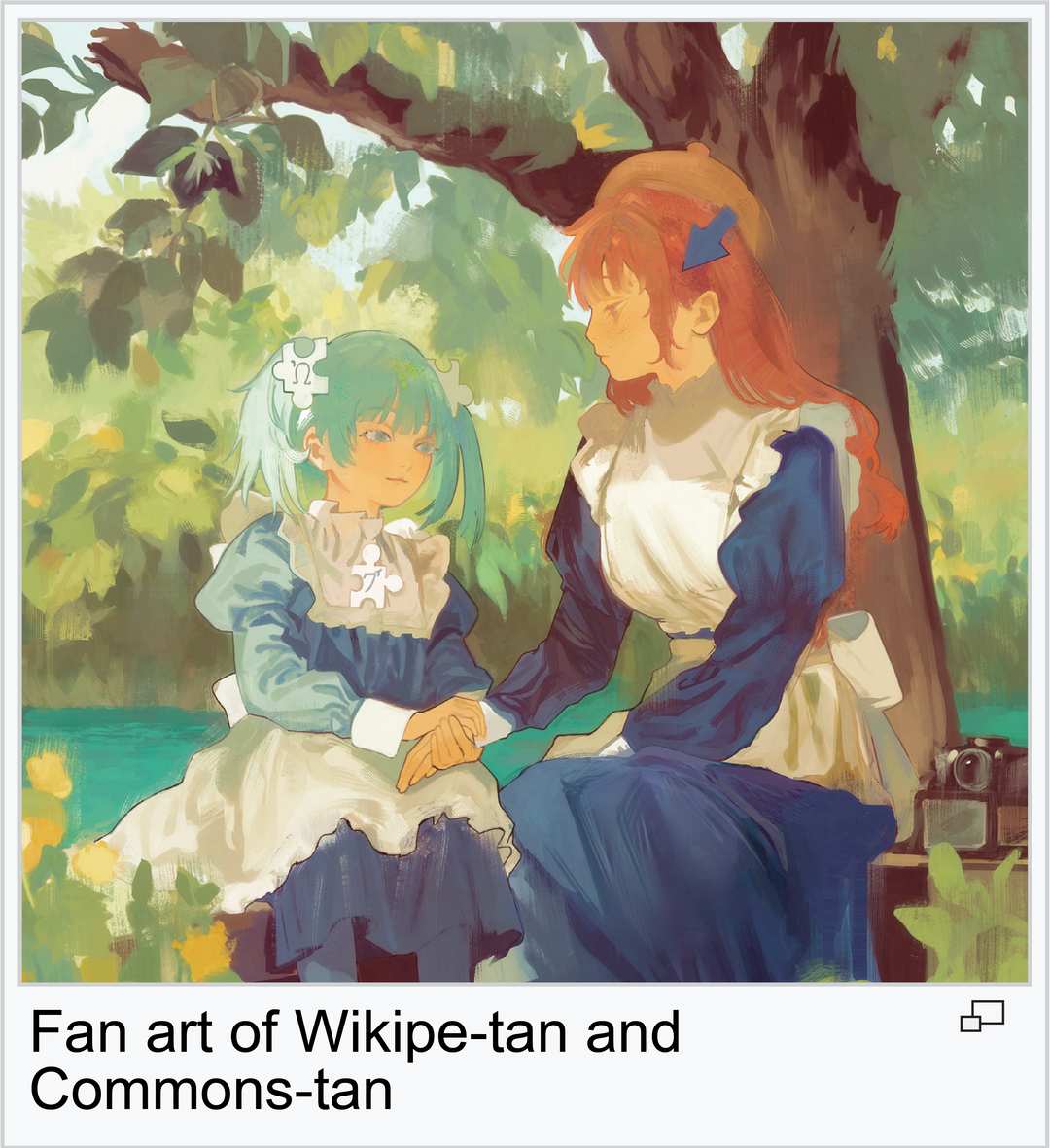
Courtesy of Honemura and Kasuga, CC BY SA 3.0
1 of 3
Courtesy of the Wikimedia Foundation (logo) and Paseyn (modifications), CC BY-SA 4.0
1 of 3
Courtesy of the Wikimedia Foundation (logo) and Paseyn (modifications), CC BY-SA 4.0
But before the jigsaw globe hit our world wide web, there were (so many!) proposed logos – Wikimedia’s archive encompasses a time capsule of early internet graphic design from designers attempting to give the digital database its personality, one that many users may overlook. A notable proposed design came about in the form of the fan-favourite Wikipede, a mustachioed centipede made out of books. When Wikipedia’s Instagram page looked back at a few unused mascots earlier this year, the internet went wild for the charming, pixellated bug, leading to feverish demand when Wikipedia joked in this year’s April Fools that Wikipede was becoming the new official logo. One comment said “A Wikipede hat and tote bag would have Wikipedia fully funded for the next 100 years” – a month later, the social and brand studio teams at the Wikimedia Foundation made official Wikipede merch. It’s glorious – I need it terribly.
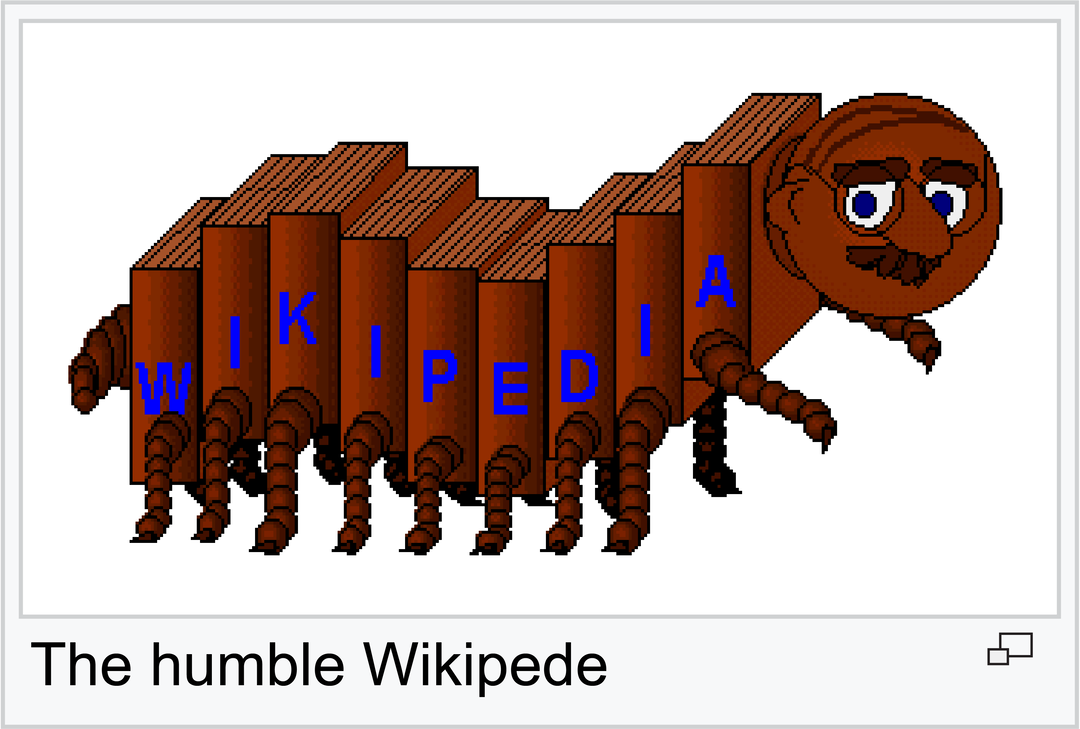
Courtesy of Theresa Knott, CC BY-SA 3.0

The aforementioned Annie Rauwerda is one of those special volunteers, who, outside of editing (after getting involved in an online edit-a-thon in 2021), is the admin of the internet favourite meme-page-educational-blog Depths Of Wikipedia. It’s a treasure trove of Wikipedia’s strangest pages, such as the article for Creme Puff, the oldest cat ever recorded, or the My Way killings, a phenomenon in the Philippines in which people were killed during or after they sang the popular Frank Sinatra song. Some pages take interest in unique names, such as economist Guy Standing (an old article made sure to let the reader know he is in fact sitting in his picture) or the convicted drug dealer Bum Farto (who infamously disappeared, one could say, like a fart in the wind).
Depths Of Wikipedia has a lot of fans (nearly two million on Instagram) and it’s not hard to understand why. “The dry encyclopedic tone absolutely produces a very humorous effect, especially when that’s the tone that’s used to discuss super lowbrow, random pop culture ephemera, like Italian brainrot memes,” Annie tells It’s Nice That. “It’s so distinct with the citation style, because basically as soon as you see text in that style, you recognise it as being from Wikipedia.” Wikipedia was probably never meant to be funny per se, although there’s a collection of pages with ‘freaky titles’, but it’s one of the wonderful accidents of the site’s visual attitude that it can reflect the evolution of our culture’s humour.
Inspired by her teacher parents, who always made learning feel fun, Annie feels kinship with Wikipedians – they take massive amounts of time out of their days to diligently make knowledge accessible and trustworthy on top of cleaning up digital vandalism to particular pages. “There’s huge communities of amateur (or perhaps not amateur in their real lives, who knows what they do in their real lives) volunteers who do, for example, paleoart – and they’ll really, really thoroughly evaluate each other’s drawings and read a bunch of scientific papers and make sure that it's as accurate and as true to the fossils as possible,” says Annie. For strangers, for free, Wikipedians’ efforts don’t go unpraised – one way Annie gives back is through shining a spotlight on pages only some of the most dedicated Wiki-spelunkers could find. “I find endless joy in fun facts and I hate the whole idea of ‘useless knowledge’ because even the most obscure facts inform your worldview,” says Annie in an interview with Wikimedia in 2021. “Why must learning have an end goal beyond quenching curiosity?”
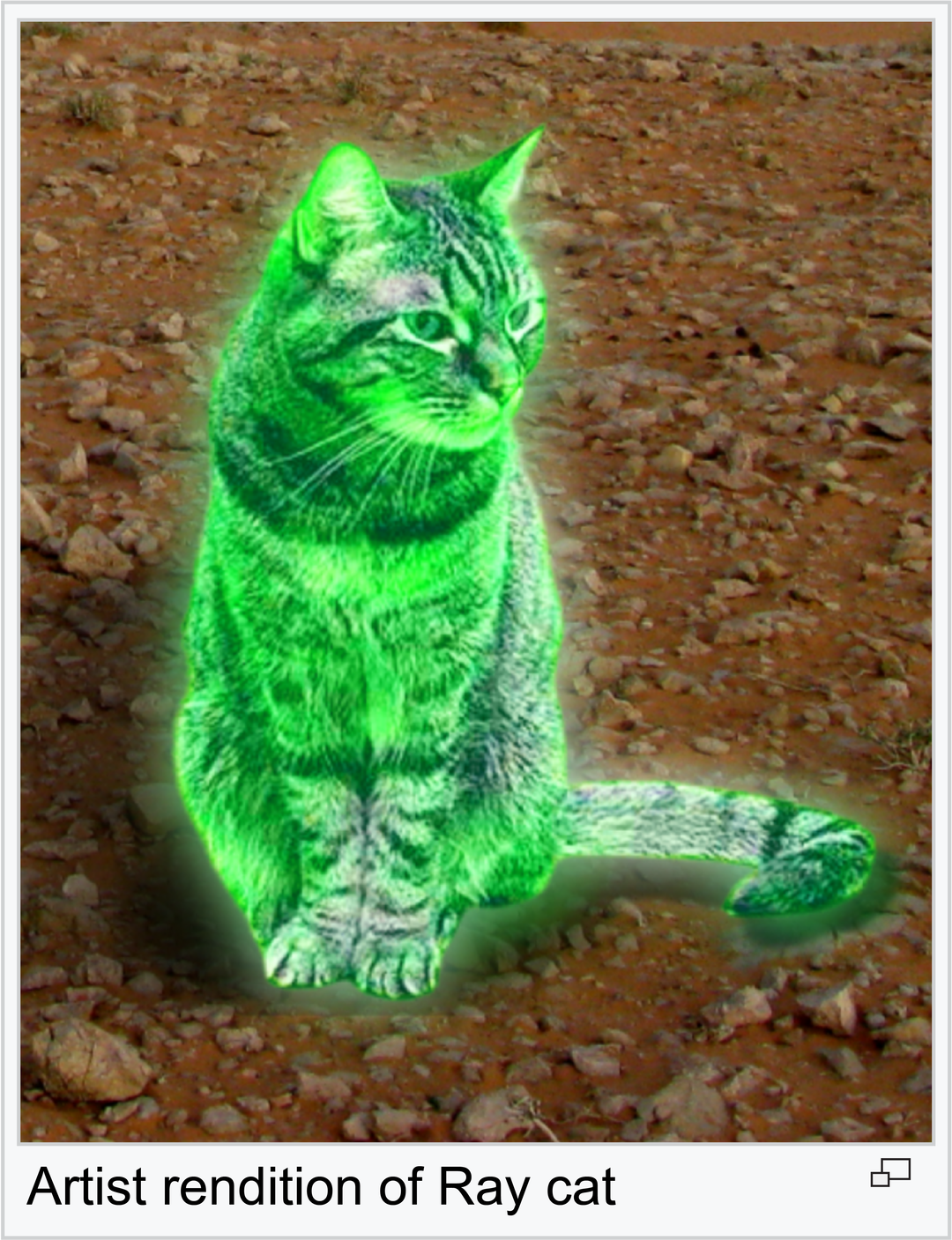
Courtesy of Di (they-them), CC BY-SA 4.0
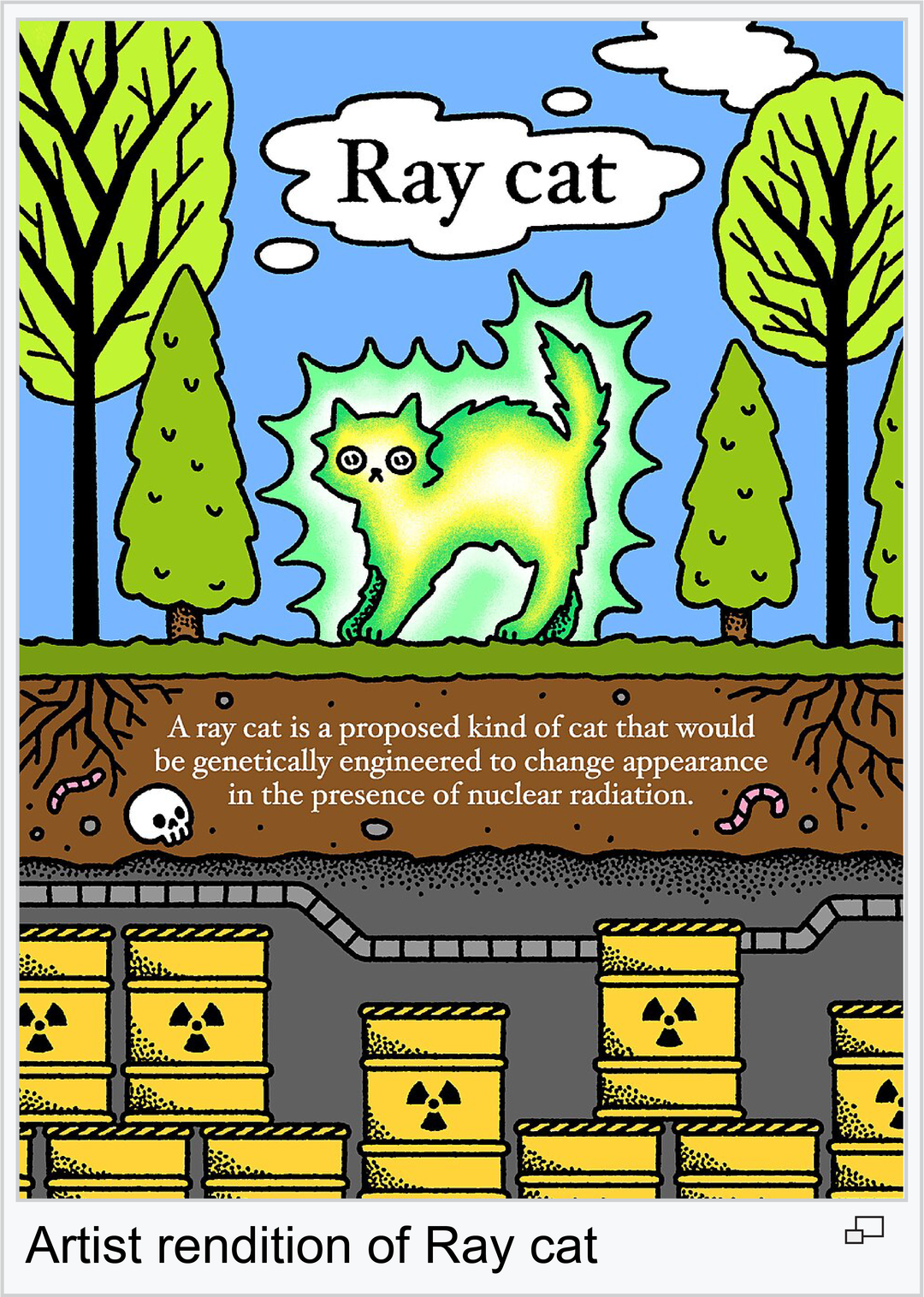
Courtesy of Sophia Ren (Ren-O-Graphics) for the Wikimedia Foundation, CC BY-SA 4.0

For Wikipedia’s 25th birthday on January 15, 2026, the Wikimedia Foundation released its first official birthday mascot – Baby Globe. It’s the puzzle ball, but adorably anthropomorphised. The design was actually originally doodled by a member of Wikipedia’s community, Jonathan Ferreira aka BaduFerreira, as he was travelling to a Wikipedia-related event. The Foundation’s director of brand Zack McCune saw it and immediately registered it as something special, the brand studio and product/tech teams fell in love with this character too and joined forces to turn them into their “little birthday mascot”. From there, Baby Globe has turned up on everything from Wikipedia’s socials to merchandising, in person events and fan art.
In the development and creation of Baby Globe, the Foundation’s brand team collaborated with Sharon Park, a regular fan-turned-commissioned-project-designer. She’s previously worked with Wikimedia on projects such as the Wikipedia Sandbox, which physicalises Wikipedia’s digital workspace, as well as a beautiful animated short film which features Baby Globe, wonderfully brought to life by Sharon, character animator Alex Kinnear and music from Ann Roman which sounds like the serene, glacial ambience of a Wii Menu. “Wikipedia launching a hand drawn mascot born out of the community just makes so much sense. Something that I learned through being a part of the community is that Wikipedians decide to roll with things, and it just becomes the thing for the next however many years. [Wikipedia’s] current puzzle logo was designed by a volunteer and everyone was just like ‘uh yeah that’s the one.’ So for the foundation to recognise a community member’s phone drawing he did in his commute as the source for this official mascot is truly wiki energy,” says Sharon.
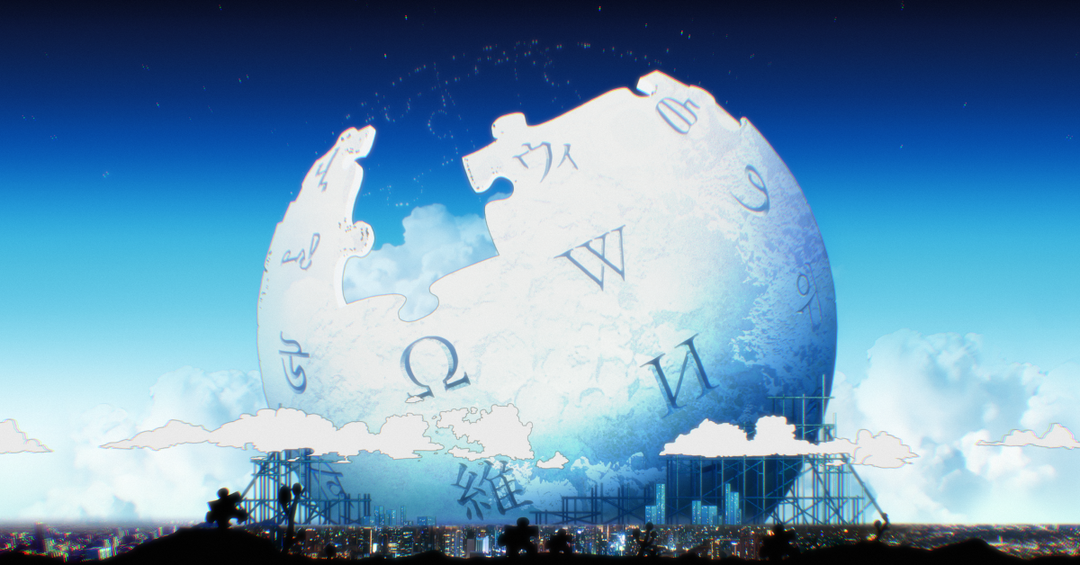
After the project launched, Sharon was motivated to create a film surrounding the launch depicting what it would look like if Baby Globe used Wikipedia and how that might feel visually – the result has the daydreamy dimensionality of the anime film Summer Wars and the Gen-X Soft Club optimism of the internet in the early 2000s as the mascot researches, plays piano, takes photographs and goes to space. But it’s not the first time Sharon has worked with Wikipedia – in the past, she’s designed Wikipedia’s 2024 In Review, where she illustrated a stunning puzzle ball logo in a glowing metropolitan nightscape. Inspired by anime influences and “hyper-objects”, Sharon sought to illustrate Wikipedia as really, really big, a huge construction project looming over a fictional Wiki-city. “With my work I can’t help but attach some kind of mythology to the site, because it really is such a natural wonder of the digital world. I’m interested in creating more lore and more stories with Wikipedia as the central theme,” says Sharon. “I guess all this is to eventually manifest a Wikipedia anime film that’s not a cosplay of the medium but an actual interesting story. That might be one of my dreams, just one piece of the puzzle.”
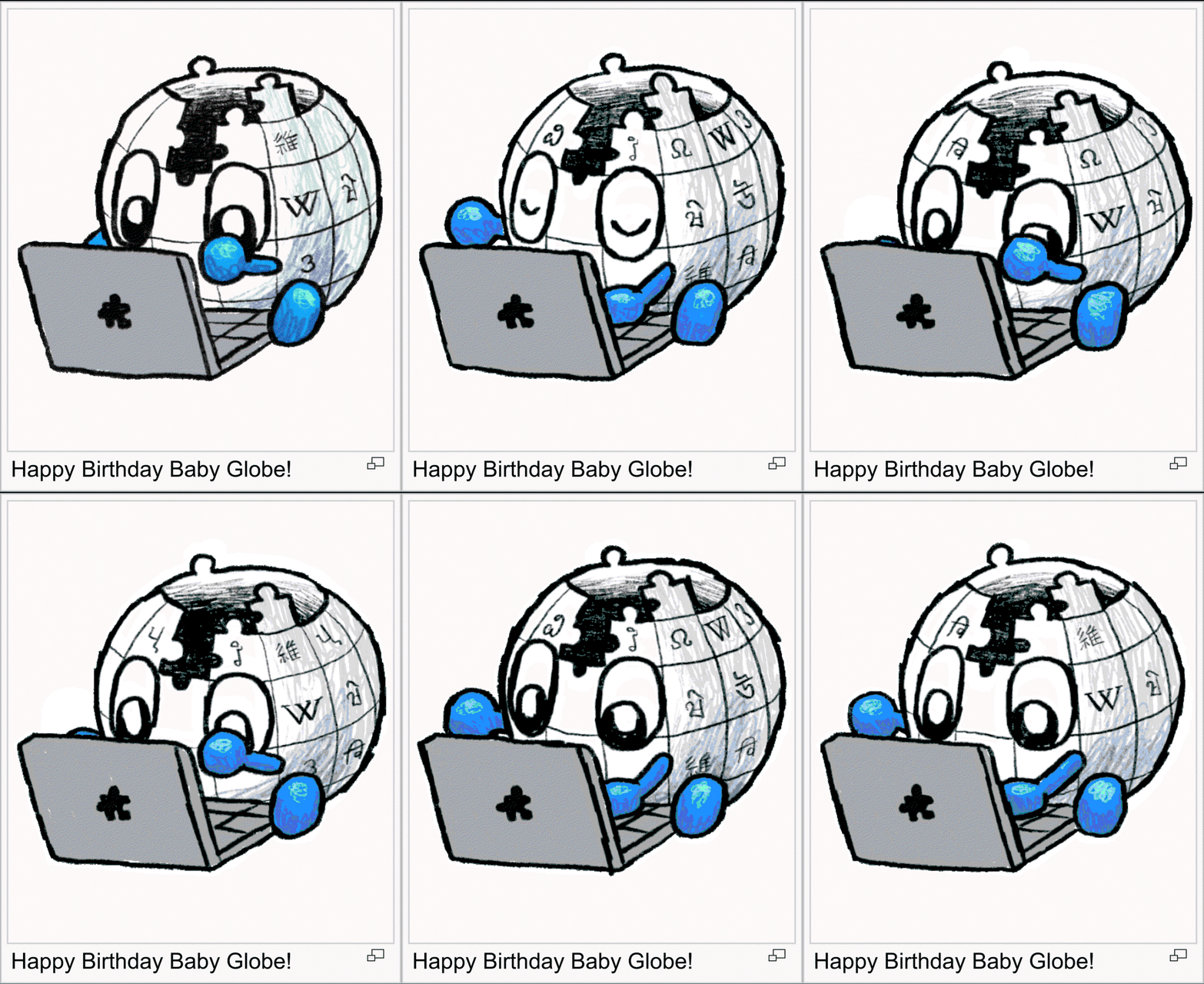
Courtesy of Wikimedia Foundation staff and contractors, CC BY-SA 4.0
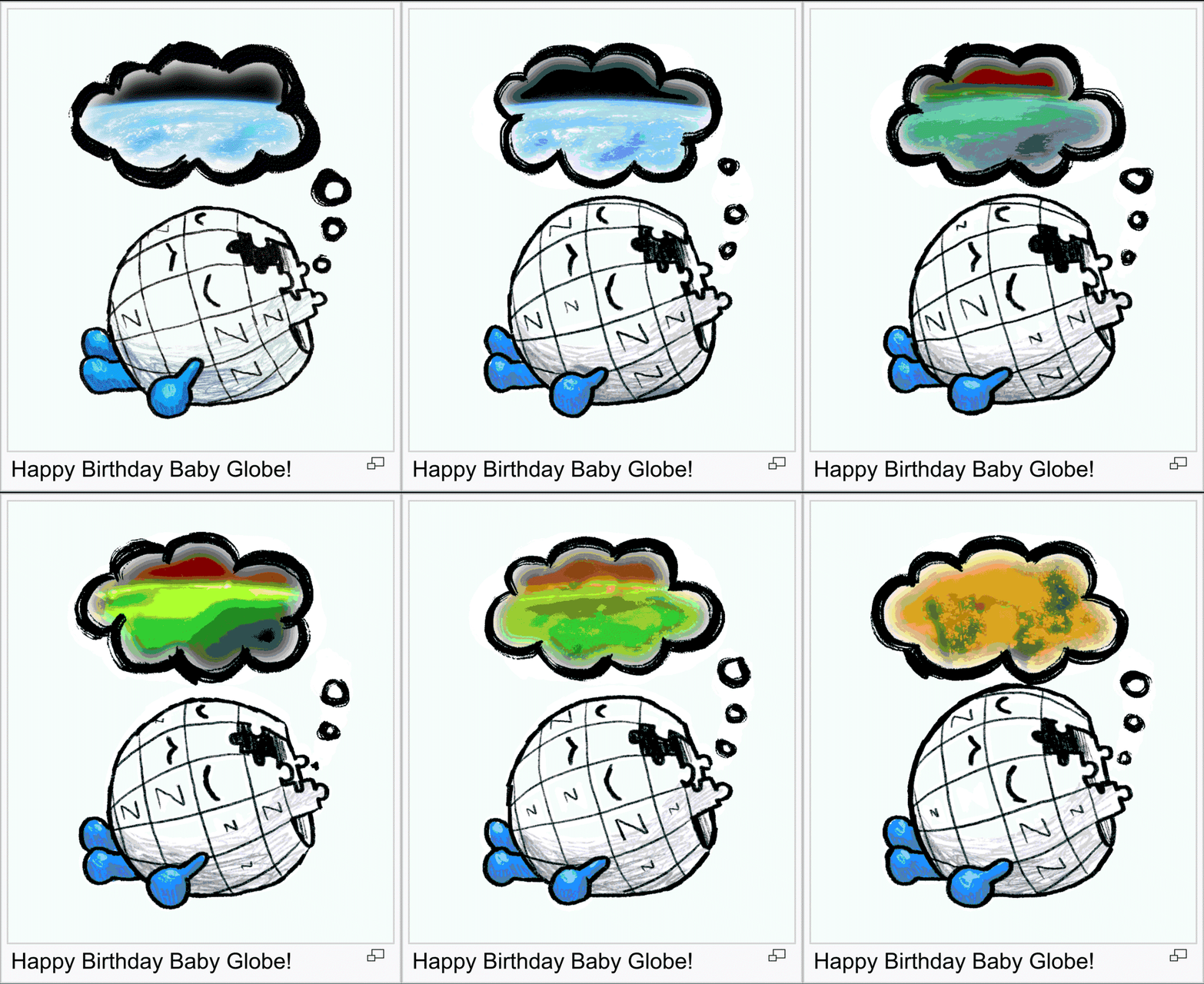
Courtesy of Wikimedia Foundation staff and contractors, CC BY-SA 4.0
Whereas Wikipedia itself does not exactly pack a visual punch, and purposefully so, Wikimedia is dedicated to making sure the aesthetics that orbit Wikipedia make up for that. Recently, the Wikimedia Foundation collaborated closely with creative agency Kin to create an anthem film in celebration of the site’s wide-reaching database, and the agency brought along director Adrian Yu and editors Connor Griffith and Tom Goulet to produce the film.
“Apparently kids don’t use Wikipedia anymore, they just use AI,” says Tom. “It’s weird to see it come full circle from when we weren’t allowed to use Wikipedia in school because it was ‘written by people’ to now, where it being ‘written by people’ is the very reason it is trusted!” Senior brand designer Bex McNally and creative director Einav Jacubovich at the Wikimedia Foundation, guided the team in making the film to feel genuine and real. Naturally, it takes place on a screen, featuring real cursor movements and realistic browsing activities inspired by Wikiracing, as the viewer follows hyperlink rabbit holes and gets spat out across several universes of topics.
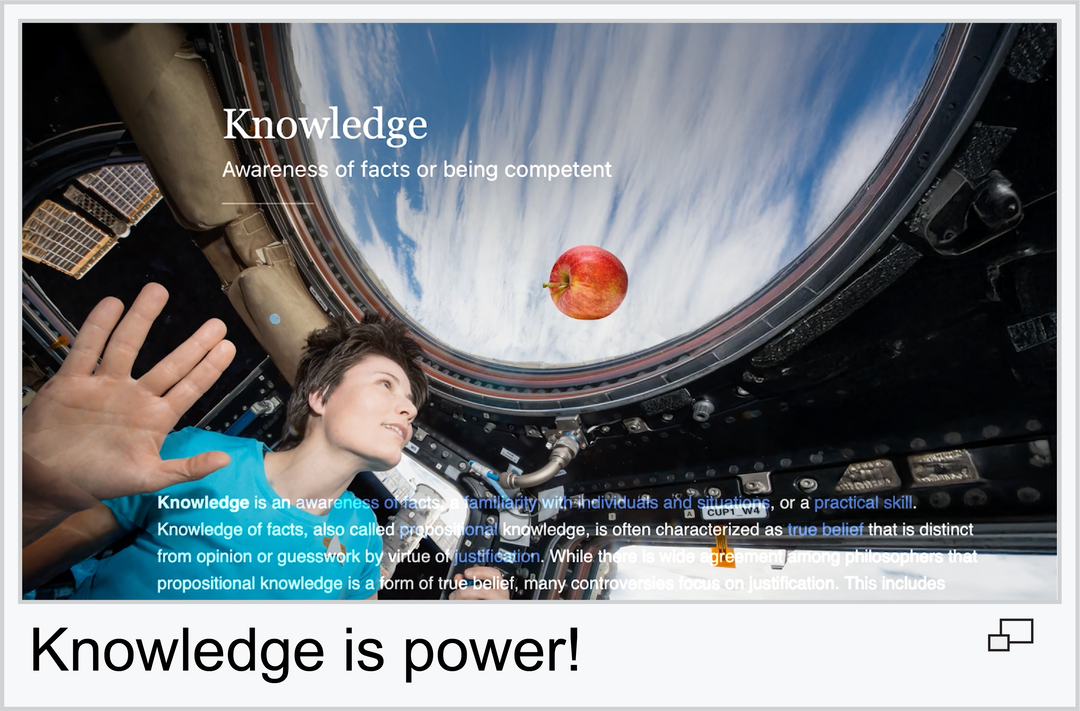
Anthem: Courtesy of Adrian Yu, Tom Goulet, Connor Griffith/Wikimedia Foundation, CC BY-SA 4.0
“The main constraint while making this video was that all the media we used had to be taken from Wikimedia Commons (which is an amazing database I’ve gratefully used many times before). And you got to love constraints. The constraints make for all the quirks,” says Tom. “One of my favourite parts of the video was the whistling soundbite with the picture of the guy whistling. It cracks me up that there was a guy who took his camera and tripod out to take a picture of himself whistling for the Whistling page. Here’s that same guy on the Japanese page for ‘bedhead.’” The Wikimedia Foundations Brand team worked closely with Kin in curating and attributing close to a thousand Wikimedia Commons images in the creation of this film – and you can believe it. Beginning with the first Wikipedia ever, with bygone top-down image loading and bitty pixel typefaces, the film whips the viewer through a visual wormhole that takes place entirely on the screen, with Wikipedia as its main character. Although it’s one-and-a-half minutes long, amongst the blitz of digital images are things you may not have known about Wikipedia, such the fact that there is a Wikipedia app (in which a really neat map feature allows you to explore your local area through Wiki pages), you can view entire football games in text-image format (complete with team formations, goals, near-goals, red cards and kits) and change spellings on pesky words like yoghurt (or is it yogurt...you decide...)
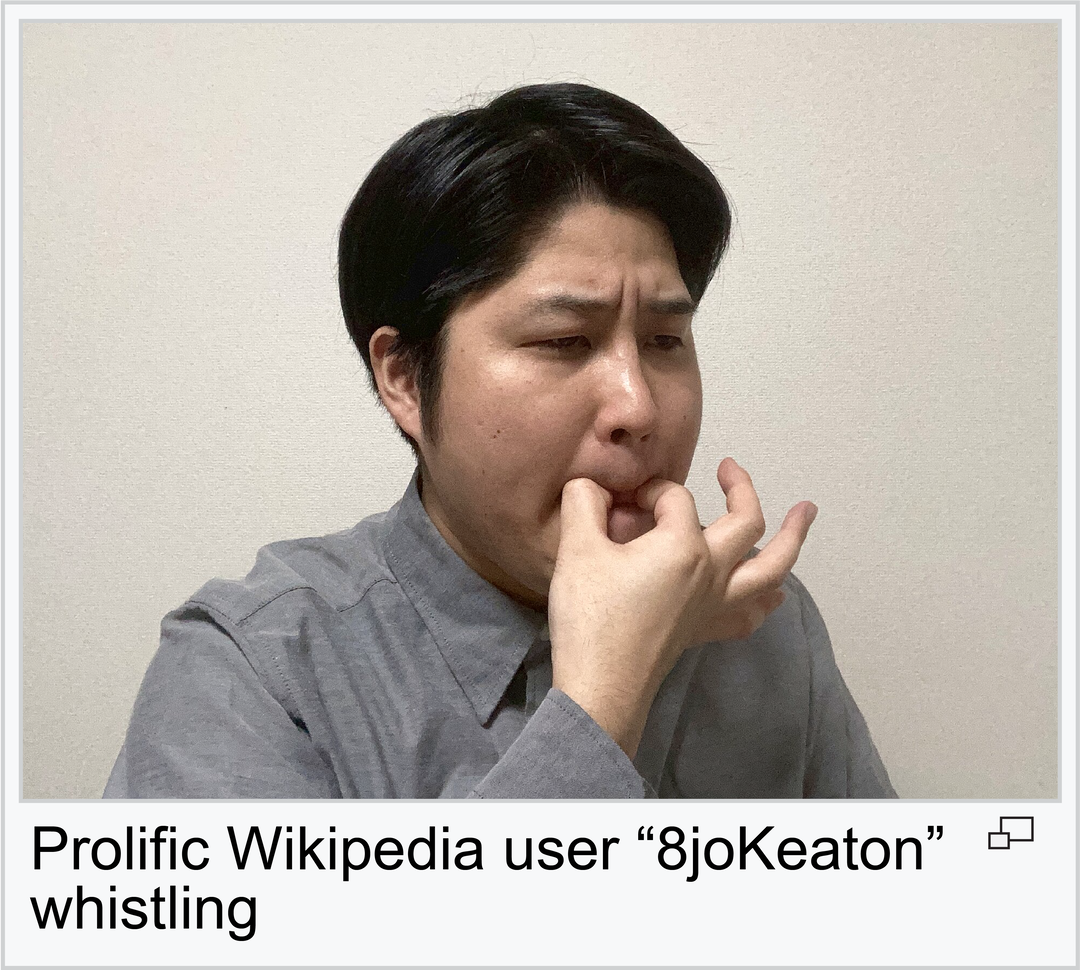
Courtesy of 8joKeaton, CC BY-SA 4.0

Amber Berson describes Wikipedia the best on The Creative Independent: “Wikipedia is an encyclopaedia. More than that, it’s the world’s free online encyclopedia, accessed by nearly 500 million unique visitors each month in more than 250 languages. The English version of Wikipedia hosts more than 4.5 million articles, all of them collaboratively authored and edited by volunteers. If there’s an article about you and your work, it’s because someone took the time to make one.”
But what’s more is that Wikipedia is more than just a database, it’s an entire world – and in its orbit is a ring of fascinating design history, volunteer-led artworks and community that goes a little unsung. It’s easy to take Wikipedia for granted, as well as its countless sister websites, because these websites feel like they’ve always been there, whenever you need them.
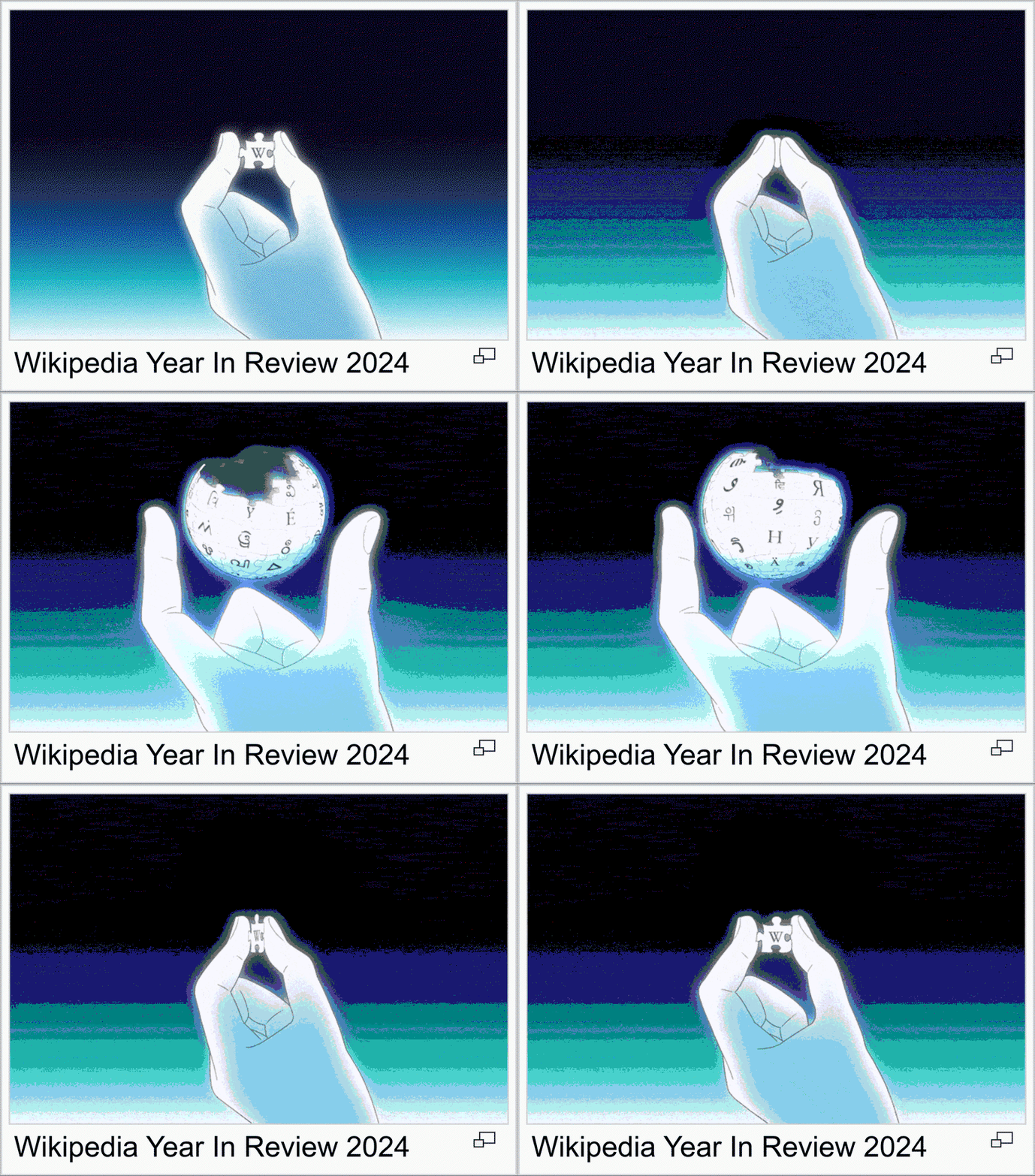
Courtesy of Sharon Park/Wikimedia Foundation, CC BY-SA 4.0
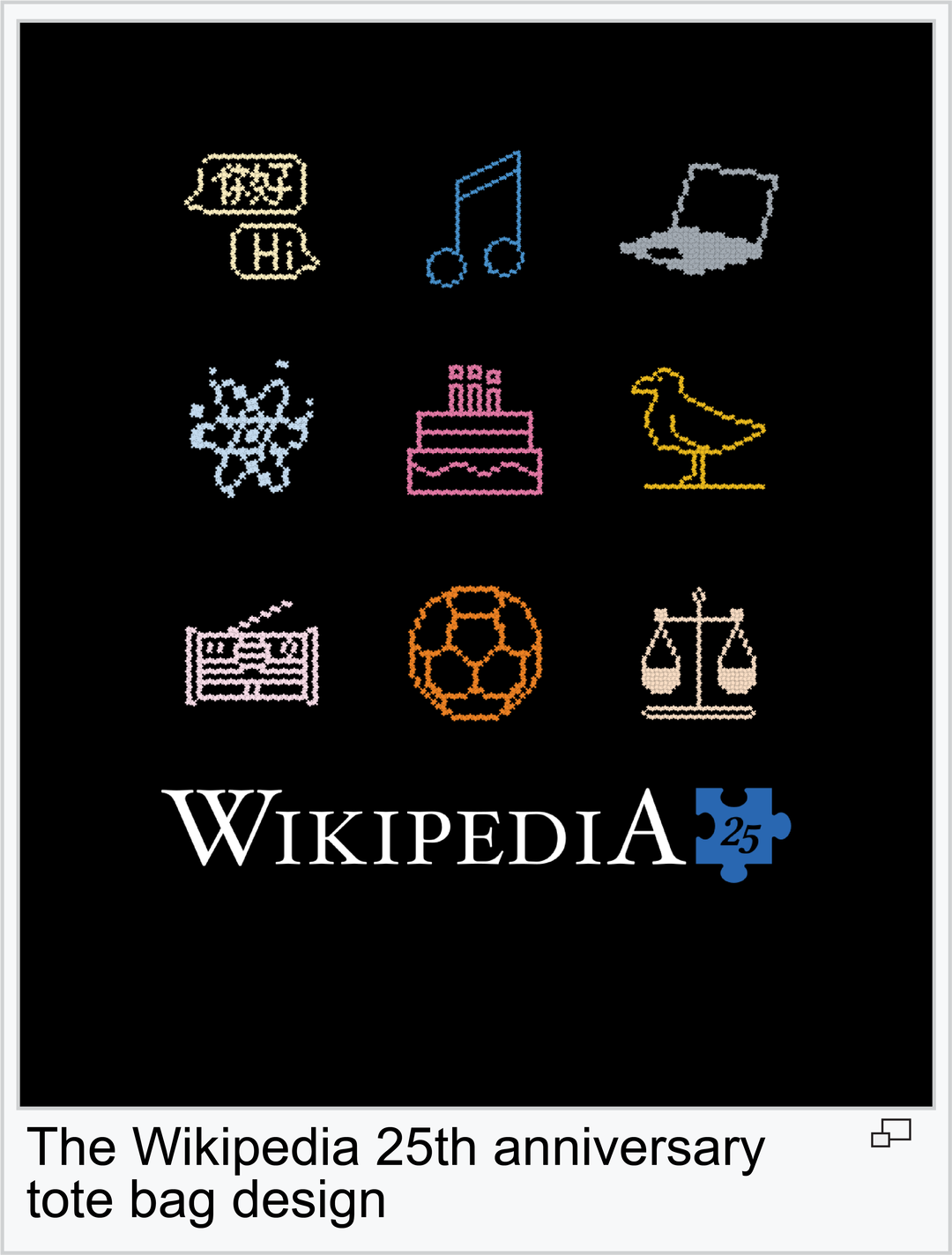
Courtesy of Wikimedia Foundation, CC BY-SA 4.0
Hero Header
Stock Image 345021 from the Fast Forward collection designed by Sara Hayward scanned from Fusion by
DigitalVision Ltd (1999)
Share Article
Further Info
About the Author
—
Paul M (He/Him) is a Junior Writer at It’s Nice That since May 2025. He studied (BA) Fine Art and has a strong interest in digital kitsch, multimedia painting, collage, nostalgia, analogue technology and all matters of strange stuff. pcm@itsnicethat.com
To submit your work to be featured on the site, see our Submissions Guide.