- Words
- Ruby Boddington
- —
- Date
- 17 August 2020
- Tags
Okocha Obasi is a designer aiming to “uncover truth, individuality and question the status quo”
A Leeds Arts University grad, Okocha wants to use design to break, build, contest, defy, rebel and unite people of all different forms of life.
Share
Share
Without being rooted in an individual discipline, Okocha Obasi is a designer and art director with a singular purpose: to not just challenge standards but break them. A graduate of Leeds Arts University’s BA in graphic design, and now based in London, he uses his practice “as [a] tool offering moments of hope, ecstasy, joy, and escape,” informed by the past but curating for the future. This has seen him explore the ethics of race and technology, surveillance and power as well as Acid House culture, but no matter what the topic, he challenges the norms of society, drawing on his upbringing and experience of university where he was often othered.
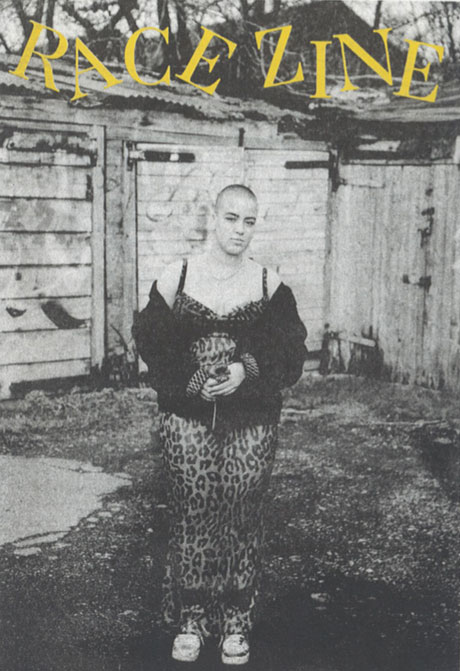
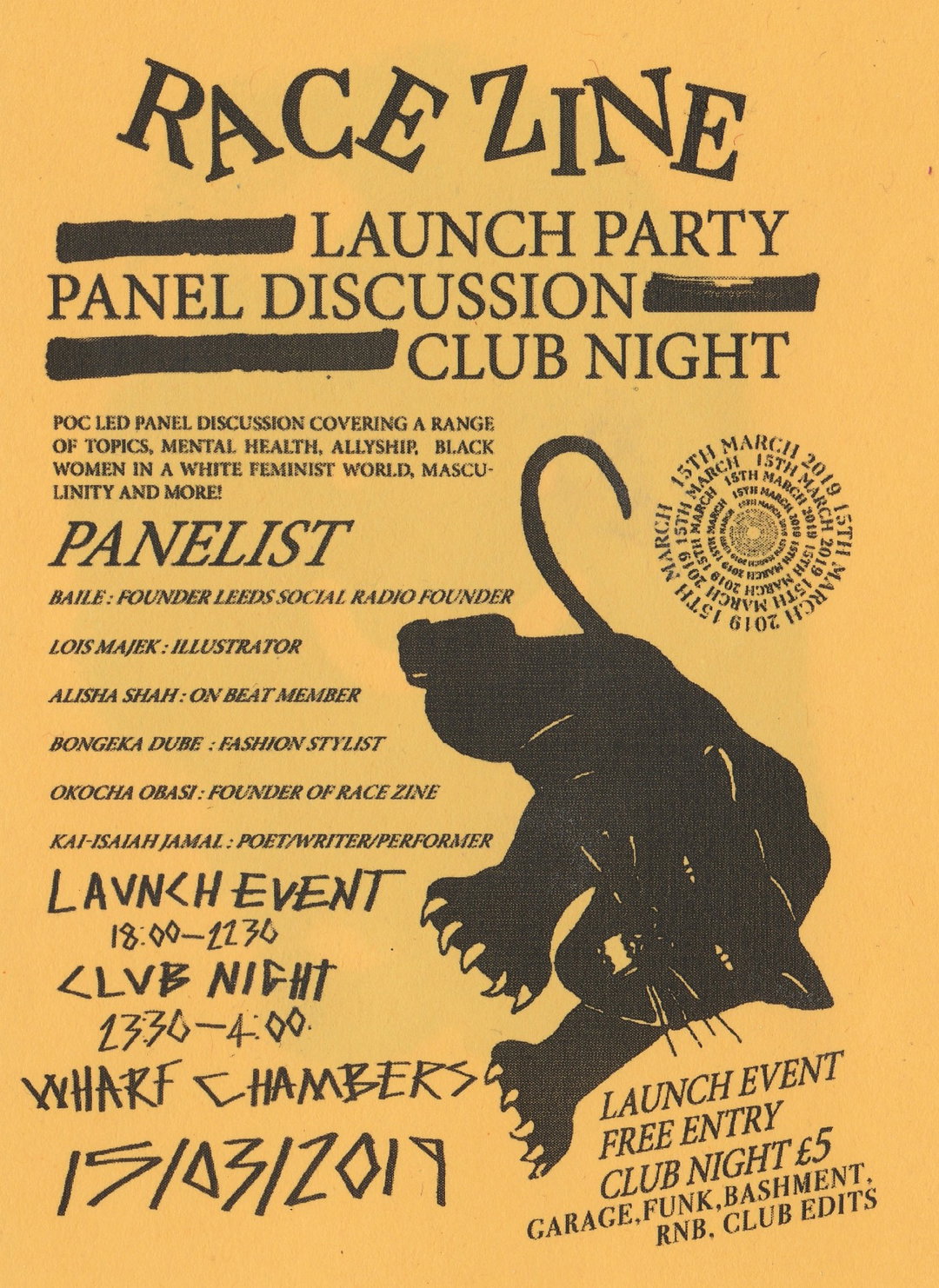
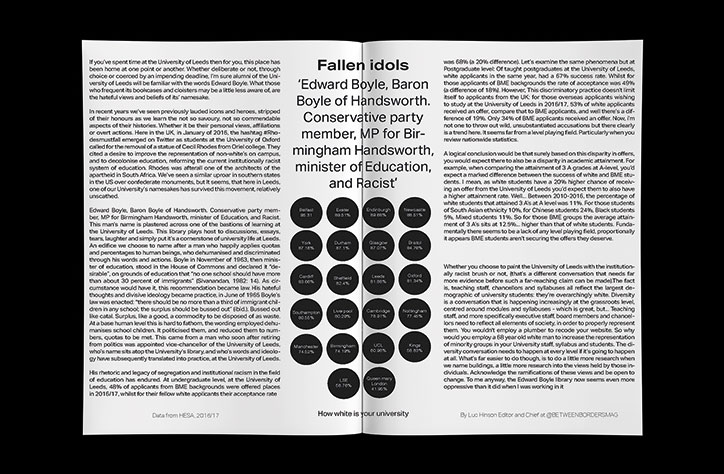
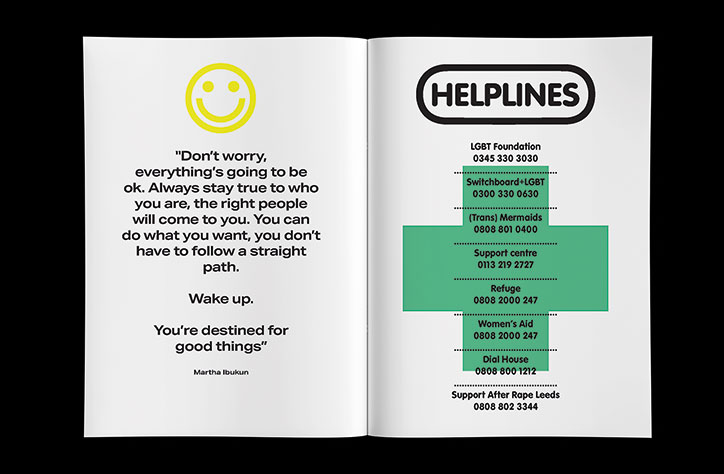
A major part of Okocha’s practice is RaceZine, a collective and publication he founded in order to push diversity, break the mould and bring people of colour in the Leeds area and beyond, together. Through RaceZine, he shares stories, recipes, essays, music, art and interviews from people of colour as well as running workshops which use creativity as a tool to dismantle normative structures around race and imagine a better future. Alongside this, Okocha runs a club night called Tongue N Teeth in which people of colour can gather in a safe space – both attendees and DJs. His intention, he tells us, “is to make people feel empowered, connected and visible.”
GalleryOkocha Obasi: Racezine
“I was always the kid who questioned things and rejected the normative as being the definitive truth.”
Okocha Obasi
It’s Nice That:
What’s the most valuable lesson you learned during your time at university?
Okocha Obasi:
The most valuable lesson I have learned while studying, is to have varied interests. It’s often what sets you apart from other people and you can clearly see that in work which is a more divergent embodiment of art and design. Be aware of that “thing” as being both an interest but also an extension of your identity at large and therefore an extension of the way you produce. Thousands of people are studying the exact same course as you, what do you have to bring to the table? What is new, fresh and bold? And if you feel like you lack an interest, put yourself out in the world you know nothing about (in the deep end first) and explore.
On the flip-side, if you’re a freelance graphic designer who’s just graduated, I personally wouldn’t get out of bed for less than £200 even if the job takes an hour or an entire day. You’re a service, not a clock. You’re being paid for your style, energy, knowledge and uniqueness and that is priceless. Never let anyone exploit your talent which has taken years to learn.
Okocha Obasi: Racezine
Okocha Obasi: Racezine
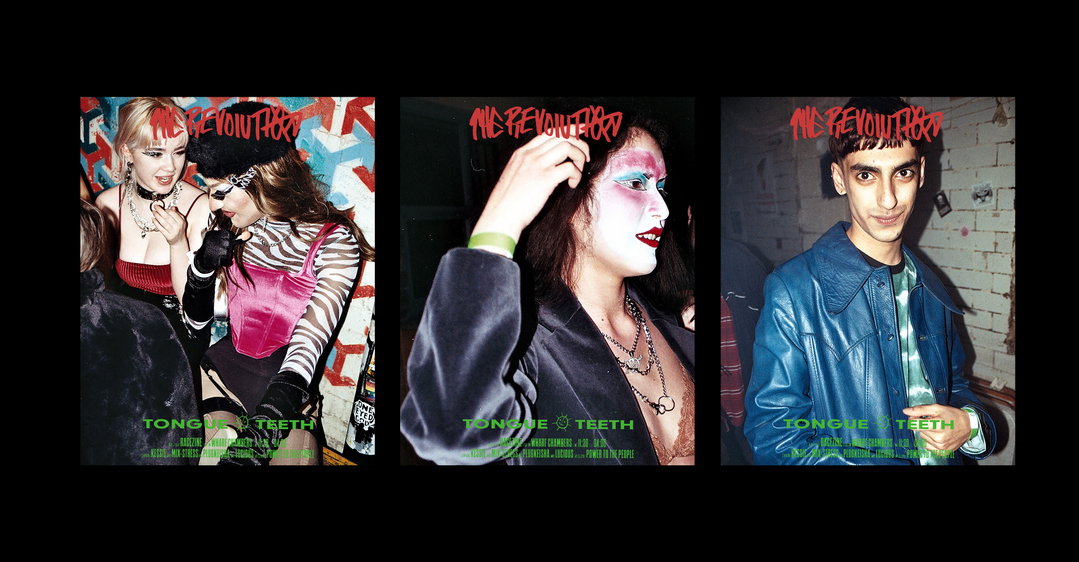
Tongue N Teeth
INT:
Within your practice, you challenge norms. What compels you to do this?
OO:
It really stems from trauma from being bullied for being different for the large majority of my life – from the earliest memories I have. This later transgressed into the way I approached all my studies. I was always the kid who questioned things and rejected the normative as being the definitive truth. From this, I was always in search of truth being held within the unknown or the not yet explored. This was something I was doing from A-levels all the way up to present. Tending to fuse theories, stories, cultures, ideas, styles and identities into one another within my work in order to create something of a hybrid or, more importantly, understanding a context from a panoptic view.
In a nutshell, I don’t like singular answers but instead prefer when a project or outcome leads to more questions between the subject and reader. I guess I’m breaking standards in the sense of creating work as an outsider or as the othered, in terms of social and economic disposition. This means the work I create is often from the perspective of the outsider to those creating within the ruling social group or supremacy. This gives me an advantage in offering present narratives not extensively present in the art and design world. And with that, there is a real aim for liberation or catharsis that I try to attain between all my work and the viewer. I aim to uncover truth, individuality and question the status quo. I do not view disciplines as singular professions, but rather see it as one large cohesive nomadic structure one uses to present different forms of narrative and intentions. I rebel or challenge norms as I want to be able to bring something new to my industry and strive to do this with both courage, critical thinking and care.
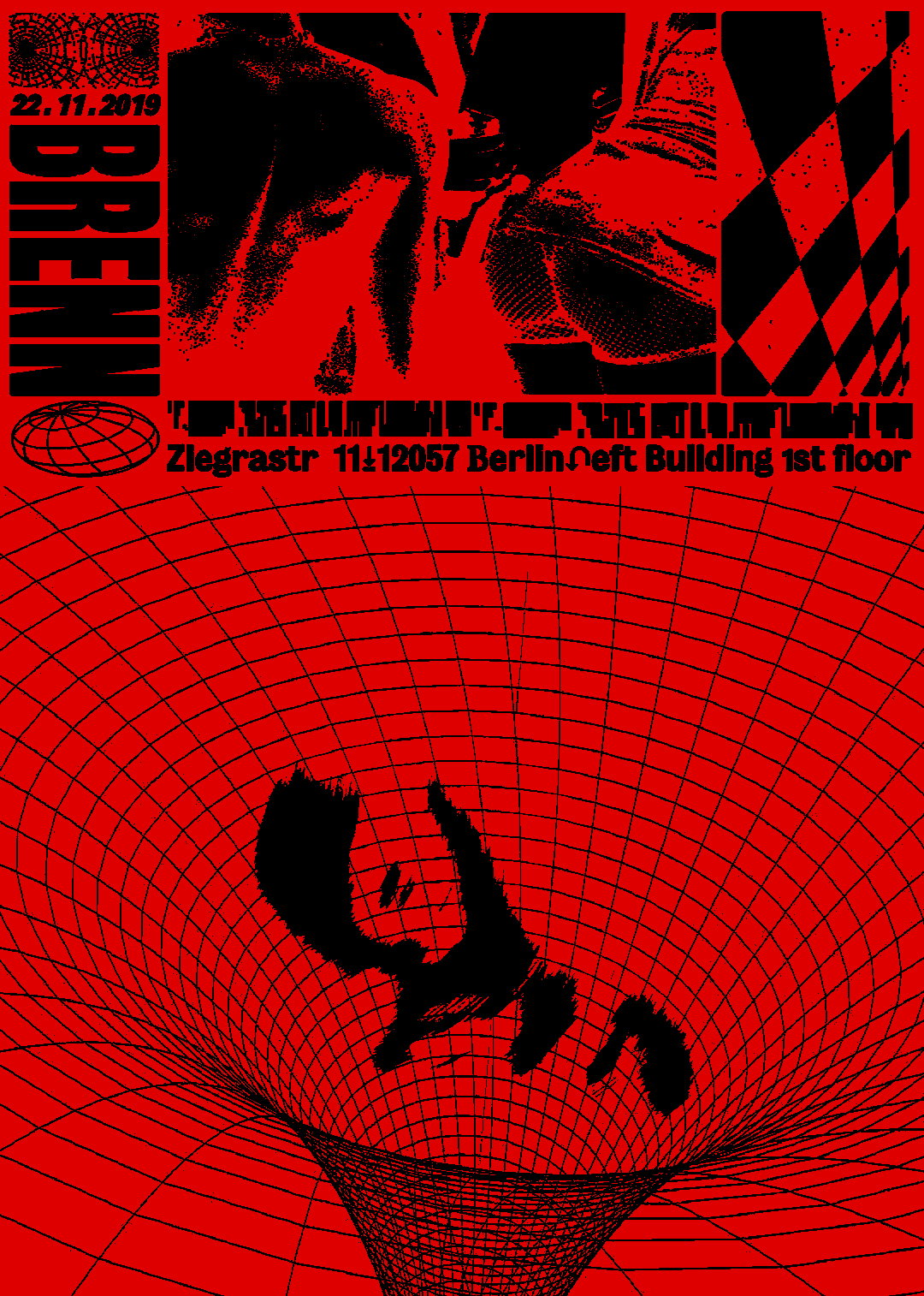
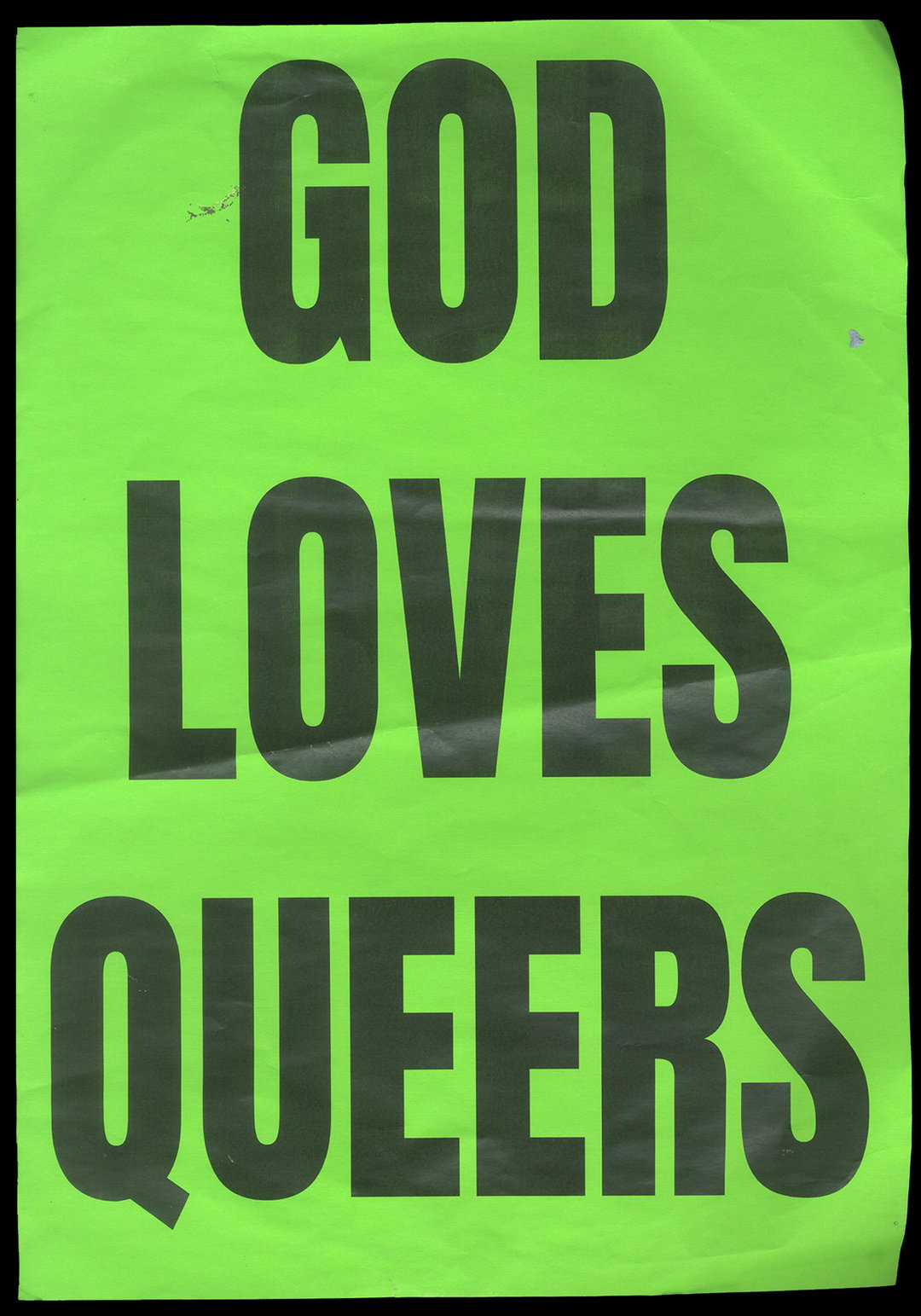
GalleryOkocha Obasi: Club night posters
INT:
Tell us about your favourite project from university? What is it about? And what aesthetic or conceptual decisions did you make?
OO:
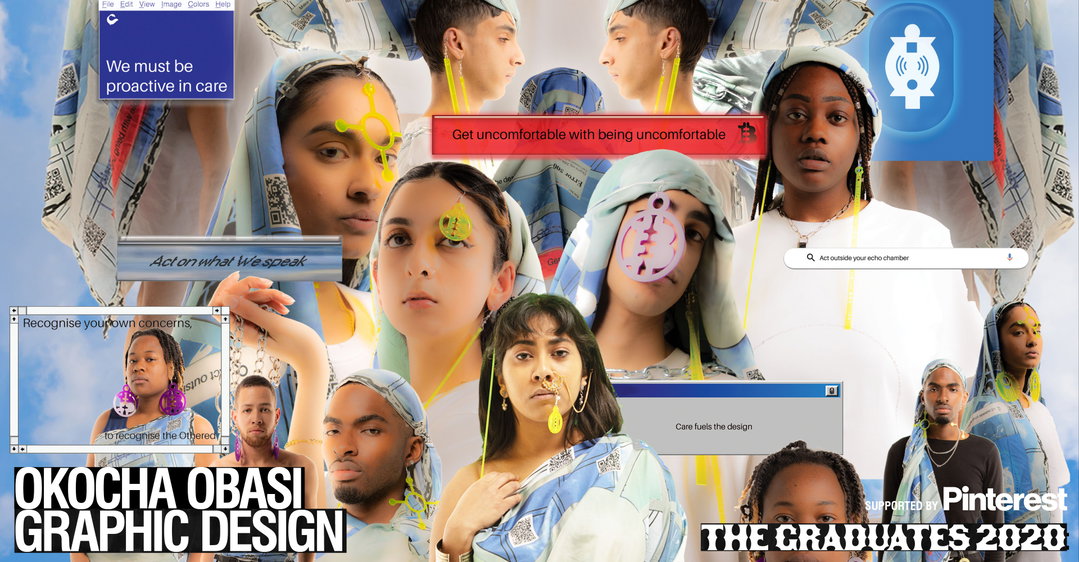
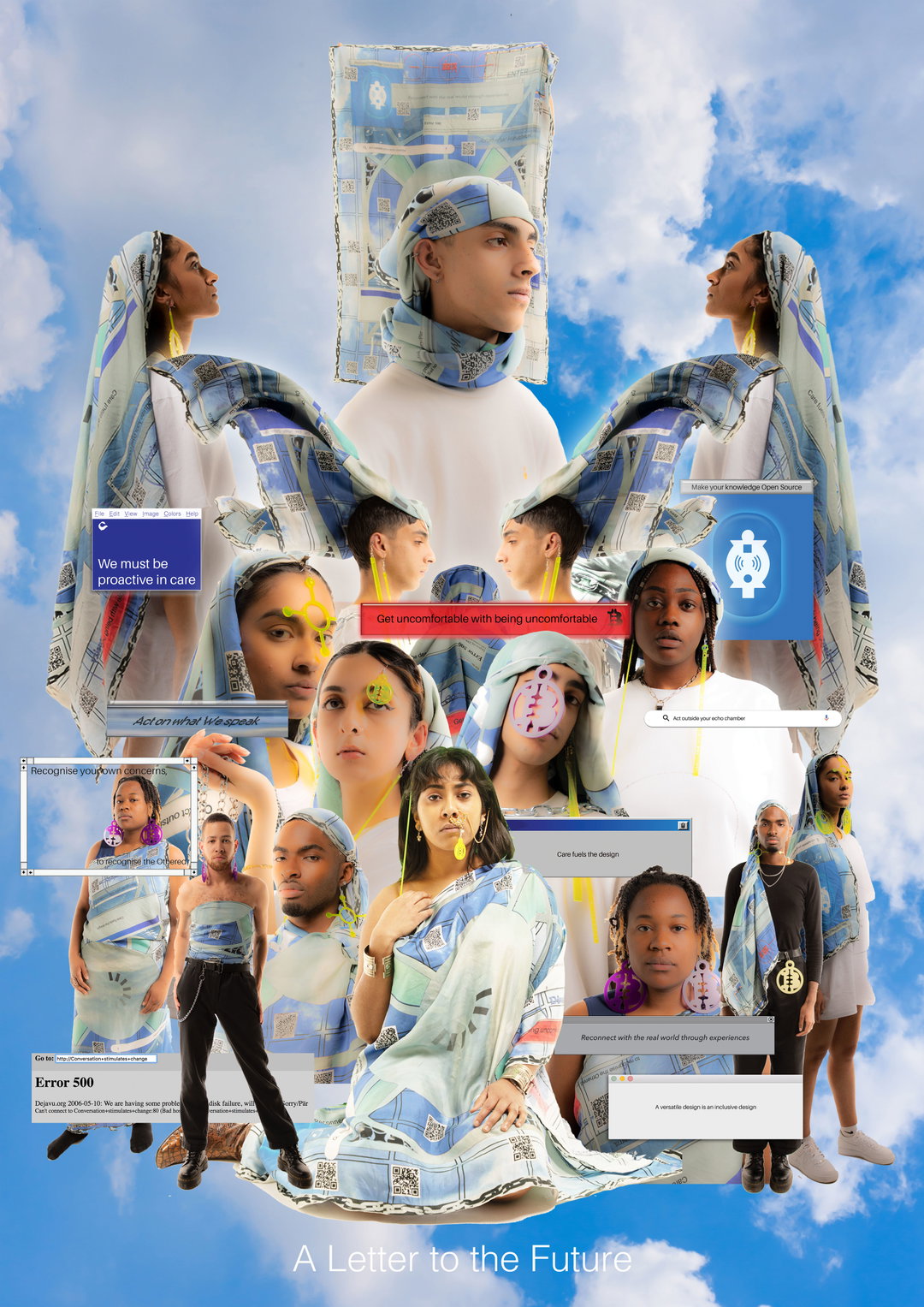
My favourite project was The Letter to The Future 1.0. It’s a three-part series based off my dissertation question, “How do designers use Technology to encompass the Othered?” From that, I researched and read tonnes of essays and got in contact with industry professionals working within the mediation of design and technology. I created a manifesto which aims to lay bare the ways both designers working within art and design, as well those working in the field of technology, can create work which encompass the all, rather than the one.
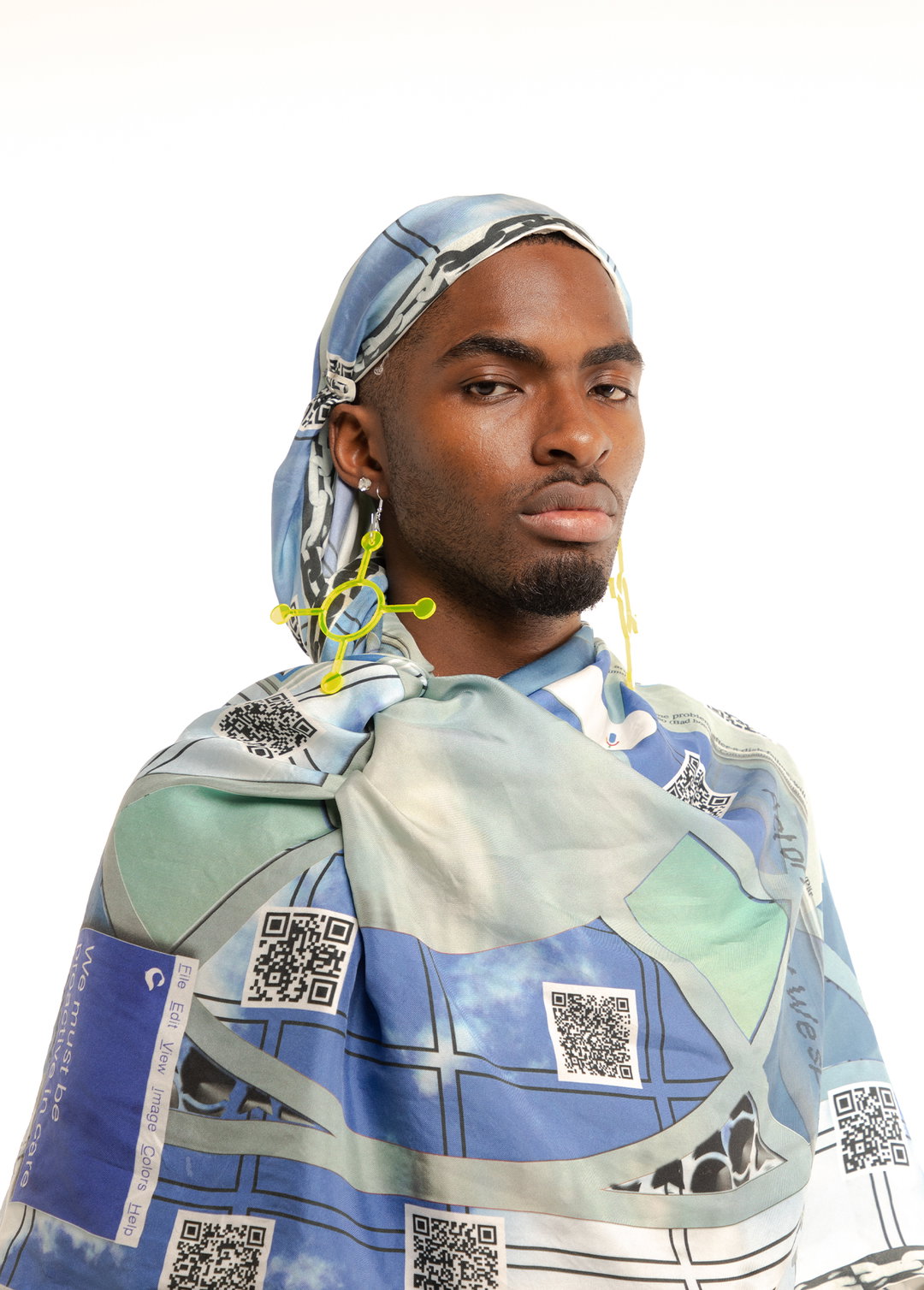
The first design was a manifesto. The second part was a 3D flag which is locked in cyberspace to live infinitely being able to adapt with the times, as well being separate from physical destruction. The final part was a look book which showed the different ways the flag could be worn by different cultural dressing traditions. At the same time, the user can conceal their body from CCTV, allowing them to gain autonomy over oneself – the chaotic patterns and QR codes being used form a shield which can direct AI-trained CCTV to intersectional study resources. The symbols you see both on the flag, used on some of the tabs, and on the jewellery worn by the models were directly taken from Adinkra symbols.
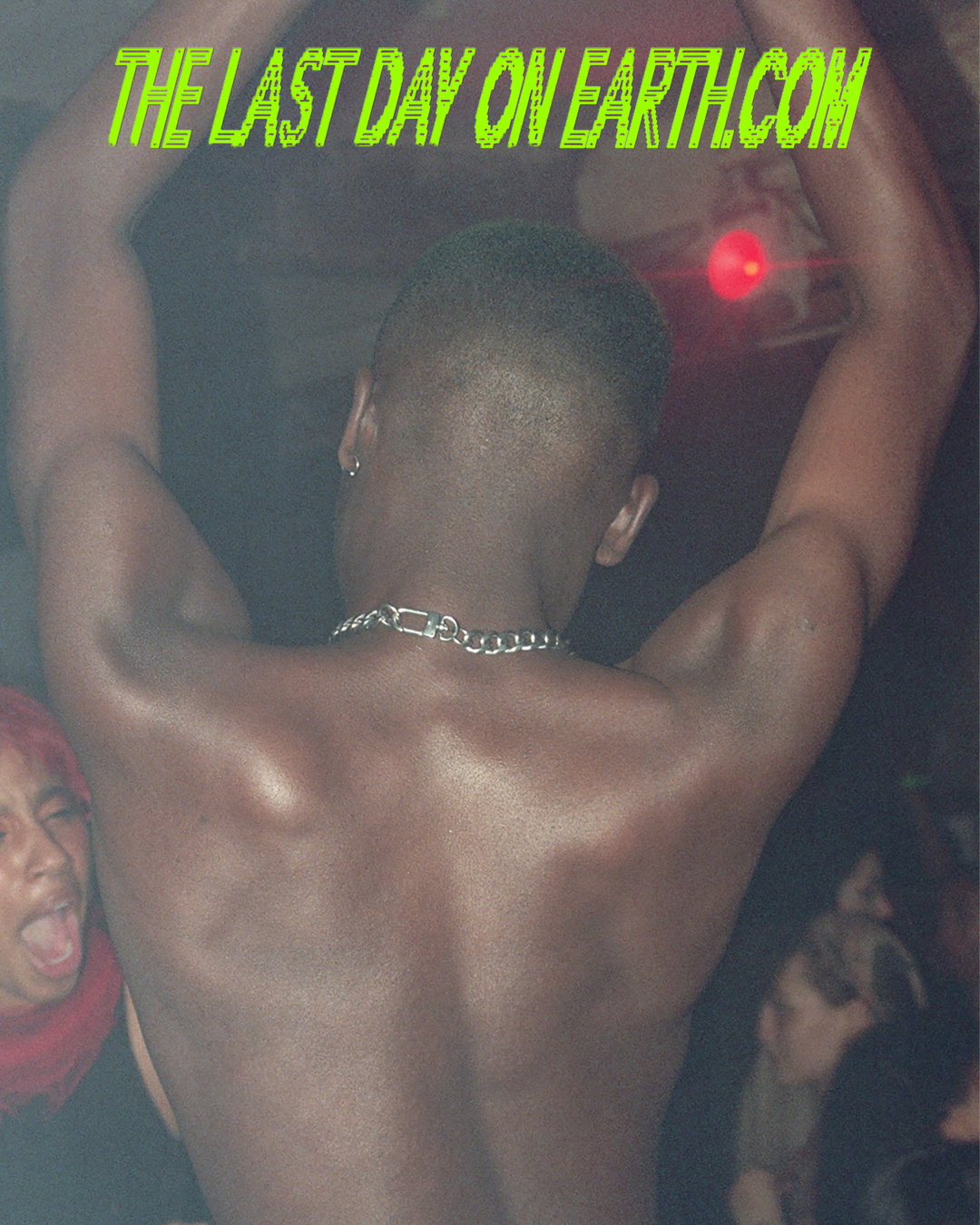
Okocha Obasi: Tongue N Teeth
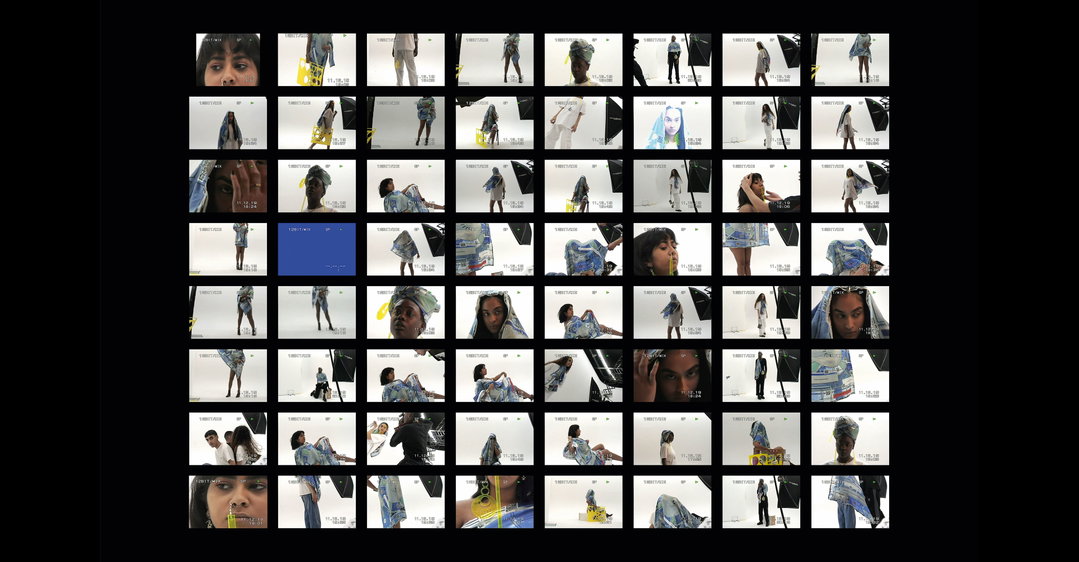
Okocha Obasi: A Letter to the Future film board
This creates a narrative which fuses tech symbols used in the West with Adinkra symbols to create a new Afro-futuristic language, which formulates the idea of care through both the semiotics of tech and African fables. Some of the same hybrid symbols and manifesto points were made into jewellery. Using what was found from African and Asian jewellery made me use the exaggeration of scale as a way to present the idea of wisdom and beauty. I loved the project as it shows off everything I love, from fashion direction to speculative design and critical storytelling. I was so immersed in this project as it was so heavily based on research and pushed me into different mediums I haven’t used before like 3D design. Overall this project is very close to my heart.
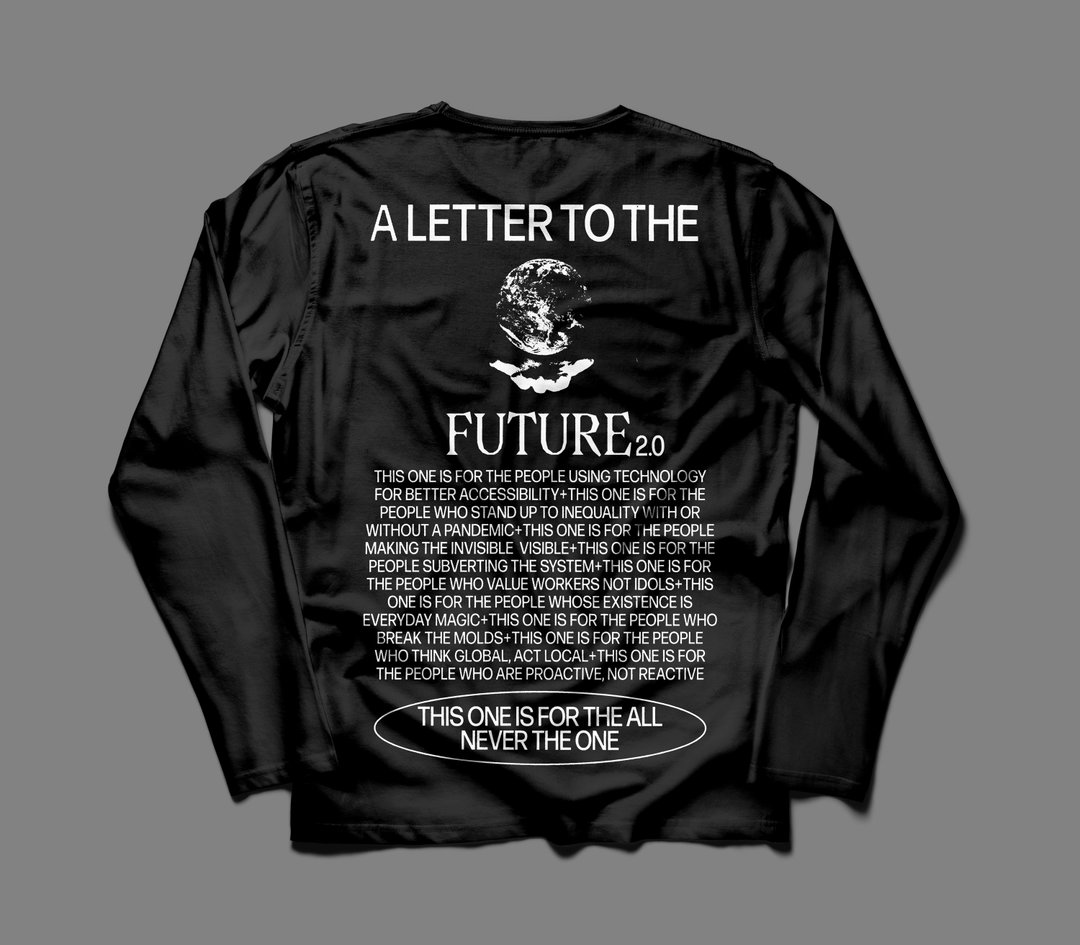
Okocha Obasi: A Letter to the Future
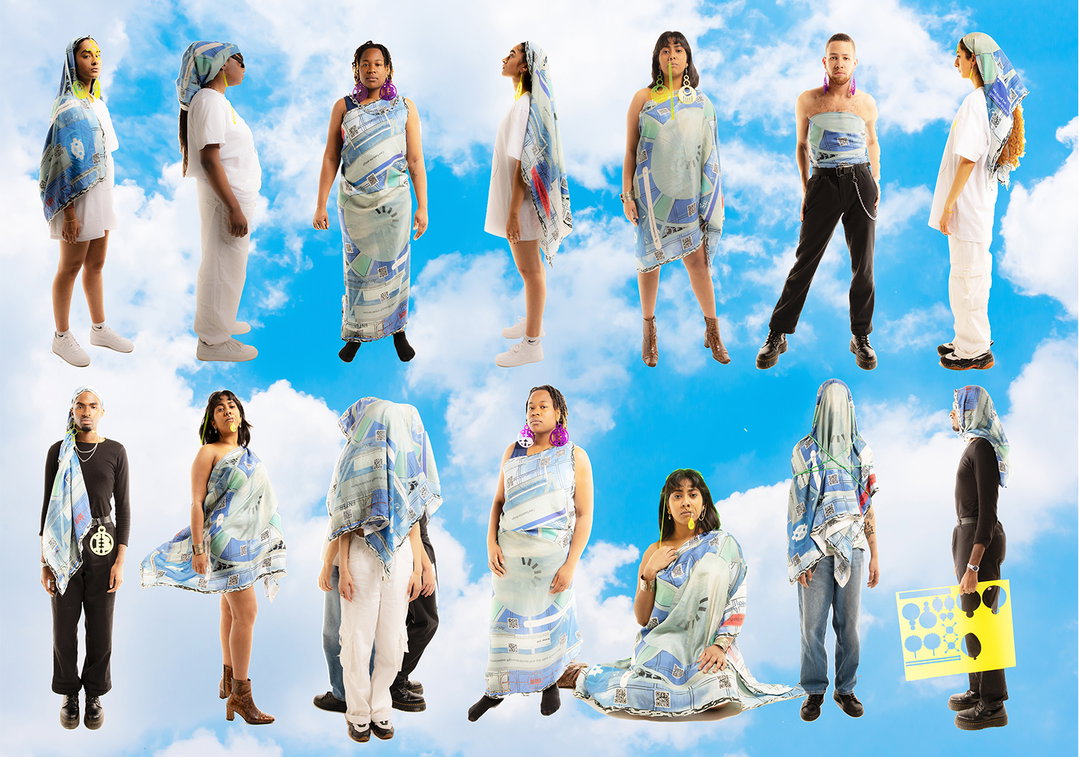
Okocha Obasi: A Letter to the Future lookbook
INT:
You also founded RaceZine Collective. Tell us about your intentions with this project?
OO:
RaceZine Collective is a one-man team and has been for most of its journey. Instead of taking the form of a traditional collective, where you have set members, I prefer to work independently, reaching out to other creatives to collaborate with for specific projects. My role is everything you see: I design and curate every last detail and if collaborating, I work closely with my peers to ensure the vision is met to a high and impactful standard.
RaceZine started off as zine publication sharing stories, recipes, essays, music, art and interviews from people of colour, mostly located in the north of England. But this then grew into workshops which use creativity as tool to dismantle uncomfortable narratives around race and the future. As well as panels which aim to highlight Black excellence, sharing industry knowledge and stories of personal growth and resilience in open and attentive environments.
GalleryOkocha Obasi: A Letter to the Future lookbook
I also run a club night called Tongue N Teeth, which was made to home both people of colour in the North as well those who often do not fit into the normative social crowds. Its aim was to give more space for people of colour, as well as only facilitating DJs of colour in the North in reaction to the heavily cis and white-dominated club scene. TNT uses themes as a way to make our guests feel empowered, but also allowing them to reflect on the times we live in. One theme was the end of the world being based on climate change, which invited our guests to come in outfits they wanted to be remembered in on the last day on earth. Another was the revolution being based on the general election, urging guests to come into the rave in what makes them feel powerful. We dished out 100s of manifestos in response to the Tory reign about how to be a better ally in the 21st Century.
So, in a nutshell RaceZine is more than a publication – it’s a space, a methodology, a voice, attitude and style, which is genuine and unapologetic. We don’t care about how many followers you have but instead care about who you are as person and what you want to say to the world. We use creativity to elevate and showcase these voices through different forms of design mediums; if that’s an event, publication or club night, the intention is to make people feel empowered, connected and visible.
The future of RaceZine now that I’ve moved back to London would be to start a creative members club for people of colour, hosting more energetic and sexually liberating club nights, movie nights, educational panels and workshops arounds creativity and personal growth. In terms of the zine, I want it to be more raw, more visual and critical in what it showcases. And push the boundaries of what is socially acknowledged within the field of art and design as Black art or documentation. It’s important to mention that RaceZine doesn’t always aim to talk about racism and should be instead viewed as a nomadic platform which focusses on using creativity as tool for liberation and communication. If that means people feel a sense of freedom for a second, hour, day or month, it is my imperative to ensure those who feel often misunderstood or not accepted in society feel some form of love under my platform’s arms. A platform borne of out pain isn’t just going to break the mould, but change it.
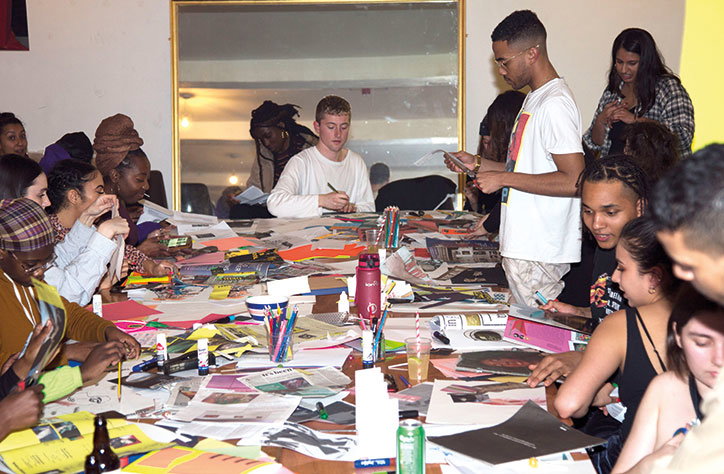
Okocha Obasi: Racezine workshop
INT:
On a more general note, how do you think design can be used instigate change or community action?
OO:
I see design as a form of brainwashing; we make things to make people feel or think certain things. And If we can use it sell things, we can use it to break, build, contest, defy, rebel and unite people of all different forms of life. All designs start with a person and end with a person, what do you want your design to do? And how will it do it? After music, I see design as one of the most powerful tools out there due to what it can ignite in people. I think it’s up to the creator how their own practice or project will instigate change or community action. But with that, the most important component of any design should be centred around care which encompasses the past, present and future social relationships of that specific community.
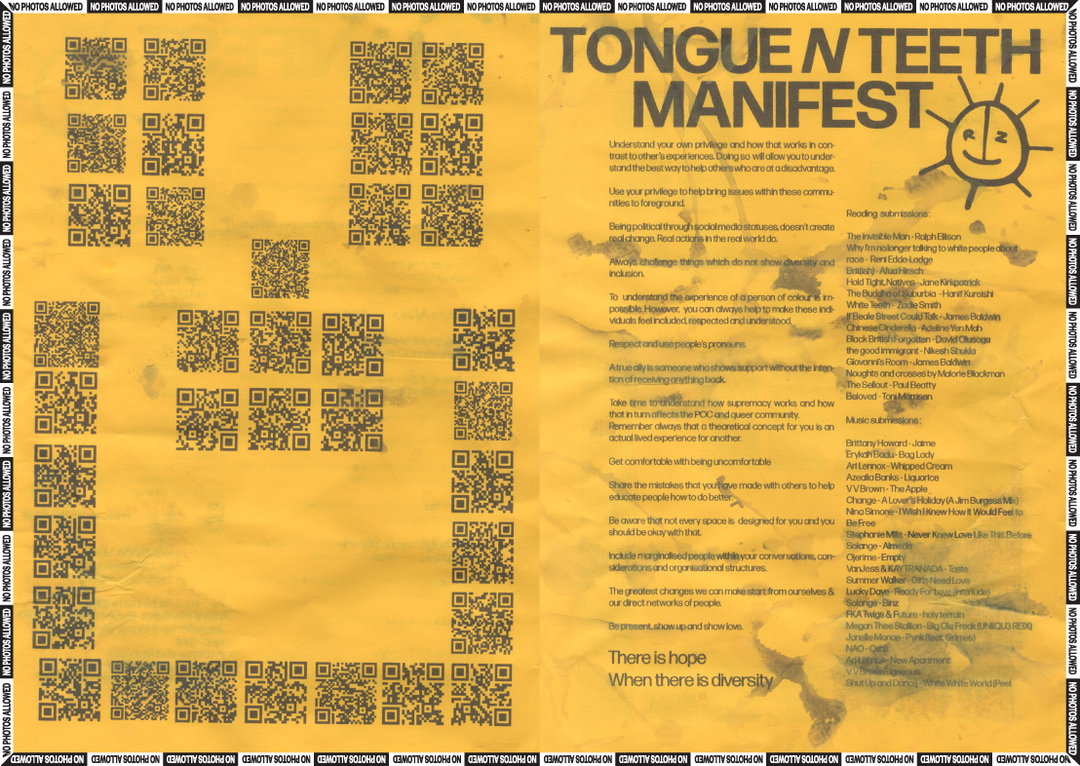
Okocha Obasi: Tongue N Teeth
“I see design as a form of brainwashing; we make things to make people feel or think certain things.”
Okocha Obasi
GalleryOkocha Obasi
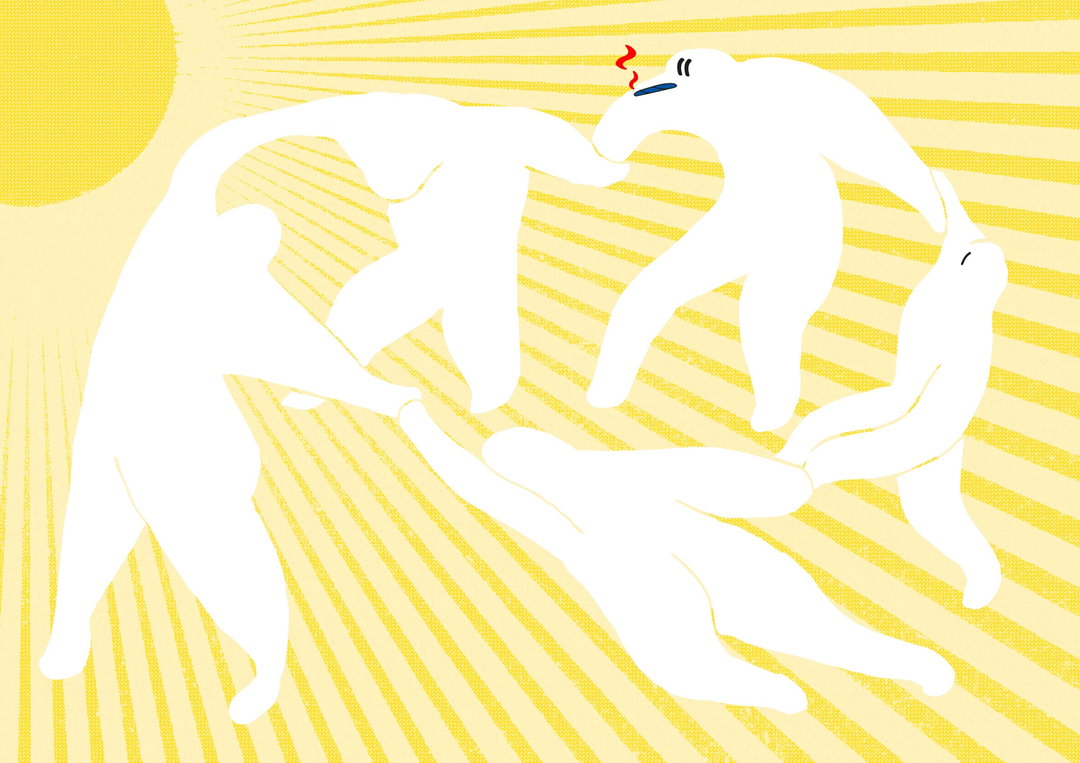
Acid flag
Club night poster
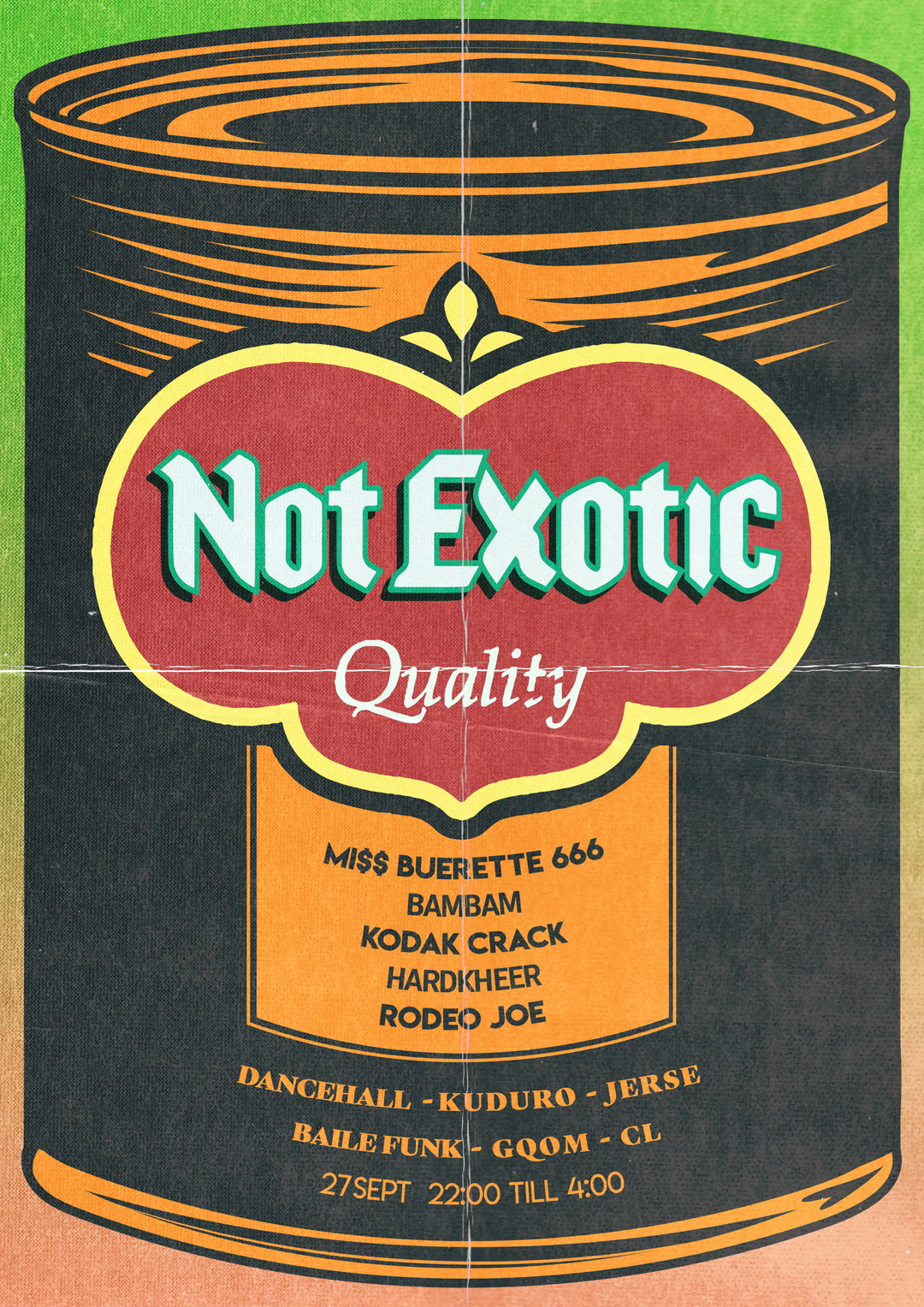
Club night poster
Share Article
About the Author
—
Ruby is Senior Creative at It's Nice That, overseeing our visual output across platforms and projects. Before that, she was associate editor on the editorial team, after joining in September 2017 following graduation from Central Saint Martins.