- Words
- Lucy Bourton
- Photography by
- Magnus Holmes
- —
- Date
- 8 November 2022
- Tags
Fisk founder Bijan Berahimi on how baby steps are key when growing a creative business
In the next instalment of our Movers & Makers series, we sit down with leading creative founders to learn how and why they set up their businesses. This week, we meet Bijan Berahimi, the founder of Portland-based studio and gallery Fisk.
Share
Share
In partnership with

Mailchimp & Co is a global community of agencies and freelancers using Mailchimp with their clients. Learn new skills, grow your network, and get tools to manage your clients–all while enjoying insider perks–when you join. Plus, it’s free.
Movers & Makers, in partnership with Mailchimp & Co, is a series on how to nurture an authentic business within the creative world. Led by the voices of industry leaders, this new series will focus on creative founders, offering insights into how founders of world-leading studios have set up, and sustained, their businesses. If you enjoy these articles and are looking to kickstart or grow your agency or freelancing business, learn more about Mailchimp & Co here.
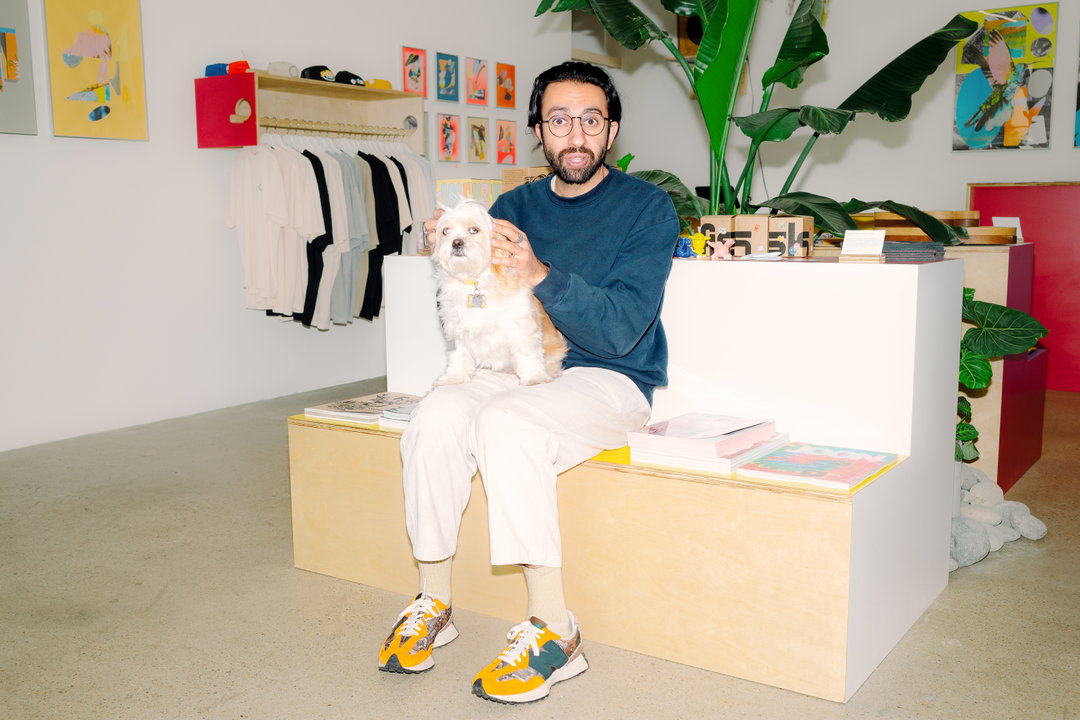
Bijan and Charlie hanging out at Fisk’s gallery on Martin Luther King Jr Blvd. Photography Magnus Holmes
Growing up, Iranian-American designer Bijan Berahimi was an extremely shy child. Not a “quiet but will soon open up” child, but a “literally hide under the tables at family parties” child. As he puts it: “I just didn’t talk.” It’s a surprise, then, to his family and even to Bijan himself that today he’s the creative founder of one of the design industry’s most respected studios: Fisk.
Based in the heavily agency-populated city of Portland, and nestled on a street lined with restaurants, Fisk has many guises. Firstly, it’s a design-focused studio creating work for the likes of Nike and Harvard, start-ups such as Akâdi or Reverie Hair Care, and musicians from Alicia Keys to Toro Y Moi. Then there’s the store and gallery, an open space where design fans can pick up the latest issues of independent magazines and prints from the creative community, and attend talks, workshops and a constantly rotating programme of exhibitions. On the side there’s also a magazine, Joon – the Farsi word for “life”, which is “often used as a term of endearment” – diving into the creative scene in Portland and beyond. Operating all these arms and legs is Bijan, his six wonderful employees, and Charlie, his dog.
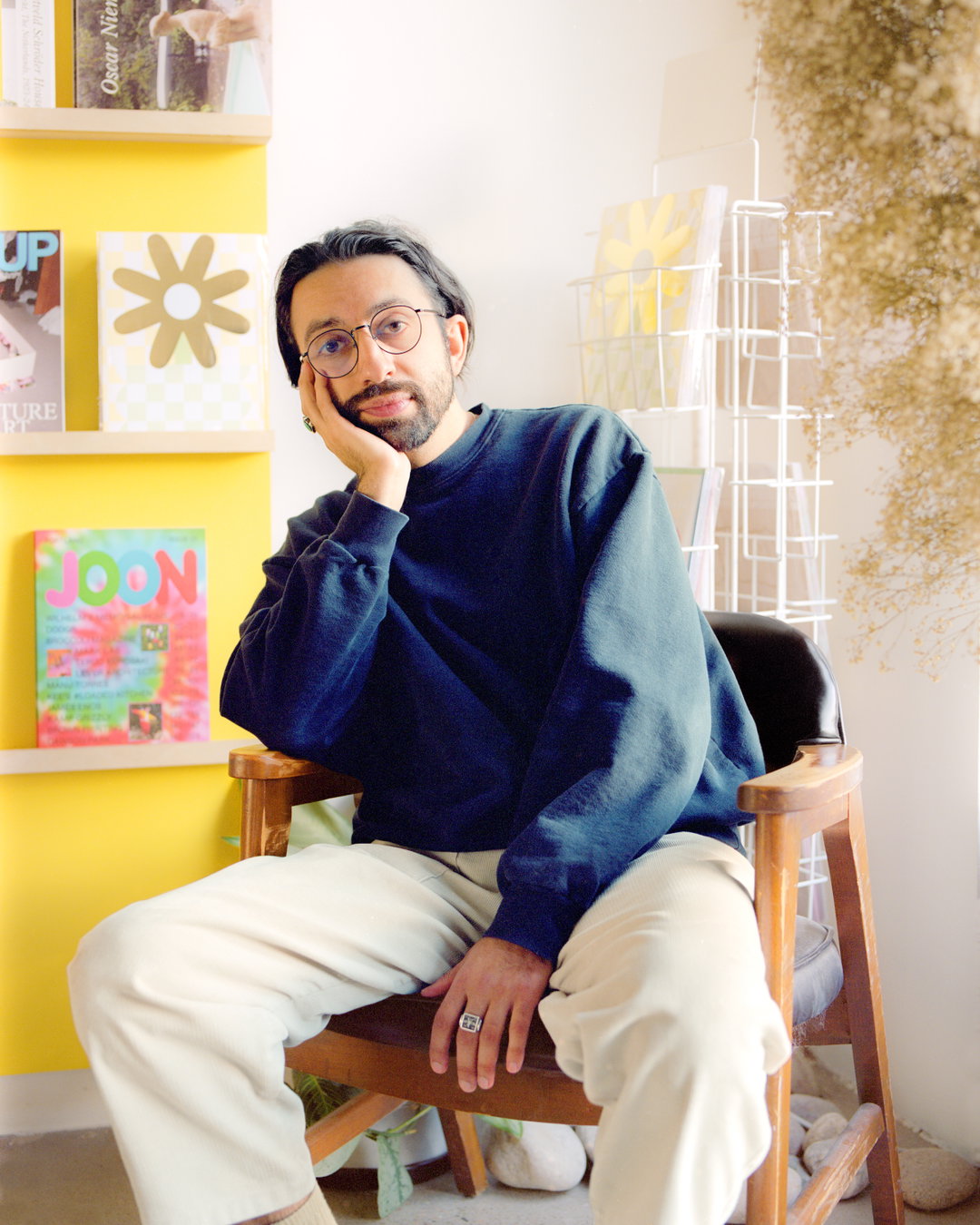
Bijan at Fisk’s gallery on Martin Luther King Jr Blvd. Photography Magnus Holmes

But the beginnings of Fisk take us down the West Coast to California, where, in 2009, Bijan was a student fascinated with graphic design, working towards a BFA in the subject from CalArts. The years prior had seen the designer fall down a “rabbit hole of the history of design, European design, Japanese design, just through the Internet and books from the library”, studying at a state school at the time. The journey to transfer to an arts-focused school “was a lot of work for me,” Bijan tells It’s Nice That, and the cost of this education meant “I wanted to take advantage of it.” And so, in the summer before his first term, “I thought of the idea of Fisk, which would be a student club,” he explains. “We were a student collective who made zines, threw parties, had a website. It was just a way to hang out and socialise outside of class.”
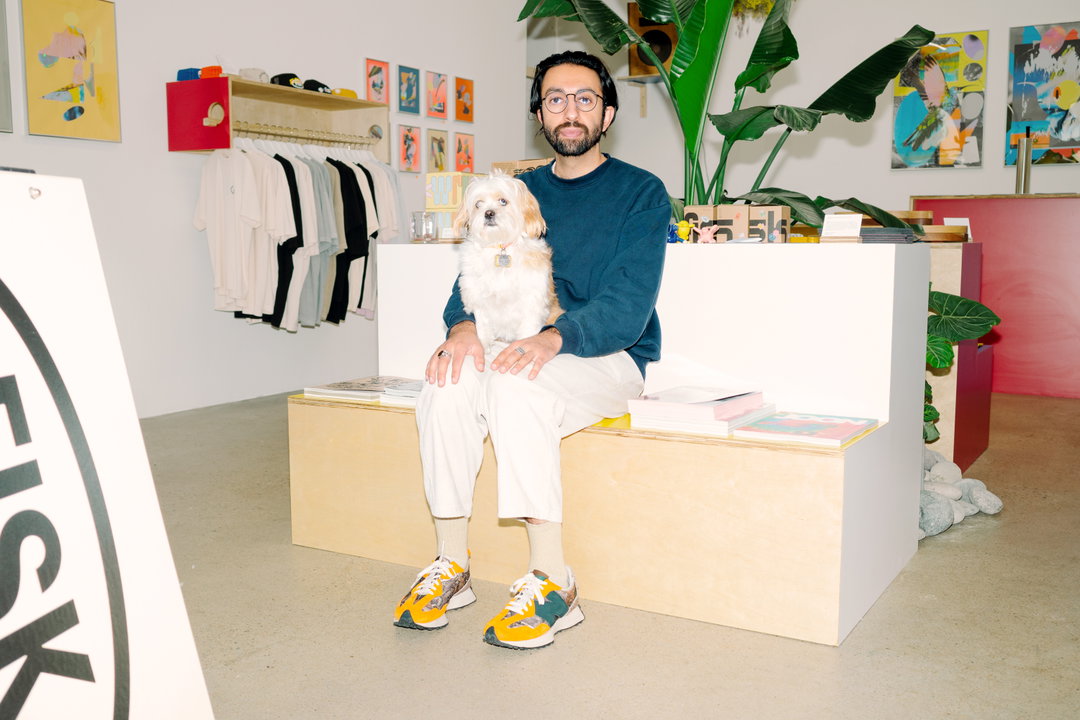
Bijan and Charlie hanging out at Fisk’s gallery on Martin Luther King Jr Blvd. Photography Magnus Holmes

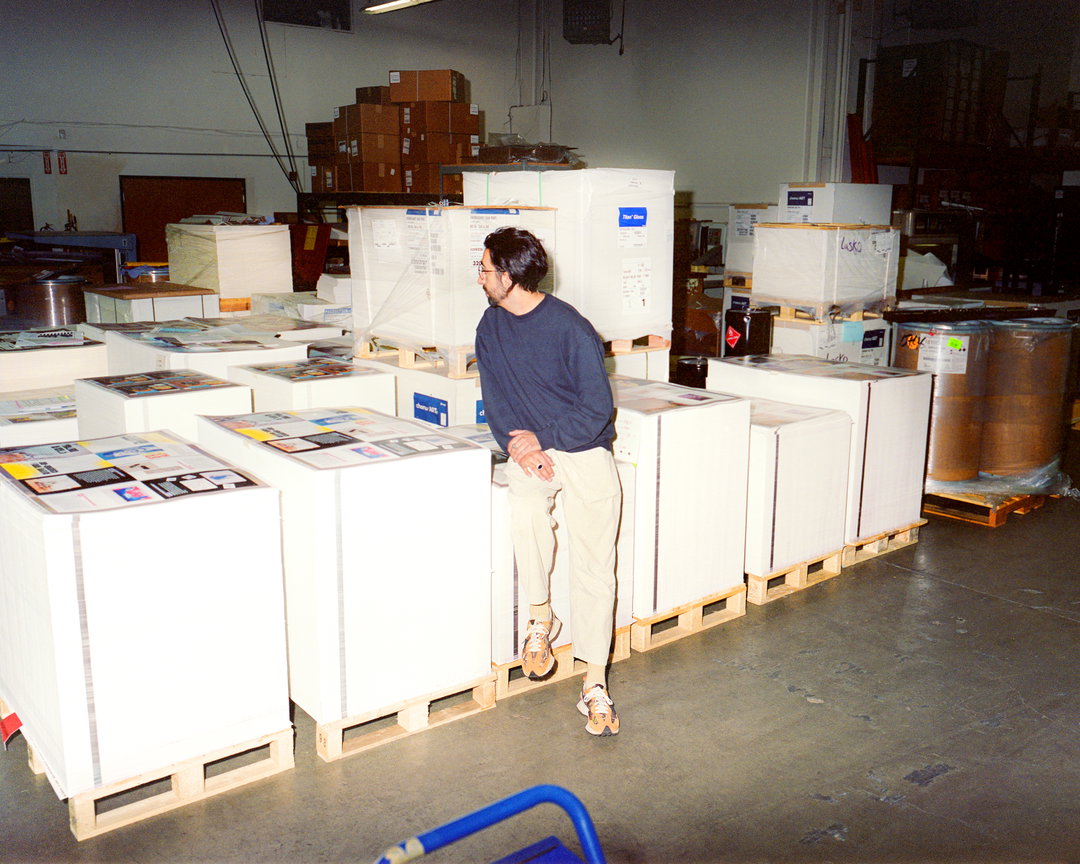
Bijan checking a project at Brown Printing Inc in Portland, where the studio’s magazine, Joon, and several other books are printed. Photography Magnus Holmes
After graduation, Bijan drove up north to Portland, soon taking a job at Nike before deciding to go freelance. Here, the second iteration of Fisk was born, after the designer was offered a desk space in the back of a local record store. In fact, reclaiming the name he once used for a collective is a decision that has defined the ethos of Fisk ever since: “I wasn’t really comparing it to agencies, which was kind of nice actually,” he reflects today. “It started more as a cultural, community event. I was freelancing design on the side and then gradually merged the gallery and store into the studio, seeing them as the same thing.”
Creating a business based on the collaborative environment of a school, rather than a traditional agency business model, has since become Fisk’s design edge against competitors. It’s also a true reflection of Bijan’s personality as a creative founder. It’s even something he traces back to his tendency to be shy as a child – hiding under the table at those family parties, but comforted by the warm commotion above. “I grew up in an Iranian household and throwing family parties is really important. Over the years I’ve started to draw the connection of hosting people to what I do – it’s very similar to what my parents were doing, in that you create a community to make you feel safe and comfortable. They would band together with other Iranians, and even though they weren’t in Iran, they would feel like they were,” says Bijan. “I kind of see how, for me, school was such a strong community of international people in a very safe environment where we could learn, try new things, fail or succeed, and collaborate. I think I’ve just tried to recreate that community through the studio, gallery or the magazine. I see community as the driver for me, design just happens to be associated with it.”
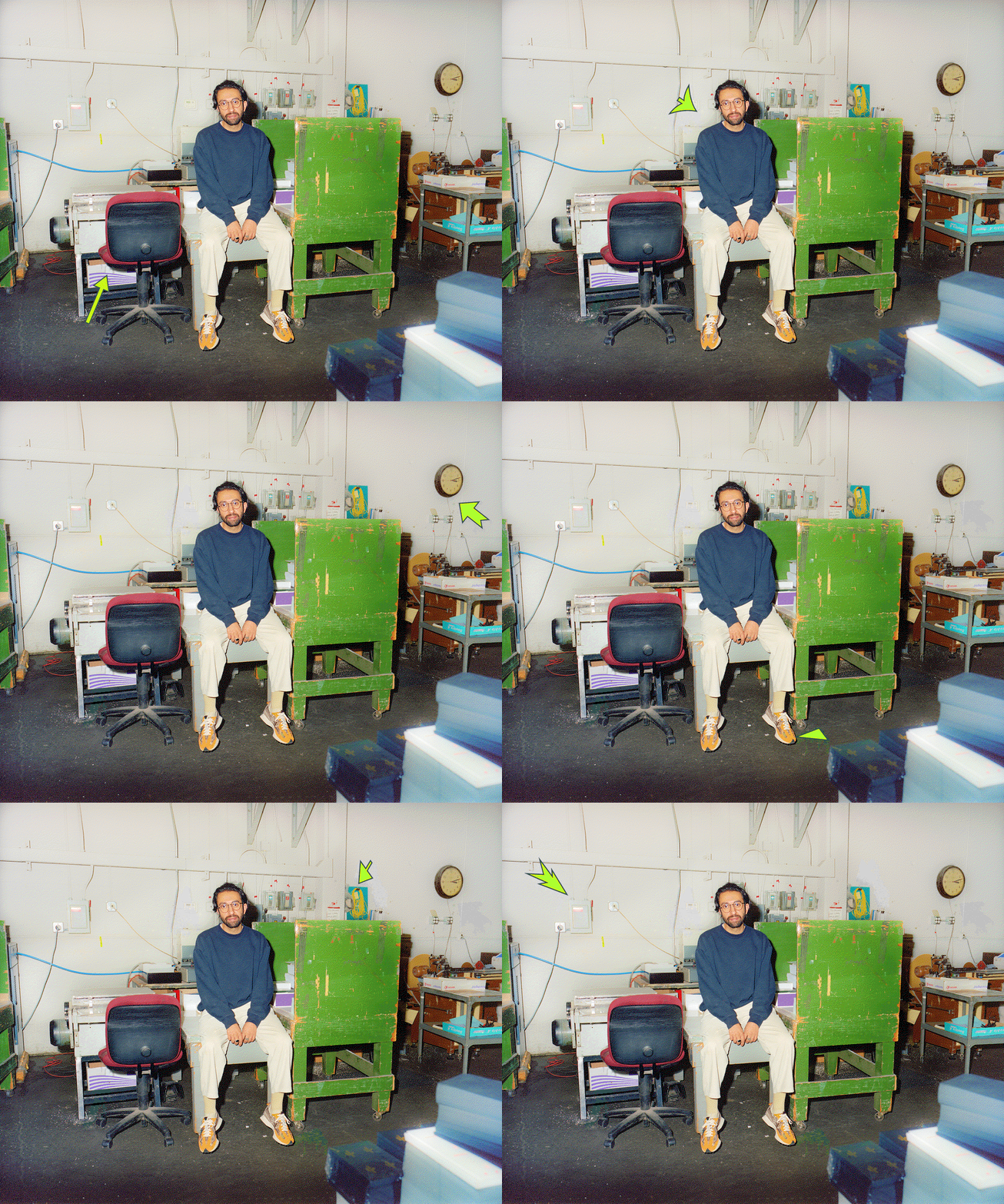
Bijan checking a project at Brown Printing Inc in Portland, where the studio’s magazine, Joon, and several other books are printed. Photography Magnus Holmes
Bijan checking a project at Brown Printing Inc in Portland, where the studio’s magazine, Joon, and several other books are printed. Photography Magnus Holmes
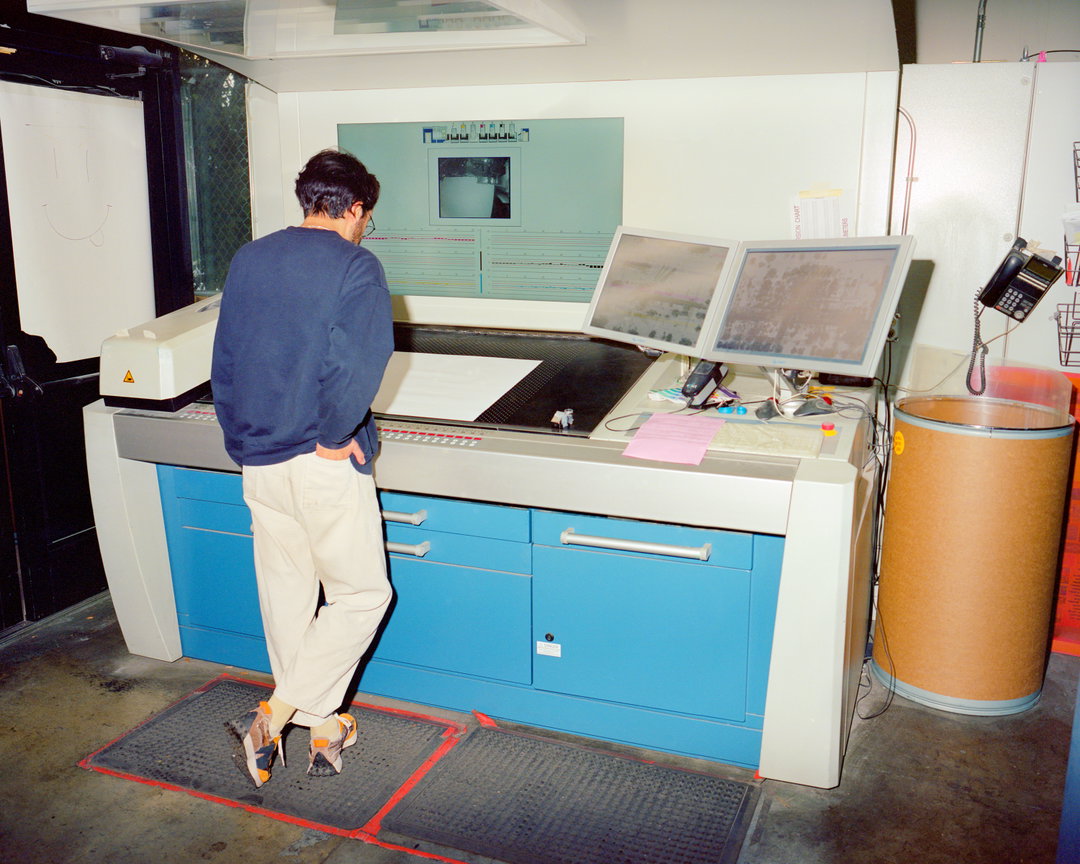
Bijan checking a project at Brown Printing Inc in Portland, where the studio’s magazine, Joon, and several other books are printed. Photography Magnus Holmes

Over the past decade, Bijan’s personal responsibilities at Fisk have, of course, evolved. As team leader, Bijan’s day-to-day life is filled with “all the small, random things that you have to do,” he says. “Not only the business side of things like taxes, but also learning how to rent a space, what kind of space to look for, how to negotiate that, then creating a decent workspace, having snacks, toilet paper, what benefits do you provide, how to provide healthcare,” he says. “It’s the not sexy stuff! There’s also no guide to doing that.”
However, another driver behind Bijan’s decision to set up his own business is the fact he wants to spend his time actually designing. In conversation, he recalls sitting down with his first boss at Nike, who offered the revelation of “whenever you add director to your title, you stop designing.” Today, “graphic designer” is how Bijan identifies over titles like director or founder, although he’s gradually realised the satisfaction gained from more entrepreneurial responsibilities. His ideal day, for example, is one filled with a variety of tasks mirroring his self-built business model. “I feel excited about the design project I am working on, but I also feel excited about the feedback, developing a scope of work, the energy of making someone feel good about their project as much as possible,” he says. “That’s what I love about Fisk the most – in one day we’re prepping for a gallery opening, releasing a new T-shirt, working on record packing, picking Pantone colours, or getting a print sample in the mail. When I have that variety, which is productive but also fun, that’s my favourite day. Then I’ll come home and just design on my couch.”
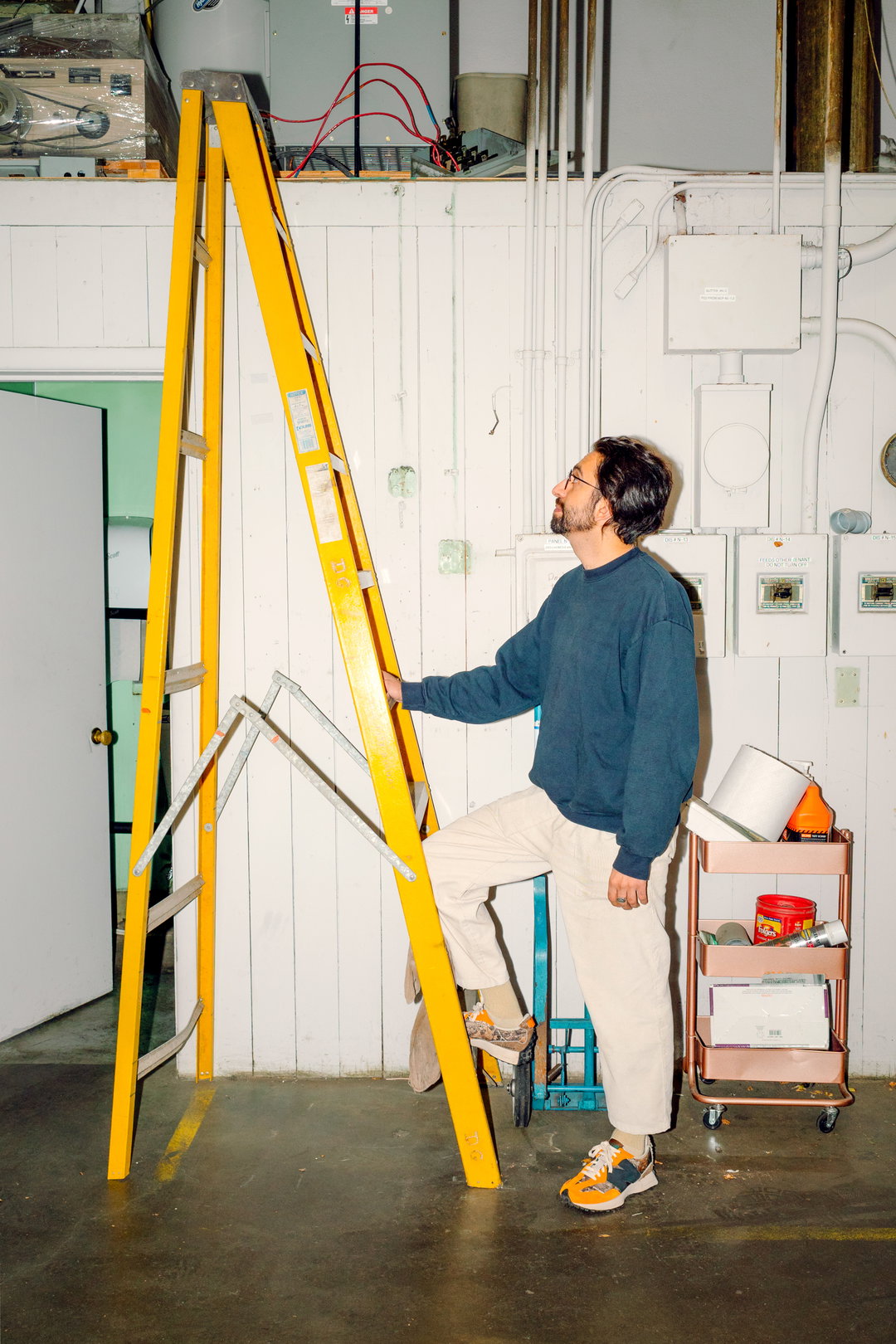
Bijan checking a project at Brown Printing Inc in Portland, where the studio’s magazine, Joon, and several other books are printed. Photography Magnus Holmes

Bijan picking up groceries at Fubonn Shopping Center and Market. Photography Magnus Holmes
To facilitate this multi-layered offering, Fisk has grown incrementally over the past 13 years. Bijan’s ability to recognise where he is best placed as a founder has seen him mostly hire design-focused roles, but more recently an account director, Holly Swendig, to aid business decisions. Of the team of seven, four mainly work on the studio alongside Holly and Bijan, including senior designer Cole Johnson; Stefano Giustiniani, an art director Bijan went to school with; Matt Vlach, a graphic designer on the team; and Elena Reyna Hernandez, another designer who initially joined last summer as an intern from CalArts. Elsewhere, running the store and gallery is James Fink, but the others will often contribute design or ideas to this arm of the business too. From speaking with Bijan, even this small team feels like its own community – they play basketball together; go bowling; the week of our interview, they were also going on a field trip, unrelated to any current projects, to a bonsai tree farm.

Bijan picking up groceries at Fubonn Shopping Center and Market. Photography Magnus Holmes

Bijan picking up groceries at Fubonn Shopping Center and Market. Photography Magnus Holmes
Fisk’s size is also intentional and something Bijan is trying to keep contained to enable the studio’s ability to stay nimble. “I’m trying to see if there is a way to grow really slowly, and right now I am trying to grow within the company,” he explains. Rather than lofty aims of expansion, the founder is instead seeking opportunities to “provide more responsibilities for the people who have been at Fisk for a number years and build that way,” he says. “That’s the angle I am going in from now, to offer more opportunity and grow from the top.”
Being a team of seven does mean Fisk has projects it can’t physically do, “or projects we don’t win once a client finds out how big we are, or our capabilities.” However, it does allow the studio to only say yes to projects it’s excited about, rather than to cover overheads. “The projects I am most excited about are when I can work with the source of the content – the musician, the chef, the business owner,” says Bijan. “When I work with that person, I see the passion, the energy and the root of those ideas.” Often, these projects lead to new opportunities for the studio or gallery, all through Bijan’s willingness to connect and generate proposals off the back of authentic conversations. “I feel like if you talk with people and just put ideas out into the world, sometimes the dots will be connected,” he says. “I think that’s happened to me a lot. I’ve put myself out there, been in the right place at the right time, felt like the opportunity was there, and jumped in. It’s a combination of luck and chance, but you also have to physically say ‘yes, I want to do this!’, and then do the work.”

Bijan picking up groceries at Fubonn Shopping Center and Market. Photography Magnus Holmes

Bijan picking up groceries at Fubonn Shopping Center and Market. Photography Magnus Holmes


Bijan picking up groceries at Fubonn Shopping Center and Market. Photography Magnus Holmes
There is often the assumption in business – creative or otherwise – that a leader is an overly confident figurehead, blazing through decisions to assert power and growth. But the truth is that creative founders come in all guises and confidence levels. In the case of Fisk, a once shy child has built a one-of-a-kind creative business that is a community over anything else. “I’ve been very fortunate to be okay at business, and I have no idea how. But now, into our ninth year, I feel confident and proud, too,” says Bijan. “I’m very thankful that it has worked and people want to hire us. I am pretty proud of not only the work we make, but also how being financially successful provides us the luxury of hiring, paying people more, having a gallery and store, making products and collaborating with artists to offer them a platform and bring our studio, and community, joy.”

Bijan picking up groceries at Fubonn Shopping Center and Market. Photography Magnus Holmes
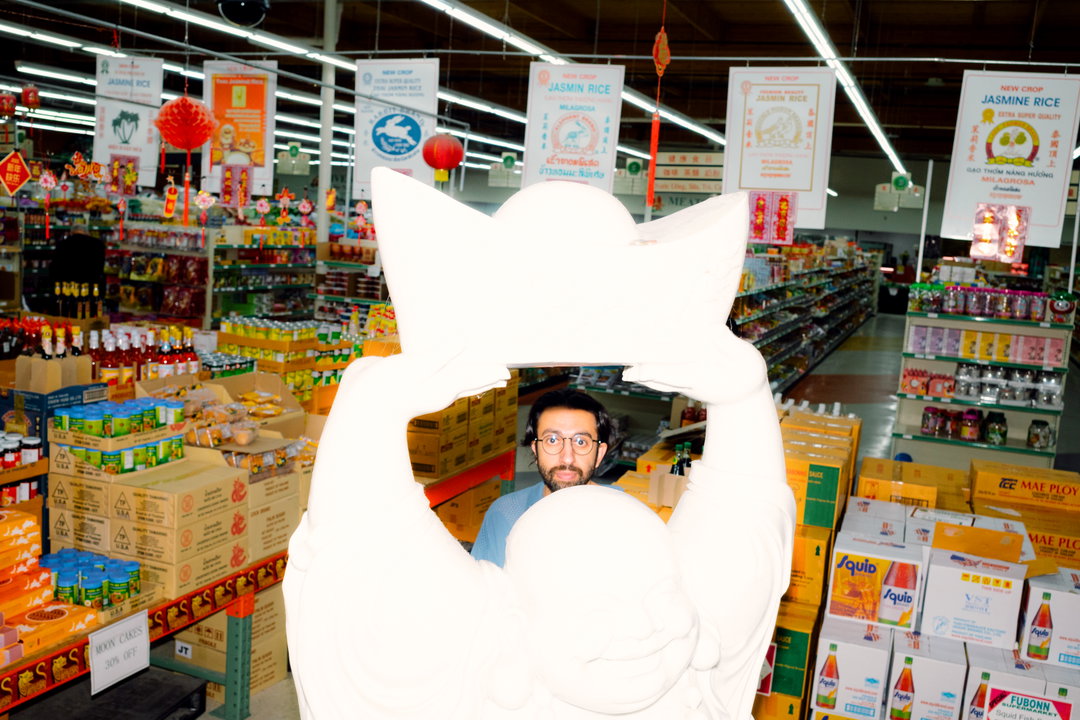
Bijan picking up groceries at Fubonn Shopping Center and Market. Photography Magnus Holmes

If you’re currently pondering how to set up your own creatively-focused business, Fisk’s founder offers two key takeaways from his experience.

Running a studio is very hard, but if you’re up for the challenge it’s really fulfilling. People are often scared to leave their jobs, and I understand that, but if you find quitting your job to be something you’re obsessed with, I am really confident humans find a way to figure it out. It might be really scary, but you will figure it out from there. The hardest thing to do is actually leave, but the biggest piece of advice I can offer is to find a way to jump in earlier than later – it’s harder to take risks as you get older.

The second piece of advice I have is simply: baby steps. For me, each decision has been baby steps. I didn’t think I would have been the type of person who wanted to own a small business when I was older, but when things are presented to you in smaller increments it makes it much more digestible. I know people who have a really specific plan, two years where they save up and have this huge studio after, but everyone is different. Baby steps have made me feel comfortable. In any decision, always think of the best-case and worst-case scenario, and if you feel comfortable taking on the worst-case scenario, take the risk.
Share Article
Further Info
About the Author
—
Lucy (she/her) was part of the It’s Nice That team from 2016–2025, first joining as a staff writer after graduating from Chelsea College of Art with a degree in Graphic Design Communication, eventually becoming a senior editor on our editorial team, and most recently at Insights, a research-driven department with It’s Nice That.