Artist Barbara Iweins on spending two years photographing all 10,532 objects in her house
The photographer undertook this mammoth task in an attempt assess the value she places on objects.
Share
Photographic artist Barbara Iweins practice has always dealt with the boundaries of intimacy and vulnerability, and how these can be pushed to their very limits. Her relationship with the medium began 11 years ago, when she was suddenly compelled to buy a camera and photograph strangers she met in the street.
“Ever since I was young, whenever I was in a public space, my eyes would be drawn to certain people and I wondered what they were thinking or doing at that exact moment, or even what their fears were, or their joys,” she explains. So, one day, she decided to act on that impulse, asking strangers if she could enter their personal lives. “Like a voyeur, I revisited them year after year with a new project. By the end of those five years, we were so close, that I could even make a picture of them at one of their most vulnerable moments: when they just opened their eyes in the morning. This project was called 7AM/7PM.”
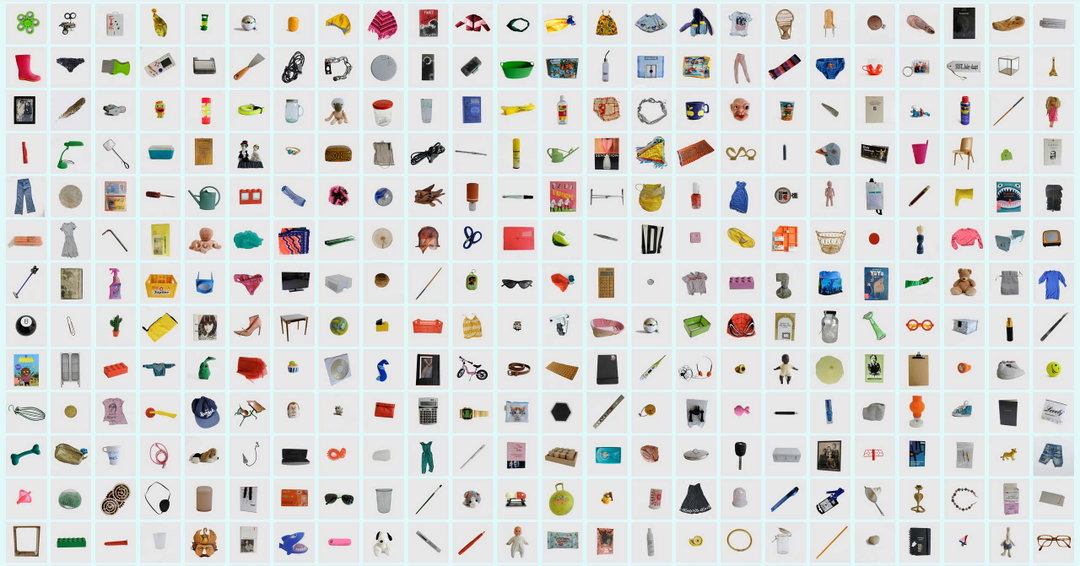
Having spent so long focussing on the vulnerability of others, recently, Barbara decided to turn inwards, using her own private life as a case study for the first time. “It was time for me to lay myself bare a little as well,” she adds. The result is Katalog, a project she began in 2018 which she describes as “a radical confrontation with my possessions through my photographic lens. The exposure of oneself, pushed to its paroxysm.” In a mammoth project, for two years and 15 hours a week, Barbara isolated herself and photographed all 10,532 objects in her house. “In order to rigorously confront myself with everything I own, I then classified everything by material, colour, their frequency of use and their emotional value.”
You’d assume that this would be a somewhat performative gesture, that the majority but perhaps not all of Barbara’s possessions would make it into the series but, she tells us, “to be totally honest with myself, I needed to capture them all. No book, no piece of clothing, no kitchen utensil, no Lego was going to escape my lens.”
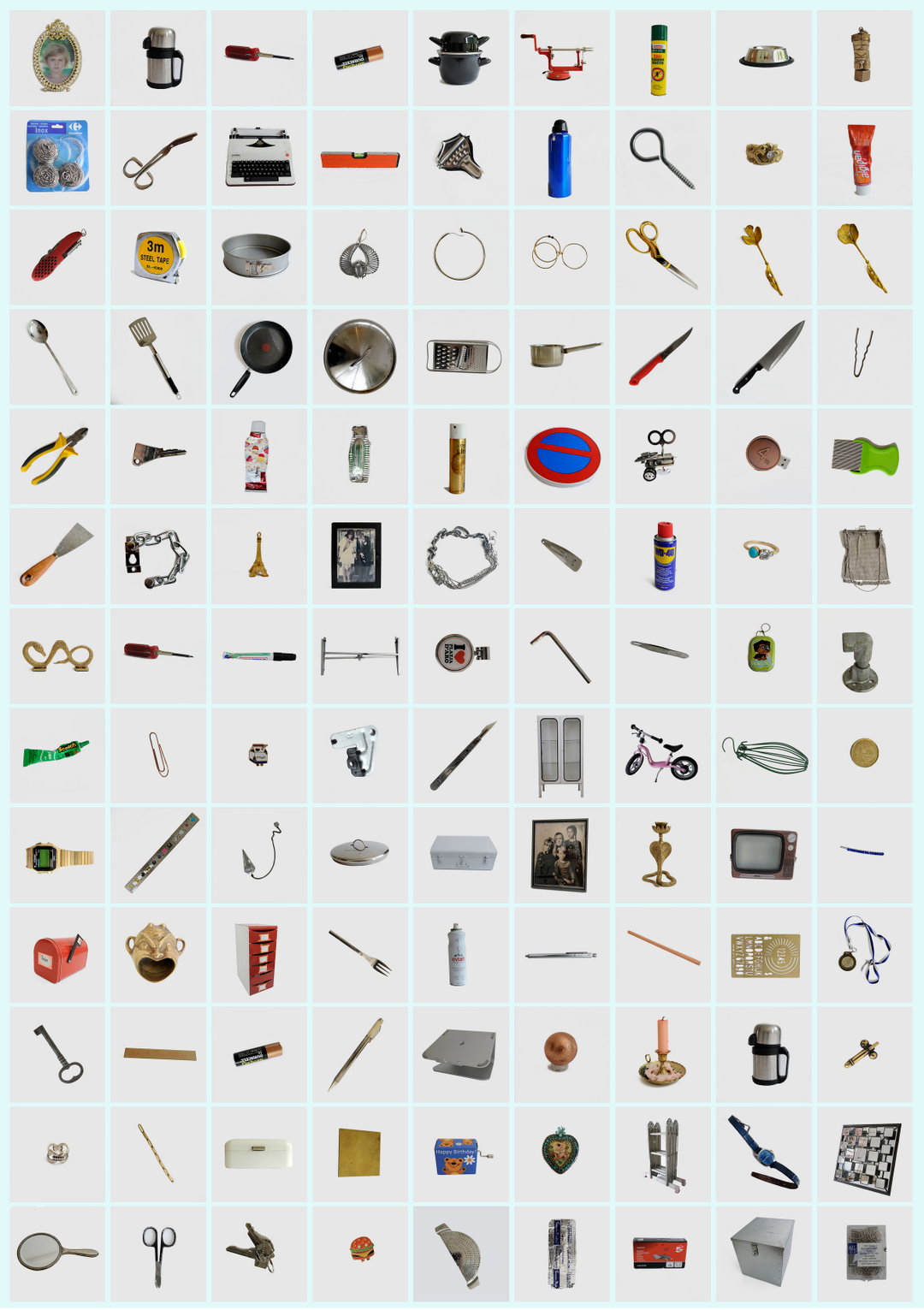
Objects by material: Metal
Undertaking such a repetitive and lengthy project was, for Barbara, a way of confronting her tendencies towards inertia and neuroticism, especially in relation to the value she places on objects. “In this chaotic world, the objects surrounding me always prove to be my stable reference points... They protect me, somehow,” she explains. This has, in part, been exacerbated by her propensity to move house yearly in her adult life. “Each time I was terrified of the quantity of stuff I had accumulated. But I also became much more careful with the objects I really cherished,” Barbara says. “In April 2018, when opening the last of the moving boxes, I was confronted with all my belongings once again. It made me question the continuous cycle of my insane and irrational accumulation and the relationship I have with the objects that surround me.”
Producing Katalog was, in turn, a search for stability, but one that exists beyond the material realm. By objectively evaluating every single item in her possession through certain criteria, Barbara created a system for understanding what is and what isn’t necessary to hold onto; what makes an object important and therefore what you no longer need for fulfilment. However, as she goes onto to explain, what she gained was a newfound appreciation for the mundane, for the beauty of the objects which support our daily rituals – the teaspoon which measures out just the right amount of coffee, or the fridge magnet which has long lost its plastic covering, but which still holds up a child’s drawing.
Each object is photographed with meticulous attention to detail, in a rigorously uniform manner, “isolated on a neutral light grey background to take it out of its environment and to really have a clear view of its value.” It’s a process Barbara is still undertaking, describing how she will be focusing of Katalog “for a while” still. But she has already begun to reflect on what she has learned throughout the process: “During my voluntary confinement, I read a lot about the search for material happiness. Over time, I realised that most of my possessions are more a source of confusion than pleasure. I feel little attachment to them, but at the same time, isolating my possessions (even the most ordinary one) and classifying them according to specific criteria, gives them an importance and a certain subjective beauty. As such, even a bottle of cough syrup that leaks down the sides develops an aesthetic interest that I would like to retain. I hoped to say goodbye to many things, but ended up loving so much more of my belongings.” Safe to say, “I am not Marie Kondo.”
What Katalog also considers is consumption on a societal level, mediating that “only goods and wealth attract us.” Barbara makes the case that every thing we do, every gesture, travel or purchase is shared on social media, asking “Are we so afraid of being insignificant?” It is our perpetual search for happiness, something we now equate with recognition. Through the performance that is Katalog, Barbara reveals all that she owns but without a filter as is customary. “It’s not an exhibition of a perfect mastered life, but the exposure of oneself pushed to its paroxysm,” she concludes.
Barbara plans to exhibit Katalog once the project is finished, traveling with the show as much as possible in 2021.
GalleryBarbara Iweins: Katalog
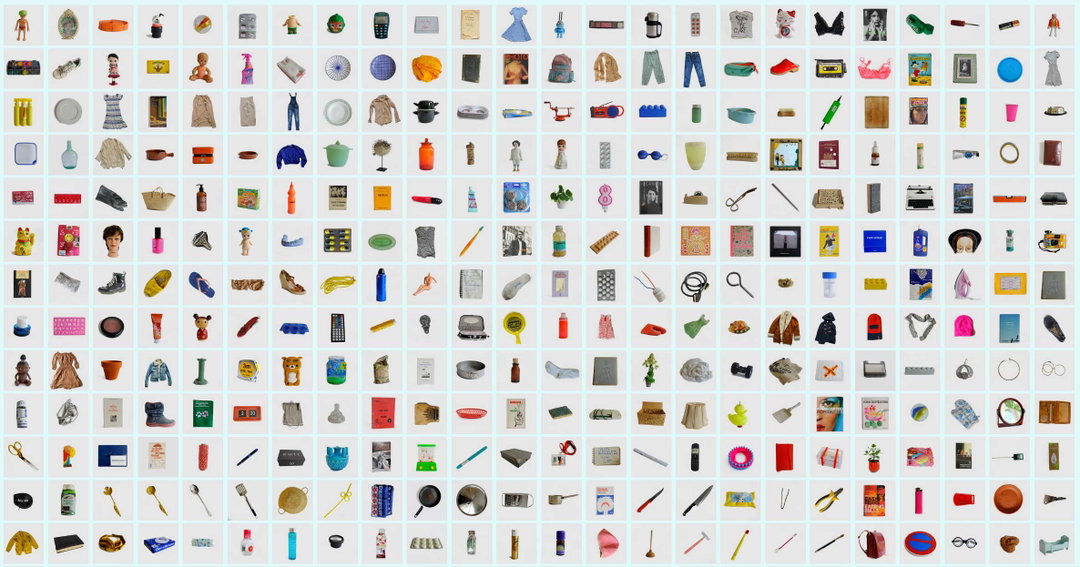
General view
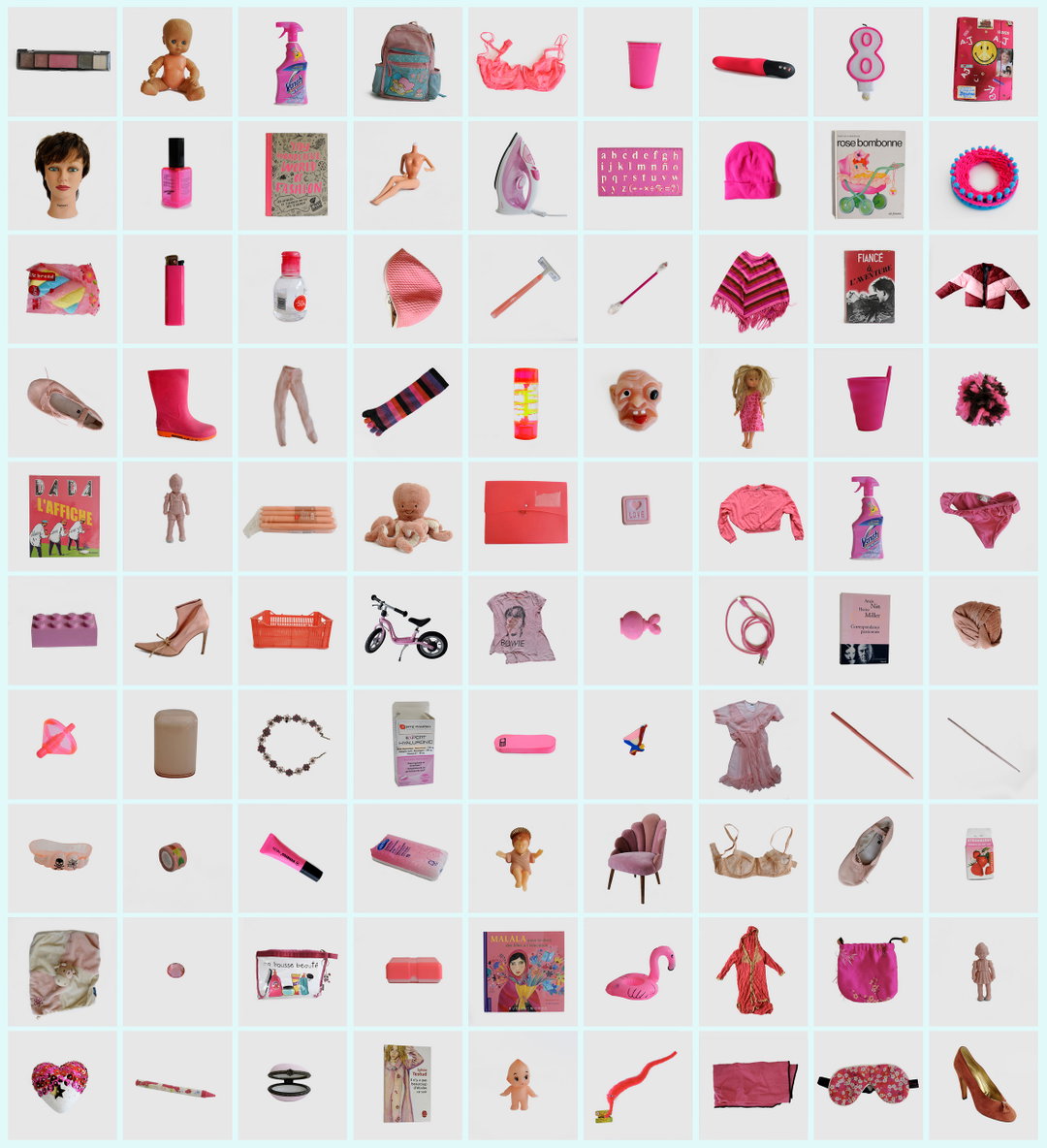
Objects by colour: Pink
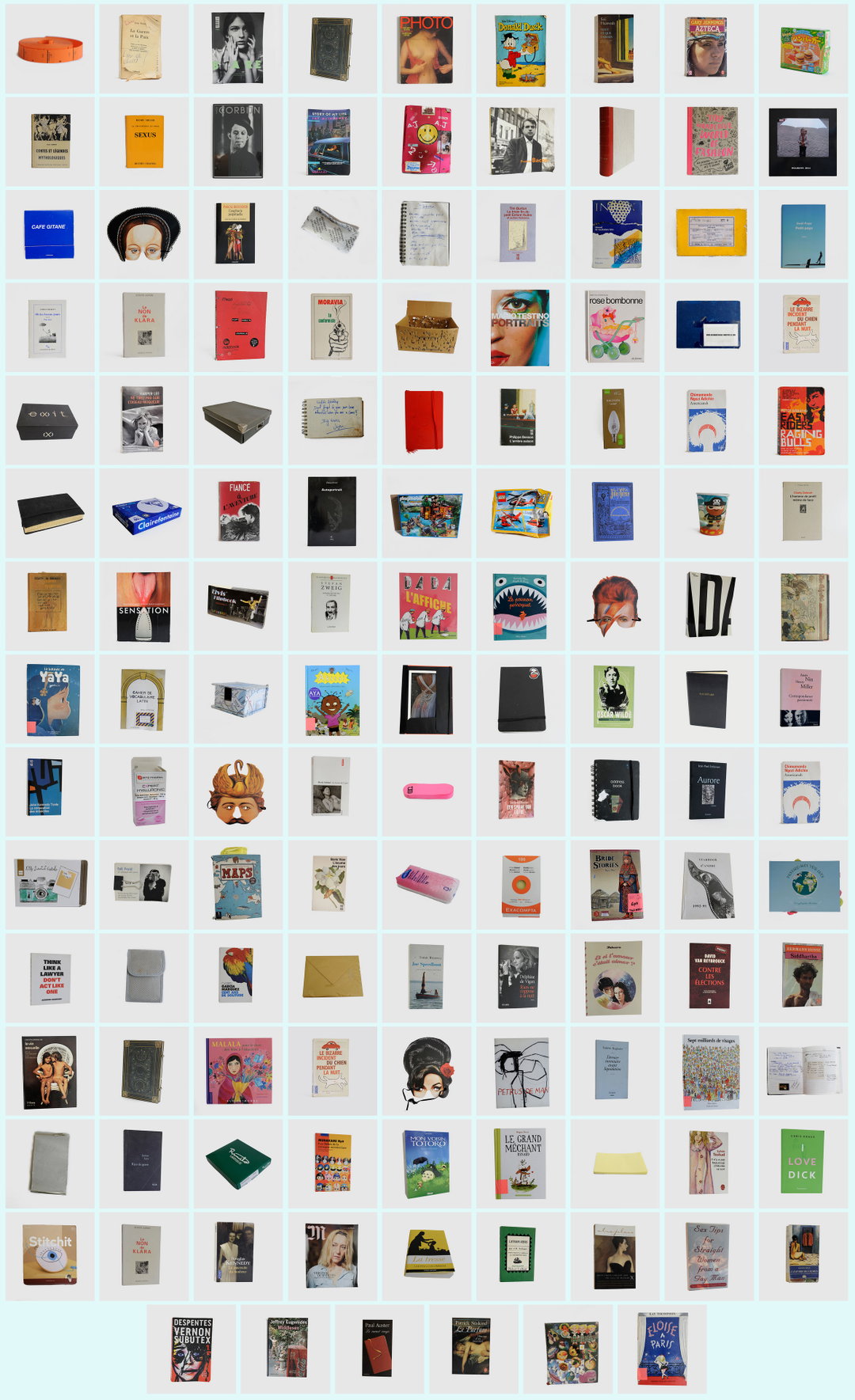
Objects by material: Paper
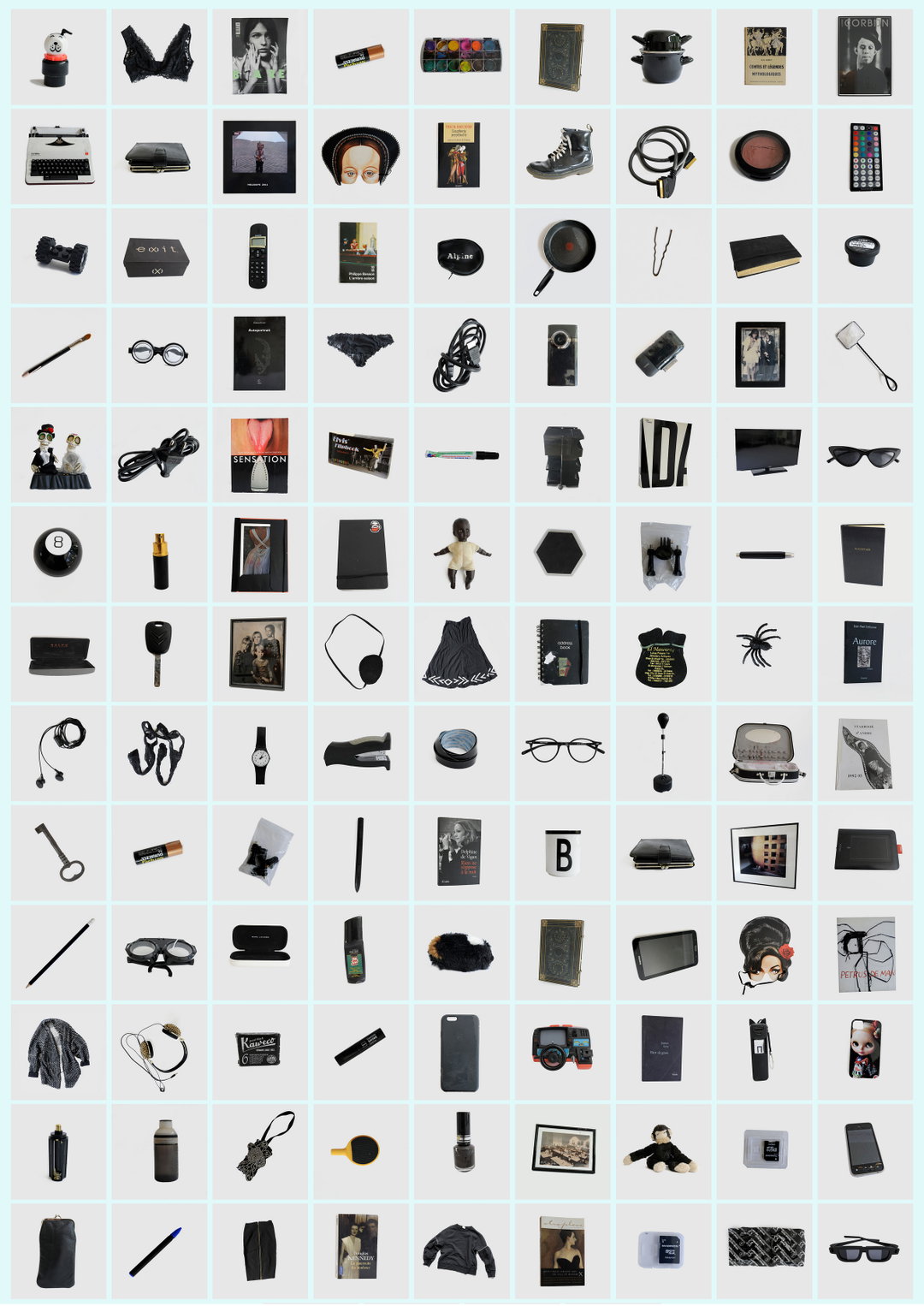
Objects by colour: Black
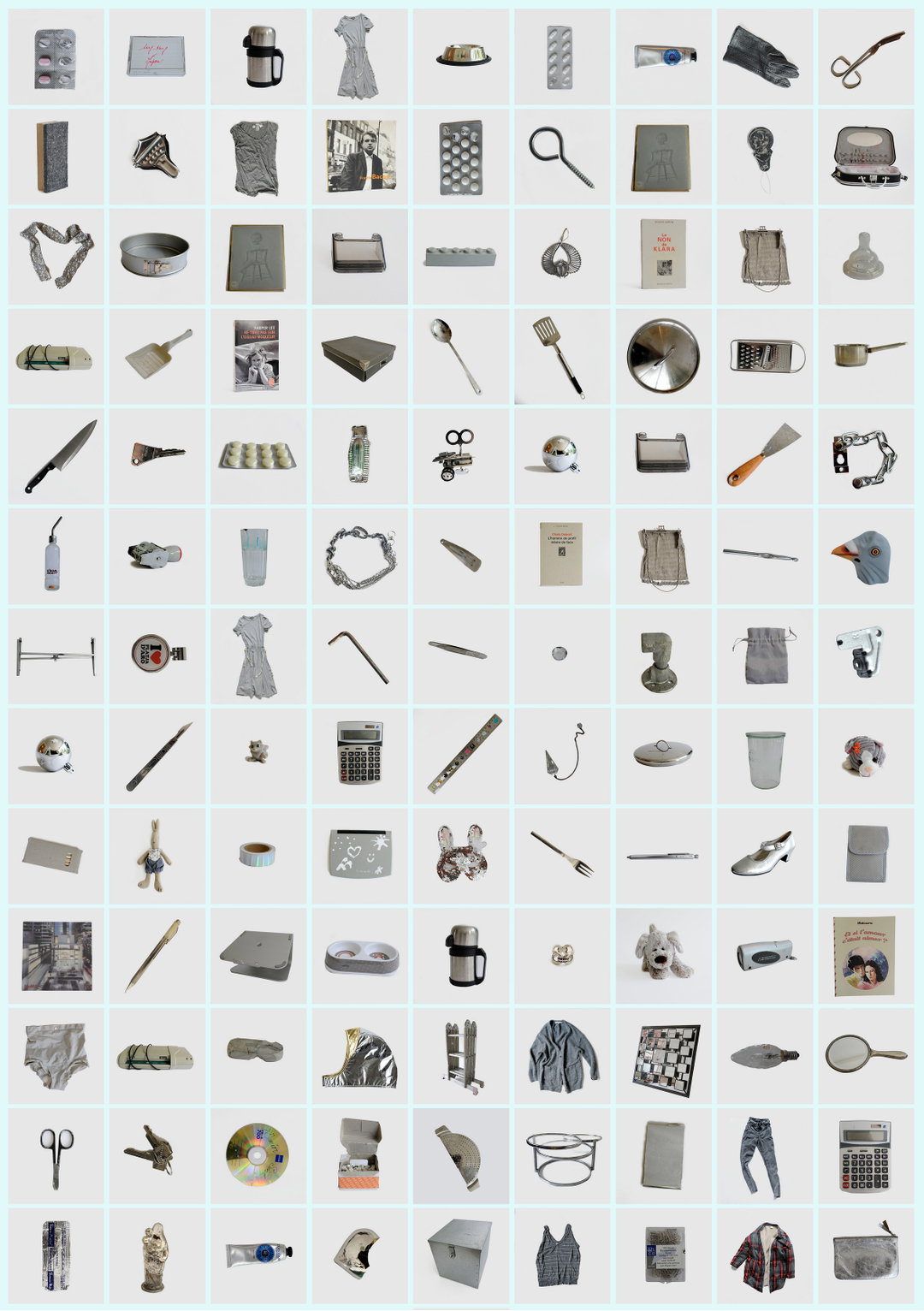
Objects by colour: Grey
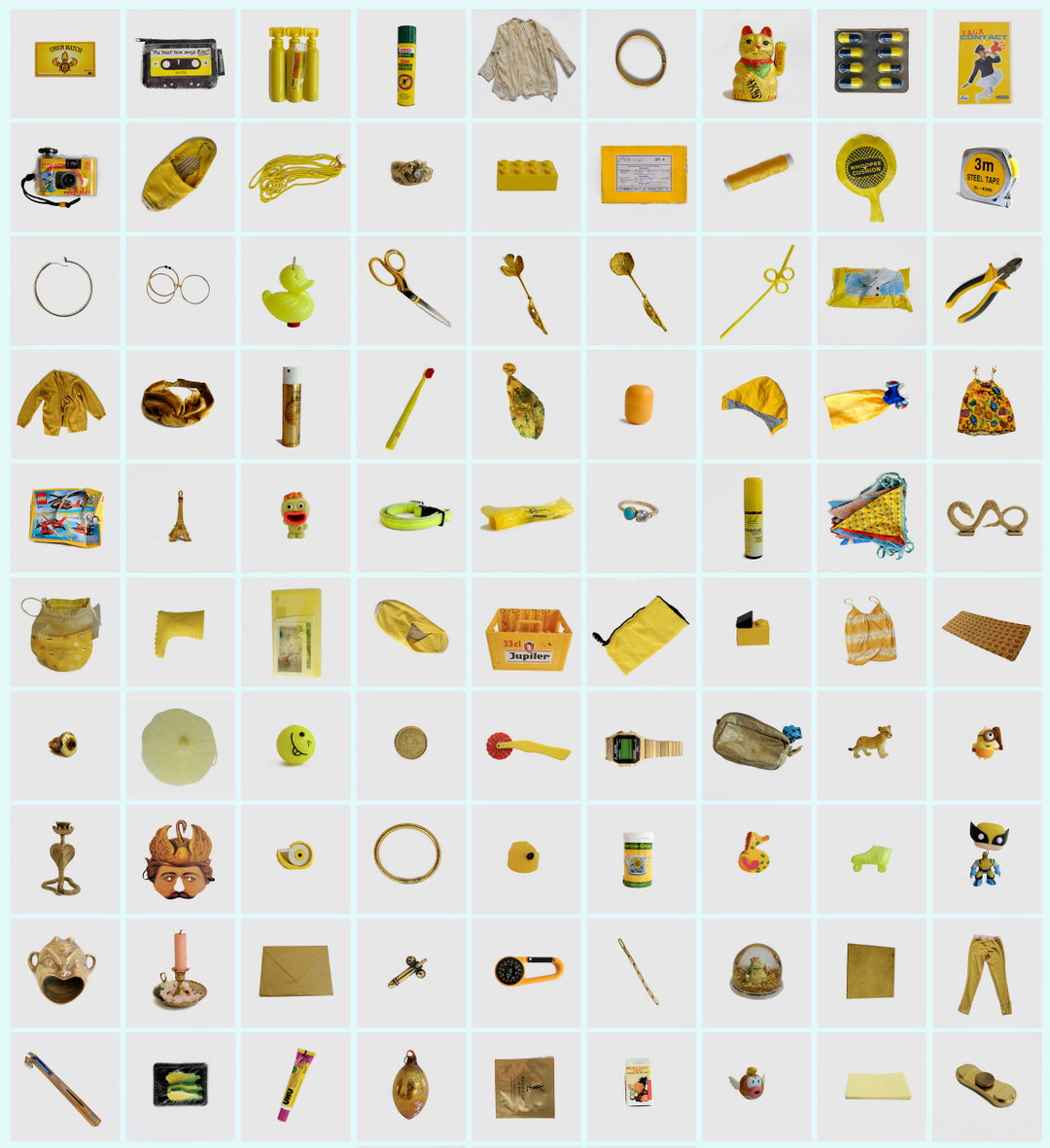
Objects by colour: Yellow
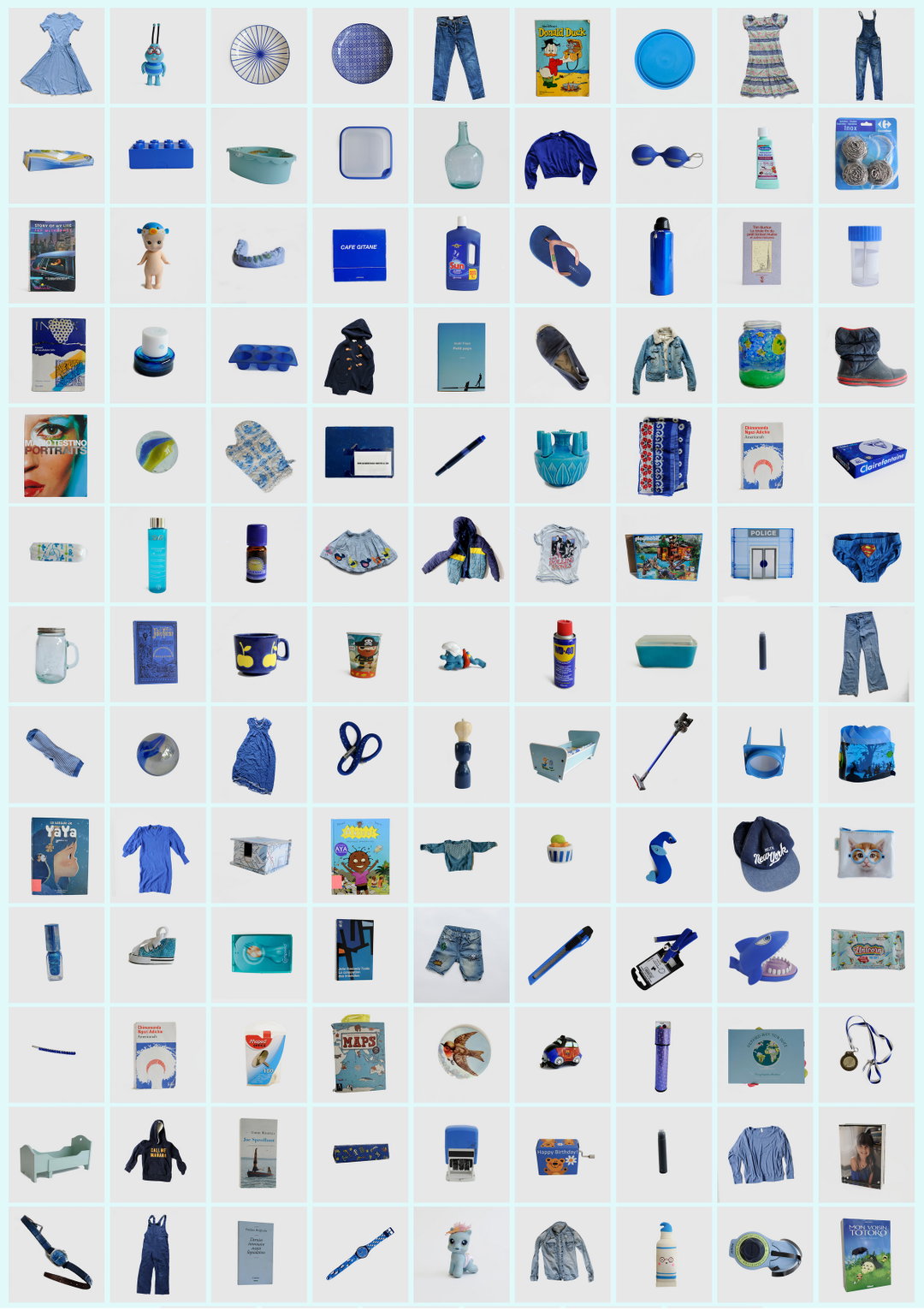
Objects by colour: Blue
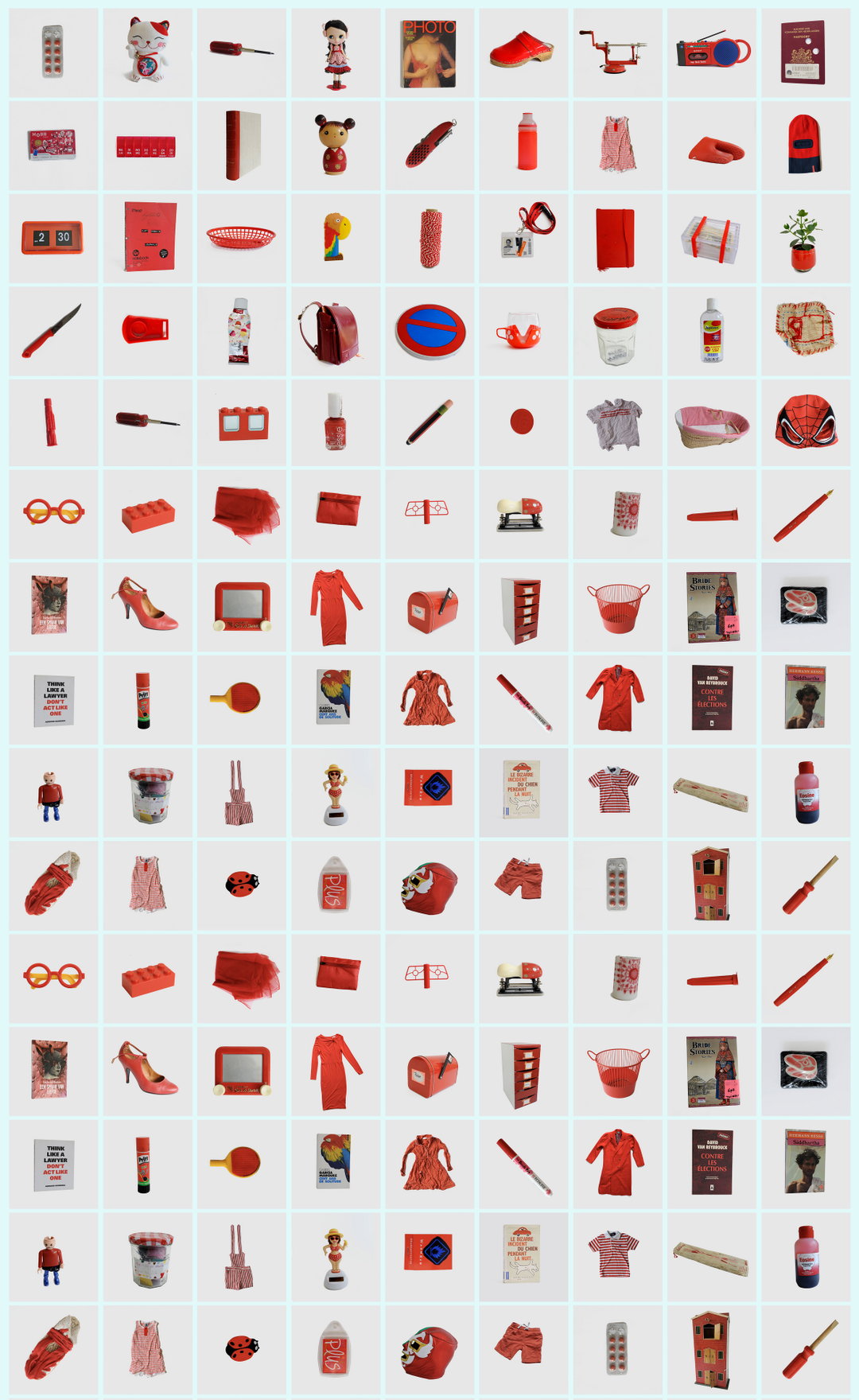
Objects by colour: Red
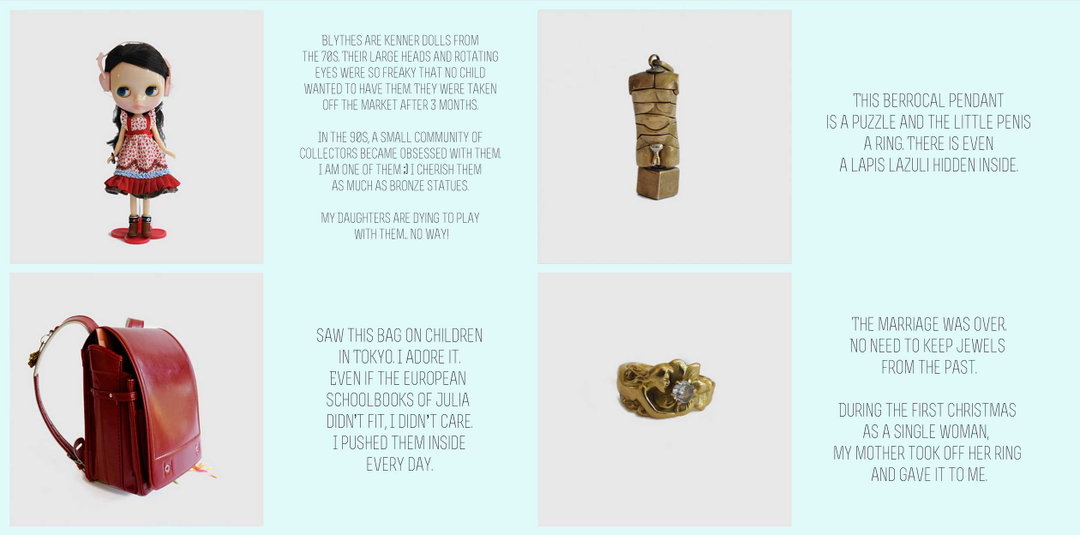
Objects that I would save in a fire
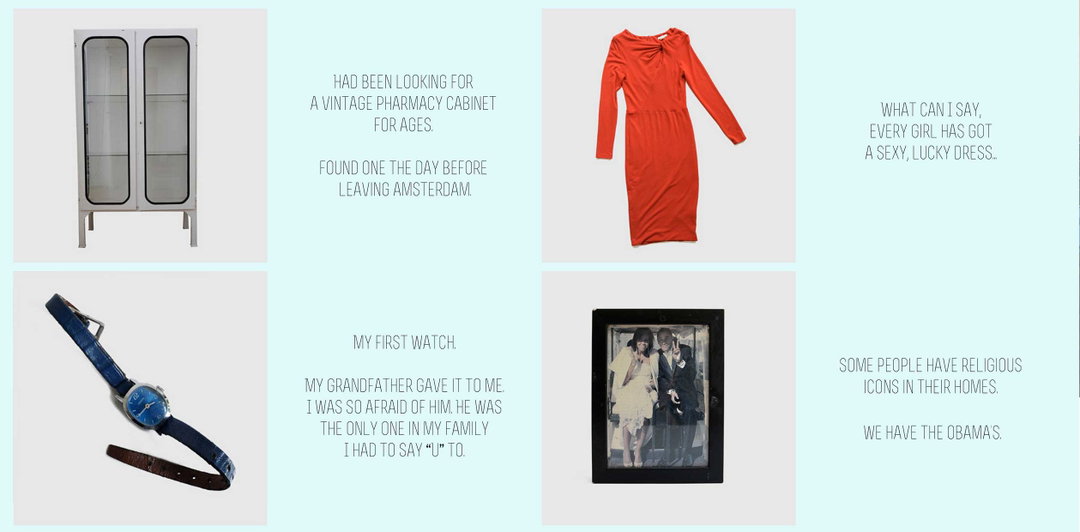
Objects that I would save in a fire
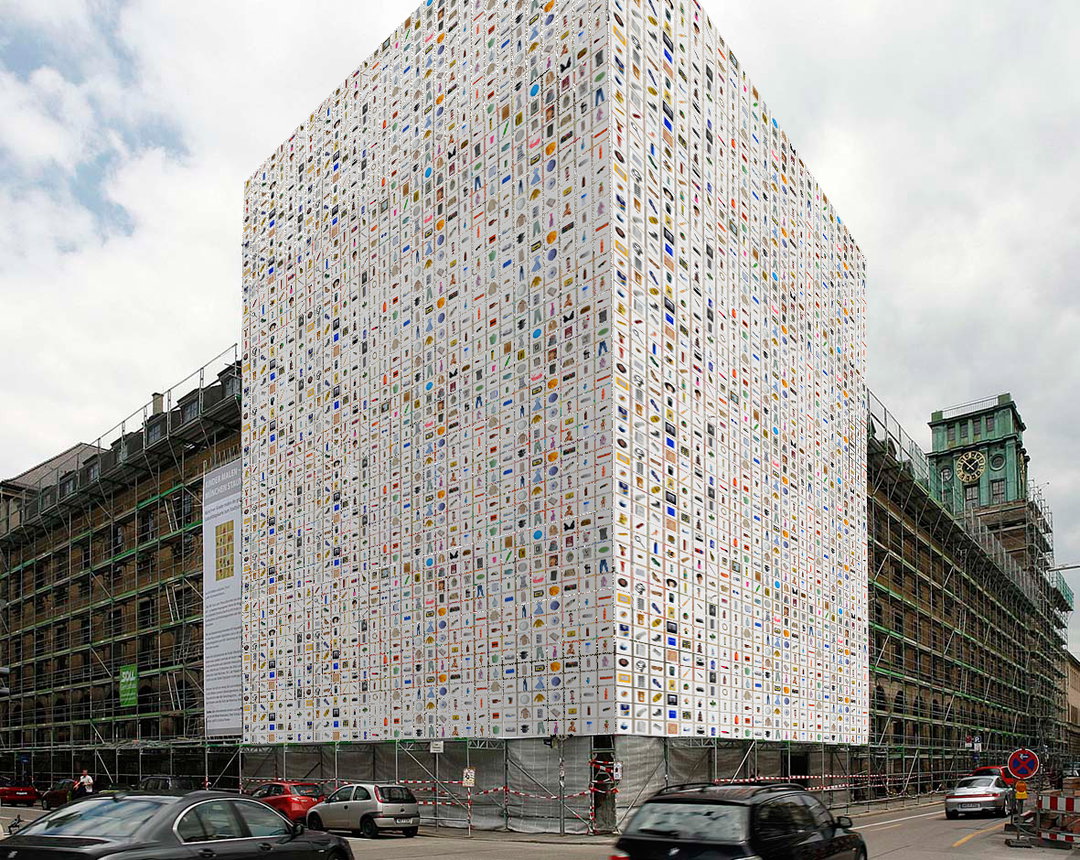
Scenography building
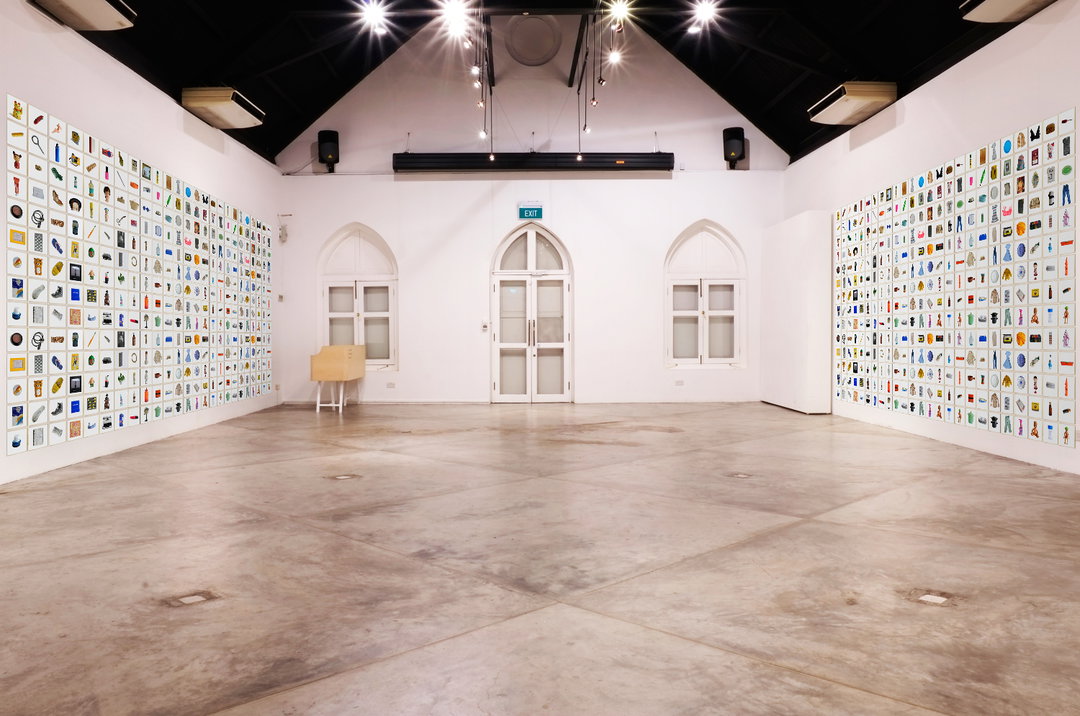
Scenography, inside small room
Hero Header
General view
Share Article
Further Info
About the Author
—
Ruby is Senior Creative at It's Nice That, overseeing our visual output across platforms and projects. Before that, she was associate editor on the editorial team, after joining in September 2017 following graduation from Central Saint Martins.