
- Words
- Rachel Cabitt
- —
- Date
- 28 January 2026
- Tags
Who should’ve won the Best Album Cover Grammy?
As the Best Album Cover award returns for 2026, we look back at some of the best album artworks of the past decade and posit who missed out on the coveted prize from 2015–2025.
Share
Share
A good album cover adheres to basic design principles. A great album cover has a layer of cultural commentary. And a fantastic album cover understands both while maybe breaking some rules.
This past June, the Grammys announced several new categories, including Best Album Cover. The award itself isn’t technically new; it’s just been on hiatus since 1974. Musician Frank Sinatra won the first Grammy for Best Album Cover in 1959 for his art direction behind Only the Lonely, on which he commissioned painter Nick Volpe to depict him as a clown. Over the next 15 years, the prize was oddly separated into various sections. The first go around: Best Album Cover (Other Than Classical) and Best Album Cover (Classical). In its eighth year: Best Album Cover (Photography) and Best Album Cover (Graphic Arts). For the 1973 awards, the prize was officially rebranded as Best Album Package. A means to do away with the categorical indecisiveness? Or perhaps a sign of the times that technology had progressed to allow more elaborate vinyl designs beyond the album cover.
1 of 4
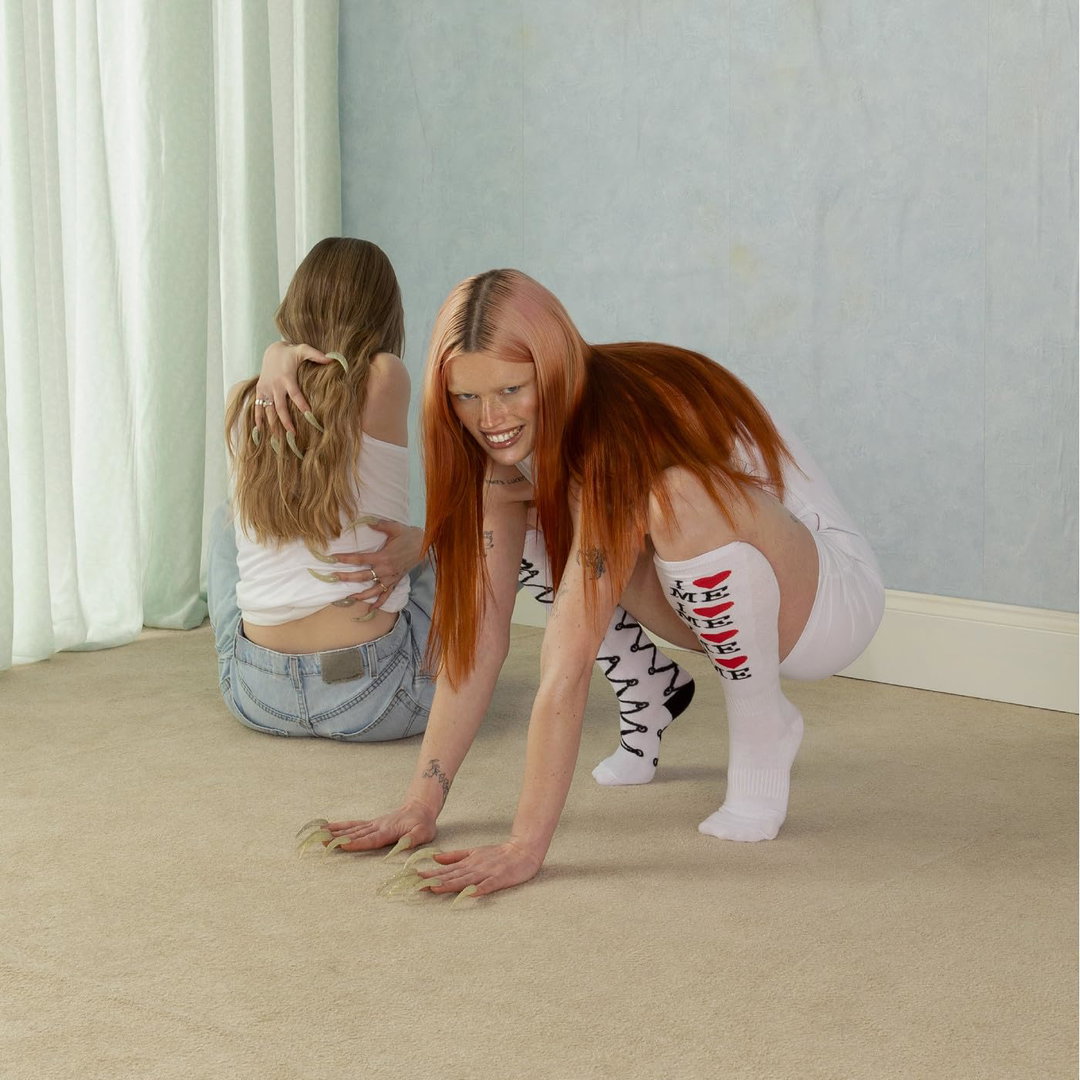
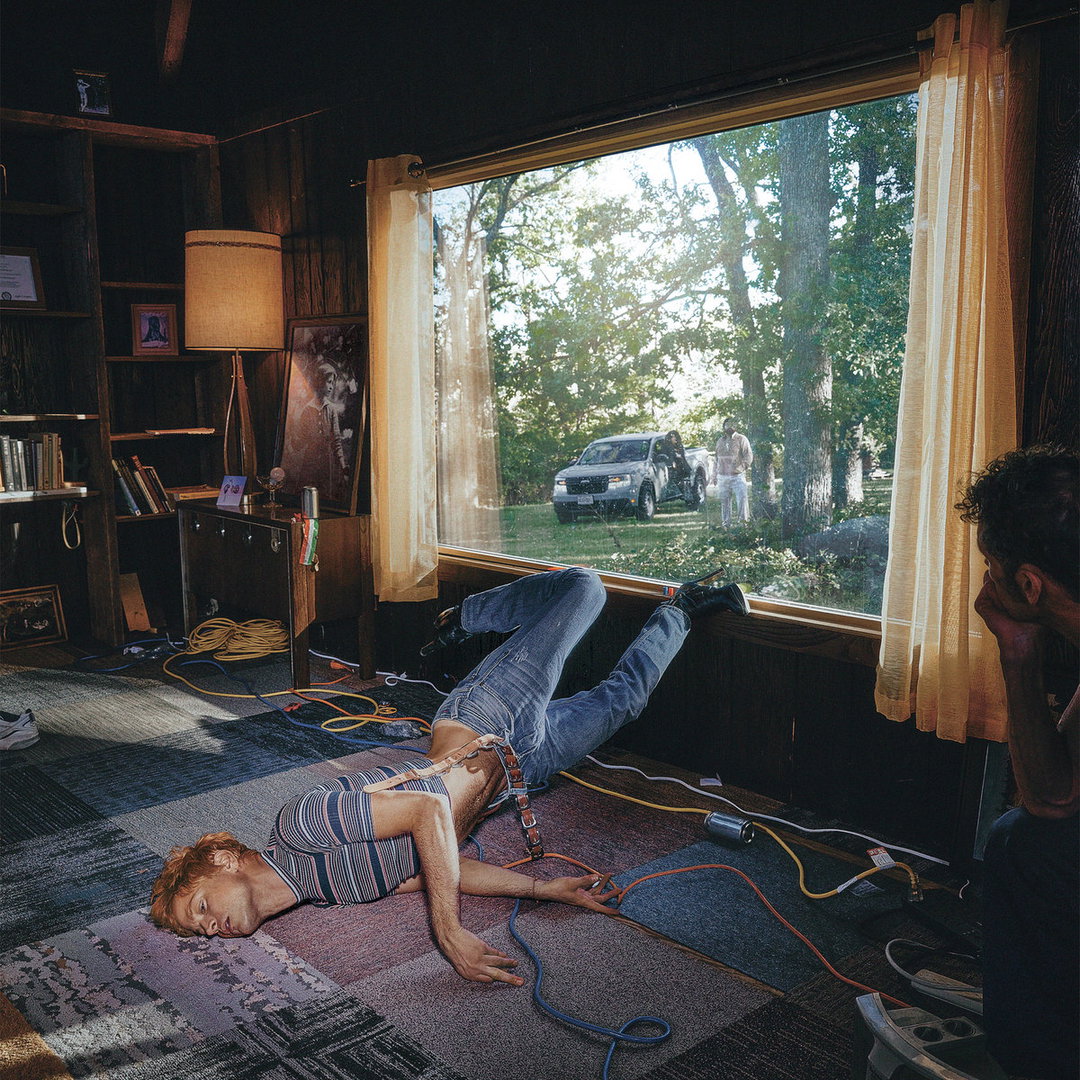
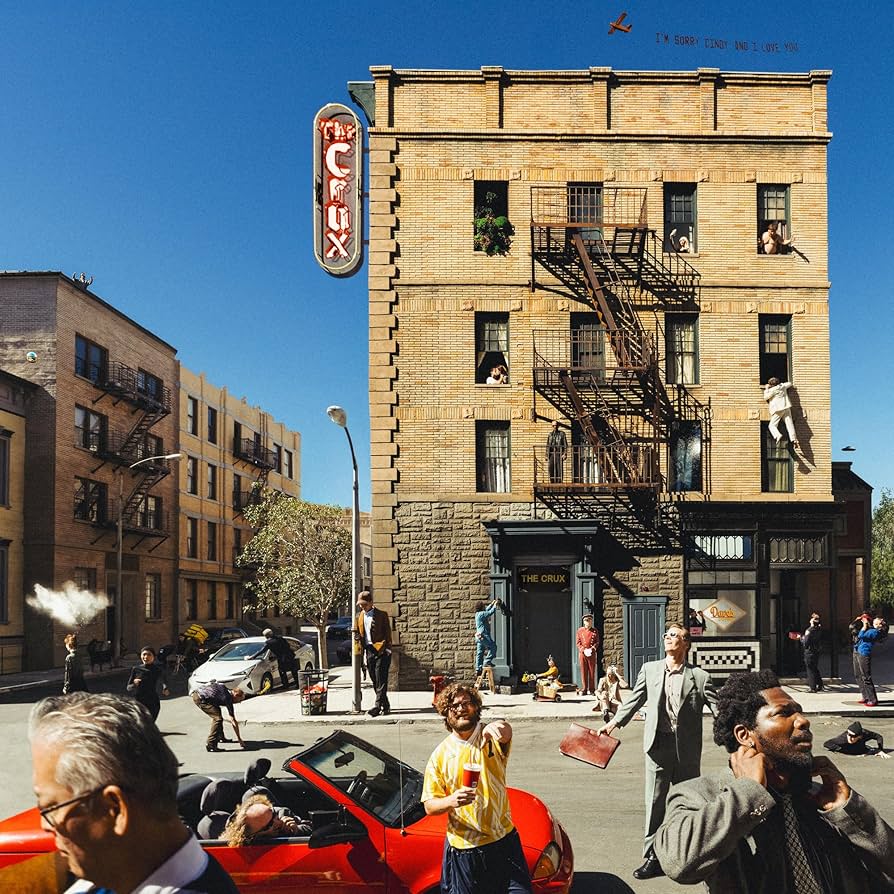
Wet Leg: Moisturizer; art directors: Hester Chambers, Ellis Durand, Henry Holmes, Matt de Jong, Jamie-James Medina, Joshua Mobaraki and Rhian Teasdale (Artwork courtesy of Domino Recording Company)
1 of 4
Wet Leg: Moisturizer; art directors: Hester Chambers, Ellis Durand, Henry Holmes, Matt de Jong, Jamie-James Medina, Joshua Mobaraki and Rhian Teasdale (Artwork courtesy of Domino Recording Company)
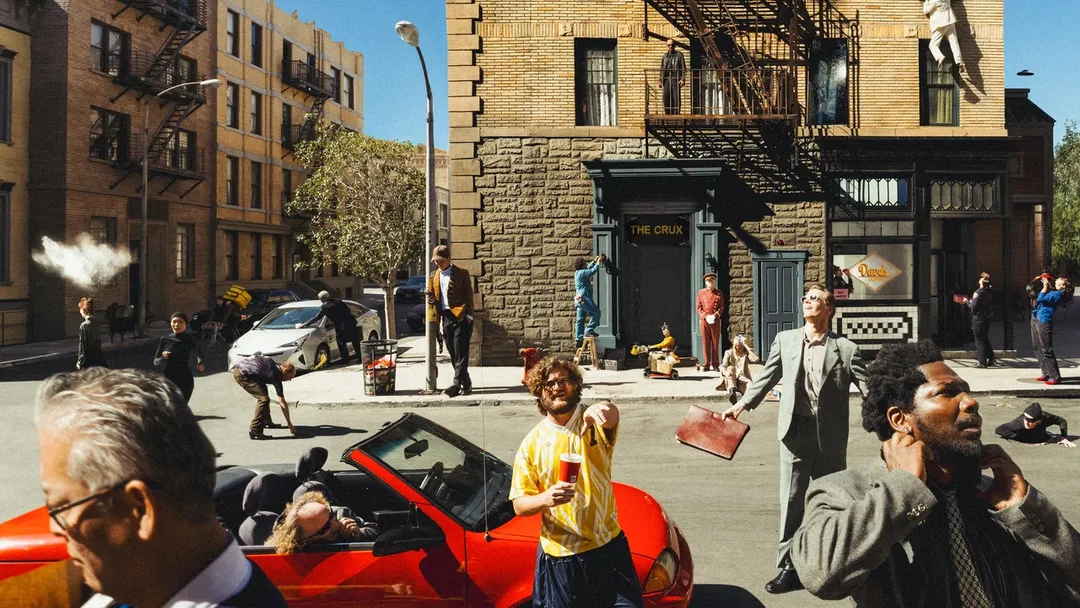
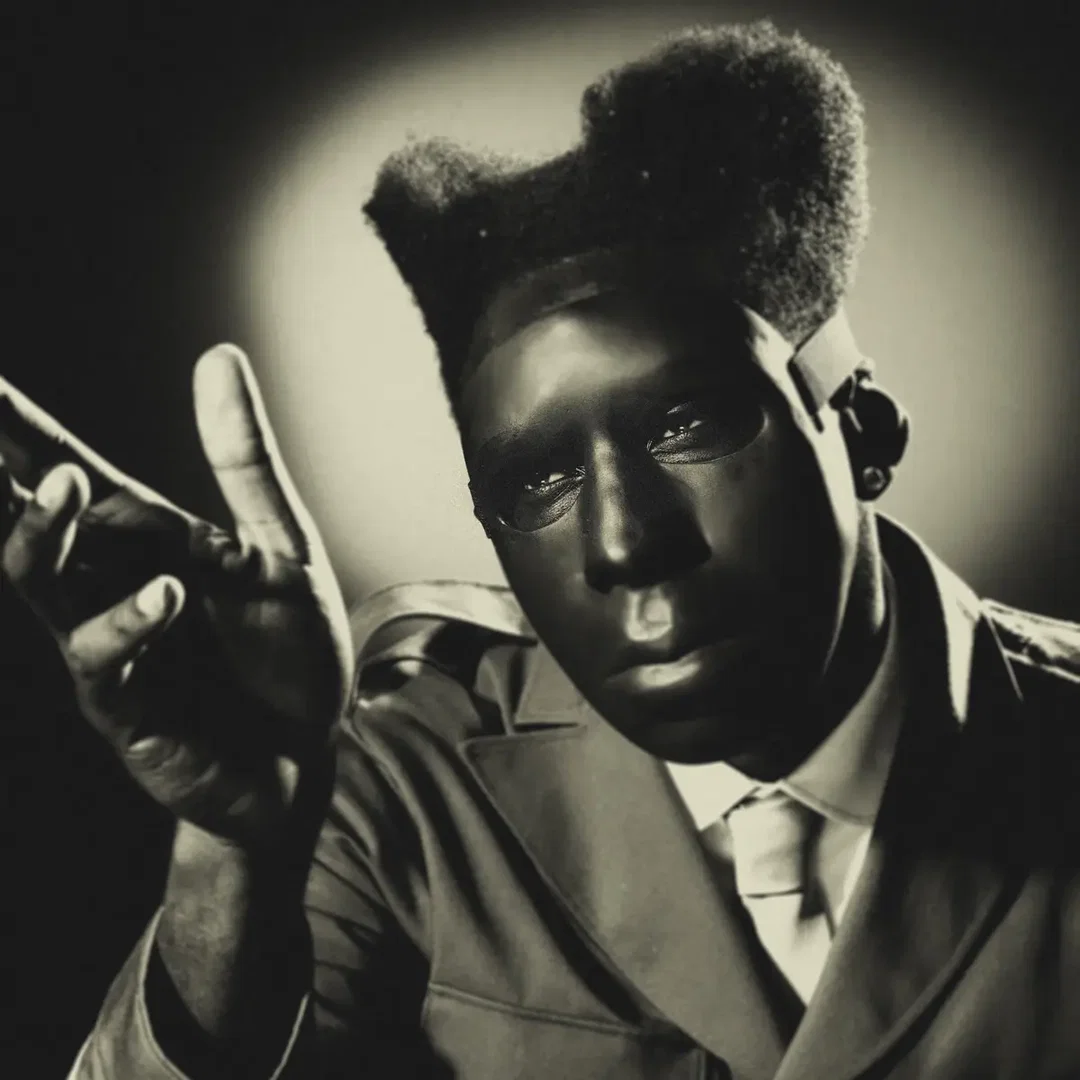
Long overdue, Best Album Cover will rightfully return at the 2026 ceremony this Sunday, and now exist alongside its former replacement. This year’s nominees include Tyler, The Creator’s Chromakopia, Djo’s The Crux, Bad Bunny’s Debí Tirar Más Fotos, Perfume Genius’ Glory, and Wet Leg’s Moisturizer. Best Record Packaging will continue to celebrate innovation in the physical design of CDs and vinyl. How the restored prize will be judged 50 years later will be determined on 1 February. The role and form of the album cover have drastically changed since 1973, thanks to streaming and the digital universe we all inhabit. Case in point: none of this year’s nominees have any typography on the covers – an essential design element for the category’s earliest contenders. To market a product without a title or the artist’s name?! Unfathomable 50 years ago and rare even a decade ago.
Among the nominees, I personally would’ve loved to see Amaarae’s Black Star on the list for its beautiful homage to the Ghanaian flag (although controversially inspired by photographer Gabriel Moses’ work), along with Sabrina Carpenter’s Man’s Best Friend for some more uproar. As Will Ferrell famously lamented in Blades of Glory, “No one knows what it means, but it’s provocative… it gets the people going!” In retrospect, controversy is all Carpenter’s cover has to offer, as opposed to Bad Bunny’s Debí Tirar Más Fotos, one of this year’s contenders.
At first glance, the Puerto Rican popstar’s eighth album cover appears quite simple: two white chairs set against an empty green landscape. But as Grammy-nominated writer Judy Cantor-Navas aptly points out on her Substack, these fixtures are more than just plastic furniture – they are the Monobloc chair. “Particularly potent in the Latin American landscape and social fabric,” as Judy writes, you’ll find them everywhere, from restaurants to beaches, sidewalks, churches, weddings, and porches. Debí Tirar Más Fotos has been described by many as Bad Bunny’s ode to his home, and on the cover, the singer continues to pay respect to the infinite memories spent in these everyday objects. He proves that a minimalist image can carry cultural gravity for millions of fans. It’s approachable. It’s music for everyone.
Which begs to ask, which covers might the Grammys have missed during this category’s hiatus? Which musicians challenged genre norms, the cultures in which they were crafted, and ultimately, the very idea of what an album cover can be? We’ve chosen one (or in some cases two) for each year of the past decade – let’s examine the context in which these album covers were created and the visual artists who helped bring them to life.
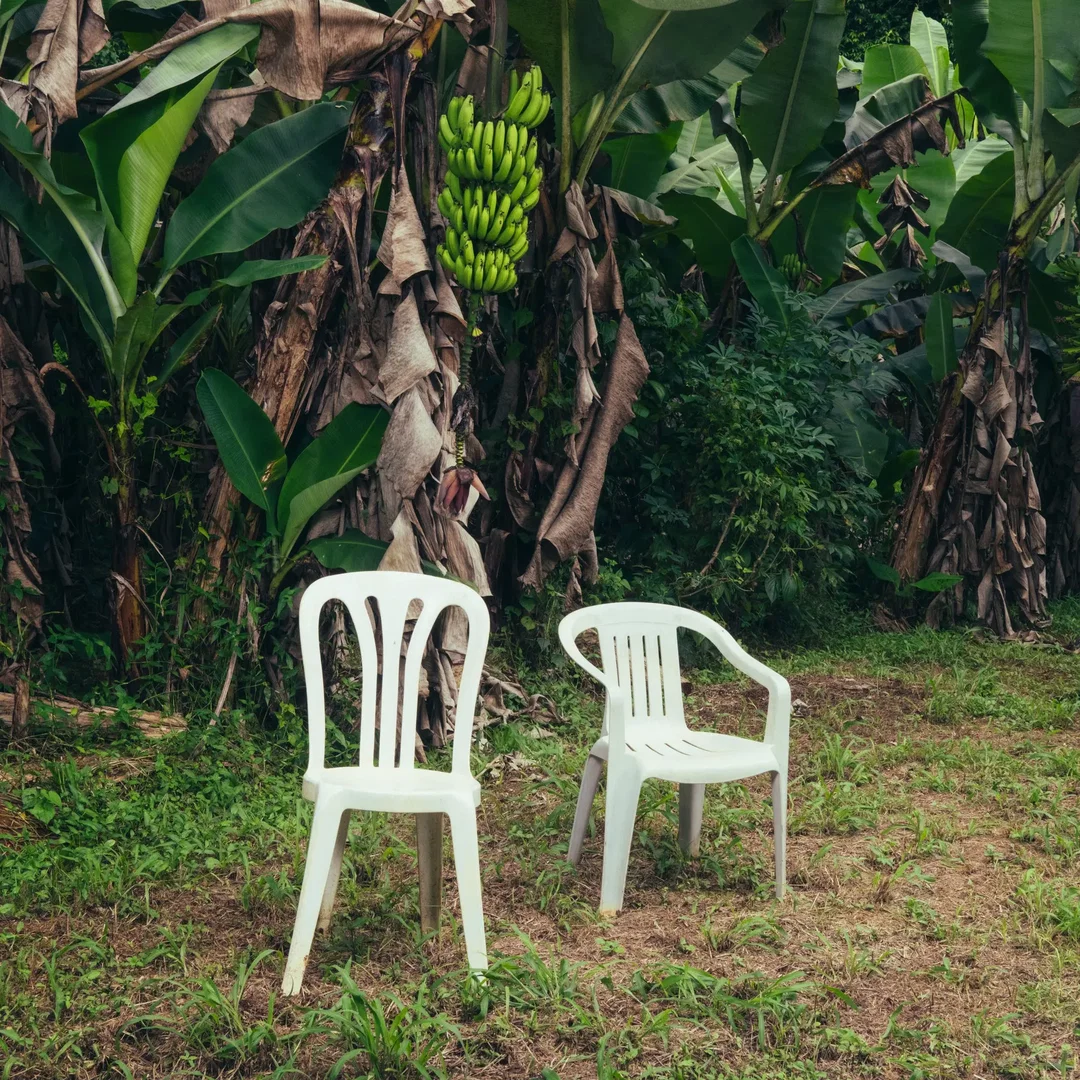
Bad Bunny: Debí Tirar Más Fotos; art director: Benito Antonio Martinez Ocasio (Artwork courtesy of Rimas Entertainment)
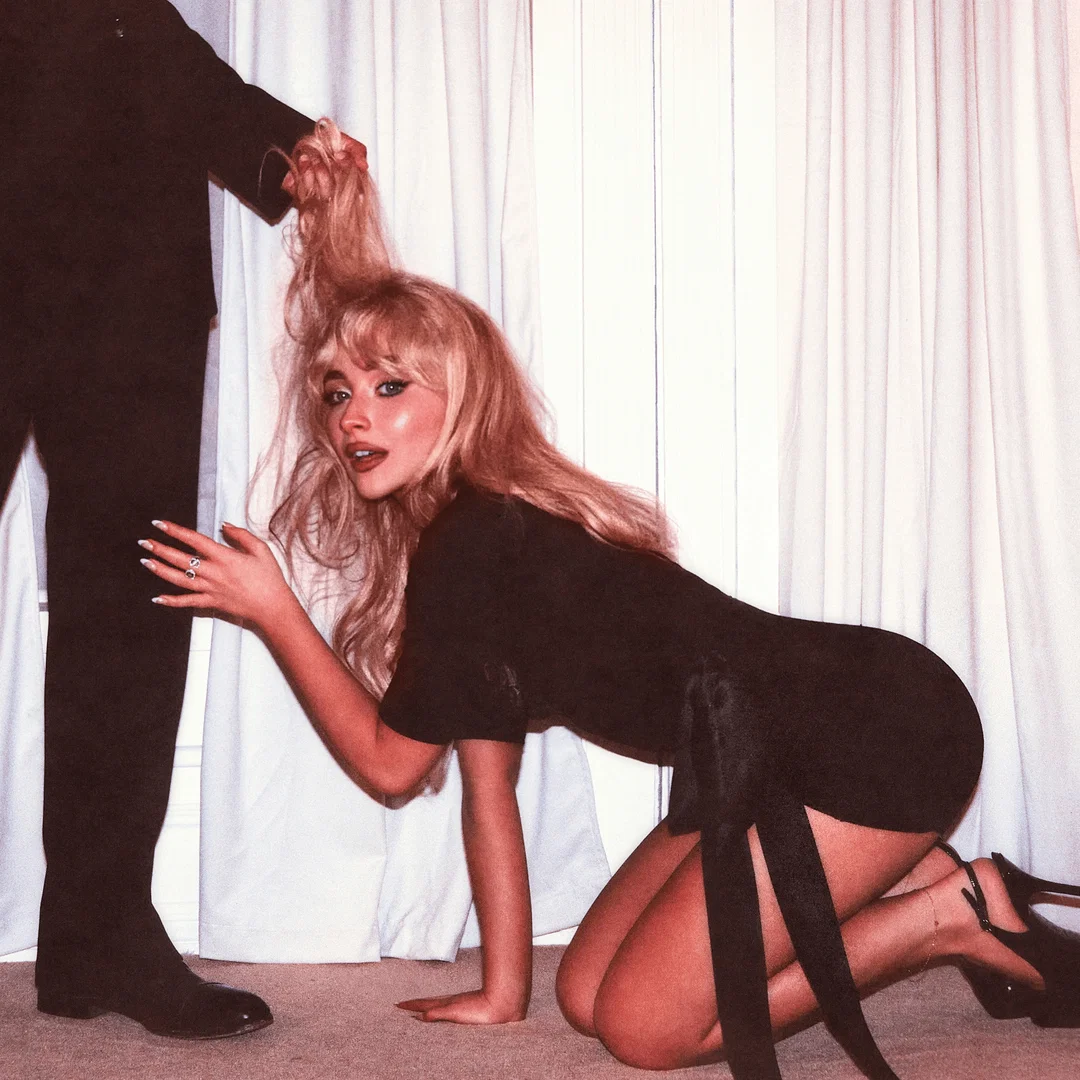
Sabrina Carpenter: Man’s Best Friend; art director: Sarah Carpenter (Artwork courtesy of Island Records)
“No one knows what it means, but it’s provocative… it gets the people going!”
Will Ferrell
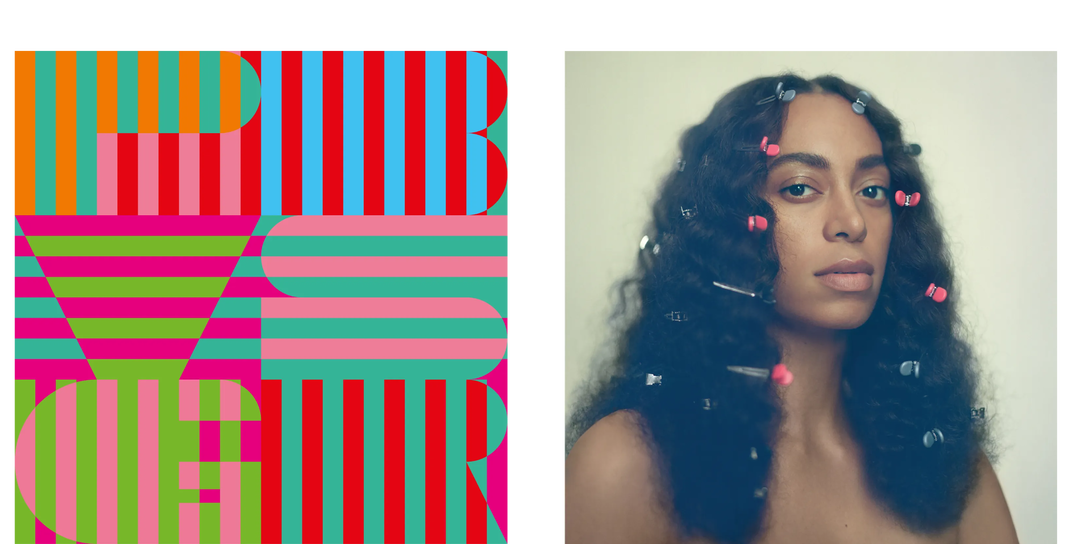
Left – Panda Bear: Panda Bear Meets the Grim Reaper (courtesy of Domino Recording Company)
Right – Solange: A Seat at the Table (courtesy of Saint Records and Columbia Records)
2015: Panda Bear – Panda Bear Meets the Grim Reaper
There’s a long history of optical album art, and Panda Bear’s fourth album happily fits right into the lineage. The cover was illustrated by Marco Papiro and art-directed by the musician himself in collaboration with producer Sonic Boom and Robert Carmichael (Seen Studio). While this album cover is up against the likes of Kendrick Lamar’s To Pimp a Butterfly, its daring abstract design defines Panda Bear’s lauded individualism.
2016: Solange – A Seat at the Table
Honourable Mention: Blood Orange – Freetown Sound
A Seat at the Table cemented Solange Knowles as a true musician with her own unique vision. No longer could she be compared to her older sister. Her collaboration with photographer and art director Carlota Guerrero, whose work is steeped in female identity, visualised “the strength of solidarity between Black women,” as told to Billboard. While the cover is a simple portrait, Solange’s regality is unmistakable. The blue and pink clips, a familiar touchpoint for Black women, normally used to part hair, are used as adornment instead.
A close runner-up for Best Album Cover of 2016 is Blood Orange’s Freetown Sound. The photograph on the cover was originally taken in 2009 by fine art photographer Deana Lawson. Titled Binky & Tony Forever, the image is a portrayal of young love.
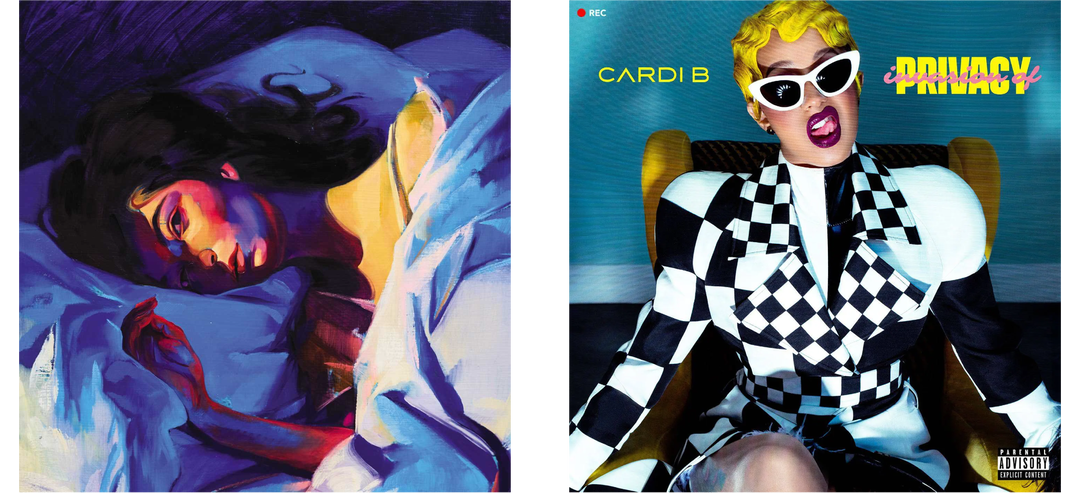
Left – Lorde: Melodrama (courtesy of Lava and Republic Records)
Right – Cardi B: Invasion of Privacy (courtesy of Atlantic Records)
2017: Lorde – Melodrama
Four years after her breakthrough album that described life as a humble teenager in New Zealand, Lorde’s Melodrama explores much darker, more complicated tones. Art directed by Hassan Rahim and painted by Sam McKinniss, the cover perfectly encapsulates the complex mood. The decision to commission a painter rather than a photographer also speaks to Lorde’s desire to visualise the music through a medium that takes time.
“The decision to commission a painter speaks to Lorde’s desire to visualise the music through a medium that takes time.”
Rachel Cabitt
2018: Cardi B – Invasion of Privacy
A great pop art meets hip-hop moment, Invasion of Privacy heralded a new visual identity for Cardi B. On her previous releases, Gangsta Bitch Music Vol. 1 & 2, the rapper is photographed with men acquiescing to her every need. But while they’re meant to show her in positions of power, the covers follow the tired sexual tropes found in the music genre. Photographed by Jora Frantzis, Invasion of Privacy pictures Cardi as the bold, vibrant musician we all know her as, with no man in sight. Art director and designer Nicholas Fulcher adds the finishing touches with the bright yellow typography and a faux security camera texture.
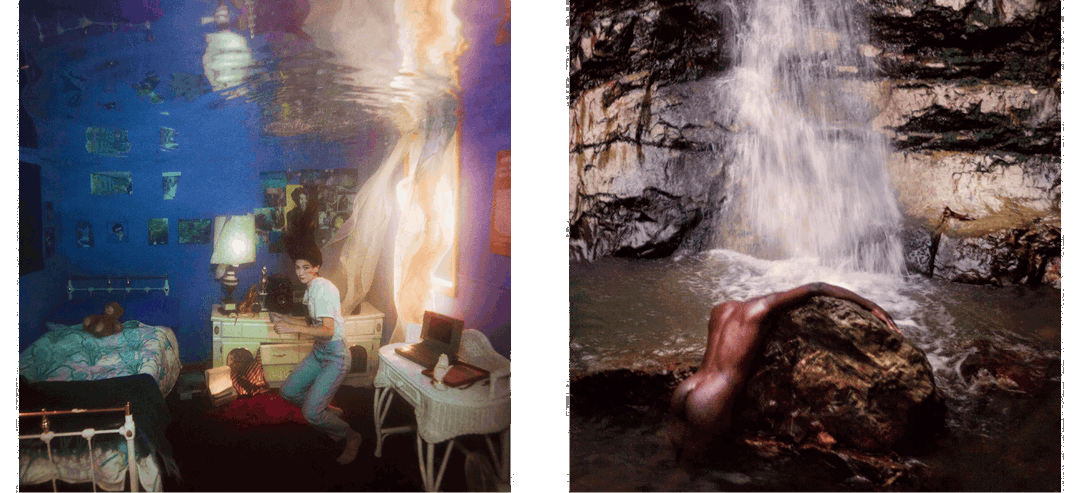
Left – Weyes Blood: Titanic Rising (courtesy of Sub Pop)
Right – Moses Sumney: græ (courtesy of Jagjaguwar)
2019: Weyes Blood – Titanic Rising
Honourable Mention: Tyler, The Creator – Igor
Photographer Brett Stanley went to great lengths to capture singer Natalie Mering, Weyes Blood, in this nostalgic underwater scene. Watch this behind-the-scenes video, and you’ll immediately agree that this production deserves this hypothetical Grammy. I really don’t need to say much more.
Honourable mention goes to Tyler, The Creator for Igor. The cut-out black-and-white photo of the rapper on a pastel pink background is reminiscent of Grace Jones’ 1982 cover of Living My Life. Tyler clearly has a reverence for referencing musical influences (his 2021 album cover for Call Me If You Get Lost also pays homage to Ol’ Dirty Bastard's 1995 debut) and continues to be hailed for his outstanding visuals, as recognised in this year’s nominees with Chromakopia.
“An indie gem that no doubt would’ve slipped past the Grammys’ radar.”
Rachel Cabitt
2020: Moses Sumney – græ
Moses Sumney’s music exists in an ephemeral, spiritual space, and this gorgeous photo by Eric Gyamfi exemplifies that. Nudity on album covers has long been controversial, but this depiction, of who we assume is Sumney, set against a waterfall, is pure fine art. The unexpected significance of 2020 further emphasises the isolation we all experienced, creating an even stronger image than Eric Gyamfi and art director Julian Gross could’ve imagined. An indie gem that no doubt would’ve slipped past the Grammys’ radar.
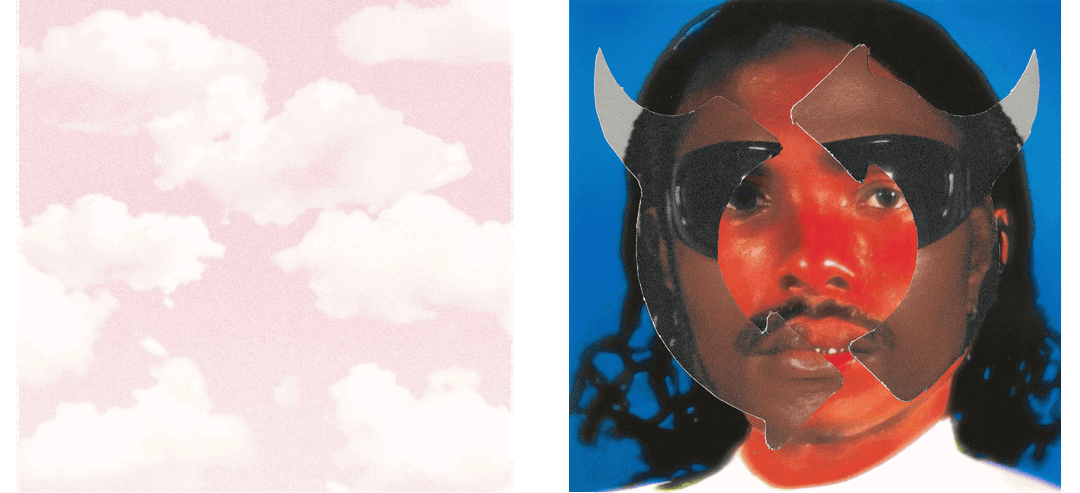
Left – Turnstile: Glow On (courtesy of Roadrunner Records)
Right – Steve Lacy: Gemini Rights (courtesy of RCA Records)
2021: Turnstile – Glow On
Lead singer Brendan Yates and art director Dewey Saunders reimagined how hardcore music can be portrayed with Glow On. Since its origins in the 80s, the scene has painted itself in DIY strokes of black-and-white Xeroxed imagery. The look is grounded in the “evolution of punk aesthetics” and “in your face concepts,” Dewey told me. The cloudy pink image by Alexis Jamet turns the genre on its head, creating one of the most delicate portrayals of a hardcore record out there.
2022: Steve Lacy – Gemini Rights
A creative dream team conjured up Steve Lacy’s Gemini Rights. Creative directed by Kwasi Fordjour (frequent collaborator of Beyoncé), designed by Viktor H (Rosalía) and Frank Dorrey (Noname), and photographed by Julian Klincewicz (Virgil Abloh). The supergroup produced a tactile collage that challenges the viewer to linger with the image beyond a split second. The top devil-horned layer also serves as a smart logo for the rest of the campaign (the animated art is great, too).
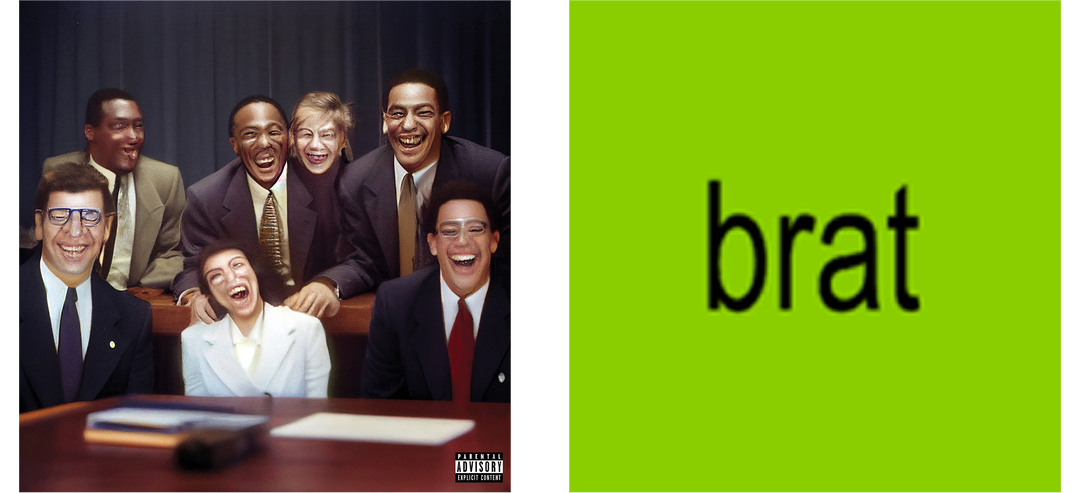
Left – Lil Yachty: Let’s Start Here (courtesy of Motown and Quality Control Music)
Right – Charli XCX: Brat (courtesy of Atlantic Records)
2023: Lil Yachty – Let’s Start Here
In 2023, the conversation around AI was just starting to make headlines. So when experimental rapper Lil Yachty revealed the cover for Let’s Start Here, by visual artist Jon Rafman (who is known for blurring the lines between technology and art), fans talked themselves into a frenzy. But what those critics didn’t understand was that the messiness of the new technology was the perfect medium for depicting these warped suited figures, who invest in computers rather than in true artistic individuals, like Lil Yachty himself. It’s pixelated, blurred and ugly in the best way possible.
“It’s pixelated, blurred and ugly in the best way possible.”
Rachel Cabitt
2024: Charli XCX – Brat
Honourable Mention: Fontaines D.C. – Romance
The most talked about record and album cover in years, and if I had a hunch, the reason why this category was ushered back in. Countless articles have examined how Charli XCX rewrote the playbook for marketing an album, so I won’t bore you. Thankfully, creative director Imogene Strauss and design studio Special Offer, Inc. took home the award for Best Record Packaging last year.
Second-place prize goes to Fontaines D.C.’s Romance. If it weren’t for Charli’s world domination, their XL Records rebrand would’ve clinched the trophy. Illustrated by Lulu Lin and art-directed by Texas Maragh, the dystopian campaign also made the argument for using neon green as a marketing tool.
Are these the best album covers of all time? Some yes, others no. But the Grammys are always a political affair! What’s more compelling is seeing how imagery significantly impacts and responds to the world we live in each year. Let’s say “thank you” to pop culture! Regardless of who wins this weekend, what truly matters is that this highly contested art form and its visual artists are finally being celebrated.
Share Article
About the Author
—
Rachel Cabitt is the co-founder of POND Creative and a photographer, designer, and art director based in New York. She publishes The Art of Cover Art, a newsletter on the art history of album covers, and has written for Wallpaper* and AIGA Eye on Design.