Launch Recite Me assistive technology

The great sameness: a comic on how AI makes us more alike

Studies say that using generative AI flattens our collective creative individuality. But how does this happen? Comic artist Jordan Bolton shows us, so we might escape the same fate.

Share

Light and Shade is a new series exploring the challenges at the heart of the AI-creative conversation. As AI becomes increasingly present across the creative industries, the series examines the opportunities and dilemmas our community grapples with. It is grounded in interviews with technologists, researchers, artists, designers, creative founders, writers, lecturers and environmental and computational experts, offering a fuller view of the many sides of the story of AI’s creative influence.

Déjà-vu is a familiar sensation in graphic design. There is always a popular template, plug-in or feature that becomes trendy, encouraging a flurry of similar-looking work, before the inevitable drop off. For years, these systems have allowed designers to make stylistic leaps quicker, to make sense of partially formed ideas faster. The resulting flatness is merely a side effect of multiple people harnessing the same tools, for the same steps in the design process. Not evil, but inevitable.

AI, like any tool in a designer’s belt which introduces automation, can also increase similarity. The artist, writer and technologist James Bridle likens this to the similarities in the appearance of buildings – a result of the default settings in the design software used by architects. But, unlike the tools designers and architects have used in the past, generative AI tends to nudge us further in the “correct direction”. In fact, it’s often described as a creative collaborator, feeding in personalised responses to your unique creative problem, making its voice just a little louder than your typical digital design tool.

We’ve seen in some initial research studies how this kind of relationship between AI and creative can increase homogenisation. In 2024, an online experiment with 36 ChatGPT users found that use of AI can expand how many creative ideas an individual user has, but at a group level, “users tended to produce less semantically distinct ideas”. That same year, another study reached similar results; this time it was a group of short-story writers who each managed to independently write a “more creative” story by using AI, but produced a narrower scope of novel content overall.

It’s odd: sameness has become a side effect of AI, though it needn’t be. While some tools currently used by designers or illustrators might offer only marginal variations, the range of inputs AI allows for are technically far greater. So long as the tool is steerable enough, and the designer has enough time to explore, AI should increase our capacity for creative expression, not stunt it. The question becomes, how do we ensure our dealings with AI expand our individual creative potential, without flattening our collective richness?

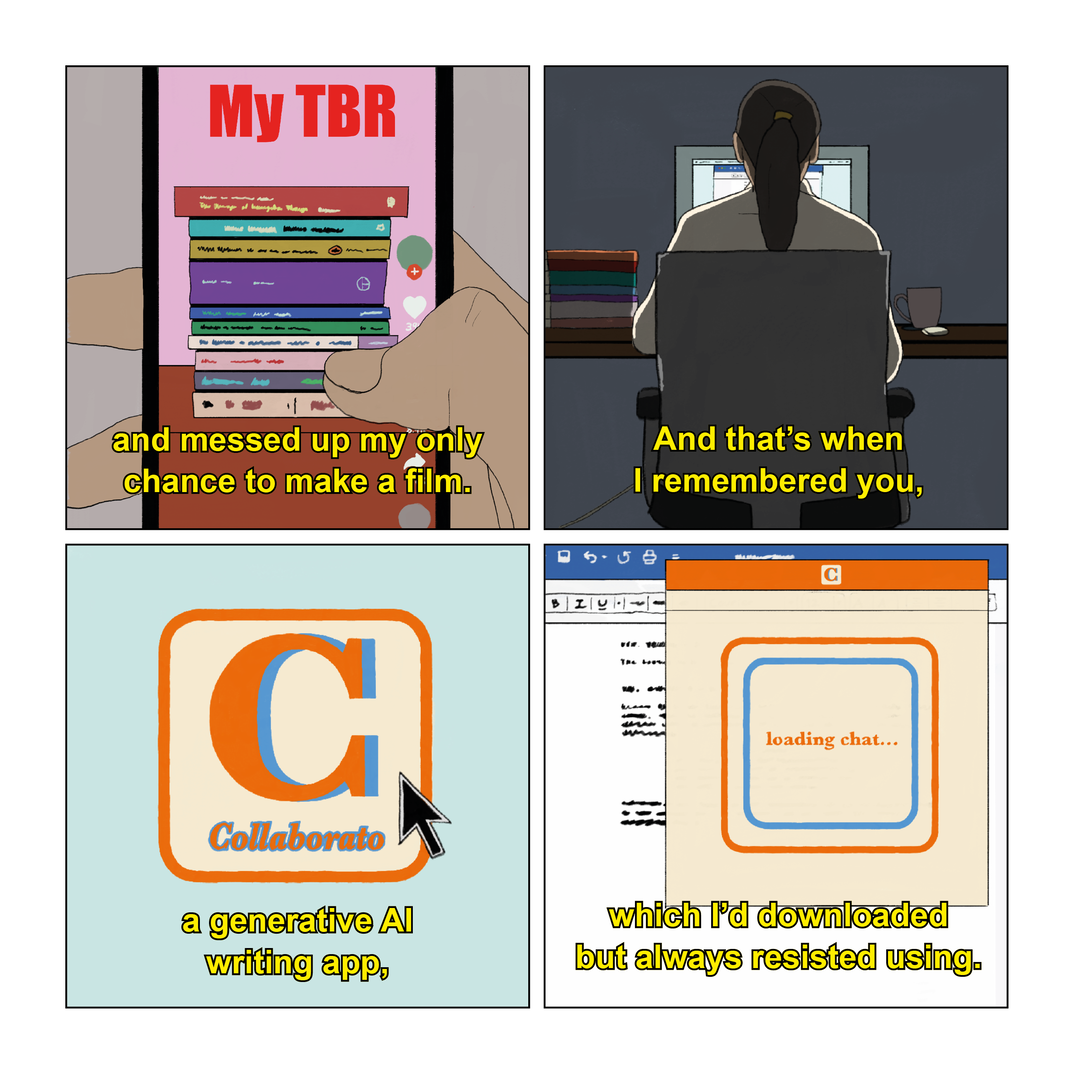
To improve our working relationship with AI, we must first understand how sameness happens. The comic below, created by Jordan Bolton, explores this topic through a single character who, under the weight of everyday pressures, comes face to face with the threat of a great homogenisation. Our hope is that it offers a pause; a chance to consider what tasks are worth templating, and when it’s best to trust our instincts.
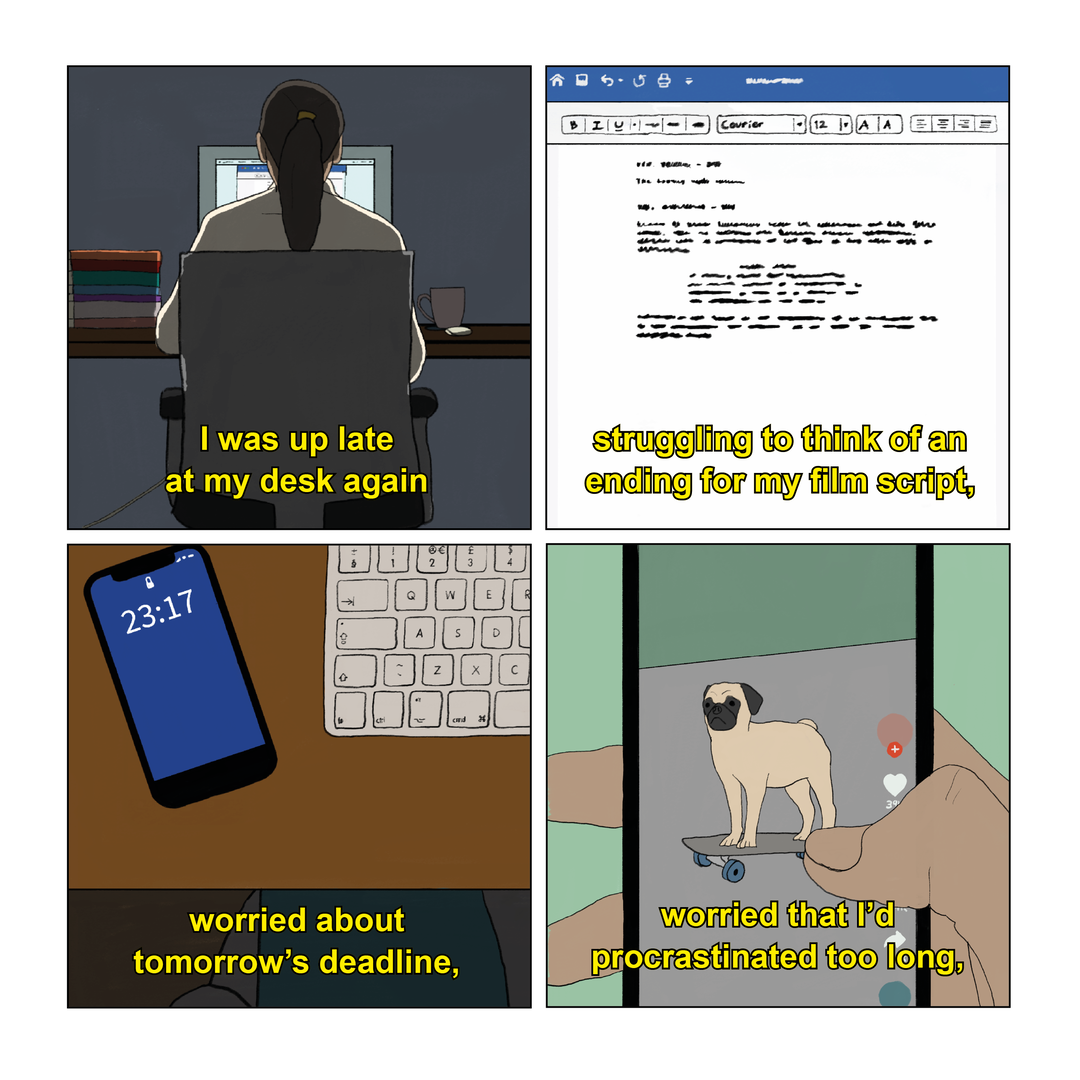
A four-panel digital comic. A person sits at a desk late at night, facing a computer screen with the caption “I was up late at my desk again”. The second panel shows a word processor with a script in progress, captioned “struggling to think of an ending for my film script,”. The third panel shows a smartphone displaying the time “23:17” next to a keyboard, captioned “worried about tomorrow’s deadline,”. The final panel shows a hand holding a phone that displays a video of a pug on a skateboard, captioned “worried that I’d procrastinated too long,”.
A four-panel comic strip. The first panel shows a hand holding a phone displaying a list titled “My TBR”, with text below reading “and messed up my only chance to make a film.” The second panel shows a person from behind, sitting at a desk with two monitors, with text reading “And that’s when I remembered you,”. The third panel shows a logo for a generative AI writing app called “Collaborato”, and the fourth panel shows a loading screen that reads “loading chat...”.
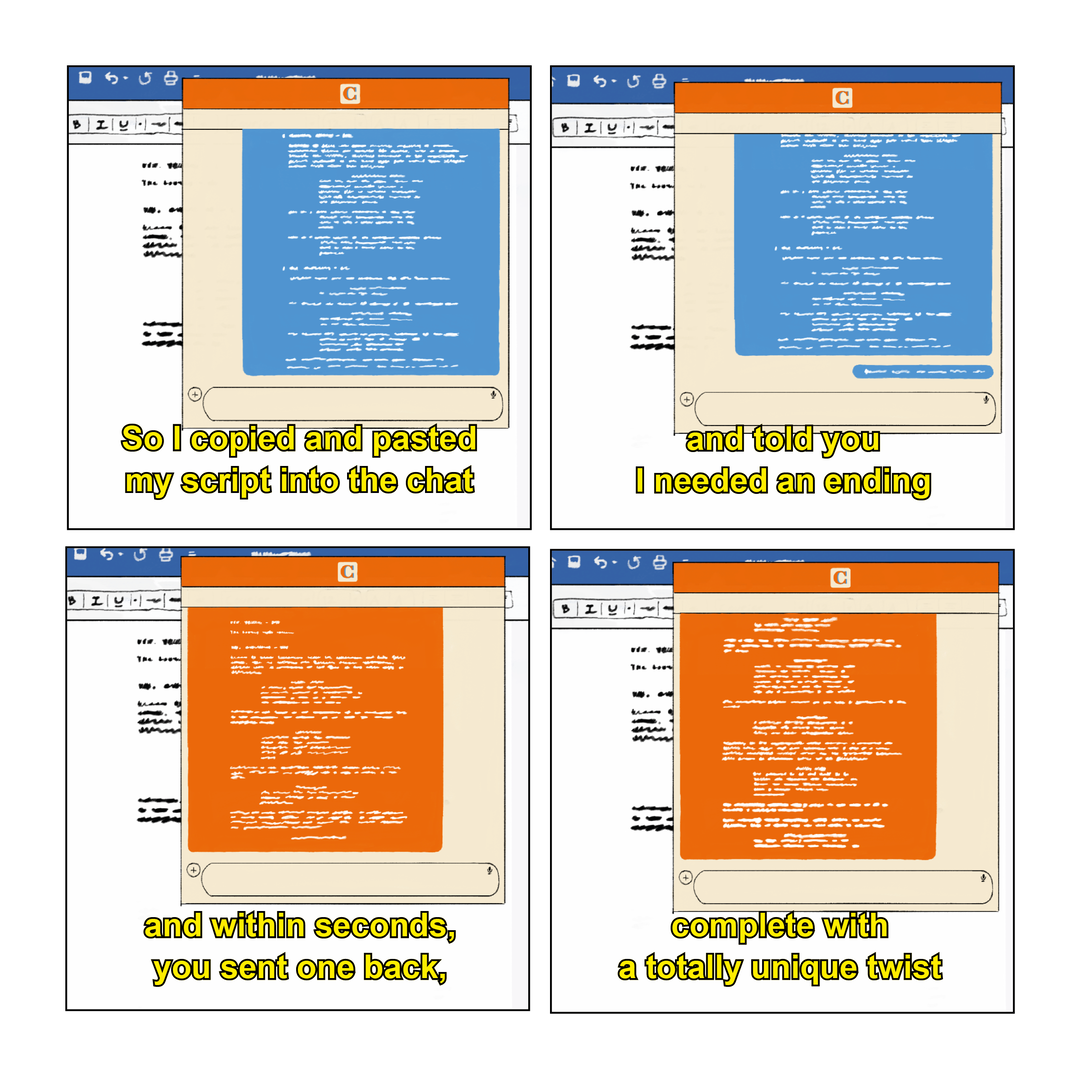
A four-panel comic showing a chat interface with a blue or orange text box. Captions below the panels read, “So I copied and pasted my script into the chat and told you I needed an ending and within seconds, you sent one back, complete with a totally unique twist”.
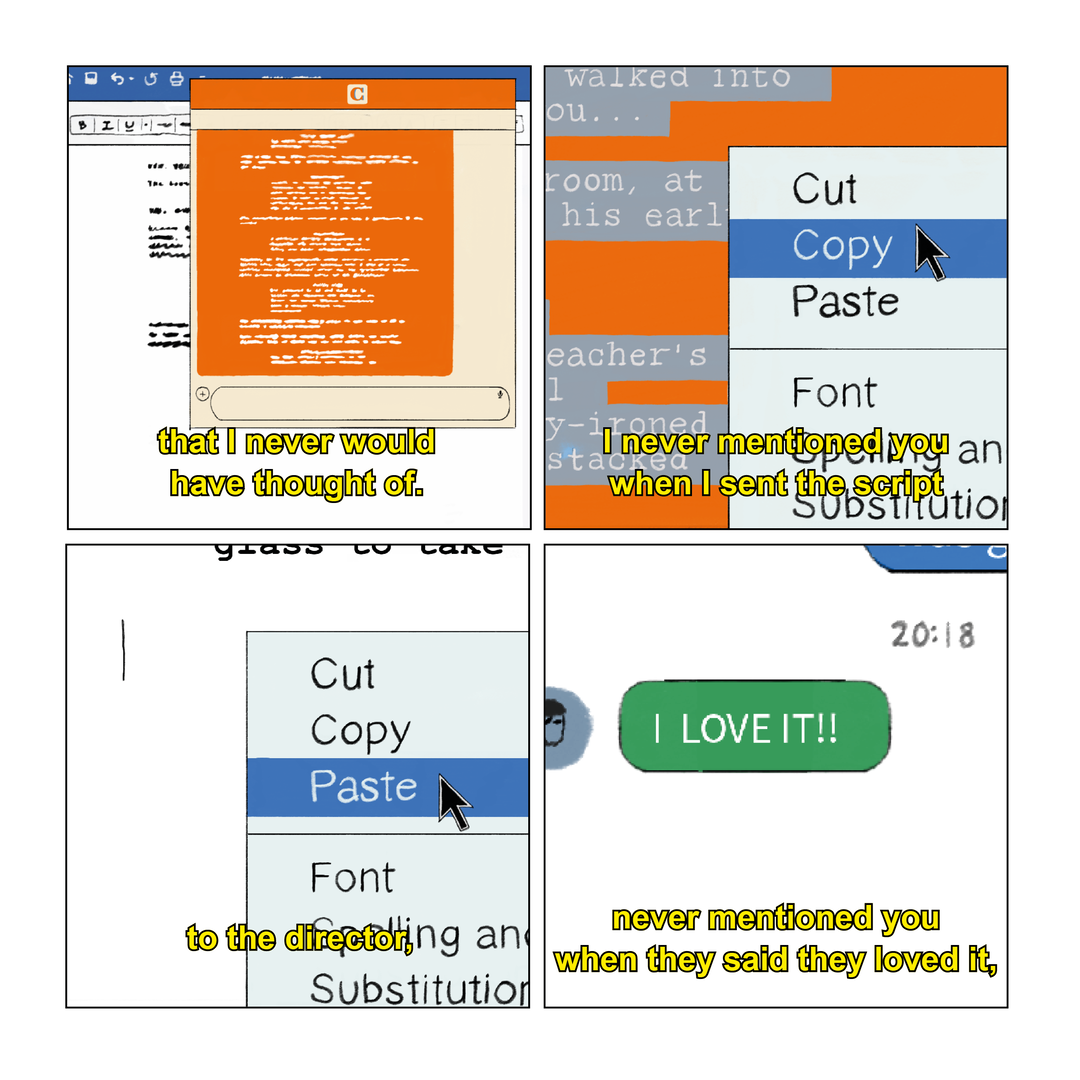
A four-panel digital collage showing a sequence of screenshots from a word processor and a messaging app. The images show a cursor selecting “Copy” and “Paste” from a menu, overlaid with yellow text that reads “that I never would have thought of”, “I never mentioned you when I sent the script”, and “never mentioned you when they said they loved it”. The final panel shows a green chat bubble that reads “I LOVE IT!!”.
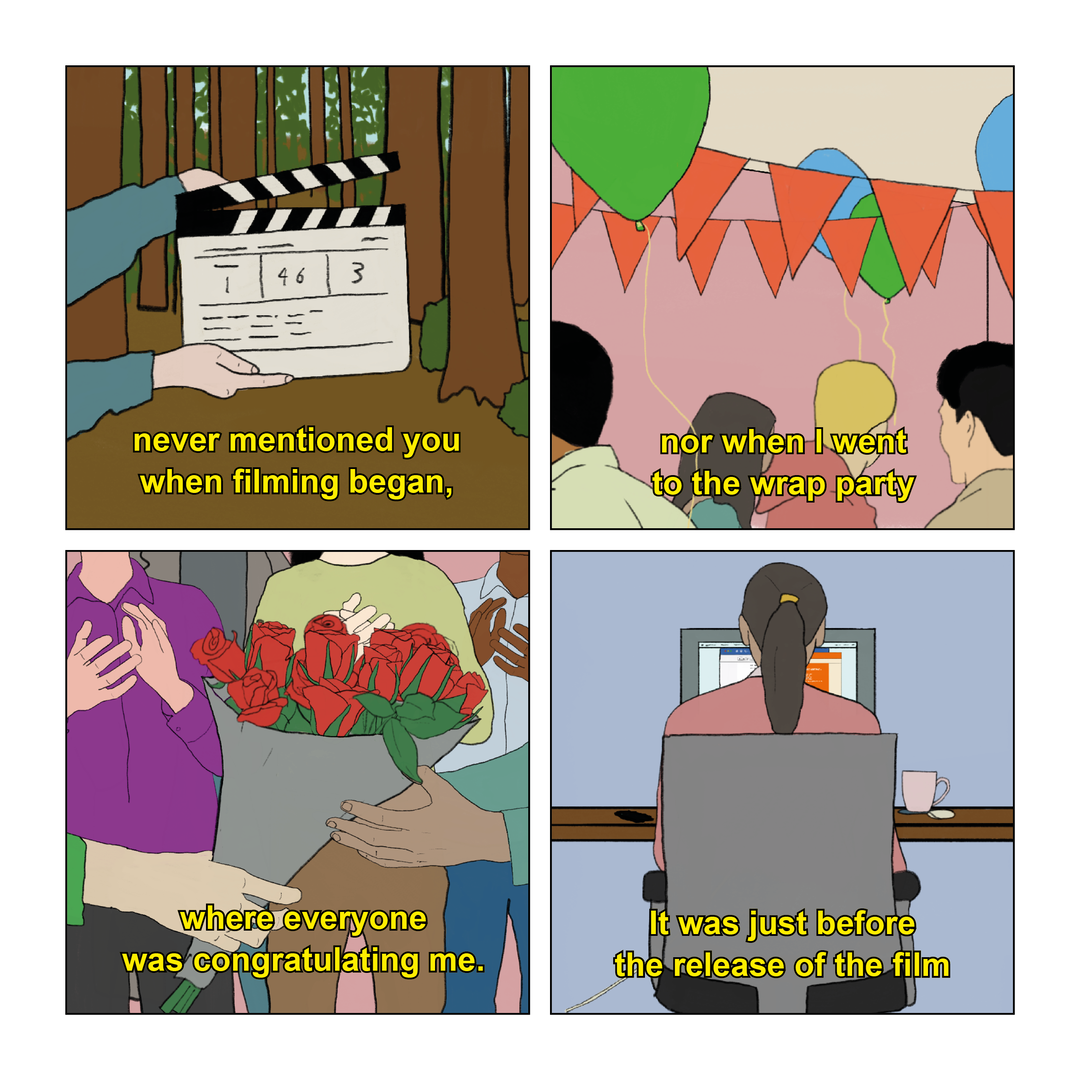
A four-panel illustration showing a person reflecting on a film project. The panels show a clapperboard, a party with balloons and bunting, a bouquet of red roses, and a person sitting at a computer. Captions across the bottom read “never mentioned you when filming began,” “nor when I went to the wrap party,” “where everyone was congratulating me,” and “It was just before the release of the film”.
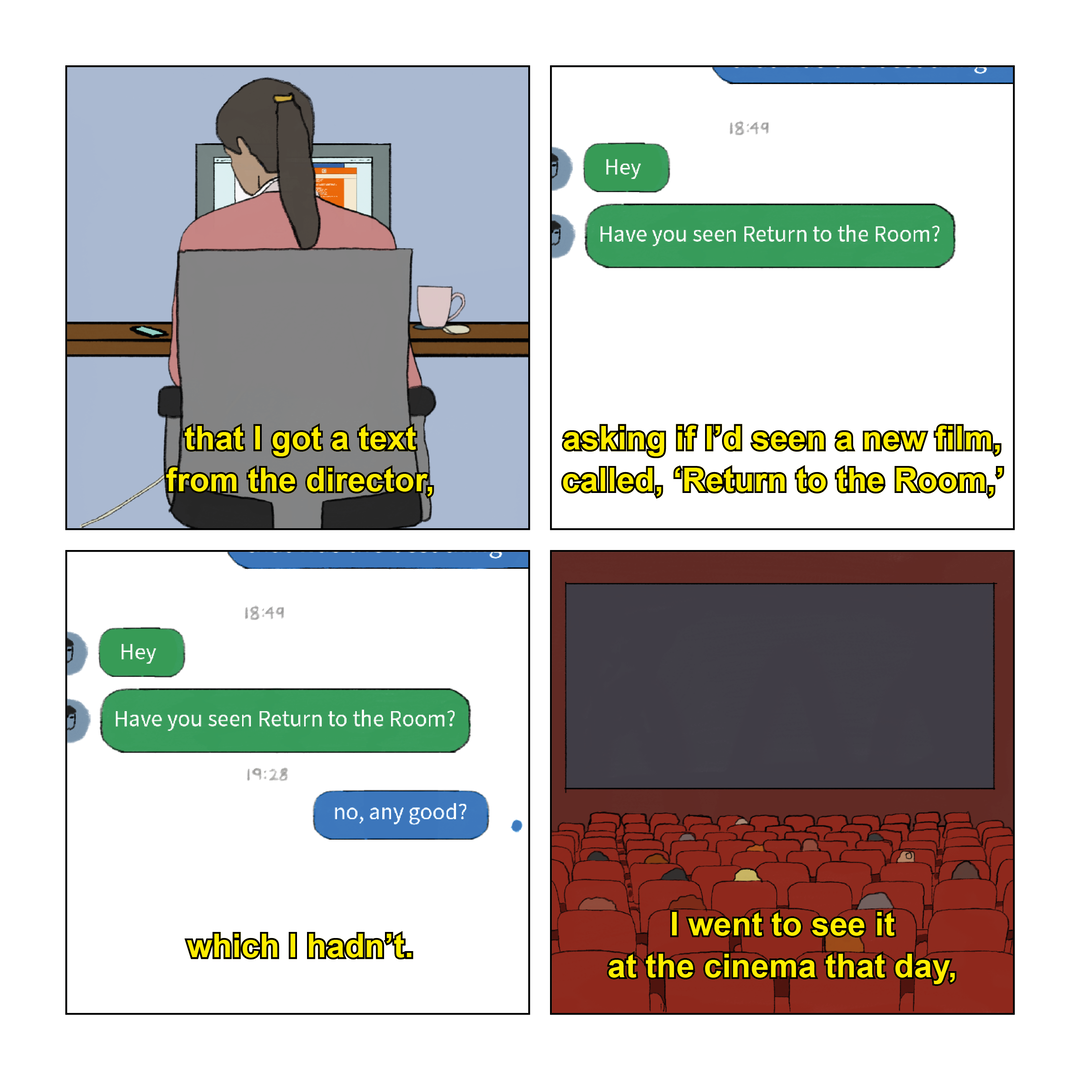
A four-panel comic illustration. A person sits at a desk, followed by a series of text messages and a shot of a cinema screen. Yellow text across the panels reads, “that I got a text from the director, asking if I’d seen a new film, called ‘Return to the Room,’ which I hadn’t. I went to see it at the cinema that day,”.
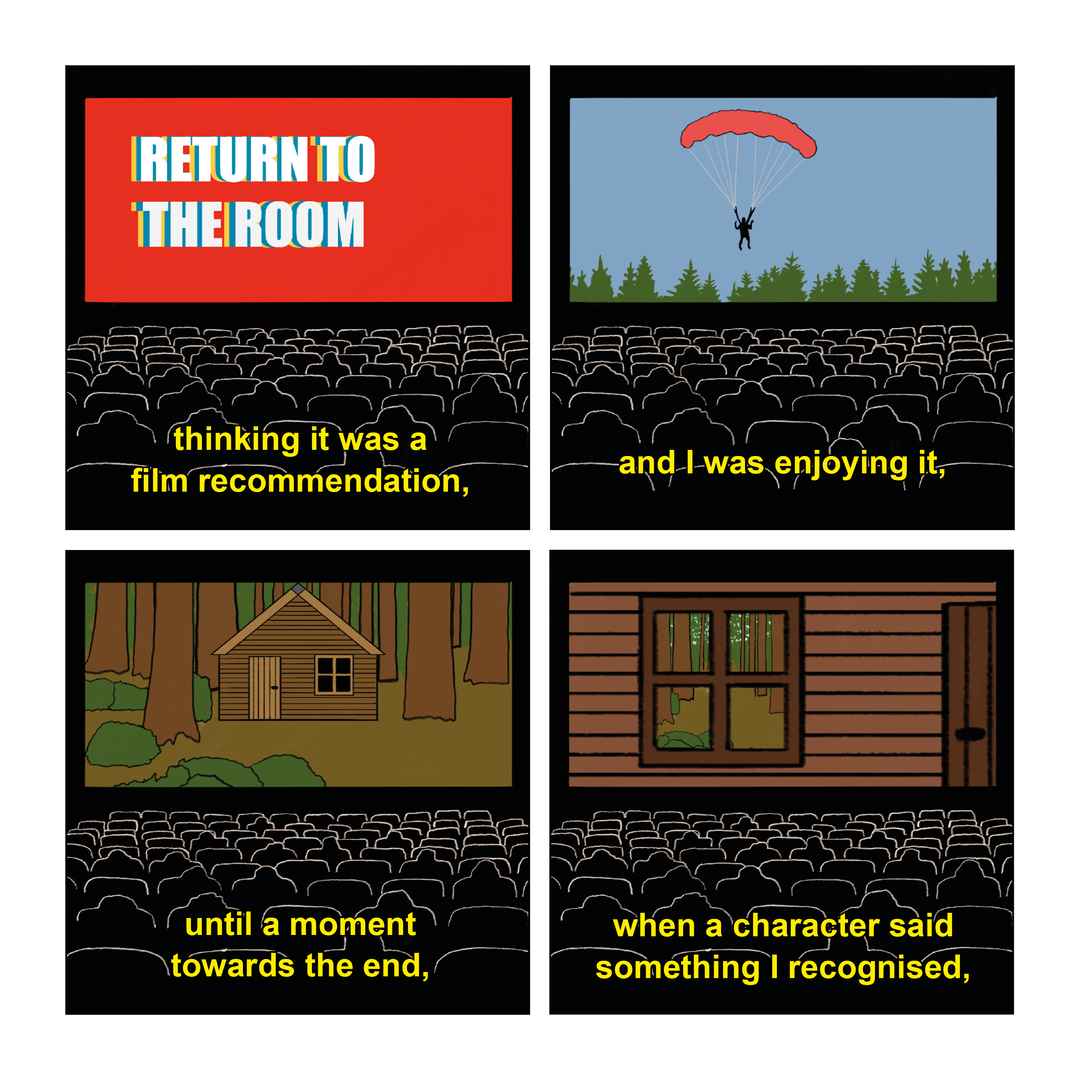
A four-panel comic strip. The first panel shows a red screen with the text “RETURN TO THE ROOM”, while the second shows a figure parachuting over a forest. The third panel shows a small wooden cabin in the woods, and the fourth is a close-up of the cabin's exterior. Captions across the bottom read, “thinking it was a film recommendation, and I was enjoying it, until a moment towards the end, when a character said something I recognised,”.
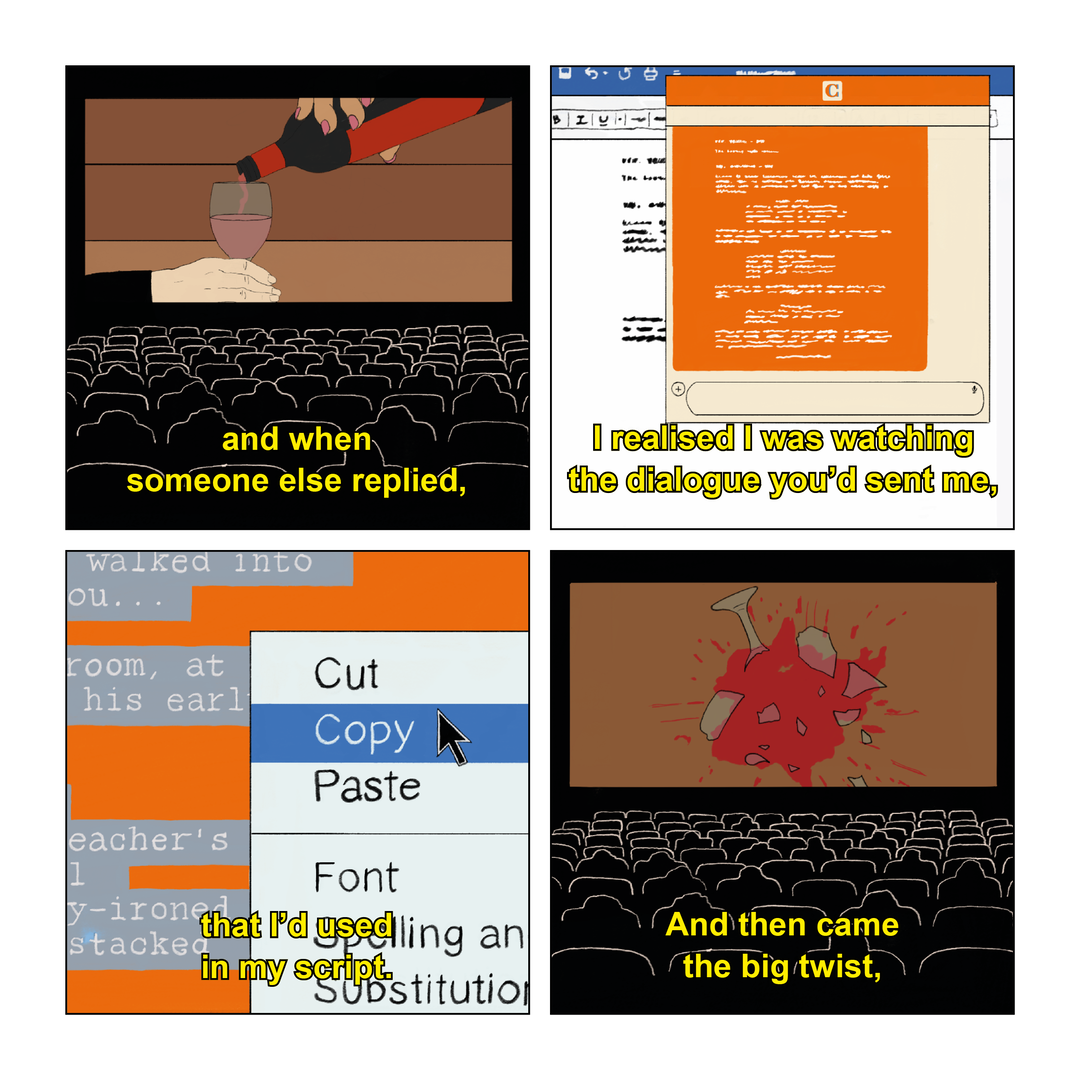
A four-panel comic. The first panel shows a hand pouring red wine into a glass, with the text “and when someone else replied,”. The second panel shows a digital message in an orange box, with the text “I realised I was watching the dialogue you’d sent me,”. The third panel shows a computer cursor selecting “Copy” from a dropdown menu over a script, with the text “that I’d used in my script.”. The final panel shows a red object exploding, with the text “And then came the big twist,”.
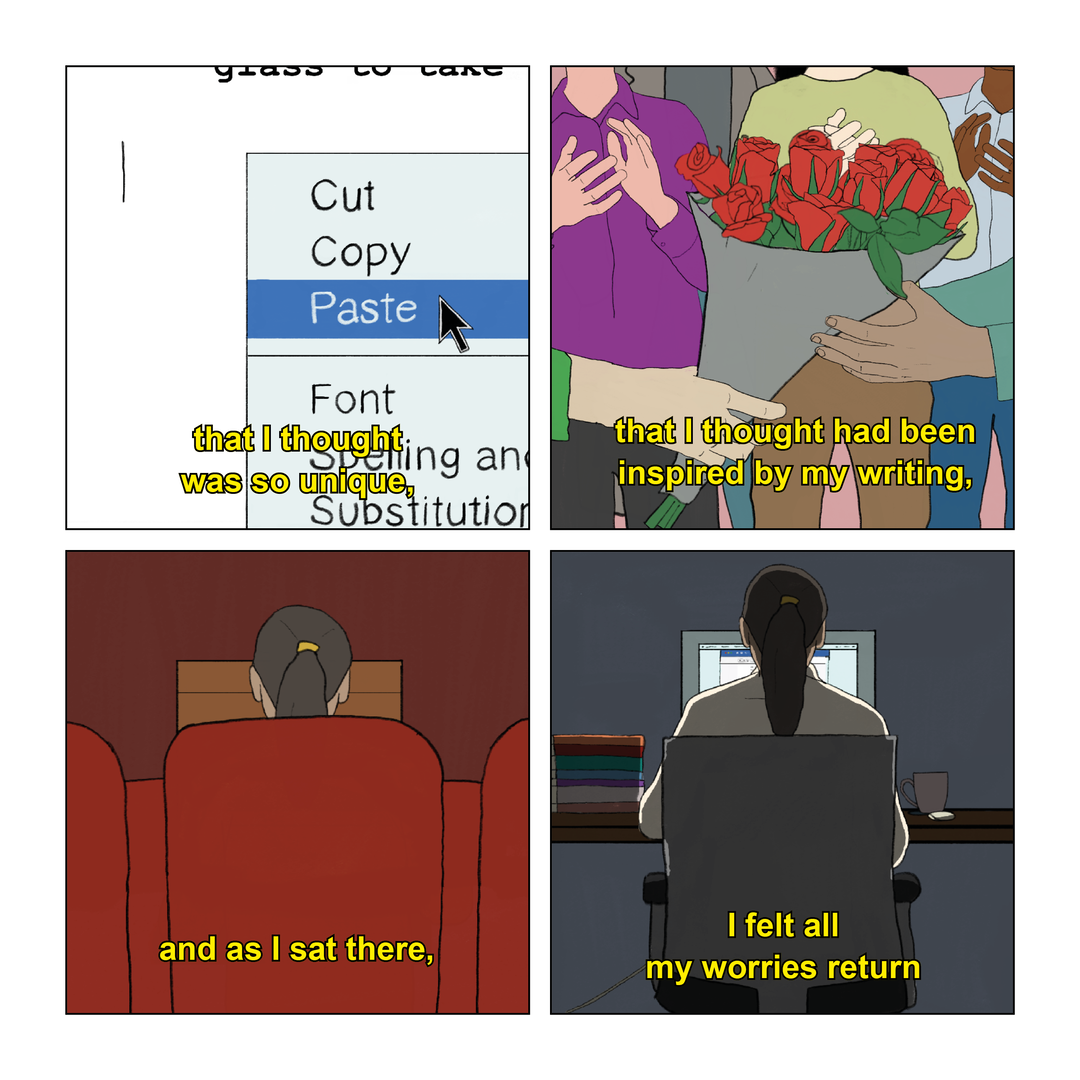
A four-panel digital illustration. The first panel shows a computer cursor over a “Paste” command in a menu, with the text “that I thought was so unique,” laid over it. The second panel shows a person holding a large bouquet of red roses, with the text “that I thought had been inspired by my writing,”. The third panel shows the back of a person sitting in a red cinema seat, with the text “and as I sat there,”. The final panel shows the person from behind, sitting at a desk in front of a computer screen, with the text “I felt all my worries return”.
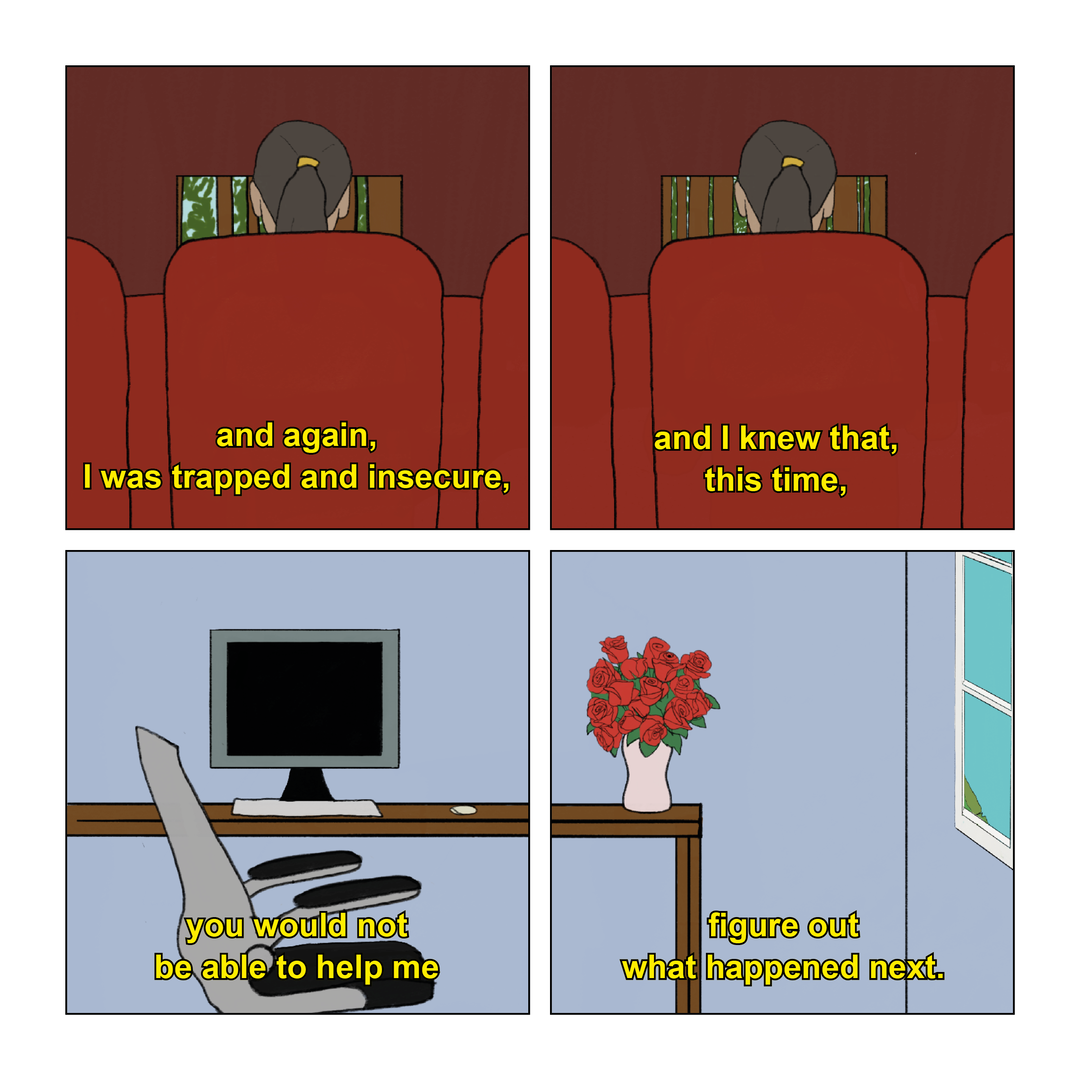
A four-panel comic strip with yellow text overlaid on each frame. The first two panels show a person seen from behind, sitting in a red cinema seat. The final two panels show a desk with a computer monitor and a vase of red roses. The full text reads: “and again, I was trapped and insecure, and I knew that, this time, you would not be able to help me figure out what happened next.”

Uncover the full Light and Shade series

Explore the challenges at the heart of the AI-creative conversation with our series of insights-driven articles below.

Brought to you by

Insights

Insights is a visual research department within It’s Nice That helping creative teams with sticking points. We deliver research on cultural landscapes, audience tastes, communities and talent to unlock your creative approach.

Share Article

Further Info

About the Author

Liz Gorny

—

Liz (she/they) is the senior editor at Insights, a research-driven department within It’s Nice That. They previously ran the news section of the website. Get in contact with them for potential Insights collaborations or to discuss Insights’ public-facing reports.

It's Nice That Newsletters

Fancy a bit of It's Nice That in your inbox? Sign up to our newsletters and we'll keep you in the loop with everything good going on in the creative world.