




- Words
- Jynann Ong
- —
- Date
- 4 March 2019
- Tags
A study of gender and colour over 14 years: JeongMee Yoon on The Pink and Blue Project
Share
Share
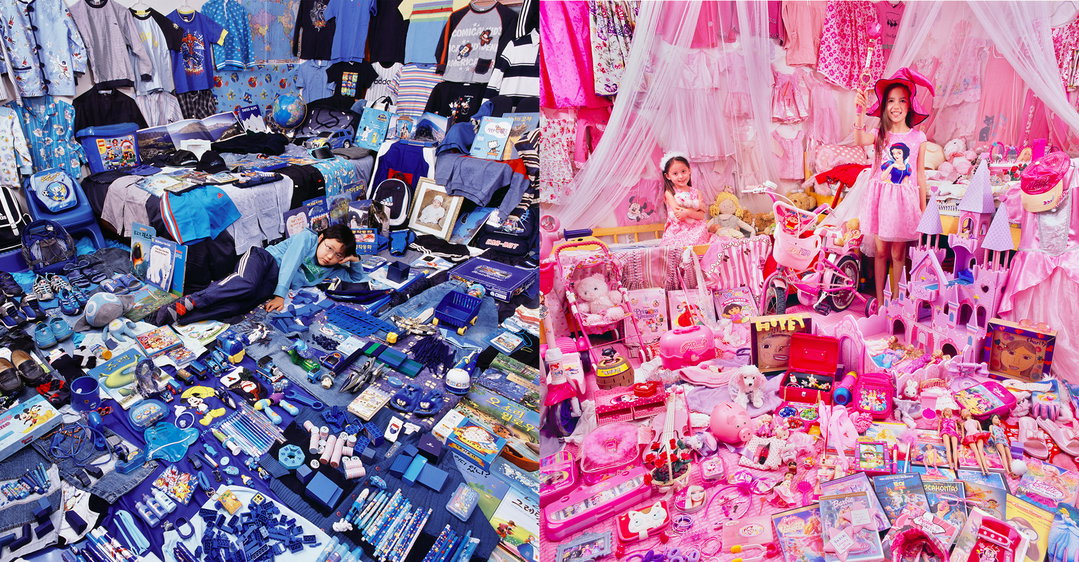
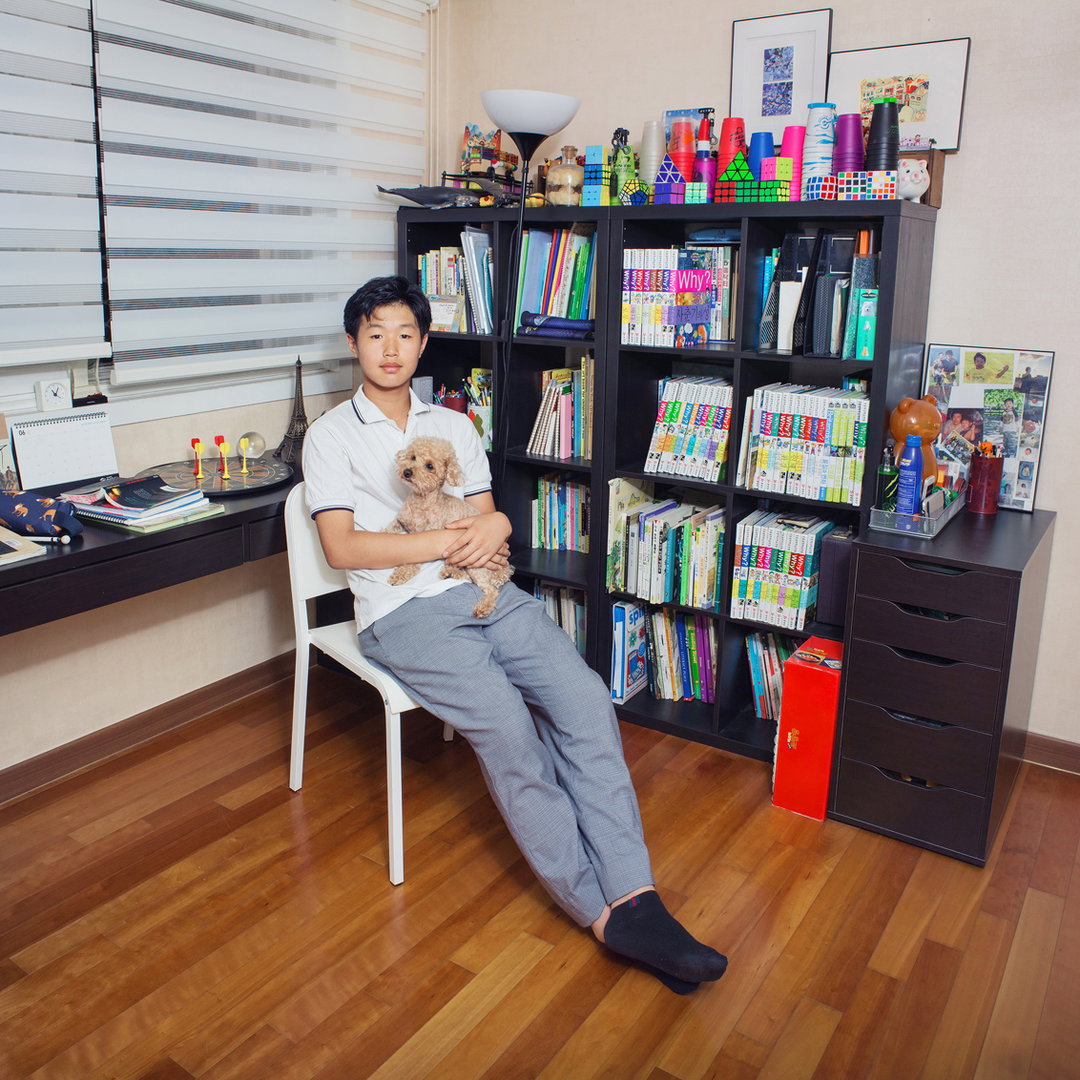
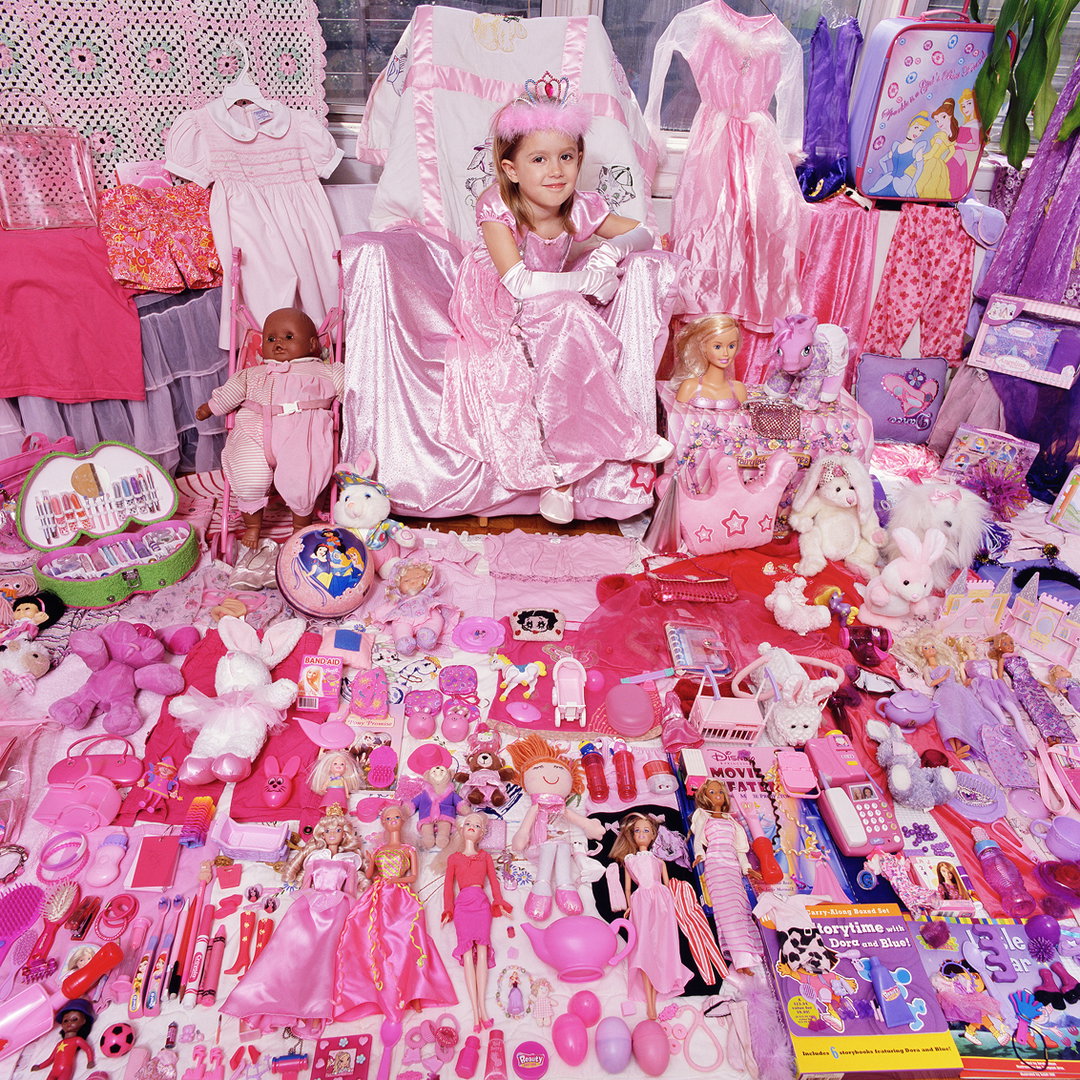
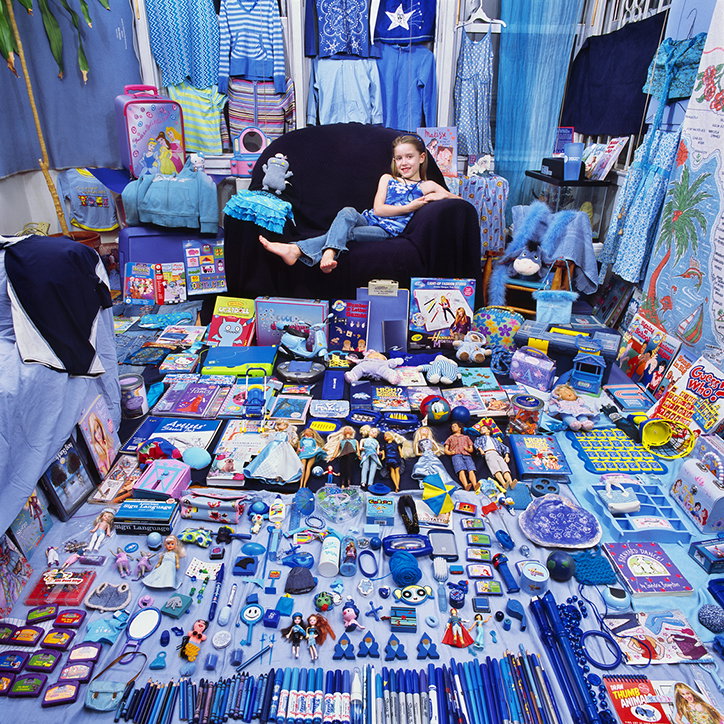
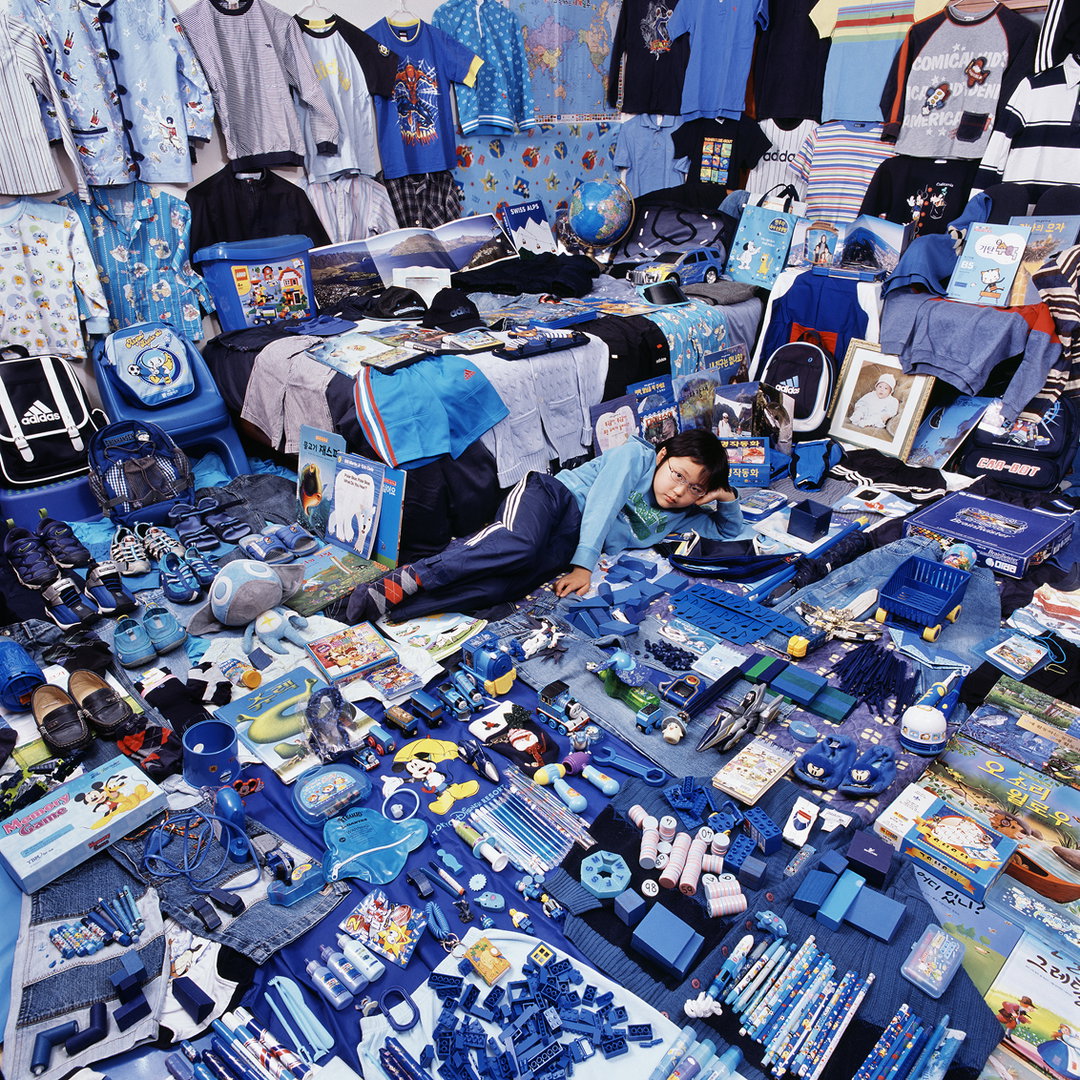
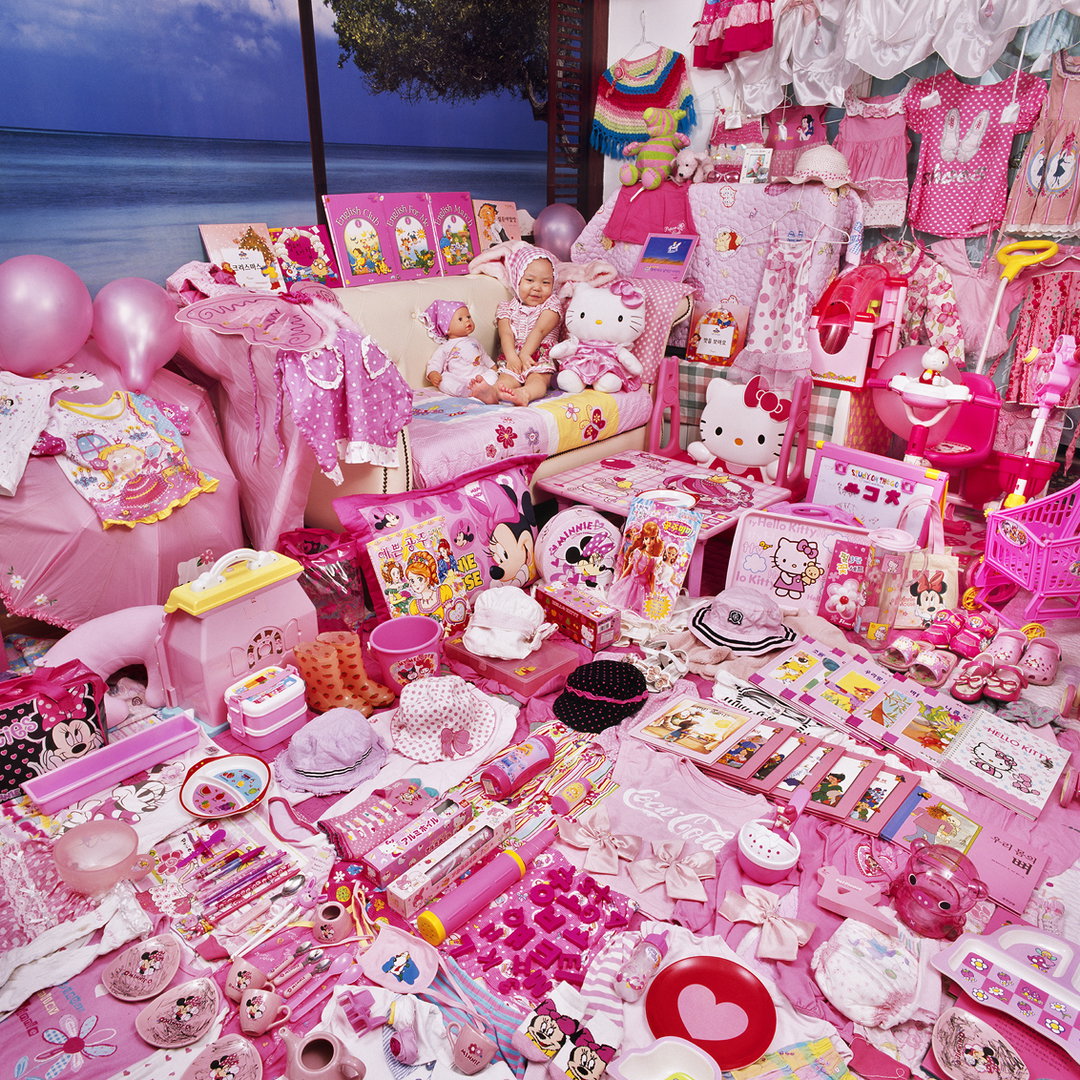
Few colours come laden with as many associations as the colours pink and blue. Whether you think they denote femininity or masculinity, both or neither, it’s difficult to deny that these two colours are charged with gender politics. This is a subject that has continuously fascinated the Seoul-based artist JeongMee Yoon over the past 19 years. Since 2005, she’s been working on an ongoing photography series The Pink and Blue Project, which captures children and young people in their bedrooms surrounded by their hoards of pink and blue possessions.
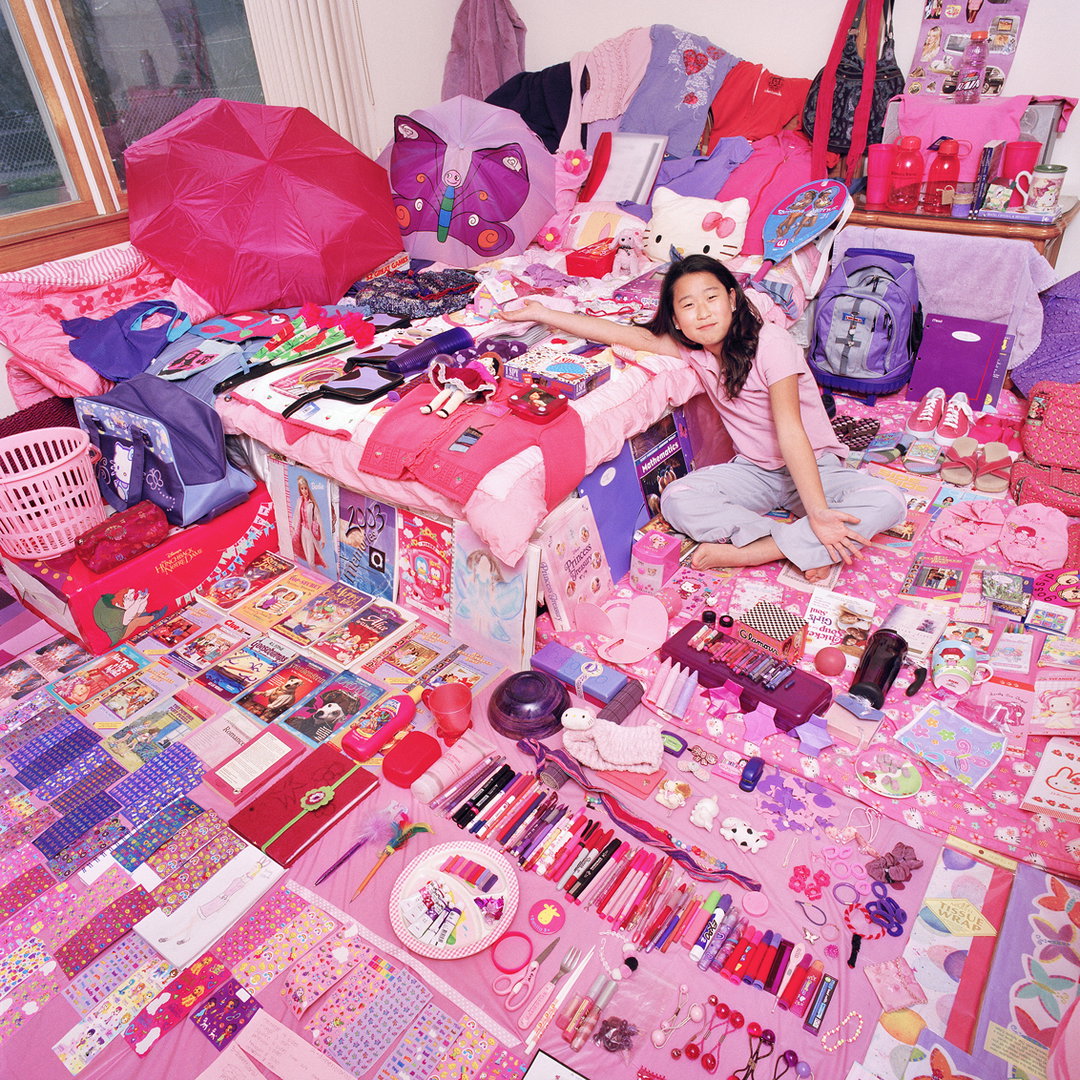
In conversation with It’s Nice That, JeongMee tells us, “The Pink and Blue Project was initiated by my daughter, who loves the colour pink so much that she only wanted to wear pink clothes and play with pink toys.” Since then, this photographic study has garnered international acclaim for its visual explosiveness and its thoughtful social commentary on gender politics and children. Split into three chapters (and counting), the mammoth series – all photographed through a medium-format lens – comments on how gender identity is socially constructed by consumerism.
JeongMee Yoon: The Pink and Blue Project, courtesy of the artist
JeongMee Yoon: The Pink and Blue Project, courtesy of the artist
JeongMee Yoon: The Pink and Blue Project, courtesy of the artist
JeongMee Yoon: The Pink and Blue Project, courtesy of the artist
JeongMee Yoon: The Pink and Blue Project, courtesy of the artist
JeongMee Yoon: The Pink and Blue Project, courtesy of the artist
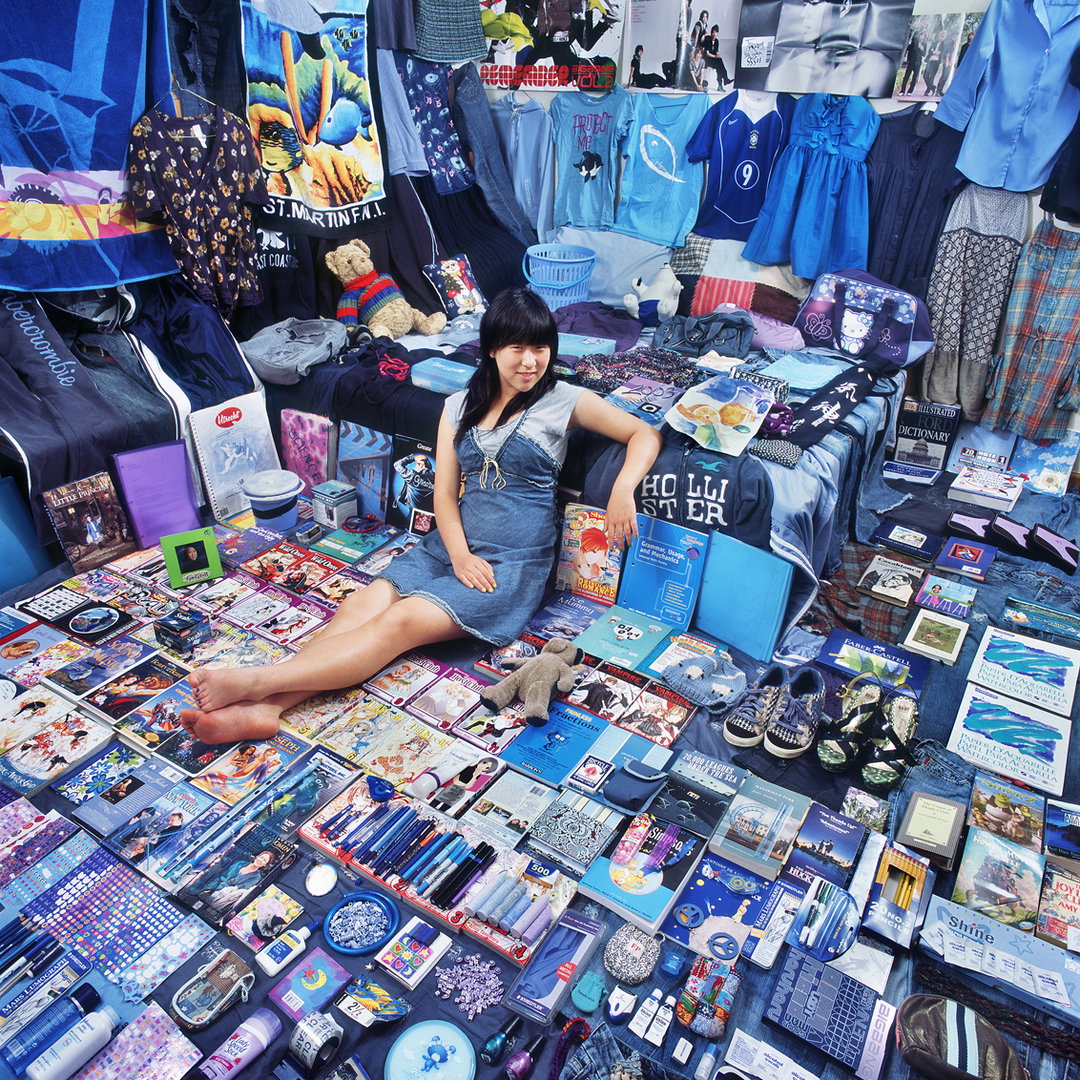
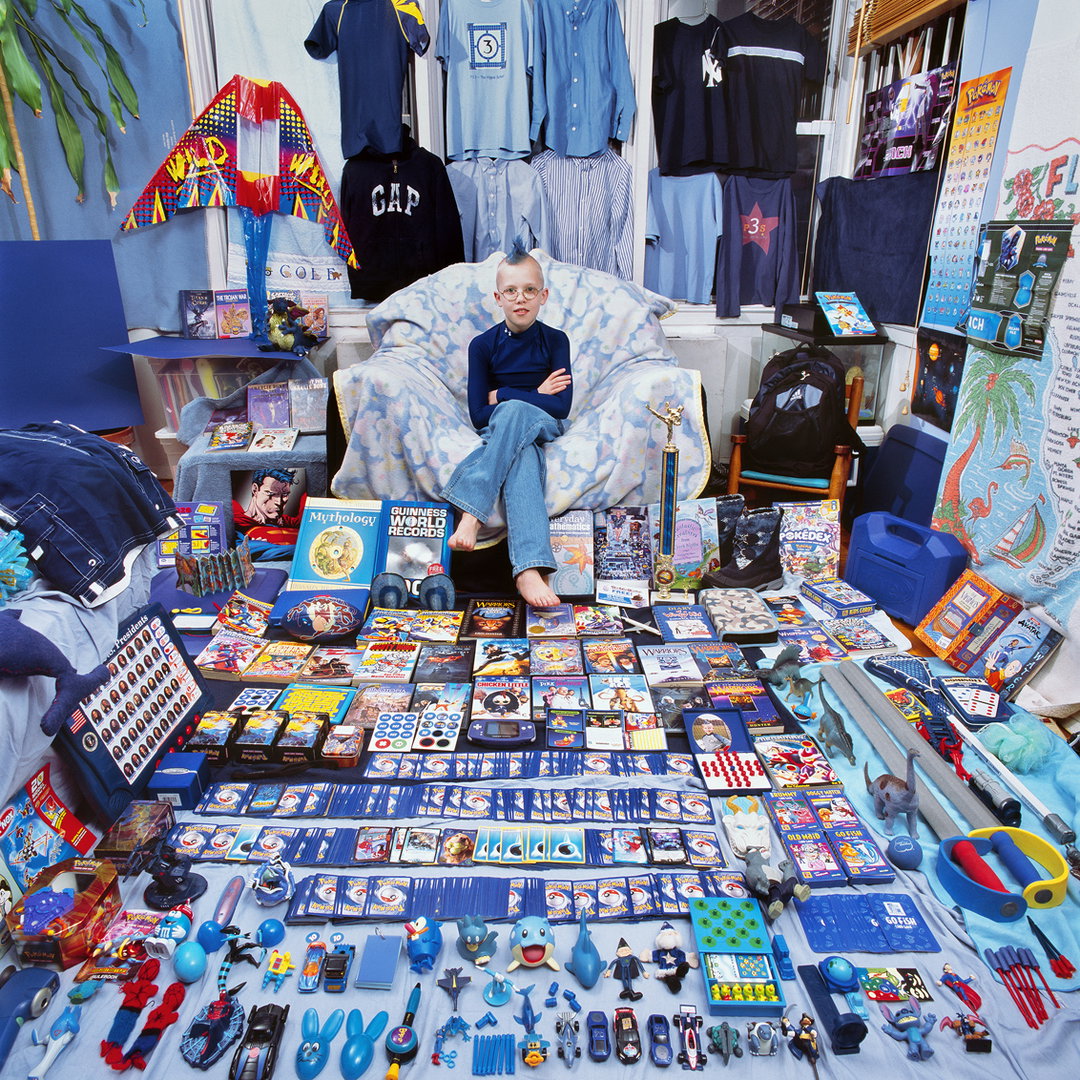
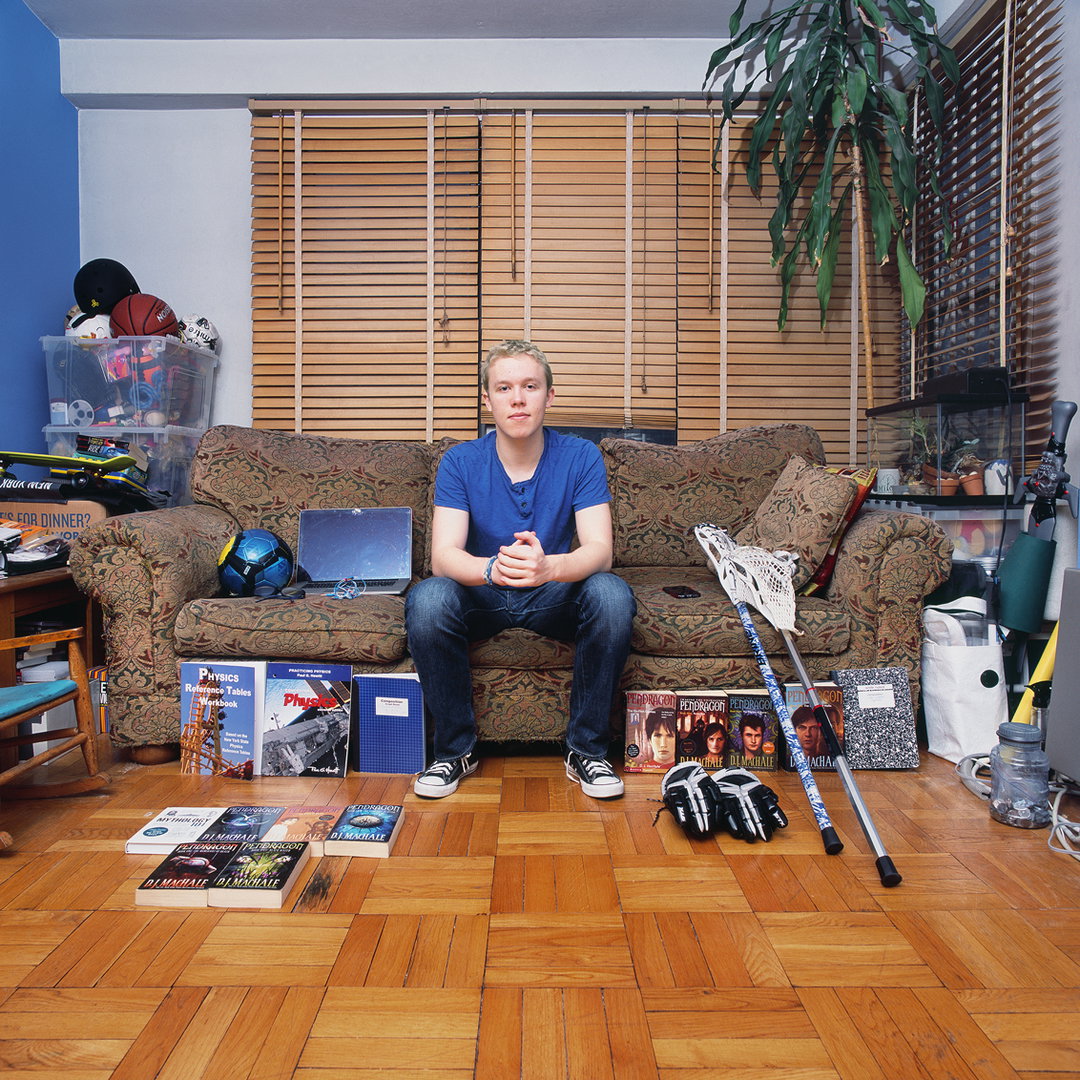
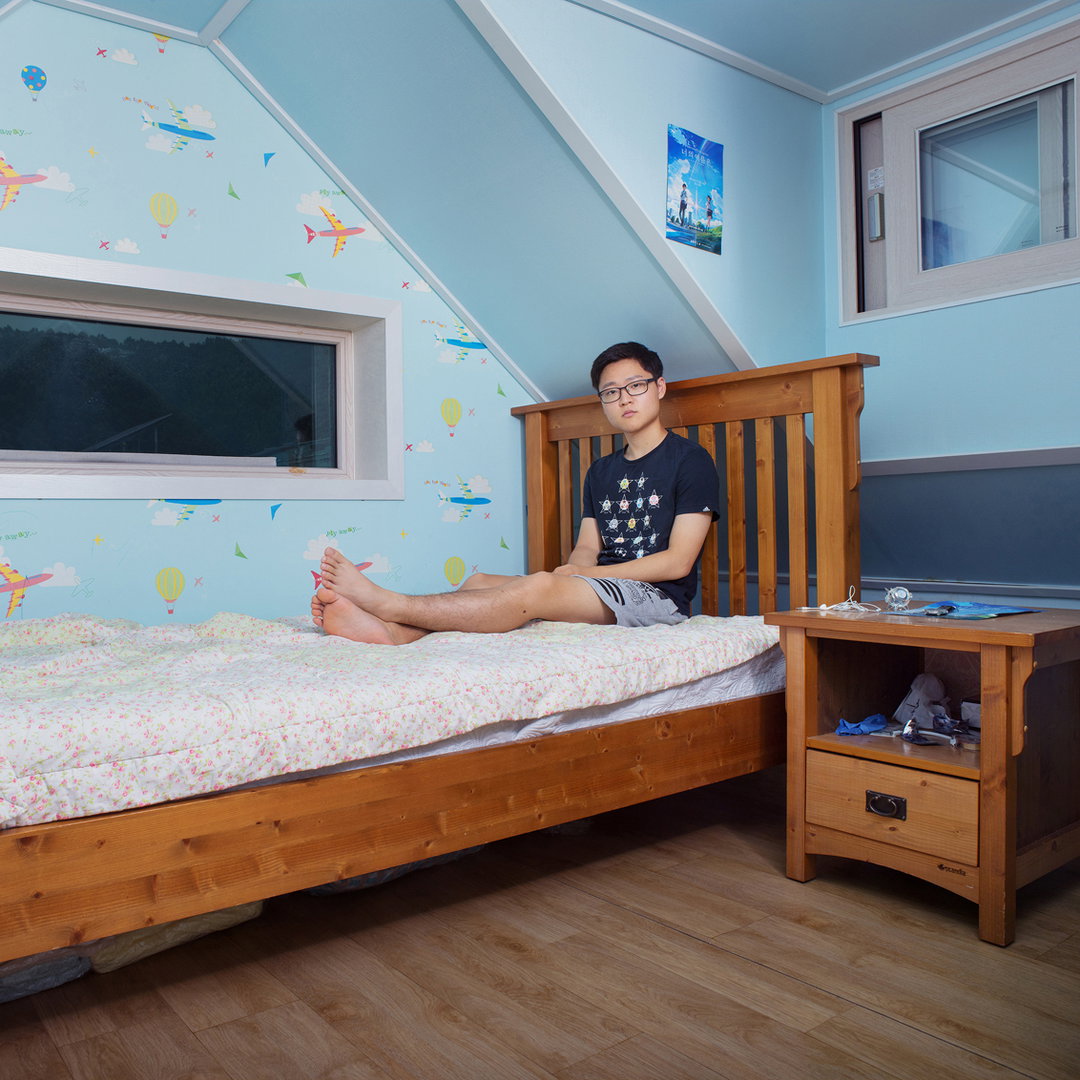
Earlier this year, the project was also turned into a long-overdue book of the same title by the German arts publishers Hatje Cantz. The book concisely tracks the 14-year evolution of the colour-based series so far. In its first iteration, the project established itself through the attention-grabbing photographs of children enveloped in their pink and blue paraphernalia. After four years, JeongMee revisited those children, documenting their changes in taste for the second chapter of the project. And after a further six years, she revisited them once again, photographing their awkward teen years and the start of adulthood, making up the project’s third chapter so far.
In essence, The Pink and Blue Project explores how gender identity is formed in part by the consumer goods that target girls and boys, not to mention their parents. The photographic thesis assesses how culturally learnt associations of pink and blue are instilled from an early age, but can also adapt and disappear with time.
JeongMee first developed a knack for documenting densely compacted scenes nearly 20 years ago. “I am fascinated by the accumulation of things,” explains the artist. Prior to The Pink and Blue Project, the artist’s work documented the possessions of a toy collector in one series, and shopkeepers with their neatly stacked shelves in another. These two series acted as a precursor for JeongMee’s magnum opus that is The Pink and Blue Project; through these two earlier works, she refined the necessary techniques to capture the minutiae within the crowded bedroom settings.
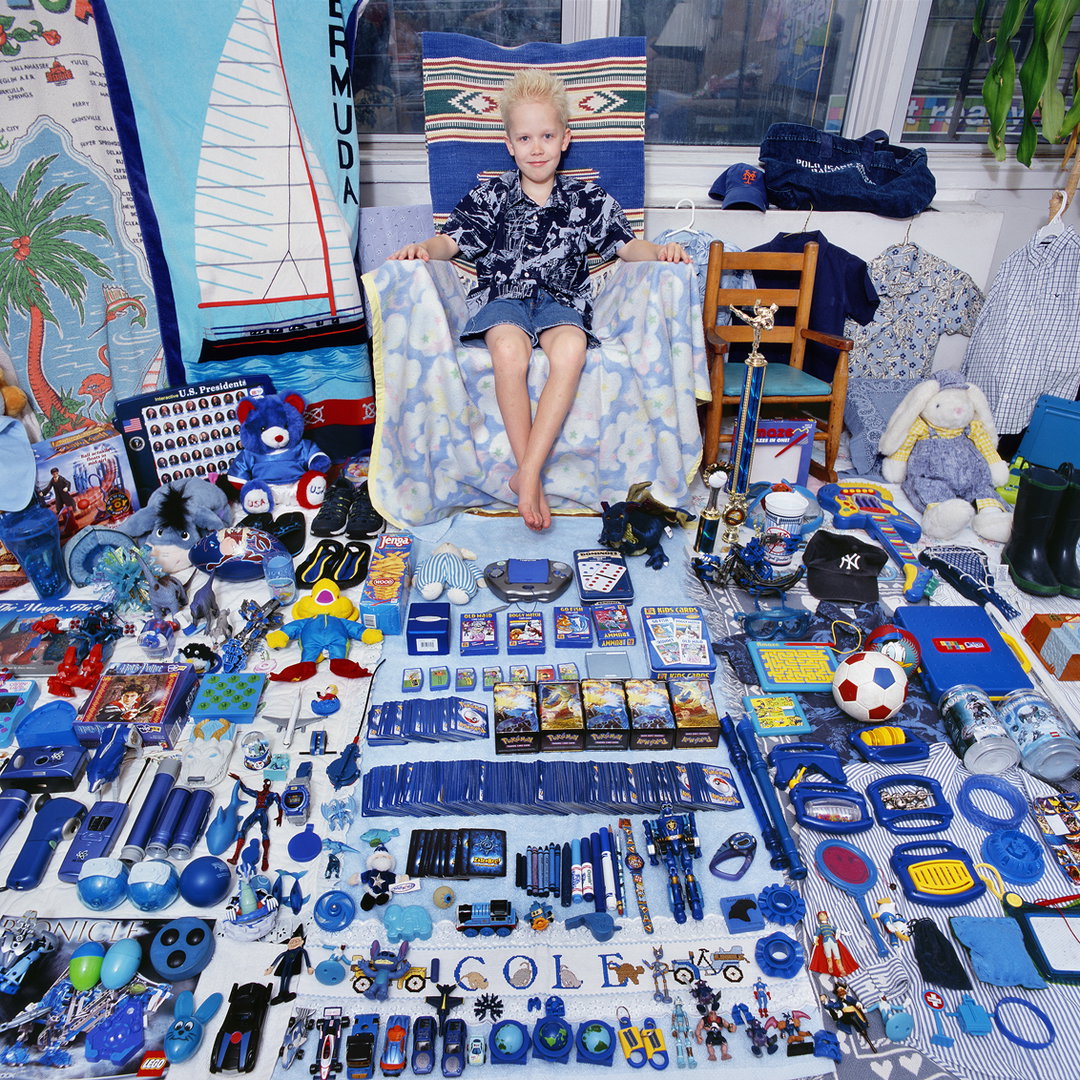
It takes four to eight hours for JeongMee to conduct a shoot. She carefully lays out all the children’s possessions, placing the smaller objects closer to the camera to capture as much detail as possible. Hanging clothes off the walls with scotch tape, the artist achieves what she calls “a hyper-realistic painterly quality”, utilising the smallest aperture (f-22) of her 6×6-format Hasselblad camera.
JeongMee Yoon: The Pink and Blue Project, courtesy of the artist
JeongMee Yoon: The Pink and Blue Project, courtesy of the artist
JeongMee Yoon: The Pink and Blue Project, courtesy of the artist
JeongMee Yoon: The Pink and Blue Project, courtesy of the artist
JeongMee Yoon: The Pink and Blue Project, courtesy of the artist
JeongMee Yoon: The Pink and Blue Project, courtesy of the artist
The camera’s square composition allows the series to “seem more crowded and spectacular,” says JeongMee. “Because children are not always able to sustain or hold the desired expressions and poses, I take several rolls of film at each shoot.” She uses diffused flash lighting to consistently capture each bedroom in a similar light, paying particular attention to her subject’s facial expression and pose to further enrich the uniform tone of the series. “I ask each model to sustain a blank, neutral expression to underline the ‘objectification’ of each child,” explains JeongMee. She suggests a variety of poses to each child that embody their individual character and play up to the “heightened difference in gender”. She subsequently chooses one photo that best encapsulates the child’s personality from around 60 to 90 proofs.
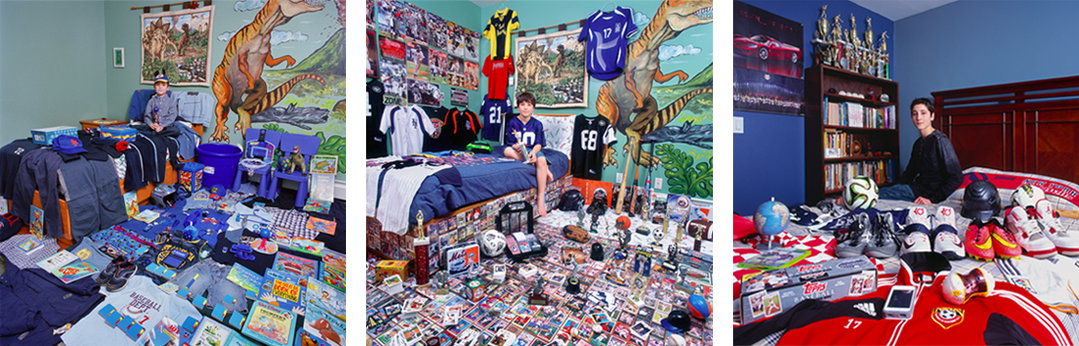
Back in 2005 when the project began, JeongMee noticed that regardless of ethnicity and cultural background, there were a lot of young girls who loved pink everything. The same went for young boys obsessed with all things blue. When her family lived in New York from 2004 to 2006, JeongMee “found that most little girls have the same tastes” and so she created a project that shifts back and forth from Korea to the US, demonstrating how children from radically different cultures are still subject to the same marketing messages. Colour is fundamentally drilled into us from a very young age. It forms a vital part of our understanding and as we grow up, we develop learnt associations of colours that later become instinctual thought, albeit dependent on our cultural paradigms.
JeongMee Yoon: The Pink and Blue Project, courtesy of the artist
JeongMee Yoon: The Pink and Blue Project, courtesy of the artist
JeongMee Yoon: The Pink and Blue Project, courtesy of the artist
JeongMee Yoon: The Pink and Blue Project, courtesy of the artist
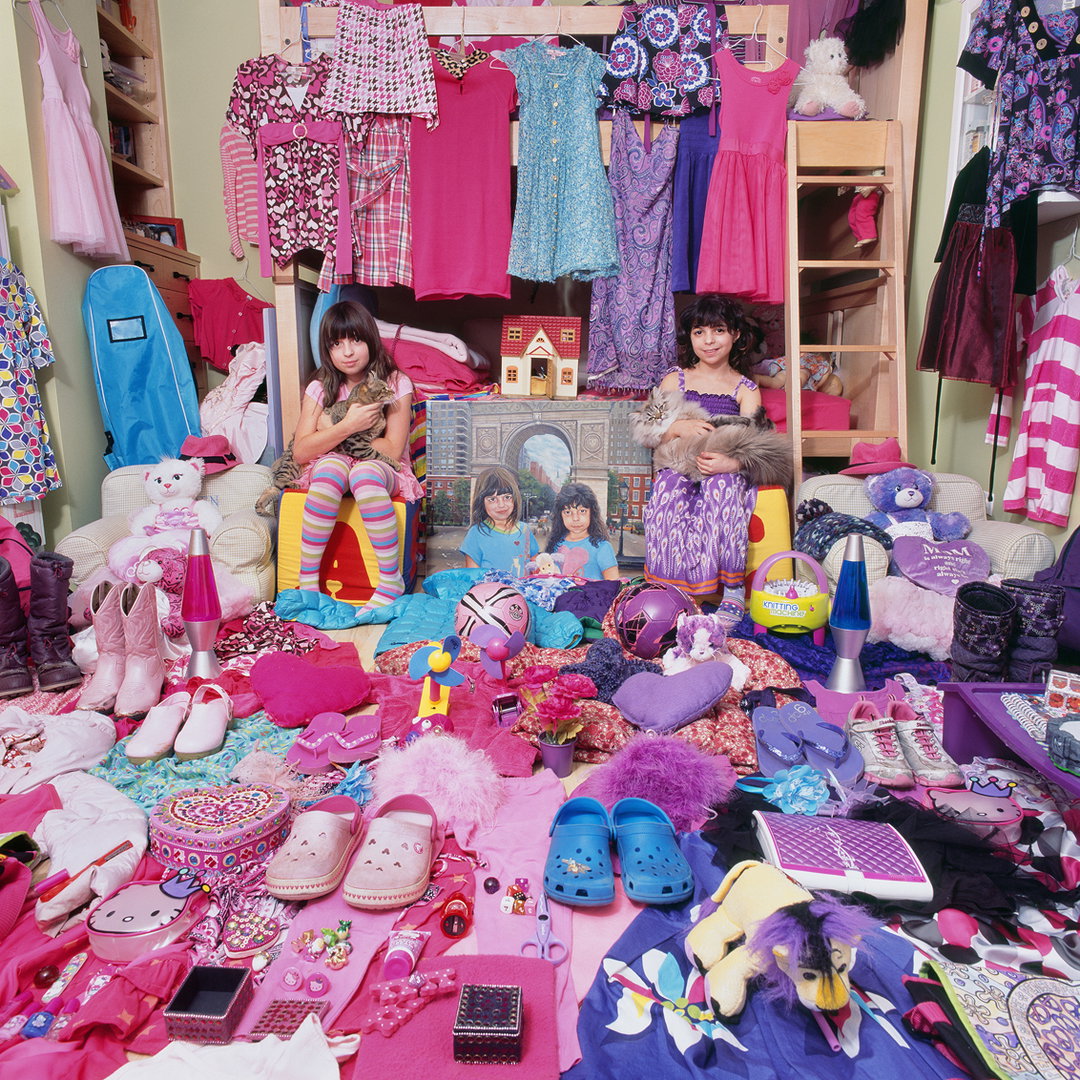
JeongMee Yoon: The Pink and Blue Project, courtesy of the artist
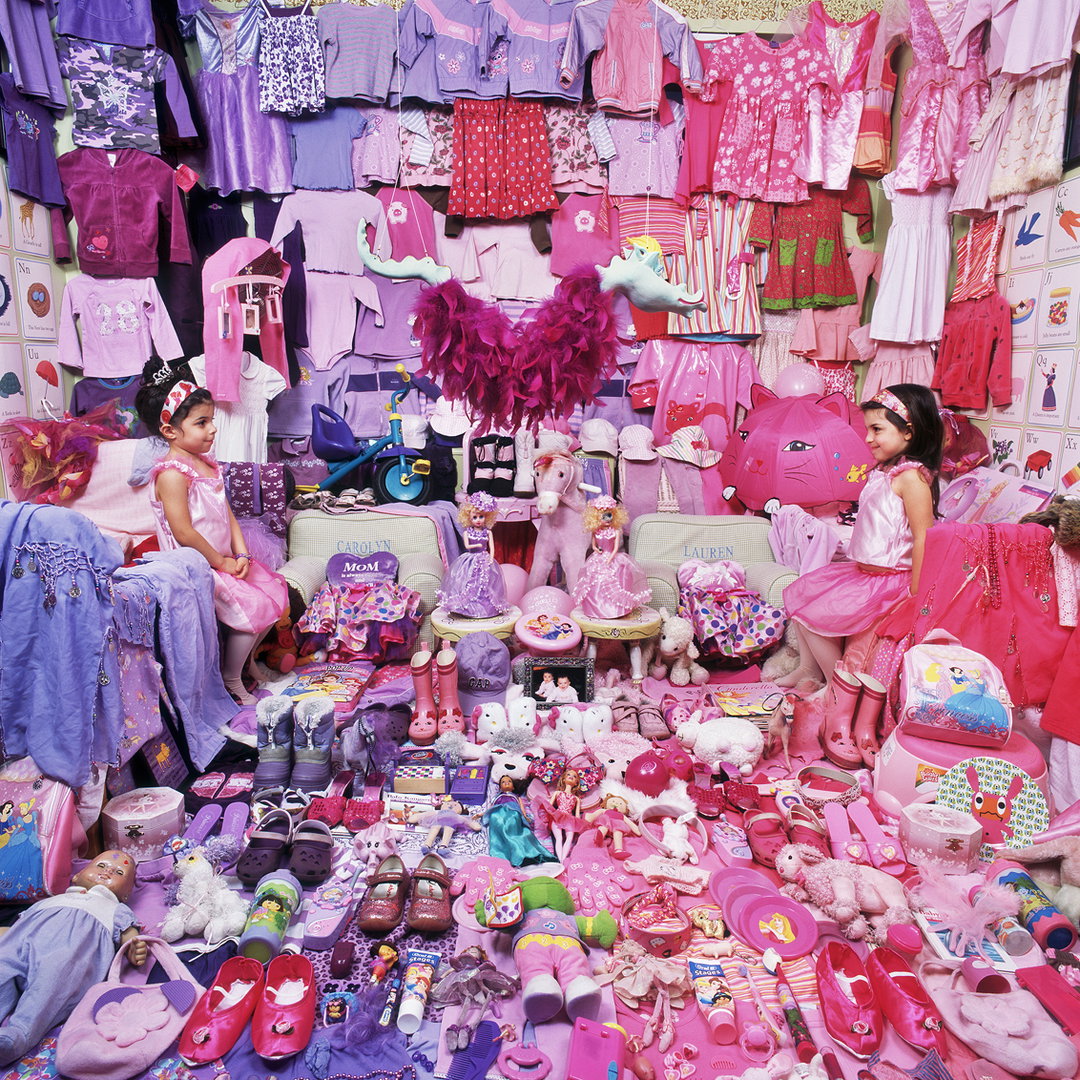
JeongMee Yoon: The Pink and Blue Project, courtesy of the artist
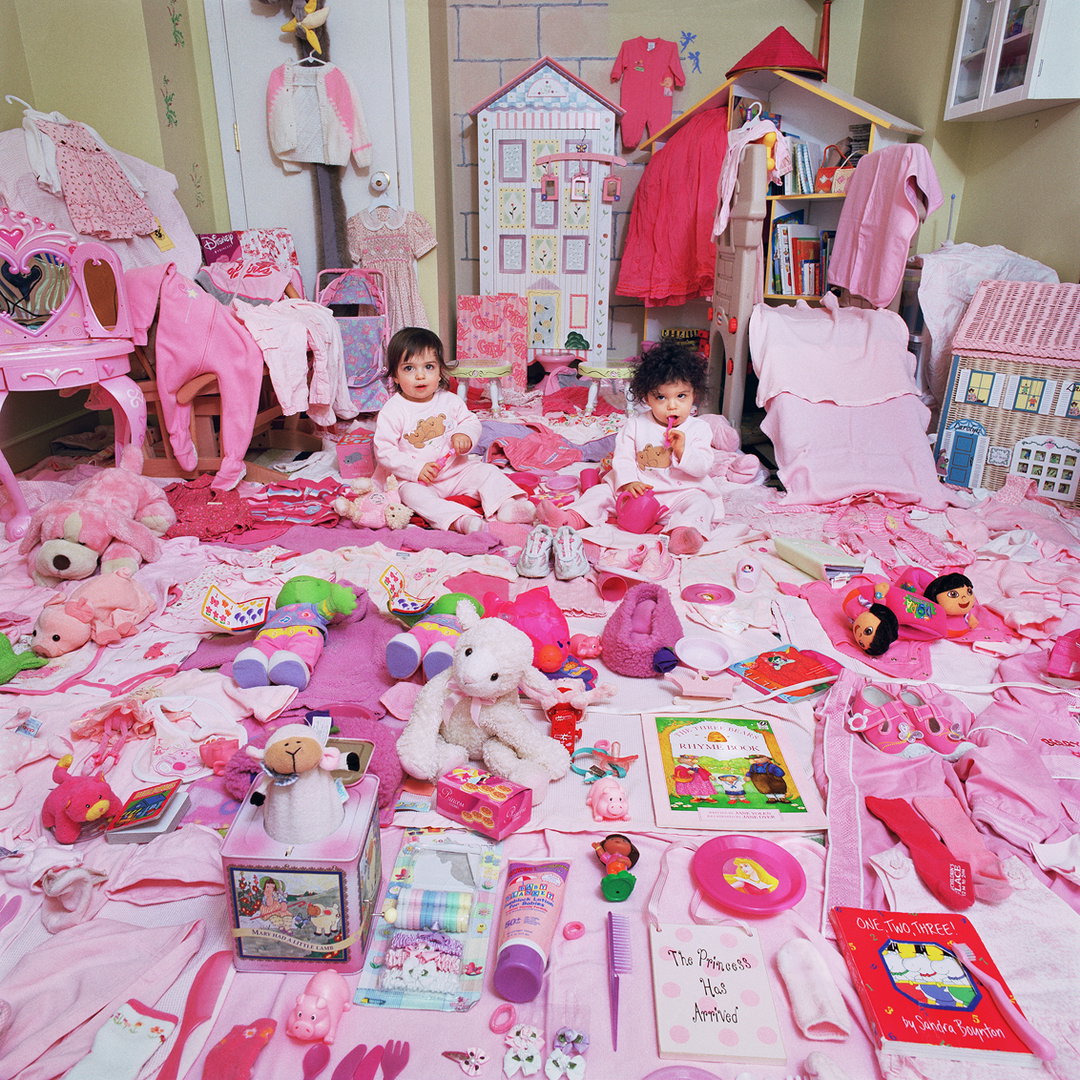
A colour’s semiotic is so strong it can inform our mood, trigger certain feelings, and determine whether we like something or not. Universally, pink has become synonymous with girlishness and “girls are trained subconsciously to wear the colour pink in order to look feminine,” says JeongMee. “Perhaps it is the influence of pervasive commercials aimed at little girls and their parents as seen through universally popular Barbie and Hello Kitty merchandise”, both of which are ubiquitous for their sweet “girly” associations.
“The saccharine, confectionary-pink objects that fill the images of girls and their accessories reveal a pervasive and culturally manipulated expression of femininity,” says JeongMee. While young girls are shaped into young women by the pink toys prescribed to them, cyclically, manufacturers play up to one-dimensional ideas of femininity to sell a product that, in turn, dictates cultural norms. In The Pink and Blue Project, JeongMee captures such snapshots, revealing poignant insights into the marketing of gendered toys at the time, with a number of girls photographed amidst a sea of pink belongings adorned with cute animals, Disney characters, flowers, hearts and so on. Comparatively, the boys’ possessions brim with all those stereotypically “boyish” associations like sports, machinery, trains and robots.
Not only does this difference in colour and association “affect thinking and behavioural patterns”; it also enforces the binary that girls and boys should act and perform in a certain manner. In the images, “the items are all their own,” adds JeongMee. “So this also works kind of like a documentary. Viewers can see society’s social and cultural trends through the items.”
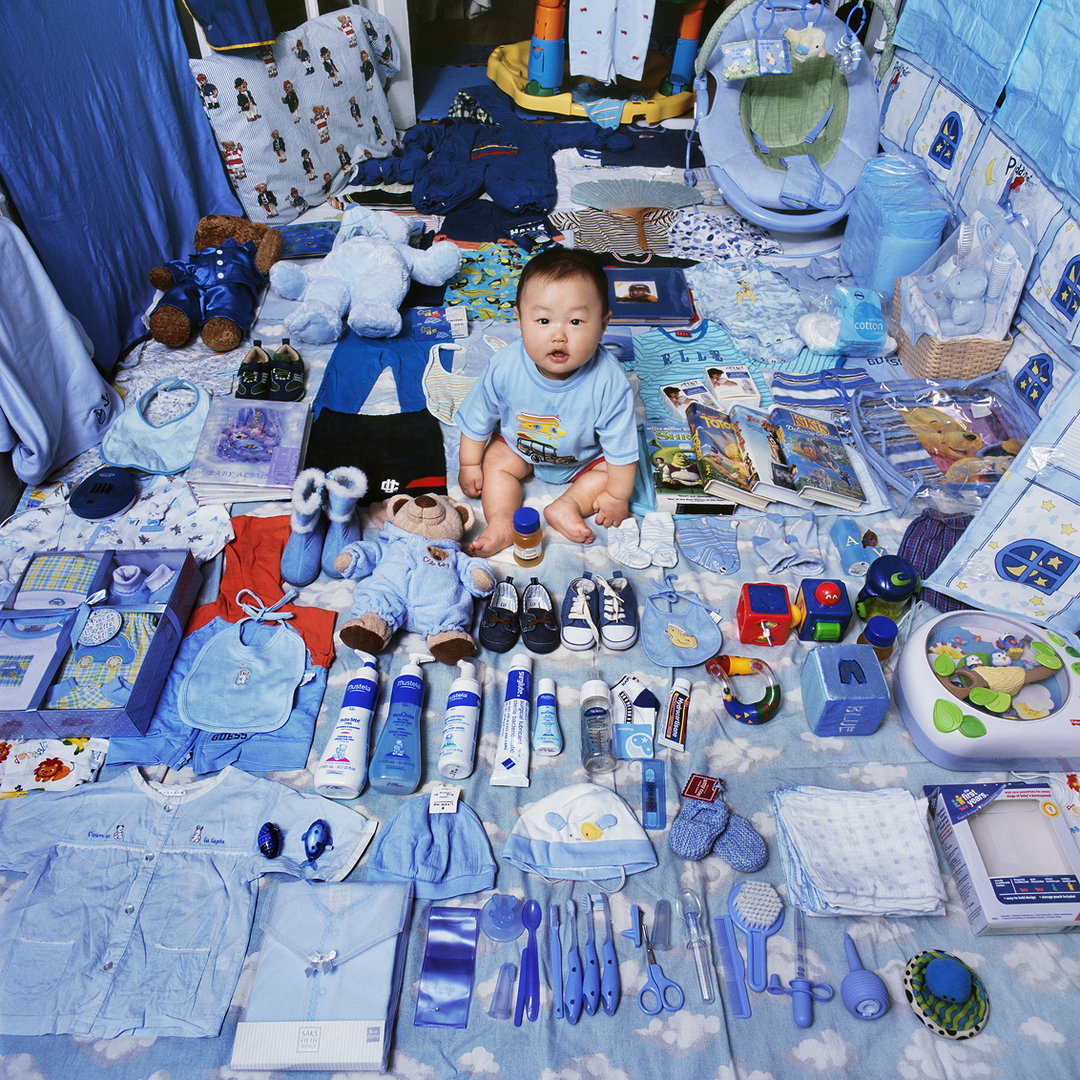
JeongMee Yoon: The Pink and Blue Project, courtesy of the artist
JeongMee Yoon: The Pink and Blue Project, courtesy of the artist
JeongMee Yoon: The Pink and Blue Project, courtesy of the artist
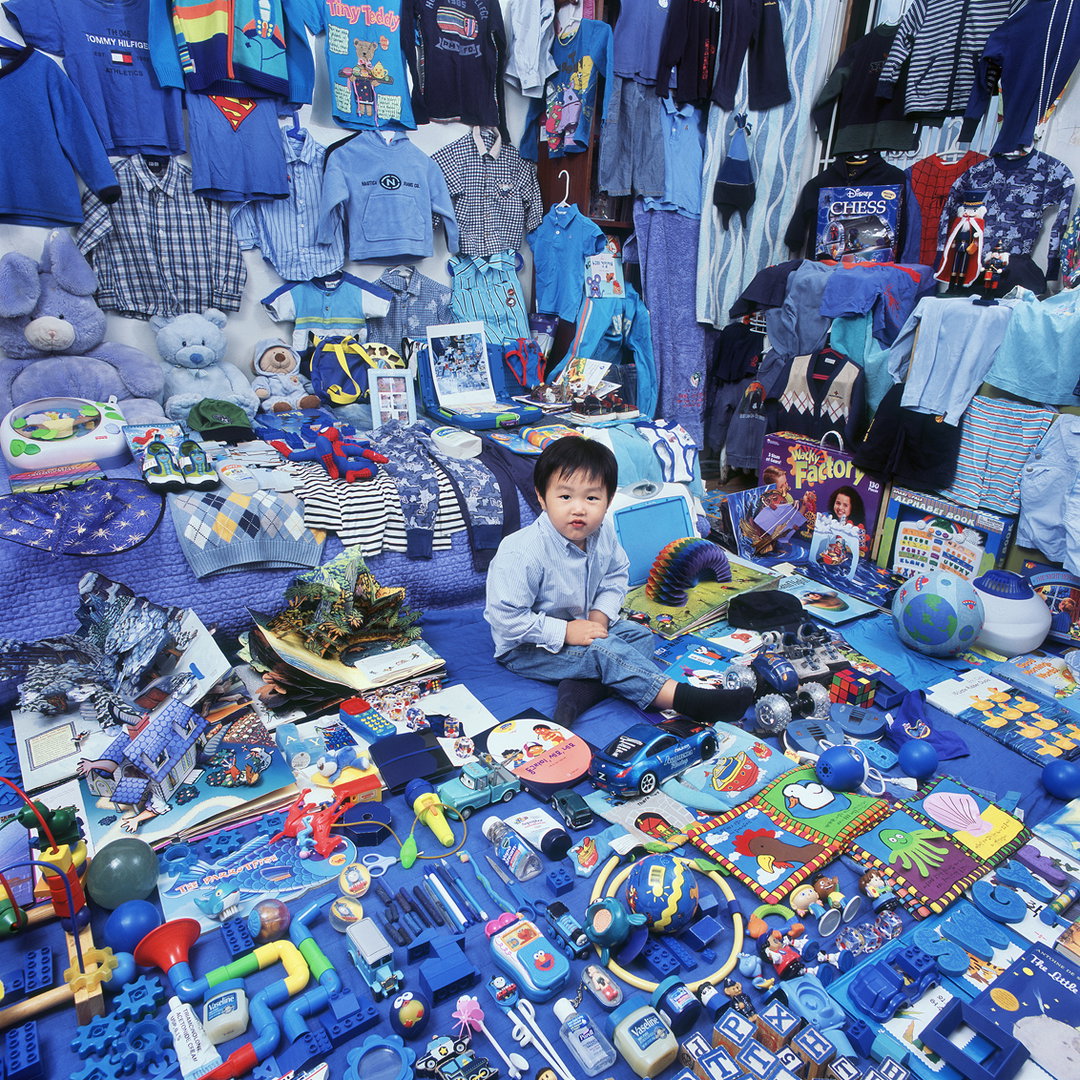
JeongMee Yoon: The Pink and Blue Project, courtesy of the artist
JeongMee Yoon: The Pink and Blue Project, courtesy of the artist
JeongMee Yoon: The Pink and Blue Project, courtesy of the artist
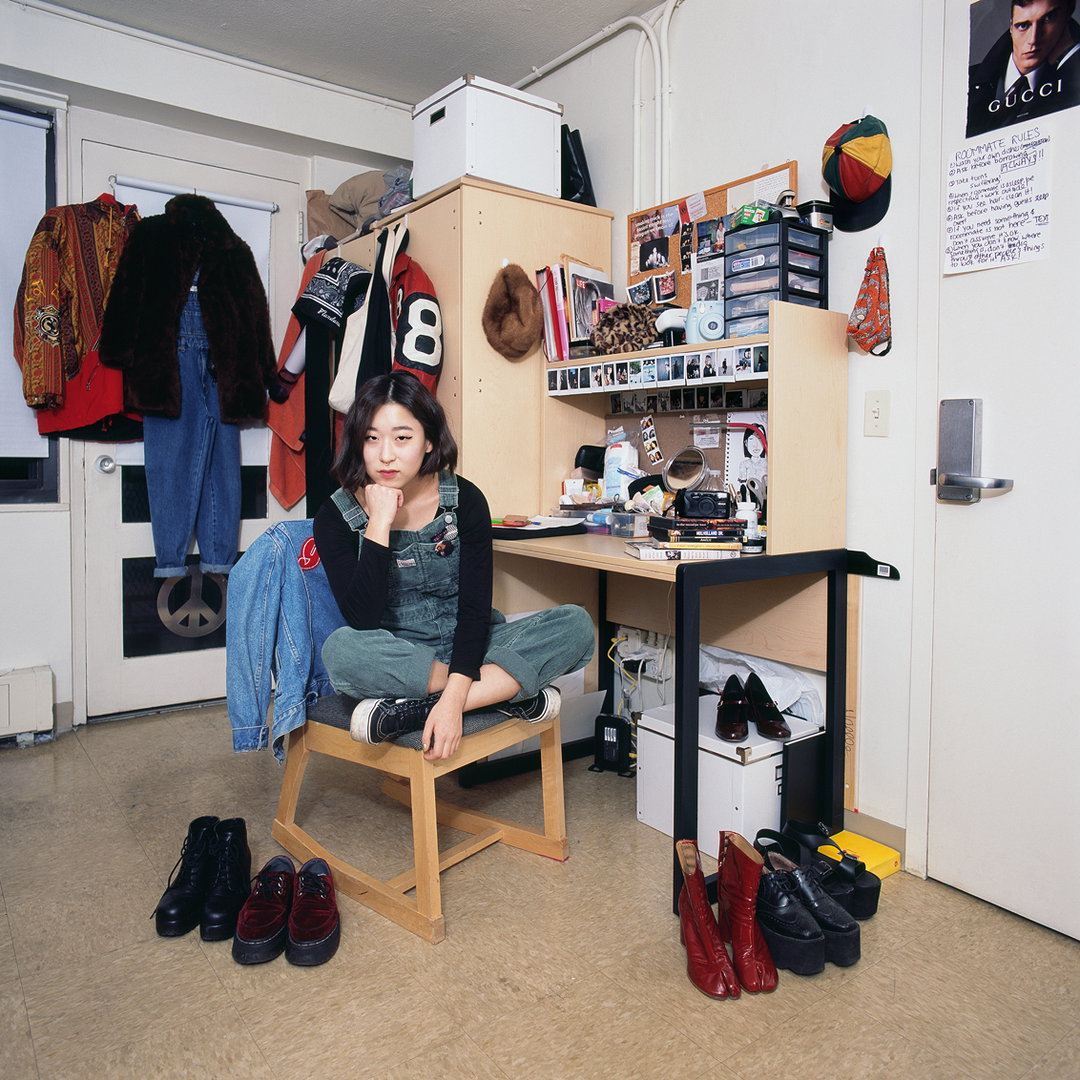
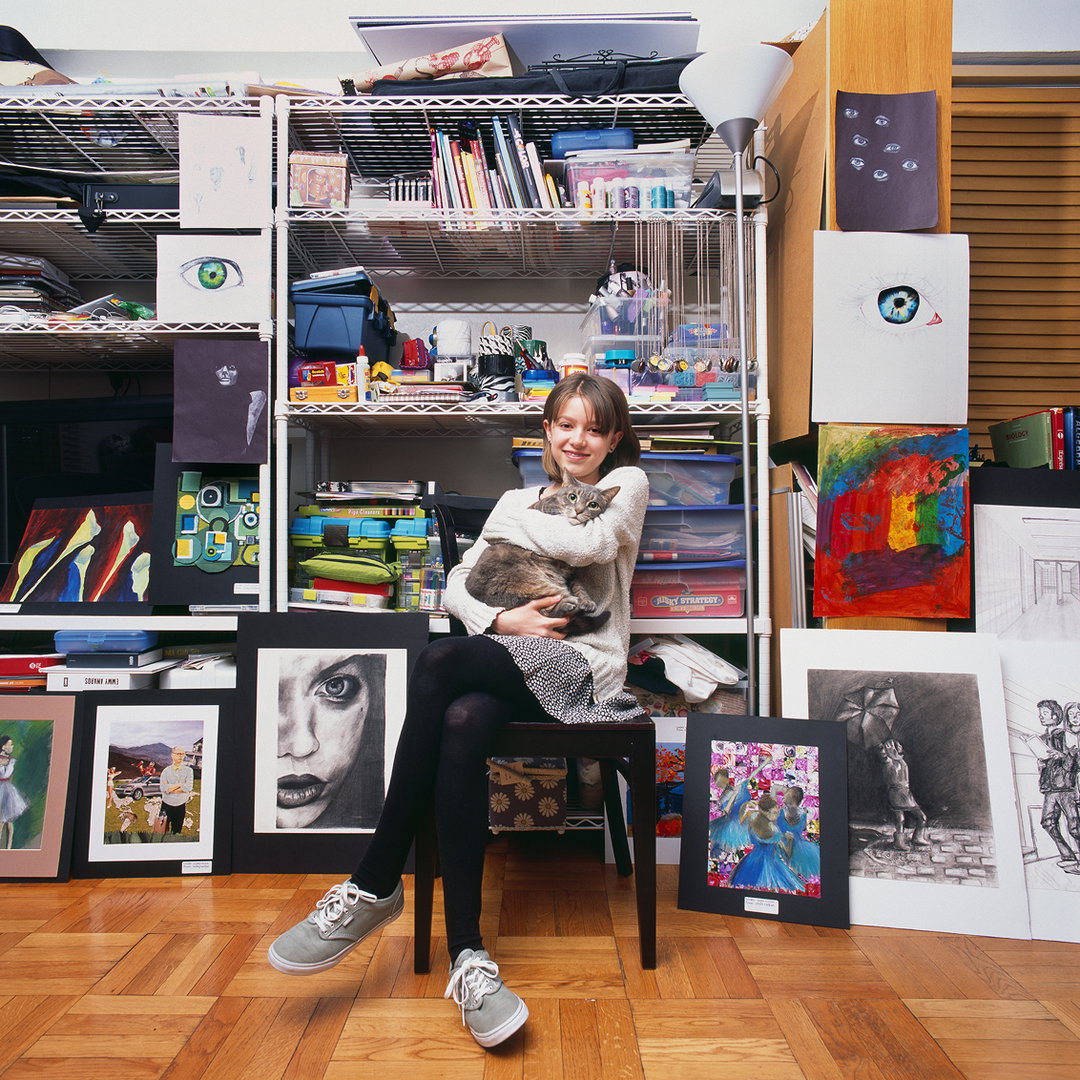
Since originally photographing many of the youngsters back in the early 2000s, the third and most recent chapter of The Pink and Blue Project revisits the subjects, who are now young adults. “Some of my older subjects remained steadfast in their preference for the same pink and blue objects,” says JeongMee. “Others changed colour preference or became ambivalent to colour identification. Some declined to pose for photos because they no longer felt comfortable in front of the camera.” Mostly The Pink and Blue Project III documents a group of young adults who have outgrown their childhood fascinations with pink and blue. “My new work examines my subjects more deeply, after the facade of colour fades away,” says the photographer.
In one image, JeongMee revisits Noelle, a freshman in New York. Despite the fact that she’s seemingly outgrown her pink obsession, the objects around her still manifest as representations of her identity. For JeongMee, it is a privilege to “view the natural changes in a person as they grow up”, seeing their favourite things change as they mature. With the artist hoping to photograph the subjects’ children for future chapters of The Pink and Blue Project, it’s clear the future of this endeavour holds infinite possibilities. (It also means that JeongMee will no longer have to advertise for models on the internet or hang around Walmart in the search for pink or blue-loving models.)
As time goes on and new iterations of the The Pink and Blue Project come into being, it is difficult to predict what we can expect from its future chapters. As some parts of society move towards gender fluidity, could our distinctions between pink and blue fade away along with the overarching binary of male and female?
JeongMee Yoon: The Pink and Blue Project, courtesy of the artist
JeongMee Yoon: The Pink and Blue Project, courtesy of the artist
JeongMee Yoon: The Pink and Blue Project, courtesy of the artist
JeongMee Yoon: The Pink and Blue Project, courtesy of the artist
JeongMee Yoon: The Pink and Blue Project, courtesy of the artist
JeongMee Yoon: The Pink and Blue Project, courtesy of the artist
“We can also see the different ways in which our society has developed,” says JeongMee, “like how flip-phone toys now resemble iPhones.” And as political movements also influence our relationships with colour, JeongMee’s work also offers an insight into colour psychology. Pointedly, in the latter half of the twentieth century in Korea, red was negatively associated with communism and was seldom seen on everyday clothing. However, the colour came back into favour during the 2002 World Cup, when the colour red was transformed from a taboo into a proud colour identifying the Asian games.
As well as continuing to work on The Pink and Blue Project, JeongMee is also pursuing a more personal project, centred on death. “My mother has been suffering from Parkinson’s disease for many years,” she explains. “She lives with a PEG tube in her stomach and can barely move.” Having witnessed many of what she describes as “horrible scenes”, JeongMee is presently interested in the prolongation of life and how our ever-extending lives in modern times are not necessarily a good thing. “It is still unclear how to proceed with the project,” says the photographer, but she hopes to express thoughts not only of living, “but how I will live, and also how I will die.”
Though this future direction seems like a pointed contrast to the visual energy of The Pink and Blue Project, both projects do in fact have their similarities. Part of JeongMee’s brilliance comes down to her ability to record passages of time through striking photography as seen in The Pink and Blue Project. Not only does she narrate social commentaries with a patient dedication to photography; her work fundamentally explores our innermost societal constraints and how we choose to live with them.
JeongMee Yoon: The Pink and Blue Project, courtesy of the artist
JeongMee Yoon: The Pink and Blue Project, courtesy of the artist
JeongMee Yoon: The Pink and Blue Project, courtesy of the artist
JeongMee Yoon: The Pink and Blue Project, courtesy of the artist
JeongMee Yoon: The Pink and Blue Project, courtesy of the artist
JeongMee Yoon: The Pink and Blue Project, courtesy of the artist
JeongMee Yoon: The Pink and Blue Project, courtesy of the artist
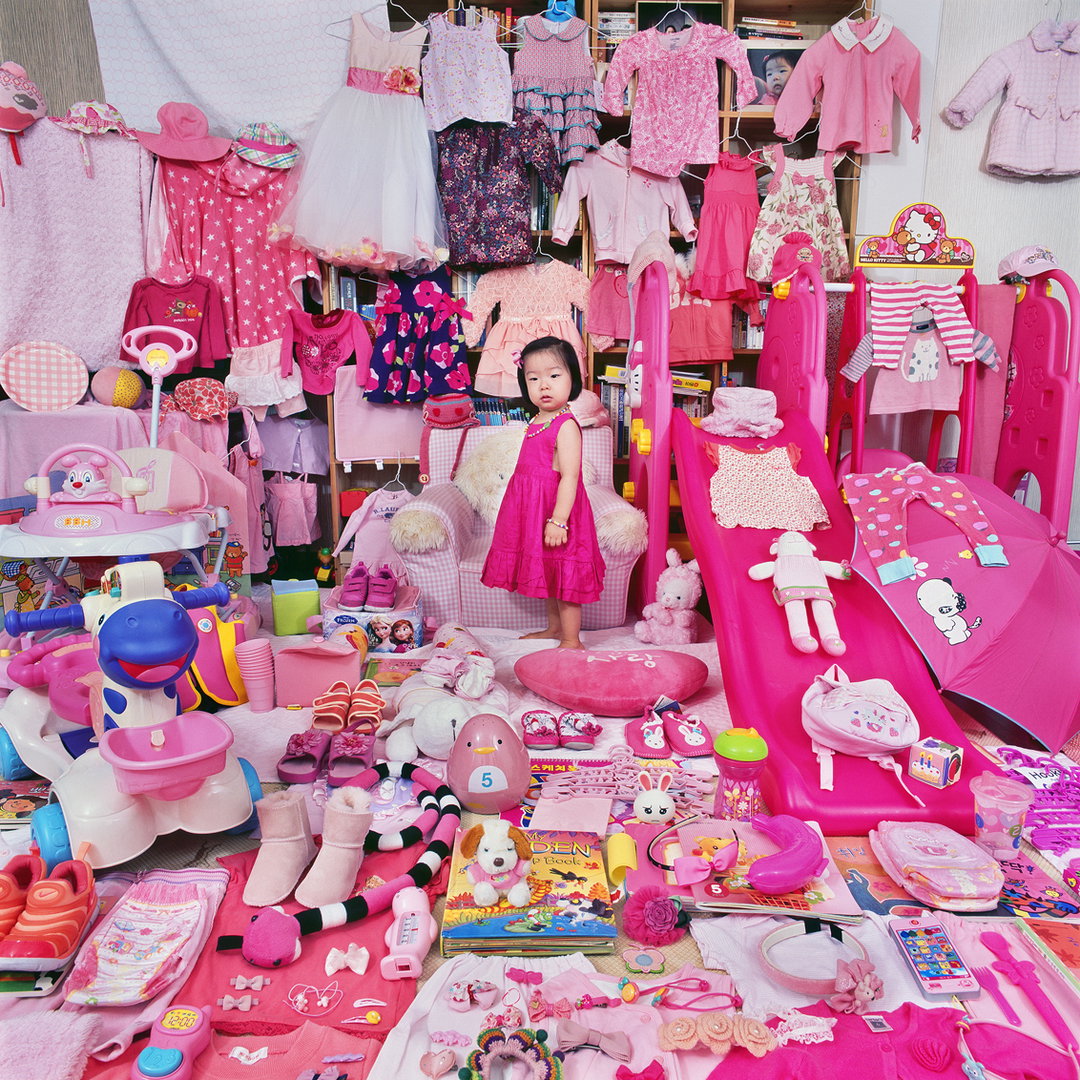
JeongMee Yoon: The Pink and Blue Project, courtesy of the artist
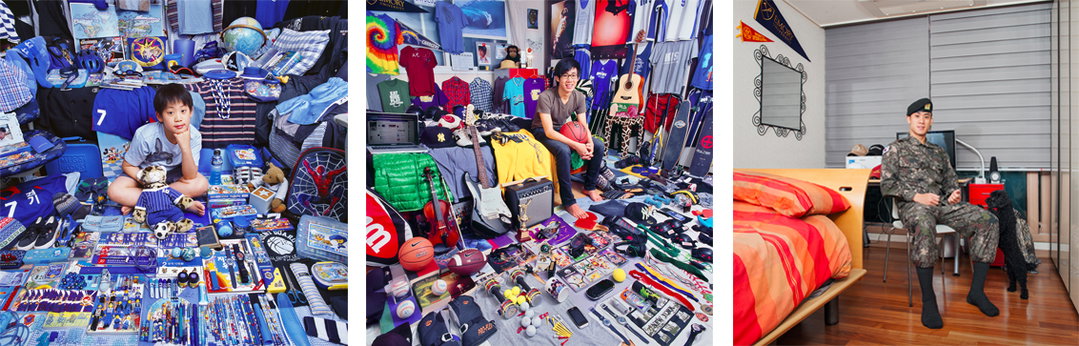
JeongMee Yoon: The Pink and Blue Project, courtesy of the artist
Share Article
Further Info
About the Author
—
Jynann joined It’s Nice That as an editorial assistant in August 2018 after graduating from The Glasgow School of Art’s Communication Design degree. In March 2019 she became a staff writer and in June 2021, she was made associate editor. She went freelance in 2022.