- Words
- Elizabeth Goodspeed
- Illustrations
- Darren Shaddick
- —
- Date
- 28 August 2025
- Tags
The Good, the Bad, and the Iffy: is there such a thing as an ethical designer?
Designers from Pentagram, Koto, Creech, and more talk candidly about the murky waters of client selection, the logistics and risks of rejecting work on moral grounds, and how to keep afloat without losing your soul in today’s design climate.
Share
Share
If you spend long enough working in design, you’ll eventually need to sell something you would never buy. Don’t get me wrong – most of what I’ve worked on has been for fields that feel easy, even inspiring, to get behind, like voting rights groups, non-alcoholic beverages, slow fashion, or plant-based proteins. Others are in a more philosophically neutral zone. Things that aren’t harmful, but not exactly world-changing either. Think: mattresses, laundry detergent, or socks (they’re organic cotton… but the packaging is still plastic).. . Occasionally though, I work in an industry that makes me feel a bit more itchy; spaces that make me think “maybe I could help change this from the inside” as much as “god, does the world really need more of this?” For me, this has included working on everything from pest control and med spas to private schools and at least two separate #girlboss empires.
Every designer has their own take on which fields are inspiring, and which are prickly – the businesses they’re proud to work for and the ones they’d rather not mention to anyone else. However, everyone has a different take on what kinds of work should go where. Here’s a short list of the industries that 70 different designers told me they would never, ever work for: gambling, crypto, NFTs, AI, Dutch companies, Israeli companies, Russian companies, Saudi Arabian companies, American companies, guns, the military, police, any political campaigns, right-wing political campaigns, porn, religion, Mormons, oil, gas, cigarettes, vapes, weed, anything Samsung, financial services, anything that tests on animals, fast fashion, weight loss, heavy chemicals, and surrogacy. Here’s a second, slightly shorter, list of industries people told me they’d love to work in: cigarettes, political campaigns, weed, crypto, AI, NFTs, and porn. One person’s obvious red flag is another person’s white whale.
But what factors drive a designer to pass on Smith & Wesson and happily take on the NYPD? The choices other designers make can seem baffling to me at times. A designer whose Instagram posts are almost all about environmentalism suddenly takes a job with an AI startup. A type foundry that used to talk a big game about supporting independent, sells to a group known for gutting the industry. An agency that touts its social-consciousness describes their new collaboration with Palantir as “imaginative”. Frankly, it all gives me flashbacks to middle school, when my favourite indie band licensed a song to Outback fucking Steakhouse (sellouts!!!) Of course, I’m well aware that not everyone gets to be choosy about the work they do. A junior on a visa, a creative director with a team to support, a designer with two kids and a mortgage, or anyone simply without final say at their job may not have the luxury of saying no. And even if they could, everything we make sits inside an economic system built on exploitation, which makes the idea of an “ethical” designer feel slippery, even naive. The world – design and otherwise – feels kind-of on fire, and it’s unclear whether we should just throw up our hands and get that bag (if we don’t, someone else will!) or try to stick to our guns while, yes, still making a living. What’s an ethical designer to do (and what does it mean to be an ethical designer in 2025, anyways)?
“It’s unclear whether we should just throw up our hands and get that bag (if we don’t, someone else will!) or try to stick to our guns while, yes, still making a living.”
Elizabeth Goodspeed
Some designers have started to try and square these contradictions by setting their own rules of engagement. Take New York design studio Creech, which has a policy against working with any alcohol brands. Its rationale is personal: several team members are sober or barely drink, and both founders come from families affected by alcohol abuse. “Why would we work on alcohol?” founder Griffin Creech says. “It isn’t something we want to help sell.” Having a client policy that's grounded in personal experience, instead of vague ideas of morality—or fear of judgment—gives the studio guidelines for what they won’t do, as well a room to decide how strictly to apply those guidelines. Their policy is firm enough to rule out alcohol companies but flexible enough to support hospitality clients that serve drinks. The team has also taken on cannabis work, since they have no negative history with the substance, nor do they view it as carrying the same potential societal harm. “There’s a medical use case for cannabis,” Griffin says. “There are people who use it for creativity.” To a straightedge punk or a Mormon, saying no to booze but yes to weed might seem confusing, even contradictory. But it works for Creech. After all, the line only has to make sense to the people drawing it.
In small studios or solo practices, decisions usually rest with one or just a few defined leaders. The calls on what to take on can be nuanced, but it’s clear who gets to make them. In bigger firms, where decisions are spread across partners and teams, those calls have to accommodate competing priorities and multiple points of view. That’s the reality at Pentagram, where each partner essentially runs their own business within a communal whole. Partner Eddie Opara describes this structure as “a box of chocolates”: the values of the partners may vary (cherry liquor filled vs. caramel nougat), even as the firm itself has to present itself as a unified moral front (the big heart-shaped box). Mostly, things work out. But objections do occur. “It’s very rare, but sometimes a partner may voice their concern about a project another partner is taking on,” Eddie tells me. “We don’t have a formal framework that really allows us to say, ‘no, you can’t take that client,’ to someone else – but nine times out of ten, if an issue is raised by one of us, the person considering the engagement will say, I totally get what you’re saying. I empathise with you, and I’m not going to take the project.” Still, there are times when objections don’t change anyone’s mind, or no one thinks to speak up until it’s too late. “Things fall through the gaps,” Eddie says. One of those gaps came up in our conversation: a consumer product strongly linked to various cancers and reproductive abnormalities that Pentagram worked on while I was a designer there. “Oh God, I was mortified that we took that one on,” Eddie says. “I do not know what that partner was thinking.” He admits, “a company of our size should probably have more conversations about ethics.”
Pentagram isn’t the only big studio to have a few dubious projects in its past. The global branding agency Koto has a history of working with sustainable and socially conscious companies, which is why it raised eyebrows – for me at least; others are effusive – when they took on a massive rebranding project for Amazon, whose dubious record on labour rights, union busting, environmental harm, and workplace safety is well-documented. When I asked founder James Greenfield about why they took on such a controversial client, he politely declined to comment on Amazon specifically, but was frank about the studio’s general approach to client selection: Koto turns downs lots of projects, including “obvious no-gos” like fur or gambling, but largely, he believes ethics are subjective. “Ultimately, it comes down to a human connection – excitement about the product or company, the potential of the work, and our own curiosity.” He says cigarettes, for instance, would be easy for him to turn down because he grew up in a non-smoking household in a country where smoking rates were in decline. “Every project comes with its own compromises,” he says. “I don’t judge anyone for what they choose to work on – or not work on. There’s nothing I regret or wouldn’t stand by.”
Both Eddie and James emphasise that their teams are free to refuse any work they object to. At Pentagram, “if someone comes to me and says, I don’t want to work on that, then they don’t have to,” Eddie tells me. James says the same of Koto: “Anyone at Koto can say no to working on a project if they want to. As a people-first company, we have to live up to that promise.” In practice, permission isn’t the same as access. I have a hard time imagining that many junior designers are going to have the chutzpah to speak up after the client’s signed and the team’s been assigned, especially if they’re new to the job and unsure how that refusal will be received. More to the point, even if one person says no, someone has to say yes – and not all designers can opt out without stalling the project or facing backlash. An official policy might protect employees on paper, but it doesn't neutralise the power dynamics that keep most people from weighing in. Seniors get to make the decisions, but juniors are the ones actually doing the morally dubious work, and dealing with the emotional reprecussions.
“Every project comes with its own compromises. I don’t judge anyone for what they choose to work on – or not work on. There’s nothing I regret or wouldn’t stand by.”
James Greenfield
The freedom to actually say no to projects is shaped by all sorts of factors. Cost of living is a big one: a designer in an expensive city who has to drive to work might weigh risk differently than someone living somewhere cheap with fabulous public transit. In the US, job security is also tied to health insurance, which means expressing concern or turning something down can very literally threaten your life—especially true for disabled designers or anyone with ongoing medical needs. For immigrants, visas often depend on staying employed full-time; depending on how your boss takes your objection to a project, being the squeaky wheel could threaten your right to stay in the country. Seniority changes the equation, too. Most portfolios don't show every project you've ever done. Some work gets left out for creative reasons (like when the client picked the brand direction you hated), but plenty disappears because you feel iffy about it in hindsight. Designers with longer careers can more easily bury work that felt like a moral compromise, while junior designers may need to show almost everything or risk seeming inexperienced. Saying yes in the moment can create its own problems further down the line: show morally grey work and you risk being pigeonholed by it—do one crypto logo and suddenly you’re the crypto guy. Then again, privilege cuts both ways. Creech partner Griffin points out that the ability to not think about the downstream effects of your work is its own kind of privilege. “When your life, especially as a kid, has been impacted by alcohol, taking a stand feels more like non-negotiable.”
Even for folks in charge, economics are a major driving force. Eddie Opara says that even as someone in a leadership role, the deciding factor in project selection isn’t usually a vague ethical duty, it’s payroll. “Sometimes, you take something on because someone needs to be paid,” he tells me. “And sometimes you don’t take it, and you lose someone because of it.” Compromise isn’t a failure of conviction so much as the cost of leadership. Turn down a controversial client you might have to let someone on your team go to make up for the lost income. Say yes, and might be making that same team design for a client they abhor. The livelihoods of the people you see every day will usually win out against an abstract future harm to complete strangers. Sometimes saying yes to something bad also means yes to something good later. Eddie describes big corporate clients as a kind of “Robin Hood mechanism”—the money from the big bads can be the very thing that lets a studio take on the little guys.
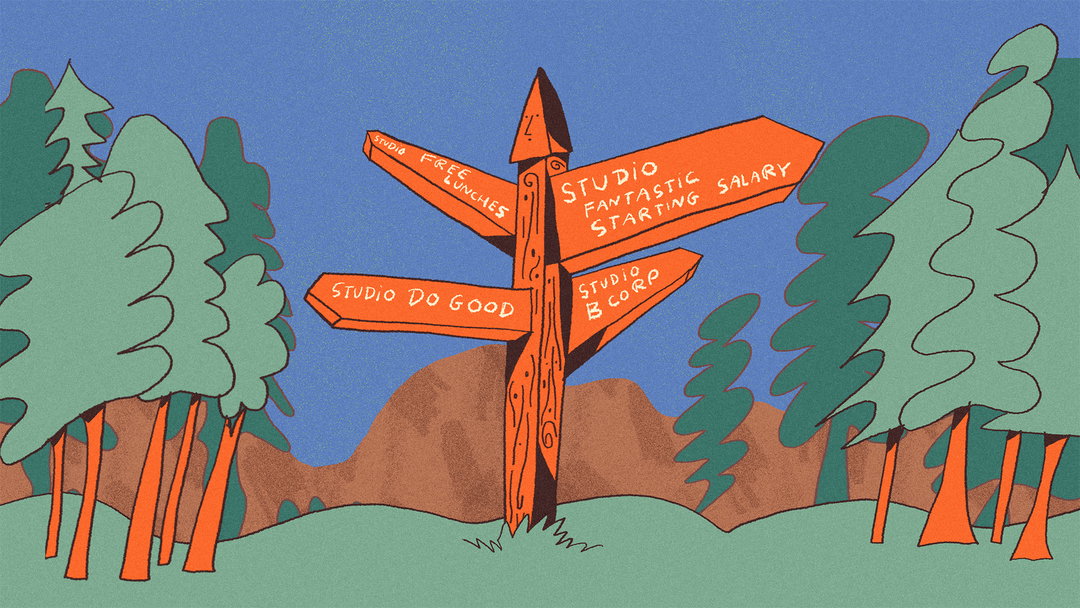
Client ethics get harder to navigate when there’s no direct relationship between the designer and the person ultimately using their work. For type designers, that’s almost always the case. Jesse Ragan, cofounder of XYZ Type, says custom projects are relatively straightforward to assess: if he doesn’t believe in a client, he can turn down the work. Retail fonts are trickier. Once they launch, a typeface is available to anyone with an internet connection—as likely to be used by an animal rights organization as a dogfighting ring. Fonts can be licensed anonymously or pulled from Adobe Fonts without the designer ever knowing. Jesse has seen his work turn up in porn, conservative Christian campaigns, and even materials for a far-right Texas militia. “It’s always a shock to see,” he says, especially given his left-leaning politics. He describes designing a typeface as a slow, intimate process – “every little letterform, it’s like, ‘hello, friend’, when I see them” – which makes it all the more jarring when it gets into the wrong hands. Rutherford Craze, founder of foundry Mass Driver, shares this feeling. “Some type designers feel that once they release a typeface, where it ends up is no longer their concern. I strongly disagree,” he says. “It’s not feasible to make a living and keep a spotless conscience, but it’s our responsibility to find the most equitable balance we can, whether that’s through [dis]incentivising certain usage, or turning down work for clients we disagree with.”
For Jesse and Rutherford, the EULA – the end-user license agreement that governs who can use a typeface, and for what – is one of the few ways to set ethical limits. Rutherford's restrictions are twofold. The first covers violence and hate speech: hard to actually police, but worth stating outright. “The point is more that they’re a statement of the foundry’s values,” he tells me, “and an attempt to discourage any potential customer who would feel threatened by them.” The second – politics, religion, crypto – is more focused on risk management. He’s approved most requests in these areas but wants to retain the option to say no when it matters to him. Even so, surprises happen. “Often font licensing is purchased before any public info is known about a brand, which is where I’ve most often been caught out in the past, and it doesn’t feel good,” Rutherford wrote. “I can’t revoke a legitimate license, and I think that’s how it should be, but it does mean I have to learn from mistakes rather than being able to fix them – changing the EULA over time, or being a little more generous with licenses for things I support.” Jesse Ragan is more cautious about what EULAs can realistically achieve, but still sees them as worthwhile. “Use of the fonts in any violent, hateful, or discriminatory context” sounds clear on paper, he explains, but gets cloudy fast. “How do we define hate and discrimination?” he says. Jesse is skeptical of blanket rules that could backfire, especially around sensitive topics like religion. Still, the EULA serves a purpose. “Letting your value system creep into every aspect of your work isn’t bad,” he says. “Virtue signaling gets a bad rap, but I think of it more like a declaration of intent. It tells the people you don’t want to work with to stay away.”
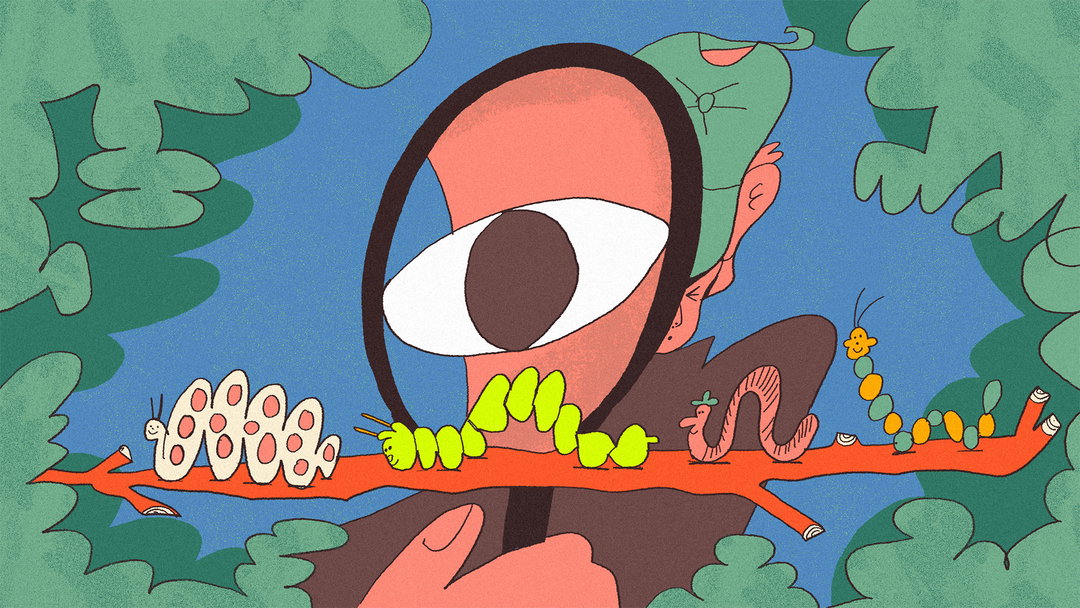
Sometimes ethics are less about what's sold than how something operates When it comes to UX design, the job of a designer is very explicitly to direct attention and reduce the chance that someone clicks on the thing they aren’t supposed to. Sometimes those nudges can be helpful, like a home screen that surfaces a reservation or a column layout that makes pricing tiers more legible. But as anyone who’s tried to cancel a software subscription knows, they can also be used for more nefarious purposes. Obscuring renewal terms is a common tactic, as is “Privacy Zuckering” (I’m sure you can guess the origin of this term), which steers users to overshare by burying or delaying privacy opt-outs. These misdirections are known as “dark patterns” – a term coined by Dr. Harry Brignull in 2010, when UX still prioritised accessibility and care for the user. Megumi Tanaka, a UX designer and educator, tells me: “We were kind of inventing the field from scratch then, so people just assumed that you had to think about the person on the other end.” In that context, dark patterns were outliers that broke with a shared understanding of what UX was supposed to be (the clue’s in the name, user experience).
As smartphones and mobile internet got better, and as people became more familiar with standard interface conventions, designers no longer needed to make everything quite so explicit or obvious. “It used to be easier to convince executives that empathy was simply what it meant to design for mobile,” Megumi says. Unfortunately, once people knew how to build accessible, user-friendly apps, they also knew they didn’t have to. Usability and manipulation can go hand in hand – an interface that works flawlessly might still be deceiving you. That shift made space for design logic that treats friction as a strategic tool. Empathy started to sound gullible (see also: the death of Google’s “don’t be evil” policy). “Everyone just kind of abandoned the empathy thing,” Megumi remembers. “It’s taxing to be the person who’s always like, ‘Hey guys, we gotta do what’s good for the user.’” Now, they say, “You’re not just being bad by accident, you’re being bad on purpose. It’s kind of like being a con artist.” Dark patterns weren’t notable anymore, they’re just regular degular digital design.
“Everyone just kind of abandoned the empathy thing. It’s taxing to be the person who’s always like, ‘Hey guys, we gotta do what’s good for the user.’”
Megumi Tanaka
Despite usually trying to advocate for the little guy, Megumi has past career moments that weigh on them ethically. At one of their first jobs, a beauty startup, they were tasked with rapidly growing the user base. Their solution? Look at clients in a user’s account, create temporary accounts for those clients without consent, then hijack a transactional SMS to ask them to “confirm” their account by clicking a link. It worked. The company got hundreds of thousands of users “basically overnight”. “Everyone clapped for me,” they say. “It even contributed to a Series B.” Yet, no one, Megumi included, saw it as a violation at the time – it was just smart growth. In retrospect, Megumi sees it clearly as a dark pattern. “I wouldn’t have wanted someone to do that to me,” they say.
Megumi still tries to be careful about the work they take on, but those decisions rarely feel clean. They’ll vet companies on Crunchbase to avoid places with shady funding, but also think the investors matter less than the CEO: “You have to evaluate the spine of the founder – how willing are they to stand up for what's right?” Crypto is a maybe – “but it feels more like selling out than AI” – and gambling is off the table entirely (too exploitative). They wouldn’t take a lead role at a company like Wix, citing its base in Israel. But other lines are blurrier. “Honestly, I’m in my get-your-bag era,” they joked. “It’s pretty hard to feel bad about stuff in tech, because even the best thing is still a little bad.”
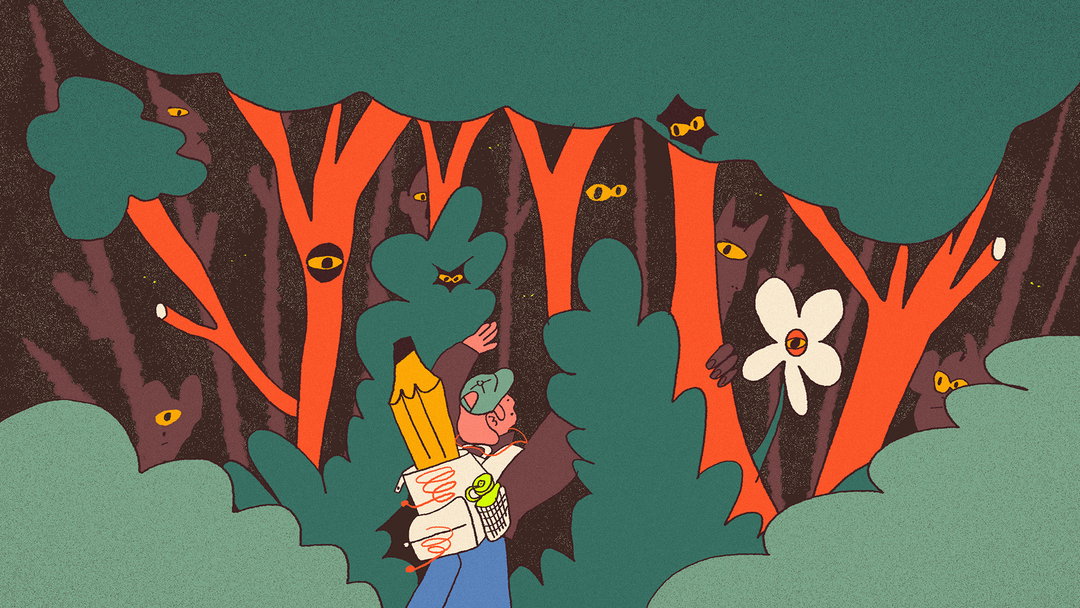
There’s obviously no such thing as a perfect project tied up in a neat ethical bow. In real life, the only people with a “perfect” ethical record would be the ones who never design anything at all. 2010s sitcom The Good Place built an entire punchline around this: no one “gets into heaven” anymore, not because people have gotten more evil, but because every modern choice is tangled in complex ideological knots. Design is no different. You can probably guess what I’m going to say next, so you might as well say it with me: there! is! no! ethical! consumption! under! capitalism! This phrase, which originated in leftist theory, acknowledges the fact that every product is made within an economic system built on exploitation, since making a profit requires paying workers less than the value they create. By force, almost all goods and services end up entangled with overlapping harms like environmental damage or labor violations. Some products carry more harm than others, but none are untouched. Even buying a tomato can connect you to a litany of issues, from low-wage farm work to pesticide runoff and monopolised agriculture. In design, even the fonts we license are often owned by venture-backed companies that treat design as an line item. The merch we design is sewn by people earning far below a living wage, and the packaging we design – yes, even the compostable kind! – ends up in a landfill.
That said (with all due respect to my op @ethicaldesign69), I think people often twist “no ethical consumption under capitalism” into a free pass for moral relativism; the idea that if the whole system’s broken, then nothing is off-limits. This becomes an easy excuse for never drawing a line at all: if everything depends on “context,” there's always a reason to say yes. But it doesn't take reading Das Kapital to comprehend that designing for a local bookstore and designing for an oil company aren’t equally compromised just because both exist in a capitalism society. Enough designers turning down fossil fuels, arms manufacturers, or tobacco won't make those industries go away, but it can slow their harm and deny them the professional legitimacy that design work confers.
“I think people often twist ‘no ethical consumption under capitalism’ into a free pass for moral relativism; the idea that if the whole system’s broken, then nothing is off-limits.”
Elizabeth Goodspeed
Whether we want to hear it or not, some things simply do cause harm. This is where I part ways with James Greenfield of Koto’s cigarette example – his point was that it’s easier to turn down cigarettes if you don’t smoke or come from a non-smoking culture. My point is that it doesn’t really matter. Cigarettes cause cancer. This is true whether you grew up around them, whether your country treats smoking as normal, or whether you smoke a pack a day. The same goes for design clients. A company’s labour violations or environmental damage don’t go away just because your personal context makes it harder to say no to working for them. Ultimately, we know why people take this work. It’s not complicated! It’s money and prestige! This isn’t inherently shameful—money pays staff, and prestige helps a studio get more work—but we shouldn’t pretend there’s some secret third reason why people are taking on work for what are very clearly dubious industries.
Even if you’re willing to swallow your beliefs for a paycheck, it might backfire. Design is a job that rewards empathy and immersion; it asks you to make your client’s goals your own. That’s hard to do if you despise everything they stand for. As Griffin Creech puts it, “I think it’s rare that someone does good work about something they loathe spending time on.” Fully inhabiting a perspective that’s radically different from your own is difficult, if not impossible. There’s only so much compartmentalising you can do before the work starts to be affected.
“I think it’s rare that someone does good work about something they loathe spending time on.”
Griffin Creech
Rather than limit work, setting boundaries can open new doors; saying no can signal what you’re saying yes to. Creech’s alcohol policy has drawn clients in the wellness space, many of whom have their own reasons for steering clear of booze (even if they’re different ones), and led to more projectsin that field. “That’s not why we did it,” Griffin says, “but it’s nice they’ve noticed and called it out. Because it matters to us.” Pentagram partner Eddie Opara, meanwhile, has begun using the United Nations’ Sustainable Development Goals – a set of 17 global objectives that include things like climate action, gender equality, and responsible consumption – as a kind of moral compass for client dilemmas. “It helps with some form of grounding,” he says. Like Creech, he emphasised that values-driven work often resonates with clients: “Clients are coming in and saying, I see what you’re doing. I feel a kinship here.” Sometimes the choice to say no can be just as visible as the work you do take on. Andy Khatouli, a creative director with past stints at JKR, Wolff Ollins, and Ragged Edge, recently posted on Linkedin about turning down a $250k pitch because the brand was on the current BDS Boycott list of businesses connected to the ongoing genocide in Gaza: “Fun brief. Really confident we would have got it – but the creative industry needs to make a better stand. Do your research. Say no. Keep brands accountable. Boycott if you need. Challenge your leaders. Life is more precious than money.”
It’s naive to think we can be morally “pure” all the time in this industry. As one designer joked to me, “only the unemployed are ethical”. But that doesn’t mean you have to shrug and let the current take you. Try to notice what work makes you feel proud, and what makes you cringe. You won’t always get to say no, but at least you’ll know when you’re making a trade-off instead of pretending it doesn’t matter to you. Maybe it’s as simple as deciding you’re ok with doing a social campaign for a company you dislike, but would never take on their rebrand. Maybe it’s no to beef and plastic but yes to bacon and glitter. Deciding your ideal boundaries can help you to work toward them, and feel less bad when you don’t get there. At the very least, it’ll keep you honest. Design has power, even if it’s smaller than we sometimes like to believe. So it’s worth asking: who gets to benefit from that power? Do you want to spend your career propping up companies you’d drag in a DM? Do you want to work somewhere that quietly signs off on harm because it’s profitable? Just because we can’t be perfect, doesn’t mean that our choices don’t matter, individually and collectively. The big question isn’t if design can change the world – it’s whether we’re paying attention to the world we’re helping to build through design.
Editor’s Note: It’s Nice That sits within Residence, a group of creative companies that operate independently and collaborate with a wide range of clients. For transparency, companies within the Residence group have worked with clients or sectors mentioned in this feature.
Share Article
Further Info
About the Author
—
Elizabeth Goodspeed is It’s Nice That’s US editor-at-large, as well as an independent designer, art director, educator and writer. Working between New York and Providence, she’s a devoted generalist, but specialises in idea-driven and historically inspired projects. She’s passionate about lesser-known design history, and regularly researches and writes about various archive and trend-oriented topics. She also publishes Casual Archivist, a design history focused newsletter.