

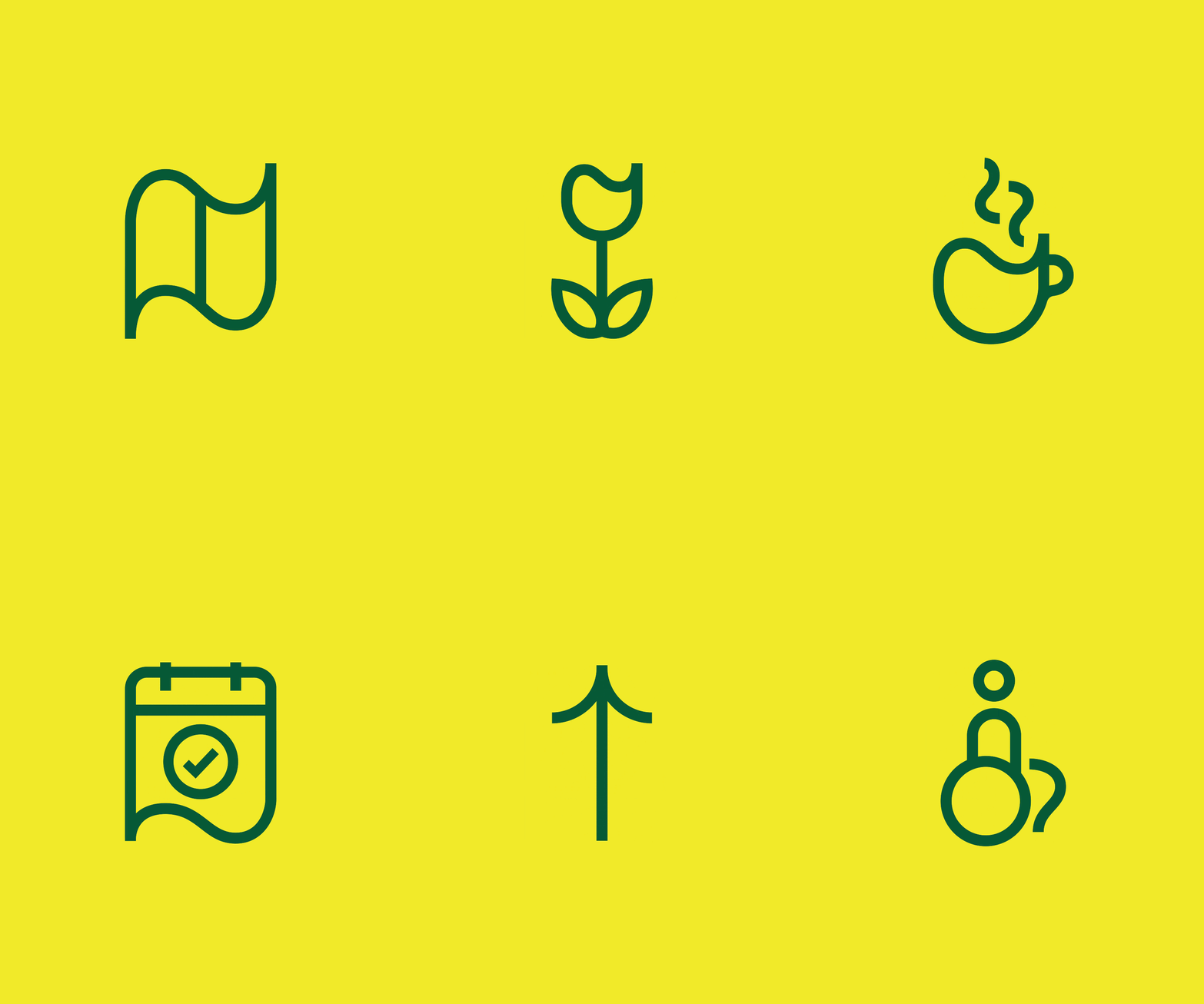
Samar Maakaroun’s visual identity for The Mosaic Rooms challenges reductive narratives around Arab identities
The new brand represents an entangled, messy cultural identity filled with “often fraught history” – but through clever abstractions and inspired Arabic scripts, breathes hope into political upheaval.
Pentagram partner Samar Maakaroun and her London-based team have been creating narratives of resistance with a bespoke identity for Mosaic Rooms, a platform for contemporary culture from the SWANA region (Southwest Asia and North Africa) since 2008. Its programme challenges reductive narratives around Arab identities while foregrounding the multiplicity and depth of artistic voices. Nearly two decades on, the reopening signals a broader transformation. Since moving from a privately funded initiative to an indie public charity, The Mosaic Rooms have become even more embedded within London’s cultural fabric and under the direction of Pip Day, it continues to evolve as one of the city’s most vital platforms for Arab culture and underrepresented voices. The redesigned building, along with its business transformation, reflects a shift in ambition – and that needs an identity that is strong, resilient and shaped by complex, often fraught histories.
The project challenges reductive narratives around Arab identities, revealing the multiplicity and depth of artistic voices in the culture, as well as the concept of the “unhomed”. “The identity does not fix a single image of “place”, but holds a condition. Drawing on the idea of the “unhomed”, as defined by Ece Temelkuran, it recognises that for many SWANA communities, belonging is not singular but constantly negotiated,” says Samar. “This applies not only to migrants or those in exile, but increasingly to anyone living through global upheaval, where political, cultural and social certainties are in flux. For Temelkuran, to be unhomed is not simply to be displaced or to move between countries, but a deeper condition where the idea of home itself becomes unstable.”
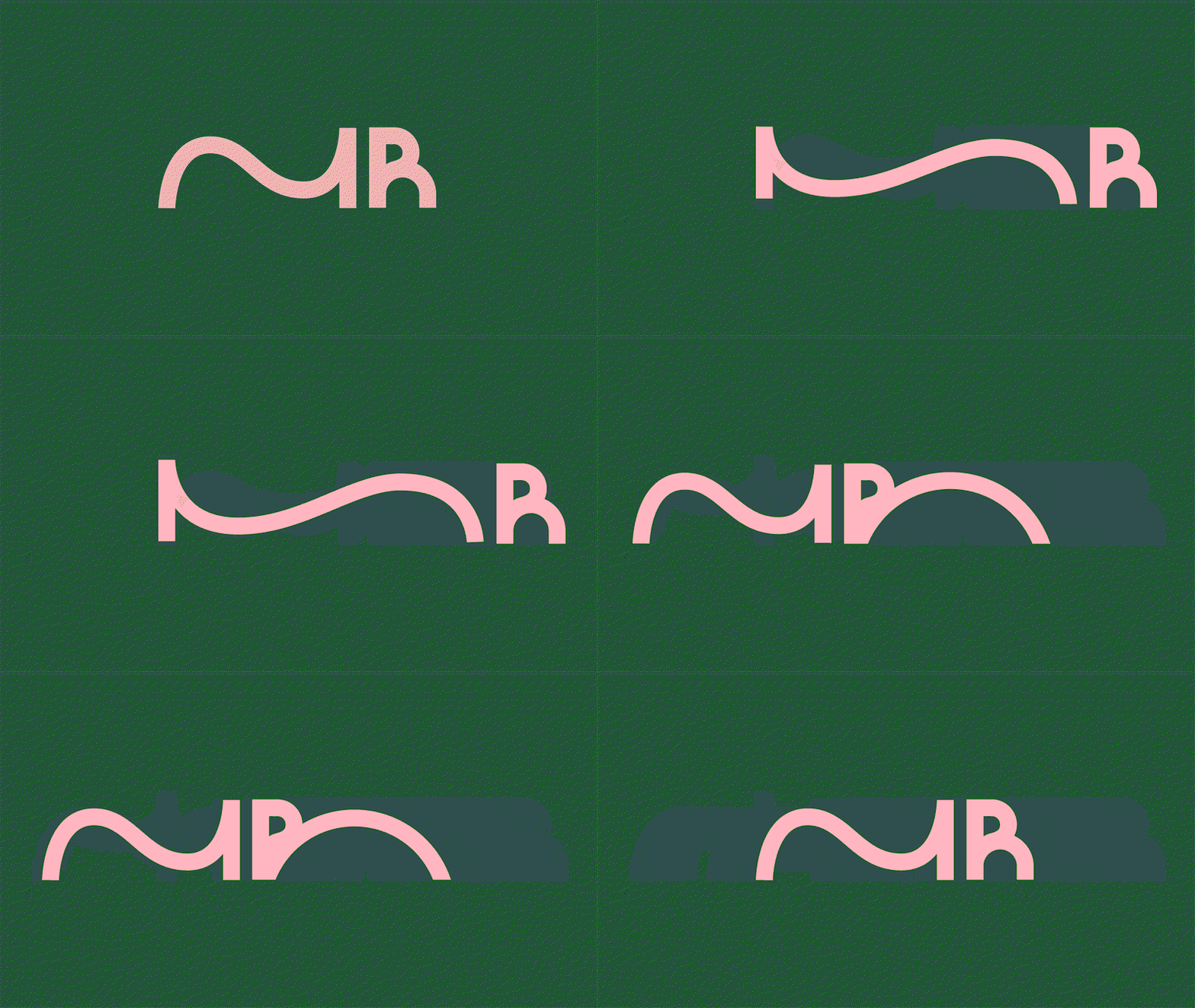
Samar Maakaroun: The Mosaic Rooms (Copyright © Samar Maakaroun, Pentagram, 2026)
Developing a bespoke identity to handle “entangled”, larger cultural identities is certainly a large task. The project started with research, interviewing staff and visitors. It became clear early on to Samar and her team that The Mosaic Rooms already occupied an unique position – and their role was to surface the position through the design.
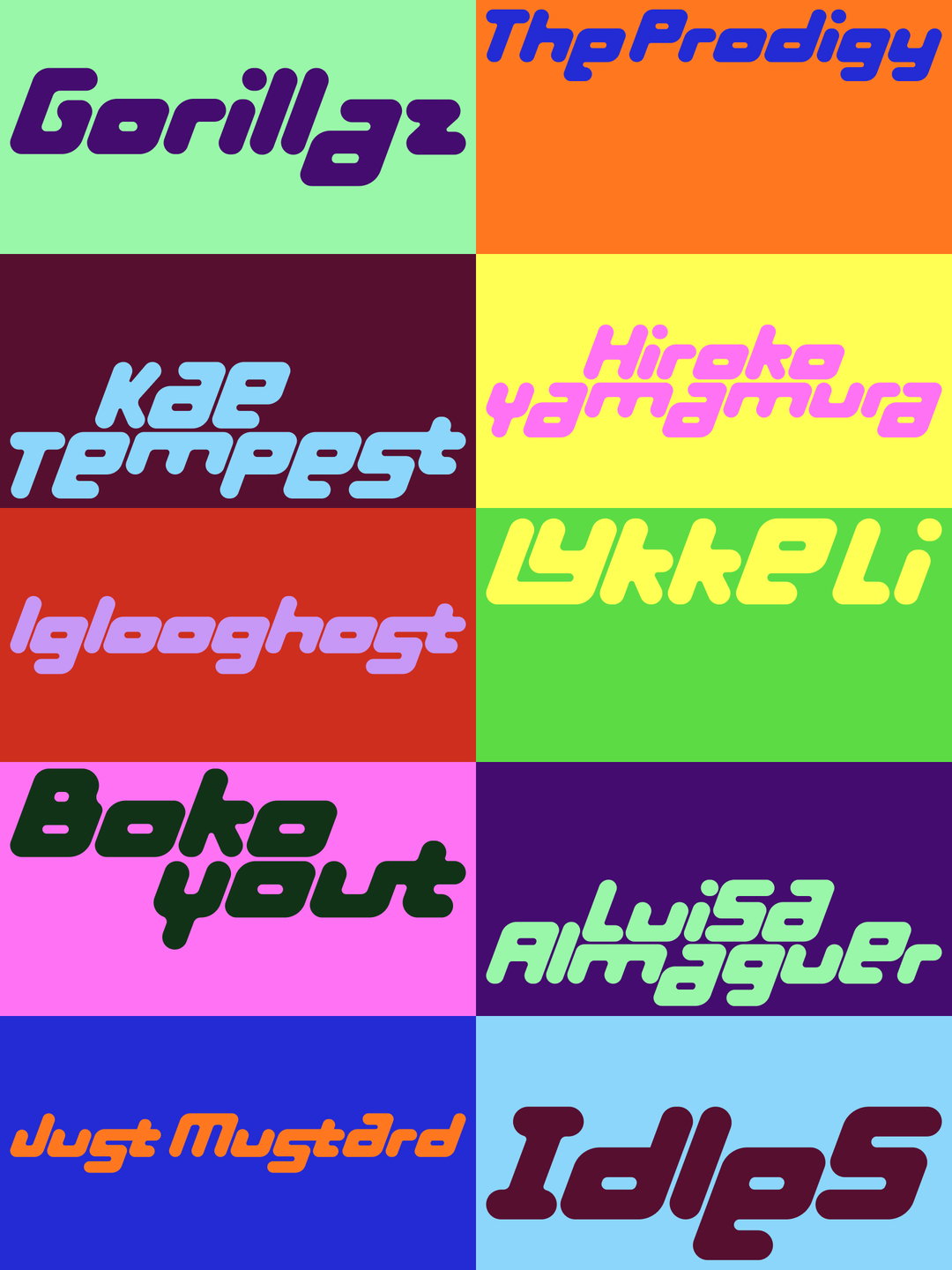
The identity creates a framework where this tension between identity and ‘home’ can exist, a sense of place that is not formed through permanence, but through “exchange, conversation and movement”. The type design reflects this: from the dual-directionality of Arabic scripts and an ‘M’ which “never settles”. Samar used that directionality of Arabic and Latin scripts as a structural idea rather than a visual reference, letting the stretched letterforms and restless geometry reflect the lived reality of navigating between languages, codes and systems. It’s a remarkably clever way to open the door to discomfort and interpretation through experiments in legibility. “The ‘M’ never settles. It behaves more like a condition than a logo: shifting, oscillating, existing between positions. Not here, not there, but in the space in between. Formally, this extends throughout the system: circular forms pull into ovals and interlocking shapes, suggesting movement, entanglement and relation,” says Samar. “In typography and image treatment, everything carries that same sense of back and forth. Here, the restlessness is not a bug in the system. It is the system.”
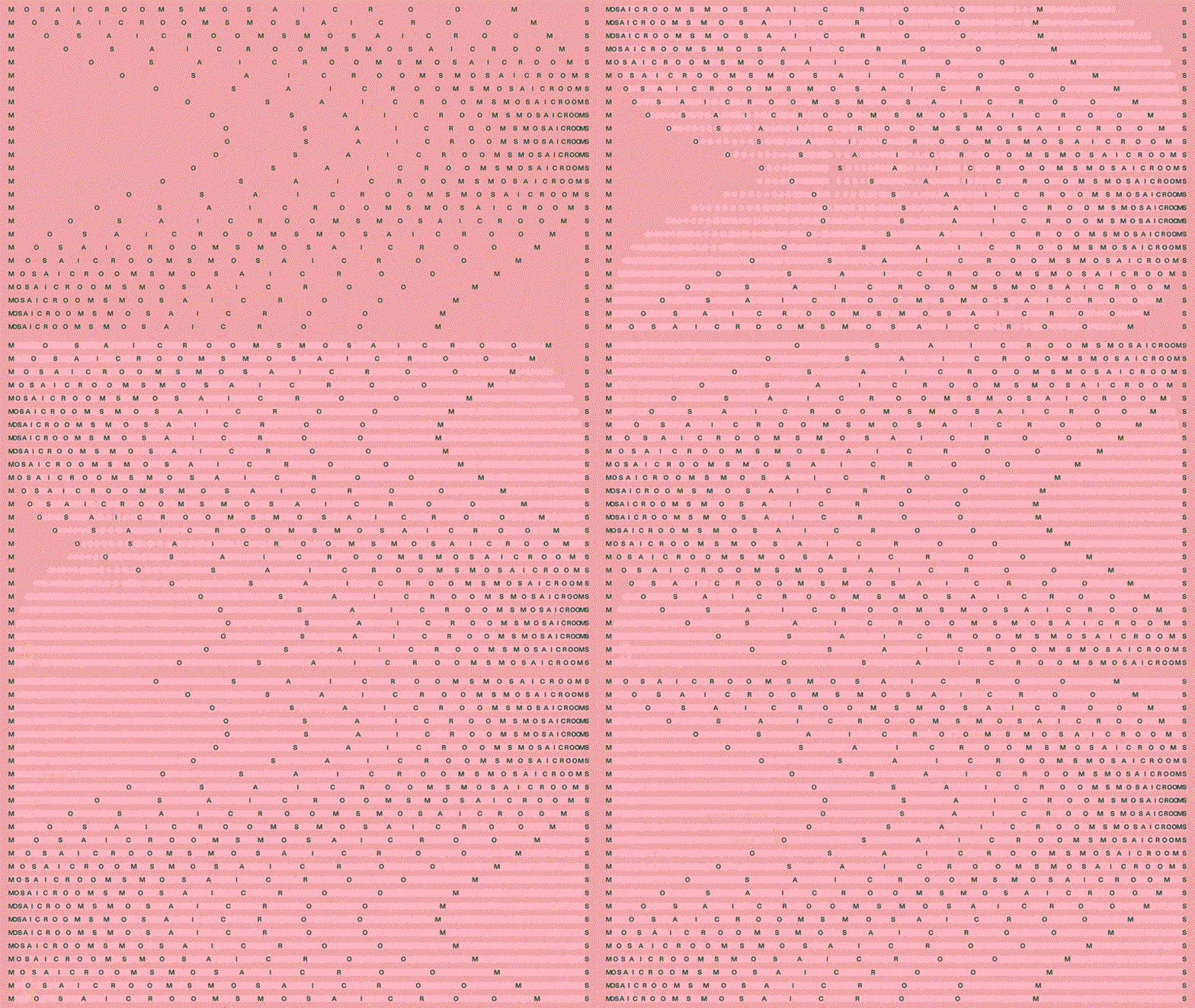
Samar Maakaroun: The Mosaic Rooms (Copyright © Samar Maakaroun, Pentagram, 2026)
The Mosaic Rooms’ new colour palette centres pink. Why is this significant? “Colour codes most associated with the region are often tied to political parties. In this context, colour is never neutral. It is coded and amplified by political presence and representation. Green, red and black. Yellow and green. Green and white. Black and white. Each combination carries weight, allegiance and reference,” says Samar. “The dusty pink, or the pink family, sits outside the usual language of political power. It is culturally sidelined. Our palette therefore uses it as a quiet disruption, a way to reclaim space away from dominant codes. It softens the system, opening a different tone, one less about dominance, more about presence.”
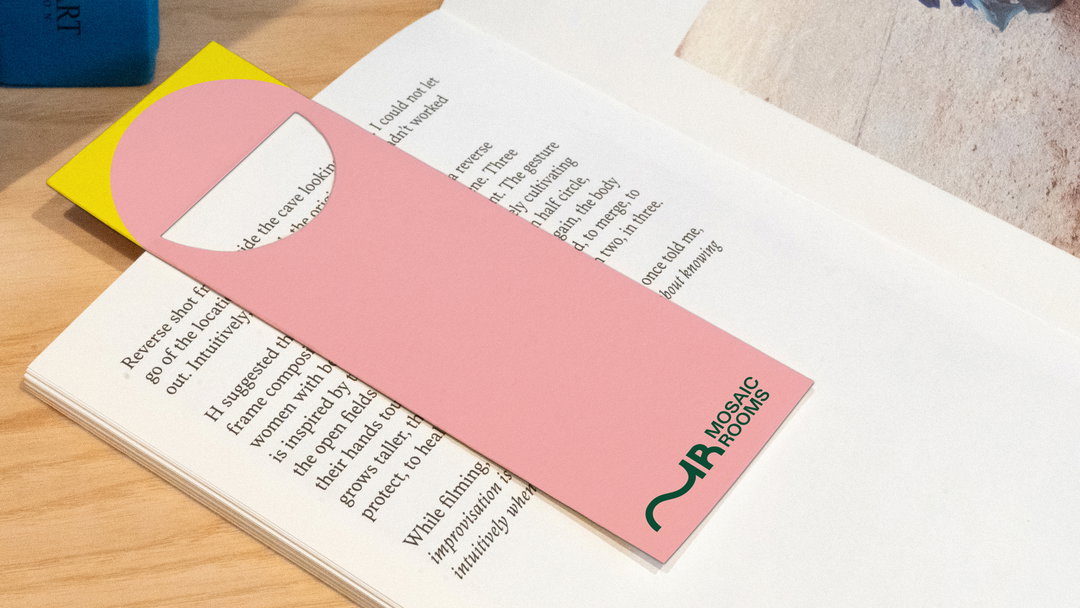
After nearly 20 years, The Mosaic Rooms “no longer needs to explain itself”. The early years were about building or justifying a presence with an identity that quite literally communicated the theme of mosaics. With this new identity, the space can abstract conceptually as well as aesthetically, moving into a more confident simplicity. “At the same time, the identity remains open and accessible. Its flexibility allows it to move across platforms, from signage to digital and motion, without losing clarity. The system is designed to expand and adapt, supporting a grassroots programme while holding a clear and consistent presence,” says Samar. “Designers inevitably bring what they know and what they see into the work, so multiplicity of perspective is part of my process.”
GallerySamar Maakaroun: The Mosaic Rooms (Copyright © Samar Maakaroun, Pentagram, 2026)
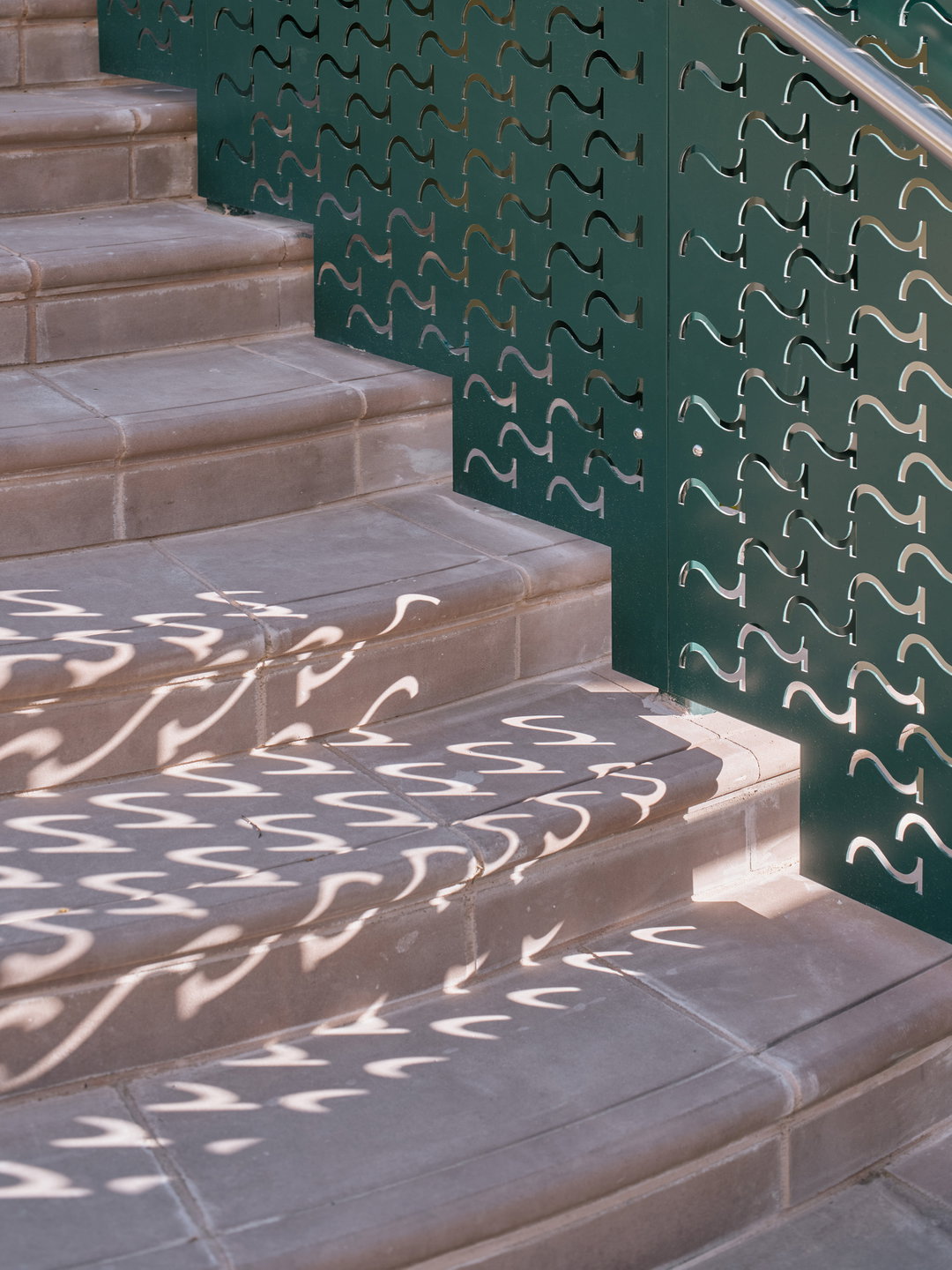
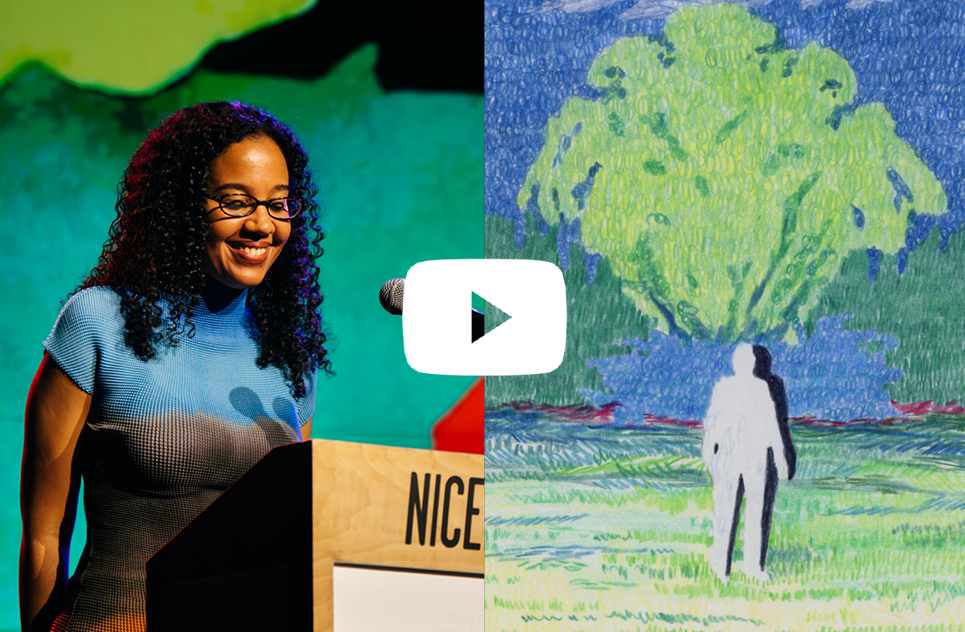
Dima Srouji: Four Moons from Home (Copyright © Dima Srouji, 2026)
Photo: Andy Stagg, courtesy of Mosaic Rooms
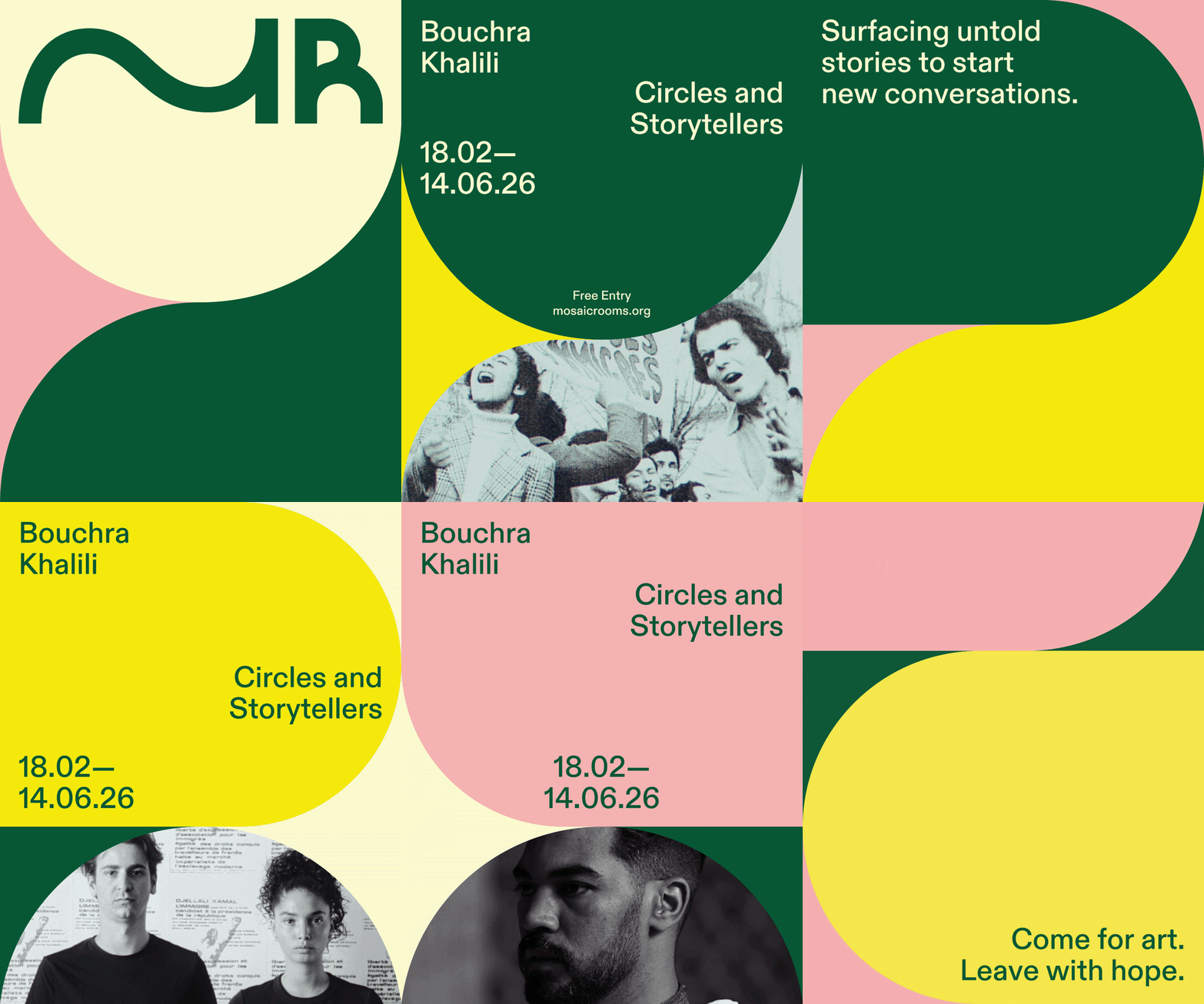
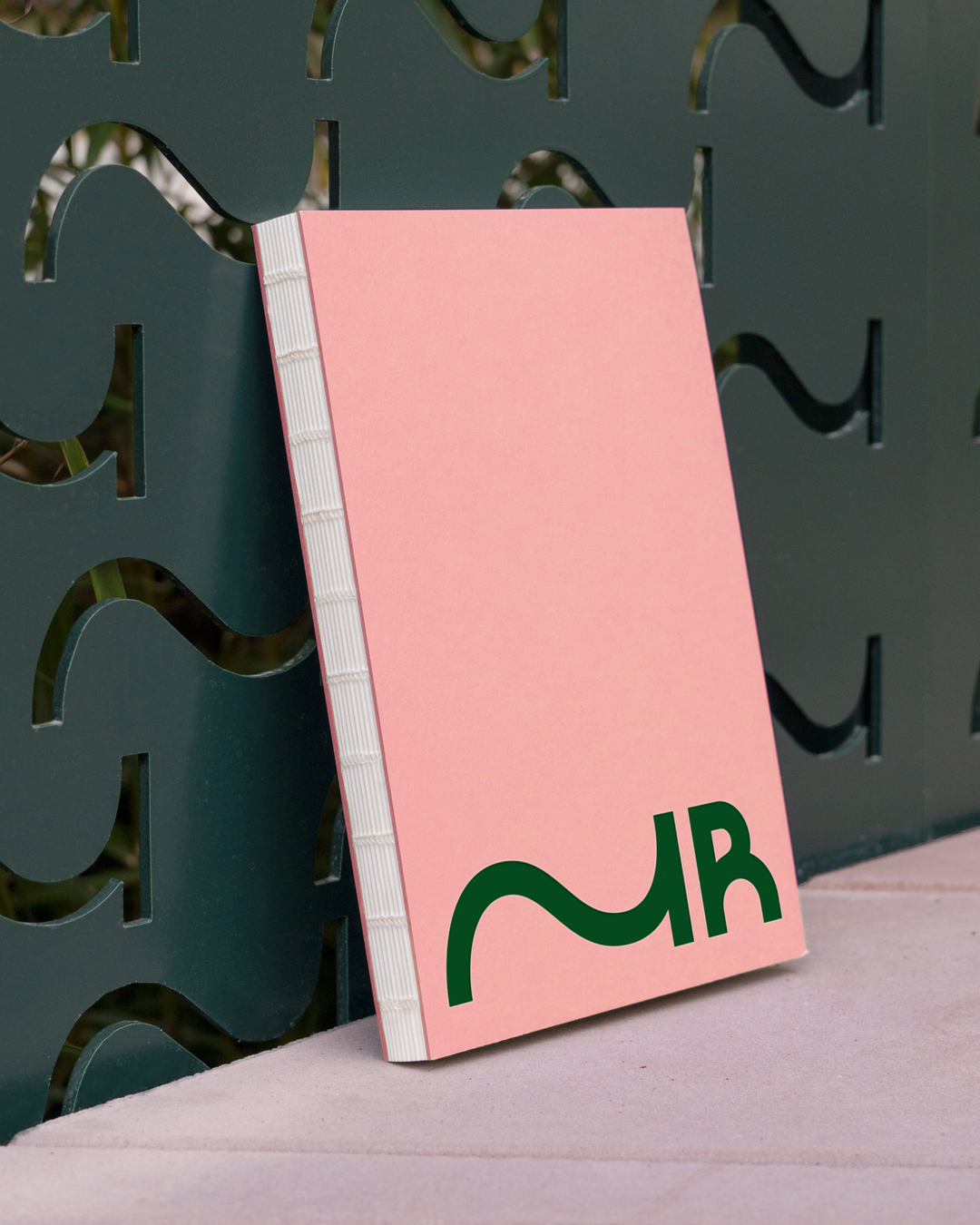
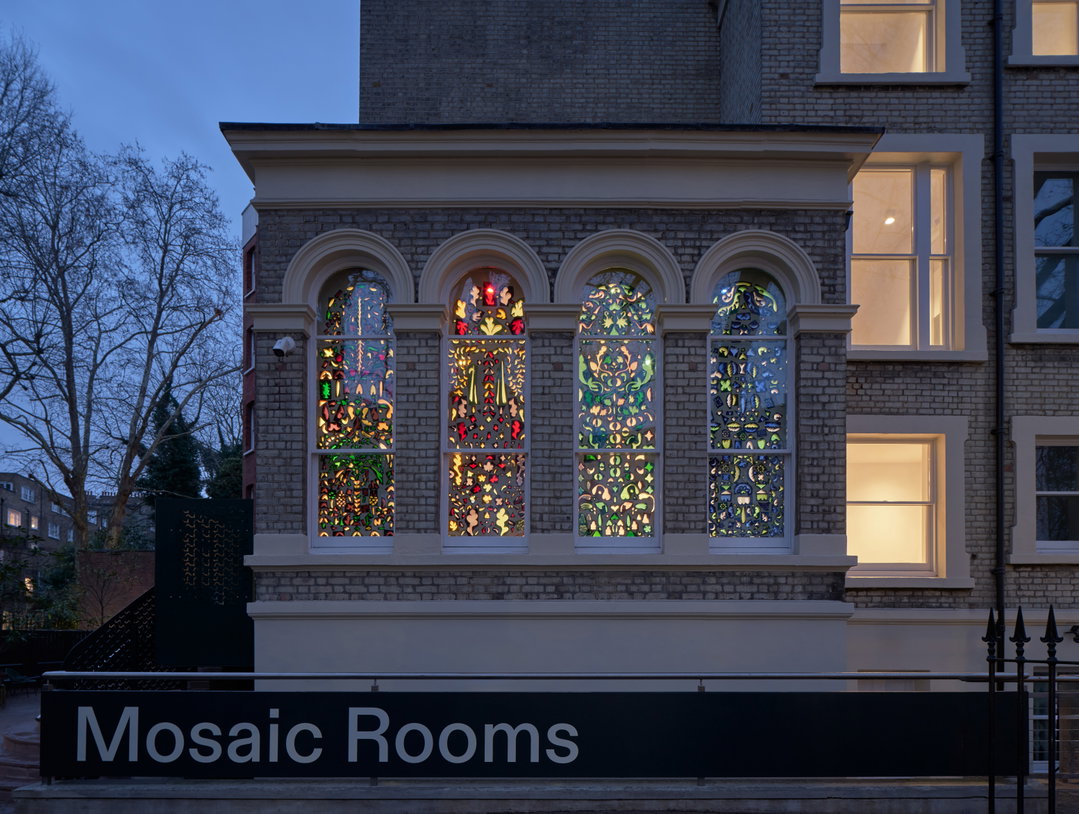
Photo: Andy Stagg, courtesy of Mosaic Rooms
Share Article
About the Author
—
Paul M (He/Him) is a Junior Writer at It’s Nice That since May 2025. He has a strong interest in graphic design, digital kitsch, multimedia painting, collage, nostalgia, analogue technology and all matters of strange stuff. pcm@itsnicethat.com
To submit your work to be featured on the site, see our Submissions Guide.