


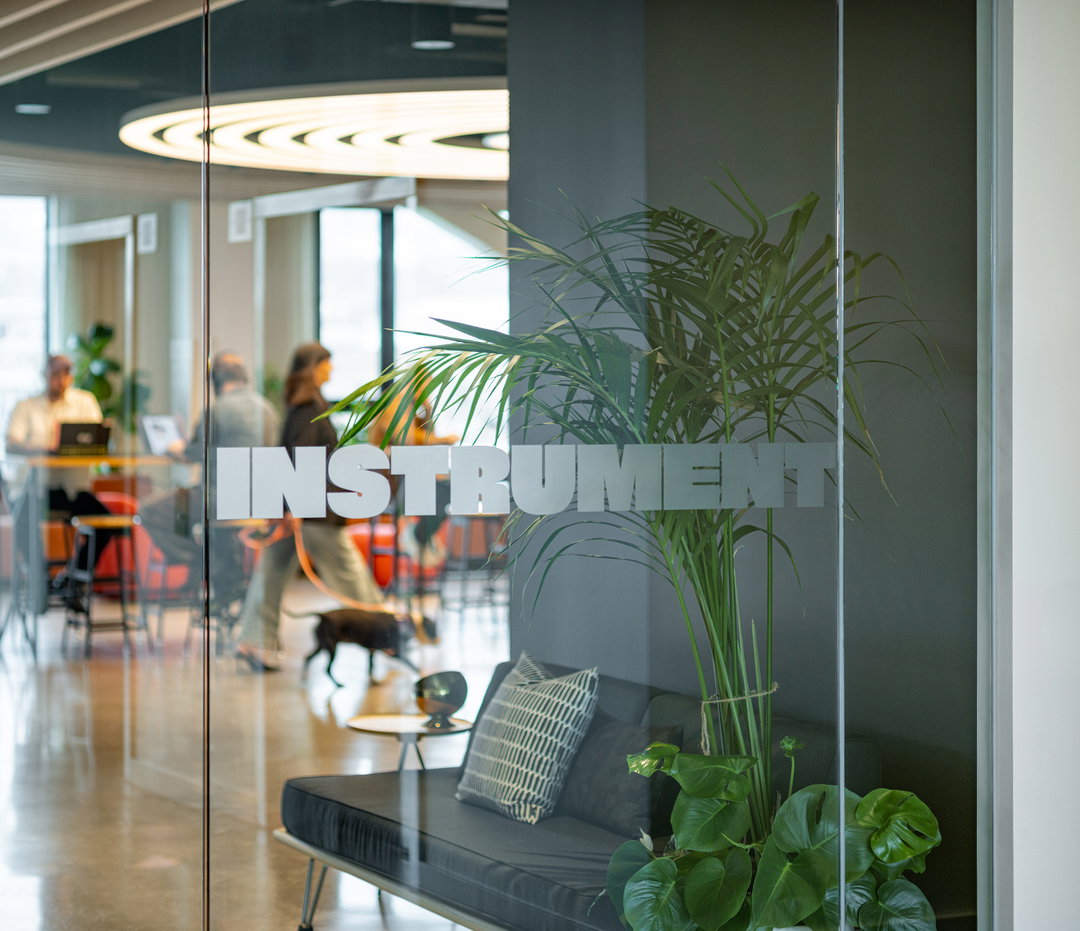
Technical readiness and creative bravery: Instrument agency’s formula for leading the charge in design
Instrument’s CCO Nishat Akhtar speaks to the company’s 20 plus years in design and technology, and its history of being one step ahead of the game.
Design and technology are two words that are very often thrown together. They’re a subject at school, whole political departments and an entire industry in and of itself. Many creative agencies label themselves as such, but few have these spaces as integrated into their practice as Instrument. From the inside out, the design and technology company works to simplify complex creative problems – working for the likes of Spotify, Google and Ōura – through interconnected and scalable design systems. At the centre of Instrument’s work is novelty and the pursuit of creative solutions that haven’t yet been uncovered. “We’ve always been most alive at the edge of what’s possible,” Instrument CCO, Nishat Akhtar, says, “where a business problem meets a design and technology solution that nobody’s tried yet.”
The ethos has remained steadfast since it started, despite the new scale and faces of the company. Having been founded in 2005 by three friends – Justin Lewis, Vince Laveccia, and JD Hooge – Nishat explains how the trio’s core belief that design and technology were inseparable has not only stood the test of time, but is a testament to how ahead of the game Instrument has always been. “That wasn’t a common conviction at the time,” she says, “most companies were still figuring out what the internet even meant for their business,” all the while, Instrument was already establishing its ground and expertise at the intersection between the two. It’s perhaps more fair to say that Instrument sits at a crossroads, rather than an intersection; design, technology, brands and business are both its output and input, fundamental elements of Instrument’s practice and, importantly, its process.

Instrument: Electronic Arts (Copyright © Instrument, 2026)
Despite the novelty of Instrument’s work, it’s important to remember that the area in which they work is nothing new. Nishat is quick to remind us of the inextricable link between design and technology – asking us to just look at the entire history of design, media and tools. Whilst the pursuit is innate to creatives, how Instrument pursues the development of the industry is a different question entirely. “We’ve always been drawn to, and exist at that edge,” Nishat tells us, “we can’t help but explore what technology is available to us, especially if it enables a more inspired way of working and better outcomes.” This was the case in 2005 when brand websites were an unprecedented application and, likewise, two decades on, with the integration of AI.
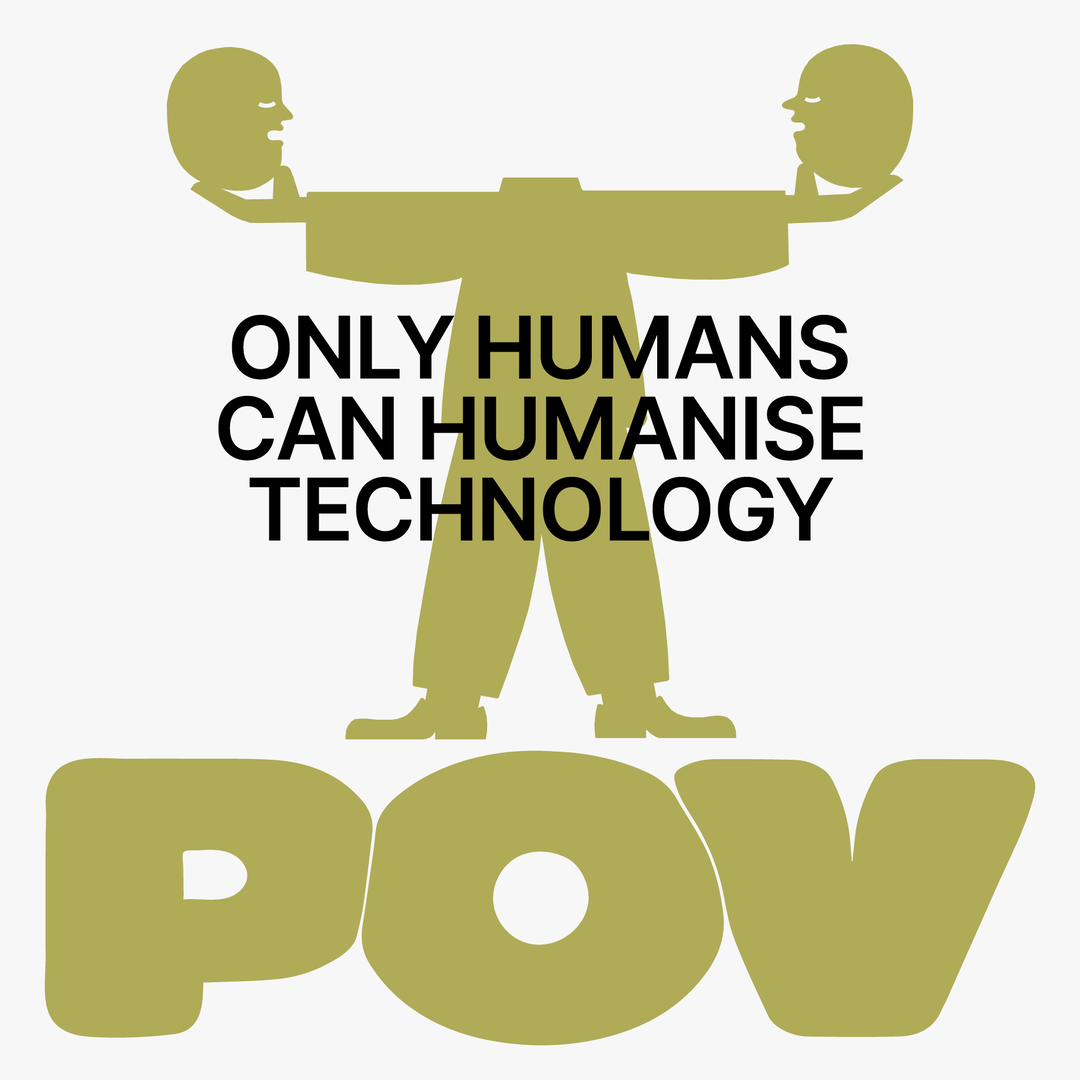
“A lot of AI discourse treats creativity like takeout, but we aren’t just serving off the menu,” Nishat says. “Creative work has always been about taste: what you choose, what you refine, what references and experiences you bring into something.” That thinking has shaped how Instrument integrates AI across design, development, production and operations – using it where it meaningfully extends the work, whether through faster prototyping, experimentation or automating repetitive tasks. “We are lovers of design, art and writing,” Nishat says, “and we care about how something is made and who made it.” Hence, AI has become an instrument, if you will, for intensifying one’s own POV, using it where “it actually makes sense” to do so. Be it faster prototyping or building agents to handle mundane tasks. “AI gives more people access to making, but it can’t give you a creative voice,” she adds, “that comes from you, from everything you’ve lived.” Instrument’s curiosity is further evident through its self-initiated projects like Playspace, an evolving archive – or “digital sketchbook” – that hosts experimental and emerging technology and tools the company has developed. Free and accessible for anyone to use, Playspace embodies Instrument’s measured creative practice and process, whilst typifying how it believes new technology, like AI, could and should be utilised.
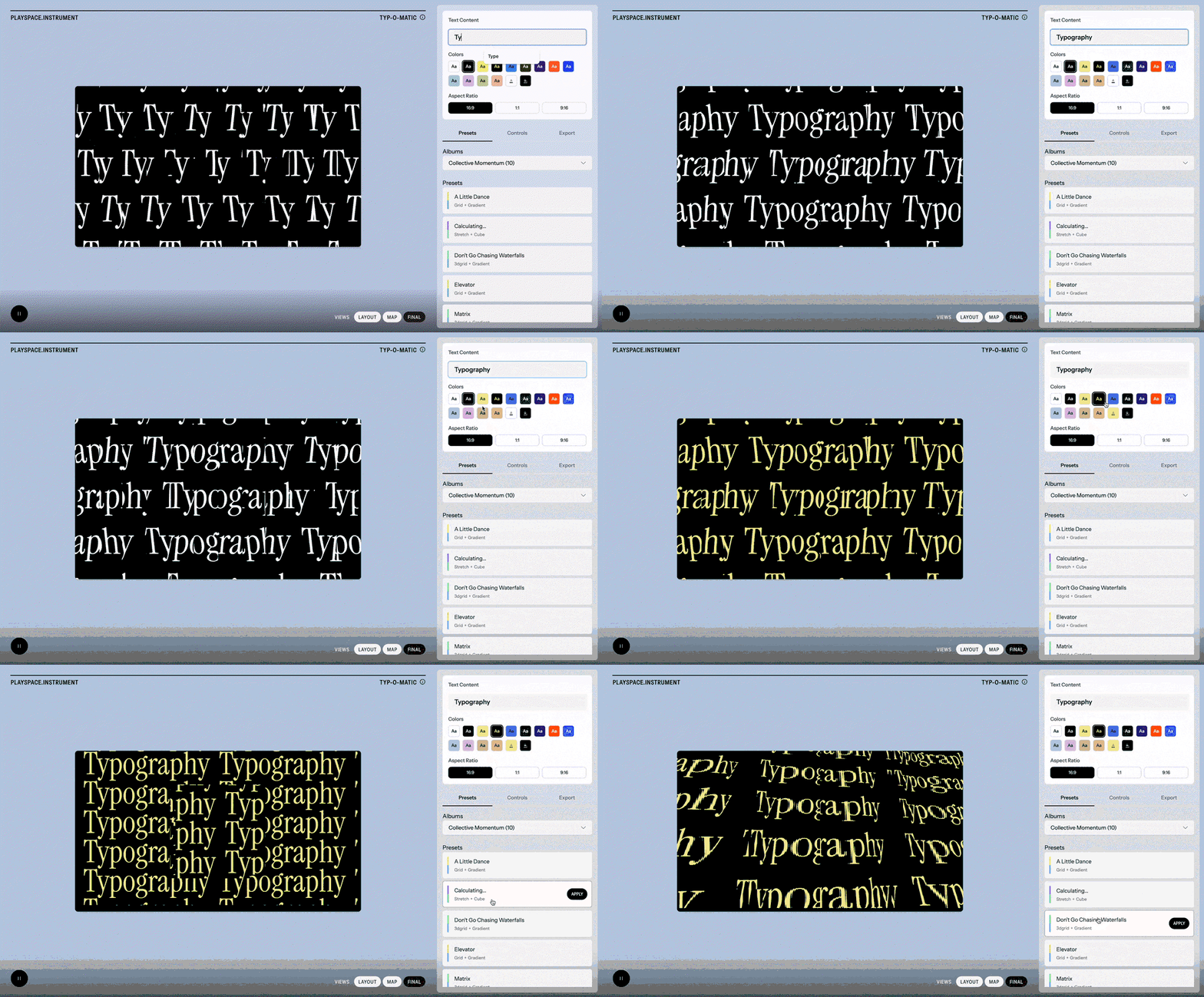
This considered approach to AI is also apparent in Instrument’s repositioning of Electronic Arts (EA). In order to help EA occupy the entertainment brand space as well as being a games publisher, Instrument’s repositioning was built from a storytelling-led, flexible system that allowed EA to scale into new spaces without losing its voice. “The system includes AI-powered tools – built by a team of designers and creative technologists – inspired to enable teams to create on-brand work quickly,” Nishat explains, “while maintaining consistency, quality, and the integrity of the broader brand ecosystem.” Ultimately, this new technology – that Nishat suggests no one is yet an expert in – is one in support of expression, a feat Nishat is adamant Instrument will never forgo. “The best work has always had a human fingerprint on it, and that’s not going away.”
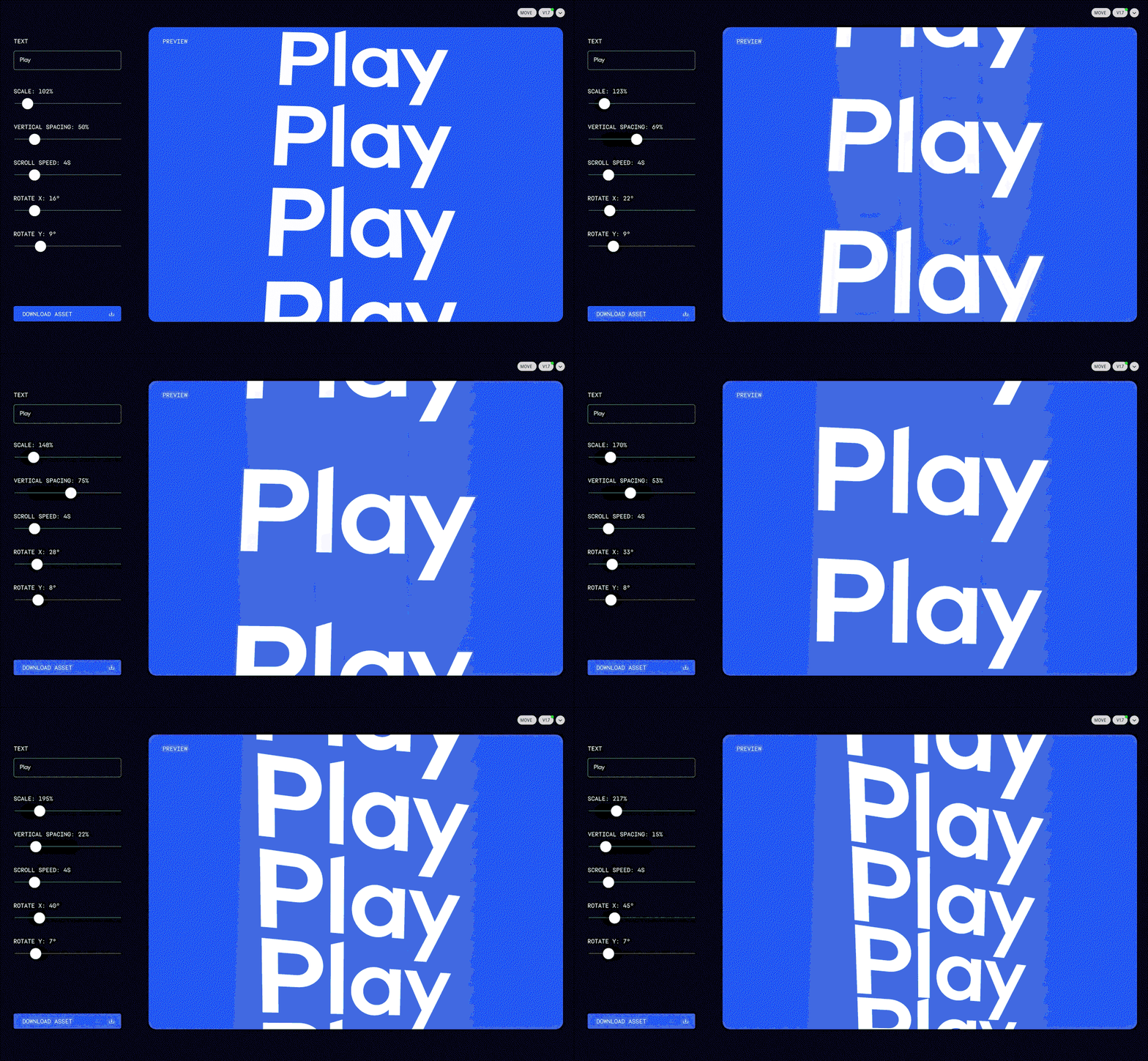
Instrument: Electronic Arts (Copyright © Instrument, 2026)
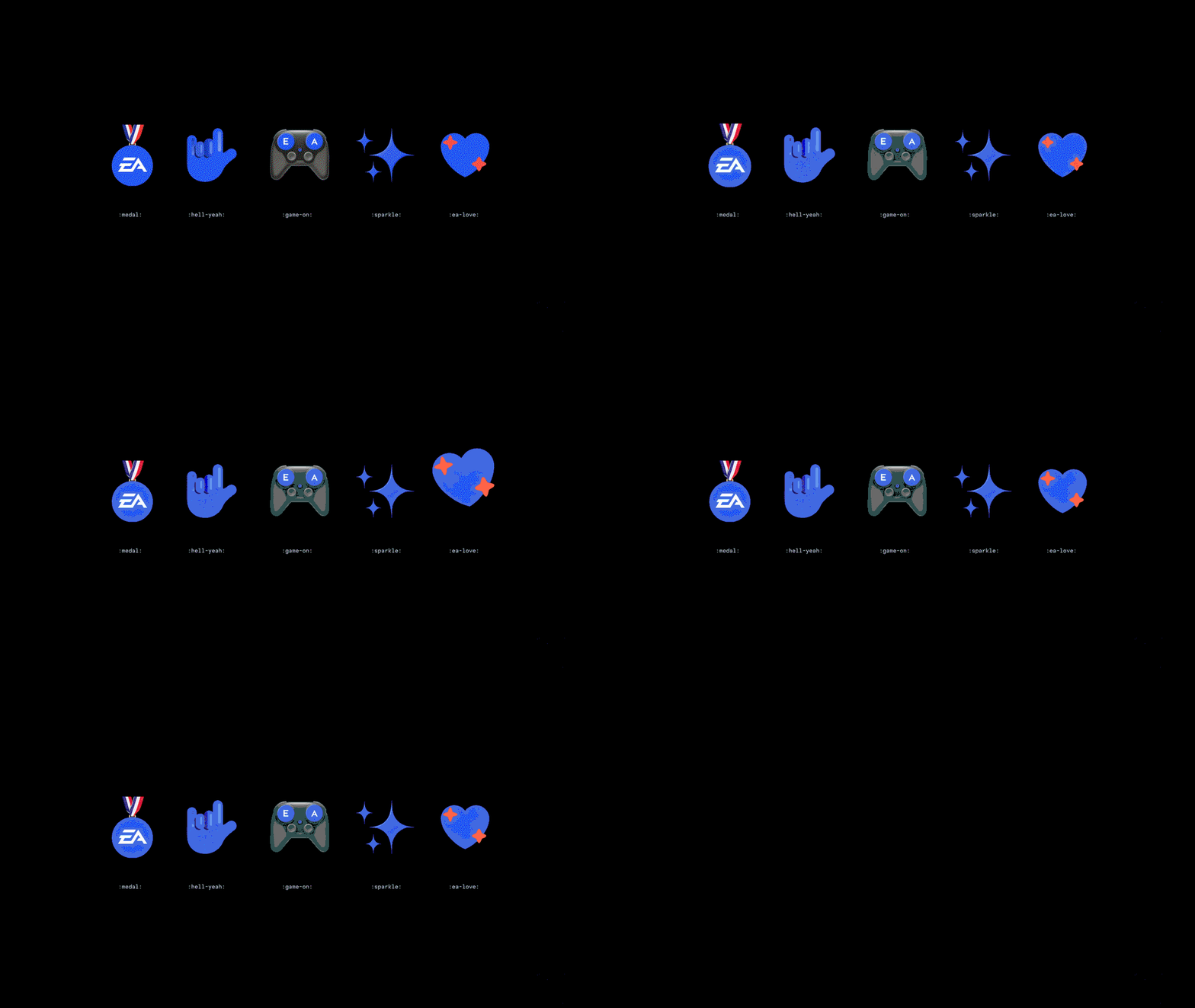
Instrument: Electronic Arts (Copyright © Instrument, 2026)
Instrument will continue to evolve as technology, culture and brands do too. Nishat says that the moment demands technical readiness and creative bravery – cornerstones that Instrument holds dear. “There’s a lot of average work out there, and that gap is only going to widen,” she says, particularly between those trodding well-worn paths and those prepared to take the path less trodden. “As AI literacy grows, the need for work that is genuinely differentiated is only going to become more urgent, not less,” Nishat ends, “breaking out of the middle takes honesty – being true to a point of view even when the safer path is right there.” A crossroads indeed.

Instrument: Electronic Arts (Copyright © Instrument, 2026)
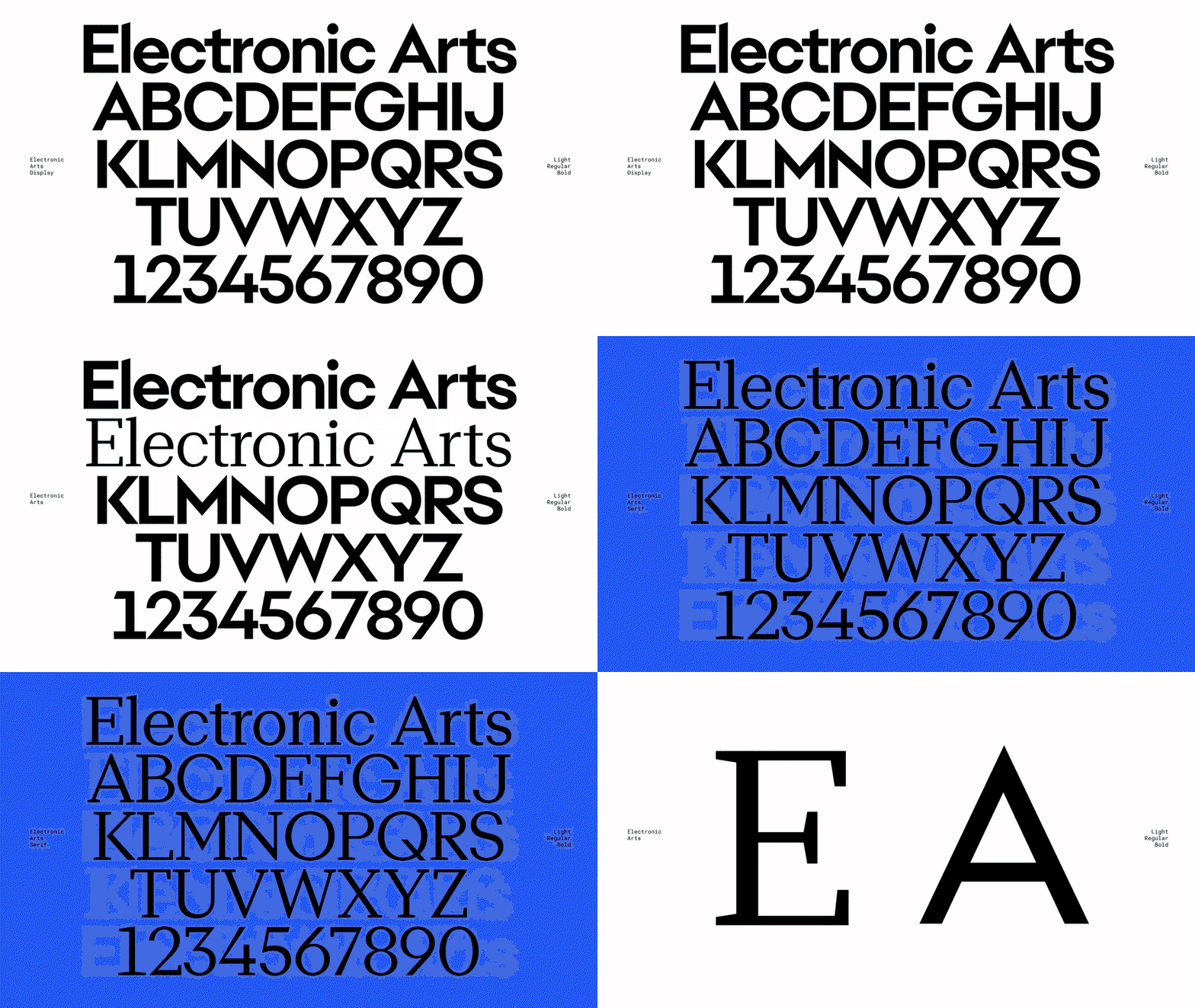
Instrument: Electronic Arts (Copyright © Instrument, 2026)
Sponsered by
Instrument
Instrument is a design and technology company. We build brands, products, and experiences guided by one belief: make the complex simple. For more than 20 years, we’ve partnered with companies like Google, Nike, Electronic Arts, ServiceNow, Uber, and ŌURA. We use technology with intent – applying tools like AI to deepen the work and move faster, without losing what makes it good.
Hero Header
(Copyright © Instrument, 2026)
Share Article
Further Info
About the Author
—
This article was sponsored by a brand, so is marked up by us as Sponsored Content. To understand more about how we work with brands and sponsorships, please head over to our Work With Us page.