The caring, empathetic and imaginative instincts of children, captured by Matilde Viegas
A Family of One’s Own demonstrates the importance of giving children a relaxed space to grow and explore.
One day, the photographer Matilde Viegas was riding in an Uber when the driver asked her what she was working on. She told him that she was creating a series photographing the local housing estate’s after-school social programme for children, Cercar-Te, and “his eyes lit up”. Not only had the driver himself benefitted from the programme when he was a child and things were difficult at home; now a father, he sent his kids to the same scheme. “He was so grateful for the after-school programme, and proud to have his kids there too, a generation later,” says Matilde.
For the photographer, this was just further proof of how important such schemes are. She too grew up taking part in free after-school activities, which provided her with a space to grow and explore when her family didn’t have the means. Having already spent a long time with the children she was photographing, she was acutely aware of how such spaces let children’s instincts flourish: those of care, empathy and imagination.
A Family of One’s Own arose after an invitation from Ci.CLO, a photography organisation that fosters critical engagement with socio-ecological issues and aims to stimulate conversations between communities. For six weeks between October 2022 and March 2023, Matilde spent time with the children, creating a series that would be exhibited at Porto’s Photography Biennale in 2023. To begin with, she spent time getting to know the children on the scheme – her camera stayed in her bag. She was keen to dig deeper, beneath the surface level stories of the Lagarteiro housing estate she found online, which “perpetuated prejudice against the community”.

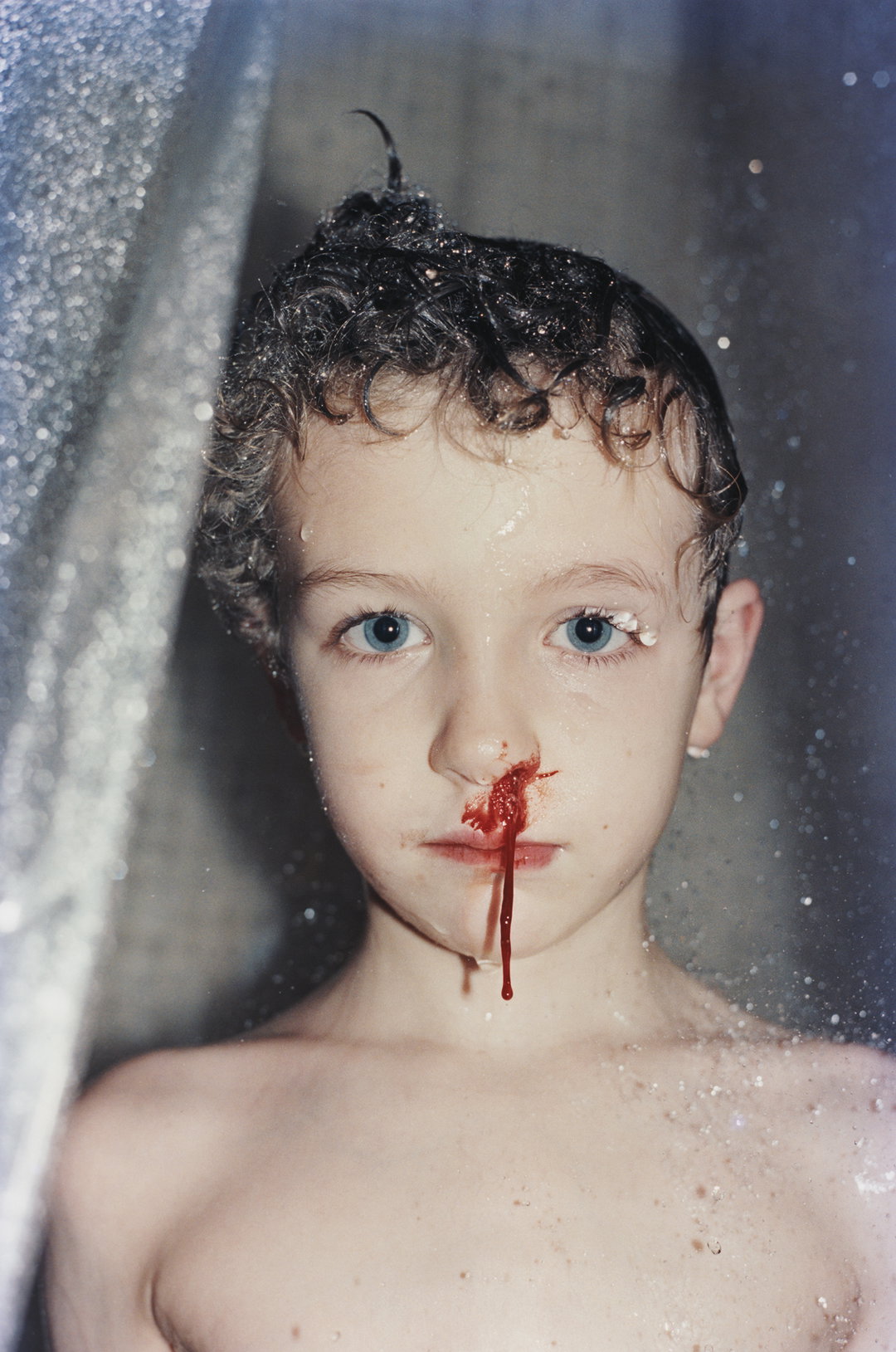
Matilde Viegas: A Family of One’s Own (Copyright © Matilde Viegas, 2023)
Built on the outskirts of Porto, the Lagarteiro scheme was intended to house the increasing numbers of unemployed people who had originally found work in the declining industrial industry. But, as with many poorly planned social housing projects built in the late twentieth century across Europe, the Lagarteiro estate was built with next-to no access to transportation, infrastructure or jobs, and with little attention paid to the nourishment of community, or the necessity of space. “It was clear that many of the kids I was getting to know had faced challenges and neglect that none should ever endure,” says Matilde. “The teachers and mentors strived to create routines, helping with the kids’ homework and providing emotional and health support.”
Soon into photographing the children, Matilde realised how intrigued they were by her cameras. “Here it became clear how important it is to let go of this idea of being ‘the photographer’, and instead allow oneself to simply be a person, untied to their professional title,” says Matilde. Responding to their interest, Matilde started putting on photography workshops using point-and-shoot cameras. Duarte, Matilde recalls, loved buses and he and his friend took turns at the bus stop so he could capture his favourite: “It was clear that the kids were immensely attuned to the beauty of the mundane surrounding them,” says Matilde. The workshops not only benefited the children, but Matilde too. When the kids were immersed in their work, she could photograph them as a fly on the wall, avoiding making them too self conscious, and more at ease.
GalleryMatilde Viegas: A Family of One’s Own (Copyright © Matilde Viegas, 2023)


These moments had a “ripple effect” on Matilde, in turn pushing her to be more relaxed, less worried by composition or technical minutia. In these free-flowing moments, she found herself drawn to the children’s hands and face, keen to highlight ”the warmth of their relationships”. Over time, Matilde had realised how often role play would permeate their play, replicating family bonds; the roles of parents, aunties, and cousins. “They created a safe space to be vulnerable and caring with one another, braiding each other’s hair, taking care of each others’ fictional wounds, as if healing the real ones on their own terms,” says Matilde. “I kept coming back to these images that somehow reflected the importance of these matriarchal families in their lives, and that’s how the title of the project came about.”
Later, Matilde also realised that it was key to incorporate portraits to create “special moments”. Spending time with the kids one on one, she would meet their family members, find out about their favourite snacks, and have deeper conversations before taking their portrait. It was a fine balance though, as Matilde was aware of how important agency is in portraiture and she let them decide what they wore, where the image was taken, and deleted it if they didn’t like it. “I wanted to create something that the kids would be proud of, and that I’d be proud of, not only artistically but also ethically,” says Matilde. “Images now have an unprecedented longevity and presence. Online bullying is a real issue. And image-making is an insanely powerful tool. We cannot ignore that.”
Just last month, the centre right party Democratic Alliance won the most seats in the Portuguese national election, with a massive increase in votes for the far-right Chega party, which placed third. With such exclusionary politics dangerously on the rise, Matilde wants A Family of One’s Own to demonstrate just how vital free social provisions for young people are. “Every single kid needs structure, support and space to grow and explore — these are basic needs alongside food and shelter,” she says. The series is a resounding demonstration of this fact, and the bonds and memories created when children are simply allowed to be children.
GalleryMatilde Viegas: A Family of One’s Own (Copyright © Matilde Viegas, 2023)


Hero Header
Matilde Viegas: A Family of One’s Own (Copyright © Matilde Viegas, 2023)
Share Article
About the Author
—
Olivia (she/her) is associate editor of the website, overseeing the day-to-day editorial projects as well as Nicer Tuesdays events. She joined the It’s Nice That team in 2021. ofh@itsnicethat.com
To submit your work to be featured on the site, see our Submissions Guide.