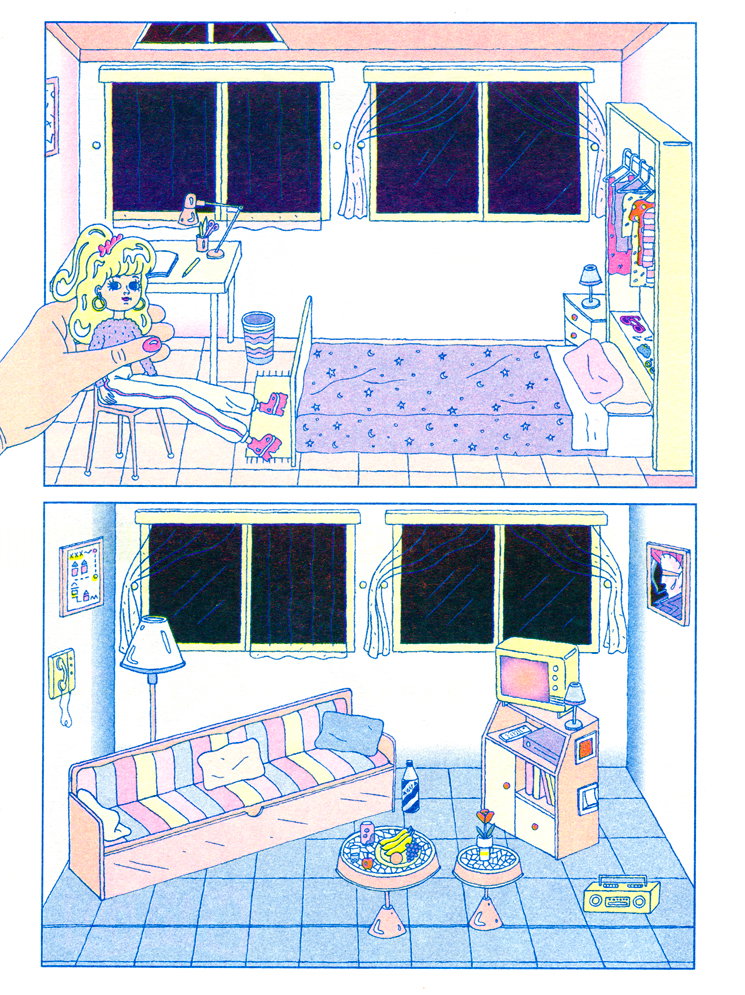
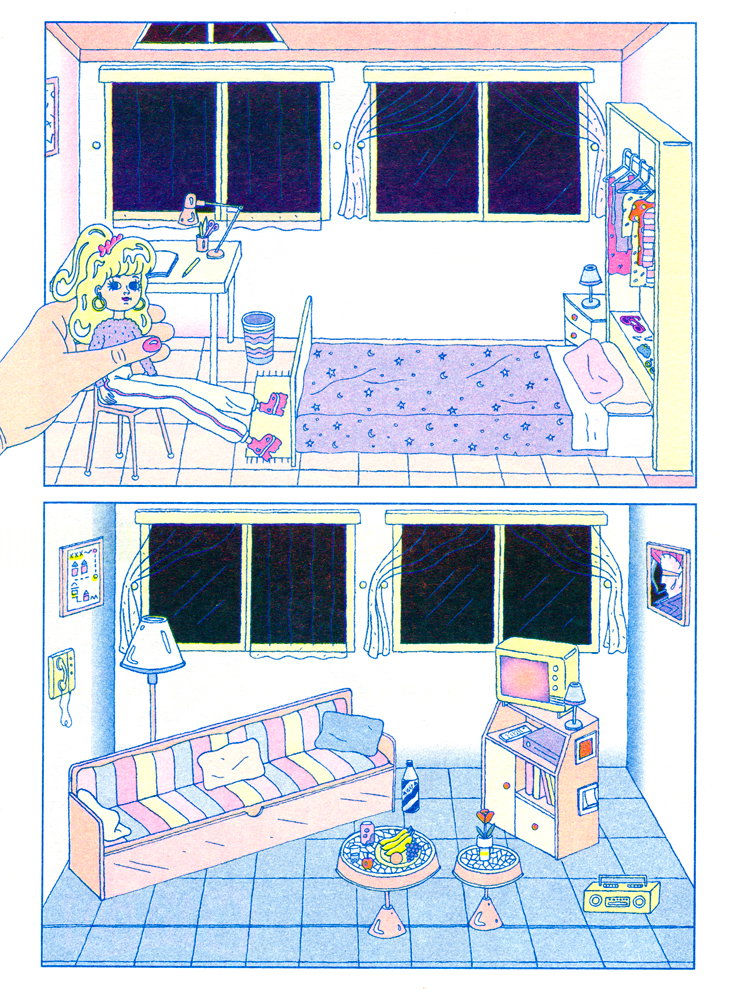
An illustration project inspired by a slightly sinister doll’s house and its inhabitant from the 80s
Four illustrators decided to create a project on a long-lasting mutual interest, La Villa Luminosa.
We can always count on Spanish illustrator María Ramos to cheer us up on the darkest of wintery mornings. And today, we delve into her latest of illustrative joys, a new collaboration with a group of friends titled La Villa Luminosa. The premise of this latest project rests on a doll’s house from the 80s, a house of the same name, belonging to a Spanish doll called Chabel. “The house was illuminated,” María recalls of the vintage object. The lamp, the fridge, the TV set all had a distinct fluorescent buzz around it that many Spaniards remember from their childhoods. “We are crazy about the design of Chabel,” says María on how she and illustrators Pepa Prieto Puy, Elisa Victoria and Ana Galvañ have created a new project centring on this magical house.
Even though the doll’s house’s heyday happened the generation previous to María’s, the house and its character remains a long term fascination. The group of friends and collaborators even tried to get in touch with the original designers but with no success thus far. Instead, they decided to create work around the house, using the house’s powerful nostalgia as a common exploration point. “However,” María points out, “the stories that are told are not for children.” While the illustrator is known for her graphic flat comics, adorable characters with large Bambi-like eyes and stark block colours, this project called for a different aesthetic due to its reference point.
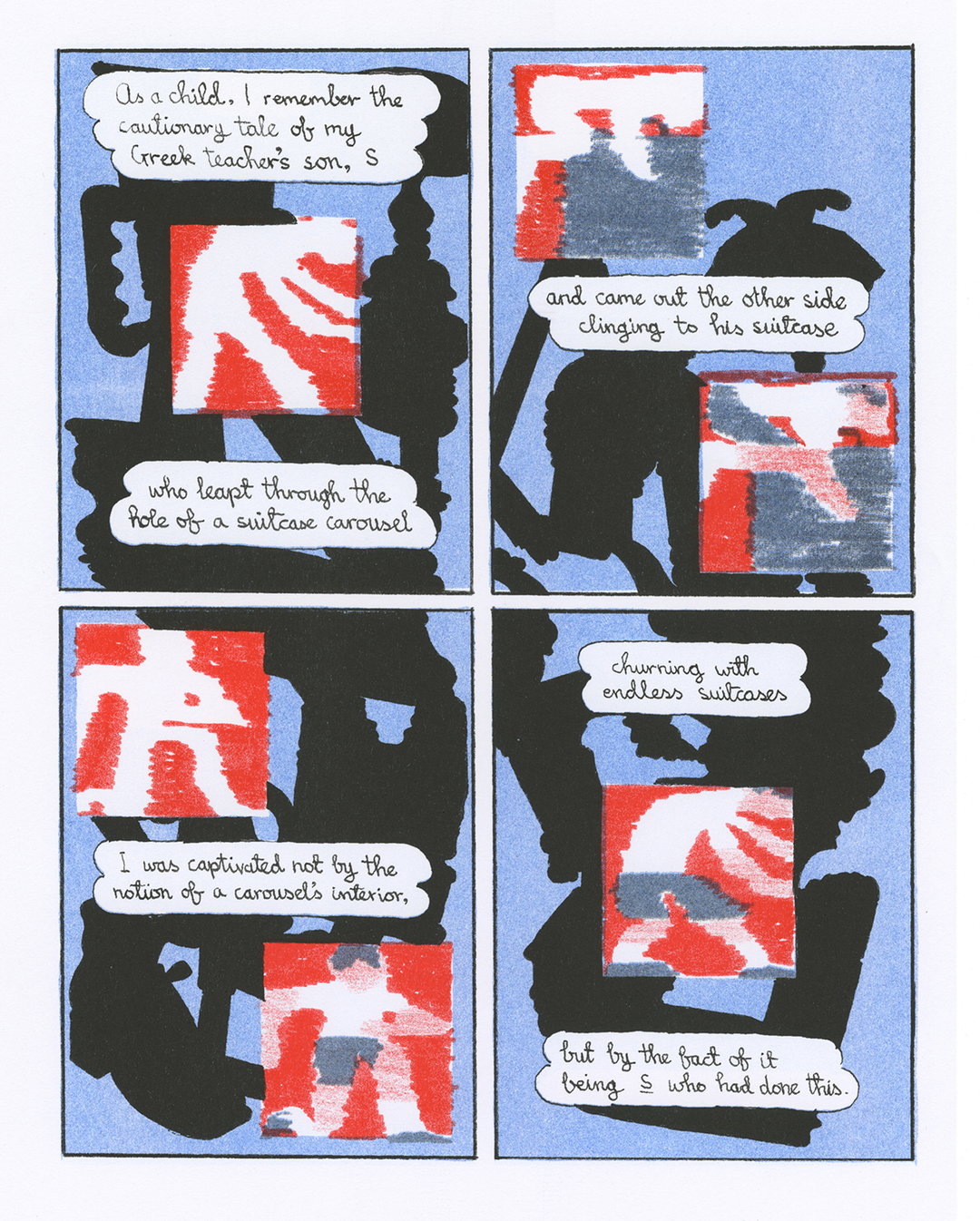
The use of Risograph adds a softer dimension to her work, as the hues gradually build up to compliment the story. To enhance the doll-like feeling of the comic too, María strikes up a different mode of figurative illustration. This time, playing on the Barbie and Ken aesthetic, but of course, adding her own twist to make each image endlessly charming. In the past, María’s focus has been on picture books featuring scanned textures and pencil which make a digital collage, but in this last book, she says, “I have changed technique and taken up marker pens.” She goes on: “I’m very happy with the result and I’m going to continue on this path in the future to see where it takes me.”
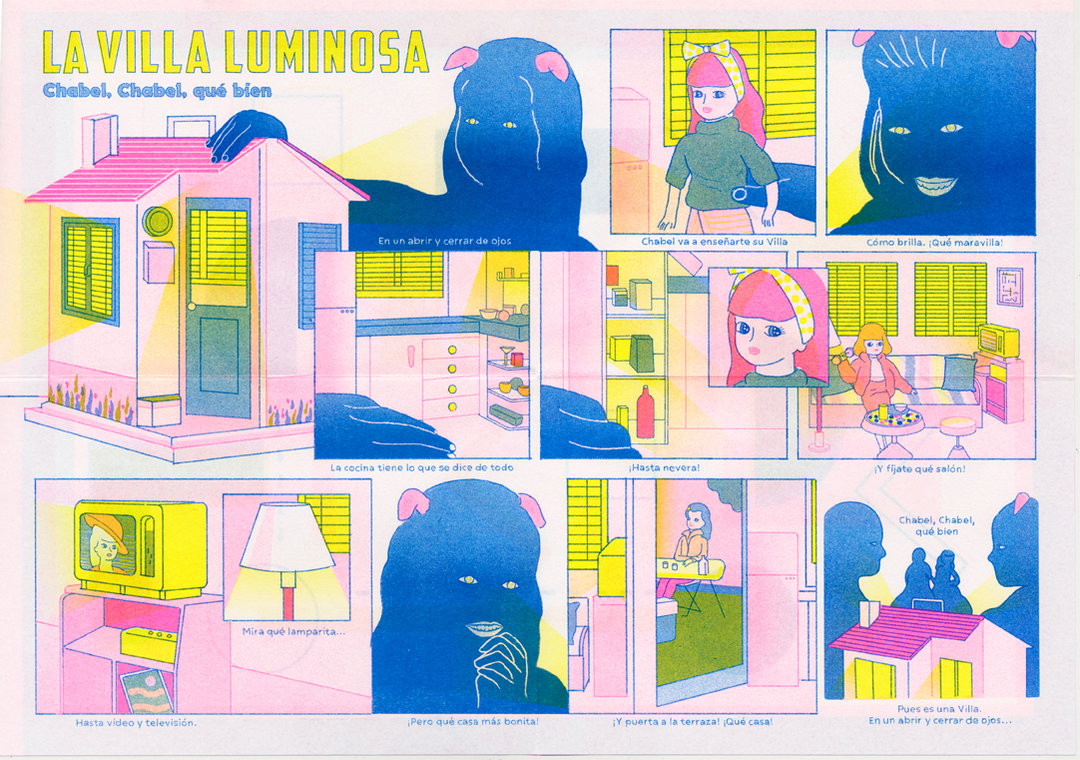
Ana Galvañ: La Villa Luminosa (Copyright © Ana Galvañ, 2020)
Together, María, Pepa, Elisa and Ana contribute different narratives which build an in-depth, fantastical and most of all, intriguing picture of Chabel. Comics, written texts, stickers and posters make up the unique compilation, each output playing on a different aspect of the house. Elisa, for example, the writer of the group who is arguably the biggest fan of the doll’s house, contributes beautiful stories detailing its goings-on. Ana, however, who designed the stickers and posters, adds visuals inspired by the television ad that marketed the doll’s house. “The ad is a bit dark,” says María, “there is something disturbing in it and Ana has captured that very well.” Similarly, Pepa’s comic also taps into this tone, playing on the slightly disturbing and sinister qualities that old children’s toys seem to express so well.
As for María’s interpretation of the house, it’s the concept of the dollhouse and what it represents that takes centre stage. She explores the versatility of the doll’s house, how children can reinvent story after story within the same small four walls, originating from the same scenario. Within this concept, she integrates questions of how toys or games are gendered. The viewer can read the comic on several different levels, one of which, is a story of how doll’s houses and playing with one are historically associated with young girls. “This idea is very dangerous,” adds María, “the idea of separating toys by gender and telling children from a young age what things they should be interested in depending on whether they are a boy or a girl: cooking, washing up, fighting, driving motorbikes?”
Injecting her contemporary style with a splash of decades gone by, María often likes to combine different oeuvres from history into her work. Right now, she’s “mad about” Richard Scarry for example. Able to draw inspiration from anything, particularly pop culture, an amalgamation of references collide to create María’s very own form of storytelling. The design of toys from the 80s and 90s is also a key interest of hers at the moment, especially when it comes to character development. But above all, she finally goes on to say, “what I’m obsessed with at the moment, are the problems I have in my day-to-day life.”
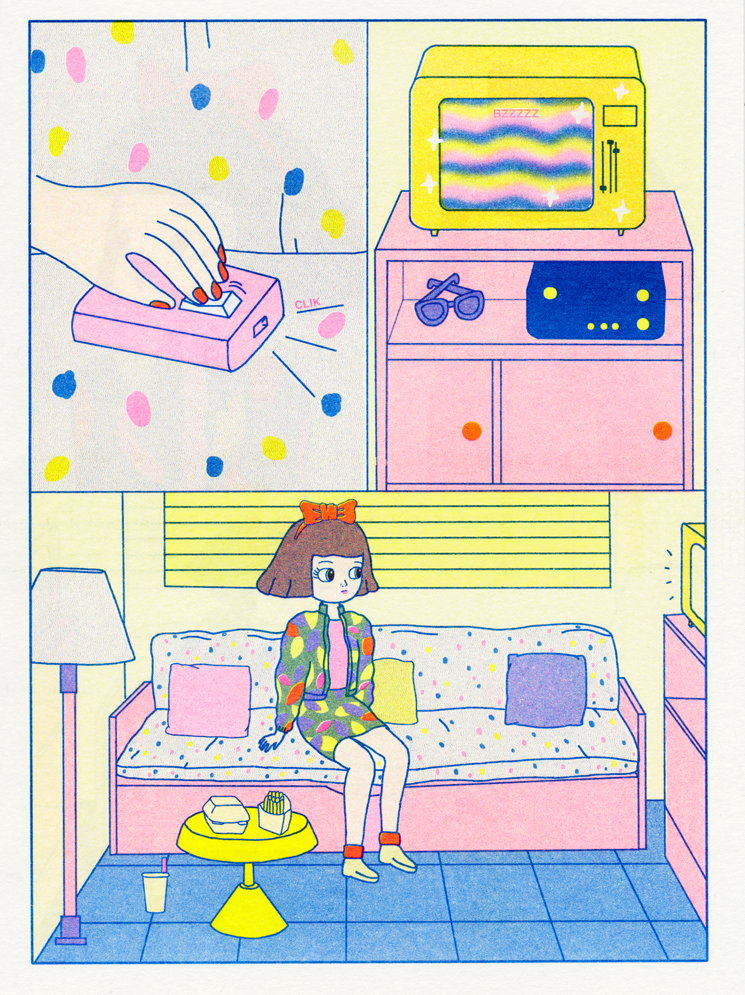
María Ramos: La Villa Luminosa (Copyright © María Ramos, 2020)
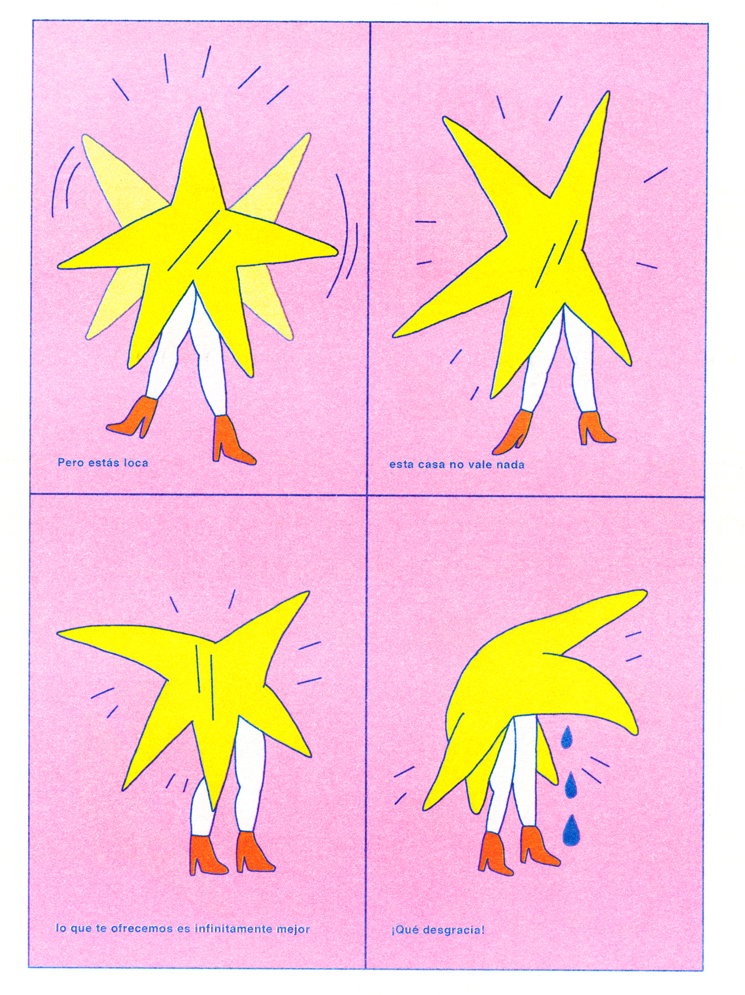
María Ramos: La Villa Luminosa (Copyright © María Ramos, 2020)
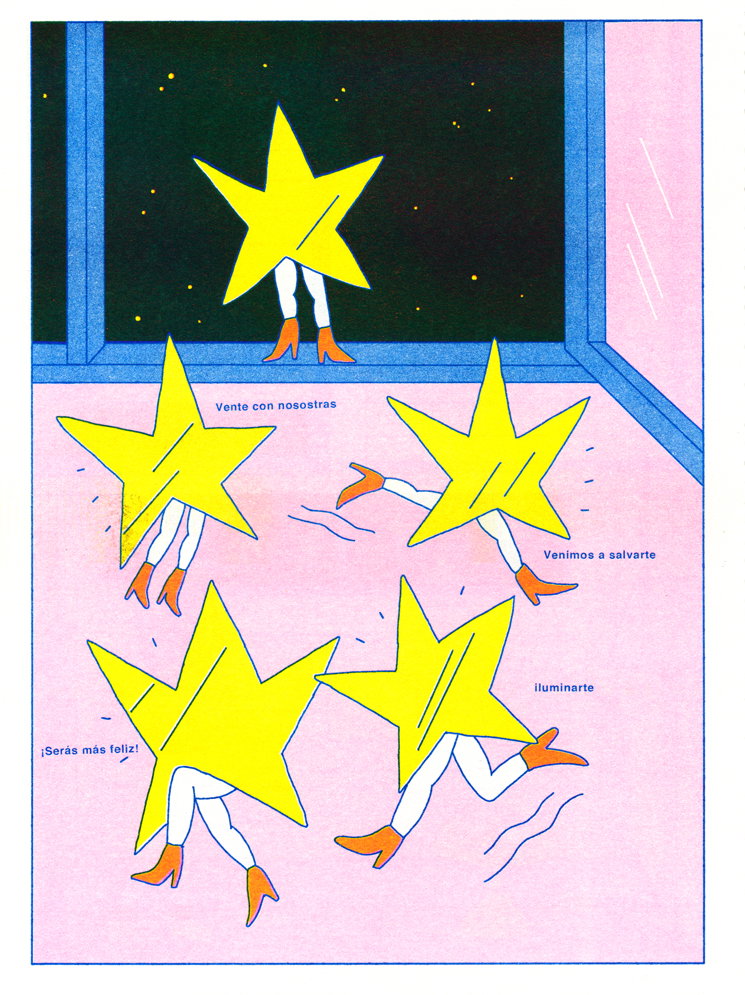
María Ramos: La Villa Luminosa (Copyright © María Ramos, 2020)
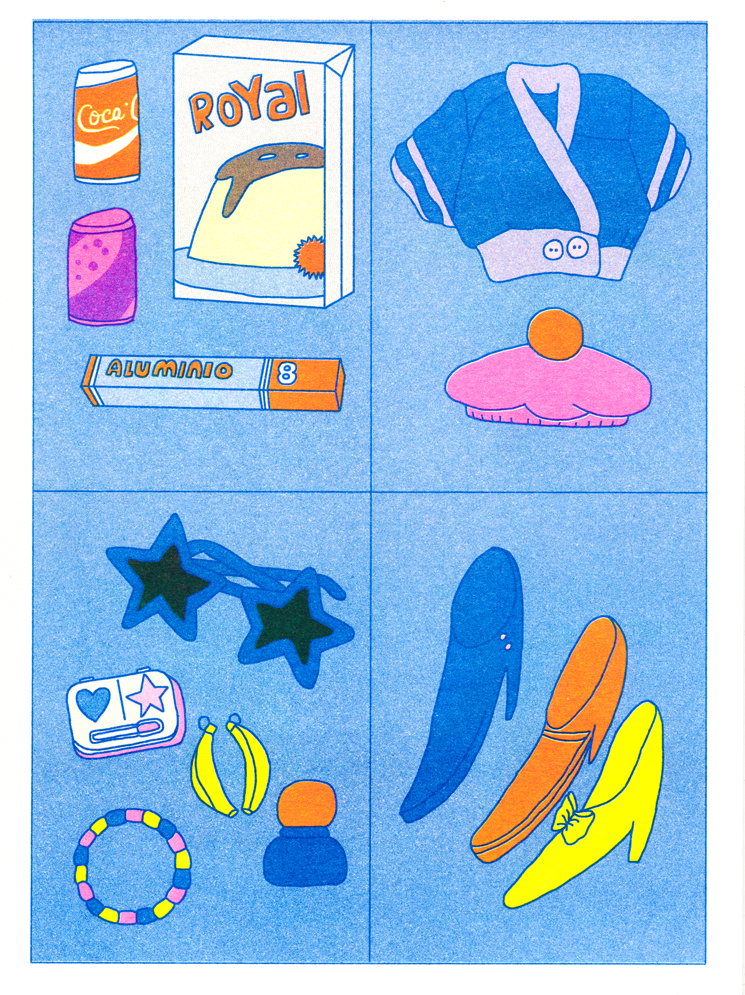
María Ramos: La Villa Luminosa (Copyright © María Ramos, 2020)
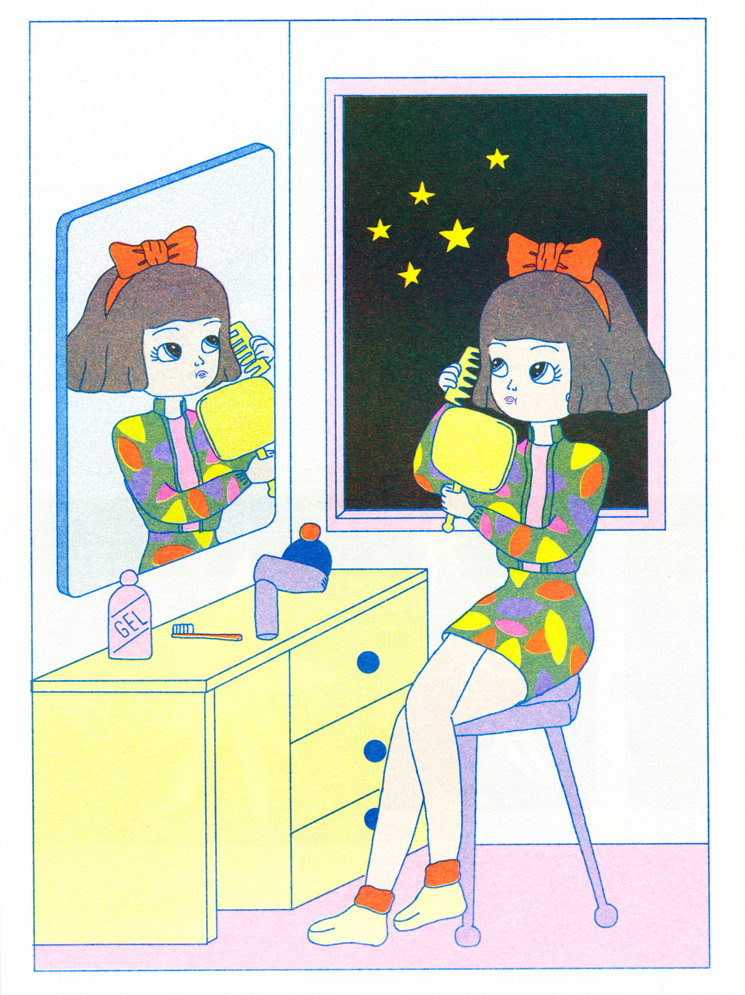
María Ramos: La Villa Luminosa (Copyright © María Ramos, 2020)
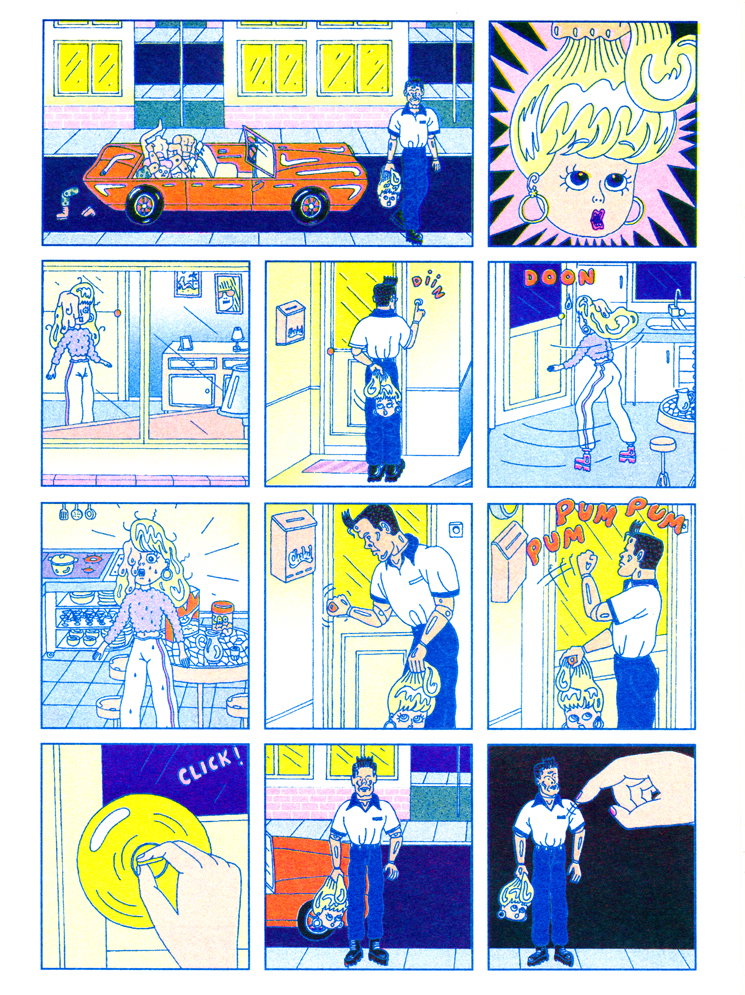
Pepa Prieto Puy: La Villa Luminosa (Copyright © Pepa Prieto Puy, 2020)
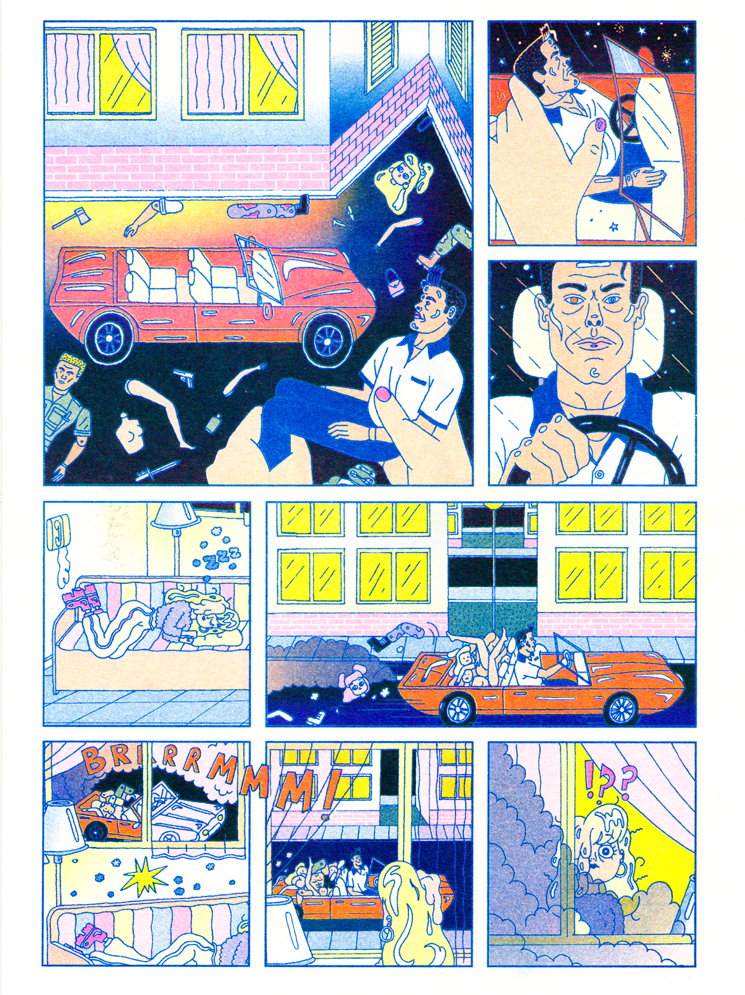
Pepa Prieto Puy: La Villa Luminosa (Copyright © Pepa Prieto Puy, 2020)
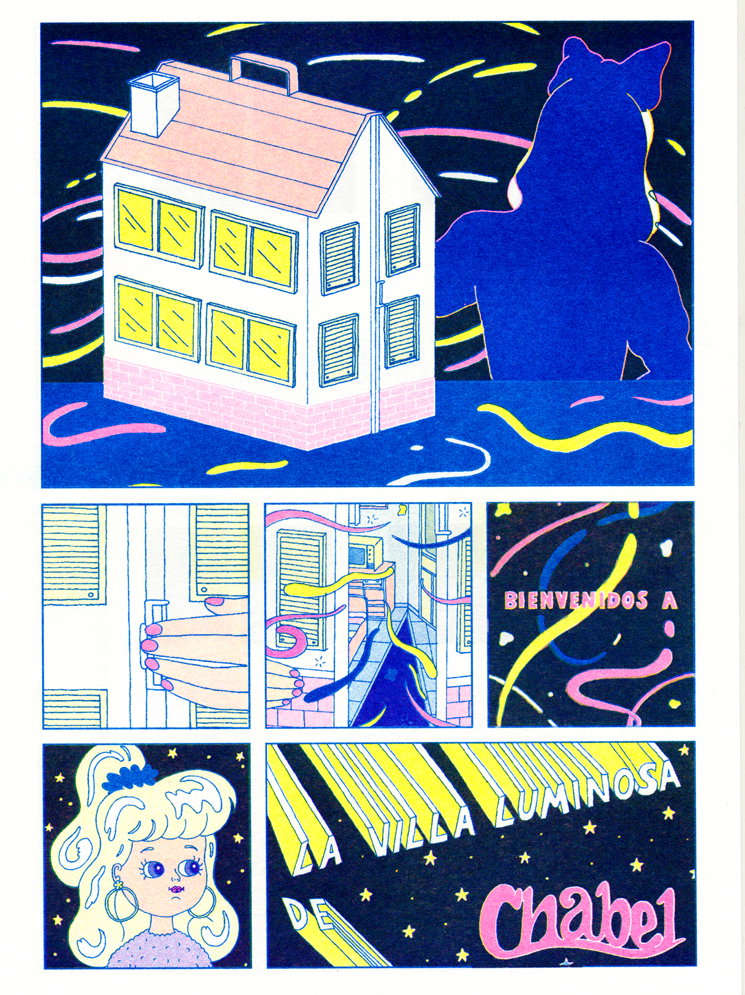
Pepa Prieto Puy: La Villa Luminosa (Copyright © Pepa Prieto Puy, 2020)
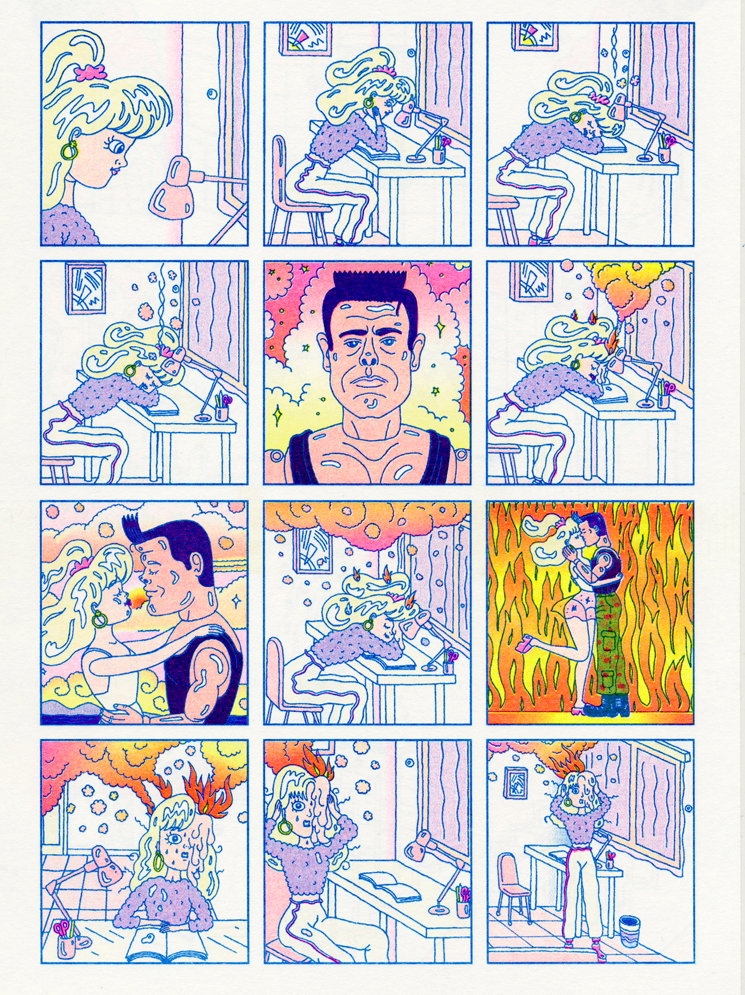
Pepa Prieto Puy: La Villa Luminosa (Copyright © Pepa Prieto Puy, 2020)
Hero Header
María Ramos: La Villa Luminosa (Copyright © María Ramos, 2020)
Share Article
About the Author
—
Jynann joined It’s Nice That as an editorial assistant in August 2018 after graduating from The Glasgow School of Art’s Communication Design degree. In March 2019 she became a staff writer and in June 2021, she was made associate editor. She went freelance in 2022.