


Elizabeth Goodspeed on why design writing needs designers writing
Without designers writing about their own work, design is easy to misunderstand. Writing helps designers work through what they think – and makes that thinking visible to others.
Share
Last month, I hit my 50th byline since I started writing professionally. That number surprised me, probably more than it should have; I still feel a bit weird calling myself a writer.
This doesn’t come from a lack of confidence (for better or worse, I seem to be pathologically incapable of imposter syndrome). I know I’m a writer! And yet, I still default to calling myself a designer first, or even exclusively, when I’m asked about myself.
A lot of this comes down to familiarity: I have a clearer internal map of my design practice than I do my writing practice. I’ve been doing design for a while – since 2011, if you count from when I started art school, or 2004, if you count from when I first got a pirated copy of Adobe Photoshop – and have worked across enough formats and genres in that time to have figured out my own innate tendencies. I know the visual tricks I fall back on and the typefaces I reach for when I’m out of ideas. When I write, I’m less attuned to tendencies like these. Often I’ll draft a column that my editor loves and still feel like it’s not quite me for reasons I can’t fully name. When this happens, I find that it’s less about the writing itself than the angle: not infrequently I realize halfway through writing an essay that I’m answering a question I’m not actually interested in.
“For designers who write, their writing and their work circle the same inquiries, even as the format changes.”
Elizabeth Goodspeed
Of course, the more I write, the easier it's gotten to identify what makes something feel like me. I’ve realized the deciding factor is the overall remit of the piece: whether what I’m writing has space for me to express how I think about the world. Both my writing and my design tend to come out of the same place: a love of history, and an interest in ideas that don’t resolve cleanly. My design work usually starts with research – looking at references, identifying small details that delight me, and replicating them in a new context in my own output. My writing process (when it works) follows a similar path: I'll notice small conversations and ideas out in the world and piece them together into a broader narrative. Seeing this overlap between my disciplines has made it easier for me to understand writing not as something separate from design, but as another way of working through the same set of questions.
Once I started to notice this overlap in my own work, I began to see it more clearly in others, too. For some people, that connection is especially visible – their writing and their work circle the same inquiries, even as the format changes. One of my favourite examples of this kind of synthesis is the work of It’s Nice That’s Tokyo correspondent, Ray Masaki. He’s the founder of Studio RAN in Tokyo as well as a design critic who has taken on subjects like institutional white supremacy in design and the illustrations on mass Japanese signage. Plainly speaking, I enjoy the quality and tone of Ray’s writing: it always reads as someone thinking through something in real time, rather than presenting a neatly resolved, but often reductive, conclusion. It’s careful without being cautious, and specific without trying to resolve all the problems it raises. But more than that, I love how clearly I can understand what he's interested in as a person from seeing his writing alongside his work. In journalistic terms, this is often called having a “beat” – a consistent set of questions or subject matter that someone returns to over time, approached from different angles. His essays tend to start from specific observations like advertising, packaging, and language before widening into questions about history, identity, and power.
Ray writes across a range of subjects, but, informed by his experience as a Japanese American who moved to Tokyo almost a decade ago, often returns to stories about cultural mistranslations and Japanese visual culture. This particular personal position seems to allow for a kind of double vision, where he’s able to see things from both inside and outside at once without fully settling into either. That same perspective carries into his design work. You can see it in his projects that deal with translation and context – like adapting an international brand for a localised audience or running workshops about how creative coding can be used to address social issues. His writing doesn’t separate from his design practice, nor his design from his writing.
“When more designers write, it starts to change how design itself gets talked about.”
Elizabeth Goodspeed
That pattern shows up in different forms. Michael Bierut – one of the most widely read designers writing today – has built a practice at Pentagram largely defined by large-scale, public-facing projects for major institutions, political campaigns, and brands that market to broad, international audience. The aesthetic of his design work itself is usually minimal and modernist, simple in a way that makes you wonder how the hell he got sign-off. In his writing, he returns to those same projects, but focuses less on the formal outcomes and more on how they come together. It becomes clear that his expertise as a designer lies as much in consensus and communication as in form; his facility with language (and therefore, client sign-off) is part of how that consensus is built in the first place. Another example is Steven Heller, whose The Daily Heller has built a running record of the field by paying attention to things that might otherwise be overlooked. That impulse aligns with his background – early in his career, he worked as an art director for the underground porn magazine Screw. His writing reflects this sustained interest in looking closely at what others pass by.
Writing can reveal what drives a designer’s work. But for the designer, it also changes how design thinking itself happens. You can get away with a lot in design: conceptual ideas are able to sit inside a visual piece of work without ever being fully spelled out. Things are gestured at rather than articulated. Writing forces you to figure out exactly what your idea is; if it isn't working, you’ll know immediately. Where design is like a ballet – implicit ideas carried through form – then writing is closer to a theatre – your thinking has to be explicitly spoken. Writing also changes how you think about your own preferences. While perspective or taste often seems like instinct (you either like something or you don’t!) writing pushes you to explain that reaction. Why does it work? What is it referencing? What assumptions are you making? Even if you don’t land on a perfect answer, you start to see your own thinking more clearly.
“Writing is to graphic design what clay is to pottery. It’s the material you’re shaping and massaging into form.”
Elizabeth Goodspeed
Writing is to graphic design what clay is to pottery. It’s the material designer shape and massage into form. To work with text well, you have to really be able to read and understand what you’re setting; not just basics around how it looks (for example, not hyphenating a word in a bad spot), but what it means on a deeper level. Just as reading makes you a better writer, writing makes you a better reader – and better readers and writers are better designers. You're able to engage more closely with any text you’re designing, and with the people producing it. Conversations with strategists, writers, or clients become more precise, because you have a shared way of thinking through language, rather than serving merely as stylist.
The same process of working through ideas and making them legible extends beyond the individual designer. When designers write en masse, it starts to change how design itself gets talked about. A lot of writing about design comes from the outside – from people reacting to the visual world without necessarily understanding how the visual world gets made. It’s not unusual to read an essay about something like Figma and realise the author has never actually used it (writers calling typefaces “fonts” is another pet peeve). Designers tend to describe different things, and describe them differently. Details that might seem minor to a layman, like the difference between a single and double story “a” or what a component library is, are emphasised when designers write because designers understands what’s at stake in those distinctions. As a result, the prose is more precise and closer to how design work actually operates. This matters because most of the people reading essays about design are... designers! Those details are exactly what we’re looking for when we read about design, and what's often missing when coverage of the field is left to outsiders.
Writing also changes how the field is seen from the outside. Without a sustained design canon written by designers, it's easy for design to collapse into surface – something to react to quickly that’s mostly judged by vibes or personal taste. Design ends up being seen as something to like or dislike rather than something to interpret. You can see this effect in things like the discourse over the Cracker Barrel rebrand, where the conversation narrowed almost immediately to before-and-after images and hot takes. The discussion moves fast, but it doesn’t go very deep. There’s a lot of certainty and not much context about what a given designer was trying to do, what constraints shaped their work, what references they were working with. When design is covered with rigor and nuance, it changes how the field is read more broadly. It becomes something that can be discussed with the same level of attention and specificity as fields with a longer history of critique—like architecture, theater, or fine art—rather than something treated as purely commercial or aesthetic.
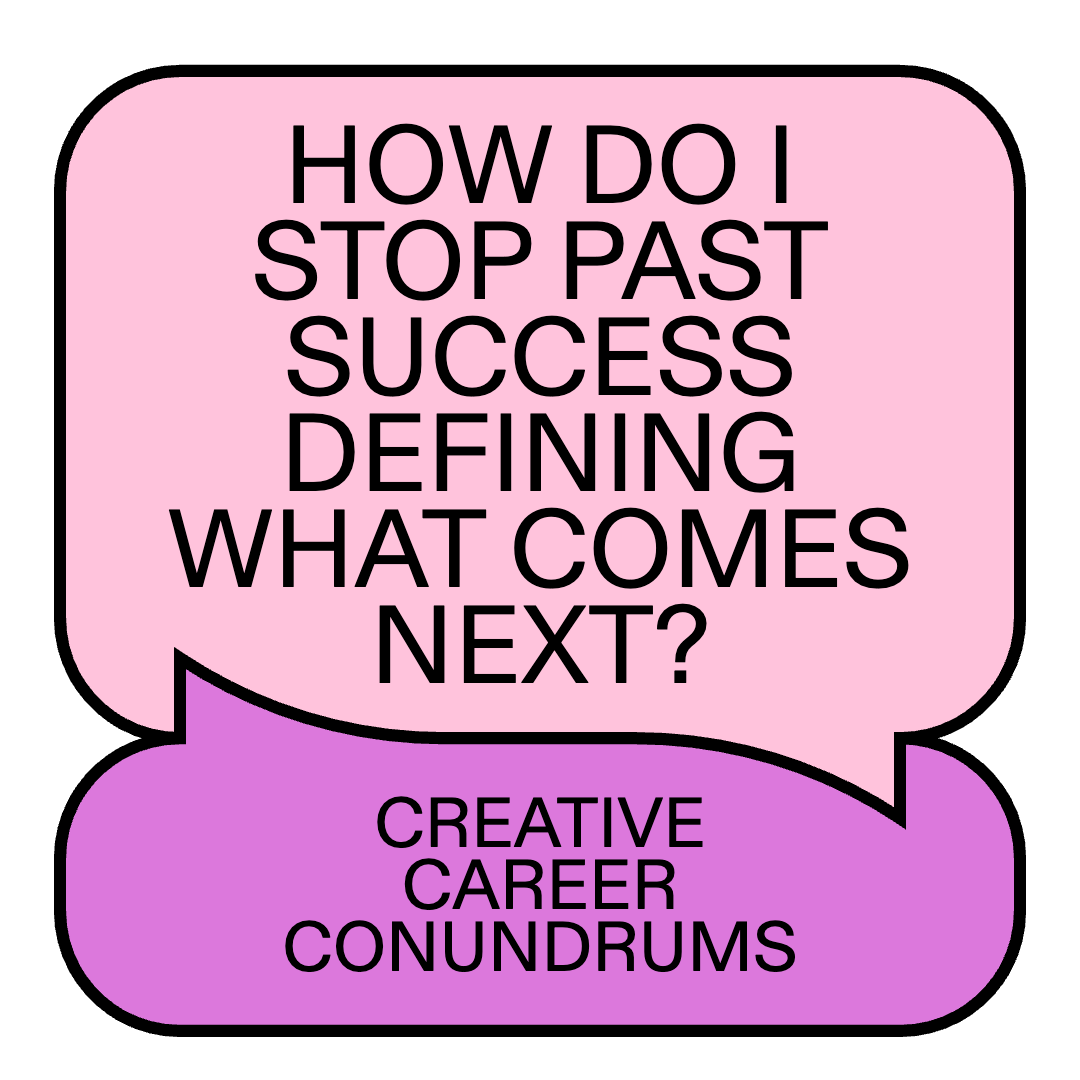
“The antidote to a million awful takes on a logo redesign is: more designers writing.”
Elizabeth Goodspeed
To be fair, a lot of this kind of in-depth design writing already exists online in some way. It shows up in tweets, Instagram captions, or Reddit and Slack threads as fragments of thinking that circulate briefly and then disappear. There’s no shortage of design opinions (for better or worse). But what’s less common in our field is the follow-through of taking those same ideas and working them into something more durable. Writing something down in a sustained way creates a record. It gives ideas somewhere to live beyond the moment they’re posted. Instead of each conversation starting from scratch, there’s something to build on or push against. In other words, the antidote to a million awful takes on a logo redesign is more designers writing.
Before I started writing, I often wanted to read things that didn’t seem to exist. I was interested in writing that took design seriously as a set of decisions, not just as outcomes—whether that meant questions of ethics or something as mundane as mockups or memes. Writing became a way of working through those questions myself, but rarely in isolation. It gave me a reason to reach out to people whose work I admired and ask questions I wouldn’t otherwise have a reason to ask. The work ends up feeling less like forming a singular argument and more like assembling something from what’s already out there: other people’s ideas, conversations, and references alongside my own perspective.
More than anything, it’s made the field feel less like something I’m consuming and more like something I—and others—can contribute to. At the very least, it makes it much harder to go back to using Lorem Ipsum.
Share Article
Further Info
About the Author
—
Elizabeth Goodspeed is It’s Nice That’s US editor-at-large, as well as an independent designer, art director, educator and writer. Working between New York and Providence, she’s a devoted generalist, but specialises in idea-driven and historically inspired projects. She’s passionate about lesser-known design history, and regularly researches and writes about various archive and trend-oriented topics. She also publishes Casual Archivist, a design history focused newsletter.