"The truth can be controversial": illustrator Edel Rodriguez on going viral
For the fifth consecutive year, It’s Nice That has media partnered with Design Indaba. We will be delivering news, interviews and insight live and direct from each day of the three-day conference in Cape Town. The event will be live broadcast via simulcast to a number of South African cities allowing each presentation to resonate around the country.
Illustrator and artist Edel Rodriguez was born in Havana, Cuba in 1971. Nine years later, he emigrated to the US with his family as part of the mass emigration movement known as the Mariel boatlift. Having lived on America’s East Coast — in Miami and New York — ever since, his Cuban upbringing has never left Edel. “I think Cuba has influenced my work in many subtle ways,” he tells It’s Nice That. “The way I handle colour is probably related to having grown up in a country where colour, from the sky to the earth, to cars, and homes, is very saturated. Other things, like my interest in politics, and trying to figure out why my family had to leave our homeland, have influenced a lot of the subject matter I work with nowadays.”
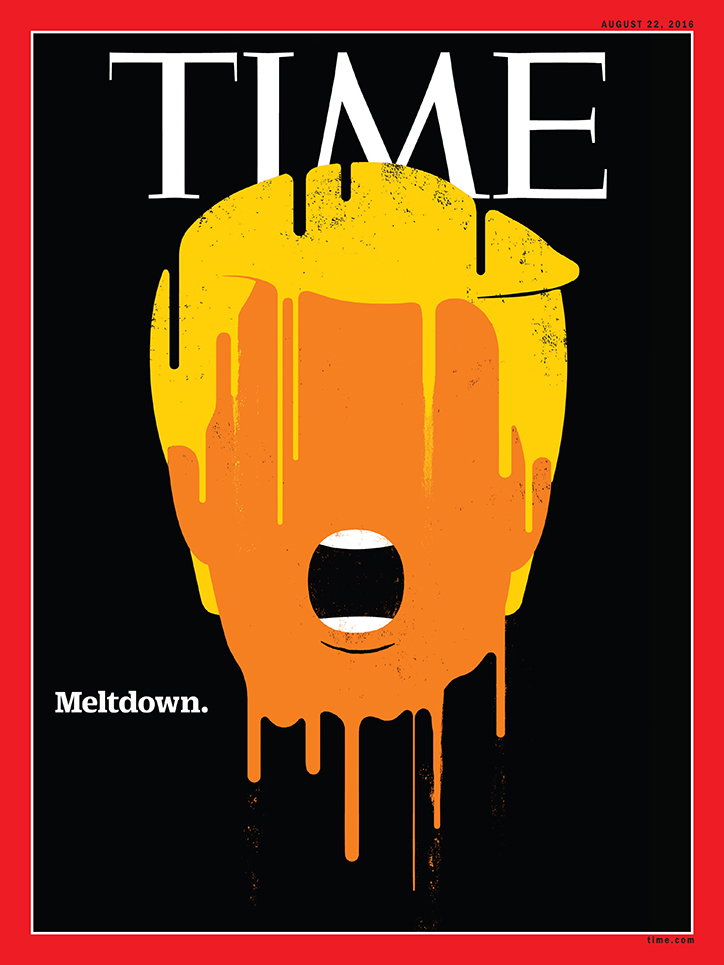
Edel has been working with Time magazine as an art director and in a freelance capacity since the mid-‘90s. In 2016 and 2017, Edel’s covers for Time magazine and Der Spiegel went viral. We caught up with Edel ahead of his talk at Design Indaba today (21 February) to find out why.
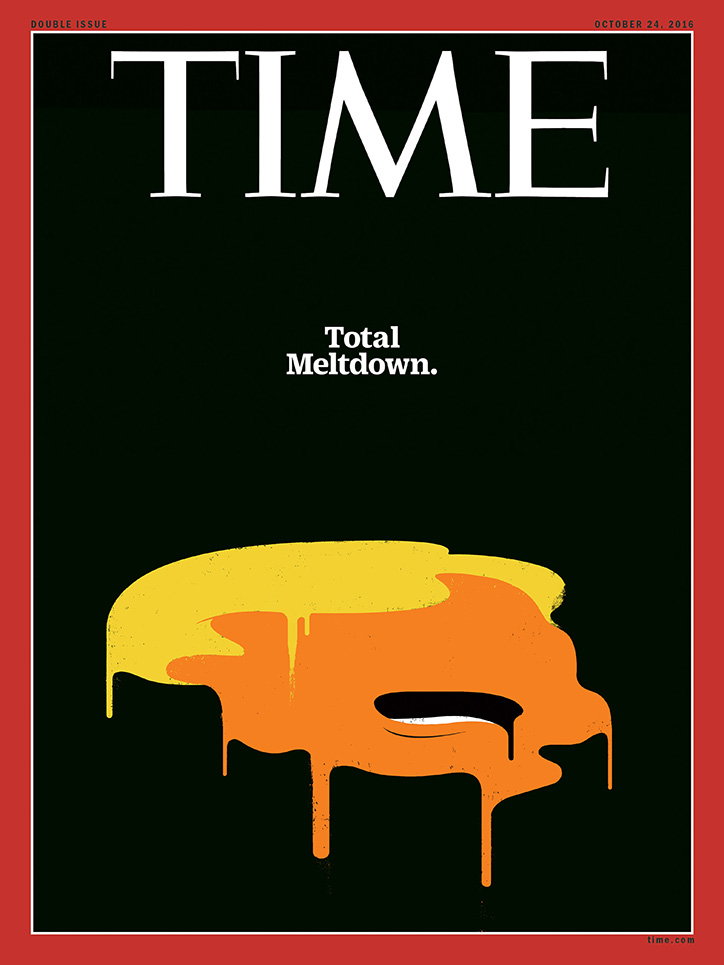
Edel Rodriguez: Time Magazine
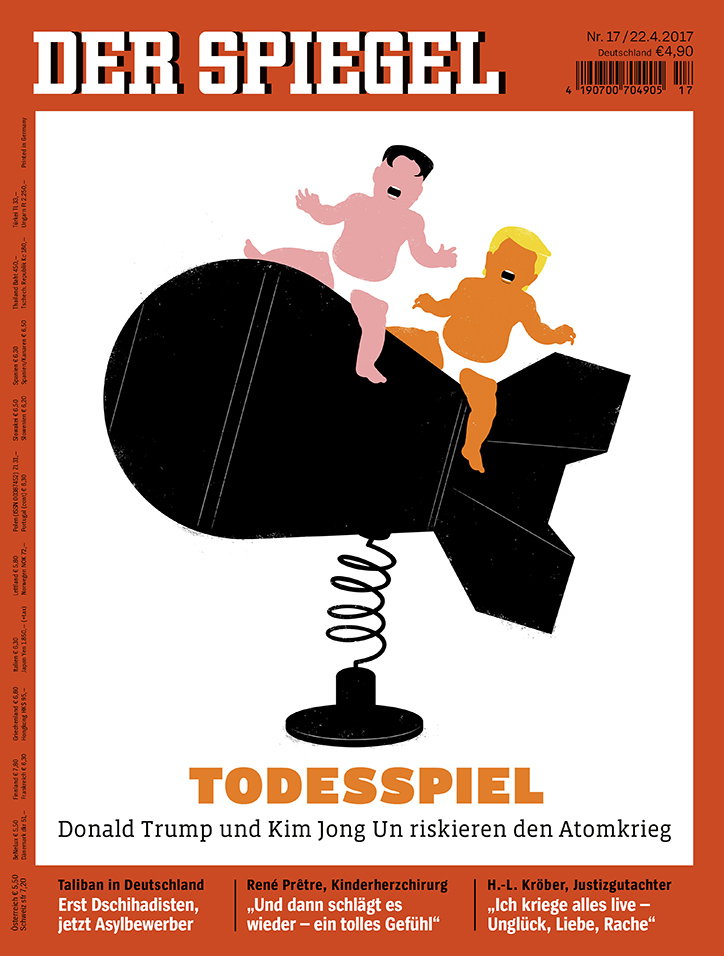
Edel Rodriguez: Der Spiegel
Tell us about the work you’ll be speaking about at Design Indaba.
I will mostly be speaking about my work over the last couple of years. How a small and personal campaign of graphics, which started online, later spread to the covers of magazines and ended up at protests throughout the world. A way of reaffirming the idea that one person’s voice can make a large impact, especially in this day and time. We have all the tools we need to affect change, right at our fingertips.
Can you run us through the process that goes into an illustrative commission for the cover of Time or Der Spiegel? Do you have a set method for approaching these kinds of commissions?
The cover process on each cover has varied a bit, from submissions that I have sent in myself, to being commissioned for a specific topic. When I am commissioned, I typically go through about a dozen ideas and we pick the one that seems to get at the crux of what’s happening that week. When I have sent an idea on my own, sometimes the magazine changes their plans to run a particular image on the cover. Other times, clients have seen something I’ve posted online and want to publish it to bring it to a wider audience.
When you begin work on a commission for the cover of a big publication, do you consider the wider impact that it will have?
I’m aware of the impact a cover might have, but it doesn’t change the way I make the image. I’m still making images for myself, images that scare me, that feel complicated to me. I then take a leap and hope a worldwide audience will get it. It usually does.
Der Spiegel’s editor-in-chief Klaus Brinkbaeumer commented that he was “surprised” by the impact of the February 2017 illustration. Were you?
I knew that cover would make an impact, but I didn’t realise it would be that strong and long-lasting. I was dealing with press about it a couple of months after the cover came out, I still am. I have made many images that deal with the topic of terrorism and beheadings, so to me, I was working with my language. When it shows up out of the blue in someone’s life, they have to deal with something they may never have imagined, and that can be unsettling to some. However, the best art works that way I believe.
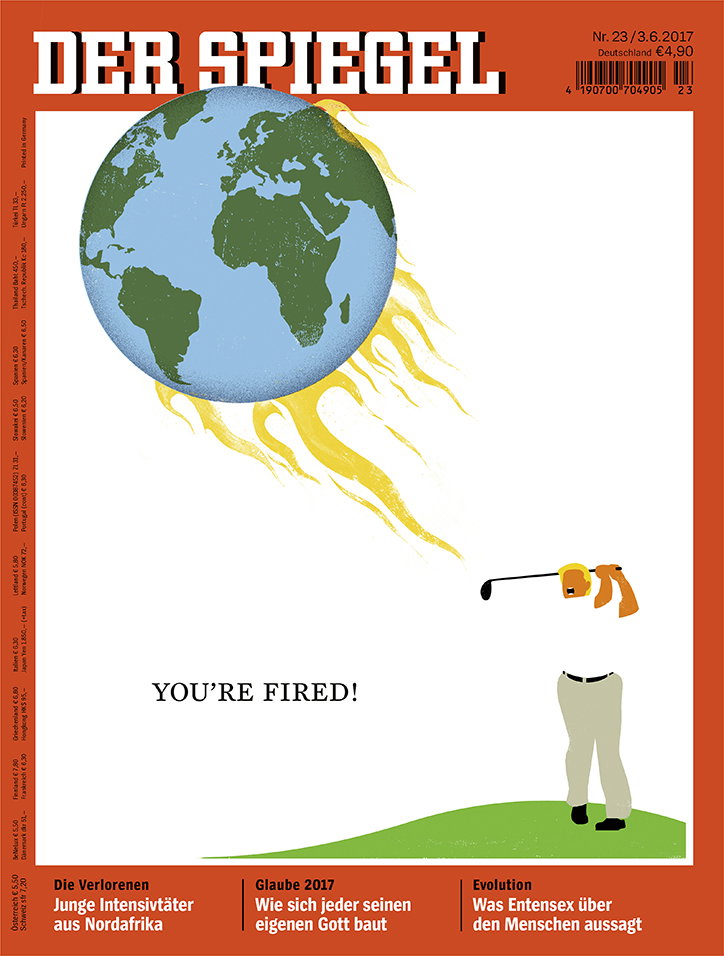
Edel Rodriguez: Der Spiegel
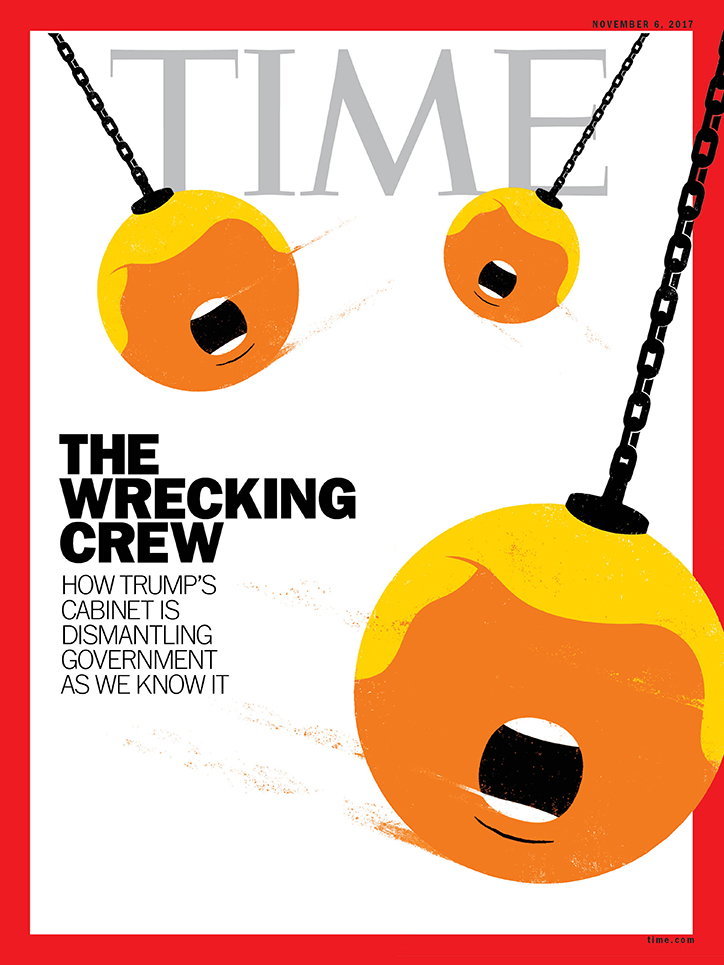
Edel Rodriguez: Time Magazine
Do you seek controversy through your work?
Controversy is very unpredictable, so I don’t know if I seek it, but I do welcome it when it happens. I think it’s a good thing for an image and magazine cover, since starting a conversation is really the main point of a cover. The truth can be controversial I suppose. These are stories we are experiencing every day. It’s like having an abusive father, but everyone is quiet about it. Finally, when one of the kids takes a picture of the abuse and shows it to the world, it’s visually shocking, but it was there the whole time. I’m just putting a focus on our nation’s daily abuse. When people see my work, there’s sometimes a release of emotions, like finally, the viewer feels that they are not alone, that they are not crazy, that someone else sees what they see. That’s a very important aspect of what I do I believe, at a time when their president is messing with their minds.
What do you think is the key to telling a complicated story in a simple way?
The key is to be honest, to put down what you actually feel, the disgust you may have, the anger, and the outrage. It’s important to refrain from censoring those feelings, to question yourself too much. I usually get there in a very direct way. Sometimes artists want to put everything into an image, but I find it effective to be very simple, it connects on a deeper level with viewers.
How has the success of your work, in terms of coverage, affected you personally and professionally?
I’ve gotten more negative messages and comments than I did before, but that comes with the territory. I’ve also had to deal with issues from some venues that are afraid to show some of the work for a variety of reasons, something I never thought would come up. I’m also travelling more for talks, shows, and lectures. Free speech and artistic freedom are very important and fascinating topics to me, so I like to be out there discussing these issues.
*You’ve worked with and for Time in some capacity since 1994. How has the magazine changed over that time? From your vantage point as an illustrator, how do you feel about the political situation in which the US finds itself today?_
I was at Time as an art director from 1994 to 2008, now I work as a freelance illustrator for them on a regular basis. I think the magazine has taken some risks lately that perhaps it would not have taken in the past, and that’s a good thing. Most of it has been as a reaction to the real dangers that the country is facing. The magazine and its journalists have stepped up.
I think the entire world is dealing with a lot of changes – migration, the refugee crisis, xenophobia, an older and entrenched generation of men that don’t want to give up power to women and minorities. This kind of stuff is happening everywhere, it’s just been amplified in the United States. We like to do things big, I suppose. I like that we’re seeing it, recognising it, and fighting it. No one can tell us that racism doesn’t exist, or that misogyny is a thing of the past. Here it is, right in front of us every day. The first step to dealing with problems is to know that they are there and to understand how big the task is. We’re learning and adjusting every day. There is a lot of opposition in this country to all that is happening, we’ll come out on top eventually.
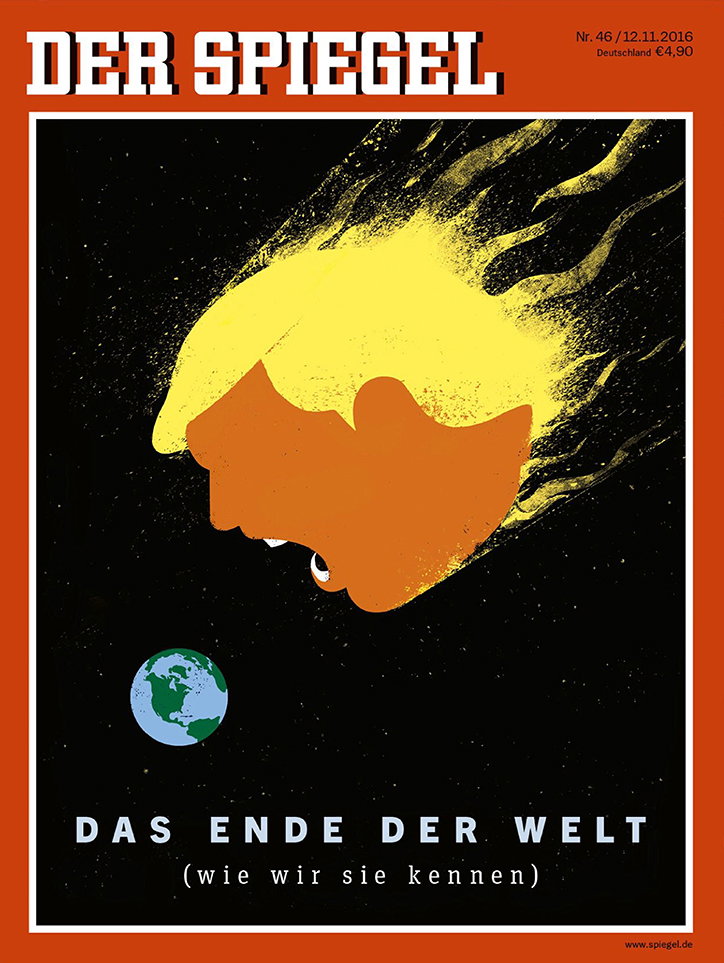
Edel Rodriguez: Der Spiegel
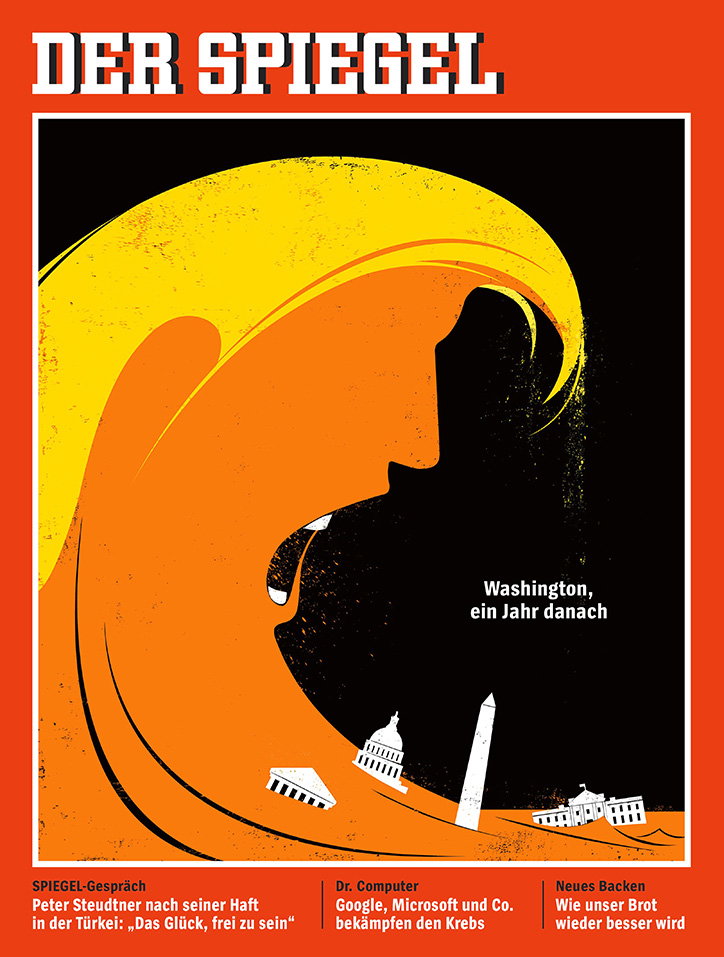
Edel Rodriguez: Der Spiegel
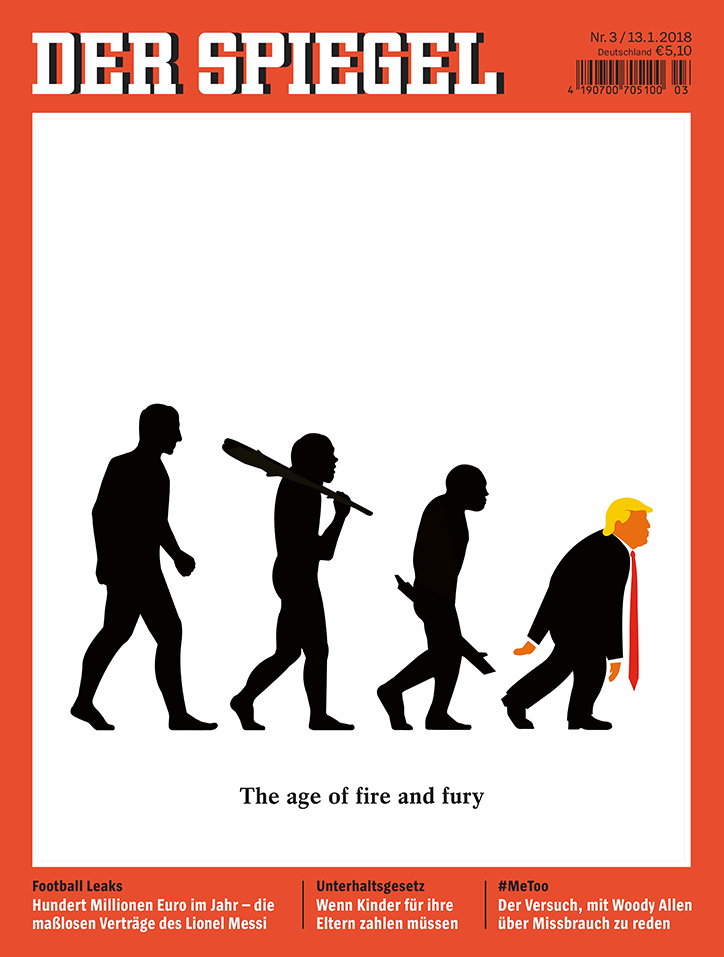
Edel Rodriguez: Der Spiegel

Edel Rodriguez: Der Spiegel
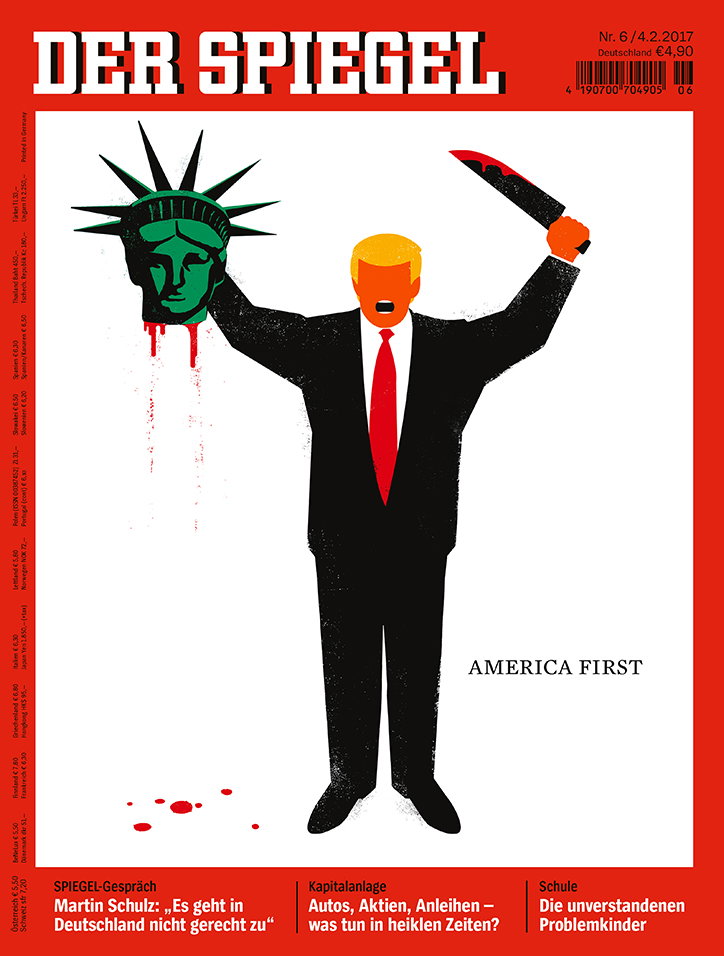
Edel Rodriguez: Der Spiegel
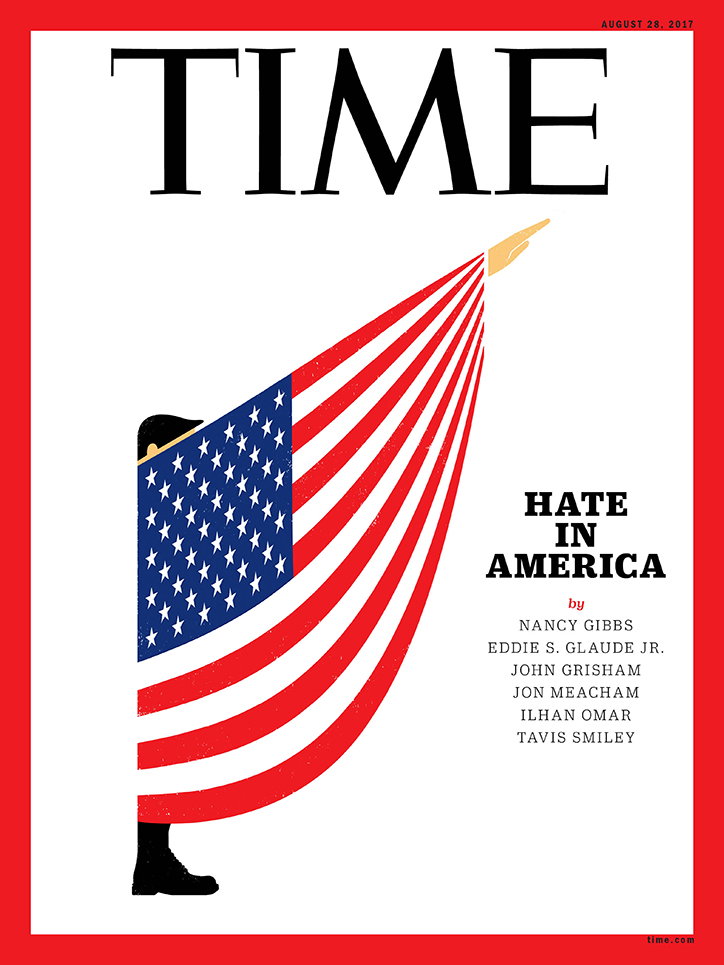
Edel Rodriguez: Time Magazine
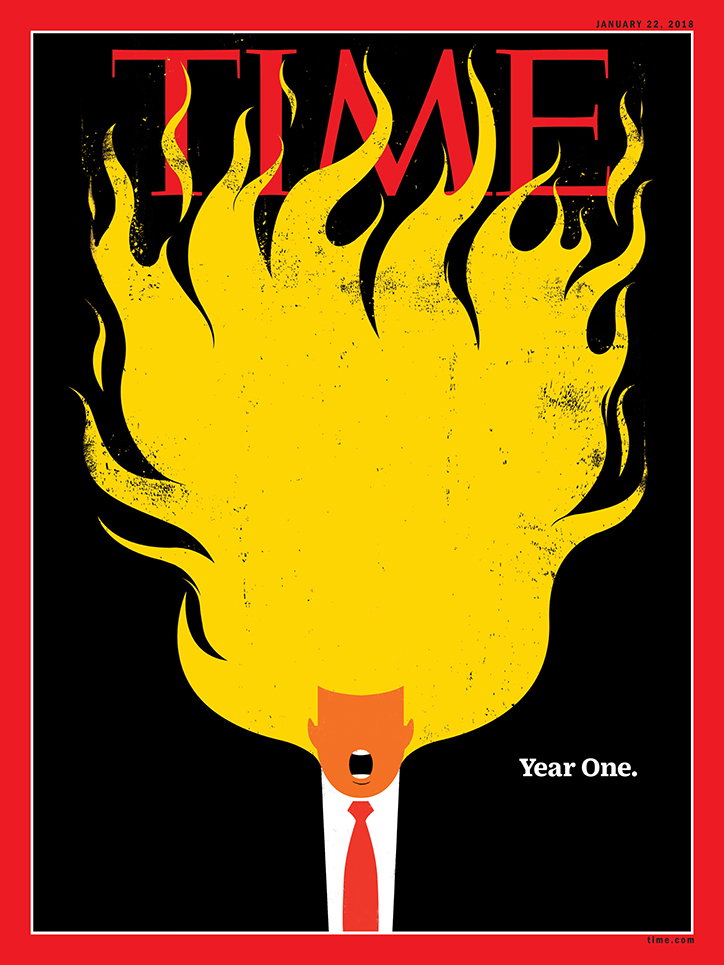
Edel Rodriguez: Time Magazine
Share Article
Further Info
About the Author
—
Bryony joined It's Nice That as Deputy Editor in August 2016, following roles at Mother, Secret Cinema, LAW, Rollacoaster and Wonderland. She later became Acting Editor at It's Nice That, before leaving in late 2018.