

A slow alternative to mainstream fashion media, Booklook is the magazine you can wear and read
The series explores what happens when we bring our editorial interactions closer to the skin.
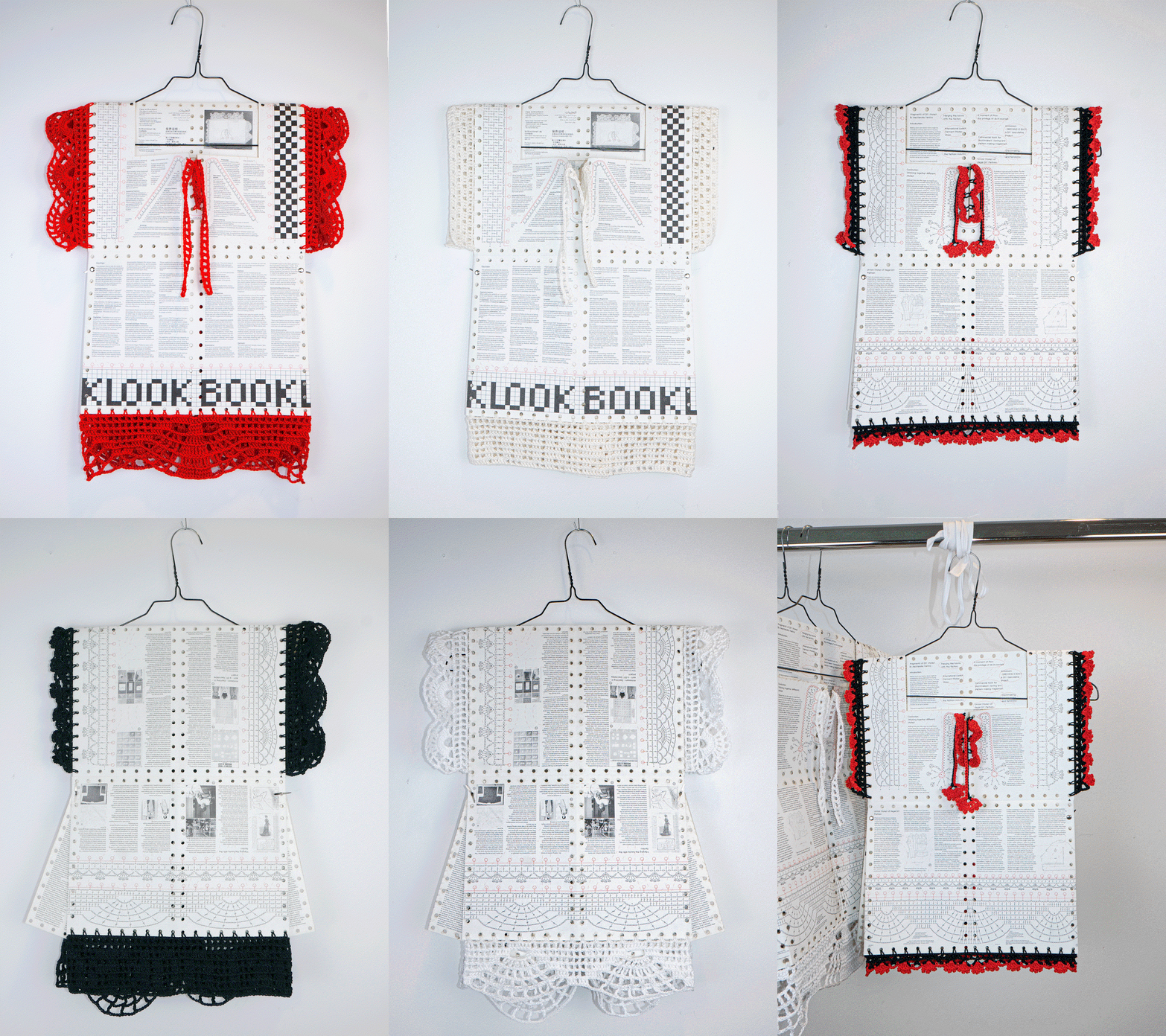
Initiated by Amsterdam-based artist and designer Anouk Beckers in 2022, Booklook is a garment-magazine – a hybrid object you can read and wear that stores hidden stories about fashion and textiles in its folds. Quite unlike your regular glossy, commercial fashion mags, the wearable series of publications are a research inquiry into how our clothes are made and the “social, cultural and historical value that they carry”, Anouk tells It’s Nice That.
The publication’s first instalment came in the form of an apron, and its subsequent edition a shirt. Each Booklook issue is a collaboration between a range of different practitioners sharing their knowledge and expertise in the form of stories, essays and DIY craft instructions, all surrounding the central garment in question. The magazine presents “a playful way to engage with theory and practice, reflecting on the industrial fashion system and its functionalities, by reading about it and dressing up”, says Anouk.
Booklook: Booklook Issue 2, Shirt (Copyright © Booklook, 2023)
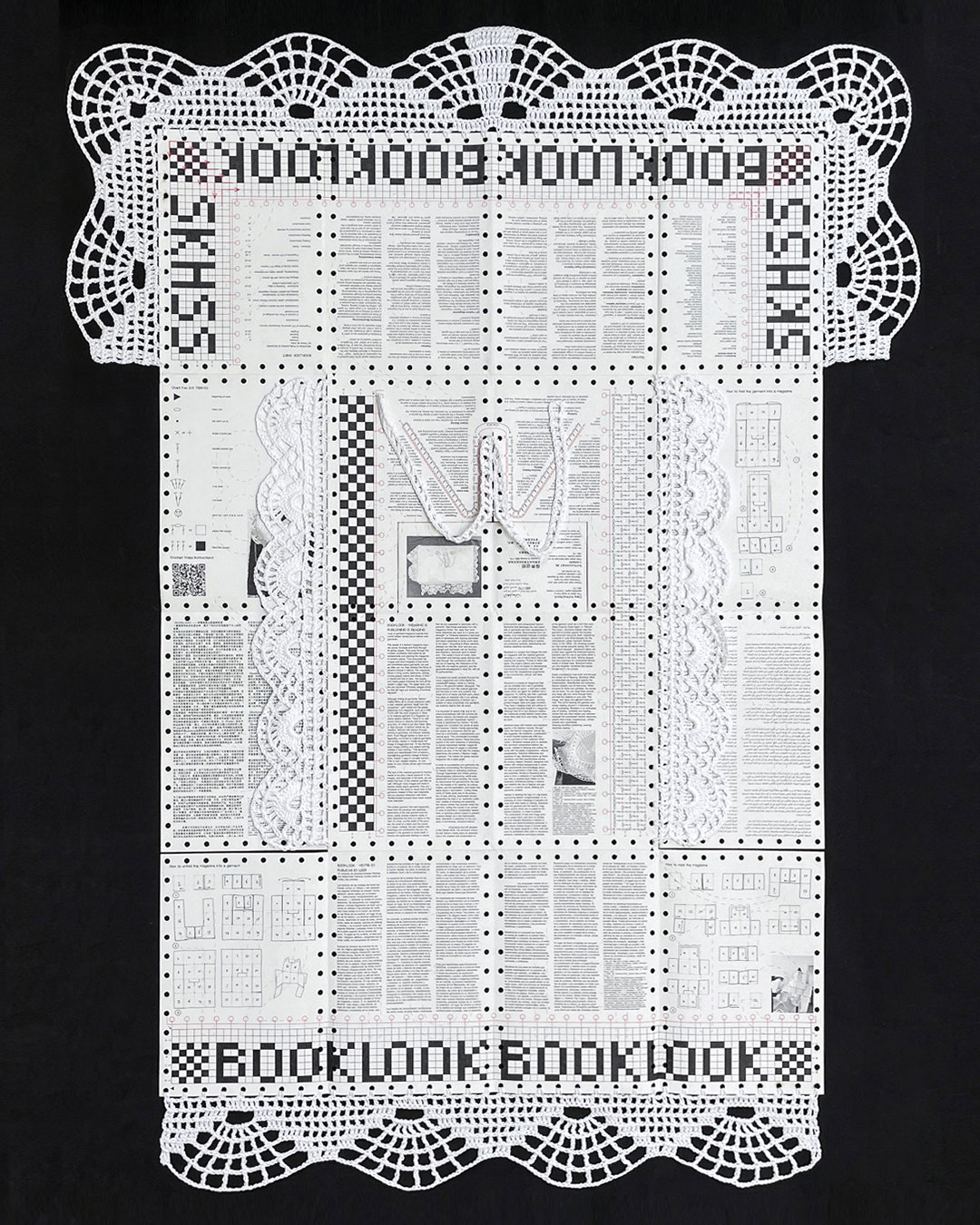
Bookbook’s last Issue, Shirt, was a collaboration between Anouk and fashion designer Mika Perlmutter, researcher Alessandra Varisco and graphic designer Lejla Vala Verheus. The issue was a bid to explore how the layout for a printed publication could become a pattern and “how that pattern could become an extension of the book itself”, says Lejla. Shirt encompassed a number of crotchet patterns by Mika, designed for readers to actively crochet around the publications edges with a built in design feature of carefully planned perforations. “In this way the publication became something even more participatory, where reading and making happened at the same time,” Lejla shares.
From a graphic design perspective the Shirt issue felt like “fitting a hundred-page book onto a single sheet”, the designer says. Running alongside countless folds and hole-punched edges, Lejla had much more of a unique design challenge with the issue than most editorial briefs entail. “We had to integrate translations, the (very precise) crochet patterns, images, Alessandra’s text, crochet instructions, QR codes to video tutorials, project introductions, an A–Z glossary, and credits – all without a strict linear reading direction”, she shares. Working with all of these different elements made Lejla “fall in love with hybrid objects,” she shares. The brief was a balancing act between structure and decoration for the publications’ dual function and its challenges made everything coming together as a final wearable garment “all the more satisfying”, she shares.
Booklook: Booklook Issue 2, Shirt (Copyright © Booklook, 2023)
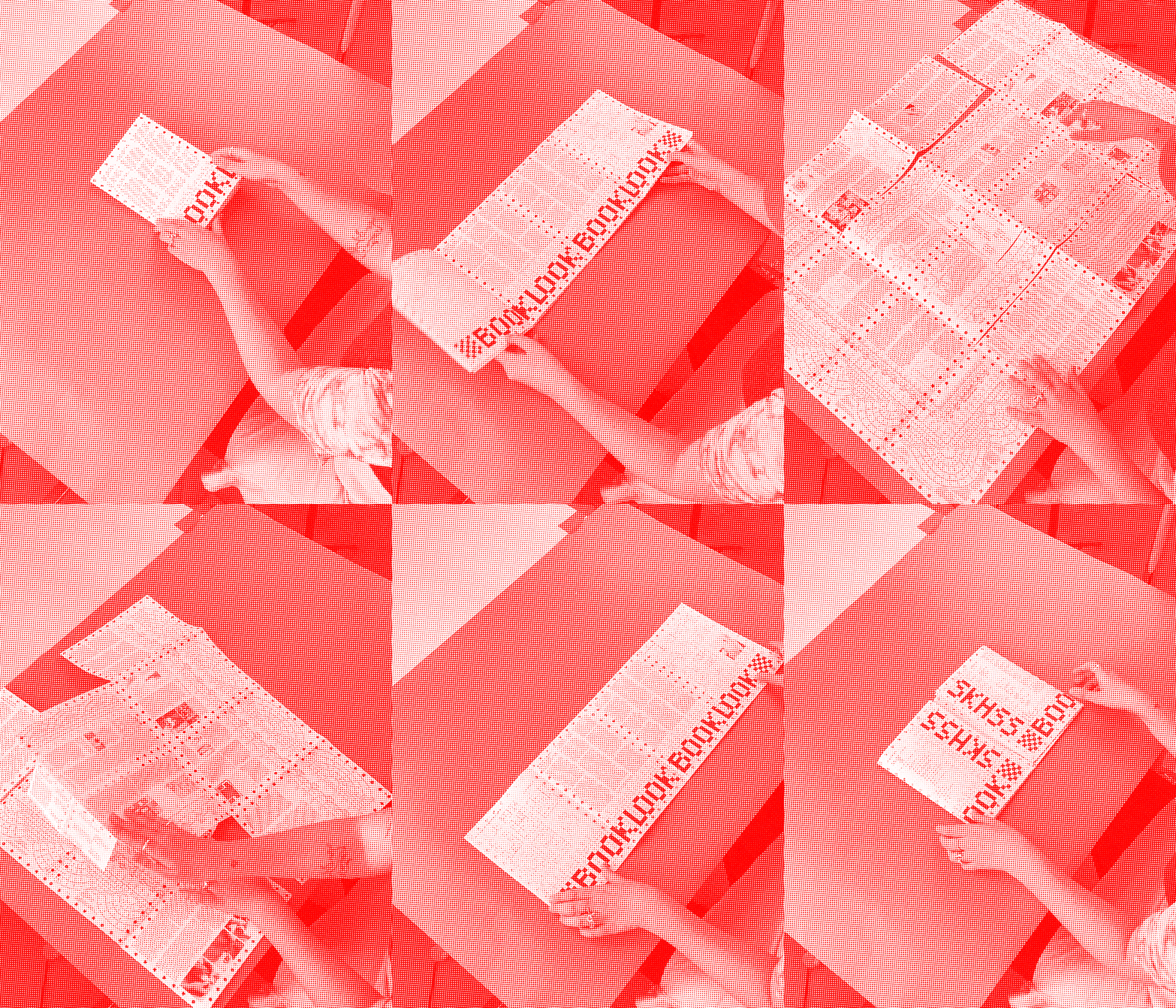
Before determining it’s content, the first step in developing any of Booklook’s issues is a hell of a lot of research into folding. Anouk always brings one central question to this stage of the next issues development: “How can I design a three dimensional object, starting from a flat sheet of paper or textile, using folding as a construction method to design both a publication and a garment?”, she says. “In my studio I have loads of these empty prototypes with no content yet but just the material.”
Closer to clothing than you might think, the first two Booklook issues were printed on washable paper Cuturon (issue 2) and Neobond (issue 1), both made by the paper company Lahnpaper. Interested in furthering this material research with the magazine’s third issue, set to be launched this spring in the form of a two piece suit, Anouk is reassessing this boundary between textile and paper, considering how material impacts the use of a printed object.
For this next issue, Booklook is set to explore Speespak, a design made by artist Iris de Leeuw in 1966: a modular textile suit with zippable trouser legs that has ties to the sexual revolution in the Netherlands. “The first part is a publication that you can read and unfold into a jacket, sharing fragments of the many conversations we had during our intergenerational collaboration on topics such as modular systems, publishing, protesting and being a female artist in the sixties and nowadays,” Anouk shares. “The second part will be a publication that unfolds into a pair of pants containing a text written by Harm Stevens, curator history 20th century at Rijksmuseum (Amsterdam, NL), where he shares the art historical context of this suit,” she ends.
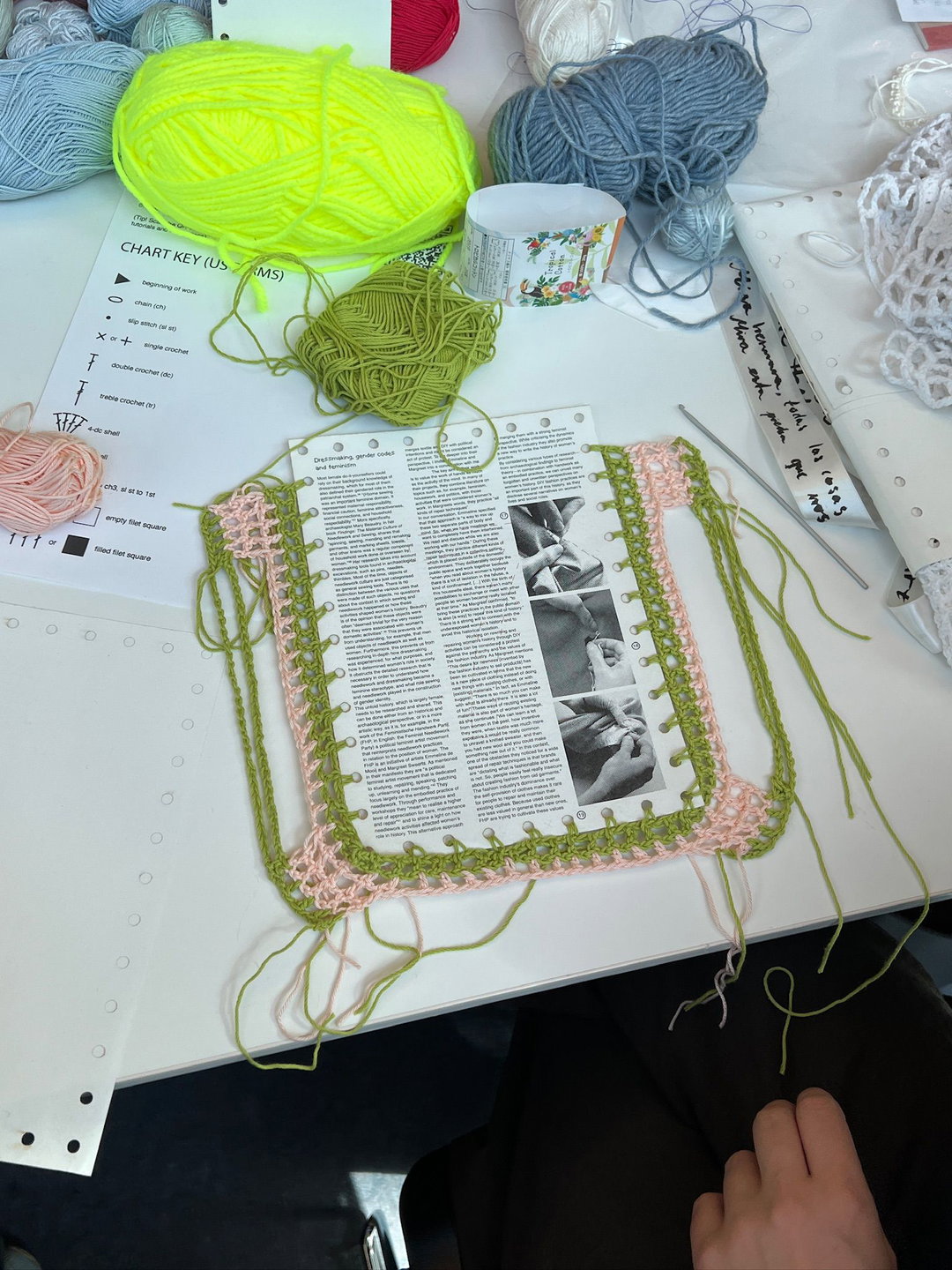
Booklook: Booklook Issue 2, Shirt, Crochet workshop at museum CODA Apeldoorn, NL. Crochet by Carmen Steeb (Copyright © Booklook, 2023)
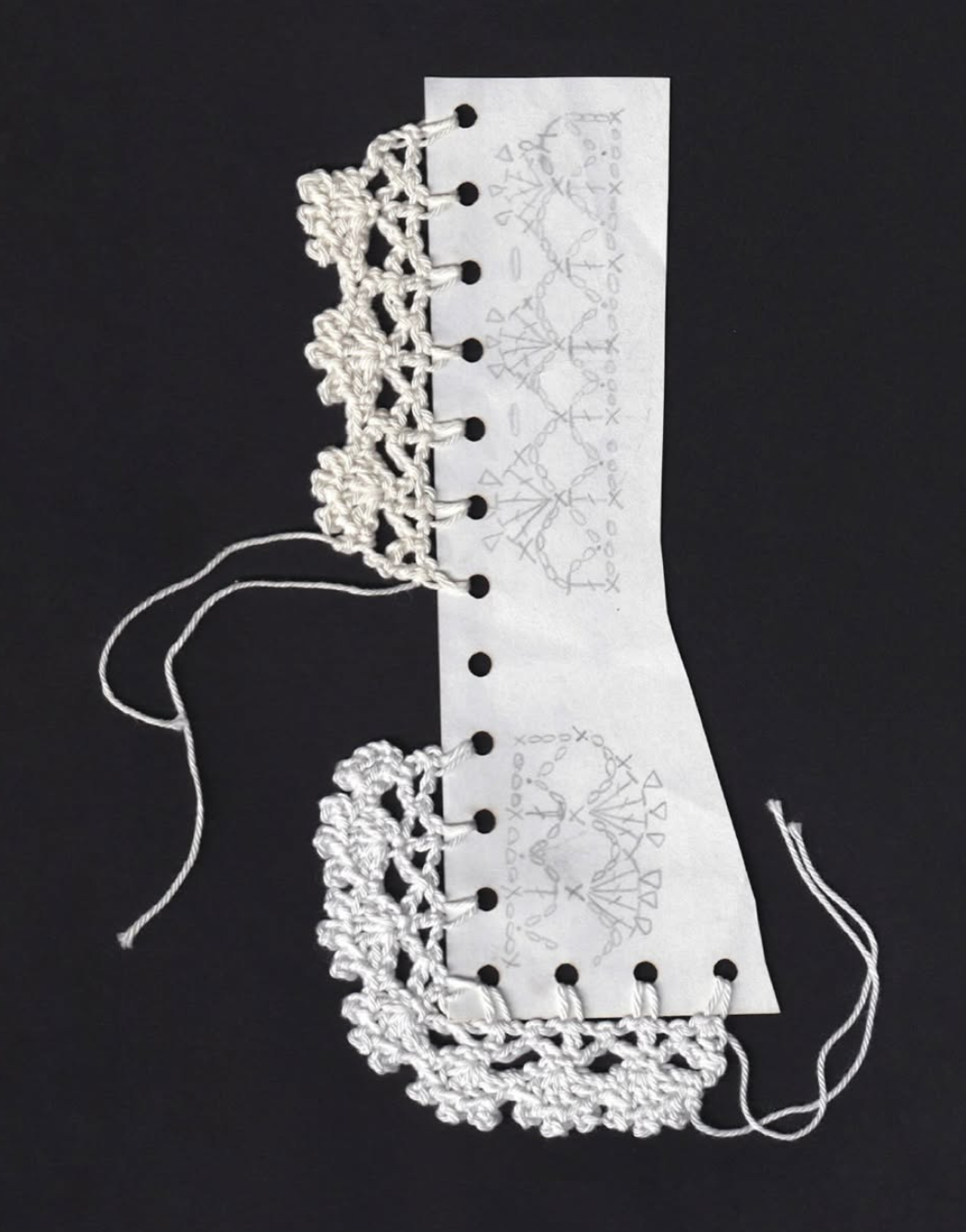
Booklook: Booklook Issue 2, Shirt, Crochet sample by Mika Perlmutter (Copyright © Booklook, 2023)
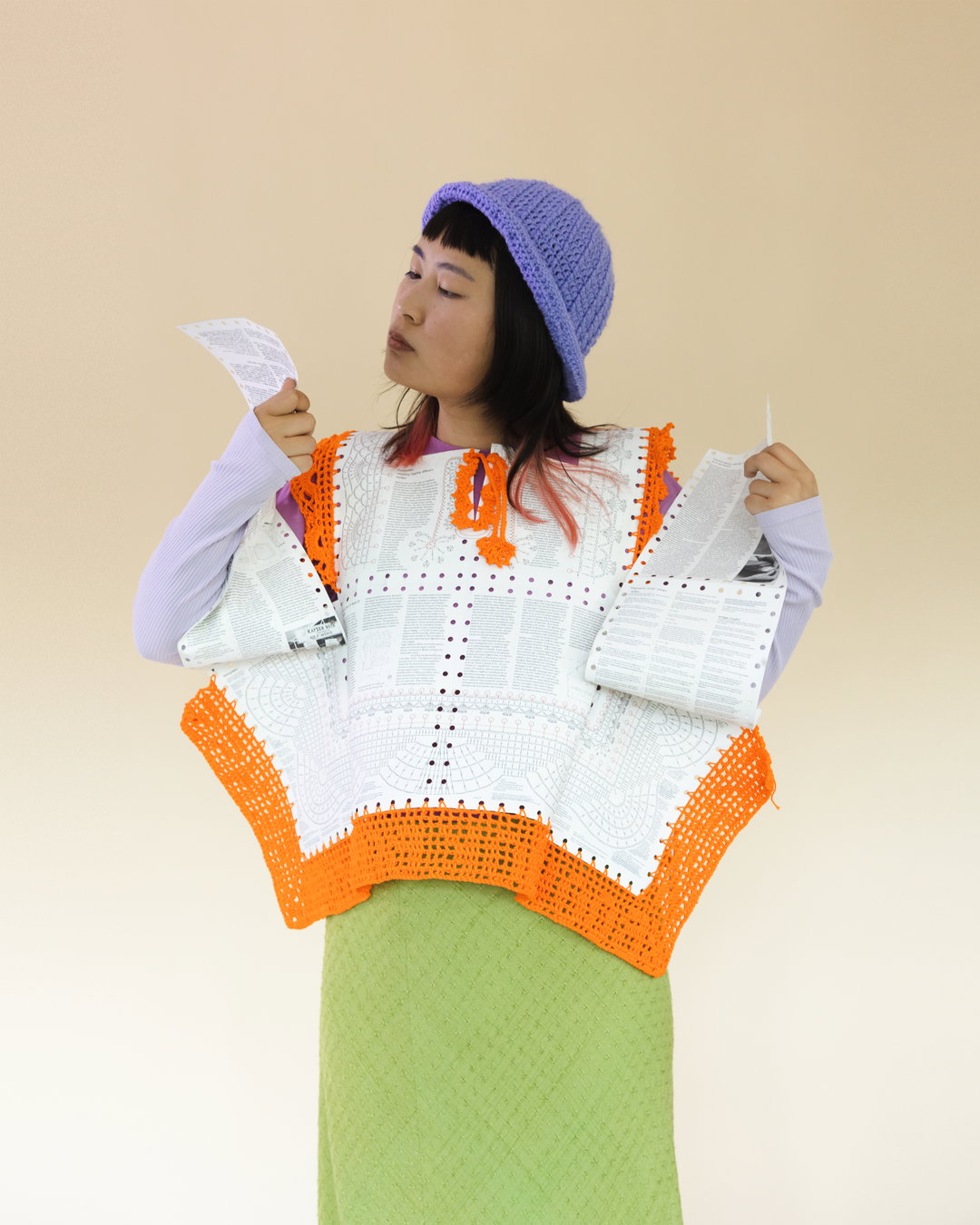
Booklook: Booklook Issue 2, Shirt, Photography by Sharon Jane D. Model: Lu Lin (Copyright © Booklook, 2023)
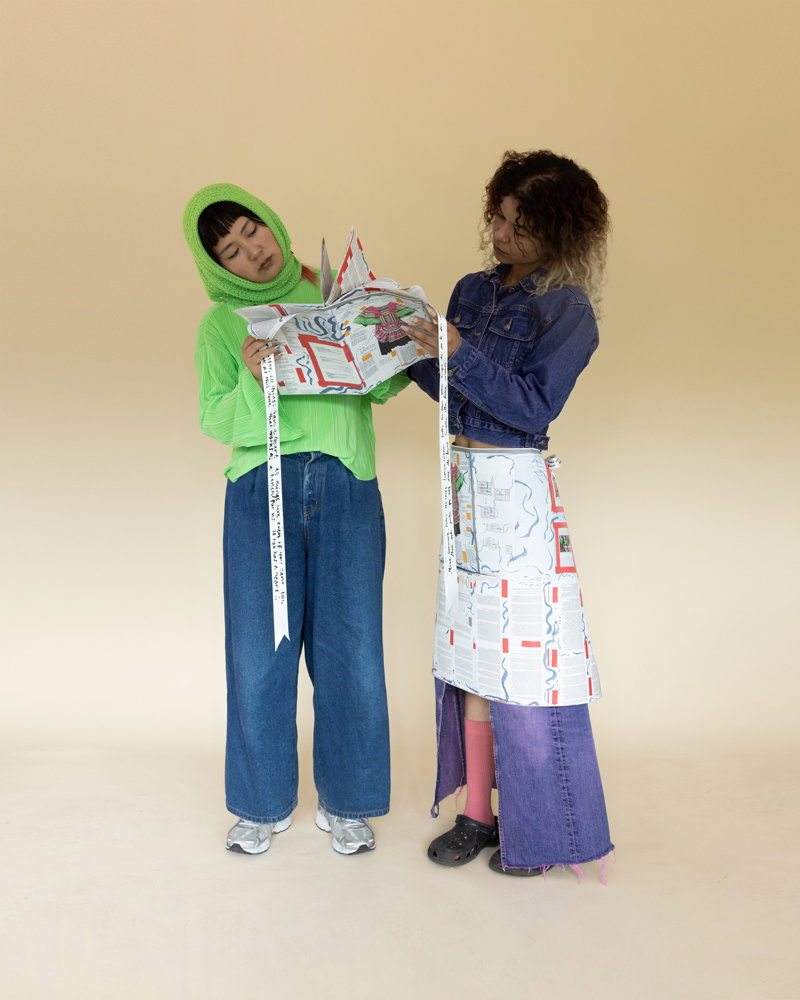
Booklook: Booklook Issue 1, Apron-Delantal, Photography by Sharon Jane D, Models: Lu Lin, Rachel Barfield (Copyright © Booklook, 2022)
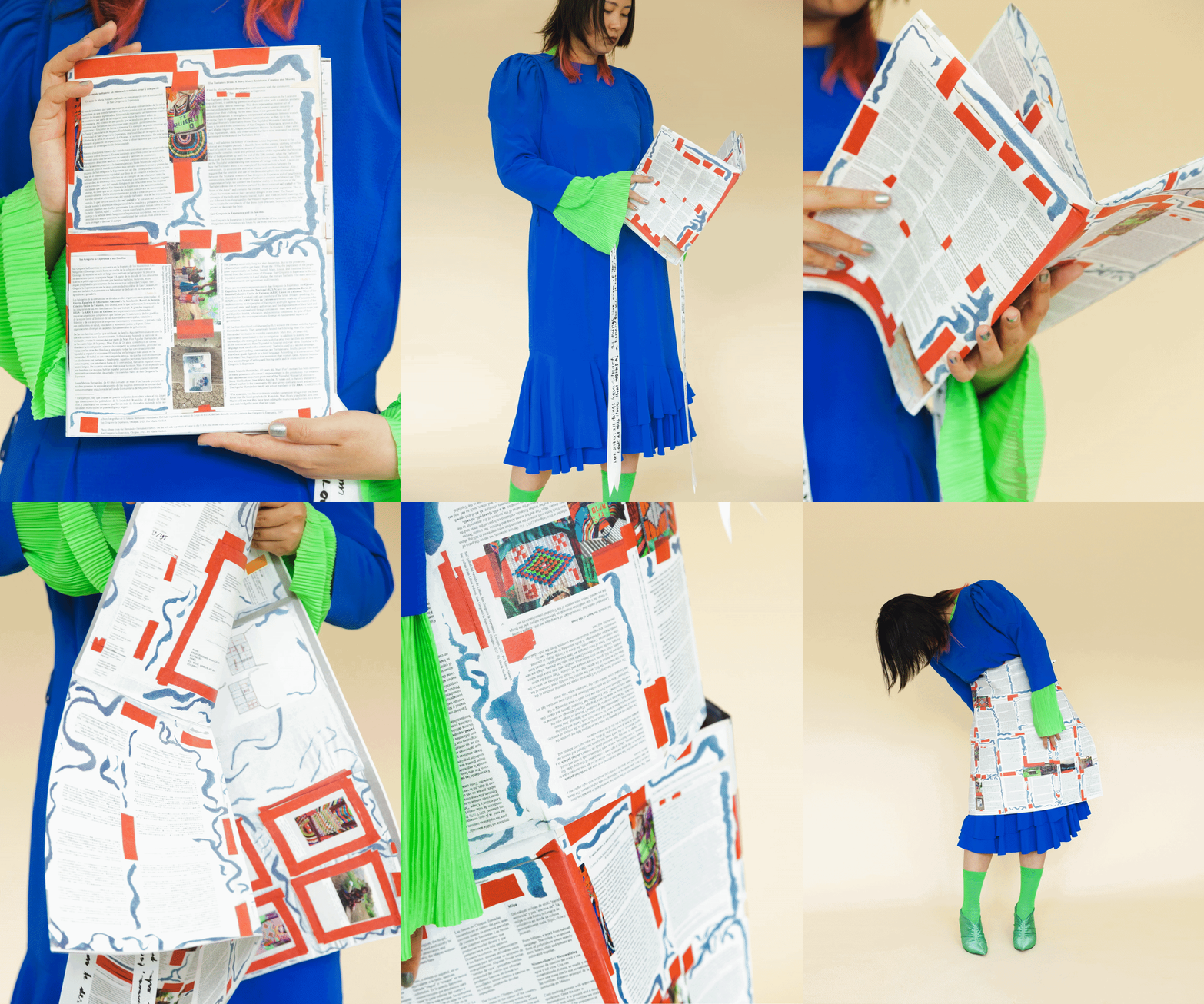
Booklook: Booklook Issue 1, Apron-Delantal, Photography by Sharon Jane D, Model: Lu Lin (Copyright © Booklook, 2022)
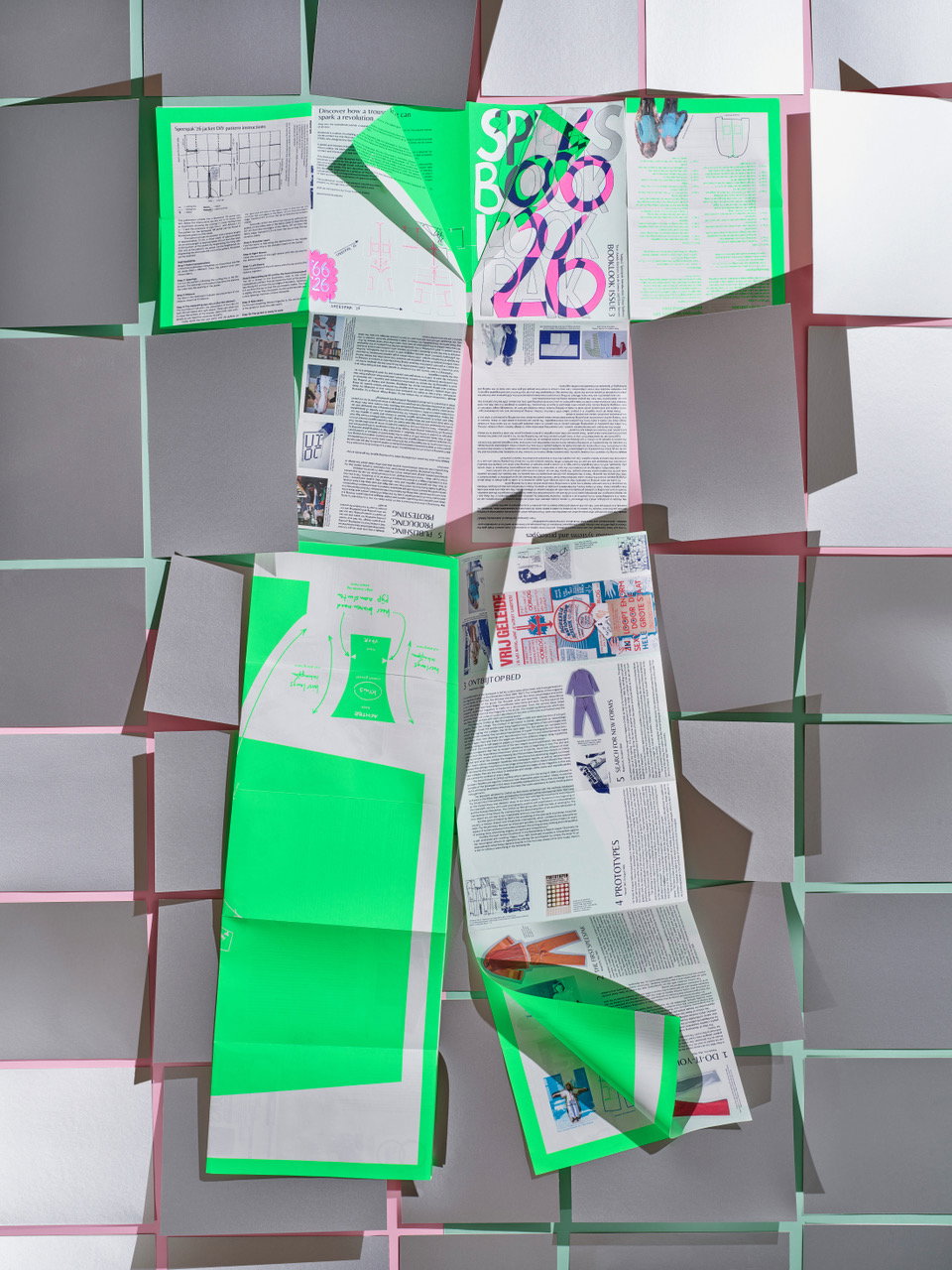
Booklook: Booklook Issue 3, Photography by Scheltens & Abbenes (Copyright © Booklook, 2026)
Hero Header
Booklook: Booklook Issue 2, Shirt, unfolded. Crochet and image by Mika Perlmutter (Copyright © Booklook, 2023)
Share Article
About the Author
—
Ellis Tree (she/her) is a staff writer at It’s Nice That. She joined as a junior writer in April 2024 after graduating from Kingston School of Art with a degree in Graphic Design. Across her research, writing and visual work she has a particular interest in printmaking, self-publishing and expanded approaches to photography. ert@itsnicethat.com
To submit your work to be featured on the site, see our Submissions Guide.