Launch Recite Me assistive technology
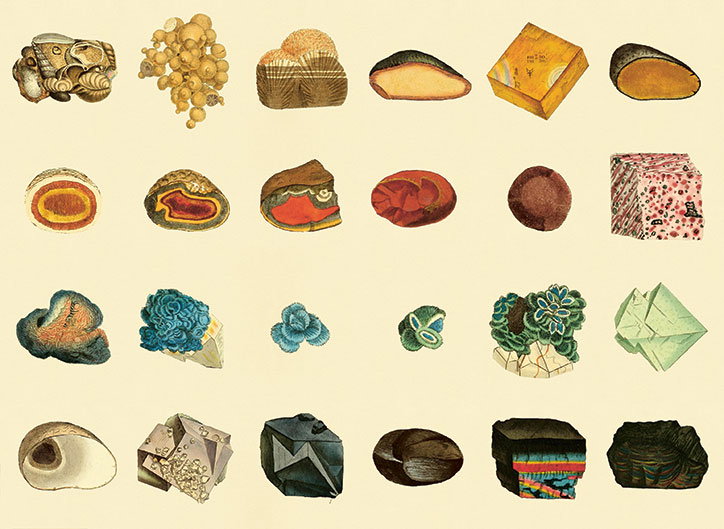
An illustration of 24 different mineral and rock samples arranged in a neat grid on a pale yellow background. The specimens vary in colour and form, including crystalline structures, polished geodes and raw ores.

Wellcome Collection publishes book of early infographics, charts and diagrams for organising nature

—
Date
28 October 2016

Animal. Vegetable. Mineral. is a publication from Wellcome Collection celebrating how humans visually classified and organised the sprawling natural world in an important era of scientific research. Made to accompany the upcoming exhibition Making Nature, it features archival charts, diagrams, maps, lists and illustrations of variants of species and organism types, delightful in their intricate and informative detail.

Most were ordering systems and tools devised by pioneering European nature researchers, artists, scientists and explorers. The book features visuals from key 18th and 19th Century figures that “shaped the course of natural history” such as Charles Darwin, Carl Linnaeus, Alexander Von Humboldt, Anna Atkins and Ernst Haeckel.

It was “the original big data challenge” says Wellcome during a time when our understanding of nature was rapidly evolving and expanding, for these pioneers to document and present their findings. Many of these images, from taxonomy charts and animal distribution maps to colourful picture dictionaries, show the creativity at hand during this process.

Animal. Vegetable. Mineral. by Tim Dee is published 1 December. Making Nature opens from 1 December 2016 – 21 May 2017, and brings together over 100 objects from literature, film, taxidermy and photography, “to examine the historical origins of our ideas about other animals and the consequences of these for ourselves and our planet.”
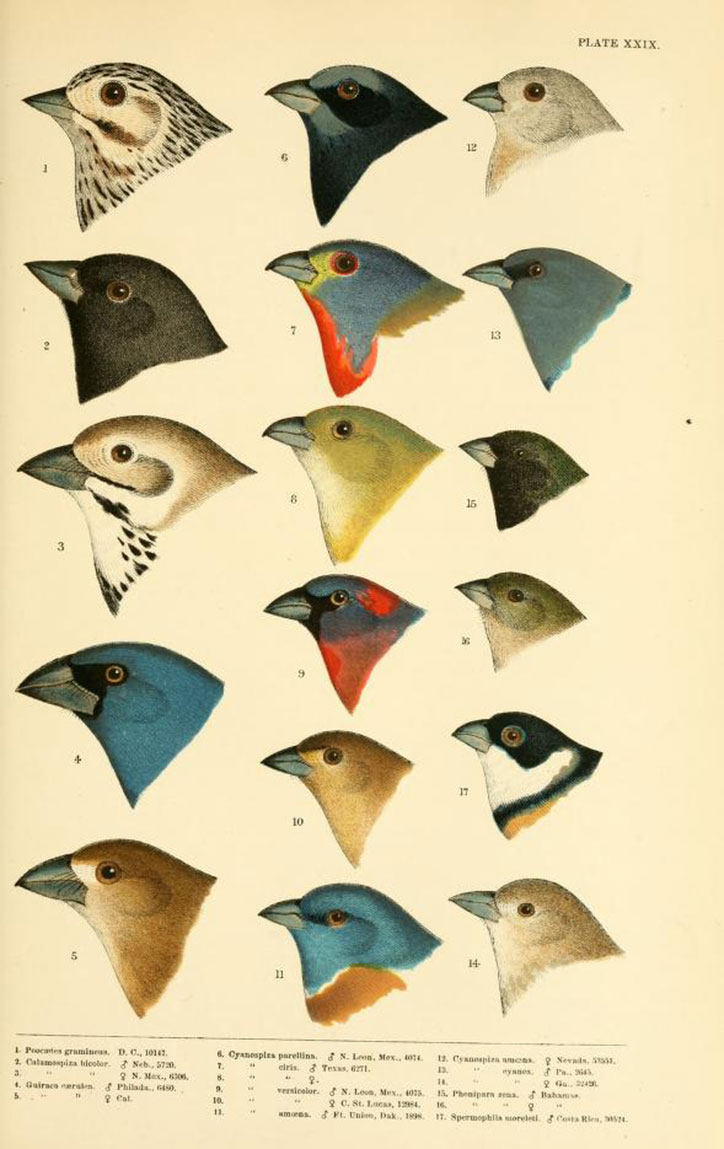
An illustration of 17 bird heads, arranged in three columns on a cream background. Each head is shown in profile, displaying a variety of colours and patterns. The top right corner is labelled “Plate XXIX.”
Above

Biodiversity Heritage Library: History of North American Birds XXIX
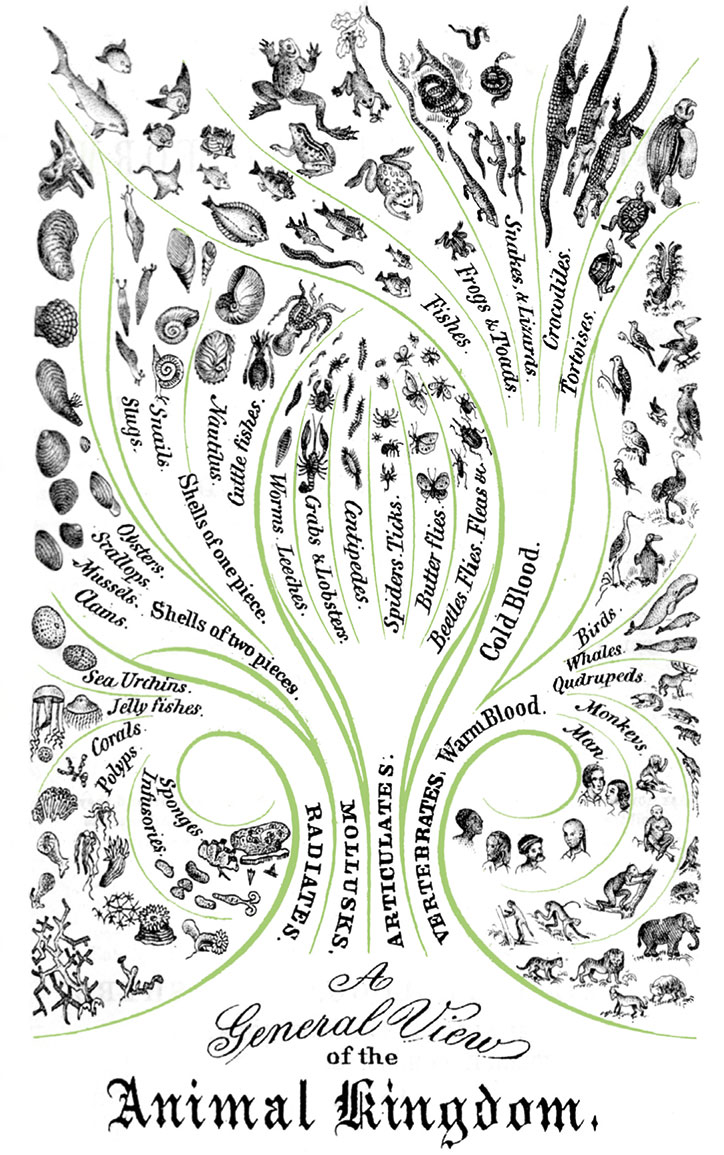
An illustration of a biological tree of life, with animals branching out from a central trunk. The diagram is labelled with categories such as “Radiates”, “Mollusks” and “Vertebrates”. At the bottom, a decorative title reads “A General View of the Animal Kingdom”.
Above

Wellcome Library: A General View of the Animal Kingdom
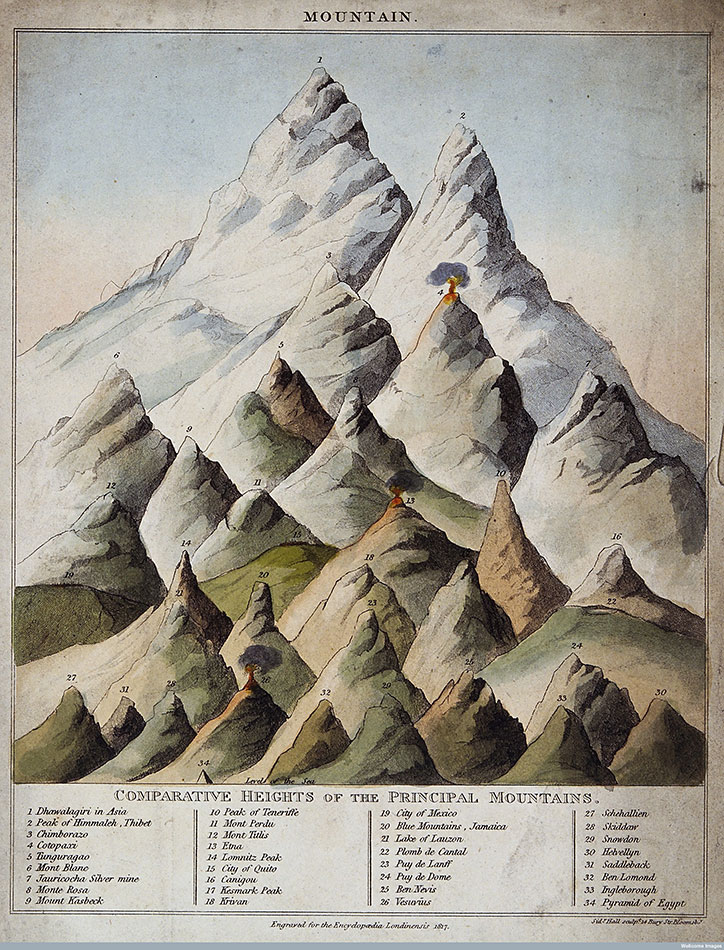
An illustration comparing the heights of various global mountains, with the tallest peaks towering over smaller ones. The image is titled “MOUNTAIN.” and includes a numbered key at the bottom titled “COMPARATIVE HEIGHTS OF THE PRINCIPAL MOUNTAINS.”
Above

Sidney Hall: Mountain (1917). Courtesy: Wellcome Images.
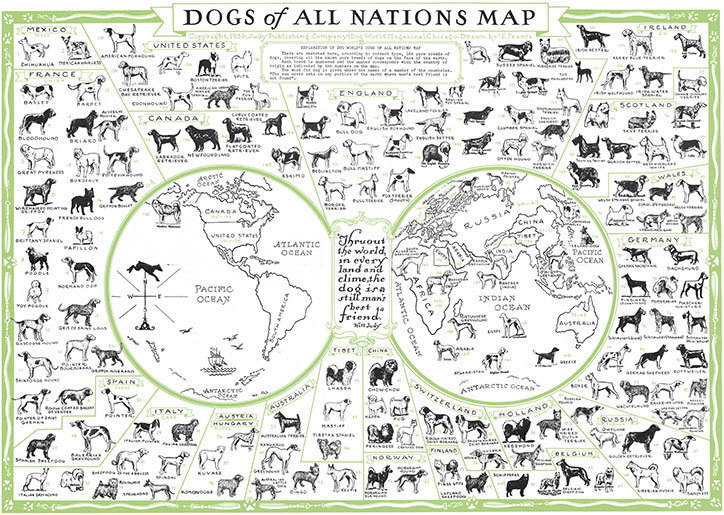
An illustration of a world map surrounded by a circular directory of dog breeds. The map is titled “Dogs of All Nations Map” and features small sketches of dogs grouped by their countries of origin.
Above

David Rumsey: Dogs of All Nations Map (1936)
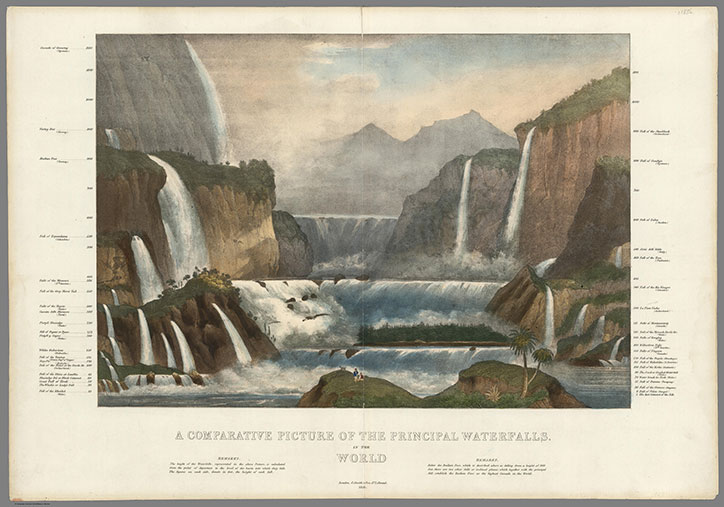
An illustration comparing the scale of the world’s most famous waterfalls. The various falls are grouped together in a single landscape, with a height scale running along the left and right edges. A title at the bottom reads “A Comparative Picture of the Principal Waterfalls of the World”.
Above

David Rumsey: Comparitive Waterfall Map
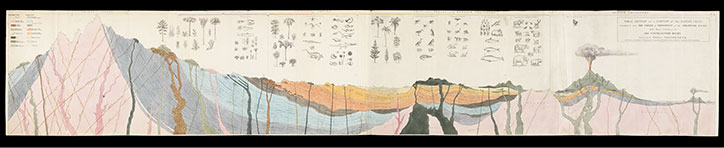
A geological cross-section illustration showing layers of earth and rock in shades of pink, blue and yellow. Above the landscape, rows of small sketches depict various fossils and plant species.
Above

Wellcome Library: Geology, A Cross Section of Mountains
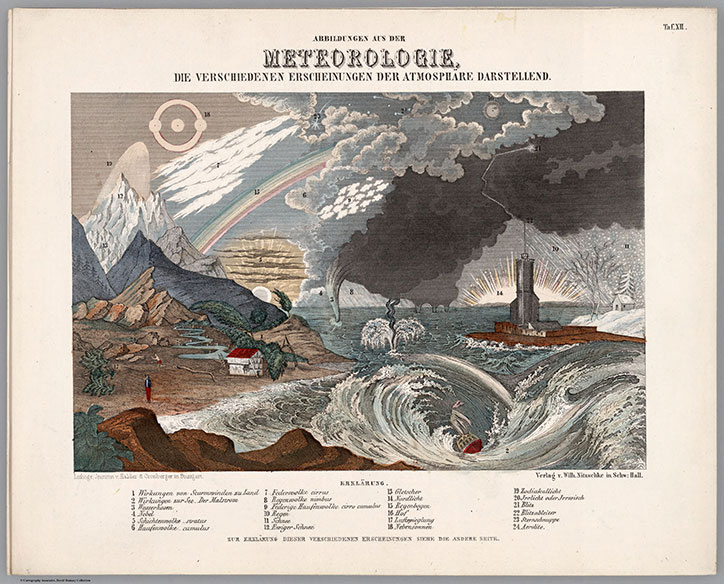
An illustration of various meteorological phenomena occurring simultaneously across a landscape. A rainbow arcs over mountains and a stormy sea, while lightning strikes a tower and a waterspout churns in the water. German text at the top reads “Abbildungen aus der Meteorologie”.
Above

David Rumsey: Meterologie

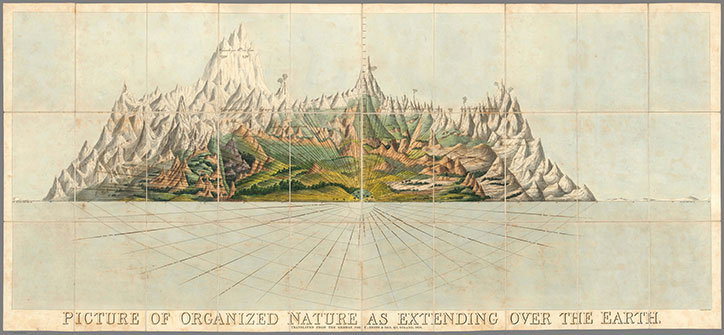
An illustration of a vast, mountainous landscape rising from a flat plane. A caption at the bottom reads “Picture of Organized Nature as Extending over the Earth.”
Above

David Rumsey: Picture of organised nature as extending over the earth.
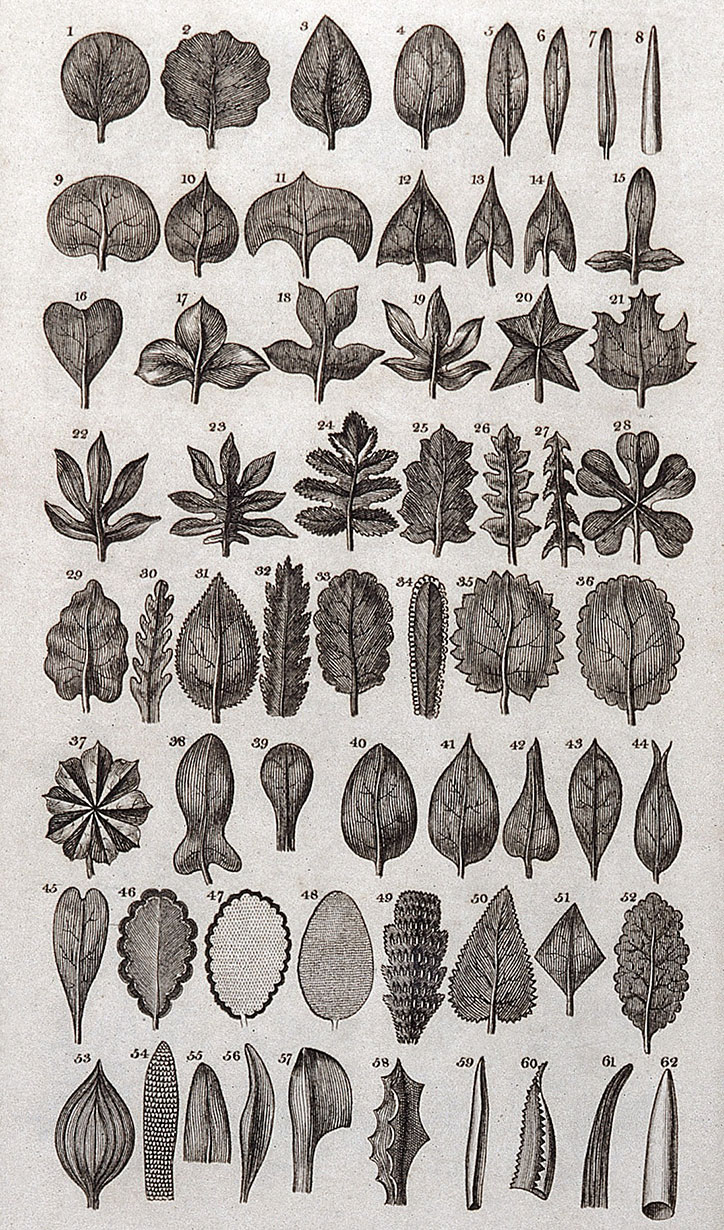
A botanical illustration showing 62 different leaf shapes and textures, arranged in a grid. Each leaf is numbered and rendered in detailed black and white line work.
Above
Left

Wellcome Library: Linnaeus Leaves

Right

Alois Auer: Nature printed leaves. Courtesy: Wellcome Images.
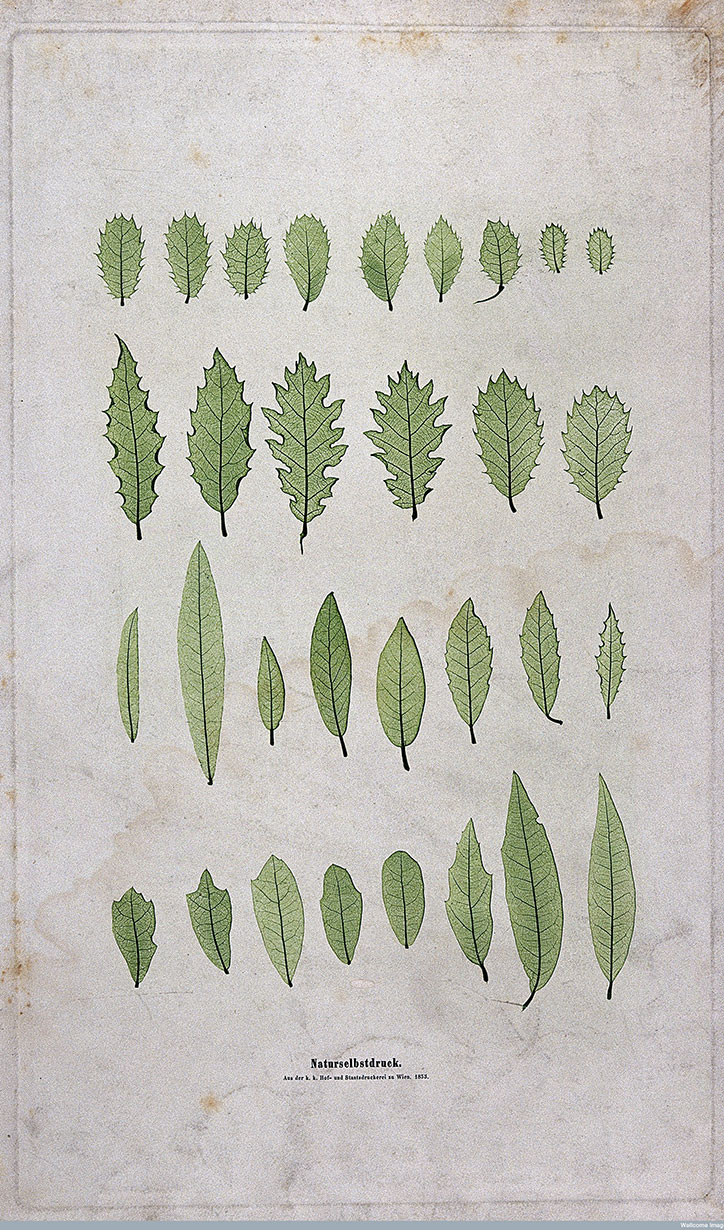
A botanical illustration showing four rows of various green leaves on aged, cream paper. The leaves vary in size and shape, ranging from small and oval to large and jagged. Text at the bottom reads “Naturselbstdruck.”
Above

Alois Auer: Nature printed leaves. Courtesy: Wellcome Images.
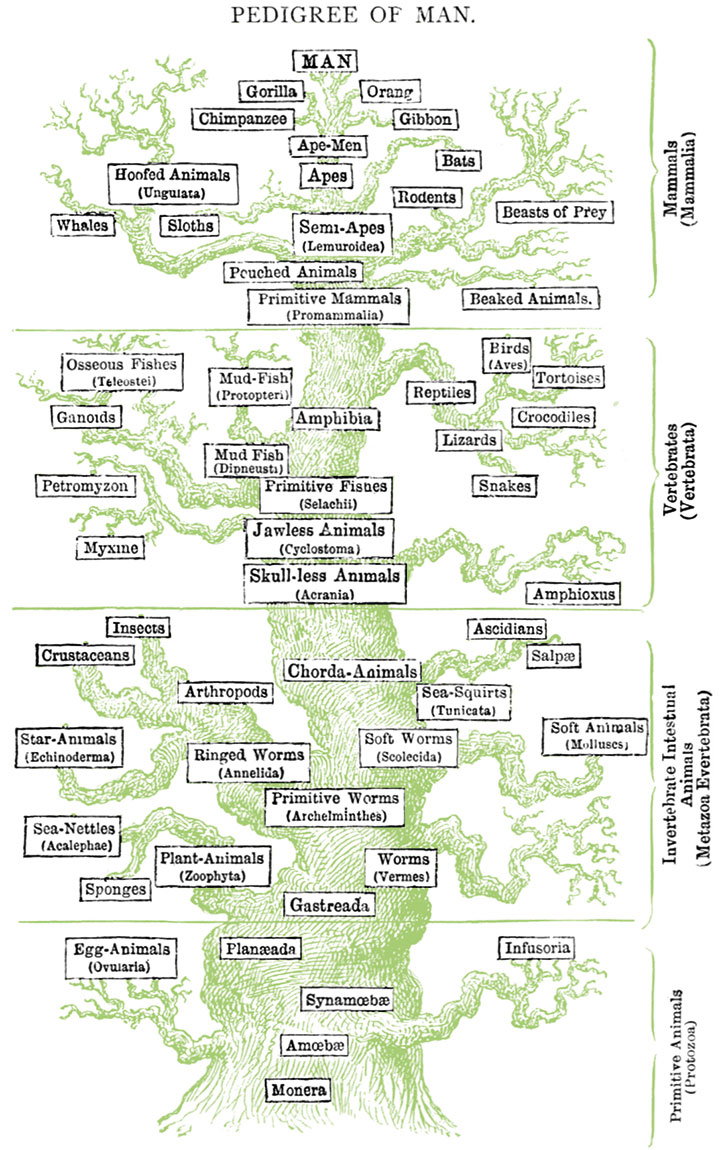
An illustration of an evolutionary tree titled “Pedigree of Man.” The diagram branches upwards from “Monera” at the base to “Man” at the top, with categories such as “Mammals”, “Vertebrates” and “Primitive Animals” labelled along the right side.
Above
Left

Ernst Haeckel: Tree of Life depicting the Pedigree of Man (1879)

Right

Louis Agassiz: Crust of the Earth as related to Zoology
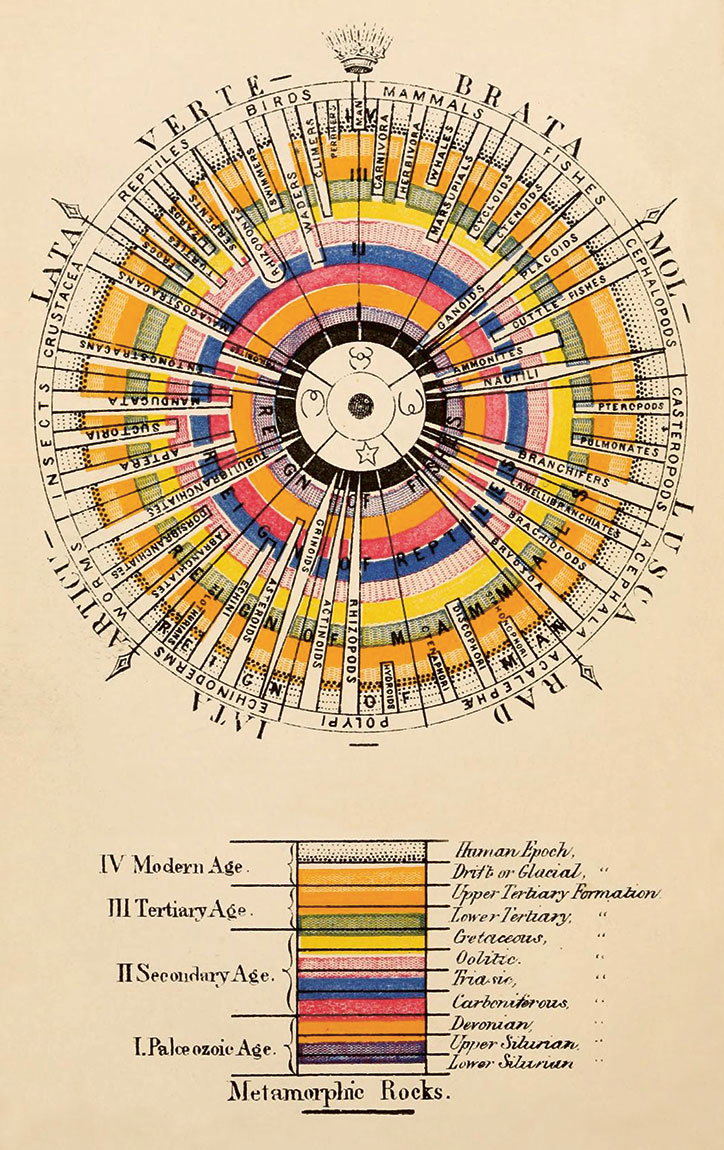
A circular diagram categorises various animal groups, from “mammals” and “birds” to “worms” and “echinoderms”. Concentric rings of colour radiate from the centre to denote different geological eras. Below the wheel, a colour-coded key links these rings to time periods, including the “Modern Age” and “Palceozoic Age”.
Above

Louis Agassiz: Crust of the Earth as related to Zoology

Share Article

About the Author

Jenny Brewer

—

Jenny oversees editorial output across It’s Nice That. Get in touch with writing pitches for features or opinion pieces, big creative story tips, or questions about all things editorial. jb@itsnicethat.com

To submit your work to be featured on the site, please see our Submissions Guide.
It's Nice That Newsletters

Fancy a bit of It's Nice That in your inbox? Sign up to our newsletters and we'll keep you in the loop with everything good going on in the creative world.