




- Words
- It's Nice That
- —
- Date
- 27 November 2019
- Tags
How do you make something digital feel physical? Here’s what happened at November’s Nicer Tuesdays
Share
Share
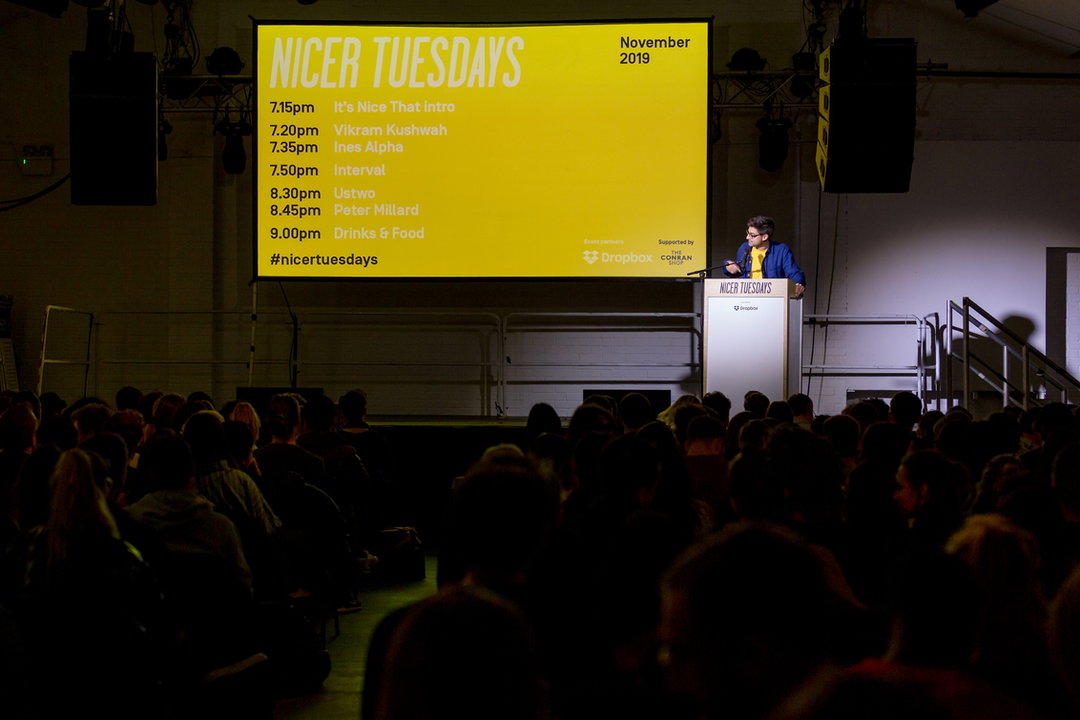
At November's Nicer Tuesdays we heard from Vikram Kushwah, Ines Alpha, Ustwo Games and Peter Millard and, in turn, we laughed, nearly cried at times, and were inspired by such a talented bunch of creatives. Coming from the worlds of photography, 3D, game design and animation respectively, it was an event that really did offer something for everyone, and we thoroughly enjoyed ourselves.
Thanks to all who came and enjoyed it with us, but if you weren't able to, here's what went down at November's Nicer Tuesdays.

Photography is much easier to experience than it is to explain
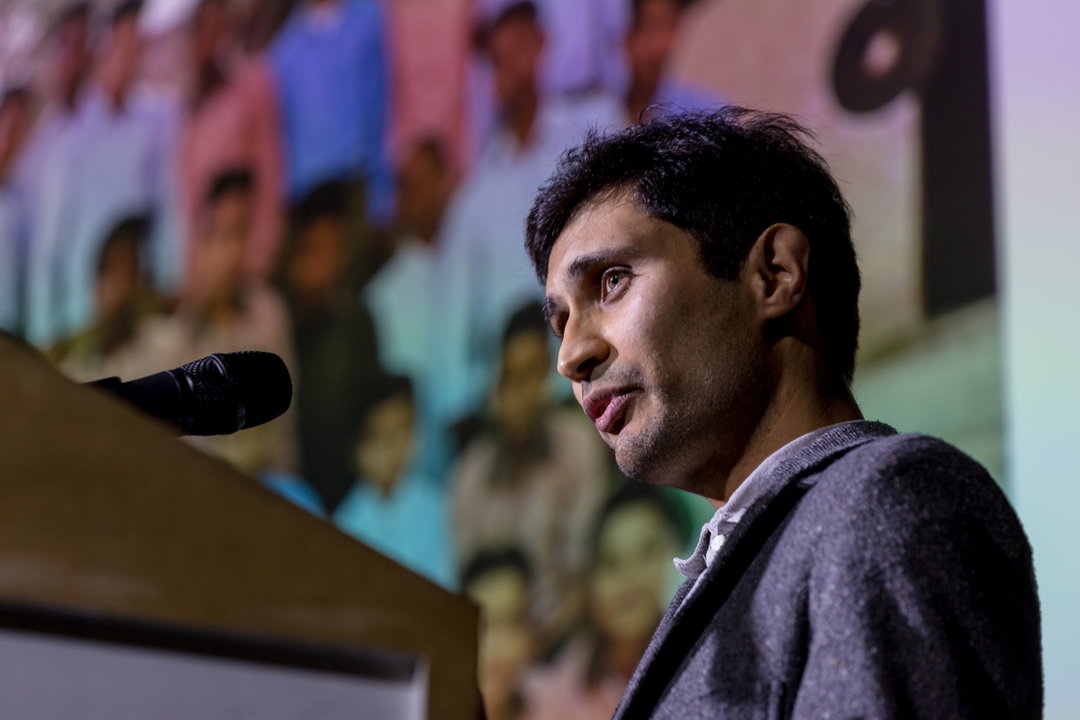
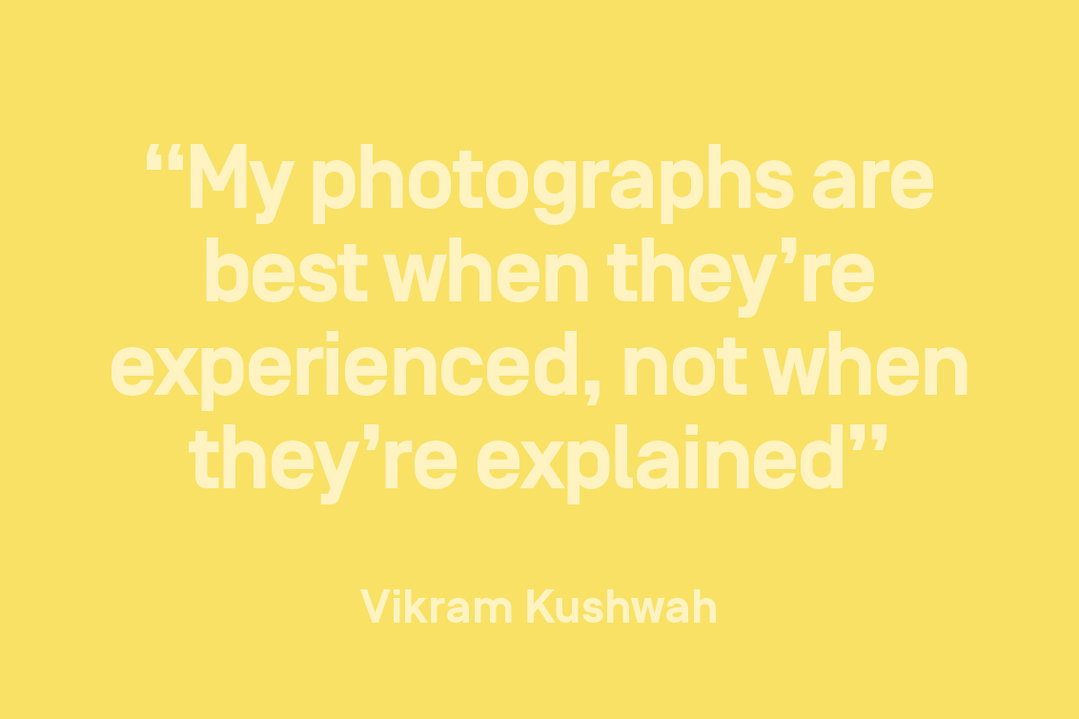
First to take to the stage last night was Vikram Kushwah, an Oxfordshire-based photographer largely working in fashion and on self-initiated art projects. “Normally it can take quite a lot of time to explain the complexities in my photographs,” he told us. “But I’ve always said my photographs are best when they’re experienced, not when they’re explained.” After giving us a brief overview of his work within the fashion industry to date – work which is largely inspired by surrealism and his childhood storybooks – he launched into what he called “the main course”, a look at his most recent series The Education I Never Had.
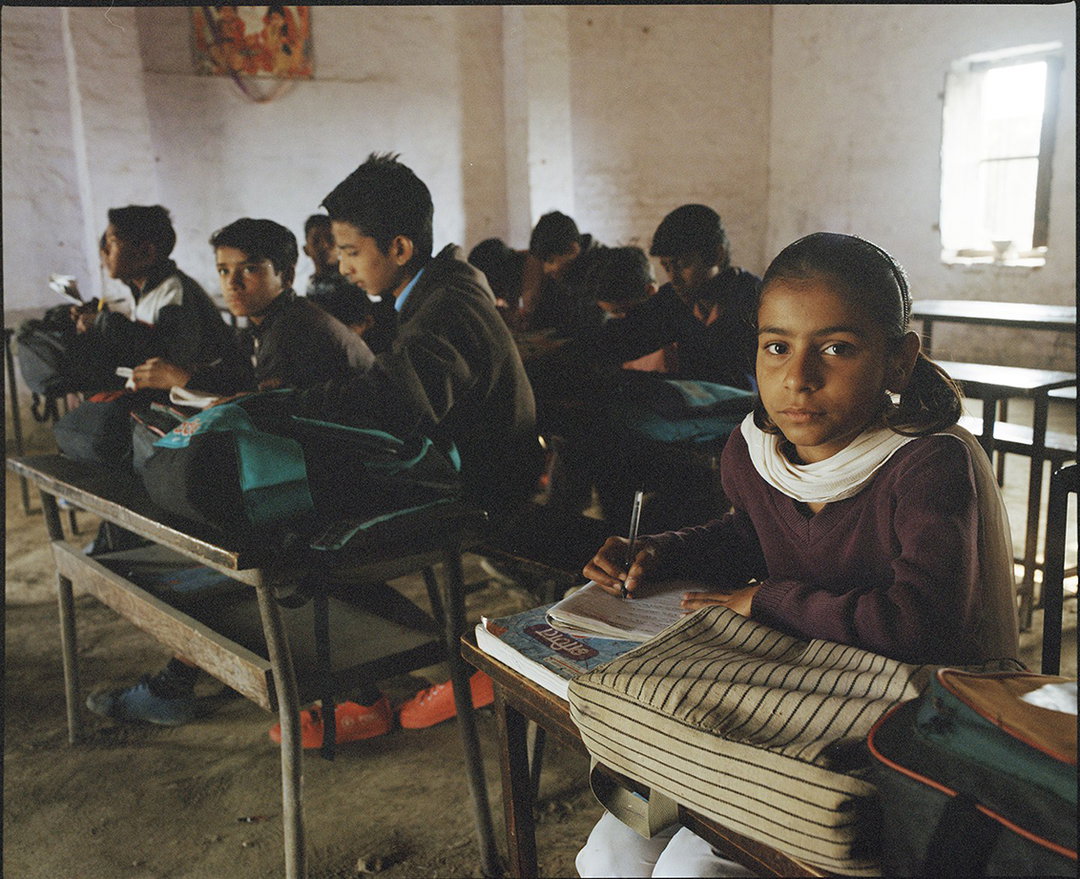
Two images from the series are currently on show at the National Portrait Gallery as part of the Taylor Wessing Portrait Prize and the story, Vikram explained, begins back in 1983 when he was born. Vikram was born into a poor household, and his parents lived in a one-room shack in India. His father taught in a local government school earning just five pounds a month. At the age of two, Vikram began playing with the local boys in his village and when he returned home, would repeat the profanities the older kids had taught him. In turn, “My father decided to send me to a boarding school, and not any boarding school but an elite one, in the foothills of the Himalayas,” taking out bank loans and selling off his inheritance in order to pay for it.
35 years later, and Vikram’s father still teaches in the same school, but the family members’ lives have gone in very different directions. “There’s such a huge divide between his life and my life over the last 35 years,” Vikram explained, “so I decided to make a return. I wanted to go back to the school he’d been teaching in all these years.” The Education I Never Had is a documentation of this return, showing everything from the school building to its students and staff who work without electricity and on dirt floors. In one image, Vikram depicts the school’s library – a sparse room with a distinct lack of books. He described this image as humorous but also sad, because while Vikram grew up playing cricket with the sons of diplomats and film stars, this was the reality for his father and the students he teaches. What’s more, it very much could have been the reality for Vikram if it hadn’t been for his father’s sacrifices. Giving thanks to his father for granting him the chance to do something else, he concluded: “It’s not just a portrait of these children and this school, it’s a portrait of the sacrifices my father made for me – it’s a portrait of the life I could have had.”
The future of makeup is exciting
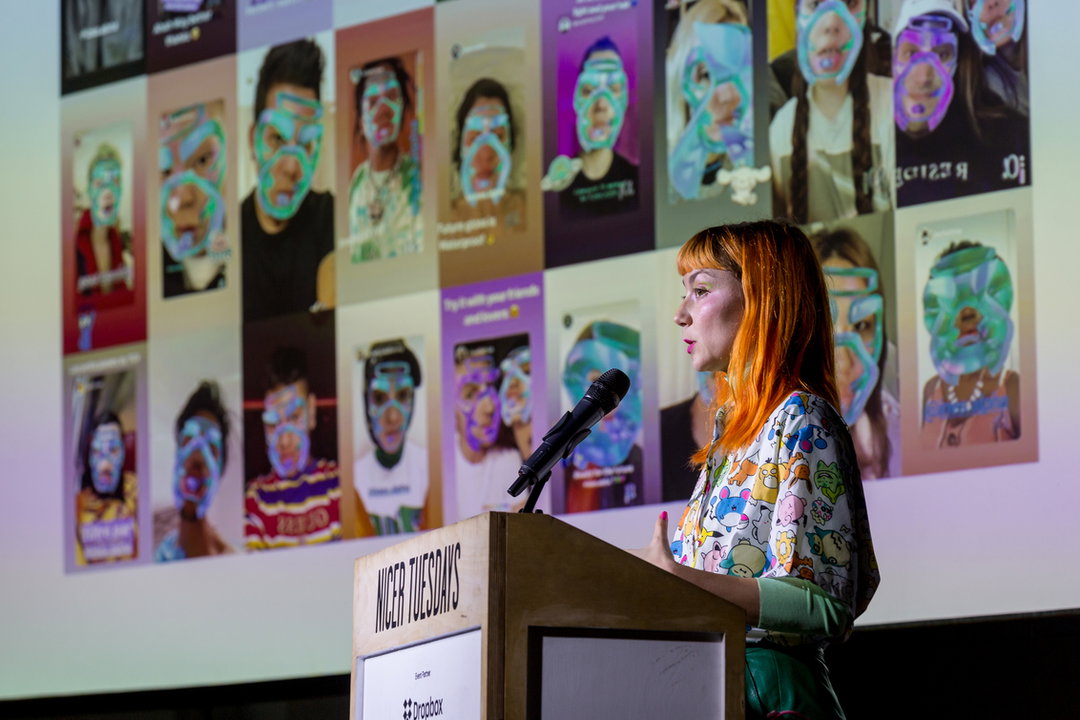
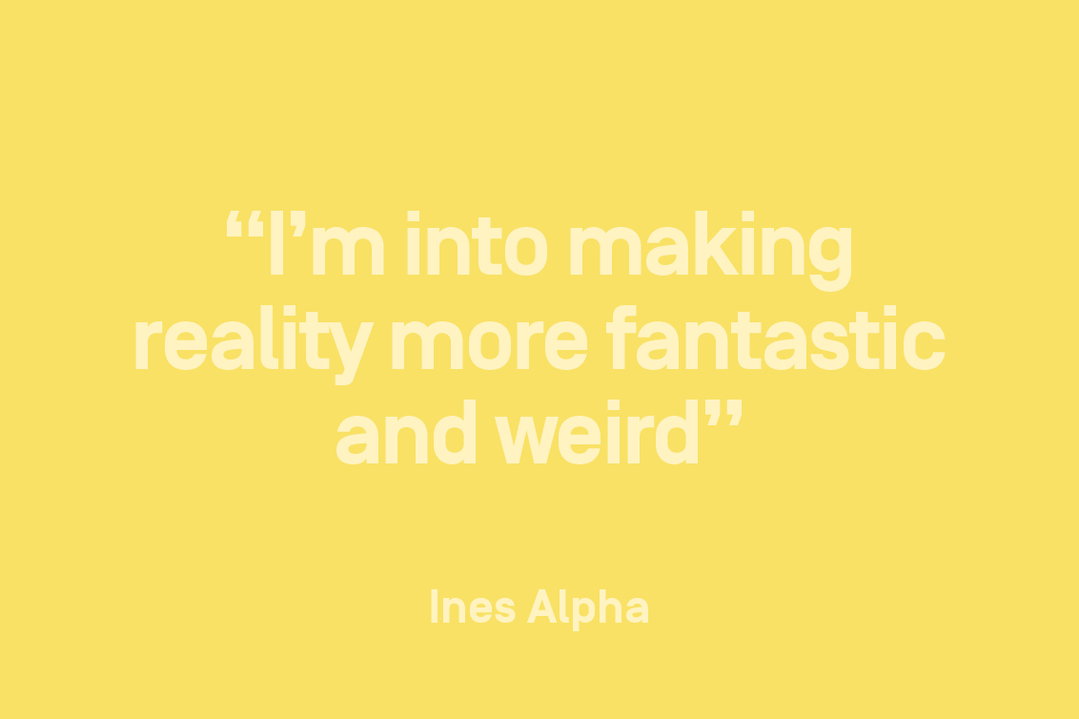
Joining us from Paris was Ines Alpha, an art director and digital artist who told us about her journey into the unusual career she now has. It was while working at an advertising company that Ines first starting experimenting with 3D. “I’m into making reality more fantastic and weird,” she explained of her interests in the medium and how it allows her to channel her love of science fiction. “I like when 3D mixes with reality in a confusing way,” she continued. For example, when looking at her work, you know it’s not real – because it can’t be real – but there’s a certain believability to the work thanks to the textures she uses and how seamlessly she manages to combine her creations with live camera footage.
Ines’ practice is characterised by what she calls 3D makeup, a combination of two of her favourite things. While her initial ventures into 3D were done in post-production, a turning point in Ines’ career came when Snapchat and Instagram released their respective AR softwares. She had been thinking about how she could make her work accessible to more people; how she could democratise her work and this new technology provided the perfect means to do so. The response was overwhelming, as Instagram users quickly adopted many of her face filters. “I was very happy that people were enjoying themselves and having fun with my designs,” she told us. “I saw all these people expressing themselves in a new way and having fun with my designs. So I wanted to do more.”
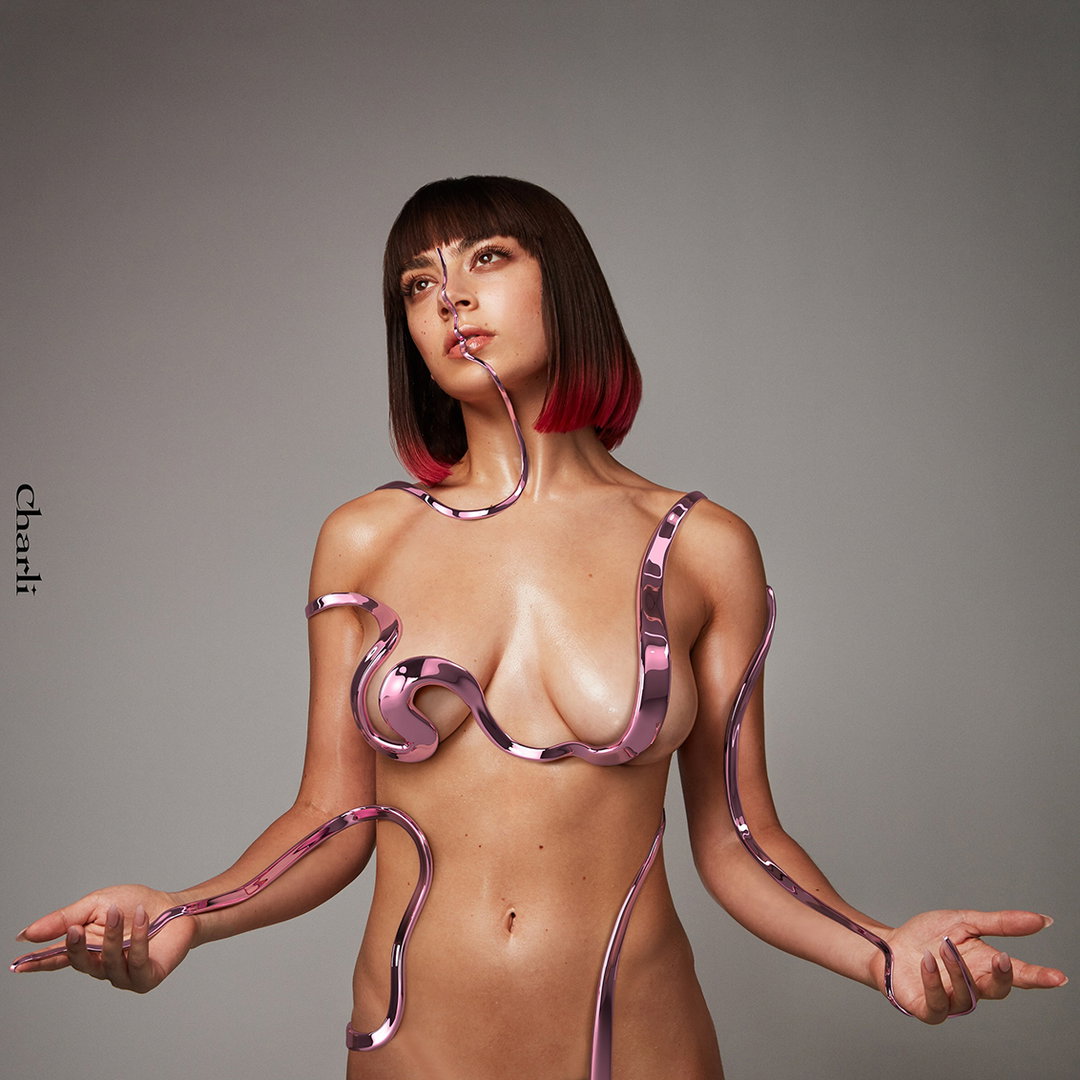
Today, Ines still creates 3D makeup as a way to explore her fascination with self expression, giving people yet another avenue through which to do so. But she also regularly works with brands and other artists. These have included Nike, Charli XCX and Selfridges. She concluded by letting us know about her hopes for the future; that everyone will be able to wear 3D make up, viewable via contact lenses or something similar. “The future will great and interesting,” she added, specifically speaking of her anticipation for future technologies and how she’ll be able to utilise them in her practice.
How do you make something digital feel physical?
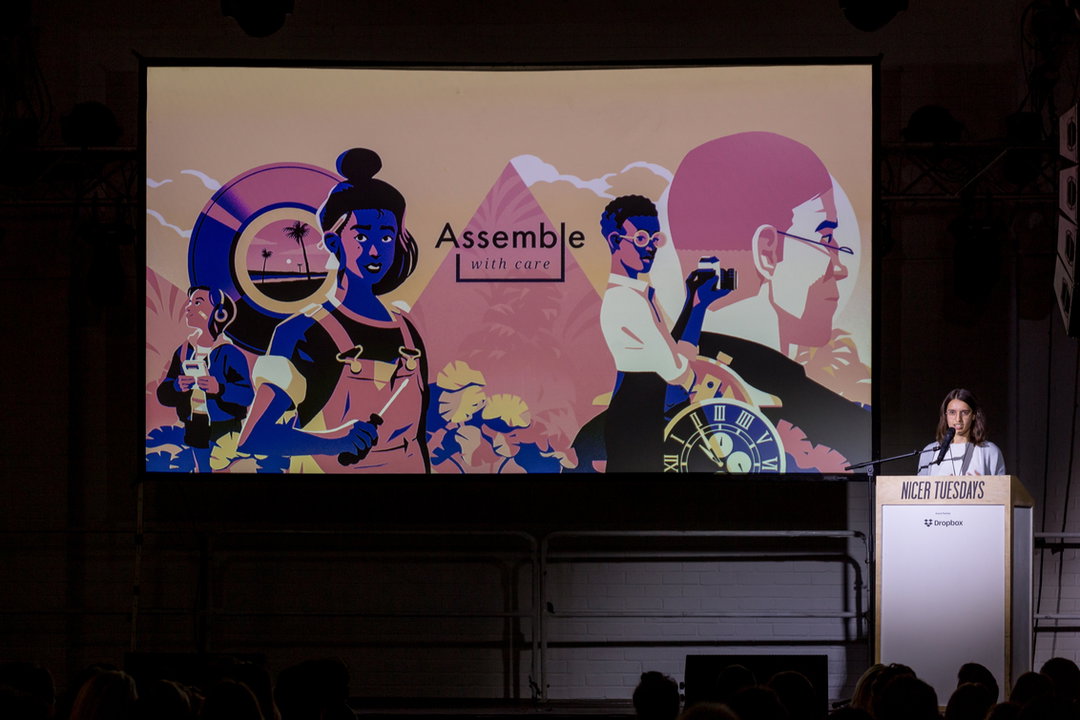
Representing Ustwo Games and giving us detailed insight into the studio’s latest release Assemble with Care was the game’s producer and writer Adrienne Law. One arm of Ustwo, Ustwo Games sees a team of 25 people, all based in south London, working on mobile games according to a set of values: built by humans, player-centric, and made with meaning. This has previously resulted in hit games Monument Valley and Monument Valley 2 as well as Land’s End. “We try to have a lot of personality in our games, we want them to feel handcrafted,” Adrienne explained. “We want to have a clear and simple game message underneath the surface.”
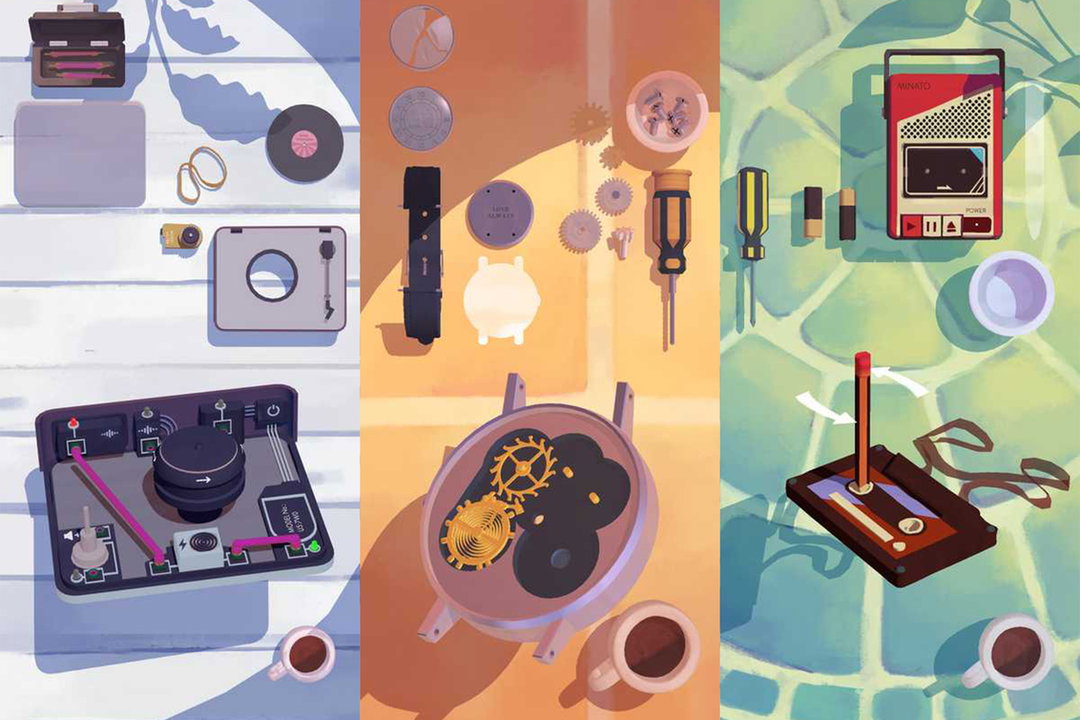
Assemble with Care was released this September and follows a repairwoman who ends up meeting two families, helping them come back together by fixing their objects and relationships simultaneously. Adrienne’s talk broke down how you go about bringing a game as beautiful and tactile as this to life. The first stage, of course, was prototyping. They replicated quick and dirty gameplay to test out why they thought the idea was exciting. This centred around the art of fixing but also the notion that objects can have emotional resonance, and that they are the perfect vessel through which to tell stories. The project wasn’t without its challenges of course, especially as it lasted for 18 months. “How do you make something digital feel physical? How do we use objects to tell a story about people? How do we make the app accessible to a mobile audience but give it some long term meaning?” were the main questions the team focussed on answering.
The result is a game which mimics the satisfaction of working with your hands to fix something, creating a haptic experience for mobile gamers. Visually, it’s an arresting game, different to a lot of what is out there thanks to the painterly style Ustwo opted for. What’s more, through careful narration and considered character building, Assemble with Care has a meditative, calming quality to it, drawing on our instinctual love of objects, and the stories we attach to them. It’s a game with feeling, both physically and emotionally due to its nostalgic, evocative traits. Importantly, Adrienne concluded, it’s a game anyone can enjoy – once you’ve had a go, give it to your grandma, and she can enjoy it just as much.
Technical ability means nothing if you’re comedic timing is off
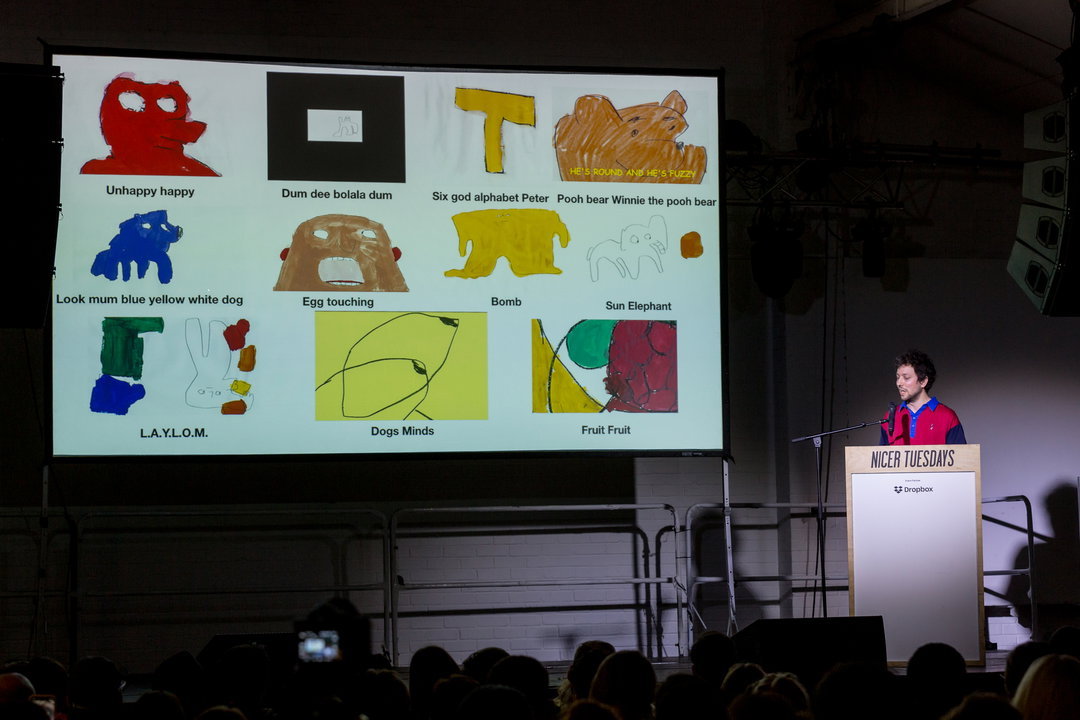
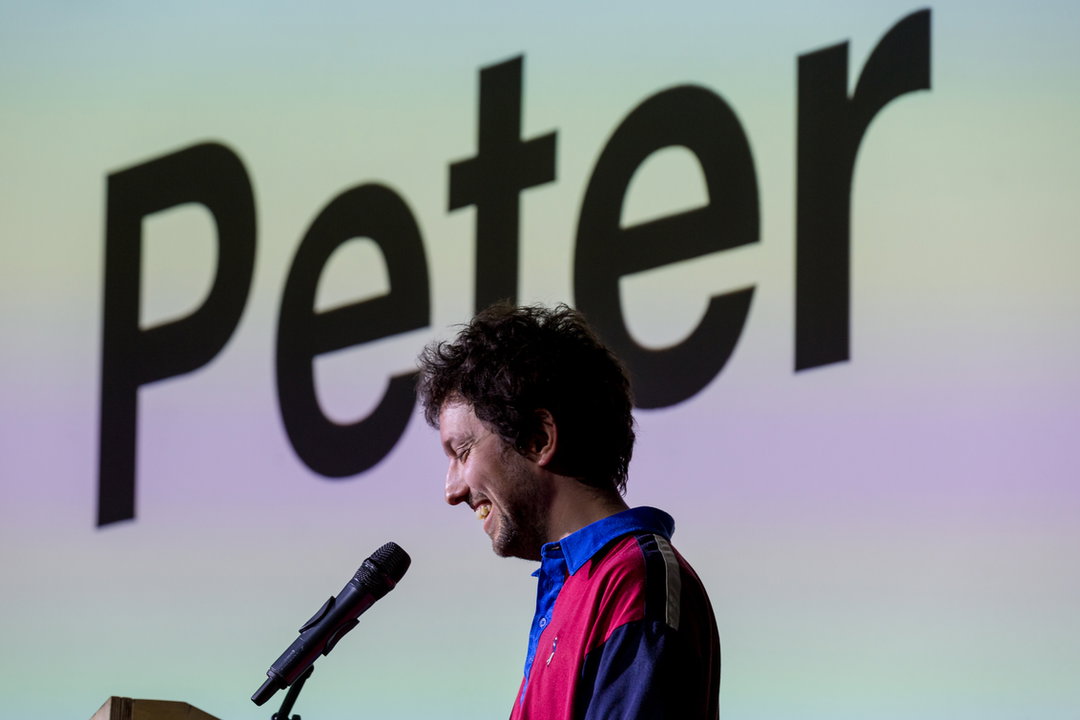
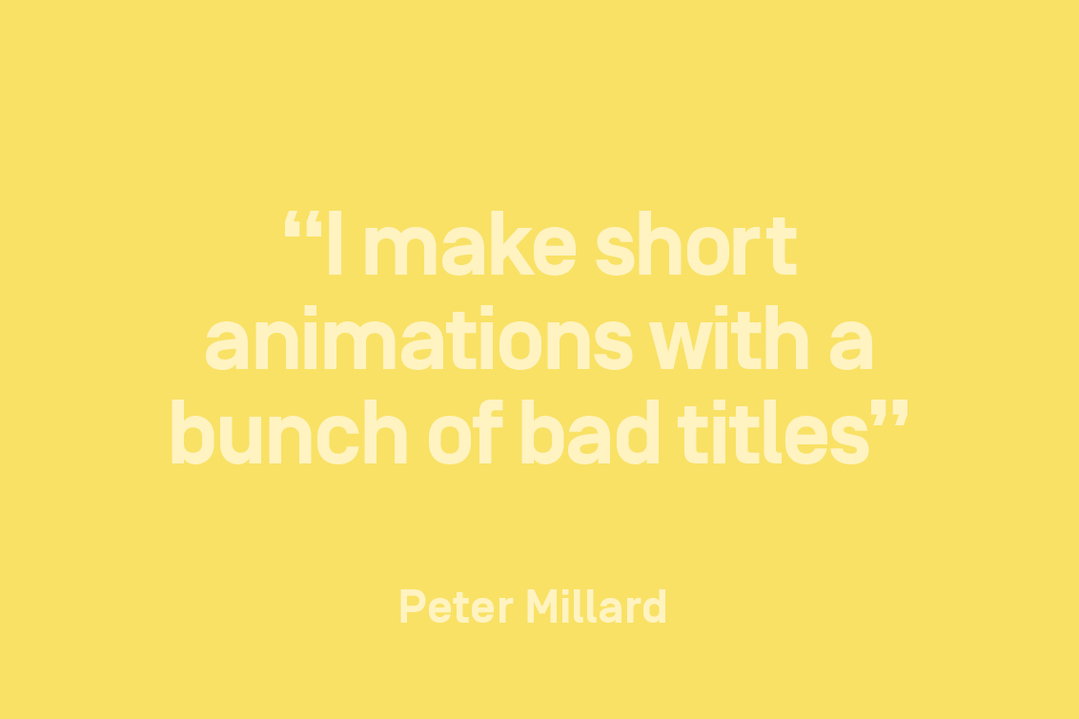
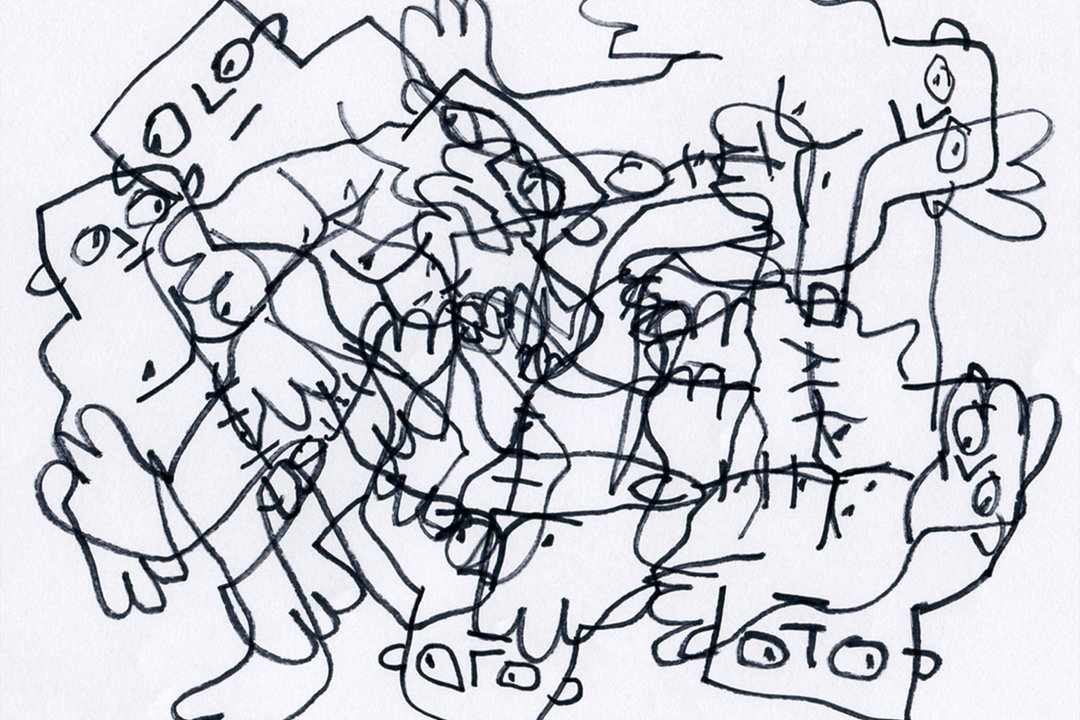
Where do we begin to describe animator Peter Millard’s Nicer Tuesdays talk? Well, for starters, it involved laughter – a lot of it! Originally from Malvern Hills, Peter’s creative journey began on an art access course where his peers consisted of over 60s, and where he spent a year painting and drawing fruit but also establishing his practice which consists of making short animations with “a bunch of bad titles”. From there, he studied animation in Newport before completing his MA in animation at the RCA, a process he described as “convincing” people to let him do things.
The majority of Peter’s talk focussed on sharing his hilarious work, one notable piece being his ident for the Ottawa Film Festival. He got the gig after moving to Canada and was given three simple stipulations: it needed to be under one minute, it had to have all the details of the festival and it had to include an owl. What Peter created is characteristically bizarre, focussing on a pencil line animation of a moose screaming, interspersed with actual footage of a moose and an owl having a face-off, and basic text outlining the festival’s information. It’s honestly exactly as it sounds and was hilariously shown before every single film during the festival. It’s works like this that typifies Peter’s practice – the techniques are simple, but the comedic timing and his understanding of how combining moving images with sound and pauses can achieve this is second to none.
Peter also gave us some insight into what he’s working on now: a set of 100 sculptures and a short film about humans’ place in the universe. Other than that, all we have left to say is, keep your eyes peeled for the video of Peter’s talk next week.

Event Partners
Dropbox
Dropbox Paper is a collaborative workspace that eliminates distractions that get in the way of creativity.
Supported by
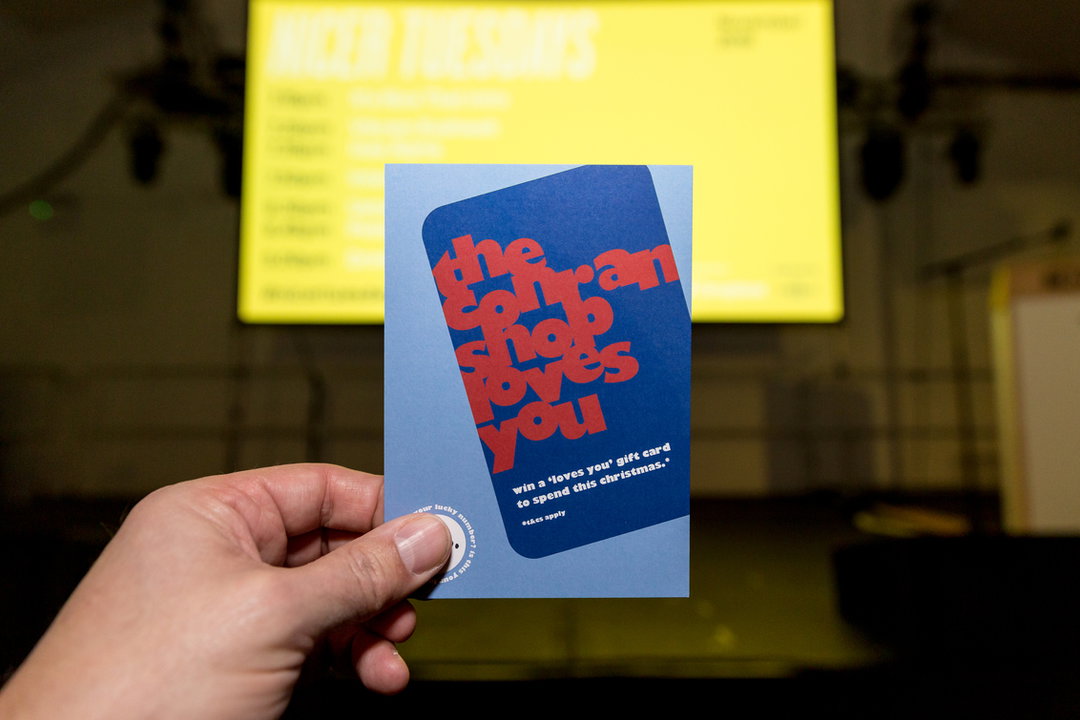
The Conran Shop
The Conran Shop is the home of considered, curated design, founded by Sir Terence Conran in 1973.
Camden Town Brewery
Camden Town Brewery was founded back in 2010 under the railway arches in Camden, with the aim of making really great lager.
Share Article
Further Info
About the Author
—
This article was written by the It’s Nice That team. To find our editors and writers, please head over to our Contact page.